Lifeline to Freedom
The Berlin Airlift and the Dawn of the Cold War
Imagine standing on the tarmac of Tempelhof Airport in 1948, watching as plane after plane lands, bringing vital supplies to a city under siege.
284 pages14 chaptersDec 13, 2024Cold War
About this book
The roar of engines fills the air, a constant reminder of the determination and ingenuity that would soon change the course of history. This is the world you'll step into with "Lifeline to Freedom: The Berlin Airlift and the Dawn of the Cold War." As you delve into the pages of this book, you'll find yourself at the heart of one of the most pivotal moments in post-World War II history. You'll witness the rising tensions between former allies, the strategic decisions that shaped the future of Europe, and the extraordinary efforts of those who refused to let a city fall to oppression. Through vivid narratives and insightful analysis, you'll gain a deep understanding of the political chess game that unfolded in the skies over Berlin. You'll explore the logistical challenges of supplying an entire city by air, the personal stories of the pilots who risked their lives daily, and the resilience of the Berliners who endured months of hardship. This book doesn't just recount history; it brings it to life. You'll feel the urgency of the crisis, the weight of the decisions made by world leaders, and the hope that each successful flight brought to the people of Berlin. By the time you turn the last page, you'll have gained not just knowledge, but a profound appreciation for the power of human determination in the face of seemingly insurmountable odds.
Table of contents
- IntroductionSetting the Stage: Post-World War II Europe, The Importance of Berlin in the New World Order, Overview of the Berlin Crisis, The Journey Ahead: Navigating the Berlin Blockade and AirliftRead below
- Chapter 1: The Aftermath of World War IIFrom Allies to Adversaries: Yalta and Potsdam Conferences, The Division of Germany and Berlin, Soviet Expansion in Eastern Europe, The Marshall Plan and Its Impact
- Chapter 2: Rising Tensions in BerlinThe Currency Reform of 1948, Soviet Walkout from the Allied Control Council, Competing Visions for Berlin's Governance, The Blockade Begins: June 24, 1948
- Chapter 3: Life Under BlockadeBerlin's Dwindling Supplies, Civilian Hardships and Rationing, The Propaganda War: East vs. West, Berlin's Spirit of Resilience
- Chapter 4: The Decision to Launch the AirliftWestern Allies' Strategic Options, General Lucius Clay and the Push for Action, President Truman's Crucial Decision, Operation Plainfare: The British Contribution
- Chapter 5: Logistics of Hope: Organizing the AirliftSelecting the Right Aircraft for the Job, Creating a Supply Chain in the Sky, Preparing Airfields for Round-the-Clock Operations, Overcoming Weather and Visibility Challenges
- Chapter 6: The Airlift in ActionPilot Experiences and Daily Routines, From Coal to Candy: The Variety of Cargo, The Tempelhof Approach: Precision Landings, Unsung Heroes: Ground Crews and Maintenance Teams
- Chapter 7: Expanding the AirliftOperation Vittles: The U.S. Effort Intensifies, Building New Airfields: Tegel's 90-Day Miracle, Civilian Pilots Join the Effort, Technological Innovations to Increase Efficiency
- Chapter 8: Berlin's Citizens: Life on the GroundDaily Struggles and Adaptations, The 'Raisin Bombers': A Symbol of Hope, Political Developments in West Berlin, Cultural Life and Resilience During the Blockade
- Chapter 9: The Soviet PerspectiveStalin's Strategy and Miscalculations, East German Reactions to the Blockade, Soviet Propaganda Efforts, Cracks in the Blockade: Soviet Dilemmas
- Chapter 10: The World Watches: International ReactionsThe United Nations and the Berlin Question, The Formation of NATO, Perspectives from Neutral Countries, Global Media Coverage and Public Opinion
- Chapter 11: The Airlift at Its PeakThe Easter Parade: Breaking Records, Overcoming the Winter Fuel Crisis, By the Numbers: Airlift Statistics and Achievements, The Human Cost: Accidents and Fatalities
- Chapter 12: Behind the Scenes: Diplomatic EffortsThe Jessup-Malik Talks, Negotiations for a Four-Power Agreement, German Leaders' Involvement in Negotiations, Economic Pressures and Their Role in Negotiations
- Chapter 13: The End of the BlockadeAgreement Reached: May 4, 1949, The Blockade is Lifted: May 12, 1949, The Airlift Continues: Ensuring Berlin's Security, Celebrations and Relief in Berlin
- Chapter 14: Aftermath and LegacyThe Solidification of German Division, Intensification of the Cold War, Berlin as a Symbol of Freedom, Lessons Learned from the Airlift, The Berlin Airlift's Relevance in Modern Geopolitics
- ConclusionReflecting on the Berlin Crisis, The Airlift's Impact on the Cold War Narrative, A Lasting Legacy of Humanitarian Triumph
- AppendixKey Figures of the Berlin Airlift, Detailed Timeline of the Berlin Airlift, Aircraft Specifications and Performance
- Further ReadingPrimary Sources and Archival Materials, Scholarly Works on the Berlin Airlift, Memoirs and Personal Accounts
Introduction
As you open the pages of this book, you are about to embark on a journey through one of the most pivotal moments in 20th-century history. The Berlin Blockade and Airlift stand as a testament to human resilience, international cooperation, and the power of logistics in the face of seemingly insurmountable odds. This introduction will set the stage for your exploration of this critical period, providing context for the events that unfolded and their far-reaching consequences that continue to shape our world today.
The Berlin Blockade and subsequent Airlift marked a turning point in post-World War II relations, transforming the uneasy alliance between the Western powers and the Soviet Union into the stark divisions of the Cold War. As you delve deeper into this book, you will gain a comprehensive understanding of how a city became the focal point of global tensions, and how the determination of nations and individuals alike prevented a humanitarian crisis and potentially averted a third world war.
Throughout this narrative, you will encounter the strategic decisions of world leaders, the daily struggles of Berlin's citizens, and the heroic efforts of the pilots and ground crews who kept the airlift operational against all odds. By examining this crucial moment in history, you will gain insights into the complexities of international relations, the logistics of large-scale humanitarian operations, and the human stories that bring historical events to life.
Setting the Stage: Post-World War II Europe
To understand the Berlin Blockade and Airlift, it is essential to first grasp the context of post-World War II Europe. The continent lay in ruins, devastated by six years of brutal conflict that had claimed millions of lives and reshaped the global order. The defeat of Nazi Germany left a power vacuum in the heart of Europe, with the victorious Allied powers—the United States, Great Britain, France, and the Soviet Union—each vying for influence over the future of the continent.
The end of the war saw Europe divided along ideological lines, with the democratic, capitalist West on one side and the communist, Soviet-dominated East on the other. This division was most starkly represented in Germany, which was partitioned into four occupation zones controlled by the four Allied powers. Berlin, though located deep within the Soviet zone, was similarly divided into four sectors. This arrangement, initially intended as a temporary measure, would become the frontline of the emerging Cold War.
In the immediate aftermath of the war, cooperation between the Allied powers began to fray as differing visions for Europe's future came into conflict. The Soviet Union, under Joseph Stalin's leadership, sought to create a buffer zone of communist states in Eastern Europe to protect against future invasions. Meanwhile, the Western Allies, led by the United States, aimed to rebuild Europe as a bulwark against communist expansion and to create markets for American goods.
These diverging goals led to increasing tensions, particularly over the fate of Germany. The Western Allies began to see a strong, democratic Germany as essential to European stability and economic recovery. In contrast, the Soviet Union, which had suffered immensely during the German invasion, prioritized security concerns and reparations. These conflicting approaches would ultimately culminate in the crisis over Berlin.
The city of Berlin itself was a microcosm of these larger tensions. Divided into four sectors but surrounded entirely by Soviet-controlled territory, Berlin became a symbol of the ideological struggle between East and West. The presence of Western powers in the heart of the Soviet zone was a constant source of friction, and control over the city became increasingly important to both sides as a matter of prestige and strategic advantage.
As you progress through this book, you will see how the unique situation in Berlin set the stage for a confrontation that would test the resolve of the Western Allies and the limits of Soviet ambition. The decisions made in the immediate post-war period, from the structure of the occupation to the economic policies implemented in different zones, all played a crucial role in shaping the events that would unfold during the Blockade and Airlift.
Understanding this post-war context is crucial for appreciating the significance of the Berlin Blockade and Airlift. These events did not occur in isolation but were the product of years of building tensions and conflicting visions for the future of Europe. As you read on, keep in mind how the broader geopolitical landscape influenced the decisions made by leaders on all sides, and how the situation in Berlin came to embody the larger struggle of the emerging Cold War.
The stage was set for a confrontation that would capture the world's attention and demonstrate the power of air logistics in resolving international crises. The Berlin Blockade and Airlift would not only determine the fate of a city but would also shape the course of the Cold War for decades to come. As we delve deeper into the events that unfolded, you will gain a profound appreciation for the complexities of this historical moment and its enduring impact on global affairs.
The Importance of Berlin in the New World Order
As the dust settled on the ruins of World War II, Berlin emerged as a focal point of global politics, embodying the tensions and aspirations of the new world order. The city's unique status—divided into four sectors within the heart of Soviet-controlled East Germany—made it a powerful symbol and a strategic prize in the emerging Cold War. Understanding Berlin's importance is crucial to grasping why the blockade and subsequent airlift became pivotal events that would shape international relations for decades to come.
Berlin's significance stemmed from several key factors. First and foremost, it represented the ideological battleground between capitalism and communism. As the capital of the defeated Nazi regime, Berlin held immense symbolic value. Control over the city was seen as a testament to the strength and appeal of each side's political and economic systems. The Western powers viewed their presence in Berlin as a beacon of democracy and freedom behind the Iron Curtain, while the Soviet Union saw it as a vulnerability in their sphere of influence that needed to be addressed.
Geographically, Berlin's location deep within the Soviet zone made it a unique outpost of Western influence. This enclave, surrounded by communist-controlled territory, served as a listening post and intelligence-gathering center for the Western allies. It provided a window into life behind the Iron Curtain and a means of maintaining contact with the East German population. For the Soviet Union, the Western presence in Berlin was a constant reminder of their incomplete control over their occupation zone and a potential threat to their authority in Eastern Europe.
Economically, Berlin played a crucial role in the reconstruction efforts of post-war Germany. The city had been a major industrial and cultural center before the war, and its revival was seen as essential to Germany's overall recovery. The Western sectors of Berlin, operating under a different economic system than the surrounding Soviet zone, became a showcase for the benefits of capitalism and democracy. This stark contrast between the sectors of Berlin provided a powerful propaganda tool for both sides in the ideological struggle of the Cold War.
Politically, Berlin was a barometer for East-West relations. The quadripartite governance of the city necessitated cooperation between the four occupying powers, making it a testing ground for diplomacy and negotiation. Decisions made about Berlin often had wider implications for Germany as a whole and for the broader context of European security. The city's status was a constant source of tension and negotiation, with each side seeking to strengthen its position without triggering a larger conflict.
The human element of Berlin's importance cannot be overstated. The city was home to millions of Germans who found themselves caught between competing superpowers. Their experiences, struggles, and aspirations became a powerful narrative in the Cold War story. The resilience of Berliners in the face of division and hardship captured the world's imagination and made the city a potent symbol of the human cost of geopolitical conflict.
As the Cold War intensified, Berlin's strategic value only increased. It became a pressure point that could be exploited to test the resolve of the opposing side. The Soviet Union, in particular, saw control over access to Berlin as a lever they could use to influence Western policy in Germany and Europe. This strategic calculus would ultimately lead to the decision to impose the blockade, setting the stage for one of the most dramatic confrontations of the early Cold War.
The importance of Berlin in the new world order was multifaceted and dynamic. It was a symbol, a strategic asset, an economic showcase, a political battleground, and a human drama all rolled into one. As you progress through this book, you will see how these various aspects of Berlin's significance interplayed during the blockade and airlift, influencing decisions made by leaders on all sides and shaping the experiences of those on the ground.
Understanding Berlin's central role in post-war geopolitics is essential for appreciating the high stakes involved in the blockade and airlift. The city's fate was inextricably linked to the larger questions of European security, the division of Germany, and the global balance of power. As we explore the events that unfolded during this critical period, keep in mind that what was at stake was not just the future of a city, but the shape of the post-war world order itself.
The Berlin Blockade and Airlift would put the importance of the city to the ultimate test, challenging the Western allies to defend their position and forcing the Soviet Union to reckon with the consequences of their actions. Through this crucible, Berlin's significance would be cemented, and its place in history as a symbol of Cold War tensions and eventual reconciliation would be assured.
Overview of the Berlin Crisis
The Berlin Crisis of 1948-1949, culminating in the Berlin Blockade and Airlift, stands as one of the most intense confrontations of the early Cold War period. This crisis brought the world to the brink of another global conflict, barely three years after the end of World War II. To fully appreciate the gravity of the situation and its far-reaching consequences, it is essential to understand the sequence of events that led to this pivotal moment in history.
The crisis had its roots in the growing tensions between the Western Allies (the United States, Great Britain, and France) and the Soviet Union over the future of Germany. In early 1948, the Western powers began taking steps to merge their occupation zones and create a unified West German state. This move was seen by the Soviet Union as a direct threat to their influence in Germany and a violation of earlier agreements on the country's post-war status.
In response to Western actions, the Soviet Union began implementing increasingly restrictive measures on travel and trade between their zone and the Western sectors of Berlin. These restrictions escalated over time, culminating in a full blockade of land and water routes to West Berlin on June 24, 1948. This blockade effectively cut off all surface access to the city for over two million residents in the Western sectors, creating a potential humanitarian crisis.
The Western Allies were faced with a difficult decision: abandon Berlin and potentially lose credibility on the world stage, or find a way to sustain the city despite the Soviet blockade. In a bold and innovative move, they chose to supply the city entirely by air, launching what would become known as the Berlin Airlift. This massive logistical operation, officially named "Operation Vittles" by the Americans and "Operation Plainfare" by the British, began on June 26, 1948.
The airlift faced numerous challenges from the outset. The sheer scale of supplying a city of over two million people by air was unprecedented. The Western sectors of Berlin required thousands of tons of supplies daily, including food, fuel, and raw materials for industry. The operation strained the limits of available aircraft and pushed pilots and ground crews to their limits. Weather conditions, especially during the harsh winter months, added another layer of difficulty to an already complex operation.
Despite these obstacles, the airlift grew in efficiency and scale over time. At its peak, planes were landing in Berlin every 30 seconds, delivering up to 13,000 tons of supplies per day. The operation not only met the basic needs of West Berliners but also demonstrated the resolve of the Western Allies and the power of air logistics in resolving international crises.
The Berlin Blockade and Airlift had profound impacts on the geopolitical landscape. It solidified the division of Germany and Berlin, accelerated the formation of NATO, and intensified the Cold War. The crisis also had significant propaganda value, with both sides using it to bolster their ideological positions. For West Berliners and many in the West, the airlift became a symbol of freedom and democracy triumphing over totalitarianism.
As the airlift continued successfully, it became clear that the Soviet strategy had backfired. Instead of forcing the Western Allies out of Berlin, the blockade had strengthened their resolve and united public opinion in the West against Soviet actions. Recognizing the failure of their approach, the Soviet Union agreed to lift the blockade on May 12, 1949, after nearly 11 months.
The end of the blockade did not immediately halt the airlift, however. Flights continued for several months to build up a stockpile of supplies in case of future Soviet actions. The last airlift flight took place on September 30, 1949, marking the official end of the operation. By this time, the airlift had delivered over 2.3 million tons of supplies in nearly 280,000 flights.
The Berlin Crisis and the subsequent airlift had lasting repercussions that extended far beyond the immediate situation in Berlin. It set a precedent for Western responses to Soviet pressure tactics and demonstrated the effectiveness of non-military solutions to Cold War confrontations. The crisis also played a crucial role in shaping German public opinion, fostering a sense of solidarity between West Germans and their Allied protectors.
As we delve deeper into the details of the Berlin Blockade and Airlift in the following chapters, you will gain a more nuanced understanding of the strategic decisions, logistical challenges, and human stories that defined this remarkable period. The crisis serves as a testament to human ingenuity, international cooperation, and the power of resolve in the face of adversity. It remains a pivotal moment in Cold War history, offering valuable lessons that continue to resonate in today's complex geopolitical landscape.
The Journey Ahead: Navigating the Berlin Blockade and Airlift
As you embark on this exploration of the Berlin Blockade and Airlift, you are about to undertake a journey through one of the most fascinating and consequential episodes of the 20th century. This book will guide you through the complexities of the crisis, offering a comprehensive look at the events that unfolded between 1948 and 1949, their causes, and their far-reaching effects. By the time you reach the final page, you will have gained not just knowledge of historical facts, but a deep understanding of the human drama, political intrigue, and logistical marvels that defined this pivotal moment in Cold War history.
Your journey will begin with a detailed examination of the post-World War II context that set the stage for the Berlin Crisis. You will explore the intricacies of the four-power occupation of Germany and Berlin, the growing tensions between the Western Allies and the Soviet Union, and the series of events that led to the imposition of the blockade. This background is crucial for understanding why Berlin became the flashpoint of early Cold War tensions and how the situation escalated to the point of crisis.
As you delve deeper into the narrative, you will witness the unfolding of the blockade and the Western Allies' decision to respond with an airlift. You'll gain insights into the strategic deliberations of key figures such as U.S. President Harry Truman, British Prime Minister Clement Attlee, and Soviet leader Joseph Stalin. The book will take you inside the corridors of power where crucial decisions were made, offering a glimpse into the high-stakes diplomacy that characterized this period.
A significant portion of the book is dedicated to the operational aspects of the Berlin Airlift. You will learn about the enormous logistical challenges faced by the Allied forces and how they were overcome through innovation, determination, and sheer hard work. From the selection of aircraft to the development of efficient loading and unloading procedures, every aspect of the airlift operation will be examined in detail. You'll also meet the pilots, ground crews, and administrators who made this unprecedented operation possible, hearing their stories and understanding their contributions.
The human dimension of the crisis is a central focus of this narrative. You will be introduced to the experiences of ordinary Berliners who lived through the blockade, enduring hardships but also displaying remarkable resilience. Through personal accounts and anecdotes, you'll gain a vivid picture of daily life in a city under siege, from the rationing of food and fuel to the psychological impact of isolation and uncertainty.
As the story progresses, you'll explore the wider international reactions to the crisis. The formation of NATO, the acceleration of European integration, and the solidification of Cold War alliances were all, in part, consequences of the Berlin Blockade. The book will help you understand how this localized crisis in Berlin had global ramifications, shaping the geopolitical landscape for decades to come.
The resolution of the crisis and its immediate aftermath form another crucial part of the journey. You'll learn about the negotiations that led to the lifting of the blockade, the continuation of the airlift to build up reserves, and the long-term implications for Berlin and Germany. The book will also examine how the crisis affected public opinion in the East and West, contributing to the hardening of Cold War attitudes.
Throughout this exploration, you will encounter a wealth of primary sources, including official documents, personal letters, and contemporary news reports. These materials will bring the events to life, allowing you to engage with the historical moment in a direct and meaningful way. Maps, photographs, and diagrams will further enhance your understanding of the geographical and technical aspects of the crisis and airlift.
As you near the end of the book, you'll have the opportunity to reflect on the legacy of the Berlin Blockade and Airlift. You'll consider how this event has been remembered and commemorated, and how its lessons continue to be relevant in today's world. The book will encourage you to think critically about the nature of international crises, the power of non-military solutions, and the importance of alliance solidarity.
This journey through the Berlin Blockade and Airlift promises to be both informative and inspiring. It is a story of human ingenuity, political brinksmanship, and ultimately, the triumph of cooperation over conflict. As you turn the pages, you will not only learn about a critical moment in history but also gain insights that can inform your understanding of current global challenges. Prepare to be transported to post-war Berlin, to feel the tension of the blockade, the roar of the aircraft, and the hope that sustained a city in its darkest hour.
This is the end of the free sample. The full book has 14 chapters.
Want this book written for you?
Tell us your goals and background, and get your own version of this book, tailored by AI to you.


Benefits of AI-tailored books
- Read one book, not ten:
- all the Cold War knowledge you need, gathered into a single book.
- Save days of learning:
- tell us your goals, choose your topics, and the whole book is built around them.
- Learn effortlessly:
- Cold War book written for your specific background and expertise.
- Understand at a glance:
- includes charts, tables, timelines, checklists, decision trees, and more.
- Stay current:
- written the day you order it, not years ago.
- Trust what you read:
- every book is checked for accuracy, with real research when your subject needs it.
Create your unique book in 3 steps
- 1. Select your focus
Select the focus of your Cold War book and share your background
- 2. Personalize your book
Specify your goals and choose sub-topics to include
- 3. Get your tailored book
Your book is ready in 10 minutes. Read it online, download as EPUB or PDF, or send to Kindle.


Frequently asked questions
- What is TailoredRead?
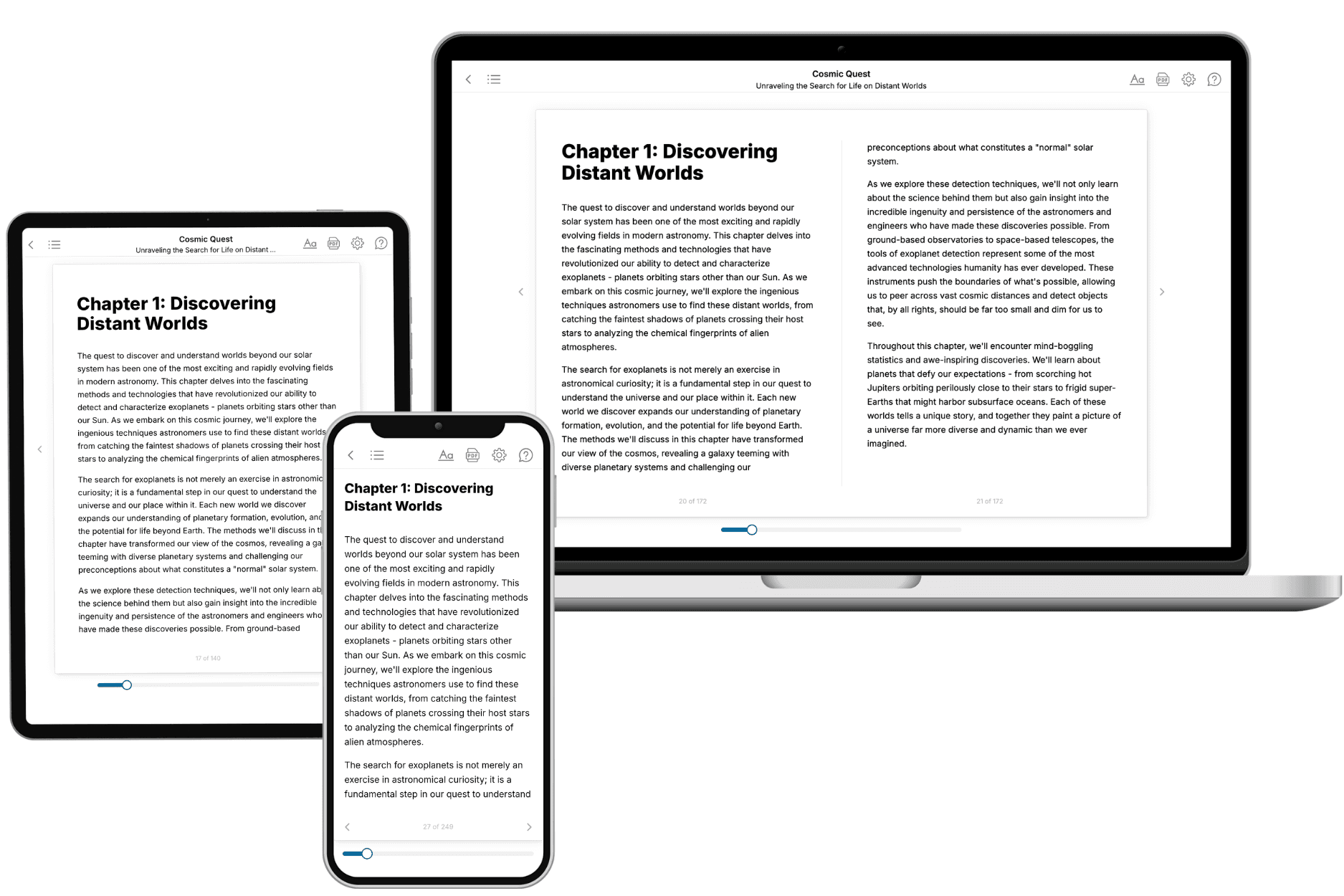
TailoredRead creates complete, full-length nonfiction ebooks, written specifically for you. Tell us what you want to learn and why, and TailoredRead writes you a complete ebook on it, with charts, tables, and diagrams throughout. Read it online, on Kindle, or on any e-reader, or download it as a PDF or EPUB. Every book is written fresh the day you order it.
- How is the book tailored to me?
Before anything is written, you answer a few short questions about your goals, your background, and the topics you care about. Your book is then planned around your answers: written at your level, focused on your goals, and covering the topics you chose, instead of the one-size-fits-all book a store sells everyone.
- Will it read like generic AI content?
No. Your book isn't a chat transcript: it's planned chapter by chapter before a single word is written, told in a clear book voice, and explains ideas visually with charts, tables, and diagrams. After writing, every book goes through an editorial pass that polishes chapters so the book reads consistent from start to finish. Judge for yourself: browse thousands of sample books on our Explore Books page.
- How accurate is the content?
Our AI first checks whether your subject needs live research. Niche and fast-moving subjects are researched before writing, and the book plan and chapters are grounded in what it finds. After writing, every book goes through a quality pass that checks its facts and consistency, and researched books list their sources in a Notes section at the back.
- How long is the book?
You choose the length: Comprehensive (250-300 pages), Detailed (150-200 pages), Essential (70-100 pages), or Short (30-50 pages).
- Does the book include visuals?
Yes. Every book includes visual elements such as timelines, checklists, step-by-step guides, decision trees, comparison tables, and matrices, and many include bar charts. A typical book includes dozens of these visual elements.
- Can I read it on Kindle? What formats can I download?
Yes. Every book can be read in our online reader or downloaded as a PDF or EPUB. The EPUB can be opened with Kindle, Apple Books, Kobo, and any e-reader. The Commercial and Author licenses also include an editable Word (DOCX) and Markdown download.
- How much does it cost?
About the price of a regular ebook. The exact price depends on your book's length and complexity, from $2 for the shortest books to $35 for the most comprehensive, and it's shown when you review your book, before you commit to anything. Each book is a one-time purchase, yours to keep, no subscription. Licenses that let you share, teach, or publish your book range from $35.99 to $49.99.
- Can I preview the book before purchasing?
Before you pay, you'll see what your book will cover: the title, a detailed description, the estimated length, and the complete chapter-by-chapter table of contents, so you know what you're getting before you decide. The full text itself is written after you purchase.
- How long does it take to create a book?
About 10 minutes. You can start reading the opening chapters while the rest is still being written.