First Blood
The Battle of Bull Run and the Awakening of the American Civil War
Many assume the Civil War's opening battle was a minor skirmish quickly forgotten.
191 pages9 chaptersNov 27, 2025American Civil War
About this book
In reality, the Battle of Bull Run on July 21, 1861, was a watershed moment that shattered Northern confidence and revealed the true scale of the conflict ahead. This book examines how two armies collided near a small Virginia stream, why both commanders misjudged their opponents, and how a chaotic day of fighting transformed American understanding of war itself. You'll discover the political pressures that rushed unprepared troops into battle, the tactical decisions that determined the outcome, and the profound consequences that rippled through the next four years of conflict. Through detailed analysis of commanders, soldiers, and strategy, this account shows how Bull Run exposed the inadequacy of prewar assumptions and forced both North and South to prepare for a far longer and bloodier struggle than anyone had anticipated.
Table of contents
- IntroductionWhy Bull Run Matters, The War Nobody Expected, What You'll Learn in This BookRead below
- Chapter 1: The Road to ConflictSecession and Uncertainty, Fort Sumter and Mobilization, Early Military Preparations
- Chapter 2: The Commanders and Their ArmiesGeneral Irvin McDowell and the Union Army, General Pierre Beauregard and Confederate Forces, Soldiers and Readiness
- Chapter 3: Geography and StrategyThe Virginia Landscape, Bull Run Creek and Logistics, Strategic Objectives, Railroad Advantages
- Chapter 4: Political Pressure and ExpectationsWashington Demands Action, Northern Confidence, Southern Determination
- Chapter 5: July 21, 1861: The Battle UnfoldsDawn and Opening Movements, Henry Hill and the Turning Point, Confusion and Collapse, The Retreat
- Chapter 6: Soldiers' ExperiencesUnion Soldiers in Battle, Confederate Soldiers in Battle, Casualties and Aftermath
- Chapter 7: Immediate ConsequencesNorthern Shock and Response, Southern Celebration, International Implications, Media and Public Opinion
- Chapter 8: Military Lessons and ReformsUnion Reorganization, Confederate Consolidation, Professionalization of Command
- Chapter 9: Bull Run's Place in the Larger WarThe Long Conflict Ahead, Strategic Stalemate in Virginia, Lessons for Future Battles
- ConclusionThe Significance of First Blood, Understanding the Civil War
- Further Reading
Introduction
On a sweltering July morning in 1861, thousands of Union soldiers marched out of Washington toward a small creek in northern Virginia. Many carried only three days' rations. Their officers expected a brief engagement, perhaps a skirmish that would scatter the rebel forces and end the Southern rebellion before summer's end. Spectators from the capital followed in carriages, bringing picnic baskets and opera glasses to watch what they assumed would be a swift Union victory. By nightfall, those same roads would be clogged with panicked soldiers, abandoned equipment, and terrified civilians fleeing a Confederate counterattack that shattered every assumption about the conflict ahead.
The Battle of Bull Run—called First Manassas by Southerners—stands as one of the most consequential single days in American military history. It was not the war's largest battle, nor its bloodiest. Yet this engagement fundamentally transformed how Americans understood the conflict they had entered. The battle exposed the inadequacy of both armies, revealed the limitations of amateur military leadership, and demonstrated that the Civil War would require far more sacrifice than anyone had imagined. What began as a test of resolve became a brutal education in the realities of modern warfare.
This book examines why Bull Run happened when and where it did, how the battle unfolded, and what it meant for the war that followed. You'll discover the political pressures that rushed unprepared troops into combat, the tactical decisions that determined the day's outcome, and the profound consequences that rippled through military and civilian life for the next four years. Understanding Bull Run means understanding how America stumbled into a conflict that would consume more than 600,000 lives and reshape the nation's future. The story begins not with the battle itself, but with the assumptions and miscalculations that made such a disaster inevitable.
Why Bull Run Matters
Bull Run matters because it shattered illusions on both sides of the conflict. Before July 21, 1861, many Northerners believed the rebellion would collapse after a single decisive engagement. Southern forces, they assumed, consisted of poorly organized militias that would scatter when confronted by the Union's superior numbers and resources. This confidence permeated Northern newspapers, political speeches, and military planning. The battle's outcome—a chaotic Union retreat that left Confederate forces in control of the field—demolished these assumptions overnight. The defeat forced Northern leaders to confront an uncomfortable truth: the Confederacy possessed both the will and capability to sustain a prolonged military campaign.
The battle's significance extends beyond its immediate military outcome. Bull Run established patterns that would define the war's character for years to come. It demonstrated the critical importance of railroad logistics, as Confederate forces used rail lines to concentrate troops at decisive moments. It revealed the challenges of coordinating large armies composed primarily of inexperienced volunteers. It showed how quickly battlefield situations could deteriorate into chaos when communication broke down and commanders lost control of their units. These lessons would be relearned, often at terrible cost, in subsequent battles throughout the war.
Bull Run also transformed public understanding of warfare itself. The presence of civilian spectators at the battle—congressmen, journalists, and Washington society figures who came to watch the fighting—created a unique moment in American military history. When these observers fled alongside retreating soldiers, their accounts brought the war's reality directly into Northern homes. Newspapers published vivid descriptions of confusion, casualties, and defeat. This media coverage established new patterns for how Americans would experience and interpret military events. The battle demonstrated that modern warfare could not be contained as a distant spectacle; it would intrude directly into civilian consciousness.
The battle's impact on military organization cannot be overstated. Before Bull Run, both armies operated with minimal professional structure. Officers received commissions based on political connections rather than military expertise. Training consisted of basic drill practice, often conducted by men who themselves had learned these skills only weeks earlier. Logistics, intelligence gathering, and coordination between units remained primitive. The battle's chaos exposed these deficiencies so dramatically that both governments initiated immediate reforms. The Union appointed George McClellan to reorganize the Army of the Potomac, beginning a professionalization process that would eventually create effective fighting forces.
Bull Run matters strategically because it established northern Virginia as the war's primary theater. The battle confirmed that any Union advance toward Richmond would face determined Confederate resistance. This geographic reality shaped military planning for the next four years. The region's terrain—its rivers, roads, and rail lines—became intimately familiar to both armies through repeated campaigns. Understanding Bull Run means understanding why this particular landscape became so contested and how its features influenced tactical possibilities. The battle initiated a strategic stalemate in Virginia that would persist despite massive expenditures of blood and resources.
The battle's psychological impact proved equally significant. For the Confederacy, victory at Bull Run provided crucial validation. It demonstrated that Southern forces could defeat larger Union armies in open battle. This success boosted morale, encouraged foreign observers to take Confederate independence seriously, and reinforced Southern determination to resist Northern coercion. For the Union, defeat created a sobering recognition that victory would require sustained effort, massive mobilization, and fundamental military reforms. The battle transformed the conflict from a limited police action into a total war that would demand unprecedented national commitment.
Finally, Bull Run matters because it reveals how wars begin—not with clear strategies and prepared forces, but with miscalculation, political pressure, and overconfidence. The battle demonstrates what happens when political leaders demand military action before armies are ready, when commanders underestimate their opponents, and when tactical plans collapse under the friction of actual combat. These lessons extend beyond the Civil War to illuminate broader patterns in military history. Bull Run stands as a cautionary tale about the dangers of rushing into conflict without adequate preparation or realistic assessment of the challenges ahead.
The War Nobody Expected
When Confederate forces fired on Fort Sumter in April 1861, few Americans anticipated the scale of conflict that would follow. President Lincoln's initial call for 75,000 volunteers to serve for ninety days reflected widespread assumptions about the rebellion's fragility. Northern newspapers predicted that a show of force would bring Southern states back into the Union within months. Southern leaders, meanwhile, believed that Northern resolve would crumble when faced with determined resistance. Both sides fundamentally misunderstood their opponent's commitment and capacity. This mutual miscalculation created conditions for a war that would dwarf all previous American military experiences.
The expectation of a short war rested on several flawed assumptions. Many Northerners believed that Southern secession represented the work of a small planter elite rather than broad popular sentiment. They assumed that ordinary Southerners, once confronted with Union military power, would reject their leaders and return to federal allegiance. This view ignored the depth of Southern commitment to independence and the cultural factors that sustained Confederate nationalism. Similarly, Southerners underestimated Northern determination to preserve the Union. They believed that a few battlefield defeats would convince Northern voters to accept Southern independence rather than continue a costly war. Both sides projected their own assumptions onto their opponents rather than accurately assessing enemy resolve.
Military unpreparedness compounded these political miscalculations. The United States Army in 1861 numbered fewer than 16,000 men, most stationed at frontier posts far from the conflict's emerging centers. The nation possessed no general staff, no systematic military education beyond West Point, and no experience managing armies of the size that would soon take the field. Both Union and Confederate forces would be built almost entirely from volunteer regiments raised by state governors and led by officers with minimal military training. This meant that the war's first major battles would be fought by amateur armies commanded by inexperienced leaders—a recipe for chaos and miscalculation.
The absence of recent large-scale warfare left Americans unprepared for modern combat's realities. The Mexican-American War of 1846-1848 had involved relatively small forces and brief campaigns. Most Americans had no direct experience with sustained military operations, mass casualties, or the logistical challenges of maintaining large armies in the field. Military technology had advanced significantly since the Mexican War, particularly in firearms and artillery, but tactical doctrine had not kept pace. Officers trained in Napoleonic-era tactics would send men forward in tight formations against rifled muskets with far greater range and accuracy than smoothbore weapons of earlier eras. The resulting casualties would shock both sides.
Economic assumptions also proved wildly optimistic. Northern leaders believed their industrial superiority would quickly overwhelm the agricultural South. They underestimated the Confederacy's ability to mobilize resources, improvise supply systems, and sustain military operations despite material disadvantages. Southern leaders, conversely, believed that cotton exports would provide sufficient revenue and that European dependence on Southern cotton would force British and French intervention on their behalf. Neither calculation proved accurate. The war would become a test of endurance rather than a quick demonstration of superiority, requiring both sides to develop unprecedented systems for financing, supplying, and sustaining military operations.
The political context further distorted expectations. Lincoln faced enormous pressure to act decisively before the ninety-day enlistments of his first volunteers expired. Congressional Republicans demanded military action to demonstrate Union resolve and punish rebellion. This political urgency pushed military operations forward before armies were adequately trained or organized. Confederate leaders faced similar pressures to demonstrate their new nation's viability through military success. These political imperatives overrode military prudence, creating conditions where both sides would commit forces to battle before they were ready. Bull Run became the inevitable result of these converging pressures.
Cultural factors also shaped expectations about the war's character and duration. Americans in 1861 retained romantic notions about warfare derived from Revolutionary War mythology and popular literature. Many imagined battle as an arena for demonstrating courage and honor rather than as organized violence requiring professional skill and systematic preparation. Volunteer soldiers enlisted expecting adventure and glory, not the grinding reality of camp disease, exhausting marches, and chaotic combat. Officers viewed war as an opportunity to prove their leadership qualities rather than as a technical challenge requiring specialized knowledge. These cultural attitudes would collide brutally with battlefield realities, beginning at Bull Run.
The war nobody expected became the war that transformed America. What began as a limited conflict to restore federal authority evolved into a total war that revolutionized military organization, expanded government power, and ultimately destroyed slavery. Bull Run marked the first step in this transformation. The battle demonstrated that neither side could achieve quick victory, that the conflict would require massive mobilization of resources and personnel, and that success would demand professional military organization rather than amateur enthusiasm. Understanding why Americans expected a short war helps explain why Bull Run's outcome proved so shocking and why its consequences proved so profound.
What You'll Learn in This Book
This book provides a comprehensive examination of the Battle of Bull Run by exploring its causes, conduct, and consequences. You'll begin by understanding the political and military context that made the battle inevitable. The opening chapters examine how secession created military confrontation, how both sides mobilized their forces, and why political pressure forced armies into battle before they were ready. You'll learn about the commanders who led these forces—their backgrounds, their strategic thinking, and their critical limitations. This context is essential for understanding why the battle unfolded as it did and why its outcome surprised so many observers.
The book then examines the geographic and strategic factors that shaped the battle. You'll discover why northern Virginia became the war's primary theater, how the region's terrain influenced tactical possibilities, and why Bull Run Creek became the site of this crucial engagement. The analysis includes detailed examination of:
- The Virginia landscape and its military significance
- Railroad networks and their role in Confederate strategy
- Logistical challenges facing both armies
- Strategic objectives that drove military planning
- The relationship between geography and tactical decision-making
A central section of the book reconstructs the battle itself in careful detail. You'll follow the action from the Union army's predawn march through the day's confused fighting to the final Confederate counterattack and Union retreat. This narrative draws on firsthand accounts from soldiers, officers, and civilian observers to capture the battle's chaos and confusion. Rather than presenting a sanitized overview, the book shows how battlefield plans collapsed under the friction of actual combat, how communication failures led to critical mistakes, and how individual decisions at crucial moments shaped the day's outcome. You'll understand not just what happened, but why it happened and what participants experienced.
The book pays particular attention to the soldiers' perspective. You'll learn what combat felt like for men who had never before experienced battle, how units maintained or lost cohesion under fire, and how casualties affected both armies. This includes examination of:
- Training and preparation levels of volunteer soldiers
- Weapons and tactics employed by both sides
- The physical and psychological experience of combat
- How officers attempted to control their units during battle
- The breakdown of military discipline during the Union retreat
- Medical care and treatment of wounded soldiers
Following the battle narrative, the book analyzes immediate consequences and longer-term impacts. You'll discover how Northern and Southern populations reacted to the battle's outcome, how political leaders responded to unexpected defeat or victory, and how military organizations began adapting to lessons learned. The analysis examines media coverage and its role in shaping public opinion, international reactions and their implications for Confederate diplomacy, and the immediate military reforms initiated by both governments. This section demonstrates how a single day's fighting generated consequences that rippled through the war's remaining years.
The book also explores Bull Run's place in the larger war. You'll learn how the battle influenced subsequent military operations in Virginia, how its lessons shaped tactical and strategic thinking, and how commanders applied or ignored these lessons in later engagements. This includes examination of:
- The professionalization of Union and Confederate armies
- Changes in command structure and military organization
- Evolution of tactical doctrine based on combat experience
- The strategic stalemate that developed in northern Virginia
- How Bull Run's lessons influenced battles like Antietam and Gettysburg
Throughout the book, you'll encounter analysis that challenges common misconceptions about the battle. Many popular accounts portray Bull Run as a comic opera of military incompetence, emphasizing the Union retreat's chaos while ignoring the battle's genuine military significance. This book takes the battle seriously as a military engagement that revealed important truths about Civil War combat. You'll learn why the Confederate victory was neither accidental nor inevitable, how both sides made reasonable decisions based on available information, and why the battle's outcome reflected genuine differences in leadership and execution rather than simple luck or incompetence.
The book concludes by examining Bull Run's historical significance and its lessons for understanding the Civil War. You'll discover why this battle mattered more than its casualty figures might suggest, how it shaped the war's subsequent course, and what it reveals about the conflict's fundamental character. The final chapters synthesize the book's themes to show how Bull Run exemplifies broader patterns in the war's development—the tension between political demands and military readiness, the challenges of creating effective armies from civilian volunteers, and the brutal process through which both sides learned to wage modern warfare. By the book's end, you'll understand not just what happened at Bull Run, but why it mattered and what it meant for the war that followed.
This is the end of the free sample. The full book has 9 chapters.
Want this book written for you?
Tell us your goals and background, and get your own version of this book, tailored by AI to you.


Benefits of AI-tailored books
- Read one book, not ten:
- all the American Civil War knowledge you need, gathered into a single book.
- Save days of learning:
- tell us your goals, choose your topics, and the whole book is built around them.
- Learn effortlessly:
- American Civil War book written for your specific background and expertise.
- Understand at a glance:
- includes charts, tables, timelines, checklists, decision trees, and more.
- Stay current:
- written the day you order it, not years ago.
- Trust what you read:
- every book is checked for accuracy, with real research when your subject needs it.
Create your unique book in 3 steps
- 1. Select your focus
Select the focus of your American Civil War book and share your background
- 2. Personalize your book
Specify your goals and choose sub-topics to include
- 3. Get your tailored book
Your book is ready in 10 minutes. Read it online, download as EPUB or PDF, or send to Kindle.


Frequently asked questions
- What is TailoredRead?
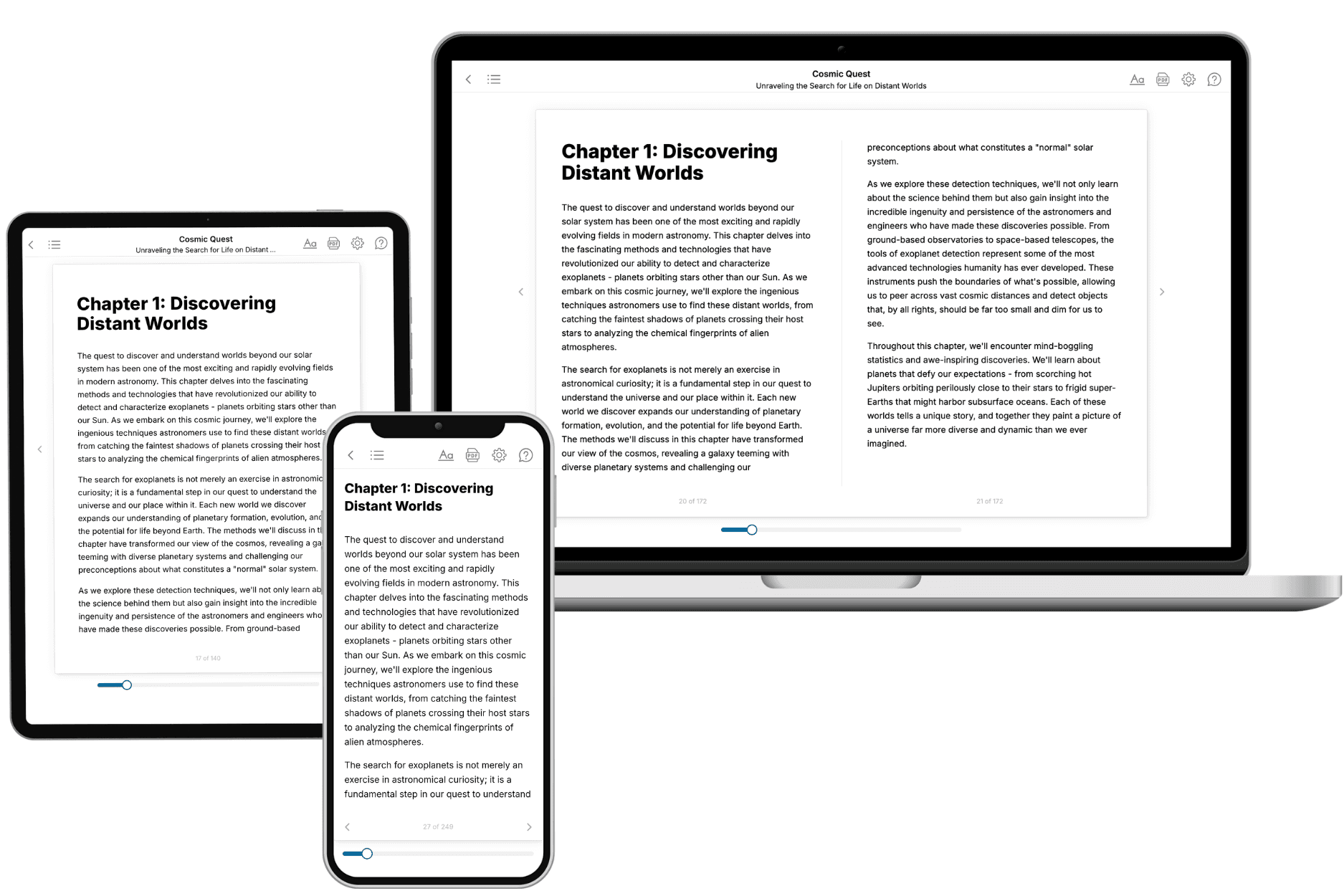
TailoredRead creates complete, full-length nonfiction ebooks, written specifically for you. Tell us what you want to learn and why, and TailoredRead writes you a complete ebook on it, with charts, tables, and diagrams throughout. Read it online, on Kindle, or on any e-reader, or download it as a PDF or EPUB. Every book is written fresh the day you order it.
- How is the book tailored to me?
Before anything is written, you answer a few short questions about your goals, your background, and the topics you care about. Your book is then planned around your answers: written at your level, focused on your goals, and covering the topics you chose, instead of the one-size-fits-all book a store sells everyone.
- Will it read like generic AI content?
No. Your book isn't a chat transcript: it's planned chapter by chapter before a single word is written, told in a clear book voice, and explains ideas visually with charts, tables, and diagrams. After writing, every book goes through an editorial pass that polishes chapters so the book reads consistent from start to finish. Judge for yourself: browse thousands of sample books on our Explore Books page.
- How accurate is the content?
Our AI first checks whether your subject needs live research. Niche and fast-moving subjects are researched before writing, and the book plan and chapters are grounded in what it finds. After writing, every book goes through a quality pass that checks its facts and consistency, and researched books list their sources in a Notes section at the back.
- How long is the book?
You choose the length: Comprehensive (250-300 pages), Detailed (150-200 pages), Essential (70-100 pages), or Short (30-50 pages).
- Does the book include visuals?
Yes. Every book includes charts, tables, and diagrams: timelines, checklists, step-by-step guides, decision trees, comparison tables, matrices, and bar charts. A typical book includes dozens of these visual elements.
- Can I read it on Kindle? What formats can I download?
Yes. Every book can be read in our online reader or downloaded as a PDF or EPUB. The EPUB can be opened with Kindle, Apple Books, Kobo, and any e-reader. The Commercial and Author licenses also include an editable Word (DOCX) and Markdown download.
- How much does it cost?
About the price of a regular ebook. The exact price depends on your book's length and complexity, from $2 for the shortest books to $35 for the most comprehensive, and it's shown when you review your book, before you commit to anything. Each book is a one-time purchase, yours to keep, no subscription. Licenses that let you share, teach, or publish your book range from $35.99 to $49.99.
- Can I preview the book before purchasing?
Before you pay, you'll see what your book will cover: the title, a detailed description, the estimated length, and the complete chapter-by-chapter table of contents, so you know what you're getting before you decide. The full text itself is written after you purchase.
- How long does it take to create a book?
About 10 minutes. You can start reading the opening chapters while the rest is still being written.