Behavior-Driven Development in Practice
Master Dependency Analysis and Build Software That Works the Way Users Expect
Many developers struggle with code that works in isolation but fails in production—often because hidden dependencies and unclear requirements create unexpected interactions.
207 pages11 chaptersMar 27, 2026Software Development
About this book
Behavior-Driven Development (BDD) offers a proven approach to prevent these failures by defining how software should behave before writing a single line of code. This book teaches you how to apply BDD principles while managing the complex web of dependencies that make modern software challenging. You'll learn to write behavior specifications that clarify requirements, design systems with loose coupling and high cohesion, and use dependency analysis to anticipate problems before they occur. Whether you're working with legacy code or building new systems, these practical techniques will help you deliver software that reliably meets user expectations and remains maintainable as requirements evolve.
Table of contents
- IntroductionWhy BDD Matters in Modern Software Development, The Dependency Challenge, What You'll Learn in This Book, How to Use This BookRead below
- Chapter 1: Understanding Behavior-Driven DevelopmentWhat is Behavior-Driven Development?, BDD vs. Traditional Testing Approaches, Core Benefits of BDD, Adopting the BDD Mindset
- Chapter 2: Dependency Analysis FundamentalsTypes of Dependencies in Software Systems, Mapping and Visualizing Dependencies, Identifying Dependency Risks and Bottlenecks, Measuring Dependency Health
- Chapter 3: Writing Effective Behavior SpecificationsIntroduction to Gherkin and Specification Syntax, Designing Clear and Testable Scenarios, Capturing Edge Cases and Error Conditions, Real-World Specification Examples
- Chapter 4: Dependency Injection and Inversion of ControlCore Principles of Dependency Injection, Common DI Patterns and Implementations, Using DI Containers Effectively, How DI Enables Better Testing
- Chapter 5: BDD Frameworks and ToolsPopular BDD Frameworks and Their Strengths, Setting Up and Using Cucumber, Integrating BDD Tools with Your Development Workflow, Choosing the Right Tools for Your Team
- Chapter 6: Implementing Step Definitions and Test AutomationWriting Effective Step Definitions, Automating Behavior Tests, Managing Test Data and Fixtures, Building Reusable and Maintainable Steps
- Chapter 7: Reducing Coupling and Improving CohesionUnderstanding Coupling in Dependency Networks, Designing for High Cohesion, Refactoring to Reduce Coupling, Architectural Patterns That Support BDD
- Chapter 8: Applying BDD to Legacy SystemsChallenges of BDD in Legacy Codebases, Incremental BDD Adoption Strategies, Using Seams to Manage Dependencies in Legacy Code, Case Studies: BDD in Legacy Systems
- Chapter 9: BDD and Team CollaborationEngaging Stakeholders in Behavior Definition, Building Shared Understanding Across Teams, Communication Patterns for BDD Success, Establishing Team Practices and Standards
- Chapter 10: Advanced BDD Scenarios and Complex DependenciesTesting Asynchronous and Event-Driven Dependencies, Managing External Service Dependencies, Handling Circular and Complex Dependency Graphs, Performance and Load Testing in BDD
- Chapter 11: BDD in Continuous Integration and DeploymentIntegrating BDD Tests into CI/CD Pipelines, Reporting and Monitoring BDD Test Results, Using BDD to Ensure Safe Deployments, Creating Effective Feedback Loops
- ConclusionKey Takeaways and Next Steps, Building a Culture of Continuous Improvement, Further Learning Resources
Introduction
Picture this: your team has spent three weeks building a new feature. The unit tests pass. The code review is clean. You deploy to production on a Friday afternoon, feeling confident. By Monday morning, your inbox is full of bug reports. Users are hitting errors that nobody anticipated, and the root cause turns out to be a dependency between two modules that nobody thought to test together. Sound familiar? This scenario plays out in software teams around the world, every single week. It is not a sign of incompetence. It is a sign that the way most teams think about testing and requirements leaves critical gaps.
Behavior-Driven Development, commonly known as BDD, was created specifically to close those gaps. Rather than asking does this function return the right value?
, BDD asks a more important question: does this system behave the way users actually expect?
That shift in perspective changes everything. It changes how you write requirements, how you design your code, how you communicate with stakeholders, and how you catch bugs before they reach production. BDD is not just a testing technique. It is a way of thinking about software that keeps the focus on what truly matters: delivering working software that solves real problems.
This book brings together two ideas that are deeply connected but rarely taught together: BDD methodology and dependency analysis. Dependencies are the invisible threads that connect every part of your system. When they are well-managed, your software is flexible, testable, and resilient. When they are tangled or hidden, they become the source of the most frustrating and expensive bugs you will ever encounter. Understanding how to analyze, map, and manage dependencies is not just a nice-to-have skill. It is essential to making BDD work in real-world systems, especially as those systems grow in complexity.
Whether you are working on a greenfield project or wrestling with a legacy codebase that has accumulated years of technical debt, the principles in this book apply. The techniques are practical, grounded in real-world scenarios, and designed to be adopted incrementally. You do not need to throw away your existing workflow to benefit from BDD. You can start small, apply the ideas to one feature or one module, and build from there. The goal is not perfection. The goal is steady, measurable improvement in the reliability and maintainability of your software.
Why BDD Matters in Modern Software Development
Modern software systems are more complex than ever before. A typical web application might involve a frontend framework, a REST API, a message queue, a relational database, a caching layer, and half a dozen third-party services. Each of these components has its own behavior, its own failure modes, and its own set of expectations about how other components will interact with it. Testing each piece in isolation is necessary, but it is not sufficient. What users experience is the behavior of the whole system, not the behavior of individual units.
Traditional testing approaches tend to focus heavily on implementation details. A unit test might verify that a specific method returns a specific value given a specific input. That is useful, but it does not tell you whether the system as a whole does what the user needs it to do. BDD flips this around by starting with user-facing behavior and working backward to implementation. You define what the system should do in plain, readable language before writing any code. This forces clarity about requirements at the earliest possible stage, when changes are cheap.
Research consistently shows that the cost of fixing a bug increases dramatically the later it is discovered in the development cycle. A bug caught during requirements definition might cost an hour to fix. The same bug caught in production can cost days of engineering time, damage to user trust, and potential revenue loss.[1] BDD addresses this by making requirements explicit and testable from day one. When a behavior specification is written before the code, the entire team has a shared, unambiguous definition of what success looks like.
BDD also solves a communication problem that plagues most software teams. Business stakeholders speak in terms of user goals and business outcomes. Developers speak in terms of classes, functions, and data structures. These two languages rarely translate cleanly, and the gap between them is where misunderstood requirements live. BDD provides a shared language, most commonly implemented through a syntax called Gherkin, that both technical and non-technical team members can read and contribute to. This shared language reduces the risk of building the wrong thing, which is arguably the most expensive mistake a software team can make.
Consider a concrete example. A product manager says: Users should be able to reset their password.
A developer hears this and builds a password reset flow. But what happens if the user's email address is not in the system? What if the reset link expires? What if the user tries to reuse their old password? These edge cases are obvious in hindsight, but they are easy to miss when requirements are communicated informally. A BDD scenario forces these questions to be answered upfront, in writing, before a single line of code is written.
Beyond individual features, BDD creates a living documentation system for your entire codebase. Unlike traditional documentation that goes stale the moment the code changes, BDD specifications are executable. They run as part of your test suite, and if the behavior changes without the specification being updated, the tests fail. This means your documentation is always accurate, because inaccurate documentation breaks the build. For teams maintaining large or long-lived systems, this property alone is worth the investment in BDD.
The adoption of BDD has grown significantly over the past decade, particularly in teams practicing agile and DevOps methodologies. Tools like Cucumber, SpecFlow, and Behave have matured considerably, making it easier than ever to integrate BDD into existing workflows. More importantly, the mindset behind BDD has influenced how leading engineering teams think about quality, collaboration, and the relationship between requirements and code. Learning BDD is not just about adding a tool to your toolkit. It is about adopting a more disciplined and user-centered approach to building software.
Key insight: BDD is most valuable not as a testing technique, but as a communication and design technique. The tests are the artifact; the conversations that produce them are the real benefit.
The Dependency Challenge
Every piece of software depends on something else. A function depends on the data it receives. A class depends on the services it calls. A microservice depends on the APIs it consumes. These dependencies are not inherently bad. In fact, they are what allow you to build complex systems from simpler parts. The problem arises when dependencies are hidden, poorly understood, or tightly coupled in ways that make the system brittle and hard to test.
Hidden dependencies are particularly dangerous. They are the ones that do not show up in your class diagrams or your architecture documentation. They might be global state that multiple modules read and write without coordination. They might be implicit assumptions about the order in which operations happen. They might be environmental dependencies, like a specific file path or a specific timezone setting, that work fine on your development machine but fail in production. These hidden dependencies are the primary reason that software that passes all its tests can still fail in unexpected ways.
Tight coupling is a related problem. When two components are tightly coupled, a change to one almost always requires a change to the other. This makes your codebase rigid and expensive to modify. It also makes testing harder, because you cannot test one component without also involving the other. In a tightly coupled system, writing a unit test for a single class might require setting up a database, a network connection, and three other services just to get the test to run. This is a sign that the dependencies are not being managed well.
The relationship between dependency management and BDD is direct and important. BDD tests are most effective when they can be run quickly, reliably, and in isolation from external systems. Achieving this requires that your code be designed with testability in mind, which in turn requires that dependencies be explicit, injectable, and replaceable. A codebase with poor dependency management will produce BDD tests that are slow, flaky, and hard to maintain. A codebase with good dependency management will produce tests that are fast, reliable, and genuinely useful as a safety net.
Dependency analysis is the practice of systematically identifying, mapping, and evaluating the dependencies in your system. It involves asking questions like:
- What does this component depend on, and what depends on it?
- Which dependencies are stable, and which are likely to change?
- Are there circular dependencies that could cause initialization problems?
- Which dependencies cross architectural boundaries and need to be carefully managed?
- Are there dependencies on external services that need to be mocked or stubbed in tests?
Answering these questions before writing code, or before writing tests, gives you a much clearer picture of the risks and complexity in your system. It helps you design better interfaces, choose better abstractions, and write tests that actually test what they claim to test. Dependency analysis is not a one-time activity. It is an ongoing practice that should be part of every design review, every refactoring session, and every new feature discussion.
A practical example illustrates the stakes. Imagine a team building an e-commerce checkout flow. The checkout service depends on an inventory service, a payment gateway, a shipping calculator, a tax service, and a user authentication service. If these dependencies are not carefully managed, a test for the checkout flow might accidentally trigger real payment charges, or fail because the inventory service is down, or produce different results depending on the user's location. Proper dependency analysis and management means each of these external dependencies can be replaced with a controlled test double, making the checkout behavior testable in complete isolation.
This book treats dependency analysis as a first-class concern, not an afterthought. Every chapter that covers BDD techniques also addresses the dependency implications of those techniques. By the time you finish this book, you will have a systematic approach to identifying and managing dependencies that makes your BDD practice significantly more effective and your codebase significantly more maintainable.
What You'll Learn in This Book
This book is organized to take you from foundational concepts to advanced, real-world application. It does not assume you have any prior experience with BDD, but it does assume you are a working software developer with a solid understanding of programming fundamentals and some experience building and maintaining software systems. The content is designed to be immediately applicable, with concrete examples, code samples, and practical exercises throughout.
The early chapters establish the conceptual foundation. You will learn what BDD actually is, how it differs from traditional testing approaches like Test-Driven Development (TDD), and what the core benefits are in practice. You will also get a thorough grounding in dependency analysis: what types of dependencies exist, how to map them, how to measure their health, and how to identify the ones that pose the greatest risk to your system's reliability and testability.
The middle chapters move into hands-on technique. You will learn to write behavior specifications using Gherkin syntax, design scenarios that are clear and testable, and capture edge cases that are easy to miss. You will explore dependency injection and inversion of control in depth, understanding not just how these patterns work but why they are essential enablers of effective BDD. You will also get a practical tour of the most widely used BDD frameworks and tools, with guidance on how to choose the right ones for your team and how to integrate them into your existing workflow.
The later chapters tackle the harder problems. These include:
- Reducing coupling and improving cohesion in existing codebases, with specific refactoring techniques and architectural patterns that support BDD
- Applying BDD to legacy systems, where dependencies are often tangled and tests are sparse or nonexistent
- Team collaboration, including how to engage non-technical stakeholders in behavior definition and how to build shared understanding across cross-functional teams
- Advanced scenarios involving asynchronous dependencies, external services, circular dependency graphs, and performance testing
- Continuous integration and deployment, including how to integrate BDD tests into CI/CD pipelines and use them to ensure safe deployments
Throughout the book, you will encounter real-world examples drawn from common software development scenarios. These are not toy examples designed to make the concepts look easy. They are realistic scenarios that reflect the kind of complexity you actually encounter in production systems. Each example is designed to illustrate a specific principle or technique, and each comes with a clear explanation of what is happening and why it matters.
By the end of this book, you will be able to write behavior specifications that clearly capture user requirements and edge cases. You will understand how to design systems with dependency management in mind, making them easier to test and easier to change. You will know how to use BDD frameworks effectively, how to integrate BDD into your team's workflow, and how to apply these techniques incrementally to existing codebases. Most importantly, you will have a mental model for thinking about software behavior and dependencies that will make you a more effective developer in any context.
Here is a summary of the key skills you will develop:
- Writing Gherkin scenarios that are readable by both technical and non-technical stakeholders
- Mapping and analyzing dependencies to identify risks before they become bugs
- Applying dependency injection patterns to make code testable and loosely coupled
- Implementing step definitions that are reusable, maintainable, and well-organized
- Refactoring legacy code to introduce seams and enable BDD adoption
- Integrating BDD tests into CI/CD pipelines for continuous quality assurance
- Facilitating BDD conversations with stakeholders to produce better requirements
How to Use This Book
This book is designed to be read sequentially, especially if BDD is new to you. Each chapter builds on the concepts introduced in previous chapters, and the dependency analysis thread that runs through the book is cumulative. If you skip ahead, you may find references to concepts that have not been introduced yet. That said, if you already have a solid understanding of BDD fundamentals, you can use the table of contents to navigate directly to the topics most relevant to your current challenges.
The code examples in this book are written primarily in a language-agnostic style, with specific examples in Java, Python, and JavaScript where the syntax matters. The principles apply regardless of the language or framework you are using. If you see an example in a language you do not use, focus on the structure and the intent rather than the syntax. The underlying patterns are the same whether you are working in a statically typed language like Java or a dynamically typed one like Python.
Each chapter ends with a set of practical exercises. These are not optional extras. They are an integral part of the learning process. Reading about BDD and dependency analysis will give you conceptual understanding, but the real learning happens when you apply the techniques to actual code. The exercises are designed to be completed in your own development environment, using your own projects where possible. Applying the concepts to code you already know will make the learning stick much faster than working through artificial examples.
If you are working through this book as part of a team, consider using the chapter content as the basis for discussion sessions. BDD is fundamentally a collaborative practice, and many of the concepts in this book are best understood through conversation. A team that reads and discusses each chapter together will get significantly more value from the material than individuals reading in isolation. Pay particular attention to the chapters on team collaboration and stakeholder engagement, which are designed to be shared with non-technical colleagues.
For those working with legacy codebases, Chapter 8 on applying BDD to legacy systems deserves special attention. It is tempting to skip straight to the advanced topics, but the legacy chapter addresses some of the most common obstacles that prevent teams from adopting BDD in practice. Even if your codebase is relatively modern, the techniques for introducing seams and managing dependencies in existing code are broadly applicable and worth understanding thoroughly.
A note on tooling: this book covers several specific BDD frameworks and tools, including Cucumber, SpecFlow, and Behave. The goal is not to make you an expert in any one tool, but to give you enough understanding of each to make an informed choice for your context and to get started quickly. The tool landscape changes over time, so the focus is always on the underlying principles rather than the specific APIs. The principles you learn here will remain relevant even as the tools evolve.
Finally, approach this material with a spirit of experimentation. BDD is not a rigid methodology with a single correct implementation. It is a set of principles and practices that need to be adapted to your specific context, team, and codebase. Some of the techniques in this book will fit your situation perfectly. Others will need to be modified. A few might not apply at all. The goal is to give you a rich enough understanding of the principles that you can make those judgments confidently and adapt the practices intelligently to your own needs.
A practical starting point: Before moving to Chapter 1, take five minutes to think of a recent bug in your codebase that made it to production. Ask yourself: was it caused by an unclear requirement, a hidden dependency, or a missing test scenario? Chances are, at least one of those three factors was involved. Keep that bug in mind as you read. By the end of this book, you will have concrete techniques to prevent exactly that kind of failure.
The journey from writing code that works in isolation to delivering software that reliably meets user expectations is not a short one. But it is one of the most valuable investments you can make as a developer. BDD, combined with disciplined dependency analysis, is one of the most effective paths to that goal. The chapters ahead will give you the knowledge, the tools, and the practical techniques to walk that path with confidence.
Notes
Introduction
- 1. B. W. Boehm, Software Engineering Economics, Prentice-Hall. Widely cited research showing defect cost escalation across development phases, 1981
This is the end of the free sample. The full book has 11 chapters.
Want this book written for you?
Tell us your goals and background, and get your own version of this book, tailored by AI to you.


Benefits of AI-tailored books
- Read one book, not ten:
- all the Software Development knowledge you need, gathered into a single book.
- Save days of learning:
- tell us your goals, choose your topics, and the whole book is built around them.
- Learn effortlessly:
- Software Development book written for your specific background and expertise.
- Understand at a glance:
- includes charts, tables, timelines, checklists, decision trees, and more.
- Stay current:
- written the day you order it, not years ago.
- Trust what you read:
- every book is checked for accuracy, with real research when your subject needs it.
Create your unique book in 3 steps
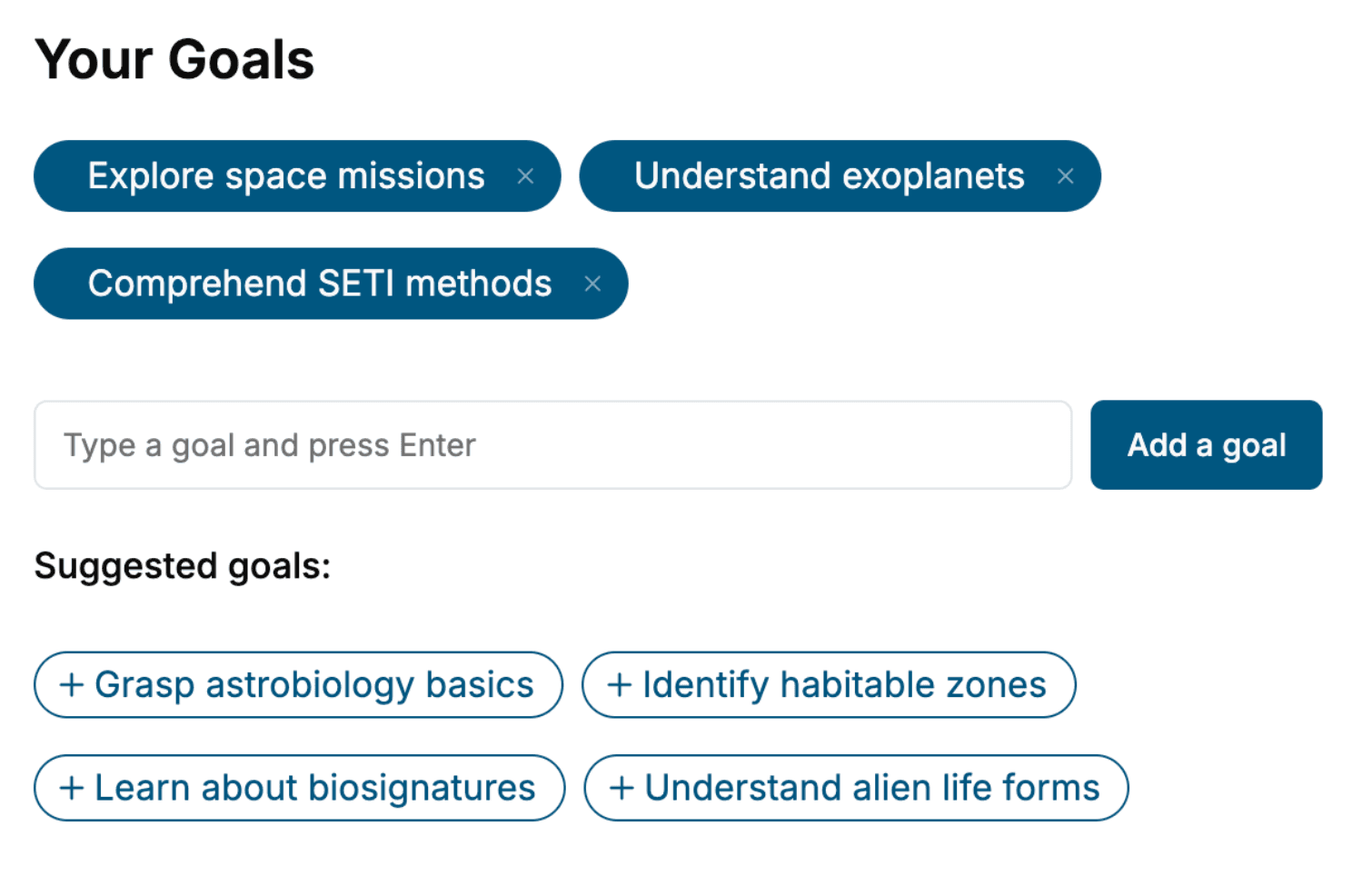
- 1. Select your focus
Select the focus of your Software Development book and share your background
- 2. Personalize your book
Specify your goals and choose sub-topics to include
- 3. Get your tailored book
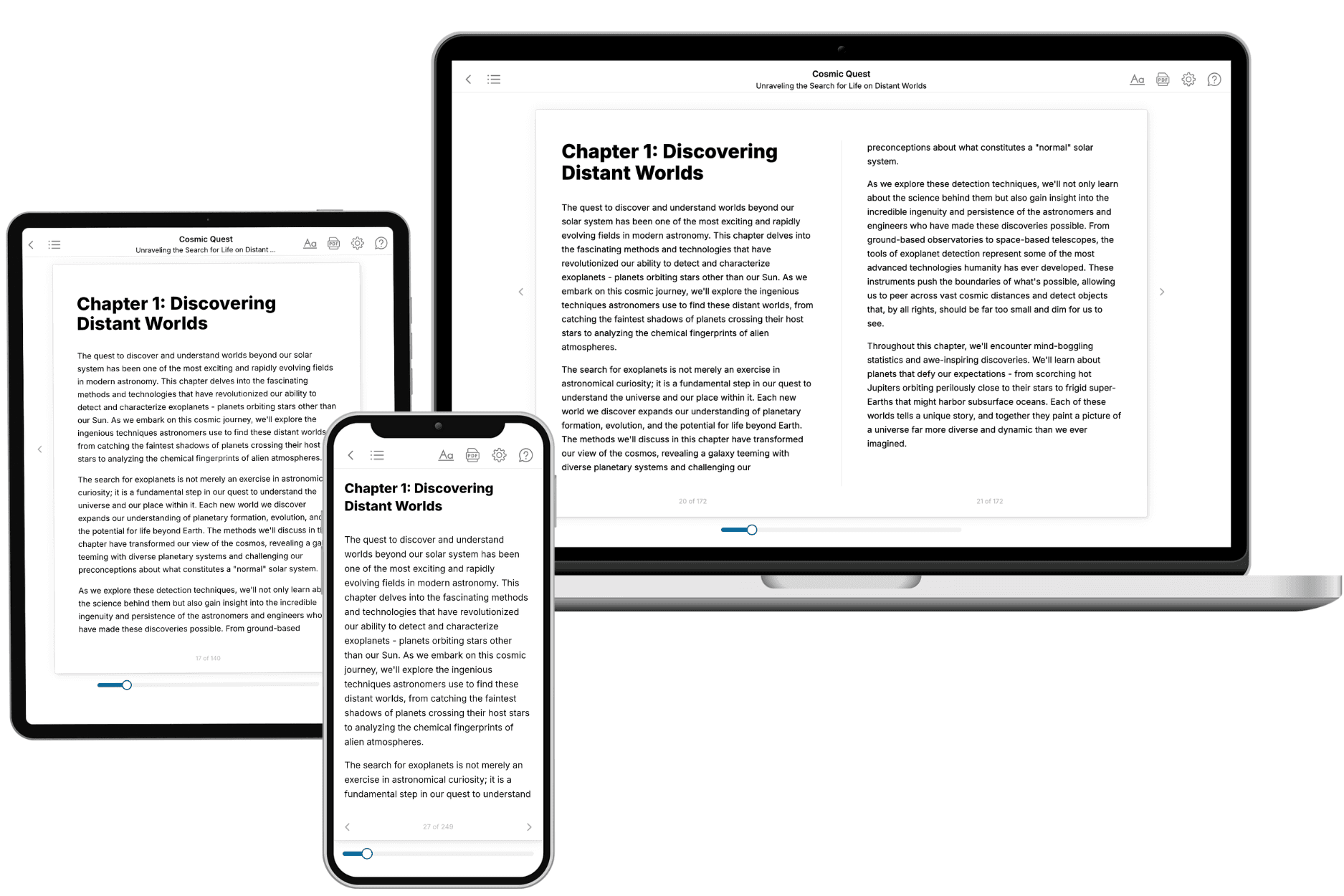
Your book is ready in 10 minutes. Read it online, download as EPUB or PDF, or send to Kindle.

Frequently asked questions
- What is TailoredRead?
TailoredRead creates complete, full-length nonfiction ebooks, written specifically for you. Tell us what you want to learn and why, and TailoredRead writes you a complete ebook on it, with charts, tables, and diagrams throughout. Read it online, on Kindle, or on any e-reader, or download it as a PDF or EPUB. Every book is written fresh the day you order it.
- How is the book tailored to me?
Before anything is written, you answer a few short questions about your goals, your background, and the topics you care about. Your book is then planned around your answers: written at your level, focused on your goals, and covering the topics you chose, instead of the one-size-fits-all book a store sells everyone.
- Will it read like generic AI content?
No. Your book isn't a chat transcript: it's planned chapter by chapter before a single word is written, told in a clear book voice, and explains ideas visually with charts, tables, and diagrams. After writing, every book goes through an editorial pass that polishes chapters so the book reads consistent from start to finish. Judge for yourself: browse thousands of sample books on our Explore Books page.
- How accurate is the content?
Our AI first checks whether your subject needs live research. Niche and fast-moving subjects are researched before writing, and the book plan and chapters are grounded in what it finds. After writing, every book goes through a quality pass that checks its facts and consistency, and researched books list their sources in a Notes section at the back.
- How long is the book?
You choose the length: Comprehensive (250-300 pages), Detailed (150-200 pages), Essential (70-100 pages), or Short (30-50 pages).
- Does the book include visuals?
Yes. Every book includes charts, tables, and diagrams: timelines, checklists, step-by-step guides, decision trees, comparison tables, matrices, and bar charts. A typical book includes dozens of these visual elements.
- Can I read it on Kindle? What formats can I download?
Yes. Every book can be read in our online reader or downloaded as a PDF or EPUB. The EPUB can be opened with Kindle, Apple Books, Kobo, and any e-reader. The Commercial and Author licenses also include an editable Word (DOCX) and Markdown download.
- How much does it cost?
About the price of a regular ebook. The exact price depends on your book's length and complexity, from $2 for the shortest books to $35 for the most comprehensive, and it's shown when you review your book, before you commit to anything. Each book is a one-time purchase, yours to keep, no subscription. Licenses that let you share, teach, or publish your book range from $35.99 to $49.99.
- Can I preview the book before purchasing?
Before you pay, you'll see what your book will cover: the title, a detailed description, the estimated length, and the complete chapter-by-chapter table of contents, so you know what you're getting before you decide. The full text itself is written after you purchase.
- How long does it take to create a book?
About 10 minutes. You can start reading the opening chapters while the rest is still being written.