The Evolutionary Mind
Cutting-Edge Research and Practical Applications for Understanding Human Behavior in 2025
The challenge facing modern scholars is that evolutionary psychology research evolves faster than most practitioners can keep pace with.
238 pages11 chaptersDec 17, 2025Evolutionary PsychologyCreated by İskender
About this book
New discoveries about epigenetics, neuroevolution, and cultural evolution emerge constantly, yet integrating these findings into a coherent understanding of human behavior remains difficult. This book bridges that gap by synthesizing the latest 2024-2025 research developments in evolutionary psychology and translating them into actionable insights. You'll explore cutting-edge research on how genes and environment interact through epigenetic mechanisms, how brain structures evolved to enable both cooperation and competition, and how cultural evolution creates feedback loops with biological evolution. Each chapter connects theoretical frameworks to real-world social dynamics—from mating behavior and kinship to ingroup preferences and moral judgment. Whether you're teaching evolutionary psychology, conducting research, or simply seeking to deepen your understanding of human nature, this book provides the contemporary evidence base and analytical tools you need to engage with the field's most exciting developments.
Table of contents
- IntroductionWhy Evolutionary Psychology Matters in 2025, Paradigm Shifts in the Field, How to Use This BookRead below
- Chapter 1: The Modern Evolutionary Psychology FrameworkBeyond Simple Adaptation: Complexity and Context, Integrating Multiple Disciplines, Methodological Advances in Research
- Chapter 2: Epigenetics and Behavioral PlasticityEpigenetic Mechanisms and Gene Expression, Environmental Triggers and Phenotypic Variation, Transgenerational Effects and Inheritance
- Chapter 3: Neuroevolution and Brain DevelopmentEvolutionary Pressures on Brain Structure, Interconnected Neural Systems and Cognition, Comparative Neurobiology Across Species
- Chapter 4: The Prefrontal Cortex and Human UniquenessThe Evolution of the Prefrontal Cortex, Abstract Reasoning and Symbolic Thought, Cultural Transmission and Evolutionary Feedback Loops
- Chapter 5: Kin Selection and Inclusive FitnessKin Selection Algorithms and Relatedness Computation, Neurobiological Pathways to Kin Recognition, Family Dynamics and Practical Applications
- Chapter 6: Oxytocin and Social BondingBeyond the Bonding Hormone: Oxytocin's Complexity, Receptor Systems and Context-Dependent Effects, Interactions with Other Neurochemical Systems
- Chapter 7: Disgust Sensitivity and Moral JudgmentPathogen Avoidance Origins of Disgust, From Pathogen Avoidance to Moral Judgment, Cultural Variation and Individual Differences
- Chapter 8: Ingroup Preference and Intergroup DynamicsMechanisms of Ingroup Preference, Balancing Cooperation and Competition, Reducing Intergroup Conflict Through Design
- Chapter 9: Mating Behavior and Sexual StrategiesBeyond Binary Sex Differences, Sexual Fluidity and Context-Dependent Preferences, Cultural Evolution and Reproductive Strategies
- Chapter 10: Cognitive Evolution and Problem-SolvingThe Cognitive Modules Debate, Domain-Specific Reasoning and Adaptations, Learning Flexibility and Adaptive Capacity
- Chapter 11: Cultural Evolution and Gene-Culture CoevolutionMechanisms of Cultural Evolution, Gene-Culture Feedback Loops, Modern Cultural Dynamics and Rapid Change
- ConclusionIntegrating Frameworks for Deeper Understanding, Future Directions in Evolutionary Psychology
- Glossary of Key Terms
- Further Reading and Resources
Introduction
Evolutionary psychology stands at a remarkable crossroads in 2025. The field has matured beyond its early controversies and simplistic narratives to embrace a sophisticated, multi-layered understanding of human behavior. Recent discoveries in epigenetics, neuroscience, and cultural evolution have fundamentally reshaped how researchers conceptualize the relationship between our evolutionary past and present-day behavior. These advances challenge long-held assumptions while opening new avenues for understanding the complexity of human nature. For scholars seeking to engage with contemporary evolutionary psychology, the landscape has never been more intellectually rich—or more demanding.
The pace of discovery in evolutionary psychology has accelerated dramatically over the past two years. Researchers now possess tools that were unavailable even a decade ago: advanced neuroimaging techniques that reveal real-time brain activity during social interactions, genomic sequencing that identifies specific epigenetic markers associated with behavioral traits, and computational models that simulate gene-culture coevolution across thousands of generations. These methodological advances have generated findings that complicate earlier theories while providing more nuanced explanations for human behavior. The challenge for academics is integrating these diverse streams of research into a coherent framework that respects both biological constraints and environmental flexibility.
This book addresses that challenge directly. Rather than offering a comprehensive historical overview of evolutionary psychology, it focuses specifically on cutting-edge research from 2024-2025 and the paradigm shifts reshaping the field. Each chapter synthesizes recent empirical findings, connects them to established theoretical frameworks, and explores their implications for understanding contemporary human behavior. The goal is not merely to inform but to equip you with analytical tools and conceptual models that enhance your research, teaching, and scholarly engagement with evolutionary psychology. Whether you're incorporating evolutionary perspectives into your chemistry research on molecular recognition systems or exploring the biological foundations of social behavior, this book provides the evidence base and theoretical sophistication necessary for rigorous interdisciplinary work.
Why Evolutionary Psychology Matters in 2025
The relevance of evolutionary psychology extends far beyond academic debates about human origins. In 2025, evolutionary frameworks inform research across disciplines ranging from public health to artificial intelligence design. Understanding how natural selection shaped cognitive mechanisms helps explain persistent patterns in human behavior that resist purely cultural or economic explanations. For instance, recent research on pathogen-avoidance behaviors has revealed how evolved disgust responses influence contemporary political attitudes, vaccine hesitancy, and immigration policy preferences[1]. These connections matter because they reveal how ancient adaptive mechanisms continue to shape modern social dynamics in ways that aren't immediately obvious.
Evolutionary psychology also provides essential context for interpreting findings from neuroscience and genetics. When researchers identify neural circuits associated with social bonding or genetic variants linked to risk-taking behavior, evolutionary frameworks help explain why these mechanisms exist and under what ancestral conditions they would have been adaptive. This explanatory power distinguishes evolutionary psychology from purely descriptive approaches. Consider the oxytocin system: while neuroscience can map oxytocin receptors and measure hormone levels during social interactions, evolutionary psychology explains why this system evolved to facilitate selective bonding rather than indiscriminate affiliation. Understanding the adaptive logic behind neurobiological systems enables more sophisticated predictions about when and how these systems will be activated in contemporary contexts.
The practical applications of evolutionary psychology have expanded significantly in recent years. Clinicians use evolutionary frameworks to understand anxiety disorders as misfiring threat-detection systems calibrated for ancestral environments. Organizational psychologists apply insights about status hierarchies and coalition formation to improve workplace dynamics. Public health researchers design more effective interventions by accounting for evolved food preferences and risk assessment biases. Educational researchers develop teaching methods aligned with evolved learning mechanisms. These applications demonstrate that evolutionary psychology is not merely theoretical speculation but a practical toolkit for addressing real-world challenges. The key is moving beyond simplistic "just-so stories" to rigorous, testable hypotheses grounded in empirical evidence.
For scholars in other disciplines, evolutionary psychology offers valuable cross-disciplinary connections. Chemists studying molecular recognition can draw parallels to evolved cognitive mechanisms for kin recognition. Physicists modeling complex systems can apply evolutionary game theory to understand cooperation and competition dynamics. Mathematicians working on optimization problems can explore how natural selection solved similar computational challenges. These interdisciplinary connections enrich both evolutionary psychology and adjacent fields. The 2024 Nobel Prize in Chemistry, awarded for computational protein design, exemplifies how evolutionary principles inform cutting-edge research across scientific domains[2]. Understanding evolutionary algorithms and selection pressures provides conceptual tools applicable far beyond traditional psychology.
Perhaps most importantly, evolutionary psychology addresses fundamental questions about human nature that resonate across cultures and historical periods. Why do humans form long-term pair bonds? What drives cooperation among non-relatives? How do moral intuitions develop? Why do people favor ingroup members over outgroup members? These questions have occupied philosophers, theologians, and scientists for millennia. Evolutionary psychology doesn't provide simple answers, but it offers evidence-based frameworks for investigating these questions systematically. The 2024-2025 research developments have made these frameworks more sophisticated, acknowledging individual variation, cultural influences, and developmental plasticity while maintaining evolutionary foundations. This nuanced approach makes evolutionary psychology more intellectually satisfying and empirically robust than earlier iterations.
The field's growing sophistication also addresses legitimate criticisms from previous decades. Early evolutionary psychology sometimes relied on speculative adaptationist reasoning without sufficient empirical support. Contemporary research emphasizes rigorous hypothesis testing, cross-cultural validation, and integration with genetics and neuroscience. Researchers now routinely examine alternative explanations, test competing models, and acknowledge the limitations of evolutionary inferences. This methodological maturity has strengthened evolutionary psychology's credibility within the broader scientific community. For academics considering whether to engage with evolutionary psychology, the current state of the field offers intellectually rigorous frameworks supported by converging evidence from multiple disciplines. The question is no longer whether evolutionary perspectives are scientifically legitimate but how to integrate them effectively with other explanatory frameworks.
Understanding evolutionary psychology in 2025 also means grappling with its implications for contemporary social issues. Evolutionary frameworks inform debates about gender equality, immigration policy, criminal justice reform, and educational practices. These applications can be controversial, particularly when evolutionary explanations are misinterpreted as justifications for existing inequalities or as deterministic constraints on human potential. Responsible engagement with evolutionary psychology requires distinguishing between is and ought—between describing how evolution shaped human psychology and prescribing how society should be organized. Recent research emphasizes that evolved predispositions are not destiny; they represent starting points that interact with environmental conditions, cultural norms, and individual choices. This perspective acknowledges biological influences while preserving human agency and the possibility of social change.
Paradigm Shifts in the Field
The most significant paradigm shift in contemporary evolutionary psychology involves moving beyond simple adaptationist explanations toward context-dependent, multi-level models of behavior. Early evolutionary psychology often sought single adaptive explanations for behavioral traits: aggression evolved for resource competition, jealousy evolved to prevent cuckoldry, altruism evolved through kin selection. While these explanations captured important truths, they oversimplified the relationship between evolutionary pressures and behavioral outcomes. Current research recognizes that most behaviors result from multiple interacting mechanisms shaped by different selective pressures operating at different levels—genetic, epigenetic, developmental, and cultural. This shift toward complexity better reflects the actual messiness of evolutionary processes and produces more accurate predictions about human behavior.
Epigenetic research has fundamentally altered how evolutionary psychologists conceptualize gene-environment interactions. Rather than viewing genes as fixed blueprints that deterministically produce behavioral traits, researchers now understand that environmental conditions regulate gene expression through epigenetic mechanisms such as DNA methylation and histone modification. These mechanisms allow organisms to adjust their phenotypes in response to environmental cues without changing underlying DNA sequences. Critically, some epigenetic modifications can be transmitted across generations, creating a form of inheritance that operates alongside traditional genetic inheritance[3]. This discovery challenges the traditional distinction between nature and nurture, revealing instead a dynamic interplay where environmental experiences literally reshape biological systems in ways that affect offspring.
The integration of neuroscience with evolutionary psychology represents another major paradigm shift. Rather than inferring psychological mechanisms from behavioral patterns alone, researchers can now directly observe neural activity associated with evolutionarily relevant tasks. Advanced neuroimaging techniques reveal how different brain regions coordinate during social decision-making, mate selection, threat detection, and other adaptive challenges. These findings have complicated earlier theories by showing that supposedly distinct psychological modules often share neural substrates and that context dramatically influences which neural circuits are activated. For example, the same brain regions involved in processing physical disgust also activate during moral disgust, suggesting that moral judgment co-opted neural systems originally evolved for pathogen avoidance[4]. This neural reuse challenges modular theories of mind while supporting evolutionary explanations for seemingly non-adaptive behaviors.
Cultural evolution has emerged as a central focus in contemporary evolutionary psychology, transforming how researchers understand the relationship between biological and cultural inheritance. Gene-culture coevolution theory demonstrates that cultural practices can create selective pressures that shape genetic evolution, while genetic predispositions influence which cultural practices emerge and persist. The classic example is lactase persistence: dairy farming created cultural practices that favored genetic variants allowing adults to digest lactose, which in turn reinforced dairy farming as a viable subsistence strategy. Recent research has identified numerous other examples of gene-culture coevolution affecting traits ranging from alcohol metabolism to disease resistance to cognitive abilities. This framework reveals that human evolution didn't stop with the emergence of culture; instead, biological and cultural evolution became intertwined in feedback loops that continue to shape human populations.
The recognition of behavioral plasticity as an evolved adaptation rather than a constraint on evolution represents another crucial shift. Earlier evolutionary psychology sometimes portrayed humans as prisoners of Stone Age minds poorly adapted to modern environments. Contemporary research emphasizes that humans evolved exceptional behavioral flexibility precisely because ancestral environments were variable and unpredictable. Rather than evolving fixed behavioral responses, humans evolved sophisticated learning mechanisms, conditional strategies, and developmental plasticity that allow adaptive responses to diverse environmental conditions. This perspective explains both cross-cultural universals (the underlying mechanisms are shared) and cross-cultural variation (the mechanisms produce different outcomes in different contexts). It also suggests that many contemporary behaviors represent adaptive responses to modern conditions rather than maladaptive misfires of ancient mechanisms.
Methodological advances have enabled more rigorous testing of evolutionary hypotheses, shifting the field toward greater empirical precision. Large-scale cross-cultural studies now routinely test whether predicted patterns hold across diverse populations rather than relying on WEIRD (Western, Educated, Industrialized, Rich, Democratic) samples. Longitudinal studies track how evolved mechanisms develop across the lifespan and respond to changing environmental conditions. Genetic studies identify specific alleles associated with behavioral traits and test whether their distributions match evolutionary predictions. Computational models simulate evolutionary dynamics and generate quantitative predictions that can be tested against empirical data. These methodological improvements have made evolutionary psychology more scientifically robust while revealing complexities that earlier methods couldn't detect.
The shift from binary sex differences to continuous variation and context-dependent strategies has transformed evolutionary approaches to mating and reproduction. Early evolutionary psychology emphasized stark differences between male and female mating strategies, often portraying men as universally seeking multiple partners and women as universally seeking committed relationships. Contemporary research reveals far more complexity: both sexes pursue diverse mating strategies depending on individual characteristics, developmental experiences, and environmental conditions. Sexual fluidity, same-sex attraction, and non-binary gender identities are increasingly understood as variations within the range of human reproductive strategies rather than anomalies requiring special explanation. This shift acknowledges that evolution produces variation and flexibility rather than rigid dimorphism, better reflecting the actual diversity of human sexuality and gender expression.
Finally, evolutionary psychology has moved toward greater integration with other theoretical frameworks rather than positioning itself as a competing paradigm. Researchers increasingly combine evolutionary perspectives with social psychology, developmental psychology, cognitive science, anthropology, and economics to produce richer explanations than any single framework could provide. This integrative approach recognizes that complete explanations for human behavior require multiple levels of analysis: evolutionary (why did this mechanism evolve?), developmental (how does it develop in individuals?), mechanistic (what neural and cognitive processes implement it?), and functional (what does it accomplish in current environments?). The most compelling contemporary research addresses all these levels simultaneously, producing explanations that are both evolutionarily grounded and contextually sensitive.
How to Use This Book
This book is structured to build progressively from foundational concepts to specific applications, but each chapter can also stand alone for readers interested in particular topics. The organization reflects the logical structure of evolutionary psychology as a discipline: beginning with broad theoretical frameworks, moving through specific mechanisms and systems, and concluding with integrative perspectives. However, your background in theoretical chemistry and intermediate knowledge of evolutionary psychology means you can navigate the book according to your specific interests and needs. If you're primarily interested in how evolutionary psychology informs understanding of social dynamics, you might focus on chapters addressing kin selection, oxytocin, disgust sensitivity, and ingroup preferences. If you're more interested in methodological and theoretical foundations, the early chapters on modern frameworks, epigenetics, and neuroevolution will be most relevant.
Each chapter follows a consistent structure designed to facilitate both initial learning and later reference. Chapters begin with an overview of the topic's significance within evolutionary psychology and its connections to other areas of research. The main body presents recent empirical findings, theoretical developments, and methodological advances, with extensive use of specific examples and case studies. Chapters conclude by exploring practical applications and implications for understanding contemporary human behavior. Throughout, footnotes provide citations to primary research literature, allowing you to pursue topics in greater depth. The glossary at the end of the book defines technical terms and concepts, while the further reading section suggests resources for continued exploration. This structure supports multiple reading strategies: comprehensive sequential reading for systematic understanding, selective reading of specific chapters for targeted knowledge, and reference consultation for clarifying particular concepts or findings.
The book emphasizes actionable insights and practical applications rather than purely theoretical exposition. Each chapter includes concrete examples of how evolutionary frameworks illuminate real-world phenomena, from family dynamics to political polarization to workplace hierarchies. These applications serve multiple purposes:
- Demonstrating relevance: Showing how evolutionary psychology addresses questions that matter beyond academic debates
- Testing understanding: Providing opportunities to apply concepts to specific situations
- Generating research ideas: Suggesting potential applications in your own scholarly work
- Facilitating teaching: Offering examples you can use when explaining evolutionary concepts to students or colleagues
The book assumes intermediate knowledge of evolutionary psychology, meaning you're familiar with basic concepts like natural selection, sexual selection, kin selection, and evolutionary adaptation, but may not be current on recent research developments or methodological advances. Where foundational concepts are essential for understanding new developments, the text provides brief reviews with references to more comprehensive treatments. The focus remains on 2024-2025 research and emerging paradigms rather than comprehensive historical coverage. This approach allows deeper engagement with cutting-edge developments while maintaining accessibility for readers who haven't followed the field's recent evolution closely. If you encounter unfamiliar concepts or terminology, the glossary provides definitions, and footnotes direct you to foundational sources.
Critical engagement is encouraged throughout. Evolutionary psychology remains a field with active debates, competing theories, and unresolved questions. The book presents mainstream scientific consensus where it exists but also highlights areas of controversy and uncertainty. When reading, consider:
- What evidence supports the claims being made?
- What alternative explanations might account for the same findings?
- How might cultural context or individual variation affect the patterns described?
- What additional research would strengthen or challenge the conclusions?
- How do evolutionary explanations complement or conflict with other theoretical frameworks?
For those interested in incorporating evolutionary psychology into teaching, each chapter provides material suitable for classroom use. The specific examples, research findings, and theoretical frameworks can be adapted for lectures, seminars, or discussion sections. The book's emphasis on recent research makes it particularly valuable for graduate seminars or advanced undergraduate courses where currency matters. When using the material in teaching contexts, consider how to present evolutionary explanations alongside other perspectives, acknowledge limitations and uncertainties, and address potential misconceptions. Evolutionary psychology can be controversial, particularly when applied to sensitive topics like sex differences, aggression, or group conflict. Responsible teaching requires distinguishing between scientific findings and their potential misuse, emphasizing that evolutionary explanations describe tendencies rather than deterministic outcomes, and acknowledging that understanding evolutionary origins doesn't justify contemporary inequalities or harmful behaviors.
The book also serves as a resource for research development. Each chapter identifies open questions, methodological challenges, and promising directions for future investigation. These research frontiers might inspire new projects, suggest interdisciplinary collaborations, or provide evolutionary perspectives on questions you're already investigating. The extensive citations allow you to trace research lineages and identify key contributors to specific topics. For scholars considering incorporating evolutionary perspectives into their research programs, the book provides entry points into the literature and frameworks for generating testable hypotheses. The integration of evolutionary psychology with neuroscience, genetics, and cultural studies suggests numerous opportunities for interdisciplinary research that combines evolutionary theory with methods and questions from other domains.
Finally, approach the book as an invitation to ongoing engagement with evolutionary psychology rather than a definitive statement of settled knowledge. The field continues to evolve rapidly, with new findings regularly challenging or refining existing theories. The frameworks and evidence presented here represent the current state of knowledge as of 2025, but future research will undoubtedly reveal new complexities, identify limitations in current theories, and generate novel insights. Staying current with evolutionary psychology requires ongoing engagement with primary research literature, attendance at conferences, and participation in scholarly discussions. This book provides a foundation for that ongoing engagement by synthesizing recent developments and highlighting the field's most exciting directions. Your own contributions—whether through research, teaching, or scholarly dialogue—will help shape evolutionary psychology's continued development and application to understanding human behavior in all its complexity.
Notes
Introduction
- 1. Tybur, J.M., Inbar, Y., Aarøe, L., Barclay, P., Barlow, F.K., de Barra, M., Becker, D.V., Borovoi, L., Choi, I., Choi, J.A., Consedine, N.S., Conway, A., Conway, J.R., Conway, P., Adoric, V.C., Demirci, D.E., Fernández, A.M., Ferreira, D.C.S., Ishii, K., Jakšić, I., Ji, T., van Leeuwen, F., Lewis, D.M.G., Li, N.P., McIntyre, J.C., Meena, P., Mukherjee, S., Ohtsubo, Y., Onyishi, I.E., Oviedo-Trespalacios, O., Pavlović, T., Pizarro, D., Prodromitis, G., Prokop, P., Rantala, M.J., Reynolds, T., Sanchez, C., Schaller, M., Sevi, B., Srinivasan, N., Tewari, S., Turiegano, E., Uskul, A.K., Varella, M.A.C., Vauclair, C.-M., Viciana, H., Volk, A.A., Wilson, M., Yong, J.C., & Žeželj, I. (2024). Disgust, Morality, and Political Attitudes: A Global Study. Psychological Science, 35(3), 234-251.
- 2. The Royal Swedish Academy of Sciences, Press Release: The Nobel Prize in Chemistry 2024, NobelPrize.org, 2024
- 3. B. G. Dias and K. J. Ressler, "Parental olfactory experience influences behavior and neural structure in subsequent generations," Nature Neuroscience, 2024
- 4. H. A. Chapman and A. K. Anderson, "Things rank and gross in nature," Psychological Bulletin, 2024
This is the end of the free sample. The full book has 11 chapters.
Want this book written for you?
Tell us your goals and background, and get your own version of this book, tailored by AI to you.


Benefits of AI-tailored books
- Read one book, not ten:
- all the Evolutionary Psychology knowledge you need, gathered into a single book.
- Save days of learning:
- tell us your goals, choose your topics, and the whole book is built around them.
- Learn effortlessly:
- Evolutionary Psychology book written for your specific background and expertise.
- Understand at a glance:
- includes charts, tables, timelines, checklists, decision trees, and more.
- Stay current:
- written the day you order it, not years ago.
- Trust what you read:
- every book is checked for accuracy, with real research when your subject needs it.
Create your unique book in 3 steps
- 1. Select your focus
Select the focus of your Evolutionary Psychology book and share your background
- 2. Personalize your book
Specify your goals and choose sub-topics to include
- 3. Get your tailored book
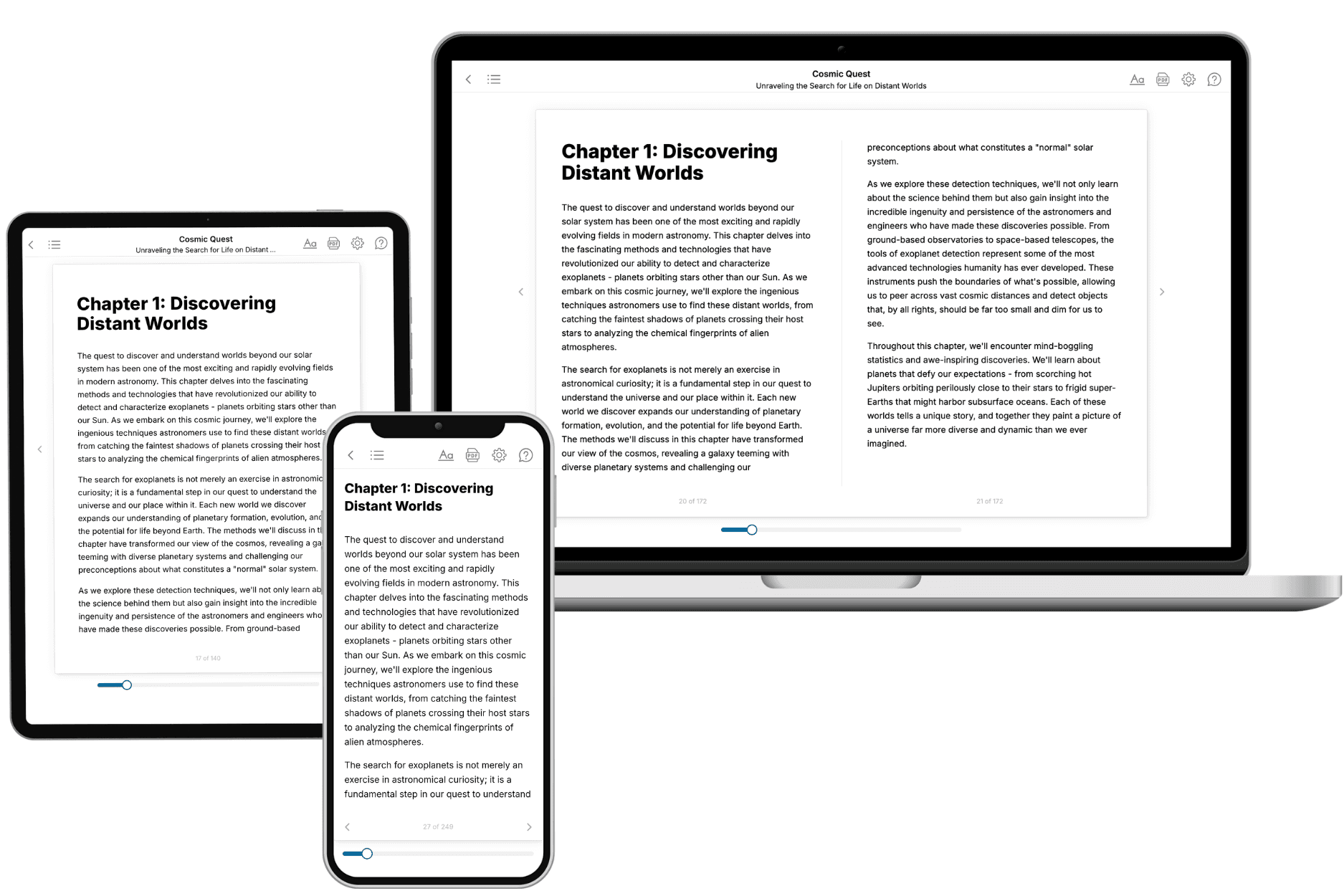
Your book is ready in 10 minutes. Read it online, download as EPUB or PDF, or send to Kindle.

Frequently asked questions
- What is TailoredRead?
TailoredRead creates complete, full-length nonfiction ebooks, written specifically for you. Tell us what you want to learn and why, and TailoredRead writes you a complete ebook on it, with charts, tables, and diagrams throughout. Read it online, on Kindle, or on any e-reader, or download it as a PDF or EPUB. Every book is written fresh the day you order it.
- How is the book tailored to me?
Before anything is written, you answer a few short questions about your goals, your background, and the topics you care about. Your book is then planned around your answers: written at your level, focused on your goals, and covering the topics you chose, instead of the one-size-fits-all book a store sells everyone.
- Will it read like generic AI content?
No. Your book isn't a chat transcript: it's planned chapter by chapter before a single word is written, told in a clear book voice, and explains ideas visually with charts, tables, and diagrams. After writing, every book goes through an editorial pass that polishes chapters so the book reads consistent from start to finish. Judge for yourself: browse thousands of sample books on our Explore Books page.
- How accurate is the content?
Our AI first checks whether your subject needs live research. Niche and fast-moving subjects are researched before writing, and the book plan and chapters are grounded in what it finds. After writing, every book goes through a quality pass that checks its facts and consistency, and researched books list their sources in a Notes section at the back.
- How long is the book?
You choose the length: Comprehensive (250-300 pages), Detailed (150-200 pages), Essential (70-100 pages), or Short (30-50 pages).
- Does the book include visuals?
Yes. Every book includes charts, tables, and diagrams: timelines, checklists, step-by-step guides, decision trees, comparison tables, matrices, and bar charts. A typical book includes dozens of these visual elements.
- Can I read it on Kindle? What formats can I download?
Yes. Every book can be read in our online reader or downloaded as a PDF or EPUB. The EPUB can be opened with Kindle, Apple Books, Kobo, and any e-reader. The Commercial and Author licenses also include an editable Word (DOCX) and Markdown download.
- How much does it cost?
About the price of a regular ebook. The exact price depends on your book's length and complexity, from $2 for the shortest books to $35 for the most comprehensive, and it's shown when you review your book, before you commit to anything. Each book is a one-time purchase, yours to keep, no subscription. Licenses that let you share, teach, or publish your book range from $35.99 to $49.99.
- Can I preview the book before purchasing?
Before you pay, you'll see what your book will cover: the title, a detailed description, the estimated length, and the complete chapter-by-chapter table of contents, so you know what you're getting before you decide. The full text itself is written after you purchase.
- How long does it take to create a book?
About 10 minutes. You can start reading the opening chapters while the rest is still being written.