Exploratory Testing Mastery
Discover Hidden Bugs and Improve Software Quality Through Intelligent Test Design
Discover how to find the bugs that matter most.
207 pages10 chaptersAug 23, 2026Software Testing
About this book
Exploratory testing is one of the most powerful yet underutilized techniques in software quality assurance. Unlike scripted testing, exploratory testing allows you to adapt in real-time, following leads and investigating anomalies as they emerge. This book teaches you how to conduct systematic, intelligent exploratory testing that uncovers critical defects while maintaining rigor and accountability. You'll learn practical techniques for designing effective test charters, managing testing sessions, prioritizing risks, and documenting your findings. Whether you're testing web applications, mobile apps, or complex enterprise systems, you'll gain actionable strategies to improve your testing effectiveness and deliver higher-quality software. This comprehensive guide bridges the gap between ad-hoc testing and structured quality assurance, showing you how to leverage exploratory testing as a strategic advantage in your QA toolkit.
Table of contents
- IntroductionWhy Exploratory Testing Matters in Modern QA, Beyond Scripted Testing: The Power of Adaptive Testing, What You'll Learn in This Book, How to Use This GuideRead below
- Chapter 1: Foundations of Exploratory TestingDefining Exploratory Testing, Exploratory Testing vs. Scripted Testing, When to Use Exploratory Testing, Core Principles of Effective Exploratory Testing
- Chapter 2: Building Your Testing MindsetCultivating Curiosity and Healthy Skepticism, Systems Thinking for Testers, Creative Problem-Solving Techniques, Learning from Failures and Anomalies
- Chapter 3: Test Charters and Session PlanningUnderstanding Test Charters, Designing Effective Test Charters, Session-Based Testing Framework, Time-Boxing and Managing Testing Sessions
- Chapter 4: Risk-Based Testing StrategiesIdentifying and Prioritizing Risks, Risk Assessment Techniques, Focusing Testing Efforts on High-Risk Areas, Business Impact Analysis for Testing
- Chapter 5: Exploratory Testing TechniquesBoundary Value and Edge Case Testing, State Transition and Flow Testing, Error Guessing and Intuitive Testing, User Scenario and Path Testing
- Chapter 6: Understanding User Behavior and ContextCreating and Using User Personas, Mapping User Workflows and Journeys, Testing in Real-World Context and Environments, Accessibility and Inclusive Testing Considerations
- Chapter 7: Documentation and ReportingEffective Session Notes and Logging, Writing Clear and Actionable Bug Reports, Metrics and Measuring Testing Effectiveness, Communicating Findings to Stakeholders
- Chapter 8: Collaboration and Team DynamicsCollaborating Effectively with Developers, Cross-Functional Testing Teams, Pair Testing and Knowledge Sharing, Building Effective Feedback Loops
- Chapter 9: Tools and Technology for Exploratory TestingEssential Tools for Exploratory Testers, Browser Developer Tools and Debugging, Test Management and Documentation Tools, Integrating Automation with Exploratory Testing
- Chapter 10: Real-World Applications and Case StudiesExploratory Testing for Web Applications, Exploratory Testing for Mobile Applications, Exploratory Testing for APIs and Services
- ConclusionKey Takeaways and Next Steps, Continuous Improvement in Your Testing Practice
- Further Reading and Resources
Introduction
A payment form passes every scripted test case on the checklist. Valid card numbers work, invalid ones get rejected, error messages display correctly. Then someone opens the same form, types a discount code, deletes it halfway through typing, hits back on the browser, and submits again. The total shown on screen no longer matches the total charged. No test script asked for that sequence, yet it happens to real customers every day. This is the gap that exploratory testing exists to close, and it is the reason this book exists.
QA teams across industries have spent decades refining scripted test suites, and those suites remain valuable. But software has grown more interconnected, more state-dependent, and more exposed to unpredictable human behavior than any fixed script can fully anticipate. A tester who only follows predetermined steps will always miss the paths nobody thought to write down. Closing that gap requires a different kind of testing, one that thinks while it works instead of executing a plan written days or weeks earlier.
This book treats exploratory testing as a professional discipline, not an excuse for random clicking. It draws on structured frameworks, risk analysis, and documentation practices that turn intuition into repeatable, defensible work. The goal is to help intermediate testers who already know the basics of QA move toward a sharper, more adaptive practice that finds the defects scripted approaches consistently miss.
The four sections ahead set the stage for everything that follows. They explain why exploratory testing has become more relevant, not less, as software has grown more complex. They clarify how adaptive testing differs from and complements scripted testing. They preview the specific skills and frameworks covered in later chapters. And they offer practical guidance on how to get the most value from this book, whether it gets read cover to cover or used as a reference during active testing work.
Why Exploratory Testing Matters in Modern QA
Modern applications rarely behave as a single, predictable sequence of screens. A typical web app might combine a single-page frontend, several backend microservices, third-party payment processors, and asynchronous background jobs, all interacting in ways that shift depending on network conditions, user permissions, and timing. Scripted test cases capture known, expected paths through this system. They cannot anticipate every combination of state, timing, and user choice that produces an actual defect. Exploratory Testing fills that space by letting a skilled tester investigate the system directly, forming hypotheses and testing them on the spot rather than following a pre-written script.
The financial cost of missed defects has also changed the calculus for QA teams. A bug caught during a scripted regression run before release is inexpensive to fix. The same bug discovered by a customer in production can trigger support tickets, refunds, churn, and reputational damage that far exceeds the cost of the original fix. Industry estimates on defect cost escalation vary, but the underlying pattern, that costs rise sharply the later a defect is found, has been documented since early software engineering research on defect economics[1]. Exploratory testing catches the odd, low-probability interactions that scripted suites tend to skip, precisely the kind of defects that slip through to production and become expensive later.
Consider a scheduling app used by a mid-size clinic. Scripted tests confirmed that appointments could be created, edited, and canceled correctly, one at a time. During an exploratory session, a tester opened the same appointment in two browser tabs, edited the time in one, then saved a note in the other without refreshing. The system silently overwrote the time change with stale data, and no error appeared anywhere. That defect had nothing to do with any single scripted case. It emerged only because a tester was actively probing how the system handled overlapping, real-world usage rather than executing a fixed list of steps.
Agile and continuous delivery practices have also shrunk the time available for testing before each release. Teams shipping multiple times a week cannot always write and maintain scripts fast enough to cover new functionality before it reaches customers. Exploratory testing scales down to fit these compressed timelines because it requires no separate script-writing phase. A tester with a well-formed Test Charter can start finding bugs within minutes of a feature landing in a test environment, which makes exploratory work a practical fit for fast release cadences rather than a luxury reserved for slower ones.
Regulatory and compliance pressure adds another layer of urgency, particularly in finance, healthcare, and any domain touching personal data. Automated and scripted checks can confirm that a system meets documented requirements, but compliance failures often hide in edge cases nobody thought to specify, such as what happens when a user requests data deletion while an export job is still running. Exploratory testers who understand the domain can probe exactly these gaps, using informed judgment rather than a checklist built only from known requirements. That judgment, applied consistently and documented well, is what separates disciplined exploratory testing from unstructured guesswork.
None of this argues that scripted testing has become obsolete. Regression suites still protect against reintroducing old bugs, and automated checks still run faster and more reliably than any human clicking through the same steps repeatedly. The argument is narrower and more practical: scripted and exploratory approaches solve different problems, and modern software needs both running in parallel rather than one substituting for the other.
Teams that rely exclusively on scripted testing tend to develop a specific blind spot over time. Their test suites grow enormous, covering every known path in detail, while their actual defect discovery rate on new, unexpected issues stays flat or declines. This happens because scripts test what testers already know to test. Exploratory testing, by contrast, generates new knowledge about the system with every session, since each session can reveal behavior nobody previously documented.
Surveys of practicing QA professionals consistently show exploratory testing rated among the most effective techniques for finding severe, customer-facing defects, even in organizations with mature automation practices[2]. This is not a coincidence. Severe defects tend to live in the interactions between features, in timing-sensitive operations, and in unusual but plausible user behavior, exactly the territory that scripted tests are least equipped to cover because nobody wrote a script for it in advance.
The practical takeaway for a working tester is straightforward: exploratory testing is not a fallback for when there is no time to write scripts. It is a distinct, necessary technique that targets a category of defects scripted approaches structurally cannot reach. Treating it that way, as a planned and resourced part of the testing strategy rather than an afterthought, changes how much value it delivers.
The chapters ahead build the specific skills needed to make that value concrete: how to structure sessions so the work stays purposeful, how to prioritize risk so effort goes where it matters most, and how to document findings so they influence real decisions instead of disappearing into a notebook.
Beyond Scripted Testing: The Power of Adaptive Testing
Scripted testing follows a fixed sequence: write the test case, define the expected result, execute the steps, compare actual to expected. This sequence works well when requirements are stable and the behavior being tested is well understood in advance. Exploratory testing inverts the order of operations through what practitioners call Simultaneous Learning, Design, and Execution. The tester learns about the system, designs the next test based on what was just learned, and executes it, all in a continuous loop rather than three separate phases done days apart.
This distinction sounds subtle on paper but changes behavior dramatically in practice. A scripted tester who finds something odd on screen typically notes it and continues down the predetermined list of steps, because deviating from the script risks leaving planned coverage incomplete. An exploratory tester who notices something odd stops immediately and investigates, because that anomaly might be the most valuable finding of the entire session. The script has already delivered its planned value by the time it runs; the exploratory session generates its value adaptively as it unfolds.
A concrete example makes the contrast clear. Testing a file upload feature with a script might involve five predefined cases: valid file, oversized file, wrong file type, empty file, and duplicate filename. An exploratory tester starts with those same rough ideas but adapts based on what the system reveals. Uploading a file with a name containing an emoji might trigger a database encoding error. That single unexpected result then leads the tester to try other special characters, right-to-left text, and extremely long filenames, none of which appeared on any original list. The script would have stopped at five cases; the exploratory session grew organically into a dozen, guided by evidence rather than a plan fixed beforehand.
Adaptive testing also handles ambiguous or incomplete requirements far better than scripted approaches. Early-stage features, prototypes, and systems undergoing active redesign often lack fully specified behavior, which makes writing detailed scripts nearly impossible without guessing at intended behavior. Exploratory testers can work productively in this ambiguity because they are not waiting for a complete specification. They investigate the system as built, compare it against reasonable user expectations, and flag discrepancies for discussion, turning testing into a form of active requirements discovery rather than pure verification.
The skill set required for adaptive testing differs from the skill set required for writing good scripts, and this matters when building or training a QA team. Scripted testing rewards precision, thoroughness in coverage, and careful documentation of steps. Exploratory testing rewards Curiosity Mindset, pattern recognition, and the ability to form and test hypotheses quickly under limited information. These are complementary skills, not competing ones, and strong QA organizations cultivate both rather than treating one as a lesser version of the other.
Adaptive testing carries real risks if left completely unstructured, and this is where many early attempts at exploratory testing fail. Without any framework, sessions drift, coverage becomes inconsistent between testers, and findings get lost because nobody wrote down what was actually tested. The remedy is not to abandon adaptiveness but to bound it, which is exactly what a Test Charter and Time-Boxing accomplish. A charter defines the mission for a session, such as investigate how the shopping cart handles quantity changes during checkout,
while a time box keeps the session focused and comparable to others, typically between sixty and ninety minutes.
James Bach and Cem Kaner, among the earliest and most influential voices formalizing this discipline, argued that skilled exploratory testing produces results at least as rigorous as scripted testing, provided it follows a structured methodology rather than ad hoc improvisation[3]. Their work laid the groundwork for Session-Based Testing, a framework that this book covers in depth later, which gives adaptive testing the structure it needs without collapsing back into a rigid script.
Adaptive testing also changes the relationship between the tester and the system under test. In scripted testing, the tester's job is largely to confirm that the system does what the specification says it should do. In exploratory testing, the tester's job includes questioning whether the specification itself makes sense, given how real users actually behave. This shift requires Healthy Skepticism toward both the software and the requirements that produced it, since either one might be wrong.
Organizations that adopt adaptive testing well tend to see two measurable shifts over time. First, the severity distribution of bugs found before release skews toward more critical issues, because exploratory sessions target the unusual interactions where severe bugs tend to cluster. Second, tester engagement and skill development improve, since exploratory work demands active thinking rather than mechanical execution, which most experienced testers find more professionally satisfying than running the same script for the tenth time.
None of this suggests exploratory testing is harder to learn than scripted testing, only that it is different, and that difference is exactly what the following chapters unpack in detail, starting with the mindset that makes adaptive testing effective and moving through the frameworks that keep it disciplined.
What You'll Learn in This Book
This book moves from foundational concepts toward increasingly practical application, structured so that each part builds directly on the one before it. The early chapters establish what exploratory testing actually is, distinguish it clearly from scripted approaches, and identify the specific situations where it delivers the most value. This grounding matters because many testers use the term loosely, applying it to unstructured guessing that lacks any real methodology behind it, and precision about definitions prevents that confusion from the start.
A significant portion of the early material addresses the internal habits that separate effective exploratory testers from mediocre ones. Curiosity Mindset, Healthy Skepticism, and Systems Thinking are not abstract personality traits here. They translate into specific, trainable habits: asking what happens if I do this instead
at every screen, distrusting a passing test result until it has been probed from a second angle, and mapping how a change in one part of a system might ripple into unrelated parts. These habits get practiced through concrete exercises rather than left as vague advice to think critically.
The middle chapters shift toward structure and prioritization, covering how to build a Test Charter, run Session-Based Testing, and apply Time-Boxing so that exploratory work stays organized and comparable across a team. This section also covers Risk-Based Testing and Business Impact Analysis in detail, giving practical methods for deciding where limited testing time should go when it is impossible to test everything equally. A tester finishing this section should be able to walk into a sprint planning meeting and propose a specific, time-boxed exploratory charter tied directly to a named business risk.
From there, the book covers a concrete technique repertoire: Boundary Value Testing and Edge Case Testing for finding failures at the limits of valid input, State Transition Testing for uncovering bugs in systems with complex workflows, Error Guessing for applying tester intuition systematically rather than randomly, and User Path Testing for exploring realistic sequences of user action rather than isolated steps. Each technique gets paired with worked examples so the reasoning behind it is visible, not just the name of the method.
Understanding the user sits at the center of the next section, covering User Persona development, User Journey mapping, and Accessibility Testing as tools for grounding exploratory work in how real people actually use software, rather than how a specification imagines they will. A persona for an elderly user with limited technical familiarity leads to a different set of exploratory questions than a persona for a power user automating repetitive tasks, and this section shows how to build and apply personas that shape testing priorities meaningfully.
Documentation receives dedicated attention because exploratory findings that never get recorded properly might as well not exist. This part of the book covers writing session notes that capture what was actually tested, producing a Bug Report clear enough that a developer can reproduce the issue without follow-up questions, and using Testing Metrics to demonstrate the value of exploratory work to people outside the QA team. A recurring theme here is that documentation is not bureaucratic overhead, it is what turns an individual tester's insight into an organizational asset.
Collaboration forms another major thread, addressing how exploratory testing works alongside developers, product managers, and other testers rather than in isolation. This includes Pair Testing, where two people test together to combine different perspectives in real time, and building Feedback Loop practices that get findings back to the people who can act on them quickly, before a defect ships to production or gets forgotten in a backlog.
Tooling gets covered pragmatically rather than exhaustively, focusing on Browser Developer Tools for inspecting network calls and application state during a session, test management platforms for organizing charters and results, and Automation Integration for understanding where scripted automation and exploratory judgment complement each other rather than compete. The emphasis throughout is that tools extend a tester's reach, they never substitute for the judgment that makes exploratory testing valuable in the first place.
The book closes with worked case studies applying everything covered to web applications, mobile applications, and APIs, since each context surfaces different kinds of risk and requires different exploratory approaches. Testing a REST API exploratory requires attention to status codes, payload structure, and rate limiting that a mobile app case study would not emphasize, while a mobile case study raises questions about interrupted network connections and background app states that rarely apply to a traditional web form. Seeing the same underlying principles applied differently across these three contexts should make it far easier to adapt them to whatever system comes next.
By the end, the goal is not just familiarity with a list of techniques but a working, internalized method for approaching any unfamiliar system with structured curiosity, confident that the resulting testing will be both adaptive and defensible.
How to Use This Guide
This book was written for QA professionals who already understand testing fundamentals and want to sharpen a specific set of skills, not for complete beginners to software testing. Reading it will go faster and stick better if it happens alongside real testing work, rather than as pure theory absorbed before ever applying it. A chapter read on Monday and tried against an actual feature on Tuesday will teach far more than the same chapter read twice in isolation.
The chapters build sequentially, and reading them in order will provide the clearest path, especially for anyone newer to structured exploratory approaches. The foundational chapters on mindset and charters set up vocabulary and concepts that later chapters, particularly the technique-focused ones, rely on without re-explaining. Someone who skips ahead to the technique chapters may find references to concepts like Session-Based Testing or Risk-Based Testing that make more sense after reading the earlier material first.
That said, this book is also designed to work as a reference after a first full read-through. A tester preparing a specific exploratory session on a payment feature might return directly to the risk prioritization chapter and the boundary testing chapter without rereading everything in between. Each subchapter aims to stand reasonably well on its own once the foundational vocabulary from the early chapters has been absorbed once.
Practical application matters more here than in many technical books, so treat the examples throughout as starting points rather than fixed recipes to copy exactly. The scheduling app example, the file upload example, and the case studies near the end all illustrate a way of thinking, not a checklist to apply mechanically to different systems. The specific bug found in one example matters less than the reasoning process that led a tester to look in that direction in the first place.
Consider keeping a running notebook, physical or digital, while working through the book, separate from the notes any single testing session would produce. Use it to record moments where a described technique connects to a real defect or behavior noticed in current work, even informally. This habit converts abstract concepts into a personal reference of concrete evidence that the techniques actually work in the specific systems being tested day to day.
Teams reading this book together, rather than individuals reading alone, can get additional value by discussing each chapter's ideas against their own product. After the risk-based testing chapter, for example, a team might spend twenty minutes identifying the three highest-risk areas of their own application and sketching what a Test Charter for each might look like. This kind of applied discussion turns shared reading into shared practice, which tends to produce more consistent testing standards across a team than individual reading alone.
Some readers will come from organizations with mature automated testing practices already in place, while others will come from teams still relying heavily on manual scripted testing. Both groups will find value here, but the emphasis on how exploratory testing complements rather than replaces existing practices matters more for the first group, while the case for adopting structured exploratory methods in the first place matters more for the second. Read with that context in mind, and adjust which sections get the most attention accordingly.
Do not treat any single technique or framework in this book as mandatory in exactly the form presented. A Test Charter template that works well for a small startup testing a single web application may need adaptation for a large enterprise team testing a portfolio of interconnected services. The underlying principles, purposeful scoping, time boundaries, and clear documentation, matter more than matching any specific template exactly.
Finally, expect this material to change how testing looks day to day, not just how it is discussed in retrospectives or planning meetings. The real test of whether these ideas have been absorbed is not whether they can be recited accurately, but whether the next testing session looks noticeably different because of them, more focused, more adaptive, and more likely to surface the bug that a script would have missed entirely.
With that groundwork in place, the next chapter turns to defining exploratory testing precisely and tracing how it diverges from scripted approaches at a mechanical level, setting up the vocabulary that the rest of the book builds on.
This is the end of the free sample. The full book has 10 chapters.
Want this book written for you?
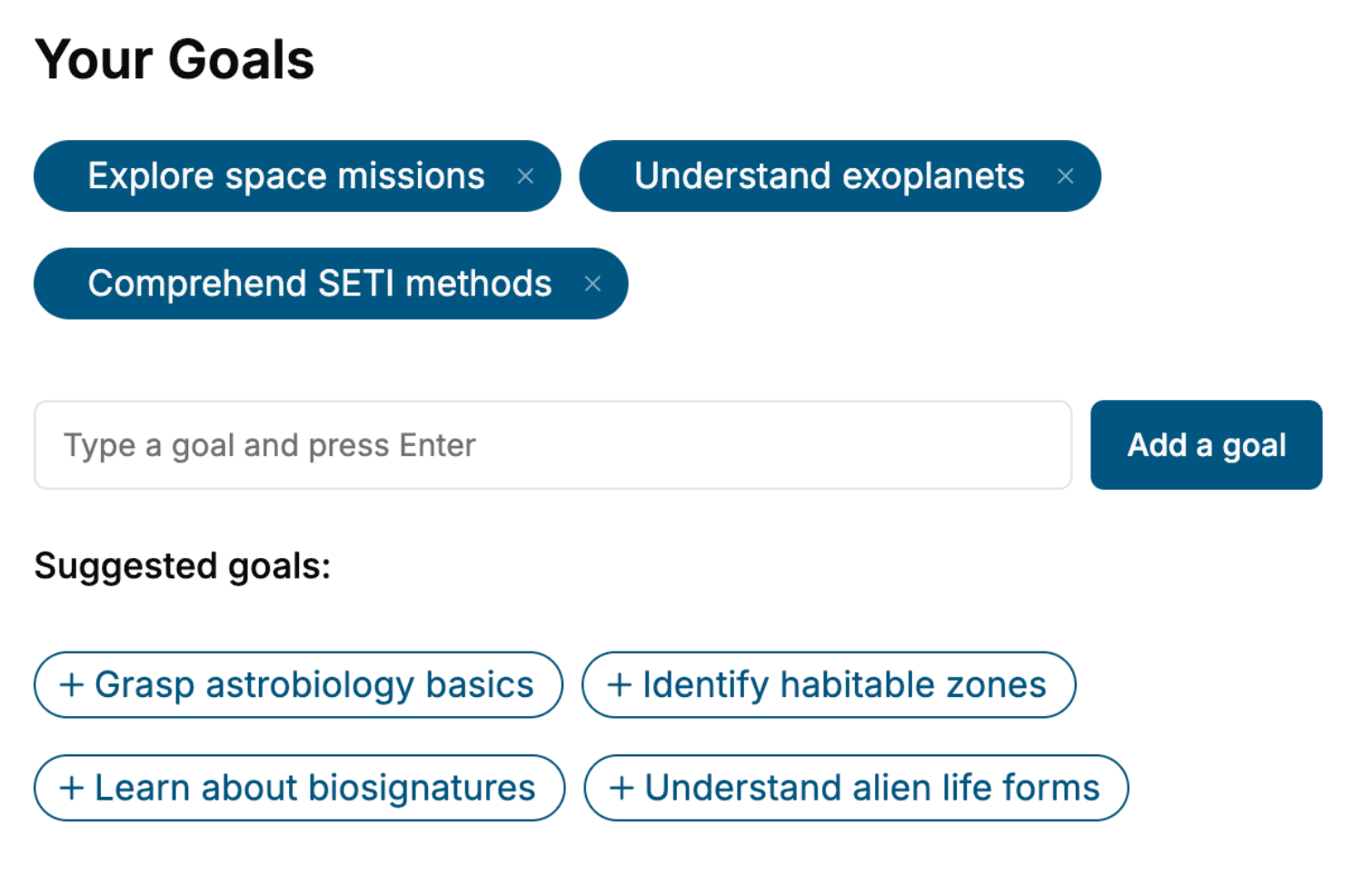
Tell us your goals and background, and get your own version of this book, tailored by AI to you.


Benefits of AI-tailored books
- Read one book, not ten:
- all the Software Testing knowledge you need, gathered into a single book.
- Save days of learning:
- tell us your goals, choose your topics, and the whole book is built around them.
- Learn effortlessly:
- Software Testing book written for your specific background and expertise.
- Understand at a glance:
- includes charts, tables, timelines, checklists, decision trees, and more.
- Stay current:
- written the day you order it, not years ago.
- Trust what you read:
- every book is checked for accuracy, with real research when your subject needs it.
Create your unique book in 3 steps
- 1. Select your focus
Select the focus of your Software Testing book and share your background
- 2. Personalize your book
Specify your goals and choose sub-topics to include
- 3. Get your tailored book
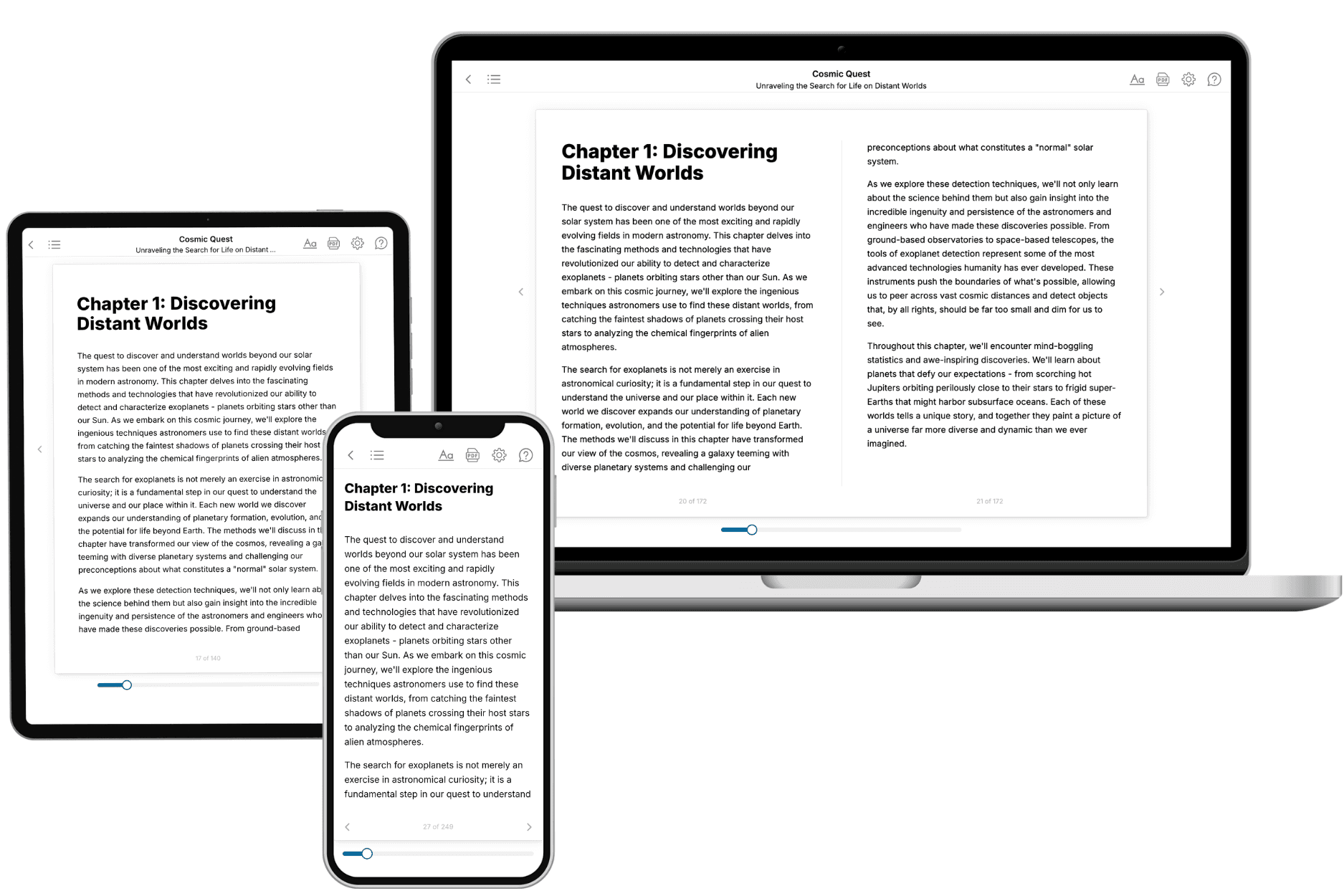
Your book is ready in 10 minutes. Read it online, download as EPUB or PDF, or send to Kindle.

Frequently asked questions
- What is TailoredRead?
TailoredRead creates complete, full-length nonfiction ebooks, written specifically for you. Tell us what you want to learn and why, and TailoredRead writes you a complete ebook on it, with charts, tables, and diagrams throughout. Read it online, on Kindle, or on any e-reader, or download it as a PDF or EPUB. Every book is written fresh the day you order it.
- How is the book tailored to me?
Before anything is written, you answer a few short questions about your goals, your background, and the topics you care about. Your book is then planned around your answers: written at your level, focused on your goals, and covering the topics you chose, instead of the one-size-fits-all book a store sells everyone.
- Will it read like generic AI content?
No. Your book isn't a chat transcript: it's planned chapter by chapter before a single word is written, told in a clear book voice, and explains ideas visually with charts, tables, and diagrams. After writing, every book goes through an editorial pass that polishes chapters so the book reads consistent from start to finish. Judge for yourself: browse thousands of sample books on our Explore Books page.
- How accurate is the content?
Our AI first checks whether your subject needs live research. Niche and fast-moving subjects are researched before writing, and the book plan and chapters are grounded in what it finds. After writing, every book goes through a quality pass that checks its facts and consistency, and researched books list their sources in a Notes section at the back.
- How long is the book?
You choose the length: Comprehensive (250-300 pages), Detailed (150-200 pages), Essential (70-100 pages), or Short (30-50 pages).
- Does the book include visuals?
Yes. Every book includes visual elements such as timelines, checklists, step-by-step guides, decision trees, comparison tables, and matrices, and many include bar charts. A typical book includes dozens of these visual elements.
- Can I read it on Kindle? What formats can I download?
Yes. Every book can be read in our online reader or downloaded as a PDF or EPUB. The EPUB can be opened with Kindle, Apple Books, Kobo, and any e-reader. The Commercial and Author licenses also include an editable Word (DOCX) and Markdown download.
- How much does it cost?
About the price of a regular ebook. The exact price depends on your book's length and complexity, from $2 for the shortest books to $35 for the most comprehensive, and it's shown when you review your book, before you commit to anything. Each book is a one-time purchase, yours to keep, no subscription. Licenses that let you share, teach, or publish your book range from $35.99 to $49.99.
- Can I preview the book before purchasing?
Before you pay, you'll see what your book will cover: the title, a detailed description, the estimated length, and the complete chapter-by-chapter table of contents, so you know what you're getting before you decide. The full text itself is written after you purchase.
- How long does it take to create a book?
About 10 minutes. You can start reading the opening chapters while the rest is still being written.