The Fabric of Nations
Understanding Nationalism in the Modern Political Landscape
In "The Fabric of Nations: Understanding Nationalism in the Modern Political Landscape," you'll embark on a thought-provoking journey through the complex world of nationalism and its intricate relationship with political freedom and contemporary politics.
284 pages14 chaptersDec 2, 2024Political Science
About this book
This comprehensive guide offers a balanced and nuanced exploration of nationalism's historical roots, its evolution over time, and its current manifestations across the globe. You'll gain insights into the various forms of nationalism, from civic to ethnic, and understand how they shape national identities, political movements, and international relations. Through engaging analysis and real-world examples, you'll discover the double-edged nature of nationalism - its potential to unite and divide, to inspire progress and hinder cooperation. The book delves into the challenges nationalism poses to globalization, multiculturalism, and international governance, while also examining its role in preserving cultural heritage and fostering a sense of belonging. Whether you're a student of political science, a concerned citizen, or simply curious about the forces shaping our world, "The Fabric of Nations" will equip you with the knowledge and analytical tools to navigate the complex landscape of modern nationalism and its impact on political freedom and global politics.
Table of contents
- IntroductionDefining Nationalism in the Modern Context, The Importance of Understanding Nationalism, Book Overview and StructureRead below
- Chapter 1: The Historical Roots of NationalismNationalism and the Enlightenment, The French Revolution and the Birth of Modern Nationalism, 19th Century Nationalist Movements, Nationalism in the 20th Century: World Wars and Decolonization
- Chapter 2: Types of NationalismCivic Nationalism, Ethnic Nationalism, Cultural Nationalism, Religious Nationalism, Economic Nationalism
- Chapter 3: Nationalism and National IdentityThe Formation of National Identities, National Symbols and Rituals, Language and National Identity, National Myths and Collective Memory
- Chapter 4: Nationalism in Contemporary PoliticsNationalist Political Parties, Nationalism and Populism, Separatist Movements and Nationalism, Nationalist Influences on Policy-Making
- Chapter 5: Nationalism and Political FreedomNationalism and Self-Determination, The Relationship Between Nationalism and Democracy, Nationalism and Authoritarian Tendencies, Nationalism and Minority Rights
- Chapter 6: Nationalism in the Age of GlobalizationThe Tension Between Nationalism and Globalization, Economic Nationalism in a Global Economy, Cultural Nationalism and Global Culture, Nationalism and International Institutions
- Chapter 7: Nationalism and International ConflictsTerritorial Disputes and Nationalism, Ethnic Conflicts and Nationalist Ideologies, Nationalism and Conflict Resolution, The Role of International Peacekeeping in Nationalist Conflicts
- Chapter 8: Nationalism and the MediaNationalist Propaganda in Traditional Media, Social Media and the Spread of Nationalist Ideas, Fake News and Nationalist Narratives, Countering Nationalist Narratives in the Media
- Chapter 9: Nationalism and EducationNationalist Influences on Educational Curricula, Teaching National History: Challenges and Controversies, Language Policies in Education and Nationalism, Balancing Nationalist and Global Perspectives in Education
- Chapter 10: The Economic Dimensions of NationalismEconomic Protectionism and Nationalism, Natural Resources and Economic Nationalism, Nationalism and International Trade Agreements, Nationalist Approaches to Economic Development
- Chapter 11: Nationalism and Cultural ExpressionNationalism in the Arts and Literature, Sports and National Identity, Preserving Cultural Heritage: Nationalism and UNESCO, Diasporic Communities and Long-Distance Nationalism
- Chapter 12: Nationalism in the Digital AgeCyber-Nationalism and Online Communities, National Security, Surveillance, and Citizenship in the Digital Era, Artificial Intelligence and National Competitiveness, The Future of Nationalism in a Technologically Connected World
- Chapter 13: Contemporary Challenges to NationalismClimate Change and Environmental Challenges, Global Migration and Refugee Crises, Pandemics and Global Health Crises, Transnational Terrorism and Security
- Chapter 14: The Future of NationalismEmerging Trends in Nationalist Movements, Alternative Models to Nation-States, Balancing National Interests and Global Cooperation, Reflections on the Enduring Nature of Nationalism
- ConclusionSummary of Key Insights, Implications for the Future of Politics and Society
- Glossary
- Further Reading
Introduction
In an era marked by global interconnectedness and rapid technological advancement, the concept of nationalism continues to play a pivotal role in shaping the political landscape of nations worldwide. As you embark on this exploration of nationalism in the context of modern politics and political freedom, it is crucial to recognize the complex and often contradictory nature of this powerful force. Nationalism, at its core, is a sentiment that binds people together through shared cultural, historical, or ethnic ties, fostering a sense of collective identity and purpose. However, it can also be a source of division, conflict, and exclusion, challenging the very foundations of democratic societies and international cooperation.
The importance of understanding nationalism in today's world cannot be overstated. As global challenges such as climate change, economic inequality, and security threats continue to transcend national borders, the tension between nationalist sentiments and the need for international collaboration has become increasingly apparent. This book aims to provide you with a comprehensive and nuanced understanding of nationalism, its historical roots, contemporary manifestations, and future implications. By delving into the multifaceted nature of nationalism, you will be better equipped to navigate the complex political landscape of the 21st century and contribute meaningfully to discussions on national identity, political freedom, and global governance.
Throughout this book, you will encounter a range of perspectives on nationalism, from its role in fostering social cohesion and cultural preservation to its potential for fueling xenophobia and authoritarianism. By examining case studies from various regions and historical periods, you will gain insights into the diverse ways in which nationalist ideologies have shaped political systems, economic policies, and social norms. This introduction will lay the groundwork for your journey through the intricate world of nationalism, providing you with the necessary context and conceptual tools to engage critically with the ideas presented in subsequent chapters.
Defining Nationalism in the Modern Context
Nationalism, as a concept, has evolved significantly since its emergence in the late 18th and early 19th centuries. In its broadest sense, nationalism can be defined as a political ideology and movement that promotes the interests of a particular nation, especially with the aim of gaining and maintaining the nation's sovereignty over its homeland. However, this definition only scratches the surface of a complex and multifaceted phenomenon that has taken on various forms and meanings throughout history and across different cultural contexts.
In the modern context, nationalism encompasses a wide range of beliefs, practices, and sentiments that center around the idea of the nation as a primary unit of political and social organization. It is characterized by a strong identification of a group of people with a particular geopolitical entity, often accompanied by a sense of pride in the nation's culture, history, and achievements. This identification can be based on various factors, including shared language, ethnicity, religion, or historical experiences. The modern conception of nationalism also often involves the belief in the right of nations to self-determination and the pursuit of their collective interests on the global stage.
One of the key challenges in defining nationalism in the contemporary world is its inherent flexibility and adaptability. Nationalist ideologies can manifest in diverse ways, ranging from inclusive civic nationalism that emphasizes shared citizenship and democratic values, to more exclusive forms of ethnic or cultural nationalism that prioritize specific group identities. Moreover, the rise of globalization and transnational movements has led to new expressions of nationalism that transcend traditional state boundaries, such as long-distance nationalism among diaspora communities or pan-ethnic nationalist movements.
It is important to note that nationalism in the modern context is not merely a political ideology but also a powerful emotional force that shapes individual and collective identities. This emotional dimension of nationalism often manifests in symbols, rituals, and narratives that reinforce a sense of national belonging and uniqueness. National flags, anthems, historical commemorations, and cultural traditions all play a role in fostering nationalist sentiments and reinforcing the idea of a shared national identity.
The relationship between nationalism and the state is another crucial aspect of its modern definition. While nationalism often aligns with the interests of existing nation-states, it can also challenge state authority, particularly in cases where national groups seek greater autonomy or independence. This tension is evident in separatist movements, struggles for indigenous rights, and debates over regional autonomy within larger state structures.
In the era of globalization, nationalism has taken on new dimensions and challenges. The increased interconnectedness of economies, cultures, and political systems has led to a complex interplay between nationalist sentiments and global forces. On one hand, globalization has facilitated the spread of nationalist ideas and movements across borders through digital media and transnational networks. On the other hand, it has also challenged traditional notions of national sovereignty and identity, leading to what some scholars describe as a "resurgence" of nationalism as a response to perceived threats to national distinctiveness and autonomy.
The modern conception of nationalism must also grapple with its relationship to other ideologies and political movements. For instance, the intersection of nationalism with populism has become increasingly prominent in recent years, with many political leaders and parties combining nationalist rhetoric with appeals to "the people" against perceived elites or outside threats. Similarly, the interaction between nationalism and various forms of religious, ethnic, or cultural identities has led to complex and sometimes volatile political dynamics in many parts of the world.
As you delve deeper into this book, it is crucial to approach the concept of nationalism with an open and critical mindset. Recognize that nationalism is not a monolithic or static phenomenon but a dynamic and contested idea that continues to evolve in response to changing social, political, and economic conditions. By understanding the various dimensions and manifestations of nationalism in the modern context, you will be better equipped to analyze its impacts on political systems, social cohesion, and international relations.
Throughout this exploration, it is essential to consider the ethical implications of nationalist ideologies and movements. While nationalism can serve as a powerful force for collective action and social cohesion, it also has the potential to foster exclusion, discrimination, and conflict. As you examine different case studies and theoretical perspectives, reflect on the balance between the positive aspects of national identity and the risks associated with extreme or exclusionary forms of nationalism.
By engaging with these complex issues, you will develop a more nuanced understanding of nationalism's role in shaping the modern world. This understanding will be invaluable as you navigate the subsequent chapters, which will delve into specific aspects of nationalism, its historical development, and its implications for contemporary politics and society.
The Importance of Understanding Nationalism
In an increasingly interconnected world, understanding nationalism is more crucial than ever. The resurgence of nationalist movements and sentiments across the globe has profound implications for political systems, international relations, and the very fabric of societies. As you delve into this topic, it becomes clear that nationalism is not merely an academic concept but a powerful force that shapes the world we live in. Grasping its nuances is essential for anyone seeking to comprehend the complexities of modern politics and contribute meaningfully to discussions about the future of nations and global governance.
One of the primary reasons for the importance of understanding nationalism lies in its pervasive influence on political decision-making. Nationalist ideologies often drive policy choices in areas such as immigration, trade, and foreign relations. For instance, the rise of economic nationalism has led to protectionist policies in various countries, impacting global trade patterns and economic cooperation. By understanding the underlying nationalist motivations behind these policies, you can better analyze their potential consequences and engage in informed debates about their merits and drawbacks. This knowledge is particularly valuable in an era where economic interdependence and nationalist sentiments often find themselves at odds.
Moreover, nationalism plays a significant role in shaping public opinion and electoral outcomes. Political leaders and parties frequently appeal to nationalist sentiments to garner support, sometimes leading to the polarization of societies and the marginalization of minority groups. By developing a critical understanding of nationalism, you can become more adept at recognizing and evaluating these appeals, allowing for a more nuanced assessment of political rhetoric and its potential impacts on social cohesion. This awareness is crucial for maintaining a healthy democracy and fostering inclusive political discourse.
Understanding nationalism is also vital for navigating the complex landscape of international relations. Nationalist ideologies often influence a nation's foreign policy objectives and its interactions with other countries. For example, competing nationalisms can exacerbate territorial disputes or fuel arms races, potentially leading to conflicts. Conversely, shared nationalist goals can sometimes foster cooperation between nations. By grasping these dynamics, you can better comprehend the motivations behind international alliances, conflicts, and diplomatic negotiations. This knowledge is invaluable for anyone interested in global affairs, diplomacy, or international business.
The relationship between nationalism and identity formation is another critical aspect that underscores the importance of understanding this concept. Nationalism plays a significant role in shaping individual and collective identities, influencing how people perceive themselves and others. This process can lead to both positive outcomes, such as cultural preservation and social solidarity, and negative consequences, like xenophobia and discrimination. By examining the ways in which nationalist ideologies contribute to identity construction, you can develop a more nuanced understanding of social dynamics within diverse societies and the challenges of fostering inclusive national identities.
Furthermore, understanding nationalism is crucial for addressing some of the most pressing global challenges of our time. Issues such as climate change, pandemics, and economic inequality require coordinated international action, which can sometimes be hindered by nationalist sentiments that prioritize short-term national interests over long-term global well-being. By comprehending the tensions between nationalist ideologies and the need for global cooperation, you can contribute to discussions about how to balance national sovereignty with collective action on transnational issues. This understanding is essential for developing effective solutions to problems that transcend national borders.
The study of nationalism also provides valuable insights into historical processes and their contemporary relevance. Many of today's geopolitical realities, border disputes, and ethnic conflicts have roots in nationalist movements and ideologies of the past. By understanding the historical development of nationalism, you can gain a deeper appreciation of the complexities of current international relations and the enduring impact of historical events on modern politics. This historical perspective is crucial for avoiding oversimplification of complex issues and for developing more nuanced approaches to conflict resolution and peacebuilding.
In the realm of cultural studies and social sciences, understanding nationalism is essential for analyzing the production and dissemination of national narratives, symbols, and myths. These cultural elements play a significant role in reinforcing national identities and shaping public discourse. By examining how nationalist ideologies are expressed through literature, art, media, and education systems, you can develop a more critical approach to cultural consumption and production. This awareness is particularly important in an age of digital media, where nationalist ideas can spread rapidly across borders and influence public opinion on a global scale.
The importance of understanding nationalism extends to the field of human rights and social justice. While nationalism can sometimes be a force for positive change, advocating for the rights of oppressed groups, it can also be used to justify discrimination and human rights abuses. By developing a nuanced understanding of nationalism, you can better recognize and challenge nationalist rhetoric that undermines human rights or promotes exclusionary policies. This knowledge is crucial for anyone working in fields related to human rights, social justice, or international development.
Lastly, understanding nationalism is vital for personal growth and global citizenship. In an increasingly diverse and interconnected world, the ability to critically engage with nationalist ideologies and their impacts can foster greater empathy, cross-cultural understanding, and global awareness. By examining your own national identity and its relationship to broader nationalist narratives, you can develop a more reflective and nuanced perspective on your place in the world. This self-awareness can lead to more meaningful interactions with people from different cultural backgrounds and a greater appreciation for the complexities of global society.
As you progress through this book, keep in mind the multifaceted importance of understanding nationalism. The knowledge and insights you gain will not only enhance your comprehension of political and social dynamics but also equip you with valuable tools for navigating the complexities of the modern world. Whether you are a student, professional, or engaged citizen, a deep understanding of nationalism will enrich your perspective on global affairs and empower you to contribute meaningfully to discussions about the future of nations and international cooperation.
Book Overview and Structure
"The Fabric of Nations: Understanding Nationalism in the Modern Political Landscape" is designed to provide you with a comprehensive and nuanced exploration of nationalism in its various forms and contexts. This book is structured to guide you through the complex tapestry of nationalist ideologies, their historical roots, contemporary manifestations, and future implications. By presenting a balanced and analytical approach to the subject, this work aims to equip you with the knowledge and critical thinking skills necessary to navigate the often contentious debates surrounding nationalism in today's world.
The book is organized into fourteen chapters, each focusing on a specific aspect of nationalism and its relationship to political freedom and modern politics. This structure allows for a systematic examination of the topic, building your understanding progressively as you move through the text. Each chapter is further divided into subsections, enabling a detailed exploration of key concepts, case studies, and theoretical frameworks. This approach ensures that you can engage with the material at various levels of depth, depending on your prior knowledge and specific areas of interest.
Beginning with the historical foundations, Chapter 1 delves into the roots of nationalism, tracing its evolution from the Enlightenment period through the French Revolution and into the 20th century. This historical context is crucial for understanding how nationalist ideologies have shaped and been shaped by major historical events and intellectual movements. By examining the development of nationalism through different historical periods, you will gain insights into the enduring nature of nationalist sentiments and their adaptability to changing social and political conditions.
Chapter 2 introduces you to the various types of nationalism, including civic, ethnic, cultural, religious, and economic nationalism. This typology provides a framework for understanding the diverse manifestations of nationalist ideologies across different societies and political systems. By exploring these distinct forms of nationalism, you will develop a more nuanced appreciation of how nationalist sentiments can be expressed and mobilized in various contexts.
The relationship between nationalism and national identity is explored in depth in Chapter 3. This chapter examines how national identities are formed, maintained, and sometimes contested through symbols, rituals, language, and collective memories. Understanding these processes is essential for grasping the emotional power of nationalism and its ability to shape individual and collective behaviors.
Chapters 4 and 5 focus on the role of nationalism in contemporary politics and its relationship to political freedom. These chapters analyze how nationalist ideologies influence political parties, populist movements, and policy-making processes. The complex interplay between nationalism, democracy, and authoritarianism is also examined, providing you with insights into the potential benefits and risks of nationalist politics for democratic systems and individual liberties.
The challenges posed by globalization to traditional conceptions of nationalism are addressed in Chapter 6. This chapter explores the tensions between nationalist sentiments and global economic, cultural, and political forces. By examining these dynamics, you will gain a better understanding of how nationalism is evolving in response to the pressures of an increasingly interconnected world.
Chapters 7 through 11 delve into specific dimensions of nationalism, including its role in international conflicts, media representation, education systems, economic policies, and cultural expressions. These chapters provide concrete examples and case studies that illustrate the wide-ranging impacts of nationalist ideologies on various aspects of society and international relations.
The final chapters of the book look towards the future, examining the intersection of nationalism with emerging technologies (Chapter 12), contemporary global challenges (Chapter 13), and potential future trends in nationalist movements (Chapter 14). These forward-looking sections encourage you to think critically about the evolving nature of nationalism and its implications for global governance and cooperation in the face of transnational challenges.
Throughout the book, you will find a variety of features designed to enhance your learning experience and deepen your engagement with the material. These include:
- Case studies that provide real-world examples of nationalist movements and policies in action
- Theoretical frameworks and key concepts explained in clear, accessible language
- Discussion questions at the end of each chapter to stimulate critical thinking and debate
- Suggestions for further reading to guide your exploration of specific topics in greater depth
- Visual aids such as maps, charts, and timelines to illustrate key points and historical developments
The book concludes with a comprehensive glossary of key terms and a curated list of further reading suggestions, providing you with additional resources to continue your exploration of nationalism beyond the scope of this text. These supplementary materials are designed to support your ongoing engagement with the subject and to facilitate further research in areas of particular interest to you.
As you progress through "The Fabric of Nations," you are encouraged to approach the material with an open and critical mindset. The topic of nationalism is complex and often controversial, with no simple answers or universal truths. This book aims to present a balanced view of the subject, acknowledging both the potential benefits and risks associated with nationalist ideologies and movements. By engaging critically with the ideas presented and reflecting on their implications for contemporary politics and society, you will develop a more nuanced and informed perspective on the role of nationalism in the modern world.
Remember that the goal of this book is not to promote or denounce nationalism, but rather to provide you with the tools and knowledge necessary to analyze nationalist phenomena critically and to engage in informed discussions about their impacts on political freedom, social cohesion, and global cooperation. As you read, consider how the concepts and examples presented relate to your own experiences and observations of nationalist sentiments in your local context and on the global stage.
By the end of this book, you should have a comprehensive understanding of nationalism as a political and social force, its historical development, contemporary manifestations, and potential future trajectories. This knowledge will empower you to engage more effectively with current debates surrounding national identity, sovereignty, and global governance, and to contribute meaningfully to discussions about the challenges and opportunities facing nations in an increasingly interconnected world.
As you embark on this intellectual journey through "The Fabric of Nations," approach each chapter with curiosity and an open mind. The insights you gain will not only enhance your understanding of nationalism but also provide you with valuable perspectives on the complex interplay between identity, politics, and global dynamics in the 21st century.
This is the end of the free sample. The full book has 14 chapters.
Want this book written for you?
Tell us your goals and background, and get your own version of this book, tailored by AI to you.


Benefits of AI-tailored books
- Read one book, not ten:
- all the Political Science knowledge you need, gathered into a single book.
- Save days of learning:
- tell us your goals, choose your topics, and the whole book is built around them.
- Learn effortlessly:
- Political Science book written for your specific background and expertise.
- Understand at a glance:
- includes charts, tables, timelines, checklists, decision trees, and more.
- Stay current:
- written the day you order it, not years ago.
- Trust what you read:
- every book is checked for accuracy, with real research when your subject needs it.
Create your unique book in 3 steps
- 1. Select your focus
Select the focus of your Political Science book and share your background
- 2. Personalize your book
Specify your goals and choose sub-topics to include
- 3. Get your tailored book
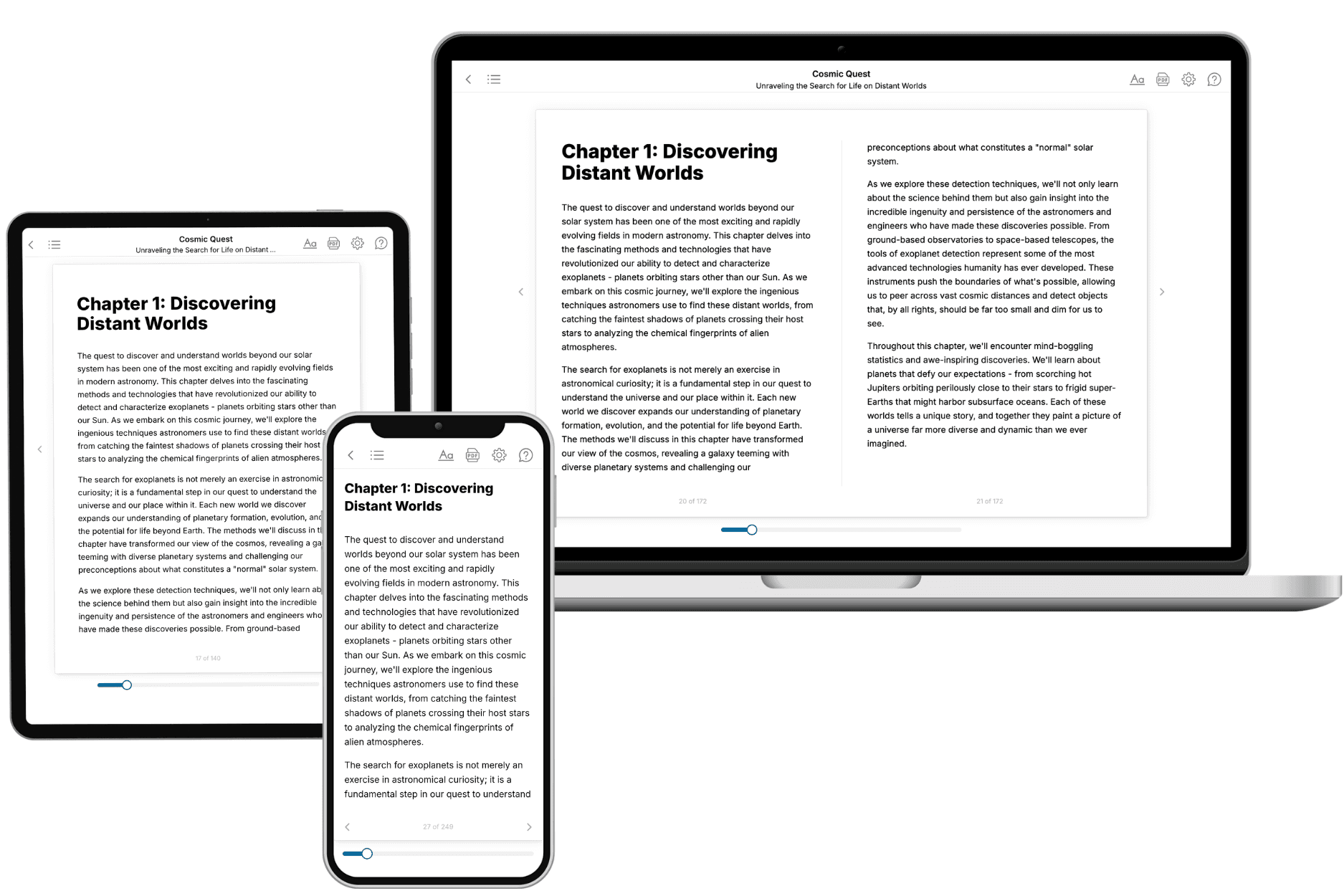
Your book is ready in 10 minutes. Read it online, download as EPUB or PDF, or send to Kindle.

Frequently asked questions
- What is TailoredRead?
TailoredRead creates complete, full-length nonfiction ebooks, written specifically for you. Tell us what you want to learn and why, and TailoredRead writes you a complete ebook on it, with charts, tables, and diagrams throughout. Read it online, on Kindle, or on any e-reader, or download it as a PDF or EPUB. Every book is written fresh the day you order it.
- How is the book tailored to me?
Before anything is written, you answer a few short questions about your goals, your background, and the topics you care about. Your book is then planned around your answers: written at your level, focused on your goals, and covering the topics you chose, instead of the one-size-fits-all book a store sells everyone.
- Will it read like generic AI content?
No. Your book isn't a chat transcript: it's planned chapter by chapter before a single word is written, told in a clear book voice, and explains ideas visually with charts, tables, and diagrams. After writing, every book goes through an editorial pass that polishes chapters so the book reads consistent from start to finish. Judge for yourself: browse thousands of sample books on our Explore Books page.
- How accurate is the content?
Our AI first checks whether your subject needs live research. Niche and fast-moving subjects are researched before writing, and the book plan and chapters are grounded in what it finds. After writing, every book goes through a quality pass that checks its facts and consistency, and researched books list their sources in a Notes section at the back.
- How long is the book?
You choose the length: Comprehensive (250-300 pages), Detailed (150-200 pages), Essential (70-100 pages), or Short (30-50 pages).
- Does the book include visuals?
Yes. Every book includes charts, tables, and diagrams: timelines, checklists, step-by-step guides, decision trees, comparison tables, matrices, and bar charts. A typical book includes dozens of these visual elements.
- Can I read it on Kindle? What formats can I download?
Yes. Every book can be read in our online reader or downloaded as a PDF or EPUB. The EPUB can be opened with Kindle, Apple Books, Kobo, and any e-reader. The Commercial and Author licenses also include an editable Word (DOCX) and Markdown download.
- How much does it cost?
About the price of a regular ebook. The exact price depends on your book's length and complexity, from $2 for the shortest books to $35 for the most comprehensive, and it's shown when you review your book, before you commit to anything. Each book is a one-time purchase, yours to keep, no subscription. Licenses that let you share, teach, or publish your book range from $35.99 to $49.99.
- Can I preview the book before purchasing?
Before you pay, you'll see what your book will cover: the title, a detailed description, the estimated length, and the complete chapter-by-chapter table of contents, so you know what you're getting before you decide. The full text itself is written after you purchase.
- How long does it take to create a book?
About 10 minutes. You can start reading the opening chapters while the rest is still being written.