FMEA Mastery
The Complete Guide to Failure Mode and Effects Analysis in Modern Manufacturing
Reduce costly failures and operational disruptions by mastering Failure Mode and Effects Analysis.
222 pages11 chaptersEnglishMar 13, 2026Quality Control and Management
About this book
This practical guide equips you with proven methodologies to systematically identify potential failures in your manufacturing processes before they impact production or customers. You'll learn how to conduct thorough FMEA studies, calculate risk priorities, and implement targeted corrective actions that deliver measurable results. Through real-world examples and step-by-step frameworks, discover how leading manufacturers use FMEA to enhance product quality, optimize resource allocation, and build organizational resilience. Whether you're implementing FMEA for the first time or refining existing programs, this book provides the tools, templates, and insights needed to transform your approach to risk management and establish a culture of prevention that drives continuous improvement across your operations.
Table of contents
- IntroductionWhy FMEA Matters in Modern Manufacturing, The Evolution of FMEA: From Aerospace to Every Industry, What You'll Learn and How to Use This BookRead below
- Chapter 1: Fundamentals of Failure Mode and Effects AnalysisDefining FMEA and Its Core Principles, Types of FMEA: Design, Process, and System, The Business Case: Benefits and ROI of FMEA
- Chapter 2: Preparing for FMEA ImplementationAssembling the Right Cross-Functional Team, Defining Scope and Boundaries, Gathering Historical Data and Process Information
- Chapter 3: Identifying Failure ModesUnderstanding What Constitutes a Failure Mode, Brainstorming and Discovery Techniques, Documenting Failure Modes Effectively
- Chapter 4: Analyzing Effects and ConsequencesTracing Effects Through the System, Assessing Severity: Impact on Customers and Operations, Documenting Effects and Their Consequences
- Chapter 5: Evaluating Occurrence and DetectionDetermining Occurrence Ratings Based on Historical Data, Evaluating Detection Methods and Their Effectiveness, Overcoming Common Challenges in Rating Assessment
- Chapter 6: Calculating and Prioritizing RiskUnderstanding the Risk Priority Number (RPN), Prioritization Strategies Beyond RPN, Creating Action Plans for High-Risk Items
- Chapter 7: Design FMEA: Preventing Problems at the SourceDesign FMEA Fundamentals and Timing, Identifying Design-Related Failure Modes, Implementing Design Controls and Verification
- Chapter 8: Process FMEA: Optimizing Manufacturing OperationsProcess FMEA Fundamentals and Application, Identifying Process-Related Failure Modes, Implementing Process Controls and Monitoring
- Chapter 9: Implementing Corrective and Preventive ActionsDeveloping Effective Corrective Actions, Tracking and Verifying Action Effectiveness, Closing Actions and Updating FMEA
- Chapter 10: FMEA Integration and Continuous ImprovementIntegrating FMEA with Quality Management Systems, Capturing and Applying Lessons Learned, Maintaining and Updating FMEA Documents
- Chapter 11: Real-World Applications and Case StudiesAutomotive Manufacturing: Reducing Defects and Recalls, Medical Device Production: Ensuring Safety and Compliance, Key Lessons and Transferable Insights
- ConclusionYour FMEA Journey: From Implementation to Excellence, Next Steps and Continuous Learning
- Appendix: Templates and ToolsFMEA Worksheet Template, Severity, Occurrence, and Detection Rating Scales, Glossary of FMEA Terms and Definitions
Introduction
Every manufacturing operation carries risk. A weld that cracks under stress, a sensor that drifts out of calibration, a seal that fails at the worst possible moment — these are not random acts of bad luck. In most cases, the conditions that lead to failure were present long before anything actually broke. The question is whether your organization has a system in place to find those conditions early, or whether you're waiting for a customer complaint, a production shutdown, or a costly recall to reveal them. That choice, between proactive prevention and reactive firefighting, is at the heart of what this book is about.
Failure Mode and Effects Analysis, known universally as FMEA, is one of the most powerful tools available to manufacturing and operations professionals for identifying and addressing risk before it becomes a real problem. It's a structured, systematic method that asks a deceptively simple set of questions: What could go wrong? What would happen if it did? How likely is it? And how would we know? When those questions are answered rigorously and collaboratively, the result is a clear picture of where your greatest vulnerabilities lie and what to do about them. FMEA doesn't eliminate uncertainty, but it dramatically reduces the number of surprises that can derail your operations.
This book is written for operations and manufacturing professionals who already have a working knowledge of quality management systems and want to go deeper. Whether you've participated in FMEA sessions before or you're preparing to lead your first formal program, the goal here is to give you a complete, practical foundation. You'll find not just the theory behind FMEA, but the frameworks, templates, and real-world examples that make the difference between an FMEA that sits in a binder and one that actively drives improvement. The chapters ahead are designed to be used, not just read.
Before diving into the mechanics, it's worth taking a moment to understand where FMEA came from, why it has endured for decades across so many industries, and what you can realistically expect to gain from mastering it. The three sections of this introduction cover exactly that ground. They set the context for everything that follows and help you get the most out of the material ahead.
Why FMEA Matters in Modern Manufacturing
Manufacturing today operates under pressures that would have seemed extraordinary just a generation ago. Supply chains span multiple continents. Product complexity has increased dramatically, with even simple consumer goods containing dozens of components sourced from different suppliers. Customer expectations for quality and reliability have never been higher, and the consequences of failure, whether measured in warranty costs, regulatory penalties, or reputational damage, have never been steeper. In this environment, the old approach of inspecting quality into a product after the fact is simply not sufficient.
Consider what happens when a failure reaches a customer. A single automotive recall can cost a manufacturer hundreds of millions of dollars, and that figure doesn't account for the long-term erosion of brand trust. In the medical device industry, a product failure can result in patient harm, regulatory action, and litigation that threatens the entire organization. Even in less regulated sectors, a production line shutdown caused by an undetected process failure can wipe out weeks of profit margin in a matter of hours. The financial case for prevention is overwhelming, and FMEA is one of the most cost-effective prevention tools available.[1]
What makes FMEA particularly valuable is that it forces structured thinking at the right time. Most quality problems are far cheaper to fix during the design or process planning phase than after production has started. Research in product development consistently shows that the cost of correcting a design flaw increases by an order of magnitude at each stage of the product lifecycle. Catching a problem on paper during an FMEA session might cost a few hours of engineering time. Catching the same problem after a product launch can cost millions. FMEA is the mechanism that moves problem-solving to the earliest possible point.
Beyond the financial argument, FMEA creates something equally valuable: shared organizational knowledge. When a cross-functional team sits down to work through a failure analysis, engineers, operators, quality professionals, and suppliers all contribute their unique perspectives. The process surfaces tacit knowledge that often lives only in the heads of experienced workers. It creates a documented record of what the team knows about potential failure modes, which becomes an invaluable resource for training new employees, onboarding new suppliers, and responding to future problems. In this sense, FMEA is as much a knowledge management tool as it is a risk management tool.
FMEA also plays a critical role in regulatory compliance across many industries. The automotive sector's IATF 16949 standard explicitly requires FMEA as part of the Advanced Product Quality Planning (APQP) process. The medical device industry's ISO 13485 and FDA design control requirements align closely with FMEA principles. Aerospace standards like AS9100 incorporate risk management practices that FMEA directly supports. For organizations operating in these regulated environments, a well-executed FMEA program is not optional. It is a fundamental expectation of customers, auditors, and regulators alike.
Perhaps most importantly, FMEA changes the culture of an organization over time. Teams that practice FMEA regularly develop a habit of asking "what could go wrong?" before committing to a design or process decision. That habit, applied consistently, builds organizational resilience. It shifts the default mode from reactive problem-solving to proactive risk management. Companies that have embedded FMEA deeply into their operations report not just fewer failures, but faster product launches, lower warranty costs, and stronger customer relationships. The methodology pays dividends that extend well beyond any single analysis.
A practical illustration: A mid-sized automotive supplier introduced a formal FMEA program after experiencing three significant warranty claims in two years. Within 18 months of implementing structured Process FMEA reviews during new product launches, the company reduced warranty-related costs by 34% and cut the average time to resolve production quality issues by nearly half. The investment in FMEA training and facilitation paid for itself within the first year.
The bottom line is straightforward. In modern manufacturing, the organizations that win are the ones that find and fix problems before they reach the customer. FMEA is one of the most proven, widely adopted, and practically effective tools for doing exactly that. Understanding it deeply and applying it well is a genuine competitive advantage.
The Evolution of FMEA: From Aerospace to Every Industry
FMEA did not emerge from a manufacturing floor. It was born in the high-stakes world of aerospace engineering, where the consequences of failure are measured not in dollars but in human lives. In the early 1960s, the United States military and NASA were grappling with the extraordinary complexity of rocket systems and spacecraft. A single undetected failure mode in a launch vehicle could destroy a mission and kill a crew. The need for a systematic method to identify and address potential failures before they occurred was urgent and obvious.
The formal origins of FMEA trace back to a 1949 U.S. military procedure, MIL-P-1629, titled "Procedures for Performing a Failure Mode, Effects and Criticality Analysis."[2] This document established the foundational framework that engineers would use to systematically evaluate how components could fail and what the consequences of those failures would be. NASA adopted and refined these methods throughout the Apollo program, and the discipline of failure analysis became a cornerstone of aerospace engineering practice. The success of the Apollo missions, despite their extraordinary technical complexity, was in part a testament to the rigor of these analytical methods.
The automotive industry recognized the potential of FMEA in the 1970s and began adapting it for manufacturing applications. Ford Motor Company is widely credited with introducing FMEA to automotive production in the United States, initially as a response to safety and liability concerns following high-profile product failures. The methodology proved so effective at identifying and preventing defects that it spread rapidly through the industry. By the 1980s, FMEA had become a standard requirement in automotive supplier quality programs, and it was eventually codified in the QS-9000 and later IATF 16949 standards that govern automotive quality management globally.
As FMEA's track record in aerospace and automotive grew, other industries took notice. The medical device sector adopted FMEA as a core tool for design risk management, recognizing that the same systematic approach that prevented spacecraft failures could prevent life-threatening device malfunctions. The semiconductor industry applied FMEA to its extraordinarily complex fabrication processes. Food and beverage manufacturers used FMEA principles to strengthen their Hazard Analysis and Critical Control Points (HACCP) programs. Today, FMEA is practiced in industries as diverse as oil and gas, pharmaceuticals, nuclear power, consumer electronics, and software development.
The methodology itself has evolved significantly over the decades. Early FMEA focused primarily on hardware components and their failure modes. As manufacturing became more process-intensive, Process FMEA emerged as a distinct discipline focused on the steps in a manufacturing or assembly process rather than the design of the product itself. System FMEA developed to address the interactions between subsystems in complex products. More recently, the automotive industry's AIAG and VDA organizations collaborated to publish a harmonized FMEA handbook in 2019 that introduced significant updates to the traditional approach, including a shift from the classic Risk Priority Number to a more nuanced Action Priority framework.[3]
The digital transformation of manufacturing has opened new frontiers for FMEA as well. Modern FMEA software platforms allow teams to build and maintain living documents that are linked to design data, process control plans, and quality management systems. Machine learning tools are beginning to assist with failure mode identification by mining historical warranty and field data. Digital twins, virtual models of physical systems, are being used to simulate failure scenarios and validate FMEA assumptions before physical prototypes are built. These technological advances are making FMEA faster, more data-driven, and more tightly integrated with the broader engineering and manufacturing workflow.
What has not changed through all of this evolution is the fundamental logic of FMEA. The core questions remain the same as they were in 1949: What could fail? What would happen if it did? How likely is it? How would we detect it? The tools and formats have grown more sophisticated, but the discipline of asking those questions systematically and acting on the answers is as relevant today as it was in the early days of the space program. Understanding this history helps explain why FMEA has proven so durable and why it continues to be a foundational practice in quality and reliability engineering worldwide.
The journey from aerospace to every industry also carries an important lesson about adaptability. FMEA works because its underlying logic is universal. Any system, whether it's a rocket engine, a surgical instrument, a food packaging line, or a software application, can fail. The consequences of those failures can be analyzed. The likelihood can be estimated. And actions can be taken to reduce risk. That universality is why FMEA has traveled so far from its origins and why it continues to find new applications in an ever-changing manufacturing landscape.
What You'll Learn and How to Use This Book
This book is organized to take you from foundational concepts through practical implementation and into advanced application. It's designed to be useful whether you read it cover to cover or use it as a reference when you're working through a specific challenge. Each chapter builds on the ones before it, but each also stands on its own as a resource for the topic it covers. Here's a clear picture of what's ahead and how to get the most out of it.
The early chapters establish the foundation. Chapter 1 defines FMEA precisely, explains its core principles, and distinguishes between the main types: Design FMEA, Process FMEA, and System FMEA. It also makes the business case for FMEA investment with concrete data on costs and returns. Chapter 2 covers preparation, including how to assemble the right cross-functional team, define the scope of your analysis, and gather the historical data and process information you'll need to do the work well. These chapters are essential reading if you're new to FMEA or if you're building a program from scratch.
The middle section of the book walks through the FMEA process step by step. You'll learn how to:
- Identify failure modes systematically using proven brainstorming and discovery techniques (Chapter 3)
- Analyze the effects of each failure mode and assess their severity from the customer's perspective (Chapter 4)
- Evaluate how often failures are likely to occur and how effectively your current controls can detect them (Chapter 5)
- Calculate Risk Priority Numbers and apply prioritization strategies that go beyond simple RPN ranking (Chapter 6)
Chapters 7 and 8 go deep on the two most commonly applied types of FMEA in manufacturing. Chapter 7 covers Design FMEA in detail, including when to conduct it, how to identify design-related failure modes, and how to implement design controls and verification activities. Chapter 8 covers Process FMEA with the same level of depth, focusing on manufacturing and assembly operations, process-related failure modes, and the control plans that support ongoing process monitoring. If your primary focus is one of these two types, you can go directly to the relevant chapter after reading the foundational material.
The later chapters address implementation and sustainability. Chapter 9 covers corrective and preventive actions, including how to develop actions that actually reduce risk, how to track their effectiveness, and how to close the loop by updating your FMEA documents. Chapter 10 addresses integration with broader quality management systems and the practices that keep FMEA alive and useful over time rather than becoming a static document that gathers dust. Chapter 11 presents detailed case studies from automotive and medical device manufacturing that illustrate how the concepts in this book play out in real operations, with specific lessons you can apply in your own context.
The appendix provides practical tools you can use immediately. These include:
- A complete FMEA worksheet template ready for adaptation to your specific process or product
- Standardized rating scales for Severity, Occurrence, and Detection with clear criteria for each level
- A comprehensive glossary of FMEA terms and definitions to support consistent language across your team
A few practical suggestions for getting the most out of this material. First, don't try to implement everything at once. FMEA is a discipline that deepens with practice. Start with a focused pilot, perhaps a single product line or a specific manufacturing process, and build your skills and your team's confidence before expanding. Second, treat the examples and case studies as templates, not just illustrations. The scenarios described throughout this book are drawn from real manufacturing contexts, and the approaches used in them can be adapted directly to your situation. Third, use the templates in the appendix from day one. Having a consistent format for your FMEA documents makes collaboration easier and ensures that your analyses are complete.
It's also worth being clear about what this book does not do. It does not provide a one-size-fits-all formula that you can apply mechanically to any situation. FMEA requires judgment, and good judgment comes from understanding the principles deeply enough to adapt them intelligently. This book gives you that understanding. It also does not replace the need for cross-functional collaboration. The best FMEA in the world is only as good as the team that produces it. The frameworks here are designed to support and structure that collaboration, not to substitute for it.
Finally, keep in mind that FMEA is not a one-time event. It's a living practice. The most effective FMEA programs are ones that are regularly reviewed, updated when processes or designs change, and continuously improved based on lessons learned from production and field experience. The goal of this book is not just to help you complete an FMEA. It's to help you build the habits, systems, and organizational culture that make FMEA a genuine driver of continuous improvement in your operations. That's a bigger ambition than a single analysis, and it's one that pays dividends for years.
How to use this book in practice: If you're preparing for your first FMEA session, read Chapters 1 through 6 in sequence before your kickoff meeting. If you're troubleshooting an existing FMEA program, go directly to the chapter that addresses your specific challenge. If you're training a new team member, the glossary and rating scales in the appendix are excellent starting points for building shared vocabulary before the analytical work begins.
The chapters ahead are dense with practical content, but they're written to be accessible. Technical terms are explained when they're introduced. Examples are drawn from real manufacturing situations. And every major concept is connected to a concrete action you can take. The goal throughout is to give you not just knowledge, but capability. By the time you finish this book, you should be able to lead a rigorous FMEA process, communicate its findings clearly to stakeholders, and build a program that delivers lasting value to your organization.
Notes
Introduction
- 1. ASQ Quality Press, The Failure Mode and Effects Analysis Handbook, American Society for Quality, 2008
- 2. U.S. Department of Defense, MIL-P-1629: Procedures for Performing a Failure Mode, Effects and Criticality Analysis, Department of Defense, 1949
- 3. VDA AIAG, FMEA Handbook, 1st Edition, Automotive Industry Action Group, 2019
This is the end of the free sample. The full book has 11 chapters.
Want this book written for you?
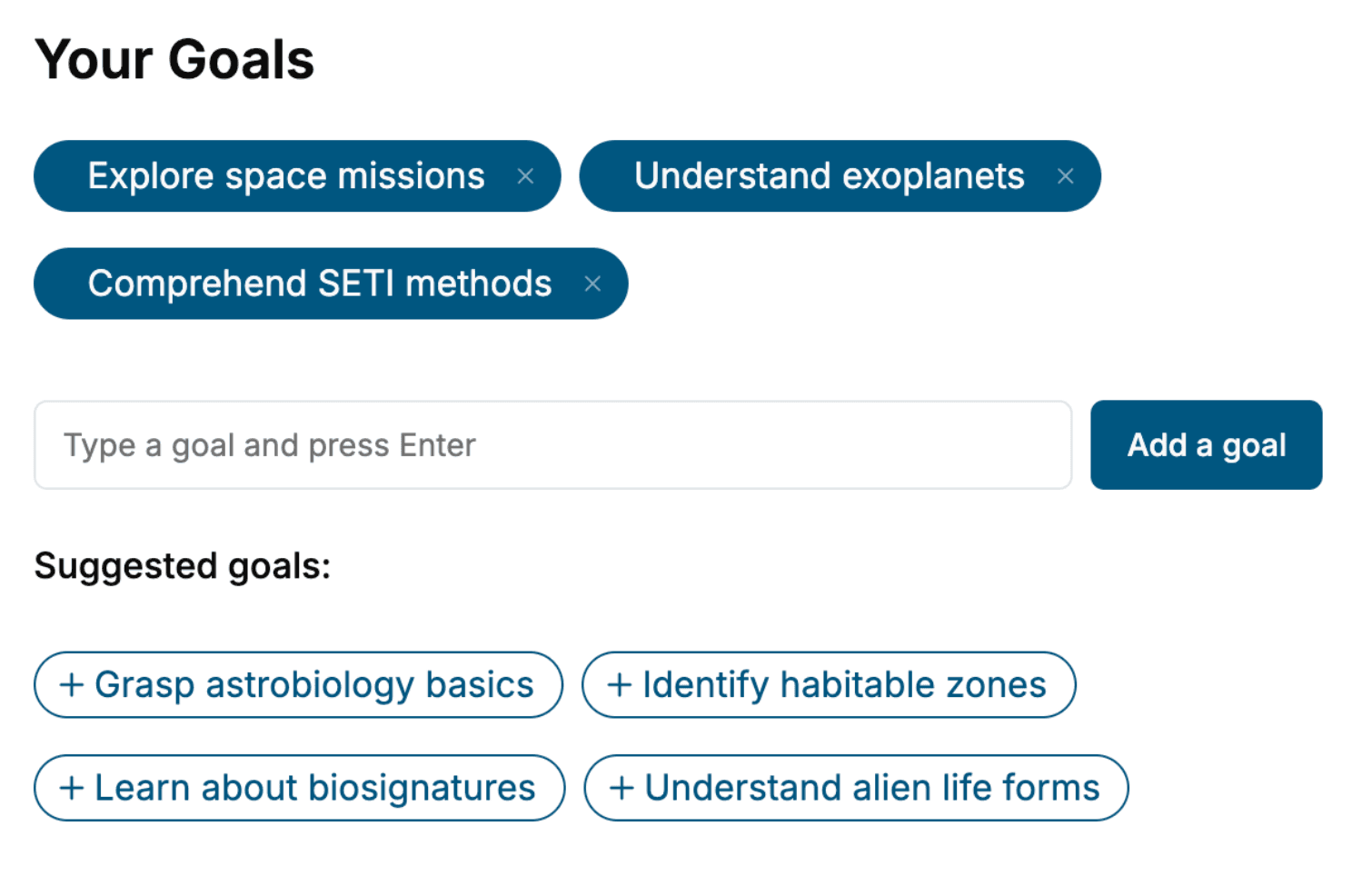
Tell us your goals and background, and get your own version of this book, tailored by AI to you.


Benefits of AI-tailored books
- Read one book, not ten:
- all the Quality Control and Management knowledge you need, gathered into a single book.
- Save days of learning:
- tell us your goals, choose your topics, and the whole book is built around them.
- Learn effortlessly:
- Quality Control and Management book written for your specific background and expertise.
- Understand at a glance:
- includes charts, tables, timelines, checklists, decision trees, and more.
- Stay current:
- written the day you order it, not years ago.
- Trust what you read:
- every book is checked for accuracy, with real research when your subject needs it.
Create your unique book in 3 steps
- 1. Select your focus
Select the focus of your Quality Control and Management book and share your background
- 2. Personalize your book
Specify your goals and choose sub-topics to include
- 3. Get your tailored book
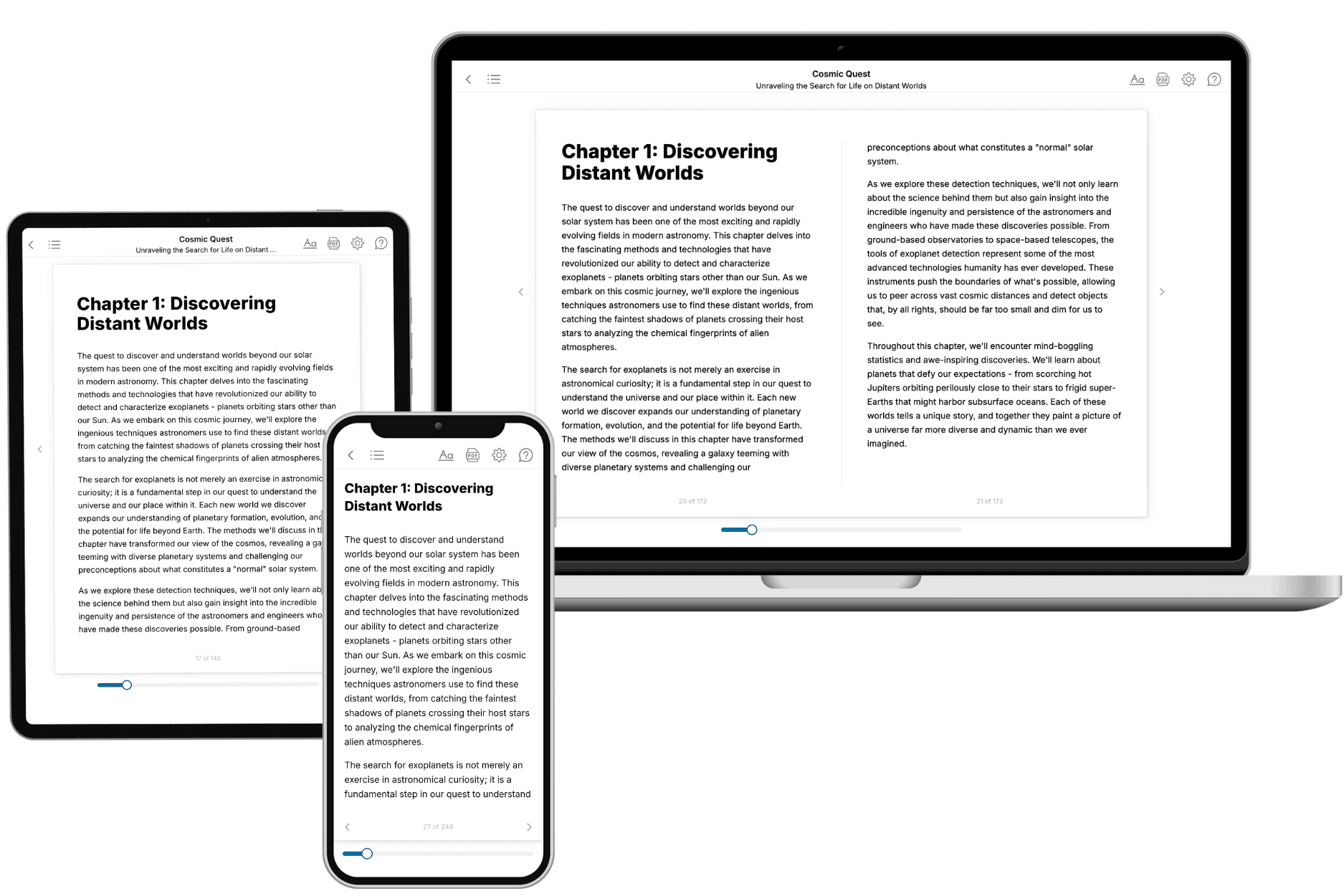
Your book is ready in 10 minutes. Read it online, download as EPUB or PDF, or send to Kindle.

Frequently asked questions
- What is TailoredRead?
TailoredRead creates complete, full-length nonfiction ebooks, written specifically for you. Tell us what you want to learn and why, and TailoredRead writes you a complete ebook on it, with charts, tables, and diagrams throughout. Read it online, on Kindle, or on any e-reader, or download it as a PDF or EPUB. Every book is written fresh the day you order it.
- How is the book tailored to me?
Before anything is written, you answer a few short questions about your goals, your background, and the topics you care about. Your book is then planned around your answers: written at your level, focused on your goals, and covering the topics you chose, instead of the one-size-fits-all book a store sells everyone.
- Will it read like generic AI content?
No. Your book isn't a chat transcript: it's planned chapter by chapter before a single word is written, told in a clear book voice, and explains ideas visually with charts, tables, and diagrams. After writing, every book goes through an editorial pass that polishes chapters so the book reads consistent from start to finish. Judge for yourself: browse thousands of sample books on our Explore Books page.
- How accurate is the content?
Our AI first checks whether your subject needs live research. Niche and fast-moving subjects are researched before writing, and the book plan and chapters are grounded in what it finds. After writing, every book goes through a quality pass that checks its facts and consistency, and researched books list their sources in a Notes section at the back.
- How long is the book?
You choose the length: Comprehensive (250-300 pages), Detailed (150-200 pages), Essential (70-100 pages), or Short (30-50 pages).
- Does the book include visuals?
Yes. Every book includes charts, tables, and diagrams: timelines, checklists, step-by-step guides, decision trees, comparison tables, matrices, and bar charts. A typical book includes dozens of these visual elements.
- Can I read it on Kindle? What formats can I download?
Yes. Every book can be read in our online reader or downloaded as a PDF or EPUB. The EPUB can be opened with Kindle, Apple Books, Kobo, and any e-reader. The Commercial and Author licenses also include an editable Word (DOCX) and Markdown download.
- How much does it cost?
About the price of a regular ebook. The exact price depends on your book's length and complexity, from $2 for the shortest books to $35 for the most comprehensive, and it's shown when you review your book, before you commit to anything. Each book is a one-time purchase, yours to keep, no subscription. Licenses that let you share, teach, or publish your book range from $35.99 to $49.99.
- Can I preview the book before purchasing?
Before you pay, you'll see what your book will cover: the title, a detailed description, the estimated length, and the complete chapter-by-chapter table of contents, so you know what you're getting before you decide. The full text itself is written after you purchase.
- How long does it take to create a book?
About 10 minutes. You can start reading the opening chapters while the rest is still being written.