Formal Verification Essentials
Master Static Analysis and Prove Your Code Works
What if you could prove mathematically that your code is correct before it ever runs in production?
207 pages9 chaptersJun 4, 2026Software QA
About this book
Formal verification offers exactly that—a rigorous approach to software quality that goes far beyond traditional testing. This book demystifies formal verification and static analysis, showing you how these powerful techniques can catch critical bugs, prevent security vulnerabilities, and give you genuine confidence in your code. Whether you're building financial systems, medical devices, or everyday applications, you'll discover practical strategies for integrating verification into your development process. Learn how static analysis tools work, understand the different verification methodologies, and master the techniques that leading companies use to ensure reliability. This isn't theoretical computer science—it's a practical guide to making your software more dependable, reducing costly bugs, and building systems that work as intended.
Table of contents
- IntroductionWhy Verification Matters in Modern Software, Beyond Testing: The Power of Proof, How to Use This BookRead below
- Chapter 1: Foundations of Formal VerificationWhat Is Formal Verification?, Verification vs. Testing: Key Differences, When to Use Formal Verification, Cost-Benefit Analysis of Verification
- Chapter 2: Static Analysis FundamentalsHow Static Analysis Works, Abstract Interpretation and Program Analysis, Control Flow and Data Flow Analysis, Understanding False Positives and False Negatives
- Chapter 3: Model Checking and State Space ExplorationModel Checking Basics, Temporal Logic and Properties, Managing State Space Explosion, Practical Model Checking Tools
- Chapter 4: Theorem Proving and Deductive VerificationIntroduction to Theorem Proving, Proof Assistants and Interactive Verification, Automated Reasoning and SMT Solvers, Practical Theorem Proving Techniques
- Chapter 5: Static Analysis Tools and TechniquesPopular Static Analysis Tools, Configuring and Tuning Analysis Tools, Interpreting Analysis Results, Integrating Tools into Your Development Workflow
- Chapter 6: Specification and Property DefinitionWriting Formal Specifications, Safety and Liveness Properties, Specification Languages and Notations, Common Specification Pitfalls
- Chapter 7: Verification in Practice: Real-World ApplicationsVerification in Critical Systems, Security Properties and Verification, Verifying Concurrent and Distributed Systems, Case Studies and Lessons Learned
- Chapter 8: Building a Verification StrategyAssessing Your Verification Needs, Choosing the Right Verification Techniques, Team Adoption and Training, Measuring Verification Success
- Chapter 9: Advanced Topics and Future DirectionsCompositional and Modular Verification, Machine Learning and AI Verification, Emerging Tools and Technologies, Research Frontiers in Formal Methods
- ConclusionKey Takeaways, Your Next Steps
- Glossary
- Further Reading and Resources
Introduction
Software is everywhere. It runs the planes you fly in, the medical devices that monitor your health, the financial systems that move your money, and the apps you use every single day. And yet, despite decades of progress in programming languages, development tools, and engineering practices, software bugs remain stubbornly common. Some are minor annoyances. Others are catastrophic. The question worth asking is not whether bugs exist in your code, but whether you have the right tools to find them before they cause real damage.
Most developers rely on testing to catch problems. Testing is valuable, and no serious engineer would argue against it. But testing has a fundamental limitation: it can only check the scenarios you think to test. Every test suite, no matter how thorough, leaves gaps. Edge cases slip through. Rare combinations of inputs go unchecked. Concurrency bugs appear only under specific timing conditions that your test environment never reproduces. Testing tells you that your code worked for the cases you tried. It cannot tell you that your code works for all possible cases.
Formal verification takes a different approach entirely. Instead of running your code and observing what happens, it uses mathematical reasoning to prove what your code will do under every possible condition. That word "prove" is not marketing language. It means the same thing it means in mathematics: a rigorous, logical argument that leaves no room for doubt. This book is about understanding that approach, learning the tools that make it practical, and building the skills to apply it in your own work. You do not need a background in academic mathematics to benefit from these techniques. You need curiosity, a willingness to think carefully about what your code is supposed to do, and the practical guidance this book provides.
The field of formal verification has matured significantly over the past two decades. What was once the exclusive domain of academic researchers and aerospace engineers is now accessible to working software developers. Tools like Clang Static Analyzer, TLA+, Coq, Z3, and many others have lowered the barrier to entry considerably. Companies like Amazon, Microsoft, and Facebook have integrated formal methods into their engineering workflows, not as exotic experiments, but as practical tools that save time and prevent costly failures.[1] This book will show you how to do the same.
Each chapter in this book builds on the last, moving from foundational concepts to practical tools to real-world application. Whether you are a developer who has never heard of model checking, or an engineer who has dabbled with static analysis tools but wants a deeper understanding, you will find material here that is directly applicable to your work. The goal is not to turn you into a formal methods researcher. The goal is to make you a more effective, more confident software engineer who knows how to use verification as a practical weapon against bugs.
Why Verification Matters in Modern Software
The cost of software bugs is staggering. A 2020 study by the Consortium for Information and Software Quality estimated that poor software quality cost the United States economy approximately $2.08 trillion in that year alone.[2] That figure includes operational failures, failed projects, and the ongoing cost of technical debt. Behind every dollar in that estimate is a real failure: a system that crashed, a transaction that corrupted data, a security vulnerability that exposed user information. These are not abstract statistics. They represent real consequences for real people.
Consider a few well-known examples that illustrate what is at stake. In 1996, the Ariane 5 rocket exploded 37 seconds after launch because of an integer overflow bug in software that had been reused from the Ariane 4 program without adequate verification for the new context.[3] The mission loss was valued at approximately $370 million. In 2012, a software error at Knight Capital Group caused the firm to lose $440 million in 45 minutes due to an automated trading system behaving in an unintended way.[4] These are not cases where testing was skipped entirely. They are cases where testing was insufficient to catch the specific failure mode that occurred.
Modern software systems have properties that make them especially difficult to test comprehensively. Concurrency introduces timing-dependent behavior that is nearly impossible to reproduce reliably in a test environment. Distributed systems have failure modes that depend on network conditions, message ordering, and partial failures across multiple nodes. Security vulnerabilities often arise from subtle interactions between components that individually appear correct. In all of these domains, the gap between "tested" and "verified" is not a minor technicality. It is the difference between confidence and certainty.
Verification matters not just for safety-critical systems, but for any software where correctness has real consequences. Financial applications need to guarantee that transactions are processed accurately. Healthcare software must handle edge cases without producing incorrect results. Authentication systems must enforce access controls without exception. Even consumer applications carry reputational and financial risk when they fail in unexpected ways. The question is not whether your software is important enough to verify. The question is whether you can afford the consequences of not verifying it.
There is also a subtler reason why verification matters: it forces clarity. Writing a formal specification of what your code should do requires you to think precisely about its behavior. That process alone often reveals ambiguities, contradictions, and missing requirements that would otherwise surface as bugs later. Many developers who adopt formal methods report that the act of specifying their system is as valuable as the verification itself. You cannot prove something correct if you have not clearly defined what "correct" means.
The good news is that you do not need to apply full formal verification to every line of code you write. Verification is a spectrum, and even lightweight techniques like running a static analysis tool on your codebase can catch significant classes of bugs automatically. The key is understanding what each technique offers, where it fits in your workflow, and how to use it effectively. That understanding is exactly what this book is designed to provide.
A practical perspective: Think of verification as a spectrum. On one end, a simple linter catches obvious style and syntax issues. On the other end, a full theorem prover provides mathematical guarantees about complex system properties. Most real-world verification work lives somewhere in the middle, using tools like static analyzers, model checkers, and SMT solvers to provide strong assurances without requiring a PhD to operate.
The shift toward more reliable software is also being driven by external pressure. Regulatory frameworks in industries like aviation (DO-178C), medical devices (IEC 62304), and automotive systems (ISO 26262) increasingly require evidence of formal analysis as part of certification. Even outside regulated industries, enterprise customers and security-conscious organizations are beginning to ask harder questions about how software is verified. Knowing how to answer those questions, and having the tools to back up your answers, is becoming a genuine professional advantage.
Beyond Testing: The Power of Proof
To understand why formal verification is fundamentally different from testing, it helps to think about what testing actually does. When you write a test, you are saying: "Given this specific input, I expect this specific output." When the test passes, you have confirmed that one particular execution of your code produced the expected result. That is genuinely useful information. But it is a sample, not a proof. No matter how many tests you write, you are always reasoning from examples rather than from principles.
Formal verification reasons from principles. Instead of asking "what does this code do with input X?", it asks "what can this code possibly do with any input?" The answer comes not from running the code, but from analyzing its structure mathematically. This distinction has profound practical consequences. A static analyzer can examine every possible path through a function and tell you whether a null pointer dereference is possible anywhere in that path space, not just in the paths your tests happen to exercise. A model checker can explore every possible state of a concurrent system and tell you whether a deadlock can ever occur, not just whether it occurred in your test runs.
The concept of a proof in this context is worth unpacking. In formal verification, a proof is a structured argument that demonstrates a property holds for all possible inputs, states, or executions. Different verification techniques construct these proofs in different ways:
- Static analysis uses abstract interpretation and data flow analysis to reason about program behavior without executing it.
- Model checking exhaustively explores all reachable states of a system model to verify that specified properties always hold.
- Theorem proving uses formal logic and proof rules to construct mathematical proofs of correctness, often with human guidance.
- SMT solving uses automated reasoning engines to check whether logical formulas describing program behavior are satisfiable or provably true.
Each of these approaches has different strengths, limitations, and appropriate use cases. A key theme throughout this book is that these techniques are complementary, not competing. The most robust verification strategies combine multiple approaches, using each one where it is most effective. Understanding the differences between them is the first step toward building that kind of layered strategy.
One of the most powerful demonstrations of what proof-based verification can achieve comes from the CompCert project, a formally verified C compiler developed at INRIA in France.[5] CompCert was verified using the Coq proof assistant to guarantee that the compiled output of any valid C program is semantically equivalent to the source code. In other words, the compiler is mathematically proven not to introduce bugs during compilation. When researchers tested CompCert against other C compilers using random testing tools, they found that CompCert produced zero miscompilations, while other widely-used compilers produced hundreds. That result is not a coincidence. It is what proof looks like in practice.
Another compelling example is Amazon Web Services' use of TLA+ to verify the designs of distributed systems like DynamoDB and S3.[1] Engineers at AWS reported finding subtle bugs in their designs that had survived extensive code review and testing, but were caught immediately when the designs were expressed as formal models. One engineer described finding a bug that would have caused data loss under a specific sequence of network failures, a scenario that would have been nearly impossible to reproduce in testing but was trivially exposed by model checking.
It is important to be honest about what formal verification cannot do. No verification technique can prove that your specification is correct, only that your implementation matches your specification. If you specify the wrong behavior, verification will faithfully confirm that your code implements the wrong behavior correctly. This is sometimes called the specification problem, and it is a genuine challenge. Writing good specifications is a skill that takes practice. But this limitation does not diminish the value of verification. It simply means that verification is one part of a broader quality strategy, not a magic solution that replaces all other forms of engineering judgment.
Verification also has practical costs. Some techniques require significant upfront investment in learning, tooling, and specification writing. Full theorem proving for complex systems can be extremely time-consuming. Model checking can run into computational limits when the state space of a system is very large. These are real constraints, and this book will address them honestly. The goal is to help you understand where verification provides the most value relative to its cost, so you can make informed decisions about where to invest your effort.
The trajectory of the field is encouraging. Verification tools are becoming more automated, more integrated into standard development environments, and more capable of handling real-world code at scale. What required a specialist ten years ago can often be accomplished today with a well-configured CI pipeline and a few hours of learning. The barrier to entry has dropped substantially, and it continues to drop. This is an excellent time to develop these skills.
How to Use This Book
This book is organized to take you from foundational understanding to practical application in a logical progression. Each chapter builds on the concepts introduced before it, so reading in order is recommended if you are new to formal verification. That said, the chapters are also designed to be useful as standalone references if you already have some background and want to focus on a specific topic.
Here is a brief map of what each part of the book covers:
- Chapters 1 and 2 establish the foundations. Chapter 1 defines formal verification, explains how it differs from testing, and helps you think about when and where to apply it. Chapter 2 dives into static analysis, covering how these tools work under the hood and what they can and cannot detect.
- Chapters 3 and 4 cover the two major formal verification methodologies in depth. Chapter 3 explores model checking, including temporal logic and practical tools. Chapter 4 covers theorem proving and automated reasoning with SMT solvers.
- Chapters 5 and 6 focus on practical application. Chapter 5 surveys the most useful static analysis tools available today and shows you how to configure and integrate them. Chapter 6 teaches you how to write formal specifications and define the properties you want to verify.
- Chapter 7 examines real-world applications, including critical systems, security verification, and concurrent systems, with concrete case studies.
- Chapter 8 helps you build a verification strategy for your own team or project, covering tool selection, team adoption, and measuring success.
- Chapter 9 looks at advanced topics and the future of the field, including verification of machine learning systems and emerging research directions.
Throughout the book, you will find concrete examples, tool demonstrations, and practical exercises. The examples use a mix of languages and tools, chosen to illustrate specific concepts clearly rather than to advocate for any particular technology stack. Where code examples appear, they are kept as simple as possible while still being realistic. The focus is always on understanding the underlying concept, not on memorizing syntax.
If you are a developer who is completely new to formal verification, the recommended path is to read Chapters 1 through 5 in order before jumping to any specific topic. These chapters give you the conceptual vocabulary and practical grounding you need to make sense of everything else. Pay particular attention to Chapter 2 on static analysis, since this is the technique most immediately applicable to everyday development work and the one with the lowest barrier to entry.
If you already have some familiarity with static analysis tools and want to go deeper, you might start with Chapter 3 on model checking or Chapter 4 on theorem proving, depending on your interests. These chapters assume you understand the basics covered in Chapters 1 and 2, but they are otherwise self-contained. Chapter 6 on specification writing is valuable regardless of which verification technique you plan to use, since clear specifications are the foundation of any verification effort.
If you are a team lead or architect trying to figure out how to introduce verification into your organization, Chapter 8 is written specifically for you. It addresses the practical challenges of tool selection, team training, and measuring the return on investment from verification activities. You may also want to read Chapter 7 for the case studies, which provide concrete evidence of what verification has achieved in real engineering contexts.
A note on prerequisites: This book assumes you are comfortable reading and writing code in at least one mainstream programming language. Familiarity with basic concepts like data structures, control flow, and concurrency will help you get the most out of the examples. No background in formal logic or mathematics beyond high school level is required. Where mathematical notation is used, it is introduced and explained in plain language before being applied.
One of the most important things you can do while reading this book is to experiment with the tools as you encounter them. Reading about static analysis is useful. Running a static analyzer on your own code and seeing what it finds is transformative. Most of the tools discussed in this book are freely available and can be installed and running within minutes. Whenever a tool is introduced, take the time to try it on a small project or even a code snippet. The hands-on experience will cement your understanding far more effectively than reading alone.
You will also notice that this book does not shy away from discussing the limitations and trade-offs of each technique. Formal verification is not a silver bullet, and presenting it as one would do you a disservice. Every technique has cases where it works well and cases where it struggles. Understanding those boundaries is what allows you to use these tools effectively rather than being frustrated when they do not solve every problem. The goal is to give you a realistic, nuanced picture of what formal verification can do for you, so you can make smart decisions about how to apply it.
Finally, keep in mind that formal verification is a skill that develops over time. Your first attempt at writing a formal specification will probably be imperfect. Your first model checking run will probably produce results that take some effort to interpret. That is completely normal. Every experienced practitioner of formal methods went through the same learning curve. The techniques in this book are learnable by any motivated developer, and the investment pays off in code that is more reliable, more maintainable, and more trustworthy. That is a goal worth working toward.
Notes
Introduction
- 1. C. Newcombe and others, "How Amazon Web Services Uses Formal Methods," Communications of the ACM, 2015
- 2. Consortium for Information and Software Quality, The Cost of Poor Software Quality in the US: A 2020 Report, 2020
- 3. J. L. Lions, ARIANE 5 Flight 501 Failure: Report by the Inquiry Board, European Space Agency, 1996
- 4. U.S. Securities and Exchange Commission, SEC Charges Knight Capital With Violations of Market Access Rule, SEC Release, 2013
- 5. X. Leroy, "Formal Verification of a Realistic Compiler," Communications of the ACM, 2009
- 1. C. Newcombe and others, "How Amazon Web Services Uses Formal Methods," Communications of the ACM, 2015
This is the end of the free sample. The full book has 9 chapters.
Want this book written for you?
Tell us your goals and background, and get your own version of this book, tailored by AI to you.


Benefits of AI-tailored books
- Read one book, not ten:
- all the Software QA knowledge you need, gathered into a single book.
- Save days of learning:
- tell us your goals, choose your topics, and the whole book is built around them.
- Learn effortlessly:
- Software QA book written for your specific background and expertise.
- Understand at a glance:
- includes charts, tables, timelines, checklists, decision trees, and more.
- Stay current:
- written the day you order it, not years ago.
- Trust what you read:
- every book is checked for accuracy, with real research when your subject needs it.
Create your unique book in 3 steps
- 1. Select your focus
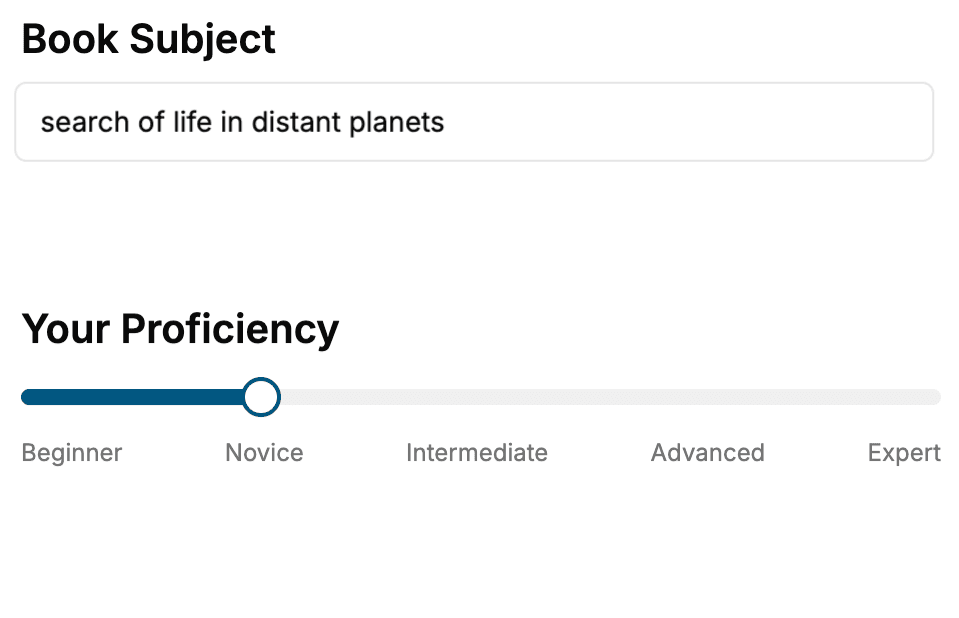
Select the focus of your Software QA book and share your background
- 2. Personalize your book
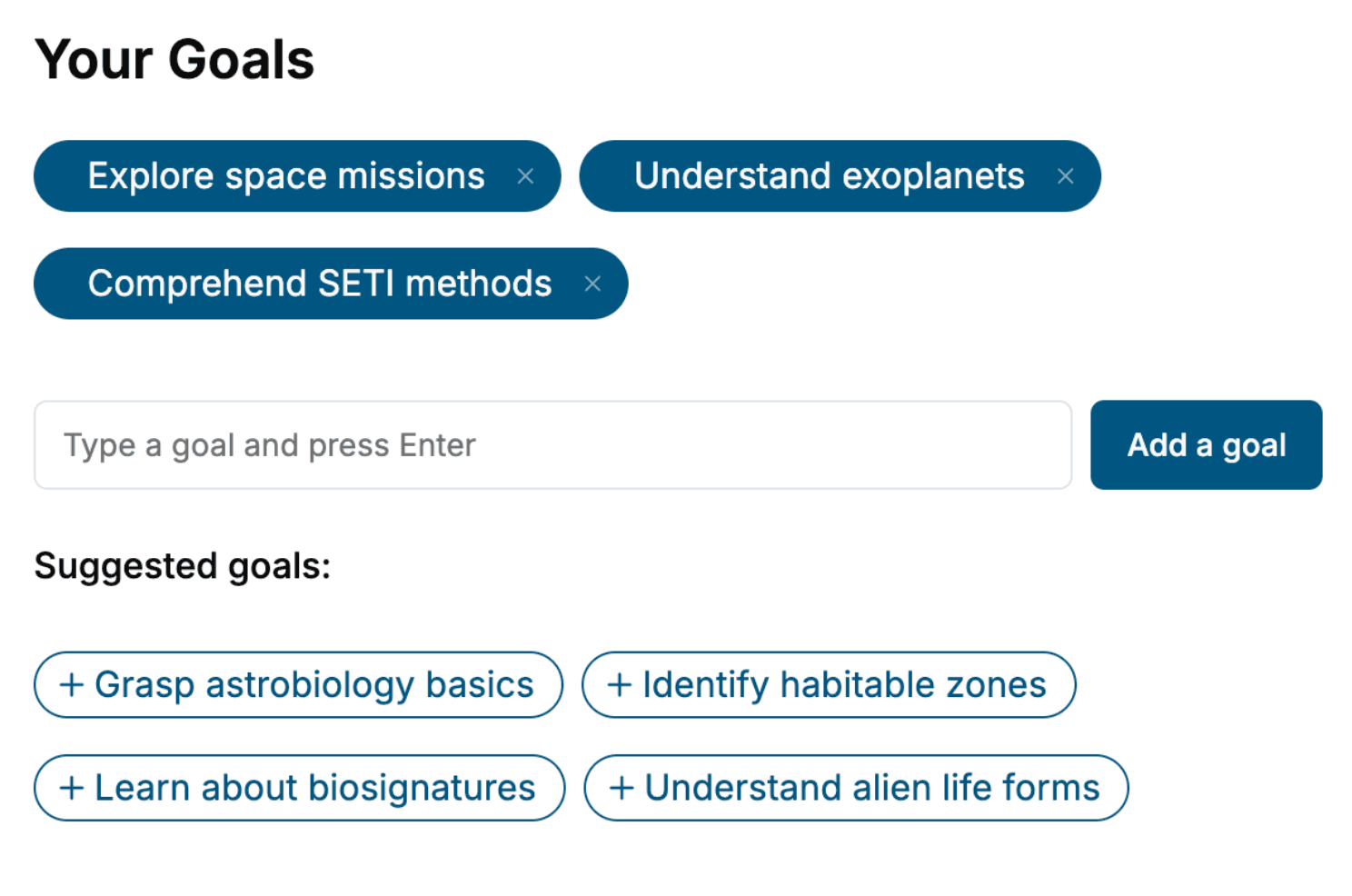
Specify your goals and choose sub-topics to include
- 3. Get your tailored book
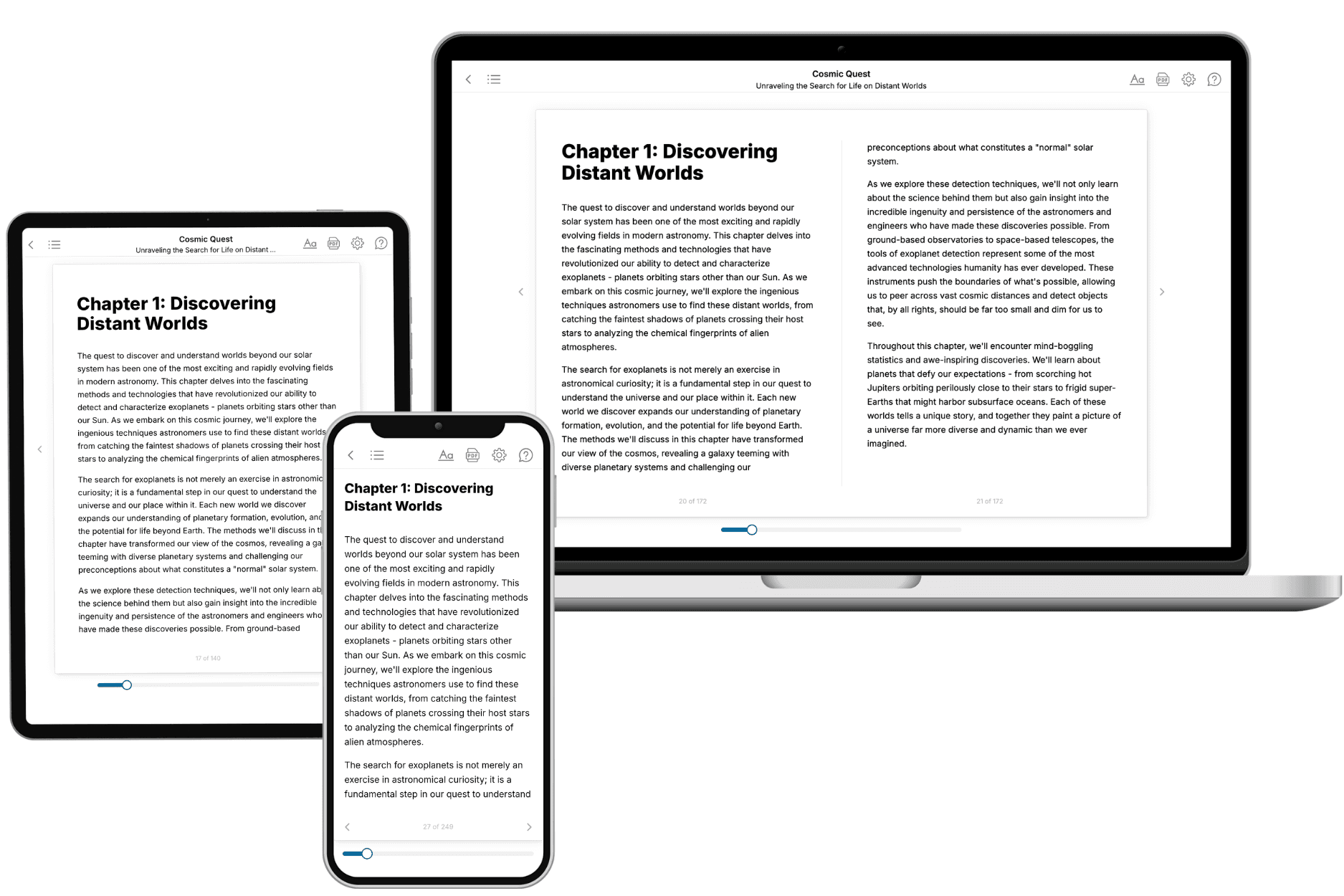
Your book is ready in 10 minutes. Read it online, download as EPUB or PDF, or send to Kindle.
Frequently asked questions
- What is TailoredRead?
TailoredRead creates complete, full-length nonfiction ebooks, written specifically for you. Tell us what you want to learn and why, and TailoredRead writes you a complete ebook on it, with charts, tables, and diagrams throughout. Read it online, on Kindle, or on any e-reader, or download it as a PDF or EPUB. Every book is written fresh the day you order it.
- How is the book tailored to me?
Before anything is written, you answer a few short questions about your goals, your background, and the topics you care about. Your book is then planned around your answers: written at your level, focused on your goals, and covering the topics you chose, instead of the one-size-fits-all book a store sells everyone.
- Will it read like generic AI content?
No. Your book isn't a chat transcript: it's planned chapter by chapter before a single word is written, told in a clear book voice, and explains ideas visually with charts, tables, and diagrams. After writing, every book goes through an editorial pass that polishes chapters so the book reads consistent from start to finish. Judge for yourself: browse thousands of sample books on our Explore Books page.
- How accurate is the content?
Our AI first checks whether your subject needs live research. Niche and fast-moving subjects are researched before writing, and the book plan and chapters are grounded in what it finds. After writing, every book goes through a quality pass that checks its facts and consistency, and researched books list their sources in a Notes section at the back.
- How long is the book?
You choose the length: Comprehensive (250-300 pages), Detailed (150-200 pages), Essential (70-100 pages), or Short (30-50 pages).
- Does the book include visuals?
Yes. Every book includes visual elements such as timelines, checklists, step-by-step guides, decision trees, comparison tables, and matrices, and many include bar charts. A typical book includes dozens of these visual elements.
- Can I read it on Kindle? What formats can I download?
Yes. Every book can be read in our online reader or downloaded as a PDF or EPUB. The EPUB can be opened with Kindle, Apple Books, Kobo, and any e-reader. The Commercial and Author licenses also include an editable Word (DOCX) and Markdown download.
- How much does it cost?
About the price of a regular ebook. The exact price depends on your book's length and complexity, from $2 for the shortest books to $35 for the most comprehensive, and it's shown when you review your book, before you commit to anything. Each book is a one-time purchase, yours to keep, no subscription. Licenses that let you share, teach, or publish your book range from $35.99 to $49.99.
- Can I preview the book before purchasing?
Before you pay, you'll see what your book will cover: the title, a detailed description, the estimated length, and the complete chapter-by-chapter table of contents, so you know what you're getting before you decide. The full text itself is written after you purchase.
- How long does it take to create a book?
About 10 minutes. You can start reading the opening chapters while the rest is still being written.