The Genetic Blueprint of Animals
Understanding Heredity, Evolution, and Biodiversity Through DNA
What if the key to understanding animal behavior, disease resistance, and evolutionary success lies hidden in the double helix?
207 pages9 chaptersMay 27, 2026Genetics
About this book
Animal genetics isn't just an academic subject—it's the foundation for understanding why some species thrive while others struggle, how traits pass through generations, and how life itself adapts to changing environments. This book demystifies the science of heredity and genetic variation, showing you how DNA orchestrates everything from a butterfly's wing patterns to a wolf pack's hunting instincts. Whether you're curious about conservation efforts, interested in how selective breeding works, or want to grasp the mechanisms behind evolution, you'll discover how genetic principles shape the animal kingdom. Through clear explanations, real-world examples, and practical applications, you'll gain the knowledge to appreciate the genetic complexity underlying all animal life and understand why genetic diversity matters for species survival.
Table of contents
- IntroductionWhy Animal Genetics Matters, What You'll Learn in This Book, How to Use This BookRead below
- Chapter 1: The Foundations of HeredityWhat Is Genetics and Why Does It Matter?, A Brief History: From Mendel to Modern Science, Genes, Traits, and the Environment
- Chapter 2: DNA: The Molecule of LifeThe Structure of DNA, How DNA Stores and Transmits Information, Chromosomes and Genetic Organization
- Chapter 3: Inheritance Patterns and Mendelian GeneticsMendel's Laws of Inheritance, Dominant and Recessive Traits, Beyond Simple Mendelian Inheritance
- Chapter 4: Genetic Variation and MutationSources of Genetic Variation, Types of Mutations and Their Effects, Mutations as the Raw Material for Evolution
- Chapter 5: Natural Selection and AdaptationHow Natural Selection Works, Adaptation: Real-World Examples Across Species, Fitness, Survival, and Reproductive Success
- Chapter 6: Population Genetics and EvolutionAllele Frequencies and Gene Pools, The Hardy-Weinberg Principle, Forces That Change Allele Frequencies
- Chapter 7: Molecular Genetics and Modern TechniquesReading and Sequencing DNA, Tools for Analyzing Genetic Information, Genomics and Its Applications
- Chapter 8: Conservation Genetics and BiodiversityWhy Genetic Diversity Matters for Species Survival, Protecting Endangered Species Through Genetics, Genetic Management in Breeding Programs
- Chapter 9: Practical Applications of Animal GeneticsSelective Breeding and Agricultural Genetics, Genetics and Disease Resistance, Genetic Forensics and Species Identification
- ConclusionKey Takeaways, The Future of Animal Genetics
- Glossary of Key Terms
- Further Reading and Resources
Introduction
Every animal alive today carries a molecular archive inside nearly every cell of its body. That archive, written in the language of DNA, contains instructions for building proteins, regulating development, responding to disease, and passing traits to the next generation. It records evolutionary history stretching back hundreds of millions of years. It explains why a cheetah can accelerate to 70 miles per hour, why some dog breeds are prone to hip dysplasia, and why a population of island birds can diverge into entirely new species within a few thousand generations. Genetics is not a peripheral detail of animal biology. It is the foundation on which everything else is built.
For a long time, genetics felt like a subject reserved for laboratory scientists working with fruit flies and petri dishes. That perception has changed dramatically. Over the past three decades, advances in DNA sequencing technology have made it possible to read the complete genetic code of virtually any animal species, quickly and affordably. Researchers can now compare the genomes of wolves and domestic dogs, track the genetic health of endangered rhinoceros populations, identify the specific mutations that make certain salmon resistant to parasites, and reconstruct the evolutionary relationships between species that diverged millions of years ago. Genetics has moved from the laboratory bench into the field, the conservation reserve, the farm, and the courtroom.
This book is designed for anyone who already has a working knowledge of zoology and biology and wants to go deeper. You understand what a cell is, you know that DNA carries genetic information, and you have probably encountered terms like allele, mutation, and natural selection before. What this book offers is a more complete picture: how these concepts connect to each other, how they play out across real animal populations, and why they matter for conservation, agriculture, medicine, and our broader understanding of life on Earth. The goal is not to overwhelm you with technical detail but to give you a genuinely useful framework for thinking about animal genetics in all its complexity.
The chapters ahead move from the molecular to the ecological, from the structure of a single DNA molecule to the genetic dynamics of entire populations. Along the way, you will encounter real examples drawn from species as different as monarch butterflies, African elephants, Atlantic cod, and domestic cattle. These examples are not decorative. They are the evidence that makes the principles concrete and memorable. Genetics is most powerful when it is connected to the living world, and that connection runs through every page of this book.
Why Animal Genetics Matters
Consider the northern cheetah, one of the most genetically uniform large mammals on Earth. Studies of wild cheetah populations have found that individuals are so closely related that skin grafts between unrelated animals are rarely rejected, a phenomenon almost unheard of in other species.[1] This extreme genetic similarity is the result of a severe population bottleneck that occurred thousands of years ago, when cheetah numbers crashed to dangerously low levels. The consequence is a species with very little genetic variation to draw on when facing new diseases, environmental changes, or other stresses. The cheetah's story is a vivid illustration of why genetic diversity is not just an abstract scientific concern. It is a practical matter of survival.
Animal genetics matters at every scale of biological organization. At the molecular level, it determines how proteins are built and how cells function. At the individual level, it shapes physical traits, immune responses, and behavioral tendencies. At the population level, it governs how groups of animals respond to selection pressures, how they adapt to changing environments, and how vulnerable they are to extinction. At the species level, it records evolutionary history and defines the boundaries between lineages. Understanding genetics means understanding all of these levels simultaneously, and seeing how they connect.
The practical stakes are enormous. Global wildlife populations are under pressure from habitat loss, climate change, disease, and overexploitation. Conservation biologists increasingly rely on genetic tools to assess the health of endangered populations, design effective breeding programs, and make decisions about which individuals to move between reserves to maintain genetic diversity. Without this information, conservation efforts can inadvertently make things worse. Introducing animals from genetically incompatible populations, for example, can disrupt locally adapted gene combinations that took thousands of generations to develop.
Agriculture provides another compelling reason to care about animal genetics. Modern livestock and aquaculture industries depend on selective breeding programs that have been refined over decades. Cattle breeds have been developed for specific combinations of milk production, disease resistance, and climate tolerance. Salmon farming operations select for faster growth rates and improved feed conversion. These programs work because breeders understand the genetic principles underlying the traits they are selecting for. As the global demand for animal protein grows and climate change alters the conditions in which livestock must survive, the ability to make informed genetic decisions becomes more critical than ever.
Medicine is a third domain where animal genetics has profound implications. Many human diseases have animal models that allow researchers to study disease mechanisms and test treatments. The genetic similarity between humans and other mammals means that discoveries made in mice, pigs, or zebrafish often translate directly to human medicine. Beyond research, understanding how disease resistance genes work in wild animal populations can inform strategies for managing zoonotic diseases, those that jump from animals to humans, which represent a significant and growing public health challenge.
There is also a deeper, more philosophical reason why animal genetics matters. It connects every living organism to every other through a shared molecular language. The same four DNA bases that spell out the genome of a fruit fly also spell out the genome of a blue whale. The same genetic code that translates DNA sequences into proteins in a bacterium operates in essentially the same way in a human cell. This universality is one of the most remarkable facts in all of science, and genetics is the discipline that reveals it most clearly. Understanding animal genetics is, in a very real sense, understanding the unity of life itself.
Finally, genetics matters because it is changing rapidly. Technologies that were experimental a decade ago are now routine. Whole-genome sequencing, which once cost billions of dollars and took years to complete, can now be done for a few hundred dollars in a matter of days. Gene editing tools allow researchers to make precise changes to an organism's DNA with unprecedented accuracy. These capabilities raise important scientific questions and equally important ethical ones. Being informed about the science is the first step toward engaging thoughtfully with those questions.
What You'll Learn in This Book
This book covers animal genetics from the ground up, but it does not start from zero. Because you already have a foundation in biology, the early chapters move efficiently through core concepts before building toward more complex territory. The goal is to give you a complete, connected understanding of how genetics works in animals, from the structure of DNA to the dynamics of evolving populations.
The first two chapters establish the molecular and historical foundations. You will revisit the structure of DNA and chromosomes with a focus on how that structure enables the storage and transmission of genetic information. You will also trace the history of genetics from Gregor Mendel's pea plant experiments in the 1860s through the discovery of the double helix in 1953 and into the genomic era of the twenty-first century. Understanding where the science came from helps clarify why certain concepts are framed the way they are and how dramatically our understanding has evolved.
Chapters Three and Four address inheritance and variation. Mendelian genetics provides the classical framework for understanding how traits are passed from parents to offspring, but real-world inheritance is often more complicated. You will learn about incomplete dominance, codominance, polygenic traits, and gene-environment interactions, all of which are essential for understanding why animals within the same species can look and behave so differently. Chapter Four then examines genetic variation and mutation, exploring the different ways that DNA can change and what those changes mean for individual animals and populations.
Chapters Five and Six move from individual genetics to population-level processes. Natural selection, adaptation, genetic drift, gene flow, and the Hardy-Weinberg principle are all covered in depth, with real examples drawn from animal populations around the world. These chapters answer one of the most fundamental questions in biology: how do populations change over time, and what drives those changes? The answers have direct implications for understanding evolution, managing wildlife populations, and predicting how species will respond to environmental change.
Chapter Seven introduces the molecular tools that have transformed genetics research over the past three decades. DNA sequencing, polymerase chain reaction (PCR), genome-wide association studies, and comparative genomics are explained clearly, with attention to what each technique can and cannot tell us. This chapter is not a technical manual, but it will give you a solid understanding of how modern genetic research works and how to interpret the findings that come out of it.
The final two chapters focus on applications. Chapter Eight covers conservation genetics, examining how genetic analysis is used to protect endangered species, manage breeding programs, and maintain biodiversity. Chapter Nine explores practical applications in agriculture, disease resistance research, and forensic identification. These chapters bring together everything covered earlier in the book and show how genetic knowledge translates into real-world action.
By the end of this book, you will be able to:
- Explain how DNA structure enables the storage and transmission of genetic information across generations
- Predict inheritance patterns for both simple Mendelian traits and more complex polygenic traits
- Describe the sources of genetic variation and explain how mutations contribute to evolutionary change
- Analyze how natural selection, genetic drift, gene flow, and mutation alter allele frequencies in populations
- Interpret the results of common molecular genetic techniques used in research and conservation
- Evaluate the role of genetic diversity in species survival and explain why it matters for conservation
- Recognize the practical applications of animal genetics in agriculture, medicine, and forensics
These are not just academic skills. They are the tools you need to read and evaluate scientific literature, engage with conservation debates, understand news stories about genetic research, and think clearly about the biological world around you. Genetics is increasingly part of public discourse, from debates about genetically modified organisms to discussions about de-extinction projects. Having a solid grounding in the science puts you in a much better position to engage with those conversations critically and confidently.
One thing this book does not do is pretend that genetics is simple or fully understood. There are genuine areas of scientific uncertainty, ongoing debates, and phenomena that current models do not fully explain. Where those exist, they are acknowledged honestly. Science is not a collection of settled facts but an ongoing process of inquiry, and genetics is one of the most active and rapidly evolving fields in all of biology. Part of what makes it so exciting is that significant discoveries are still being made regularly.
How to Use This Book
This book is designed to be read sequentially, because each chapter builds on concepts introduced in the ones before it. If you try to jump directly to the chapter on conservation genetics without reading the earlier material on population genetics and genetic variation, some of the reasoning will be harder to follow. That said, if you already have strong familiarity with a particular topic, the chapter summaries and key terms at the end of each chapter can help you quickly assess whether you need to read that section in full or can move on.
Throughout the book, you will encounter several recurring features designed to reinforce learning and make the material more concrete:
- Real-world examples: Every major concept is illustrated with a specific animal species or population. These examples are drawn from published research and are chosen to represent a wide range of taxa, from insects to large mammals.
- Key terms: Important technical terms are introduced in bold when they first appear and are defined in context. A full glossary at the back of the book provides concise definitions for quick reference.
- Figures and diagrams: Visual representations of molecular structures, inheritance patterns, and population dynamics are included throughout to support the written explanations.
- Footnotes and citations: Claims based on specific research studies are cited with footnotes, so you can follow up on the primary literature if you want to go deeper on any topic.
- Further reading: A curated list of books, review articles, and online resources at the back of the book points you toward additional material for each major topic area.
One practical suggestion: keep a notebook or digital document open as you read. Genetics involves a lot of interconnected concepts, and writing brief summaries in your own words is one of the most effective ways to consolidate understanding. When you encounter a new term or concept, try to write a one-sentence explanation of it before moving on. When you finish a chapter, try to sketch out how the main ideas connect to each other. This kind of active engagement with the material will make a significant difference in how much you retain.
It is also worth paying attention to the examples even when they involve species you are not particularly interested in. The genetic principles illustrated by a population of Galápagos finches are the same ones that apply to a herd of African buffalo or a school of Atlantic herring. The specific biology varies, but the underlying logic is consistent. Developing the habit of recognizing that consistency across different species is one of the hallmarks of genuine genetic literacy.
If you encounter a concept that feels unclear, the best approach is to pause and reread the relevant passage rather than pushing forward. Genetics is a cumulative subject, and a shaky understanding of allele frequencies, for example, will make the Hardy-Weinberg principle harder to grasp, which in turn will make the discussion of genetic drift less intuitive. Taking the time to solidify each concept before moving on pays dividends later. The glossary is a useful resource when a term feels slippery, and the index can help you locate earlier discussions of concepts that reappear in later chapters.
For those who want to go beyond the book, the further reading section at the back is organized by chapter and includes both accessible popular science books and more technical review articles. If a particular topic captures your interest, those resources will take you considerably deeper. The field of animal genetics is vast, and this book is best understood as a well-structured entry point rather than a comprehensive reference. Its purpose is to give you the conceptual framework and vocabulary you need to continue learning independently.
Finally, approach this material with curiosity rather than anxiety. Genetics has a reputation for being difficult, partly because it involves molecular processes that are invisible to the naked eye and partly because the terminology can feel overwhelming at first. But the core ideas are genuinely elegant and, once understood, deeply satisfying. The double helix is one of the most beautiful structures in nature. The way natural selection shapes populations over generations is one of the most powerful explanatory frameworks in all of science. The fact that a tiny sample of tissue can reveal the evolutionary history of a species is nothing short of remarkable. This book is an invitation to appreciate all of that, and to understand it well enough to think with it, not just about it.
Genetics is the grammar of life. Once you understand the rules, the living world begins to read like a story that has been unfolding for billions of years, written in a language that every organism on Earth shares.
That story is what the chapters ahead are about. The science is rigorous, the examples are real, and the implications reach far beyond the laboratory. Whether your interest lies in wildlife conservation, evolutionary biology, animal behavior, or simply the desire to understand how life works at its most fundamental level, you are in the right place. The genetic blueprint of animals is waiting to be read.
Notes
Introduction
- 1. S. J. O'Brien and others, "Genetic basis for species vulnerability in the cheetah," Science, 1985
This is the end of the free sample. The full book has 9 chapters.
Want this book written for you?
Tell us your goals and background, and get your own version of this book, tailored by AI to you.


Benefits of AI-tailored books
- Read one book, not ten:
- all the Genetics knowledge you need, gathered into a single book.
- Save days of learning:
- tell us your goals, choose your topics, and the whole book is built around them.
- Learn effortlessly:
- Genetics book written for your specific background and expertise.
- Understand at a glance:
- includes charts, tables, timelines, checklists, decision trees, and more.
- Stay current:
- written the day you order it, not years ago.
- Trust what you read:
- every book is checked for accuracy, with real research when your subject needs it.
Create your unique book in 3 steps
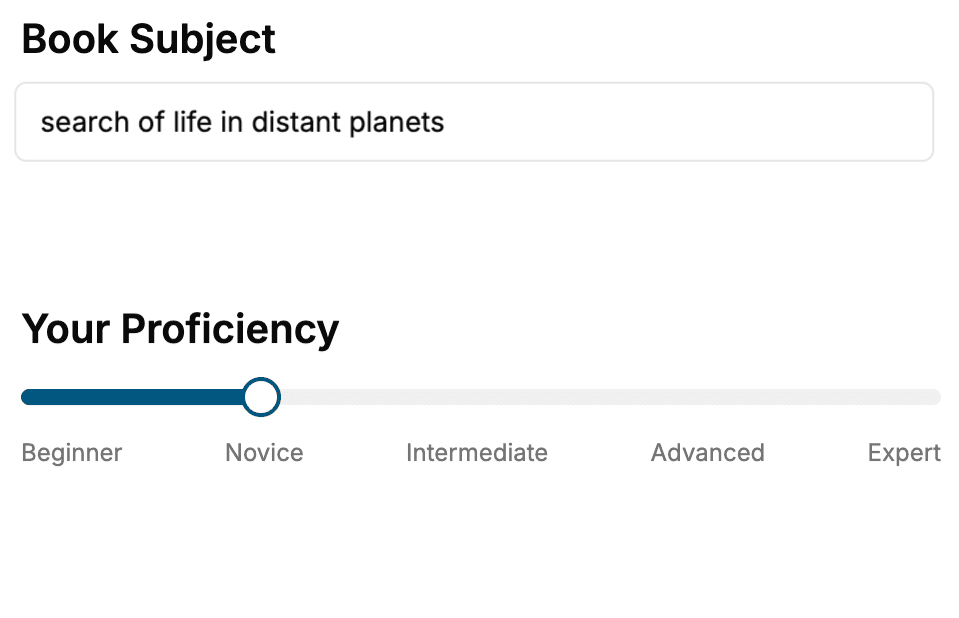
- 1. Select your focus
Select the focus of your Genetics book and share your background
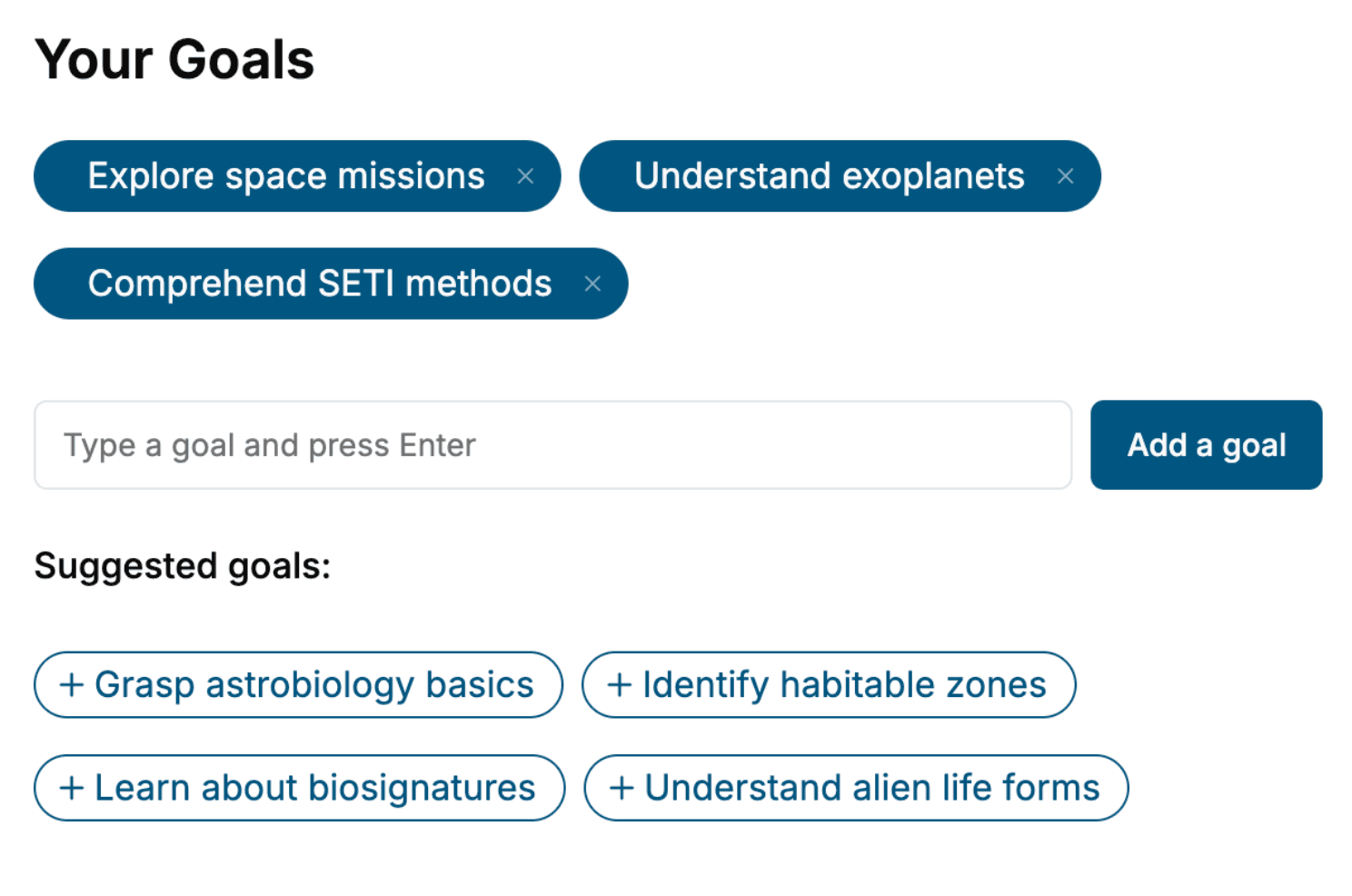
- 2. Personalize your book
Specify your goals and choose sub-topics to include
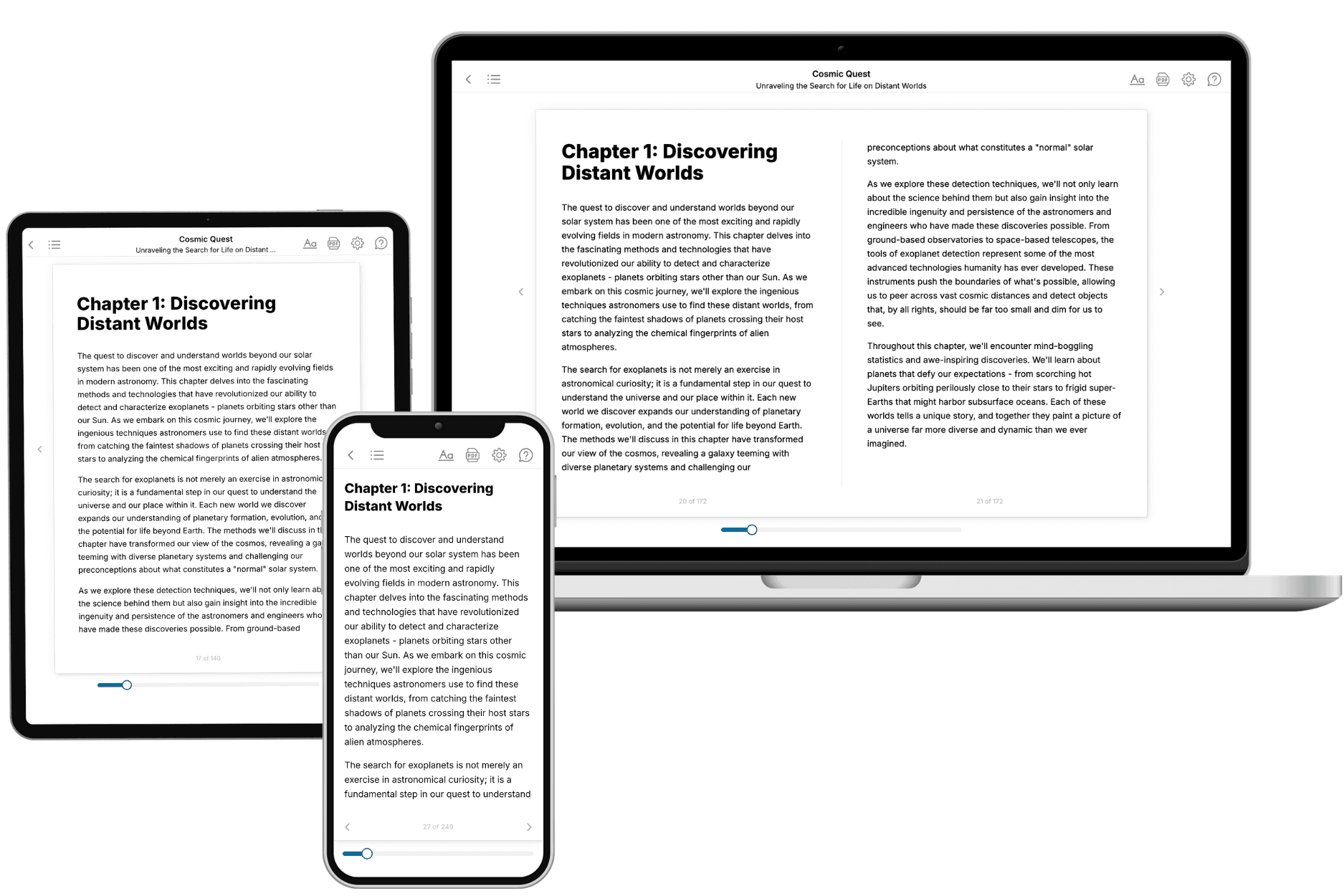
- 3. Get your tailored book
Your book is ready in 10 minutes. Read it online, download as EPUB or PDF, or send to Kindle.
Frequently asked questions
- What is TailoredRead?
TailoredRead creates complete, full-length nonfiction ebooks, written specifically for you. Tell us what you want to learn and why, and TailoredRead writes you a complete ebook on it, with charts, tables, and diagrams throughout. Read it online, on Kindle, or on any e-reader, or download it as a PDF or EPUB. Every book is written fresh the day you order it.
- How is the book tailored to me?
Before anything is written, you answer a few short questions about your goals, your background, and the topics you care about. Your book is then planned around your answers: written at your level, focused on your goals, and covering the topics you chose, instead of the one-size-fits-all book a store sells everyone.
- Will it read like generic AI content?
No. Your book isn't a chat transcript: it's planned chapter by chapter before a single word is written, told in a clear book voice, and explains ideas visually with charts, tables, and diagrams. After writing, every book goes through an editorial pass that polishes chapters so the book reads consistent from start to finish. Judge for yourself: browse thousands of sample books on our Explore Books page.
- How accurate is the content?
Our AI first checks whether your subject needs live research. Niche and fast-moving subjects are researched before writing, and the book plan and chapters are grounded in what it finds. After writing, every book goes through a quality pass that checks its facts and consistency, and researched books list their sources in a Notes section at the back.
- How long is the book?
You choose the length: Comprehensive (250-300 pages), Detailed (150-200 pages), Essential (70-100 pages), or Short (30-50 pages).
- Does the book include visuals?
Yes. Every book includes charts, tables, and diagrams: timelines, checklists, step-by-step guides, decision trees, comparison tables, matrices, and bar charts. A typical book includes dozens of these visual elements.
- Can I read it on Kindle? What formats can I download?
Yes. Every book can be read in our online reader or downloaded as a PDF or EPUB. The EPUB can be opened with Kindle, Apple Books, Kobo, and any e-reader. The Commercial and Author licenses also include an editable Word (DOCX) and Markdown download.
- How much does it cost?
About the price of a regular ebook. The exact price depends on your book's length and complexity, from $2 for the shortest books to $35 for the most comprehensive, and it's shown when you review your book, before you commit to anything. Each book is a one-time purchase, yours to keep, no subscription. Licenses that let you share, teach, or publish your book range from $35.99 to $49.99.
- Can I preview the book before purchasing?
Before you pay, you'll see what your book will cover: the title, a detailed description, the estimated length, and the complete chapter-by-chapter table of contents, so you know what you're getting before you decide. The full text itself is written after you purchase.
- How long does it take to create a book?
About 10 minutes. You can start reading the opening chapters while the rest is still being written.