GKE Mastery
Advanced Techniques for Optimizing Google Kubernetes Engine on GCP
Managing production Kubernetes clusters at scale presents a complex challenge: balancing performance, security, cost, and reliability while maintaining operational simplicity.
238 pages12 chaptersFeb 18, 2026KubernetesCreated by kaushik
About this book
This comprehensive guide takes you beyond basic GKE administration to master the advanced techniques that separate world-class infrastructure from merely functional deployments. You'll learn to architect resilient clusters that scale intelligently, implement security controls that protect without hindering development, and optimize costs without sacrificing performance. Through practical strategies covering infrastructure automation, advanced networking, service mesh integration, and multi-cluster management, you'll gain the expertise to handle enterprise-grade requirements. Whether you're implementing disaster recovery, establishing GitOps workflows, or fine-tuning database performance on GKE, this book provides the architectural patterns, configuration strategies, and operational practices needed to build and maintain production systems that are secure, efficient, and observable.
Table of contents
- IntroductionWhy GKE Mastery Matters in Modern Infrastructure, What You'll Learn and How to Use This Book, Prerequisites and Assumed KnowledgeRead below
- Chapter 1: GKE Cluster Architecture DesignCluster Architecture Fundamentals and Design Principles, Node Pool Strategy and Workload Segregation, Regional vs. Zonal Clusters: Tradeoffs and Selection Criteria
- Chapter 2: Advanced Networking StrategiesVPC Design and Network Segmentation, Network Policies and Microsegmentation, Advanced Ingress and Load Balancing Patterns
- Chapter 3: Infrastructure Provisioning AutomationTerraform for GKE Provisioning and Management, GitOps Workflow Implementation and Best Practices, Testing and Validating Infrastructure Code
- Chapter 4: GKE Deployment SecurityKubernetes RBAC Controls and Role Design, GKE Workload Identity and Service Account Management, Pod Security Policies and Container Runtime Security
- Chapter 5: Container Resource OptimizationResource Requests, Limits, and Quality of Service, Pod Scheduling Policies and Node Affinity, Vertical Pod Autoscaling and Resource Right-Sizing
- Chapter 6: Multi-Cluster ManagementMulti-Cluster Architecture and Topology Patterns, Cross-Cluster Networking and Service Discovery, Cluster Federation and Workload Distribution
- Chapter 7: GKE Monitoring and LoggingObservability Strategy and Metrics Collection, Prometheus Metrics Collection and Alerting, Centralized Logging and Log Analysis
- Chapter 8: Cost Efficiency OptimizationCost Analysis and Resource Utilization Tracking, Cluster Scaling Strategies and Autoscaling Configuration, Cost Reduction Techniques and Commitment Discounts
- Chapter 9: Advanced CI/CD PipelinesCI/CD Pipeline Architecture and Tool Integration, Canary and Blue-Green Deployment Patterns, Pipeline Security and Artifact Management
- Chapter 10: Service Mesh Architecture and Istio IntegrationService Mesh Fundamentals and Architecture, Istio Deployment and Configuration on GKE, Advanced Traffic Management and Resilience Patterns
- Chapter 11: Disaster Recovery and Backup StrategiesDisaster Recovery Planning and RTO/RPO Definition, Advanced Backup Strategies and Data Protection, Recovery Testing and Failover Procedures
- Chapter 12: Compliance, Audit Logging, and Performance TuningCompliance Requirements and Audit Logging, Performance Tuning Techniques and Database Optimization, Persistent Storage Solutions and Configuration
- ConclusionYour Path to GKE Mastery, Continuous Learning and Staying Current
- Appendix: Quick Reference and ResourcesEssential GKE and Kubernetes Commands, Configuration Templates and Code Examples, Further Reading and Community Resources
Introduction
Kubernetes has fundamentally changed how engineering teams build, deploy, and operate software at scale. Google Kubernetes Engine sits at the center of that transformation for organizations running workloads on Google Cloud Platform. It abstracts away much of the operational complexity of managing Kubernetes control planes, yet it simultaneously exposes a vast surface area of configuration, optimization, and architectural decisions that can make or break a production system. Getting a cluster running is straightforward. Getting it right is an entirely different challenge.
The gap between a functional GKE deployment and a truly production-grade one is wider than most engineers expect. A cluster that works in staging can buckle under real traffic, surprise you with unexpected cloud bills, or expose sensitive workloads to unnecessary risk. The difference usually comes down to decisions made early in the design process: how node pools are structured, how networking is segmented, how security controls are layered, and how the team plans to observe and recover from failures. These decisions compound over time, and reversing poor ones in a live environment is painful and expensive.
This book was written for engineers who have moved past the basics. You already understand pods, deployments, and services. You have probably stood up a GKE cluster or two and deployed real workloads. Now you want to go deeper: to understand the architectural patterns that scale, the security controls that protect without slowing teams down, the cost levers that matter, and the operational practices that keep systems healthy over months and years. Every chapter in this book is oriented toward that goal, combining conceptual grounding with concrete, actionable guidance you can apply directly to your own infrastructure.
The topics covered here span the full lifecycle of a GKE environment. From initial cluster architecture and network design through infrastructure automation, security hardening, multi-cluster management, observability, cost optimization, CI/CD pipelines, service mesh integration, and disaster recovery, the book is structured to build knowledge progressively. Each chapter stands on its own as a reference, but reading them in sequence gives you a coherent mental model of how all these systems interact. Production infrastructure is never just one thing working in isolation; it is a set of interconnected decisions that reinforce or undermine each other.
Why GKE Mastery Matters in Modern Infrastructure
Google Kubernetes Engine is not simply a managed Kubernetes service. It is a deeply integrated platform that connects Kubernetes workloads to the broader GCP ecosystem: Cloud Load Balancing, Cloud Armor, Cloud SQL, Pub/Sub, IAM, Secret Manager, and dozens of other services. Mastering GKE means understanding not just Kubernetes primitives but how those primitives interact with GCP-native capabilities. That integration is both a major strength and a source of complexity that rewards deep knowledge.
The stakes for getting GKE right have grown significantly as organizations move more critical workloads to Kubernetes. A 2023 survey by the Cloud Native Computing Foundation found that 96% of organizations are either using or evaluating Kubernetes, and the majority of production deployments run on managed services like GKE.[1] When Kubernetes is running your payment processing, your customer-facing APIs, or your data pipelines, the cost of misconfiguration is measured in outages, security incidents, and wasted engineering time.
Cost is one of the most immediate and visible consequences of poor GKE design. It is surprisingly easy to overprovision node pools, leave idle clusters running, or fail to configure autoscaling correctly, resulting in cloud bills that grow faster than your actual workload. Equally, underprovision the wrong components and you face latency spikes, pod evictions, and cascading failures under load. Mastery means finding the right balance, and that balance is not static. It shifts as your workloads evolve, your team grows, and your traffic patterns change.
Security is another domain where the gap between basic and advanced GKE usage is stark. A default GKE cluster is not a secure GKE cluster. Workload Identity needs to be configured to avoid overly permissive service account bindings. Network policies need to be defined to prevent lateral movement between services. Pod security standards need to be enforced to prevent privilege escalation. Each of these controls requires deliberate configuration, and they need to work together as a layered defense rather than as isolated checkboxes.
Operational maturity is the third pillar. Teams that master GKE build systems that are observable, recoverable, and automatable. They can answer questions like: Which service is consuming the most CPU right now? What changed in the last deployment that caused this latency increase? How long would it take to restore this cluster from scratch in a different region? These are not hypothetical questions. They are the questions that get asked during incidents, and having good answers requires investment in observability, automation, and disaster recovery planning long before anything goes wrong.
The competitive advantage of GKE mastery is real and measurable. Engineering teams that operate their infrastructure well ship faster, spend less on cloud resources, and recover from incidents more quickly. They spend less time firefighting and more time building. That is the practical payoff of the investment this book asks you to make.
The difference between a cluster that works and a cluster that scales, stays secure, and stays affordable is almost entirely a function of the decisions made before the first workload is deployed.
GKE also evolves rapidly. Google regularly releases new features, deprecates old ones, and updates default behaviors. Staying current requires a mental model of how the system works at a deep level, not just familiarity with the current set of flags and options. The goal of this book is to give you that mental model, so that when GKE introduces a new node auto-provisioning feature or changes how Workload Identity Federation works, you can evaluate it quickly and integrate it intelligently into your existing architecture.
What You'll Learn and How to Use This Book
This book is organized into twelve chapters, each focused on a distinct domain of GKE expertise. The chapters are designed to be read sequentially for the best learning experience, but they also function as standalone references when you need to go deep on a specific topic. Here is a brief map of what each chapter covers and how they connect to each other.
Chapter 1: GKE Cluster Architecture Design lays the foundation. It covers the core design principles for structuring a GKE cluster, including how to think about node pool strategy, workload segregation, and the tradeoffs between regional and zonal cluster configurations. The decisions made here influence everything that follows, so this chapter is worth reading carefully even if you have existing clusters.
Chapter 2: Advanced Networking Strategies goes deep on VPC design, network segmentation, network policies, and advanced ingress patterns. Networking is one of the most complex and consequential aspects of GKE configuration. This chapter gives you the tools to design networks that are secure, performant, and maintainable.
Chapter 3: Infrastructure Provisioning Automation covers Terraform-based GKE provisioning, GitOps workflow implementation, and infrastructure testing. If you are still creating clusters through the GCP console or with ad-hoc scripts, this chapter will show you a better path. Automation is not just about convenience; it is about consistency, auditability, and the ability to recover quickly.
Chapters 4 and 5 address security and resource optimization respectively. Chapter 4 covers RBAC design, Workload Identity, and pod security controls. Chapter 5 covers resource requests and limits, pod scheduling policies, and vertical autoscaling. These two chapters are closely related: security controls affect how workloads can be scheduled, and resource configuration affects the blast radius of a security incident.
Chapters 6 through 8 move into operational territory. Chapter 6 covers multi-cluster architecture and cross-cluster networking. Chapter 7 covers observability strategy, Prometheus integration, and centralized logging. Chapter 8 covers cost analysis, autoscaling configuration, and cost reduction techniques. Together, these chapters address the operational challenges that become most visible once a system is running in production.
Chapters 9 through 12 cover advanced topics that separate mature GKE deployments from basic ones. Chapter 9 addresses CI/CD pipeline architecture and deployment patterns like canary and blue-green releases. Chapter 10 covers service mesh architecture and Istio integration on GKE. Chapter 11 addresses disaster recovery planning, backup strategies, and recovery testing. Chapter 12 covers compliance, audit logging, performance tuning, and persistent storage configuration.
To get the most out of this book, treat it as a working reference rather than a passive read. Each chapter includes specific configuration examples, architectural patterns, and actionable recommendations. Apply them to your own environment as you go. The concepts will stick much better when you connect them to real infrastructure you are responsible for. If you encounter a chapter that covers ground you already know well, skim it for the specific GKE nuances and move on. The goal is not to cover every possible Kubernetes concept but to focus on the decisions and configurations that matter most in a GKE production context.
The appendix at the end of the book provides a quick reference for essential GKE and Kubernetes commands, configuration templates you can adapt for your own use, and a curated list of further reading and community resources. Bookmark it. You will find yourself returning to it regularly.
Prerequisites and Assumed Knowledge
This book assumes a solid foundation in both Kubernetes and Google Cloud Platform. It is not an introduction to either. If you are new to Kubernetes, you should first work through the official Kubernetes documentation and get comfortable with core concepts like pods, deployments, services, ConfigMaps, and namespaces before diving into this material. Similarly, if you have never worked with GCP, spending time with the GCP fundamentals documentation will make the GKE-specific content here much more accessible.
Specifically, you should be comfortable with the following Kubernetes concepts before starting:
- Pod lifecycle, resource requests, and limits
- Deployments, StatefulSets, DaemonSets, and Jobs
- Services, Ingress, and basic networking concepts
- ConfigMaps, Secrets, and volume mounts
- Namespaces and basic RBAC concepts
- Horizontal Pod Autoscaler and basic scaling behavior
- kubectl command-line usage for common operations
On the GCP side, you should have working familiarity with the following:
- GCP project structure, IAM roles, and service accounts
- VPC networks, subnets, and firewall rules
- Cloud Storage, Cloud SQL, and Pub/Sub at a conceptual level
- The GCP console and the
gcloudCLI for basic operations - Billing concepts and the GCP cost model
Infrastructure-as-Code experience is helpful but not strictly required for most chapters. Chapter 3 covers Terraform in depth, and some familiarity with HCL syntax will help you follow the examples more easily. If you have used Terraform with other cloud providers, the GKE-specific patterns will feel familiar. If you have not used Terraform at all, the chapter includes enough context to get you oriented, though you may want to supplement it with Terraform's own getting-started documentation.[2]
Programming and scripting skills are assumed throughout the book. Examples use YAML for Kubernetes manifests, HCL for Terraform configurations, and occasional shell scripts for automation tasks. You do not need to be an expert in any of these, but you should be able to read and modify them without significant friction. Understanding how to read a YAML manifest and identify what each field does is a baseline skill for working with Kubernetes at any level.
Networking knowledge is particularly important for Chapters 2 and 6. You should understand concepts like CIDR notation, subnetting, routing, and the difference between Layer 4 and Layer 7 load balancing. If these concepts feel fuzzy, a quick review of networking fundamentals will pay dividends throughout the book. GKE networking builds on these concepts in ways that are hard to follow without a solid foundation.
Finally, it helps to have access to a GCP environment where you can experiment. Many of the configurations and patterns in this book are best understood by trying them out. A personal GCP project with a small GKE cluster is sufficient for most experiments. GCP's free tier and the GKE Autopilot pricing model can keep costs low during learning. If you are working in an organization, a dedicated sandbox project is ideal so you can experiment freely without affecting production systems.
One important note on versions: GKE and Kubernetes both release updates frequently. The concepts and architectural patterns in this book are designed to be durable across versions, but specific flags, API versions, and default behaviors may change. Always cross-reference with the official GKE documentation for the version you are running, particularly for security-sensitive configurations where defaults have historically changed between releases.[3] The goal here is to give you the understanding to evaluate those changes intelligently, not to provide a static configuration reference that will be outdated in six months.
With that foundation in place, you are ready to go deep. The chapters ahead cover a lot of ground, but they are organized to build on each other logically. Start with cluster architecture, understand how networking and security layer on top of it, and then work outward into automation, observability, and advanced operational patterns. By the end, you will have a comprehensive, practical understanding of what it takes to run GKE at an enterprise level, and the tools to keep improving as the platform evolves.
This is the end of the free sample. The full book has 12 chapters.
Want this book written for you?
Tell us your goals and background, and get your own version of this book, tailored by AI to you.


Benefits of AI-tailored books
- Read one book, not ten:
- all the Kubernetes knowledge you need, gathered into a single book.
- Save days of learning:
- tell us your goals, choose your topics, and the whole book is built around them.
- Learn effortlessly:
- Kubernetes book written for your specific background and expertise.
- Understand at a glance:
- includes charts, tables, timelines, checklists, decision trees, and more.
- Stay current:
- written the day you order it, not years ago.
- Trust what you read:
- every book is checked for accuracy, with real research when your subject needs it.
Create your unique book in 3 steps
- 1. Select your focus
Select the focus of your Kubernetes book and share your background
- 2. Personalize your book
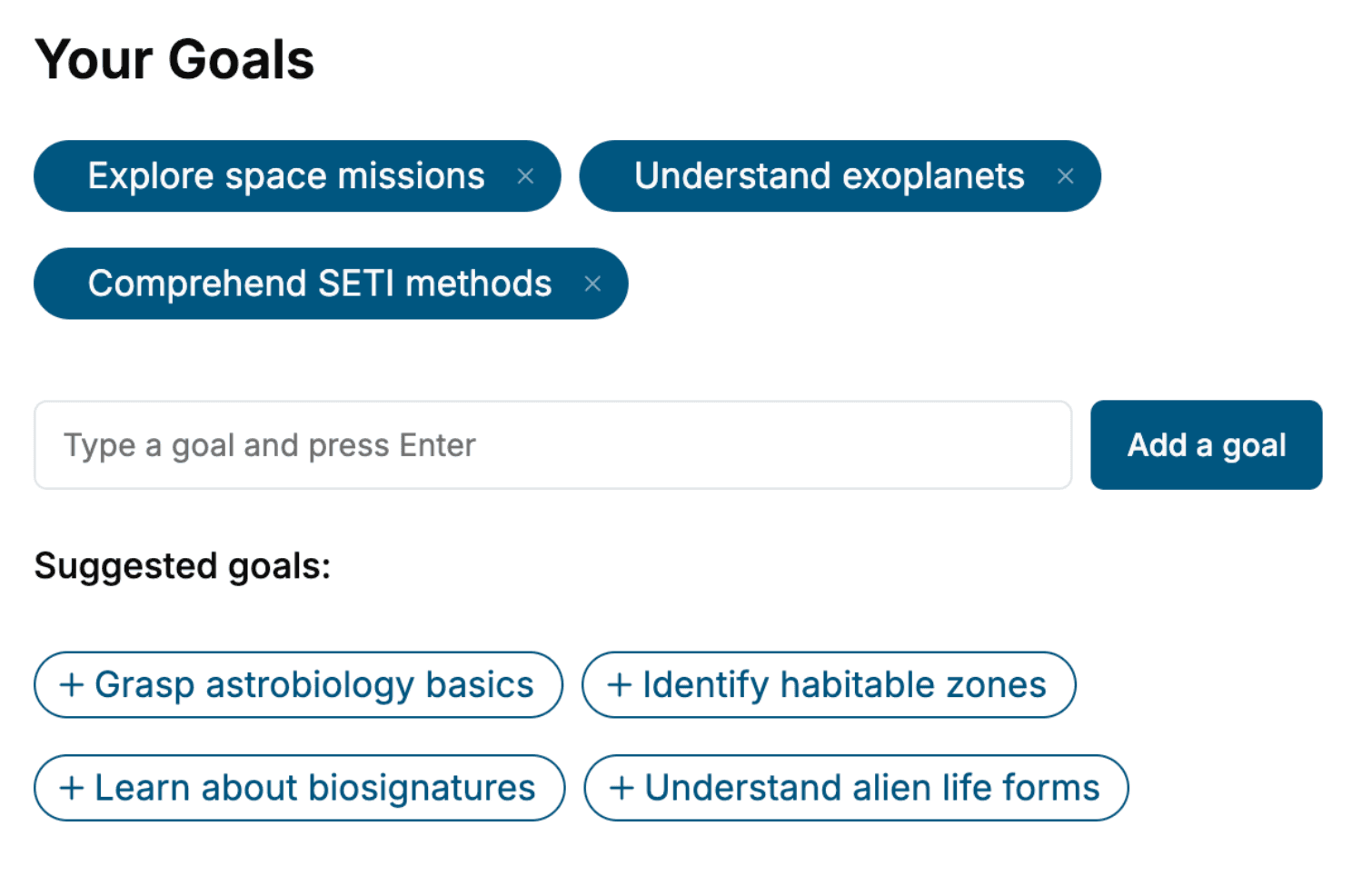
Specify your goals and choose sub-topics to include
- 3. Get your tailored book
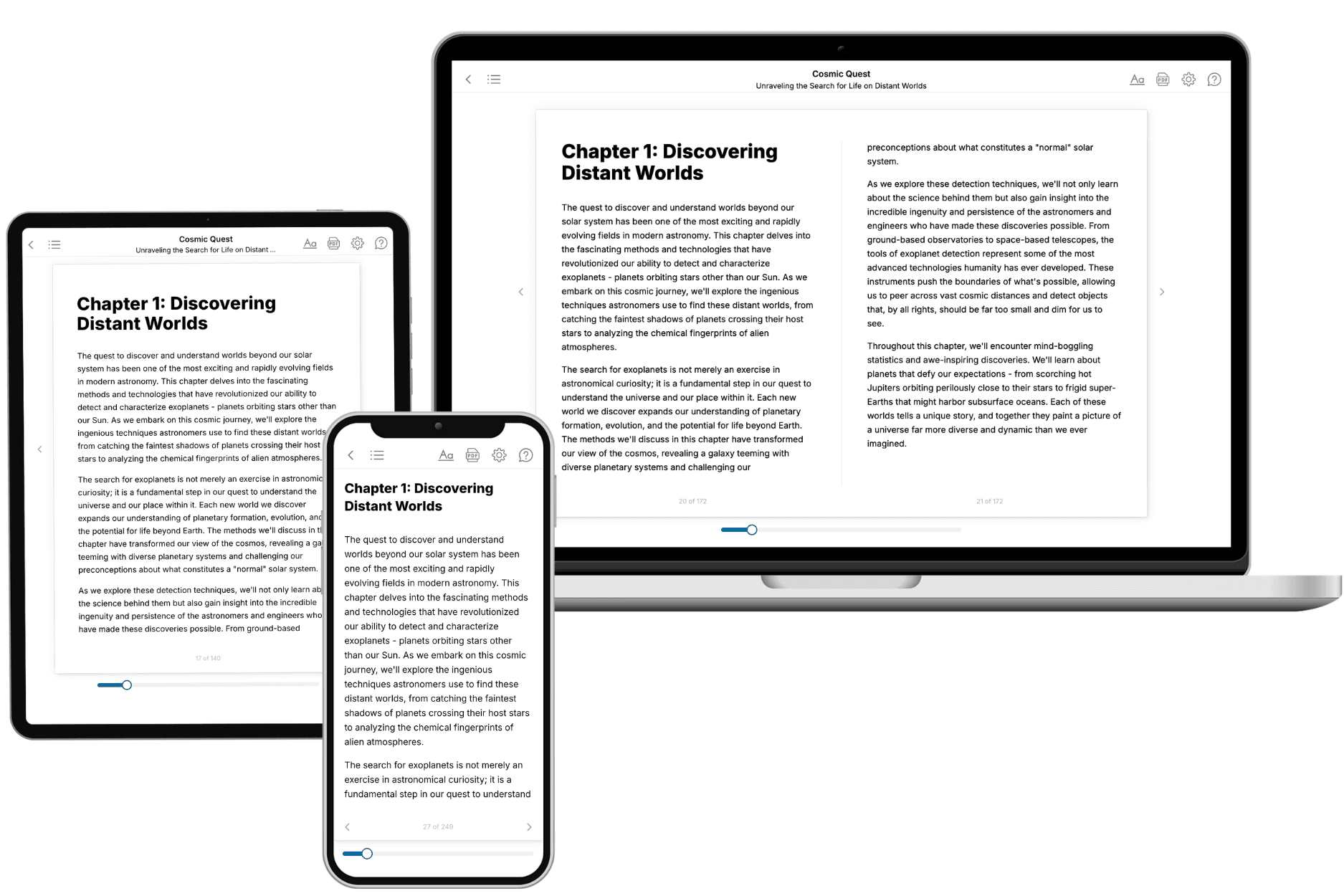
Your book is ready in 10 minutes. Read it online, download as EPUB or PDF, or send to Kindle.

Frequently asked questions
- What is TailoredRead?
TailoredRead creates complete, full-length nonfiction ebooks, written specifically for you. Tell us what you want to learn and why, and TailoredRead writes you a complete ebook on it, with charts, tables, and diagrams throughout. Read it online, on Kindle, or on any e-reader, or download it as a PDF or EPUB. Every book is written fresh the day you order it.
- How is the book tailored to me?
Before anything is written, you answer a few short questions about your goals, your background, and the topics you care about. Your book is then planned around your answers: written at your level, focused on your goals, and covering the topics you chose, instead of the one-size-fits-all book a store sells everyone.
- Will it read like generic AI content?
No. Your book isn't a chat transcript: it's planned chapter by chapter before a single word is written, told in a clear book voice, and explains ideas visually with charts, tables, and diagrams. After writing, every book goes through an editorial pass that polishes chapters so the book reads consistent from start to finish. Judge for yourself: browse thousands of sample books on our Explore Books page.
- How accurate is the content?
Our AI first checks whether your subject needs live research. Niche and fast-moving subjects are researched before writing, and the book plan and chapters are grounded in what it finds. After writing, every book goes through a quality pass that checks its facts and consistency, and researched books list their sources in a Notes section at the back.
- How long is the book?
You choose the length: Comprehensive (250-300 pages), Detailed (150-200 pages), Essential (70-100 pages), or Short (30-50 pages).
- Does the book include visuals?
Yes. Every book includes charts, tables, and diagrams: timelines, checklists, step-by-step guides, decision trees, comparison tables, matrices, and bar charts. A typical book includes dozens of these visual elements.
- Can I read it on Kindle? What formats can I download?
Yes. Every book can be read in our online reader or downloaded as a PDF or EPUB. The EPUB can be opened with Kindle, Apple Books, Kobo, and any e-reader. The Commercial and Author licenses also include an editable Word (DOCX) and Markdown download.
- How much does it cost?
About the price of a regular ebook. The exact price depends on your book's length and complexity, from $2 for the shortest books to $35 for the most comprehensive, and it's shown when you review your book, before you commit to anything. Each book is a one-time purchase, yours to keep, no subscription. Licenses that let you share, teach, or publish your book range from $35.99 to $49.99.
- Can I preview the book before purchasing?
Before you pay, you'll see what your book will cover: the title, a detailed description, the estimated length, and the complete chapter-by-chapter table of contents, so you know what you're getting before you decide. The full text itself is written after you purchase.
- How long does it take to create a book?
About 10 minutes. You can start reading the opening chapters while the rest is still being written.