John Brown's Raid on Harper's Ferry
The Violent Abolitionist Act That Shook a Nation and Accelerated the Civil War
The question of whether violence can ever be justified in pursuit of moral justice has haunted American history since 1859.
222 pages11 chaptersDec 14, 2025US Civil War History
About this book
John Brown's raid on Harper's Ferry represents one of the most consequential and controversial moments in American history, yet many people understand only fragments of what actually happened. This book provides a complete, balanced account of Brown's assault on the federal arsenal, examining the man behind the raid, the meticulous planning that preceded it, the chaotic 36 hours of the attack itself, and the seismic consequences that rippled across the nation. You'll discover how a failed businessman and religious extremist became convinced that slavery could only be destroyed through armed rebellion, how his raid terrified the South and galvanized Northern abolitionists, and how this single event accelerated the nation toward civil war. By exploring multiple perspectives—from Brown's followers to federal troops to enslaved people to Southern slaveholders—you'll gain a nuanced understanding of how Americans interpreted this pivotal moment so differently, and why it remains relevant to contemporary debates about violence, justice, and social change.
Table of contents
- IntroductionWhy This Moment Matters, The Question of Violence and Justice, How to Read This BookRead below
- Chapter 1: America in 1859: A Nation DividedThe Slavery Expansion Debate, Political Compromises Failing, Rising North-South Tensions
- Chapter 2: John Brown: The Man Behind the RaidEarly Life and Religious Conviction, Business Failures and Radicalization, Kansas Violence and Growing Reputation
- Chapter 3: The Plan: Conception and PreparationThe Subterranean Pass Way Vision, Recruiting Followers and Supporters, Gathering Weapons and Resources
- Chapter 4: Harper's Ferry: The Target and Its SignificanceWhy Harper's Ferry, The Federal Arsenal and Its Weapons, Geography and Strategic Considerations
- Chapter 5: October 16-17, 1859: The Raid UnfoldsThe First Hours: Initial Success, Militia Response and Escalation, Federal Troops Arrive Under Robert E. Lee
- Chapter 6: The Siege and SurrenderThe Final Standoff, Brown's Last Stand, Casualties and Immediate Aftermath
- Chapter 7: The Trial: Justice or SpectacleThe Legal Proceedings, Brown's Defense and Testimony, Verdict and Sentence
- Chapter 8: Execution and MartyrdomFinal Days in Prison, December 2, 1859: The Execution, Immediate Reactions Across the Nation
- Chapter 9: Northern Response: Hero or FanaticAbolitionist Celebration and Support, Moderate Northern Concerns, Memorials and Growing Legend
- Chapter 10: Southern Response: Fear and FurySouthern Panic and Conspiracy Fears, Secession Momentum Accelerates, How the South Interpreted the Raid
- Chapter 11: The Path to Civil WarImmediate Consequences of the Raid, The Election of 1860 and Secession, From Harper's Ferry to Fort Sumter
- Conclusion: Understanding John Brown's LegacyA Contested Legacy, The Enduring Violence and Justice Debate
- Further Reading and Resources
Introduction
On the night of October 16, 1859, a small band of armed men crossed the Potomac River into Virginia with a plan that would shake the foundations of the American republic. Led by a fifty-nine-year-old abolitionist named John Brown, these twenty-one raiders seized the federal arsenal at Harper's Ferry, intending to spark a slave rebellion that would spread throughout the South. Within thirty-six hours, the raid had failed spectacularly—ten of Brown's men lay dead, and Brown himself was captured, wounded, and awaiting trial. Yet this brief, chaotic episode would reverberate through American history with an intensity far beyond its military significance. The raid on Harper's Ferry transformed the national conversation about slavery from political debate into violent confrontation, accelerated the nation's march toward civil war, and raised questions about violence, justice, and moral conviction that remain relevant today.
The story of John Brown's raid is not simply a tale of one man's fanaticism or heroism, depending on your perspective. It represents a critical moment when the tensions that had been building in American society for decades finally erupted into armed conflict. By 1859, the United States had exhausted its capacity for political compromise on the question of slavery. The Missouri Compromise, the Compromise of 1850, the Kansas-Nebraska Act—each attempt to balance the interests of free and slave states had only postponed the inevitable reckoning. Brown's raid shattered any remaining illusions that the slavery question could be resolved peacefully. In the North, many viewed Brown as a martyr who had sacrificed himself for the cause of human freedom. In the South, he became the embodiment of Northern aggression and the justification for secession. Both interpretations would prove consequential in the months that followed.
Understanding John Brown's raid requires examining multiple perspectives and resisting the temptation to view history through a single lens. Brown himself was a complex figure—a deeply religious man who believed God had called him to destroy slavery, a failed businessman who had experienced repeated financial disasters, a loving father who led two of his sons to their deaths, and a tactical planner whose raid was marked by both careful preparation and catastrophic miscalculation. The raid involved not just Brown and his followers, but also the enslaved people who were supposed to join the uprising, the townspeople of Harper's Ferry who found themselves caught in the crossfire, the militia members who responded to the attack, and the federal troops led by Robert E. Lee who ultimately suppressed it. Each group experienced and interpreted these events differently, and those competing interpretations shaped the nation's response.
This book provides a comprehensive examination of John Brown's raid on Harper's Ferry, exploring the historical context that made such an action conceivable, the planning and execution of the raid itself, and the profound consequences that followed. You'll discover how a single violent act by a small group of men could accelerate a nation toward civil war, how the same event could be interpreted as both heroic sacrifice and criminal terrorism, and how the questions raised by Brown's actions continue to resonate in contemporary debates about violence as a tool for social change. By examining this pivotal moment from multiple angles, you'll gain insight not just into a specific historical event, but into the broader dynamics of how societies respond when fundamental moral questions can no longer be resolved through existing political institutions.
Why This Moment Matters
John Brown's raid on Harper's Ferry stands as one of the most consequential single events in American history, yet its significance extends far beyond the thirty-six hours of violence that unfolded in October 1859. The raid matters because it represented a fundamental shift in how Americans approached the slavery question. For decades, politicians had crafted elaborate compromises designed to maintain the Union while accommodating both free and slave states. These compromises assumed that slavery was primarily a political and economic issue that could be managed through negotiation and territorial arrangements. Brown's raid declared, through violent action, that slavery was instead a moral abomination that demanded immediate destruction, regardless of legal niceties or political consequences. This shift from political discourse to moral absolutism backed by violence transformed the national debate and made peaceful resolution increasingly impossible.
The raid's importance lies not in its military success—it failed completely in that regard—but in its symbolic power and psychological impact. Brown intended to seize weapons from the federal arsenal and distribute them to enslaved people throughout the region, sparking a widespread rebellion that would make slavery untenable in the South. The plan was wildly unrealistic, based on faulty assumptions about how enslaved people would respond and how quickly Brown could mobilize support. Yet the raid's failure as a military operation only enhanced its power as a symbol. In the North, Brown's willingness to sacrifice his life for the cause of abolition inspired many who had previously viewed slavery as a distant abstraction. Church bells tolled on the day of his execution, and prominent intellectuals like Ralph Waldo Emerson and Henry David Thoreau praised him as a martyr. This Northern sympathy for a man who had attacked federal property and attempted to incite slave rebellion confirmed the South's worst fears about Northern intentions.
For the South, Harper's Ferry represented an existential threat that demanded a forceful response. The raid seemed to validate Southern warnings that Northern abolitionists would not be satisfied with preventing slavery's expansion into new territories—they sought to destroy slavery where it already existed, even if that meant encouraging slave rebellions that could result in widespread violence. Southern newspapers reported the raid with apocalyptic language, comparing it to Nat Turner's 1831 rebellion and warning that Brown's actions were merely the opening salvo in a Northern campaign to destroy Southern society. The fact that Brown had received financial support from prominent Northern abolitionists—the so-called "Secret Six"—suggested to many Southerners that the raid was not the work of a lone fanatic but part of a broader Northern conspiracy. This perception accelerated the South's movement toward secession, as many concluded that remaining in the Union meant accepting the constant threat of Northern-sponsored violence against slavery.
The raid matters today because it raises enduring questions about violence, justice, and social change that remain unresolved. Was John Brown a terrorist who used violence against innocent people to advance his political agenda, or was he a freedom fighter who recognized that slavery could only be destroyed through force? Can violence ever be justified in pursuit of moral ends, and if so, who decides which causes warrant violent action? These questions have echoed through subsequent American history, from debates about militant labor organizing in the early twentieth century to civil rights movement discussions about nonviolence versus armed self-defense to contemporary arguments about property destruction during protests. Brown's raid provides a historical case study for examining these questions in a specific context where the moral stakes were clear—slavery was an undeniable evil—but the tactical and ethical questions about how to combat it remained deeply contested.
Understanding Harper's Ferry also illuminates how societies fracture when they can no longer agree on fundamental values. By 1859, Americans in different regions had developed such divergent worldviews that they literally could not comprehend how their fellow citizens interpreted the same events. Northerners who viewed Brown as a hero could not understand how Southerners could defend slavery; Southerners who viewed Brown as a terrorist could not understand how Northerners could celebrate a man who had attacked federal property and attempted to incite slave rebellion. This mutual incomprehension made compromise impossible and conflict inevitable. The dynamics visible at Harper's Ferry—moral absolutism, regional polarization, the breakdown of shared institutions, and the turn toward violence—offer insights into how democratic societies fail and how political disagreements escalate into armed conflict.
The raid's legacy extends into the Civil War itself and beyond. When Union soldiers marched into battle singing "John Brown's Body," they transformed Brown from a failed raider into a symbol of the Union cause. The song's lyrics—John Brown's body lies a-mouldering in the grave, but his soul goes marching on
—captured the idea that Brown's death had given birth to a larger movement that would ultimately destroy slavery. This mythologization of Brown served important purposes during the war, providing Union soldiers with a moral narrative that elevated their cause beyond mere preservation of the Union. Yet it also obscured the more complicated historical reality of who Brown was and what he had actually attempted. Examining the real John Brown and the actual events at Harper's Ferry allows us to move beyond myth and understand the complex human dynamics that drove this pivotal moment.
Finally, Harper's Ferry matters because it demonstrates how individual actions can have consequences far beyond their immediate effects. Brown's raid involved only twenty-one men and lasted less than two days, yet it fundamentally altered the trajectory of American history. This is not to suggest that Brown single-handedly caused the Civil War—the conflict had deep structural causes rooted in economic systems, political institutions, and cultural differences that had been developing for decades. However, Brown's raid served as a catalyst that accelerated existing trends and made peaceful resolution far more difficult. Understanding how this small-scale action produced such large-scale consequences provides insight into the role of contingency in history and the ways that symbolic events can reshape political possibilities. The raid reminds us that history is not simply the unfolding of impersonal forces, but the result of human choices and actions that can redirect the course of events in unexpected ways.
The Question of Violence and Justice
At the heart of John Brown's raid lies a question that has troubled moral philosophers, political theorists, and ordinary citizens throughout history: can violence ever be justified in pursuit of justice? Brown believed the answer was unequivocally yes when it came to slavery. He viewed slavery as a system of violence that brutalized millions of people, and he concluded that peaceful methods had failed to end it. From his perspective, using violence to destroy slavery was not only justified but morally required. He frequently cited biblical passages about freeing the oppressed and argued that God had called him to take up arms against slaveholders. This religious conviction gave Brown a sense of absolute moral certainty that made compromise impossible and violence inevitable. His willingness to kill and die for his beliefs made him either a heroic martyr or a dangerous fanatic, depending on whether one shared his conviction that slavery's evil justified violent action.
Brown's position represented a radical departure from the mainstream abolitionist movement of his time. Most abolitionists, including prominent figures like William Lloyd Garrison, advocated for "moral suasion"—the idea that slavery could be ended through persuasion, education, and political action rather than violence. They believed that using violence to combat slavery would undermine the moral authority of the abolitionist cause and potentially trigger a race war that would result in massive casualties. Frederick Douglass, himself an escaped slave and leading abolitionist, met with Brown before the raid and tried to dissuade him, arguing that attacking a federal arsenal would be suicidal and would harm rather than help the cause of abolition. Douglass later wrote that he told Brown, You're going into a perfect steel-trap, and you will never get out alive.
Yet Brown proceeded anyway, convinced that his moral clarity justified the risks.
The question of violence and justice becomes more complex when we examine what Brown actually did during the raid. His actions included:
- Seizing federal property (the arsenal) without authorization
- Taking hostages, including local farmers and townspeople who had no direct involvement in slavery
- Killing several people during the raid, including a free Black railroad baggage handler named Hayward Shepherd
- Attempting to incite a slave rebellion that could have resulted in widespread violence
Brown's defenders argue that his violence must be understood in the context of slavery's far greater violence. Slavery was itself a system built on violence—the violence of kidnapping people from Africa, the violence of separating families, the violence of whipping and torture used to maintain control, and the violence of denying people their fundamental humanity and freedom. From this perspective, Brown's limited violence pales in comparison to the systematic violence of slavery, and criticizing Brown for using violence while tolerating slavery represents a profound moral failure. This argument suggests that those who condemned Brown's violence while remaining silent about slavery's violence were guilty of a selective morality that privileged order and property rights over human freedom and dignity. The question becomes not whether violence is ever justified, but rather which forms of violence society chooses to recognize and condemn.
Critics of Brown, both in his time and today, argue that his willingness to use violence made him no different from the slaveholders he opposed. They contend that accepting violence as a tool for social change, even in pursuit of just ends, opens the door to terrorism and vigilantism. If Brown was justified in attacking Harper's Ferry because he believed slavery was evil, then anyone with strong moral convictions could justify violence against those they view as oppressors. This argument emphasizes the importance of maintaining legal and political processes for resolving disputes, even when those processes are slow and imperfect. From this perspective, Brown's raid represented a dangerous rejection of democratic governance in favor of individual moral judgment backed by force. The fact that Brown's cause was just does not, in this view, justify his methods, because accepting those methods would undermine the rule of law and make peaceful coexistence impossible.
The debate over Brown's violence also involves questions about effectiveness and consequences. Even those who might accept violence in principle must consider whether Brown's specific actions advanced or harmed the cause of abolition. In the short term, the raid clearly harmed the abolitionist movement by allowing slavery's defenders to portray abolitionists as violent extremists and by strengthening Southern resolve to defend slavery. The raid contributed to the election of Abraham Lincoln in 1860, as Southern Democrats split over how to respond to the perceived Northern threat, but it also made Southern secession more likely. In the longer term, Brown's raid may have accelerated the coming of the Civil War, which ultimately destroyed slavery—but at the cost of over 600,000 lives. Would slavery have ended through other means if Brown had not acted? Would the cost in human lives have been lower or higher? These counterfactual questions are impossible to answer definitively, but they highlight the difficulty of assessing whether violent action serves its intended purposes.
Contemporary debates about violence and social justice often invoke John Brown as either a model to emulate or a cautionary tale to avoid. During the civil rights movement of the 1960s, activists debated whether Brown's example supported armed self-defense against racist violence or whether his failure demonstrated the superiority of nonviolent resistance. Malcolm X praised Brown as a white man who had been willing to fight and die for Black freedom, while Martin Luther King Jr. emphasized the moral power of nonviolent resistance. More recently, debates about property destruction during protests against police violence have revived questions about what forms of resistance are legitimate and effective. Those who defend property destruction sometimes invoke Brown's example, arguing that property rights should not take precedence over human rights. Those who criticize such tactics argue that violence and destruction alienate potential allies and provide authorities with justification for repression. These ongoing debates demonstrate that the questions raised by Brown's raid remain unresolved and deeply relevant to contemporary struggles for justice.
How to Read This Book
This book is structured to provide you with a comprehensive understanding of John Brown's raid on Harper's Ferry by examining the event from multiple perspectives and at different scales. The narrative moves chronologically, beginning with the historical context that made the raid possible, then examining Brown's background and motivations, following the planning and execution of the raid itself, and finally exploring the consequences that rippled outward from Harper's Ferry to the nation and beyond. This structure allows you to understand not just what happened, but why it happened and why it mattered. Each chapter builds on previous ones, so reading sequentially will provide the most complete understanding. However, if you're already familiar with the basic facts of the raid, you may choose to focus on particular chapters that address specific aspects of the story that interest you most.
The book is organized into eleven main chapters, each addressing a distinct aspect of the Harper's Ferry story:
- Chapter 1 examines the United States in 1859, exploring the political, economic, and social tensions that had brought the nation to the brink of civil war
- Chapter 2 profiles John Brown himself, tracing his development from failed businessman to radical abolitionist willing to use violence
- Chapter 3 details Brown's planning process, including his vision for sparking a slave rebellion and his efforts to recruit followers and gather resources
- Chapter 4 explains why Brown chose Harper's Ferry as his target and what strategic advantages he believed the location offered
- Chapters 5 and 6 provide a detailed narrative of the raid itself, from the initial attack through the final siege and surrender
- Chapters 7 and 8 examine Brown's trial and execution, exploring how these events transformed him into a martyr
- Chapters 9 and 10 analyze how different regions of the country responded to the raid, revealing the deep divisions that made civil war increasingly inevitable
- Chapter 11 traces the path from Harper's Ferry to the outbreak of the Civil War, examining how the raid accelerated the nation's march toward armed conflict
Throughout the book, you'll encounter multiple perspectives on the same events. This multiperspectival approach is essential for understanding Harper's Ferry because the raid meant such different things to different people. Northern abolitionists, Southern slaveholders, enslaved people, federal officials, and ordinary citizens all experienced and interpreted the raid differently, and these competing interpretations shaped the nation's response. Rather than presenting a single authoritative narrative, this book shows you how the same events could be understood in radically different ways depending on one's position and values. This approach may sometimes feel uncomfortable—you may find yourself sympathizing with Brown's goals while questioning his methods, or understanding Southern fears while rejecting their defense of slavery. This discomfort is productive, as it reflects the genuine moral complexity of the historical situation and resists the temptation to reduce history to simple heroes and villains.
The book makes extensive use of primary sources—letters, newspaper accounts, trial testimony, and contemporary speeches—to allow historical actors to speak in their own voices. These sources are presented in blockquotes and are essential for understanding how people at the time understood what was happening. When reading these primary sources, pay attention not just to what they say but to what they reveal about the assumptions and worldviews of their authors. A Southern newspaper's description of Brown as a "fanatic" and a Northern abolitionist's description of him as a "martyr" both tell us something important about how different Americans understood the raid. The book also includes footnotes citing historical scholarship, allowing you to trace claims to their sources and pursue topics of particular interest in greater depth. These scholarly sources represent decades of historical research and debate about Harper's Ferry, and they demonstrate that historians continue to disagree about many aspects of the raid and its significance.
As you read, consider the following questions that will help you engage more deeply with the material:
- How did Brown's religious convictions shape his willingness to use violence, and what does this tell us about the relationship between religion and political action?
- Why did the raid fail militarily but succeed symbolically, and what does this reveal about the power of martyrdom?
- How did regional differences in interpreting the raid reflect deeper divisions in American society that made compromise impossible?
- What role did Brown's raid play in causing the Civil War, and how do we assess the relationship between individual actions and large-scale historical events?
- How should we evaluate Brown's legacy today, and what does our answer reveal about our own values regarding violence and justice?
The book aims to be balanced and analytical rather than polemical. You won't find a simple verdict declaring Brown a hero or a villain, because the historical reality is more complex than such labels allow. Instead, you'll find a careful examination of what Brown did, why he did it, how others responded, and what consequences followed. This approach requires you to do some of the interpretive work yourself—to weigh competing perspectives, consider evidence, and reach your own conclusions about Brown's actions and their significance. This may be more challenging than reading a book that tells you what to think, but it's also more rewarding because it treats you as an active participant in the process of historical understanding rather than a passive recipient of predetermined conclusions. History is not simply a collection of facts to be memorized but an ongoing conversation about how we understand the past and what it means for the present.
Finally, this book is written for readers who have some familiarity with American history but are not specialists in the Civil War era. Technical terms and historical references are explained when they first appear, and the narrative provides sufficient context to understand events without requiring extensive prior knowledge. However, the book does assume that you're willing to engage with complexity and ambiguity rather than seeking simple answers. The story of John Brown's raid is inherently complicated, involving questions of morality, strategy, politics, and human motivation that resist easy resolution. If you're looking for a straightforward tale of good versus evil, you may find this book frustrating. But if you're interested in understanding how a single violent act could reshape a nation's trajectory and raise questions that remain relevant more than 160 years later, then this book will provide you with the tools and information you need to develop that understanding. The goal is not to tell you what to think about John Brown, but to help you think more deeply and carefully about the questions his raid raises.
This is the end of the free sample. The full book has 11 chapters.
Want this book written for you?
Tell us your goals and background, and get your own version of this book, tailored by AI to you.


Benefits of AI-tailored books
- Read one book, not ten:
- all the US Civil War History knowledge you need, gathered into a single book.
- Save days of learning:
- tell us your goals, choose your topics, and the whole book is built around them.
- Learn effortlessly:
- US Civil War History book written for your specific background and expertise.
- Understand at a glance:
- includes charts, tables, timelines, checklists, decision trees, and more.
- Stay current:
- written the day you order it, not years ago.
- Trust what you read:
- every book is checked for accuracy, with real research when your subject needs it.
Create your unique book in 3 steps
- 1. Select your focus
Select the focus of your US Civil War History book and share your background
- 2. Personalize your book
Specify your goals and choose sub-topics to include
- 3. Get your tailored book
Your book is ready in 10 minutes. Read it online, download as EPUB or PDF, or send to Kindle.


Frequently asked questions
- What is TailoredRead?
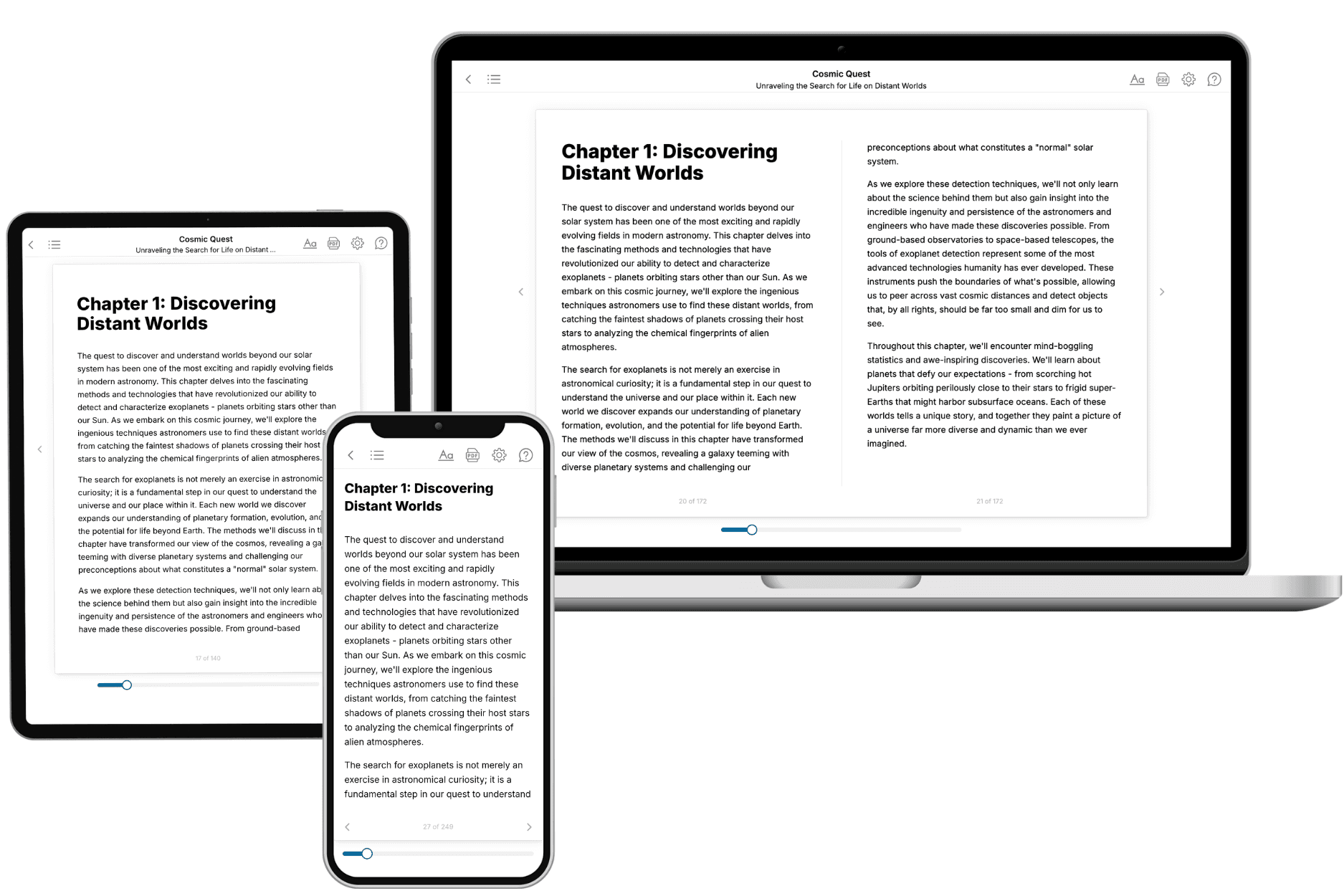
TailoredRead creates complete, full-length nonfiction ebooks, written specifically for you. Tell us what you want to learn and why, and TailoredRead writes you a complete ebook on it, with charts, tables, and diagrams throughout. Read it online, on Kindle, or on any e-reader, or download it as a PDF or EPUB. Every book is written fresh the day you order it.
- How is the book tailored to me?
Before anything is written, you answer a few short questions about your goals, your background, and the topics you care about. Your book is then planned around your answers: written at your level, focused on your goals, and covering the topics you chose, instead of the one-size-fits-all book a store sells everyone.
- Will it read like generic AI content?
No. Your book isn't a chat transcript: it's planned chapter by chapter before a single word is written, told in a clear book voice, and explains ideas visually with charts, tables, and diagrams. After writing, every book goes through an editorial pass that polishes chapters so the book reads consistent from start to finish. Judge for yourself: browse thousands of sample books on our Explore Books page.
- How accurate is the content?
Our AI first checks whether your subject needs live research. Niche and fast-moving subjects are researched before writing, and the book plan and chapters are grounded in what it finds. After writing, every book goes through a quality pass that checks its facts and consistency, and researched books list their sources in a Notes section at the back.
- How long is the book?
You choose the length: Comprehensive (250-300 pages), Detailed (150-200 pages), Essential (70-100 pages), or Short (30-50 pages).
- Does the book include visuals?
Yes. Every book includes charts, tables, and diagrams: timelines, checklists, step-by-step guides, decision trees, comparison tables, matrices, and bar charts. A typical book includes dozens of these visual elements.
- Can I read it on Kindle? What formats can I download?
Yes. Every book can be read in our online reader or downloaded as a PDF or EPUB. The EPUB can be opened with Kindle, Apple Books, Kobo, and any e-reader. The Commercial and Author licenses also include an editable Word (DOCX) and Markdown download.
- How much does it cost?
About the price of a regular ebook. The exact price depends on your book's length and complexity, from $2 for the shortest books to $35 for the most comprehensive, and it's shown when you review your book, before you commit to anything. Each book is a one-time purchase, yours to keep, no subscription. Licenses that let you share, teach, or publish your book range from $35.99 to $49.99.
- Can I preview the book before purchasing?
Before you pay, you'll see what your book will cover: the title, a detailed description, the estimated length, and the complete chapter-by-chapter table of contents, so you know what you're getting before you decide. The full text itself is written after you purchase.
- How long does it take to create a book?
About 10 minutes. You can start reading the opening chapters while the rest is still being written.