The Manual Testing Handbook
Master the Art of Finding Bugs Before Your Users Do
Discover how to become a more effective manual tester and significantly improve software quality.
191 pages10 chaptersDec 14, 2025Software QA
About this book
This comprehensive guide takes you beyond basic testing to master proven techniques that professional QA teams use daily. You'll learn how to design test cases that catch critical defects, execute tests strategically, and communicate findings that drive real improvements. Whether you're new to QA or looking to sharpen your skills, this handbook provides practical frameworks for exploratory testing, test documentation, defect reporting, and specialized testing areas like performance and security. Each chapter builds your testing mindset and equips you with actionable strategies you can apply immediately. By mastering manual testing fundamentals and advanced techniques, you'll become an invaluable team member who consistently delivers higher quality software and earns recognition for your contributions to product excellence.
Table of contents
- IntroductionWhy Manual Testing Still Matters in Modern QA, What You'll Learn in This Handbook, How to Use This Book for Maximum ImpactRead below
- Chapter 1: Foundations of Manual TestingCore Testing Principles and Mindset, Your Role in the Software Development Lifecycle, Understanding Quality Dimensions Beyond Functionality
- Chapter 2: Designing Effective Test CasesAnatomy of a Well-Designed Test Case, Boundary Value Analysis and Equivalence Partitioning, Decision Table Testing for Complex Logic, State Transition and Path Testing
- Chapter 3: Mastering Exploratory TestingExploratory Testing Fundamentals and Mindset, Creating and Using Test Charters, Session-Based Testing Approach
- Chapter 4: Executing Tests with PrecisionTest Execution Strategies and Prioritization, Setting Up and Managing Test Environments, Test Data Preparation and Management
- Chapter 5: Reporting Defects That Drive ActionAnatomy of an Effective Defect Report, Writing Clear Reproduction Steps, Assessing Severity, Priority, and Impact, Communicating with Developers and Stakeholders
- Chapter 6: Test Documentation and TraceabilityTypes of Test Documentation and When to Use Them, Requirements Traceability and Coverage Tracking, Meaningful Test Metrics and Reporting
- Chapter 7: Advanced Functional Testing TechniquesRegression Testing Strategies and Scope, Integration Testing Across System Components, Testing Real-World User Workflows and Scenarios
- Chapter 8: Specialized Testing DomainsPerformance and Load Testing Fundamentals, Security Testing and Vulnerability Identification, Usability and User Experience Testing, Compatibility and Cross-Platform Testing
- Chapter 9: Tools, Automation, and Modern TestingEssential Testing Tools and When to Use Them, Integrating Manual and Automated Testing, Continuous Testing in DevOps Environments
- Chapter 10: Developing Your Testing MindsetCritical Thinking and Problem-Solving Skills, Cultivating Attention to Detail and Pattern Recognition, Staying Current and Advancing Your QA Career
- ConclusionKey Takeaways and Your Testing Journey, Next Steps for Continued Growth
Introduction
Software quality has never been more critical than it is today. Users expect applications to work flawlessly across devices, platforms, and scenarios. A single defect can damage reputation, cost revenue, and erode trust. Yet despite the rise of automation and artificial intelligence in testing, manual testing remains an indispensable skill that separates good QA professionals from great ones. This handbook exists to help you master that skill and become the tester who consistently finds the bugs that matter most.
Manual testing is not simply clicking through an application without a plan. It's a disciplined craft that combines technical knowledge, critical thinking, and systematic approaches to uncover defects that automated tests miss. The best manual testers develop an intuition for where software breaks, understand how users actually interact with systems, and communicate findings in ways that drive meaningful improvements. These skills take time to develop, but they're learnable, and this book provides the roadmap.
Whether you're transitioning into QA from another role, looking to formalize your testing knowledge, or seeking to advance from junior to senior positions, this handbook meets you where you are. You'll find practical techniques you can apply immediately, frameworks that bring structure to your testing, and insights that help you think more strategically about quality. Each chapter builds on the previous one, creating a comprehensive foundation for manual testing excellence that will serve you throughout your career.
The software industry continues to evolve rapidly, with new technologies, methodologies, and tools emerging constantly. Yet the fundamental principles of effective testing remain remarkably consistent. Understanding these principles and knowing how to apply them in modern development environments gives you a competitive advantage. This book bridges that gap between timeless testing fundamentals and contemporary practices, ensuring you're equipped for both today's challenges and tomorrow's opportunities.
Why Manual Testing Still Matters in Modern QA
The conversation around manual versus automated testing often creates a false dichotomy. Some organizations rush to automate everything, believing that manual testing is outdated or inefficient. Others resist automation entirely, clinging to manual approaches even where automation would provide clear benefits. The reality is more nuanced: manual testing and automated testing serve complementary purposes, and the most effective QA strategies leverage both appropriately. Manual testing excels in areas where human judgment, creativity, and adaptability are essential.
Consider what happens when a user encounters your application for the first time. They bring expectations shaped by other software they've used, mental models about how things should work, and unique contexts that influence their behavior. Manual testing captures this human dimension of software quality in ways that automated scripts cannot. A manual tester notices that a button placement feels awkward, that error messages confuse rather than guide, or that a workflow requires too many steps for a common task. These usability insights directly impact user satisfaction but rarely appear in automated test results.
Exploratory testing represents one of manual testing's most powerful applications. When you explore an application without rigid scripts, you adapt your testing based on what you discover. You notice patterns, follow hunches, and investigate areas that seem suspicious. This adaptive approach uncovers unexpected defects that scripted tests miss because those scripts only check what someone anticipated might go wrong. Real-world defects often emerge from scenarios that nobody predicted, and manual testing's flexibility makes it ideal for finding these issues.
The economics of testing also favor manual approaches in specific situations. Automated tests require upfront investment in frameworks, maintenance as the application changes, and technical expertise to implement effectively. For features that change frequently, one-time testing needs, or exploratory investigations, manual testing delivers faster results at lower cost. A skilled manual tester can validate a new feature in minutes, while creating and maintaining automated tests for the same feature might take hours or days. Understanding when to test manually versus when to automate is a critical skill that this handbook will help you develop.
Manual testing also plays an essential role in validating automated tests themselves. How do you know your automated test suite actually catches defects? Manual testing provides the ground truth. When you manually verify that a defect exists and then confirm that your automated tests detect it, you validate your automation strategy. Similarly, when automated tests fail, manual investigation determines whether you've found a real defect or encountered a flaky test. Manual testing provides the human intelligence that makes automation trustworthy.
Edge cases and boundary conditions represent another area where manual testing shines. While you can automate boundary value testing once you've identified the boundaries, discovering those boundaries often requires manual exploration. What happens when a user enters emoji in a name field? How does the system behave when network connectivity fluctuates? What occurs if a user rapidly clicks a submit button multiple times? Manual testers excel at asking "what if" questions and investigating scenarios that fall outside normal parameters. These edge cases frequently harbor critical defects that impact real users.
The integration of systems presents complexity that manual testing handles particularly well. Modern applications rarely exist in isolation—they connect to databases, third-party APIs, payment processors, authentication services, and numerous other components. Understanding how these integrations behave under various conditions requires the kind of holistic thinking that manual testers provide. You might notice that an API timeout causes a cascade of failures, or that data synchronization issues emerge only under specific timing conditions. These integration defects often require manual investigation to understand and reproduce.
Security testing benefits significantly from manual approaches. While automated security scanners identify known vulnerabilities, creative security testing requires thinking like an attacker. Manual testers probe for authorization flaws, test whether the application leaks sensitive information, and investigate whether security controls can be bypassed. This adversarial mindset—trying to break the system in ways developers didn't anticipate—is fundamentally a manual testing skill. Automated tools complement this work but cannot replace the creativity and persistence of a skilled security tester.
Finally, manual testing maintains its relevance because software quality encompasses more than functional correctness. Performance under real-world conditions, accessibility for users with disabilities, cultural appropriateness for international audiences, and emotional responses to design choices all matter. Manual testing evaluates these qualitative dimensions of quality that resist easy automation. When you manually test, you're not just verifying that features work—you're assessing whether the software delivers a quality experience that meets user needs and expectations.
What You'll Learn in This Handbook
This handbook provides a comprehensive curriculum for manual testing excellence, organized into ten chapters that build progressively from fundamentals to advanced techniques. Each chapter focuses on practical skills you can apply immediately while also developing the deeper understanding that enables you to adapt these techniques to your specific context. The content balances theory with practice, ensuring you understand not just how to apply testing techniques but why they work and when to use them.
The journey begins with Foundations of Manual Testing, where you'll develop the core principles and mindset that underpin all effective testing. You'll learn how testing fits into the software development lifecycle, understand your role in quality assurance, and explore quality dimensions beyond basic functionality. This foundation ensures you approach testing strategically rather than mechanically, thinking critically about what to test and why it matters. You'll discover how to shift from simply executing tests to actively contributing to product quality.
In Designing Effective Test Cases, you'll master the techniques that professional testers use to maximize defect detection while minimizing redundant testing. You'll learn boundary value analysis, equivalence partitioning, decision table testing, and state transition testing. Each technique comes with practical examples showing exactly how to apply it to real features. By the end of this chapter, you'll design test cases that systematically cover critical scenarios rather than randomly checking features, dramatically improving your testing efficiency and effectiveness.
The Mastering Exploratory Testing chapter develops your ability to test adaptively and creatively. You'll learn how to create test charters that guide exploration without constraining it, implement session-based testing approaches, and document your exploratory testing effectively. This chapter transforms exploratory testing from an ad-hoc activity into a disciplined practice that consistently uncovers important defects. You'll develop the confidence to explore unfamiliar features and the skills to communicate what you discovered during those explorations.
Executing Tests with Precision covers the practical aspects of test execution that often receive insufficient attention. You'll learn strategies for prioritizing tests when time is limited, techniques for setting up and managing test environments, and approaches to test data preparation and management. These operational skills ensure that your well-designed tests actually get executed effectively. You'll discover how to handle common execution challenges like environment instability, data dependencies, and timing issues that can derail testing efforts.
The Reporting Defects That Drive Action chapter addresses one of the most critical yet underappreciated testing skills: communicating your findings effectively. You'll learn how to write defect reports that developers can quickly understand and reproduce, how to assess severity and priority accurately, and how to communicate with both technical and non-technical stakeholders. This chapter recognizes that finding defects is only half the battle—getting them fixed requires clear communication and collaboration. You'll develop skills that make you a valued team member rather than just a bug finder.
Test Documentation and Traceability explores how to document your testing work in ways that provide value without creating excessive overhead. You'll learn which documentation types serve which purposes, how to maintain requirements traceability, and how to report meaningful test metrics. This chapter helps you strike the right balance between documentation that supports quality and bureaucracy that slows teams down. You'll understand how to adapt documentation practices to different project contexts and organizational needs.
In Advanced Functional Testing Techniques, you'll deepen your functional testing skills with strategies for regression testing, integration testing, and testing complex user workflows. You'll learn how to maintain effective regression test suites as applications grow, how to test integrations between system components, and how to validate that real-world user scenarios work end-to-end. These advanced techniques enable you to test larger, more complex systems effectively and contribute to testing strategy discussions with confidence.
The Specialized Testing Domains chapter introduces you to testing areas beyond functional testing: performance, security, usability, and compatibility testing. While each of these domains could fill entire books, this chapter provides the foundational knowledge you need to contribute effectively in these areas. You'll learn what to look for, common issues to investigate, and when to escalate to specialists. This breadth of knowledge makes you a more versatile tester who can contribute across different quality dimensions.
Tools, Automation, and Modern Testing helps you navigate the contemporary testing landscape. You'll learn about essential testing tools and when to use them, how manual and automated testing integrate effectively, and how testing works in DevOps and continuous delivery environments. This chapter ensures you can work effectively in modern development contexts while maintaining the manual testing skills that remain valuable. You'll understand how to position yourself as a tester who embraces appropriate automation while recognizing where manual testing adds unique value.
Finally, Developing Your Testing Mindset focuses on the cognitive and professional skills that distinguish exceptional testers. You'll develop critical thinking and problem-solving abilities, cultivate attention to detail and pattern recognition, and learn strategies for continuous learning and career advancement. This chapter recognizes that technical skills alone don't make you an outstanding tester—you also need the mindset, habits, and professional practices that enable you to apply those skills effectively throughout your career.
How to Use This Book for Maximum Impact
This handbook is designed to serve multiple purposes: as a comprehensive learning resource for those new to manual testing, as a reference guide for experienced testers seeking to refresh specific skills, and as a career development tool for QA professionals looking to advance. How you use this book depends on your current situation, goals, and learning preferences. The following guidance helps you extract maximum value regardless of your starting point or objectives.
If you're new to manual testing or transitioning from another role, read the book sequentially from beginning to end. Each chapter builds on concepts introduced in previous chapters, creating a logical progression from fundamentals to advanced techniques. Take time with the early chapters on foundations and test design—these provide the conceptual framework that makes later chapters more meaningful. As you read, try applying the techniques to a real application, even if it's just a personal project or publicly available website. Practical application accelerates learning and helps you internalize concepts that might otherwise remain abstract.
For experienced testers looking to formalize or expand your knowledge, you might skip directly to chapters addressing your specific gaps or interests. Use the table of contents to identify areas where you want to deepen your expertise. Perhaps you're strong in exploratory testing but want to improve your test case design skills, or you're comfortable with functional testing but need to learn more about security testing. This targeted approach lets you build on your existing foundation efficiently. However, don't skip chapters entirely based on assumptions about what you already know—you might discover new perspectives or techniques even in familiar areas.
The book works effectively as a reference guide for specific situations. When you encounter a testing challenge at work, consult the relevant chapter for guidance. Facing a complex feature with multiple conditional logic paths? Review the decision table testing section. Need to write a particularly important defect report? Reference the chapter on defect reporting. Keep the book accessible during your workday so you can quickly look up techniques, frameworks, or best practices when you need them. Over time, this reference usage reinforces your learning and helps you apply concepts in real-world contexts.
To maximize learning retention and skill development, actively engage with the content rather than passively reading. When you encounter a testing technique, pause and think about how you would apply it to a feature you're currently testing. When you read about a defect reporting practice, review your recent defect reports and identify improvements you could make. This active processing transforms information into practical skills. Consider keeping a testing journal where you note insights, techniques you want to try, and reflections on how concepts apply to your work.
The examples throughout the book illustrate concepts with specific scenarios, but your learning deepens when you create your own examples from your work context. After reading about boundary value analysis, identify a feature in your application where you could apply it. After learning about test charters for exploratory testing, write a charter for an upcoming testing session. This translation from the book's examples to your specific context ensures you're not just understanding concepts abstractly but developing the ability to apply them in your unique situation.
Consider forming or joining a study group with other QA professionals working through this handbook. Discussing concepts with peers deepens understanding, exposes you to different perspectives, and provides accountability for actually applying what you learn. You might meet weekly to discuss a chapter, share experiences applying techniques, and troubleshoot challenges. This collaborative learning approach often proves more effective than studying alone, particularly for developing the judgment and critical thinking that distinguish exceptional testers from merely competent ones.
As you progress through the book, build a personal testing toolkit based on what you learn. This might include templates for test cases and defect reports, checklists for different testing types, reference sheets for testing techniques, and notes on tools and resources. Customize these materials to your context and preferences. Over time, this toolkit becomes a valuable resource that makes you more efficient and effective. Share your toolkit with colleagues and incorporate their feedback—teaching others reinforces your own learning and contributes to your team's overall capability.
Don't expect to master everything immediately. Testing expertise develops over time through repeated practice and reflection. You might read about a technique, try applying it, struggle initially, and only achieve proficiency after several attempts. This is normal and expected. Return to chapters periodically as you gain experience—you'll often discover new insights in material you've read before because your growing experience provides new context for understanding. The book is designed to support your development over months and years, not just during an initial reading.
Pay special attention to the sections on mindset, communication, and professional development. Technical testing skills are necessary but not sufficient for career success. How you think about testing, how you communicate with team members, and how you continue learning throughout your career often matter as much as your technical capabilities. These "soft skills" distinguish testers who advance in their careers from those who plateau. Invest time developing these dimensions of your professional capability alongside your technical testing skills.
Finally, remember that this handbook provides frameworks and principles, not rigid rules. Effective testing requires adapting techniques to your specific context—your application's characteristics, your team's practices, your organization's constraints, and your users' needs. Use the book's guidance as a starting point, then adjust based on what works in your situation. The goal is not to follow every practice exactly as described but to develop the judgment to know which practices to apply, how to adapt them, and when to deviate from standard approaches. This contextual judgment is the hallmark of testing mastery, and it develops through thoughtful practice over time.
This is the end of the free sample. The full book has 10 chapters.
Want this book written for you?
Tell us your goals and background, and get your own version of this book, tailored by AI to you.


Benefits of AI-tailored books
- Read one book, not ten:
- all the Software QA knowledge you need, gathered into a single book.
- Save days of learning:
- tell us your goals, choose your topics, and the whole book is built around them.
- Learn effortlessly:
- Software QA book written for your specific background and expertise.
- Understand at a glance:
- includes charts, tables, timelines, checklists, decision trees, and more.
- Stay current:
- written the day you order it, not years ago.
- Trust what you read:
- every book is checked for accuracy, with real research when your subject needs it.
Create your unique book in 3 steps
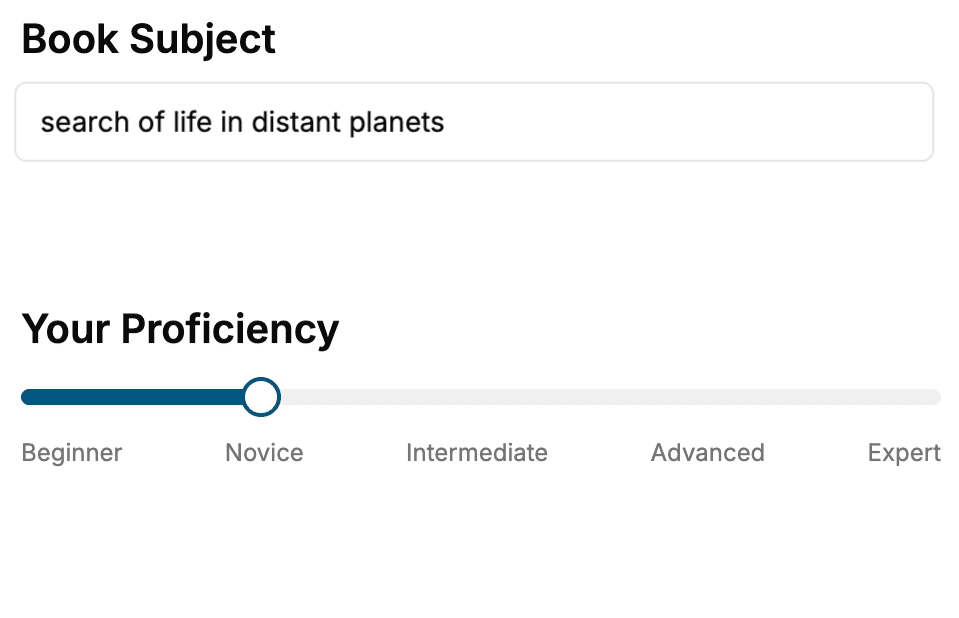
- 1. Select your focus
Select the focus of your Software QA book and share your background
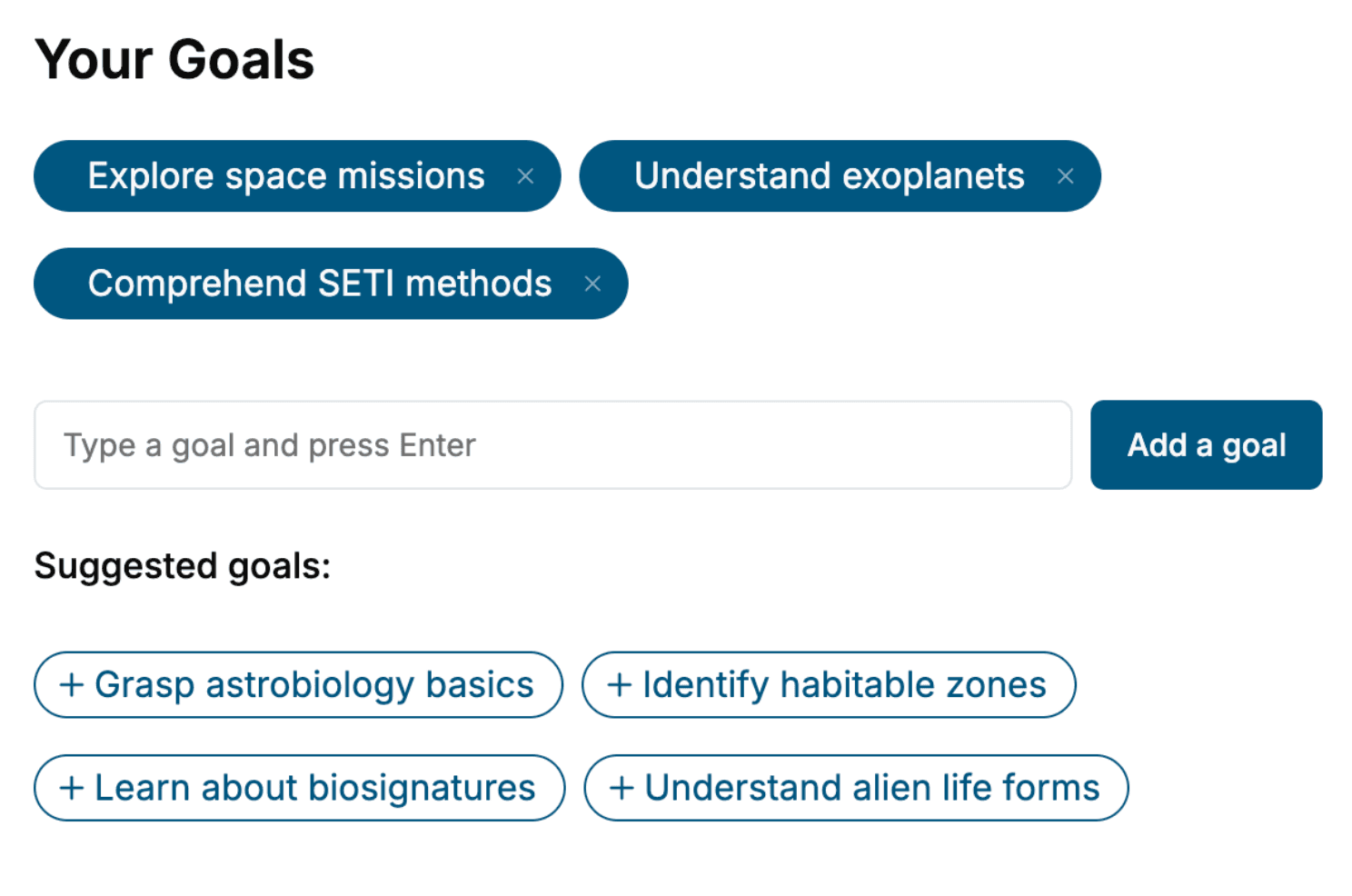
- 2. Personalize your book
Specify your goals and choose sub-topics to include
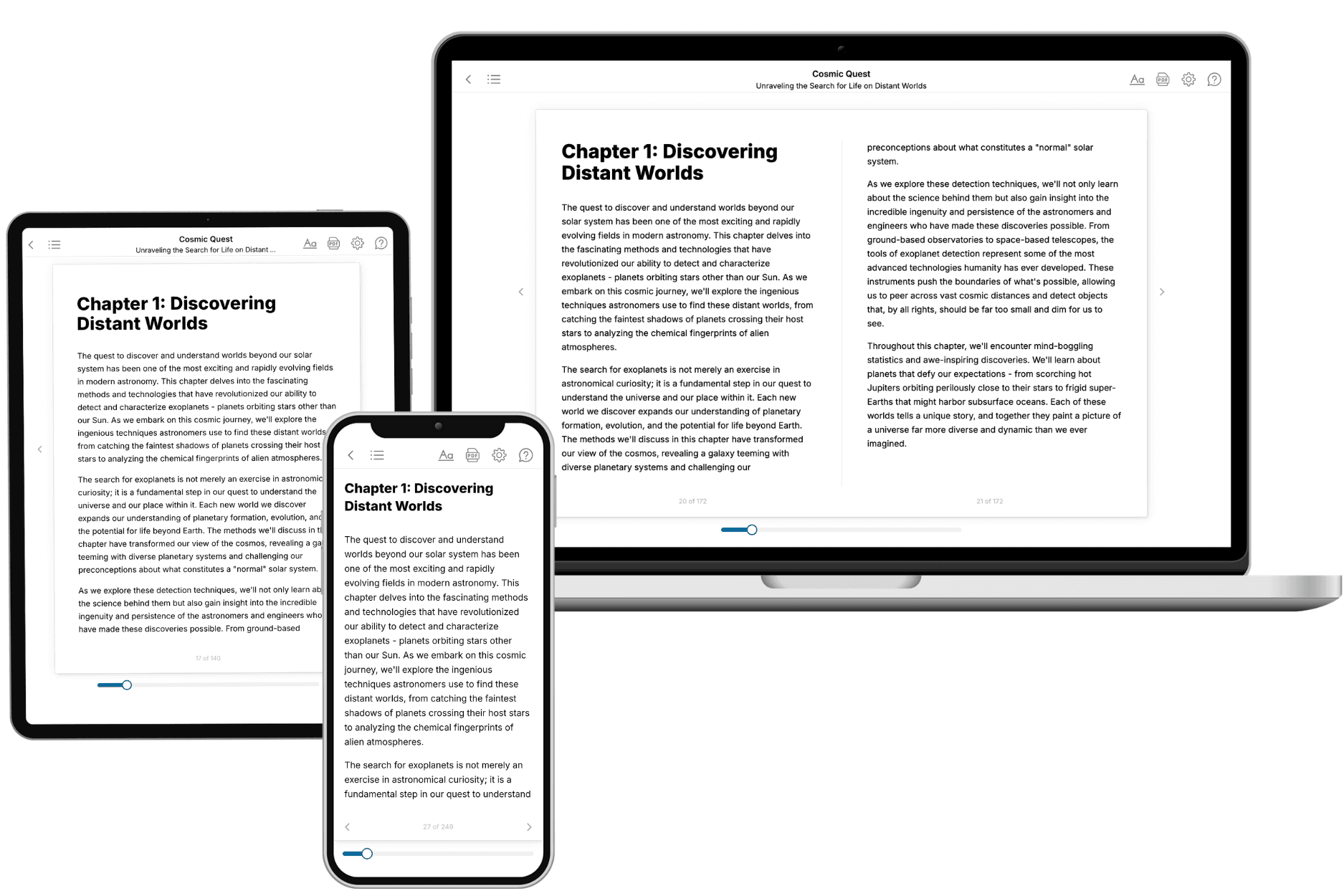
- 3. Get your tailored book
Your book is ready in 10 minutes. Read it online, download as EPUB or PDF, or send to Kindle.
Frequently asked questions
- What is TailoredRead?
TailoredRead creates complete, full-length nonfiction ebooks, written specifically for you. Tell us what you want to learn and why, and TailoredRead writes you a complete ebook on it, with charts, tables, and diagrams throughout. Read it online, on Kindle, or on any e-reader, or download it as a PDF or EPUB. Every book is written fresh the day you order it.
- How is the book tailored to me?
Before anything is written, you answer a few short questions about your goals, your background, and the topics you care about. Your book is then planned around your answers: written at your level, focused on your goals, and covering the topics you chose, instead of the one-size-fits-all book a store sells everyone.
- Will it read like generic AI content?
No. Your book isn't a chat transcript: it's planned chapter by chapter before a single word is written, told in a clear book voice, and explains ideas visually with charts, tables, and diagrams. After writing, every book goes through an editorial pass that polishes chapters so the book reads consistent from start to finish. Judge for yourself: browse thousands of sample books on our Explore Books page.
- How accurate is the content?
Our AI first checks whether your subject needs live research. Niche and fast-moving subjects are researched before writing, and the book plan and chapters are grounded in what it finds. After writing, every book goes through a quality pass that checks its facts and consistency, and researched books list their sources in a Notes section at the back.
- How long is the book?
You choose the length: Comprehensive (250-300 pages), Detailed (150-200 pages), Essential (70-100 pages), or Short (30-50 pages).
- Does the book include visuals?
Yes. Every book includes charts, tables, and diagrams: timelines, checklists, step-by-step guides, decision trees, comparison tables, matrices, and bar charts. A typical book includes dozens of these visual elements.
- Can I read it on Kindle? What formats can I download?
Yes. Every book can be read in our online reader or downloaded as a PDF or EPUB. The EPUB can be opened with Kindle, Apple Books, Kobo, and any e-reader. The Commercial and Author licenses also include an editable Word (DOCX) and Markdown download.
- How much does it cost?
About the price of a regular ebook. The exact price depends on your book's length and complexity, from $2 for the shortest books to $35 for the most comprehensive, and it's shown when you review your book, before you commit to anything. Each book is a one-time purchase, yours to keep, no subscription. Licenses that let you share, teach, or publish your book range from $35.99 to $49.99.
- Can I preview the book before purchasing?
Before you pay, you'll see what your book will cover: the title, a detailed description, the estimated length, and the complete chapter-by-chapter table of contents, so you know what you're getting before you decide. The full text itself is written after you purchase.
- How long does it take to create a book?
About 10 minutes. You can start reading the opening chapters while the rest is still being written.