Mastering Object Relational Mapping
Design Patterns, Architecture, and Best Practices for Modern Software Development
Build robust, high-performance applications by mastering the principles and practices of Object Relational Mapping.
207 pages9 chaptersJun 21, 2026ORM
About this book
This comprehensive guide bridges the gap between object-oriented design and relational databases, equipping you with the knowledge to make informed architectural decisions. You'll explore the impedance mismatch problem, discover how different ORM patterns solve real-world challenges, and learn proven strategies for optimizing queries, managing relationships, and designing entities that scale. Through practical examples and architectural insights, you'll understand not just how to use ORM frameworks, but why certain approaches work better than others. Whether you're designing a new system or refactoring legacy code, this book provides the conceptual foundation and practical techniques needed to leverage ORM effectively while avoiding common pitfalls that plague many applications.
Table of contents
- IntroductionWhy ORM Matters in Modern Development, What You'll Learn in This Book, How to Use This Book EffectivelyRead below
- Chapter 1: The Impedance Mismatch ProblemObjects vs. Tables: Understanding the Fundamental Disconnect, Historical Context: How We Got Here, The Real Cost of Ignoring the Mismatch
- Chapter 2: Core ORM Concepts and TerminologyEntities and Mapping Fundamentals, Relationships and Associations, Identity and Equality in ORM, The Persistence Context and Unit of Work Pattern
- Chapter 3: Architectural Patterns: Active Record vs. Data MapperThe Active Record Pattern: Simplicity and Trade-offs, The Data Mapper Pattern: Separation and Flexibility, Choosing the Right Pattern for Your Project
- Chapter 4: Entity Design and Relationship MappingDesigning Entities That Map Well to Databases, One-to-Many and Many-to-One Relationships, Many-to-Many Relationships and Join Tables, Inheritance Strategies: Single Table, Joined, and Table-Per-Class
- Chapter 5: Query Optimization and Loading StrategiesLazy Loading vs. Eager Loading: Making the Right Choice, The N+1 Query Problem and How to Avoid It, Writing Efficient Queries with ORM, Understanding the SQL Behind Your ORM Queries
- Chapter 6: Transaction Management and ConcurrencyTransaction Basics and ACID Properties, Isolation Levels and Concurrency Issues, Optimistic Locking and Version Control, Pessimistic Locking and Row-Level Locks
- Chapter 7: Advanced Mapping TechniquesMapping Value Objects and Embedded Types, Polymorphic Queries and Inheritance Challenges, Custom Types and Type Converters
- Chapter 8: Testing ORM-Based ApplicationsUnit Testing Strategies with ORM, Integration Testing and Database Fixtures, Mocking and Stubbing ORM Components
- Chapter 9: Common Pitfalls and Anti-PatternsOver-Fetching Data and Unnecessary Relationships, Circular Dependencies and Bidirectional Relationships, Leaky Abstractions and Hidden Complexity
- ConclusionKey Takeaways and Principles, Continuing Your ORM Mastery Journey
- Glossary
- Further Reading and Resources
Introduction
Every developer who has worked with both object-oriented code and relational databases has felt the friction. You model your domain beautifully in classes and objects, with rich relationships and encapsulated behavior, and then you hit the database layer. Suddenly, you're translating objects into rows, navigating foreign keys, and writing SQL that feels disconnected from the elegant model you just built. This tension is not a sign that something went wrong. It is a fundamental characteristic of working across two different paradigms, and it has a name: the object-relational impedance mismatch.
Object Relational Mapping, commonly known as ORM, emerged as a practical answer to this challenge. Rather than forcing developers to manually translate between objects and tables on every database interaction, ORM frameworks provide a layer of abstraction that handles much of that translation automatically. Frameworks like Hibernate for Java, Entity Framework for .NET, SQLAlchemy for Python, and Doctrine for PHP have become central tools in enterprise software development. Millions of applications rely on them every day to persist data, manage relationships, and query databases without writing raw SQL for every operation.
But here is the problem that motivates this book: many developers use ORM frameworks without truly understanding what is happening underneath. They follow tutorials, annotate their entities, and get things working. Then, as the application grows, performance degrades. Queries that should be fast become slow. Relationships that seemed simple start causing unexpected database calls. Transactions behave in ways that are hard to predict. These are not random failures. They are the predictable consequences of using a powerful tool without understanding its principles. This book exists to close that gap, giving you the conceptual foundation and practical skills to use ORM frameworks with confidence and precision.
This introduction sets the stage for everything that follows. It explains why ORM matters in the context of modern software development, outlines what you will learn across the chapters ahead, and offers guidance on how to get the most out of this book based on your background and goals. Whether you are building a new system from scratch or trying to untangle performance problems in an existing application, the journey starts here.
Why ORM Matters in Modern Development
Software development has changed dramatically over the past two decades, but one thing has remained remarkably constant: most applications still need to store and retrieve data from relational databases. Despite the rise of NoSQL systems, graph databases, and cloud-native storage solutions, relational databases like PostgreSQL, MySQL, and Microsoft SQL Server continue to power the majority of enterprise applications worldwide.[1] The relational model is mature, well-understood, and exceptionally good at enforcing data integrity. It is not going away.
At the same time, object-oriented programming has become the dominant paradigm for building application logic. Java, C#, Python, and PHP are all object-oriented at their core, and the design patterns, frameworks, and architectural styles that developers rely on are built around objects, classes, and inheritance. The challenge is that these two worlds, objects and relational tables, do not map onto each other naturally. An object can have behavior, inheritance, and complex nested structures. A database table is a flat grid of rows and columns. Bridging that gap manually is tedious, error-prone, and time-consuming.
ORM frameworks solve this problem by automating the translation between the two worlds. Instead of writing SQL to insert a Customer object into a customers table, you call a method like entityManager.persist(customer) and the framework handles the rest. This is not just a convenience. It is a significant productivity multiplier. Studies and industry surveys consistently show that ORM usage reduces the amount of boilerplate data-access code developers need to write, freeing them to focus on business logic rather than database plumbing.[2]
Beyond productivity, ORM frameworks bring important architectural benefits. They encourage a clean separation between your domain model and your persistence mechanism. They make it easier to write unit tests by abstracting away the database. They provide built-in support for common patterns like the Unit of Work and Identity Map, which help manage object state and prevent duplicate queries. When used well, an ORM framework is not just a code generator. It is an architectural partner that shapes how your application handles data at every level.
However, ORM is not a magic solution. It introduces its own complexity, and that complexity can bite hard if you do not understand it. The infamous N+1 query problem, where loading a list of objects triggers hundreds of individual database queries, is one of the most common performance killers in ORM-based applications. Misconfigured lazy loading, poorly designed entity relationships, and misunderstood transaction boundaries are responsible for a significant share of production performance incidents in enterprise systems. These problems are not caused by ORM frameworks being bad tools. They are caused by developers using those tools without understanding the principles behind them.
Consider a real-world scenario: a development team builds an e-commerce platform using a popular ORM framework. The application works well in development and early testing. But when it goes to production with thousands of concurrent users, the database becomes a bottleneck. Profiling reveals that a single page load is triggering over 200 SQL queries because of unoptimized relationship loading. The fix requires understanding how the ORM's loading strategies work, which relationships should be eager-loaded versus lazy-loaded, and how to write more targeted queries. None of that knowledge comes from just reading the framework's getting-started guide. It comes from understanding ORM at a deeper level, which is exactly what this book provides.
ORM matters in modern development not just because it saves time, but because it shapes the architecture of your entire data layer. The decisions you make about entity design, relationship mapping, and query strategy have long-term consequences for performance, maintainability, and scalability. Understanding those decisions deeply is what separates developers who use ORM effectively from those who struggle with it.
What You'll Learn in This Book
This book is organized as a progressive journey through ORM concepts, starting with the foundational problem that ORM exists to solve and building toward advanced techniques and architectural best practices. Each chapter builds on the previous ones, so by the time you reach the later chapters, you will have the context needed to understand why certain advanced techniques matter and when to apply them.
The journey begins with Chapter 1: The Impedance Mismatch Problem. Before diving into ORM solutions, it is essential to understand the problem clearly. This chapter explores the fundamental disconnect between objects and tables, traces the historical context of how developers have handled this challenge over time, and examines the real costs of ignoring the mismatch. Understanding the problem deeply makes every ORM concept that follows more meaningful.
Chapter 2: Core ORM Concepts and Terminology establishes the vocabulary and foundational ideas you need to work effectively with any ORM framework. You will learn about entities and mapping, how relationships and associations are represented, the critical distinction between identity and equality in an ORM context, and the persistence context pattern that underlies most modern ORM frameworks. These concepts apply across frameworks and languages, making this chapter one of the most universally applicable in the book.
Chapter 3: Architectural Patterns dives into the two dominant approaches to ORM design: the Active Record pattern and the Data Mapper pattern. These are not just implementation details. They represent fundamentally different philosophies about how your domain model should relate to your persistence layer. You will learn the trade-offs of each approach, see concrete examples of both, and develop a framework for choosing the right pattern for a given project.
From there, Chapter 4: Entity Design and Relationship Mapping gets practical. You will learn how to design entities that map cleanly to database tables, how to handle one-to-many, many-to-one, and many-to-many relationships, and how to approach inheritance mapping using the three main strategies: single table, joined table, and table-per-class. This chapter is full of concrete examples and common pitfalls to avoid.
Chapter 5: Query Optimization and Loading Strategies addresses one of the most critical skill areas for any ORM developer. You will learn the difference between lazy and eager loading, understand the N+1 query problem in depth, and develop practical techniques for writing efficient queries. Crucially, you will also learn how to read and interpret the SQL that your ORM generates, because understanding what is happening at the database level is essential for optimization.
The book then moves into Chapter 6: Transaction Management and Concurrency, covering ACID properties, isolation levels, and the two main locking strategies: optimistic and pessimistic locking. These topics are often underestimated by developers who are new to ORM, but they are critical for building applications that handle concurrent users correctly and maintain data integrity under load.
Chapter 7: Advanced Mapping Techniques explores more sophisticated scenarios, including mapping value objects and embedded types, handling polymorphic queries, and creating custom type converters. These techniques become important as your domain model grows in complexity and you need more fine-grained control over how objects are persisted.
Chapter 8: Testing ORM-Based Applications covers strategies for unit testing, integration testing, and mocking ORM components. Testing data-access code is notoriously tricky, and this chapter provides practical approaches that make your ORM-based code testable without sacrificing coverage or confidence.
Finally, Chapter 9: Common Pitfalls and Anti-Patterns consolidates lessons from across the book into a focused examination of the mistakes that most commonly cause problems in real-world ORM usage. Over-fetching data, circular dependencies, and leaky abstractions are examined in detail, with concrete guidance on how to recognize and fix each one.
By the end of this book, you will not just know how to use an ORM framework. You will understand why certain approaches work better than others, how to diagnose and fix common problems, and how to make architectural decisions that keep your data layer clean, performant, and maintainable as your application grows.
How to Use This Book Effectively
This book is written for intermediate software developers and architects who already have a working knowledge of object-oriented programming and some experience with relational databases. You do not need to be an expert in either area, but you should be comfortable with concepts like classes, inheritance, and SQL queries before diving in. If you are brand new to both ORM and databases, spending some time with introductory resources first will make this book significantly more valuable.
The book is designed to be read sequentially from start to finish, and that is the recommended approach for most readers. The chapters build on each other in a deliberate way. The impedance mismatch problem discussed in Chapter 1 provides the conceptual foundation for understanding why ORM patterns are designed the way they are in Chapter 3. The entity design principles in Chapter 4 directly inform the query optimization strategies in Chapter 5. Reading out of order is possible, but you may find yourself missing context that makes certain concepts click.
That said, if you are coming to this book with a specific problem to solve, here is a practical guide to finding what you need quickly:
- If you are struggling with slow queries or unexpected database calls, start with Chapter 5 on query optimization and loading strategies, then revisit Chapter 4 on entity design.
- If you are trying to choose between ORM frameworks or architectural approaches, Chapter 3 on Active Record vs. Data Mapper is your starting point.
- If you are dealing with data integrity issues or concurrency bugs, go directly to Chapter 6 on transaction management.
- If you are trying to make your ORM code more testable, Chapter 8 on testing strategies addresses that directly.
- If you are seeing strange or hard-to-explain behavior in your ORM-based application, Chapter 9 on anti-patterns is likely to have the answer.
The code examples throughout this book are written to be framework-agnostic wherever possible. Rather than tying every example to a single framework like Hibernate or Entity Framework, the focus is on concepts and patterns that apply across frameworks. Where specific syntax is needed to illustrate a point, the examples use clear, readable pseudocode or reference widely-used frameworks with notes on how the concept applies in other contexts. This approach means the knowledge you gain here will remain relevant even as frameworks evolve or you switch between technology stacks.
One of the most important habits to develop while reading this book is to connect concepts to your own codebase. As you read about the N+1 problem, think about whether you have seen that pattern in your own applications. As you read about entity design principles, consider how your current entities are structured and whether they follow those principles. The concepts in this book become much more concrete when you apply them to real code you have written or are currently working on.
The best way to learn ORM is not to read about it in isolation, but to read about it while actively working with a real application. Every concept in this book becomes clearer when you can immediately apply it, test it, and observe the results in a system you understand.
Each chapter ends with a summary of key points and, where appropriate, practical exercises or reflection questions. These are not busywork. They are designed to help you consolidate what you have learned and identify gaps in your understanding before moving on. Taking a few minutes to work through them will significantly improve how much you retain from each chapter.
It is also worth noting what this book is not. It is not a step-by-step tutorial for any single ORM framework. It does not walk you through setting up Hibernate from scratch or configuring Entity Framework in a new project. There are excellent official documentation resources and framework-specific tutorials for that purpose. This book focuses on the principles, patterns, and architectural thinking that make you effective with any ORM framework, not just one specific tool. Think of it as the conceptual layer that sits above the framework documentation and makes that documentation make sense.
Finally, approach this material with a mindset of critical thinking rather than rule-following. ORM is a domain full of trade-offs, and the right answer often depends on context. Lazy loading is not always bad. Eager loading is not always good. Active Record is not always the wrong choice. Throughout this book, the goal is to give you the understanding needed to evaluate trade-offs intelligently, not to hand you a rigid set of rules to follow blindly. The developers who get the most out of ORM are those who understand the principles well enough to know when to follow the conventional wisdom and when to deviate from it.
With that foundation in place, it is time to begin. The first chapter dives into the heart of the matter: the impedance mismatch problem that makes ORM necessary in the first place. Understanding that problem clearly is the single most important step toward mastering everything that follows.
This is the end of the free sample. The full book has 9 chapters.
Want this book written for you?
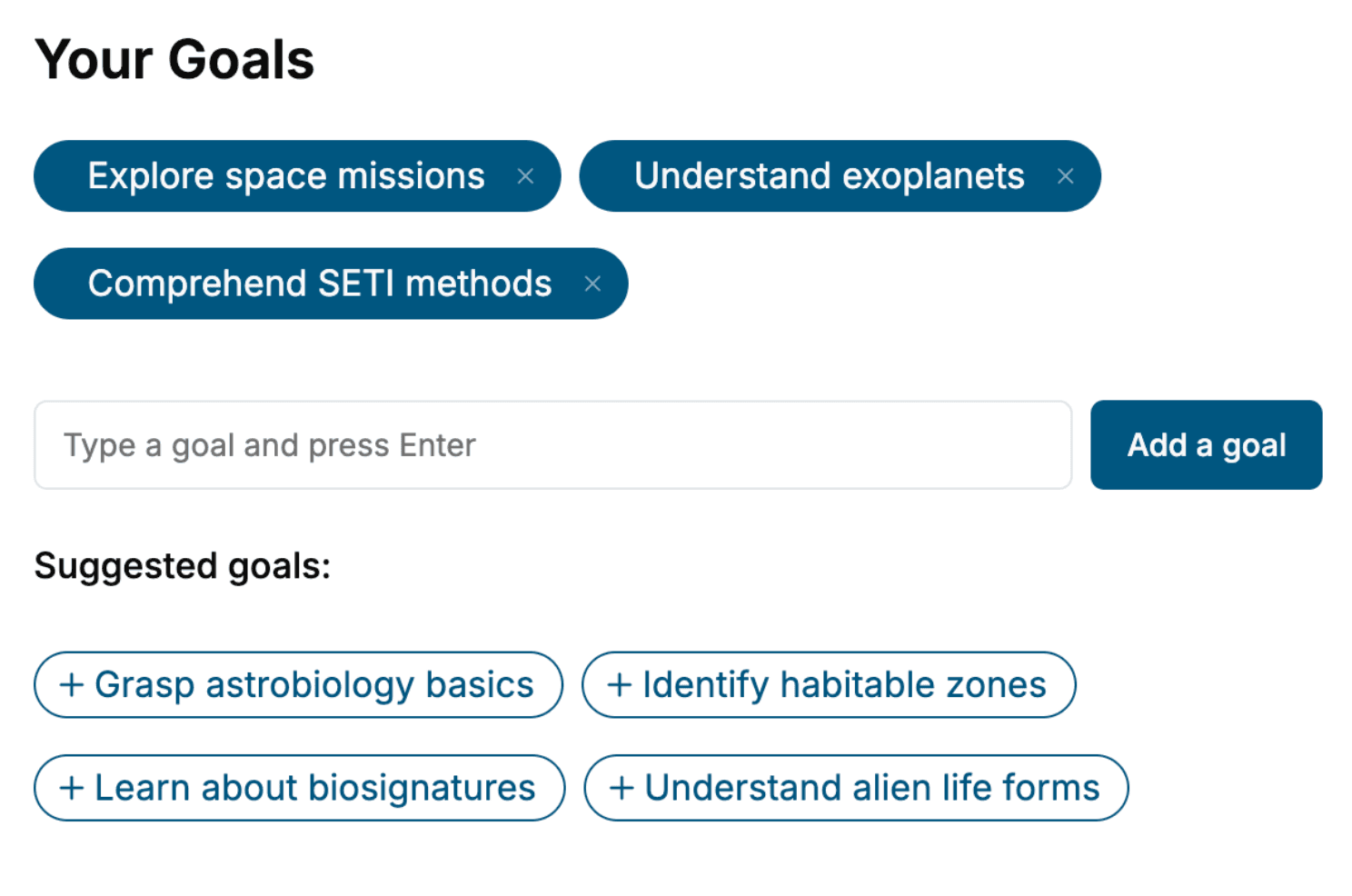
Tell us your goals and background, and get your own version of this book, tailored by AI to you.


Benefits of AI-tailored books
- Read one book, not ten:
- all the ORM knowledge you need, gathered into a single book.
- Save days of learning:
- tell us your goals, choose your topics, and the whole book is built around them.
- Learn effortlessly:
- ORM book written for your specific background and expertise.
- Understand at a glance:
- includes charts, tables, timelines, checklists, decision trees, and more.
- Stay current:
- written the day you order it, not years ago.
- Trust what you read:
- every book is checked for accuracy, with real research when your subject needs it.
Create your unique book in 3 steps
- 1. Select your focus
Select the focus of your ORM book and share your background
- 2. Personalize your book
Specify your goals and choose sub-topics to include
- 3. Get your tailored book
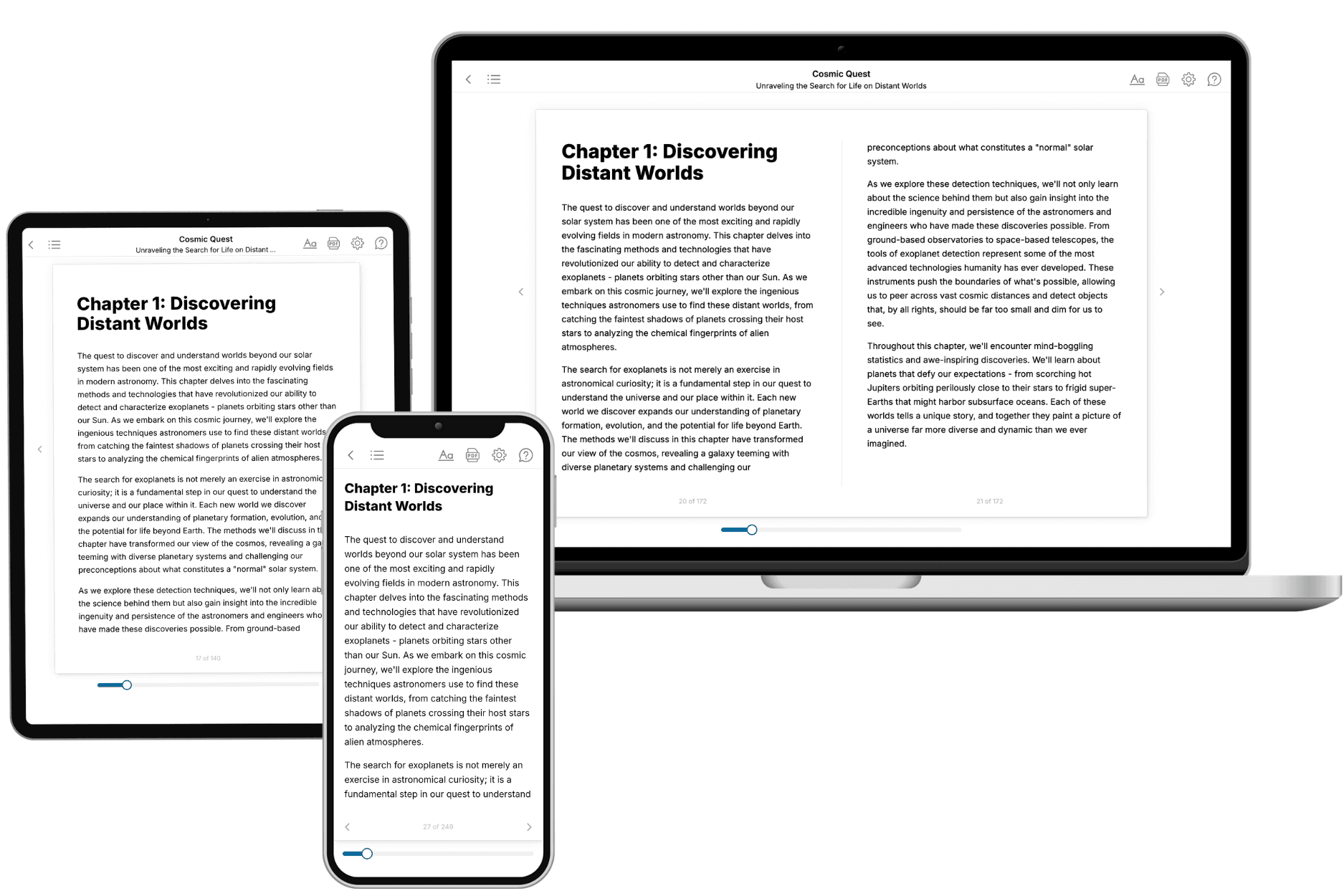
Your book is ready in 10 minutes. Read it online, download as EPUB or PDF, or send to Kindle.

Frequently asked questions
- What is TailoredRead?
TailoredRead creates complete, full-length nonfiction ebooks, written specifically for you. Tell us what you want to learn and why, and TailoredRead writes you a complete ebook on it, with charts, tables, and diagrams throughout. Read it online, on Kindle, or on any e-reader, or download it as a PDF or EPUB. Every book is written fresh the day you order it.
- How is the book tailored to me?
Before anything is written, you answer a few short questions about your goals, your background, and the topics you care about. Your book is then planned around your answers: written at your level, focused on your goals, and covering the topics you chose, instead of the one-size-fits-all book a store sells everyone.
- Will it read like generic AI content?
No. Your book isn't a chat transcript: it's planned chapter by chapter before a single word is written, told in a clear book voice, and explains ideas visually with charts, tables, and diagrams. After writing, every book goes through an editorial pass that polishes chapters so the book reads consistent from start to finish. Judge for yourself: browse thousands of sample books on our Explore Books page.
- How accurate is the content?
Our AI first checks whether your subject needs live research. Niche and fast-moving subjects are researched before writing, and the book plan and chapters are grounded in what it finds. After writing, every book goes through a quality pass that checks its facts and consistency, and researched books list their sources in a Notes section at the back.
- How long is the book?
You choose the length: Comprehensive (250-300 pages), Detailed (150-200 pages), Essential (70-100 pages), or Short (30-50 pages).
- Does the book include visuals?
Yes. Every book includes charts, tables, and diagrams: timelines, checklists, step-by-step guides, decision trees, comparison tables, matrices, and bar charts. A typical book includes dozens of these visual elements.
- Can I read it on Kindle? What formats can I download?
Yes. Every book can be read in our online reader or downloaded as a PDF or EPUB. The EPUB can be opened with Kindle, Apple Books, Kobo, and any e-reader. The Commercial and Author licenses also include an editable Word (DOCX) and Markdown download.
- How much does it cost?
About the price of a regular ebook. The exact price depends on your book's length and complexity, from $2 for the shortest books to $35 for the most comprehensive, and it's shown when you review your book, before you commit to anything. Each book is a one-time purchase, yours to keep, no subscription. Licenses that let you share, teach, or publish your book range from $35.99 to $49.99.
- Can I preview the book before purchasing?
Before you pay, you'll see what your book will cover: the title, a detailed description, the estimated length, and the complete chapter-by-chapter table of contents, so you know what you're getting before you decide. The full text itself is written after you purchase.
- How long does it take to create a book?
About 10 minutes. You can start reading the opening chapters while the rest is still being written.