The Model Evaluation Handbook
A Practical Guide to Measuring, Comparing, and Optimizing AI Performance
Are you confident that your AI model will perform as well in production as it did during testing?
315 pages16 chaptersOct 15, 2025Machine Learning
About this book
Many practitioners discover too late that impressive training results don't guarantee real-world success. The gap between laboratory performance and practical deployment often stems from inadequate evaluation practices that miss critical aspects of model behavior. This comprehensive guide takes you beyond basic accuracy metrics to develop a sophisticated understanding of model evaluation. You'll learn how to select appropriate metrics for different problem types, implement robust validation strategies, and identify potential pitfalls before they impact your projects. From understanding bias and fairness considerations to mastering advanced techniques like cross-validation and ensemble evaluation, you'll gain the skills needed to make confident decisions about model performance. Whether you're working on classification, regression, or more complex AI systems, this book provides practical frameworks for evaluating models systematically. You'll discover how to detect overfitting, handle imbalanced datasets, and assess model reliability under changing conditions. Each concept is illustrated with real-world examples and actionable techniques you can apply immediately. By the end of this book, you'll have the expertise to evaluate AI models with confidence, communicate results effectively to stakeholders, and ensure your models deliver consistent value in production environments. Your evaluation skills will become a competitive advantage in developing robust, reliable AI systems.
Table of contents
- IntroductionWhy Model Evaluation Matters, Common Evaluation Pitfalls, How This Book Is Organized, Getting the Most from This GuideRead below
- Chapter 1: Foundations of Model EvaluationUnderstanding Evaluation Fundamentals, Performance Beyond Accuracy, The Model Evaluation Lifecycle, Aligning Evaluation with Stakeholder Needs
- Chapter 2: Data Splitting and PreparationTrain, Test, and Validation Sets, Strategic Data Splitting Approaches, Time-Based Data Considerations, Preventing Data Leakage
- Chapter 3: Classification Model MetricsUnderstanding Confusion Matrices, Precision, Recall, and F1-Score, ROC Curves and AUC Analysis, Multiclass Classification Metrics
- Chapter 4: Regression Model EvaluationMean Squared Error and Variants, Mean Absolute Error and Robust Metrics, R-Squared and Explained Variance, Residual Analysis Techniques
- Chapter 5: Cross-Validation TechniquesK-Fold Cross-Validation, Stratified and Group-Based Validation, Time Series Cross-Validation, Nested Cross-Validation for Model Selection
- Chapter 6: Bias and Fairness EvaluationTypes of Bias in Model Evaluation, Fairness Metrics and Measurements, Demographic Parity and Equal Opportunity, Strategies for Bias Detection and Mitigation
- Chapter 7: Evaluating Models with Imbalanced DataChallenges of Imbalanced Datasets, Sampling and Rebalancing Strategies, Cost-Sensitive Evaluation Metrics, Threshold Optimization for Imbalanced Data
- Chapter 8: Detecting Overfitting and UnderfittingLearning Curves and Performance Analysis, Validation Curves for Hyperparameter Tuning, Model Complexity and Generalization, Evaluating Regularization Effectiveness
- Chapter 9: Comparing Multiple ModelsStatistical Tests for Model Comparison, Paired t-Tests and McNemar's Test, Model Ranking and Selection Methods, Evaluating Ensemble Methods
- Chapter 10: Interpretability and Explainability AssessmentMeasuring Model Interpretability, Feature Importance and Attribution, Local vs Global Explanations, Evaluating Explanation Quality
- Chapter 11: Production Model EvaluationKey Metrics for Production Systems, Continuous Monitoring Frameworks, Detecting and Measuring Data Drift, Identifying Performance Degradation
- Chapter 12: Advanced Evaluation TechniquesBootstrap Sampling for Confidence Intervals, Bayesian Approaches to Model Evaluation, Multi-Objective Evaluation Frameworks, Uncertainty Quantification in Evaluation
- Chapter 13: Domain-Specific Evaluation ConsiderationsComputer Vision Model Evaluation, Natural Language Processing Metrics, Recommendation System Evaluation, Time Series Model Assessment
- Chapter 14: Communicating Evaluation ResultsEffective Visualization of Results, Reporting to Different Stakeholders, Communicating Uncertainty and Limitations, Translating Results into Actionable Insights
- Chapter 15: Tools and Frameworks for Model EvaluationPython Libraries for Evaluation, Automated Evaluation Platforms, Building Custom Evaluation Frameworks, Integrating Evaluation into ML Workflows
- Chapter 16: Best Practices and Common MistakesComprehensive Evaluation Checklist, Common Evaluation Errors to Avoid
- Conclusion
- Glossary
- Further Reading
Introduction
The moment of truth arrives when your carefully crafted machine learning model encounters real-world data for the first time. After weeks or months of development, feature engineering, and hyperparameter tuning, you deploy your model with confidence, only to discover that its production performance falls dramatically short of your laboratory results. This scenario plays out countless times across organizations worldwide, highlighting a critical gap in how we approach model evaluation. The difference between models that succeed in production and those that fail often comes down to one fundamental factor: the quality and comprehensiveness of the evaluation process used during development.
Model evaluation represents far more than a final checkpoint before deployment. It serves as the foundation for every critical decision you make throughout the machine learning lifecycle, from selecting the most appropriate algorithm to determining when a model is ready for production use. Yet despite its central importance, evaluation remains one of the most misunderstood and poorly executed aspects of machine learning practice. Many practitioners rely on oversimplified metrics like accuracy, missing crucial insights about model behavior that could prevent costly failures down the line.
The stakes of inadequate evaluation extend beyond technical performance metrics. In healthcare applications, poor evaluation practices can lead to diagnostic tools that exhibit dangerous biases across patient populations. In financial services, insufficient evaluation can result in credit scoring models that perpetuate unfair lending practices. In autonomous systems, evaluation shortcomings can compromise safety-critical decision-making processes. These real-world consequences underscore why mastering model evaluation techniques is not just a technical skill but a professional responsibility for anyone working with AI systems.
This handbook addresses the evaluation challenges that intermediate and advanced practitioners face when working with complex, real-world machine learning systems. Rather than focusing on basic concepts, it delves into the nuanced decisions and sophisticated techniques required to evaluate models effectively across diverse problem domains. You will discover how to move beyond simple train-test splits to implement robust validation strategies that provide reliable estimates of model performance. The content emphasizes practical implementation, offering concrete frameworks and methodologies that you can apply immediately to your current projects.
Why Model Evaluation Matters
The fundamental purpose of model evaluation extends far beyond measuring accuracy on a test set. Effective evaluation serves as your primary tool for understanding how a model will behave in the complex, unpredictable environment of production systems. When you evaluate a model comprehensively, you gain insights into its strengths, weaknesses, and potential failure modes that directly inform deployment decisions. This understanding becomes particularly crucial when dealing with high-stakes applications where model failures can have significant consequences for users, businesses, or society at large.
Consider the case of a major technology company that deployed a resume screening model without adequate bias evaluation. The model, trained on historical hiring data, systematically discriminated against qualified candidates from underrepresented groups, perpetuating existing inequities in the hiring process[1]. This failure occurred not because the model lacked technical sophistication, but because the evaluation process failed to assess fairness across different demographic groups. A comprehensive evaluation framework would have identified these biases before deployment, preventing both the discriminatory outcomes and the significant reputational damage that followed.
The economic implications of inadequate evaluation practices are substantial and measurable. Organizations that implement robust evaluation frameworks report significantly higher success rates for their machine learning initiatives compared to those that rely on basic evaluation approaches. The difference stems from better model selection decisions, more accurate performance predictions, and earlier detection of potential issues that could derail projects. When you invest time in comprehensive evaluation during development, you reduce the likelihood of costly post-deployment fixes and model retraining cycles.
Model evaluation also serves as a critical communication tool between technical teams and business stakeholders. Well-designed evaluation frameworks translate complex model behavior into metrics and visualizations that non-technical decision-makers can understand and act upon. This communication capability becomes essential when seeking approval for model deployment, explaining model decisions to end users, or demonstrating compliance with regulatory requirements. The ability to present evaluation results clearly and convincingly often determines whether promising models receive the support needed for successful deployment.
The complexity of modern machine learning systems amplifies the importance of sophisticated evaluation techniques. Deep learning models, ensemble methods, and automated machine learning pipelines introduce layers of complexity that simple evaluation approaches cannot adequately assess. These systems may exhibit emergent behaviors, complex interactions between components, and performance characteristics that vary significantly across different data distributions. Comprehensive evaluation frameworks provide the tools needed to understand and validate these complex systems before they impact real users.
Regulatory compliance represents another critical dimension where evaluation practices directly impact business outcomes. Industries such as finance, healthcare, and transportation face increasing regulatory scrutiny of their AI systems, with requirements for explainability, fairness, and performance documentation. Evaluation frameworks that incorporate these regulatory considerations from the beginning enable organizations to demonstrate compliance more effectively and reduce the risk of regulatory penalties or deployment restrictions.
The iterative nature of machine learning development makes evaluation particularly important for guiding improvement efforts. Each evaluation cycle provides feedback that informs the next round of model development, feature engineering, or data collection activities. Teams that establish systematic evaluation practices create feedback loops that accelerate model improvement and help them identify the most impactful areas for optimization. This iterative approach transforms evaluation from a one-time assessment into a continuous improvement process that drives better outcomes over time.
Finally, evaluation practices directly impact the long-term maintainability and evolution of machine learning systems. Models deployed without comprehensive evaluation often become black boxes that are difficult to debug, improve, or adapt to changing requirements. In contrast, models evaluated using systematic frameworks come with detailed documentation of their behavior, performance characteristics, and limitations. This documentation proves invaluable when teams need to troubleshoot issues, extend functionality, or transfer knowledge to new team members.
Common Evaluation Pitfalls
The most pervasive evaluation mistake involves treating accuracy as the sole measure of model quality. This oversimplification leads practitioners to select models that perform well on average but fail catastrophically on important edge cases or minority classes. For example, a medical diagnostic model might achieve 95% accuracy overall while completely missing a rare but serious condition that affects only 2% of patients. The high overall accuracy masks the model's failure to detect cases where accurate diagnosis is most critical. Comprehensive evaluation requires examining performance across different subgroups, error types, and operating conditions to reveal these hidden weaknesses.
Data leakage represents another critical pitfall that can completely invalidate evaluation results. This occurs when information from the future or from the target variable inadvertently influences model training, creating artificially inflated performance estimates. A common example involves time series forecasting models that accidentally include future information in their feature sets, leading to unrealistically optimistic evaluation results. More subtle forms of leakage can occur through data preprocessing steps, feature engineering processes, or even through the way data is collected and labeled. Detecting and preventing data leakage requires careful attention to the temporal relationships in your data and systematic validation of your preprocessing pipeline.
The train-test split trap catches many practitioners who rely on a single, arbitrary division of their data for evaluation. This approach provides only one perspective on model performance and can lead to misleading conclusions if the split happens to create unrepresentative test sets. Consider a customer churn prediction model evaluated on data split randomly by customer ID. If the split inadvertently separates customers from different time periods or geographic regions, the evaluation results may not reflect how the model will perform on future customers. Robust evaluation requires multiple validation strategies, including cross-validation techniques that provide more stable and representative performance estimates.
Metric selection errors occur when practitioners choose evaluation metrics that don't align with their actual business objectives or problem requirements. A classic example involves using precision and recall equally when the costs of false positives and false negatives are dramatically different. In fraud detection systems, missing a fraudulent transaction (false negative) might cost hundreds of dollars, while flagging a legitimate transaction for review (false positive) might cost only a few cents in processing time. Evaluation frameworks that treat these errors equally will guide you toward models that optimize for the wrong outcomes. Effective evaluation requires careful consideration of the real-world costs and benefits associated with different types of model errors.
The statistical significance oversight represents a subtle but important pitfall in model comparison. Many practitioners compare models based on point estimates of performance metrics without considering the statistical significance of observed differences. Two models might show different accuracy scores on your test set, but the difference could easily be due to random variation rather than genuine performance differences. This becomes particularly problematic when working with small datasets or when performance differences are modest. Proper model comparison requires statistical testing to determine whether observed differences are meaningful and likely to persist on new data.
Temporal validation failures occur when practitioners ignore the time-dependent nature of their data during evaluation. This is particularly common in applications where data patterns change over time, such as financial markets, user behavior analysis, or demand forecasting. Evaluating these models using random splits that mix data from different time periods can create overly optimistic performance estimates because the model has access to patterns from the future during training. Proper temporal validation requires splitting data chronologically and evaluating how well models trained on historical data perform on future observations.
The external validity problem arises when evaluation datasets don't represent the actual conditions under which models will operate in production. Laboratory datasets are often cleaner, more balanced, and more consistent than real-world data. Models that perform excellently on these curated datasets may struggle when confronted with the noise, missing values, and distribution shifts that characterize production environments. This gap between evaluation and deployment conditions can lead to significant performance degradation that comes as a surprise to development teams. Addressing this requires evaluation strategies that incorporate realistic data quality issues and distribution variations.
Hyperparameter optimization bias represents a sophisticated pitfall that affects practitioners who extensively tune their models. When you repeatedly evaluate different hyperparameter configurations on the same test set, you inadvertently optimize your model for that specific test set, leading to overly optimistic performance estimates. This process, sometimes called test set contamination,
can make your model appear more generalizable than it actually is. The solution involves nested cross-validation approaches that separate hyperparameter optimization from final model evaluation, ensuring that your performance estimates reflect true generalization capability.
Finally, the interpretability-performance trade-off often receives inadequate attention during evaluation. Many practitioners focus exclusively on predictive performance while ignoring whether their models can provide the explanations required for their specific use case. In regulated industries or high-stakes applications, the ability to explain model decisions may be just as important as predictive accuracy. Evaluation frameworks that ignore interpretability requirements can lead to the selection of models that perform well technically but fail to meet operational requirements for transparency and explainability.
How This Book Is Organized
This handbook follows a carefully structured progression that builds from fundamental concepts to advanced techniques, ensuring that you develop both theoretical understanding and practical skills. The early chapters establish the conceptual foundation you need to think systematically about evaluation, while later chapters dive into specialized techniques for specific problem types and deployment scenarios. Each chapter includes concrete examples, implementation guidance, and common pitfalls to avoid, making the content immediately applicable to your current projects.
The foundation chapters begin with core evaluation principles and data preparation strategies that underpin all effective evaluation practices. Chapter 1 establishes the fundamental concepts and terminology you'll use throughout the book, while Chapter 2 focuses on data splitting and preparation techniques that prevent common evaluation errors. These chapters emphasize the critical decisions you make before running any evaluation metrics, as these early choices often determine the reliability of your entire evaluation process. You'll learn how to structure your data to support robust evaluation and avoid the data leakage problems that can invalidate your results.
The metrics-focused chapters provide comprehensive coverage of evaluation techniques for different problem types. Chapters 3 and 4 cover classification and regression metrics respectively, going beyond basic accuracy measures to explore the full spectrum of available evaluation approaches. These chapters help you understand when to use different metrics, how to interpret their results, and how to combine multiple metrics for a complete picture of model performance. You'll discover how to select metrics that align with your specific business objectives and technical requirements.
The validation and reliability section addresses the sophisticated techniques needed to obtain trustworthy performance estimates. Chapter 5 covers cross-validation methods that provide more stable and representative performance estimates than simple train-test splits. Chapter 6 tackles the critical topic of bias and fairness evaluation, providing frameworks for assessing whether your models treat different groups equitably. Chapter 7 focuses on the special challenges of evaluating models with imbalanced datasets, where traditional metrics can be misleading. Chapter 8 addresses overfitting and underfitting detection, helping you understand when your models are likely to generalize well to new data.
The advanced evaluation section explores sophisticated techniques for model comparison and specialized evaluation scenarios. Chapter 9 provides statistical frameworks for comparing multiple models reliably, while Chapter 10 addresses the growing importance of interpretability and explainability assessment. Chapter 11 focuses on production evaluation, covering the unique challenges of monitoring model performance in live systems. Chapter 12 introduces advanced techniques like bootstrap sampling and Bayesian evaluation approaches that provide richer insights into model behavior and uncertainty.
The specialization chapters recognize that different domains require tailored evaluation approaches. Chapter 13 covers domain-specific considerations for computer vision, natural language processing, recommendation systems, and time series applications. Each domain presents unique evaluation challenges and requires specialized metrics and validation strategies. These chapters provide the domain expertise needed to evaluate models effectively in your specific area of application.
The practical implementation section bridges the gap between theoretical knowledge and real-world application. Chapter 14 focuses on communicating evaluation results effectively to different stakeholders, from technical team members to business executives. Chapter 15 provides comprehensive coverage of tools and frameworks that can streamline your evaluation processes, including both established libraries and guidance for building custom evaluation systems. Chapter 16 synthesizes the book's content into actionable best practices and provides checklists for avoiding common evaluation mistakes.
Throughout the book, you'll find consistent emphasis on practical implementation and real-world applicability. Each major concept includes step-by-step implementation guidance, code examples where appropriate, and discussion of common challenges you're likely to encounter. The content assumes familiarity with basic machine learning concepts but provides sufficient background to make advanced techniques accessible to practitioners with intermediate experience.
The book's structure supports both sequential reading and targeted reference use. If you're new to systematic evaluation practices, reading the chapters in order will build your knowledge progressively. If you're facing specific evaluation challenges, you can jump directly to relevant chapters while using the cross-references to fill in any background knowledge you might need. Each chapter concludes with key takeaways and actionable next steps that help you apply the concepts immediately to your own projects.
Getting the Most from This Guide
To maximize the value you derive from this handbook, approach it as a practical toolkit rather than a theoretical reference. Each chapter includes implementation exercises and real-world examples designed to reinforce key concepts through hands-on application. Set up a dedicated environment where you can experiment with the techniques as you learn them, using either your own datasets or the publicly available datasets referenced throughout the book. This active learning approach will help you internalize the concepts and develop the intuition needed to apply them effectively in novel situations.
Before diving into specific techniques, take time to assess your current evaluation practices and identify areas where improvement would have the greatest impact on your work. Create a baseline evaluation of one of your existing models using your current approach, then revisit this evaluation as you progress through the book, incorporating new techniques and comparing the insights they provide. This comparative approach will help you understand the practical benefits of more sophisticated evaluation methods and build confidence in applying them to future projects.
The book's examples span multiple domains and problem types, but don't limit yourself to examples that match your specific area of work. Techniques developed for classification problems often provide valuable insights for regression tasks, and approaches from computer vision can inform natural language processing applications. Cross-pollination between domains frequently leads to innovative evaluation approaches that provide competitive advantages. Pay particular attention to the underlying principles behind each technique, as these principles often transfer more broadly than the specific implementations.
Establish a systematic approach to documenting your evaluation processes as you implement new techniques. Create templates for evaluation reports, standardize your metric calculations, and build reusable code modules that implement the frameworks described in this book. This documentation serves multiple purposes: it ensures consistency across projects, facilitates knowledge transfer to team members, and creates a reference library you can draw upon for future work. Many of the evaluation failures described in this book could have been prevented by better documentation and systematization of evaluation practices.
Consider the stakeholder perspective throughout your learning process. Technical excellence in evaluation means little if you cannot communicate your findings effectively to the people who make deployment decisions. Practice translating technical evaluation results into business language, and experiment with different visualization approaches for presenting your findings. The most sophisticated evaluation framework becomes useless if it doesn't influence decision-making processes within your organization.
Build connections between the evaluation techniques and your broader machine learning workflow. Evaluation should not be an afterthought that occurs only at the end of model development. Instead, it should be integrated throughout the development process, informing decisions about data collection, feature engineering, model selection, and hyperparameter optimization. As you learn new evaluation techniques, consider how they might be incorporated into earlier stages of your development process to provide faster feedback and better guidance for improvement efforts.
Pay special attention to the failure modes and limitations discussed for each technique. Understanding when evaluation methods break down or provide misleading results is just as important as knowing how to implement them correctly. Keep a record of evaluation mistakes you encounter in your own work, and refer back to the relevant sections of this book to understand how different approaches might have prevented these issues. This reflective practice will help you develop the judgment needed to select appropriate evaluation strategies for different situations.
Finally, remember that model evaluation is a rapidly evolving field with new techniques and best practices emerging regularly. Use this book as a foundation for ongoing learning rather than a complete reference that will never need updating. Follow the research literature in your domain, participate in professional communities focused on machine learning evaluation, and contribute your own insights and experiences to the broader community. The evaluation challenges you face in your work may lead to innovations that benefit practitioners across many domains.
The journey toward evaluation mastery requires patience and persistent practice. Start with the techniques most relevant to your immediate needs, but don't neglect the foundational concepts that support more advanced approaches. Build your evaluation skills incrementally, validating each new technique against your existing approaches before incorporating it into your standard practice. With systematic effort and attention to the principles outlined in this handbook, you'll develop the evaluation expertise needed to build more reliable, fair, and effective machine learning systems.
Notes
Introduction
- 1. Jeffrey Dastin, "Amazon scraps secret AI recruiting tool that showed bias against women," Reuters, 2018
This is the end of the free sample. The full book has 16 chapters.
Want this book written for you?
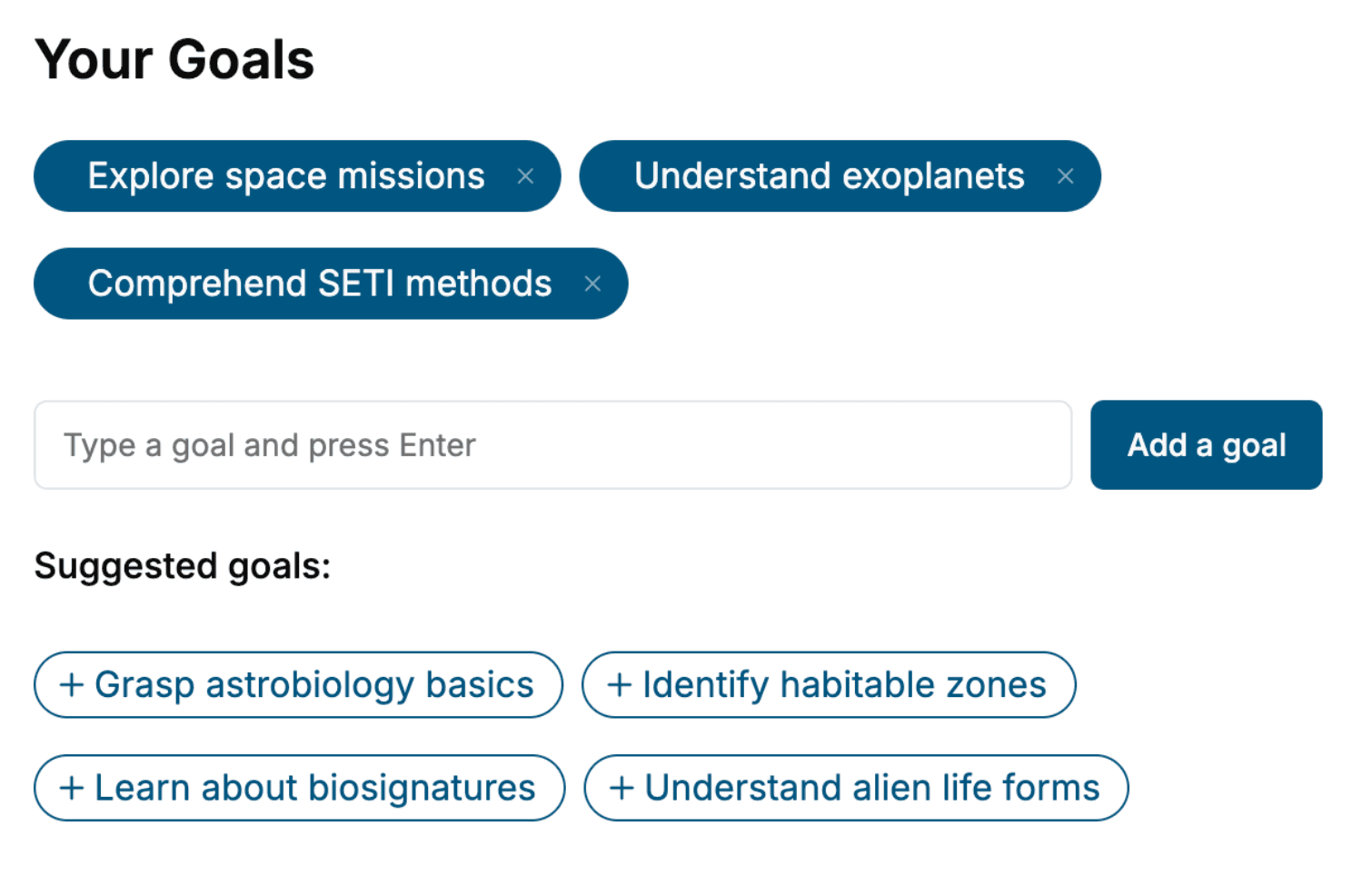
Tell us your goals and background, and get your own version of this book, tailored by AI to you.


Benefits of AI-tailored books
- Read one book, not ten:
- all the Machine Learning knowledge you need, gathered into a single book.
- Save days of learning:
- tell us your goals, choose your topics, and the whole book is built around them.
- Learn effortlessly:
- Machine Learning book written for your specific background and expertise.
- Understand at a glance:
- includes charts, tables, timelines, checklists, decision trees, and more.
- Stay current:
- written the day you order it, not years ago.
- Trust what you read:
- every book is checked for accuracy, with real research when your subject needs it.
Create your unique book in 3 steps
- 1. Select your focus
Select the focus of your Machine Learning book and share your background
- 2. Personalize your book
Specify your goals and choose sub-topics to include
- 3. Get your tailored book
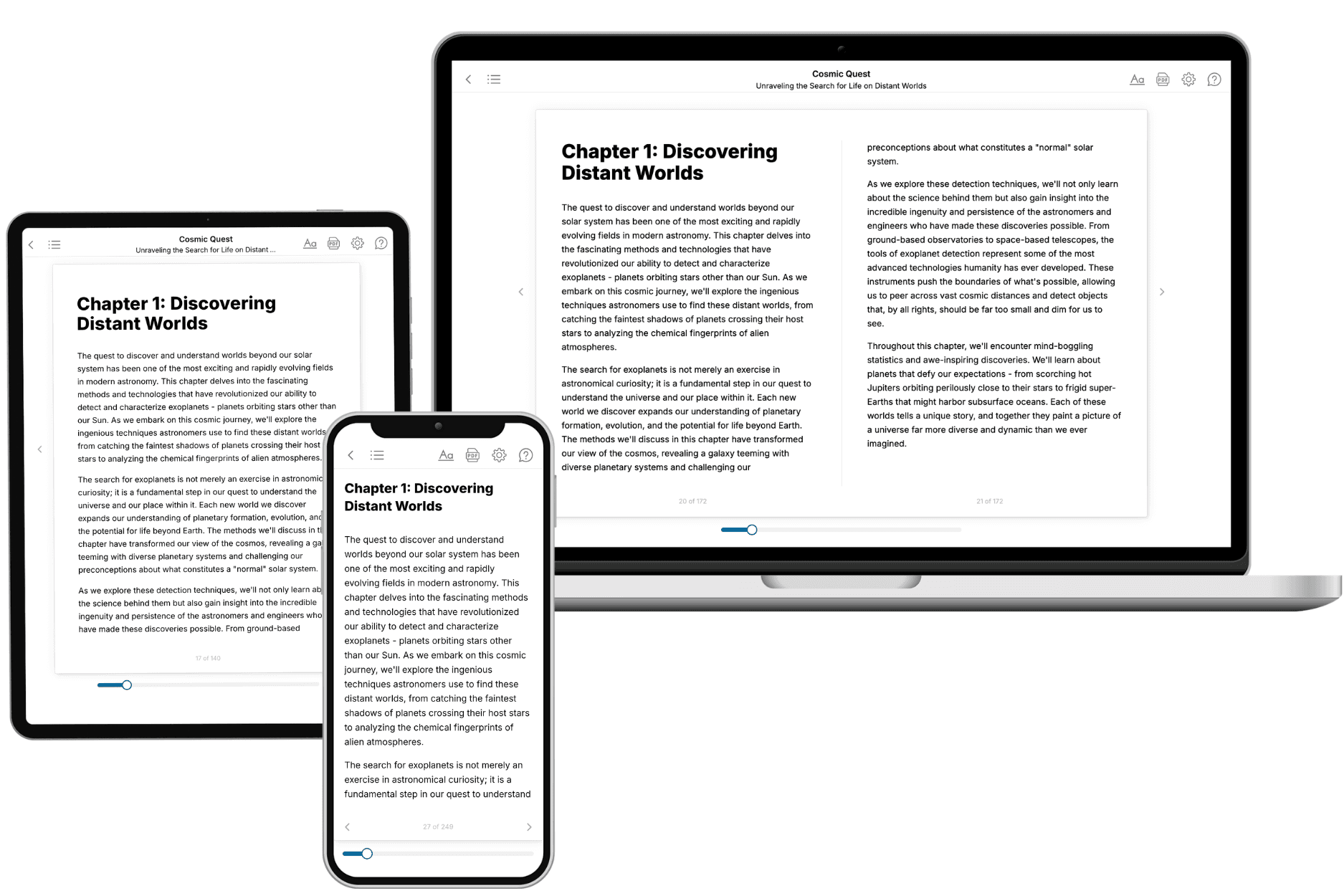
Your book is ready in 10 minutes. Read it online, download as EPUB or PDF, or send to Kindle.

Frequently asked questions
- What is TailoredRead?
TailoredRead creates complete, full-length nonfiction ebooks, written specifically for you. Tell us what you want to learn and why, and TailoredRead writes you a complete ebook on it, with charts, tables, and diagrams throughout. Read it online, on Kindle, or on any e-reader, or download it as a PDF or EPUB. Every book is written fresh the day you order it.
- How is the book tailored to me?
Before anything is written, you answer a few short questions about your goals, your background, and the topics you care about. Your book is then planned around your answers: written at your level, focused on your goals, and covering the topics you chose, instead of the one-size-fits-all book a store sells everyone.
- Will it read like generic AI content?
No. Your book isn't a chat transcript: it's planned chapter by chapter before a single word is written, told in a clear book voice, and explains ideas visually with charts, tables, and diagrams. After writing, every book goes through an editorial pass that polishes chapters so the book reads consistent from start to finish. Judge for yourself: browse thousands of sample books on our Explore Books page.
- How accurate is the content?
Our AI first checks whether your subject needs live research. Niche and fast-moving subjects are researched before writing, and the book plan and chapters are grounded in what it finds. After writing, every book goes through a quality pass that checks its facts and consistency, and researched books list their sources in a Notes section at the back.
- How long is the book?
You choose the length: Comprehensive (250-300 pages), Detailed (150-200 pages), Essential (70-100 pages), or Short (30-50 pages).
- Does the book include visuals?
Yes. Every book includes charts, tables, and diagrams: timelines, checklists, step-by-step guides, decision trees, comparison tables, matrices, and bar charts. A typical book includes dozens of these visual elements.
- Can I read it on Kindle? What formats can I download?
Yes. Every book can be read in our online reader or downloaded as a PDF or EPUB. The EPUB can be opened with Kindle, Apple Books, Kobo, and any e-reader. The Commercial and Author licenses also include an editable Word (DOCX) and Markdown download.
- How much does it cost?
About the price of a regular ebook. The exact price depends on your book's length and complexity, from $2 for the shortest books to $35 for the most comprehensive, and it's shown when you review your book, before you commit to anything. Each book is a one-time purchase, yours to keep, no subscription. Licenses that let you share, teach, or publish your book range from $35.99 to $49.99.
- Can I preview the book before purchasing?
Before you pay, you'll see what your book will cover: the title, a detailed description, the estimated length, and the complete chapter-by-chapter table of contents, so you know what you're getting before you decide. The full text itself is written after you purchase.
- How long does it take to create a book?
About 10 minutes. You can start reading the opening chapters while the rest is still being written.