MVC Mastery
Architecting Robust Software with Model-View-Controller Patterns
You've heard about MVC, but do you truly understand its power?
284 pages14 chaptersJan 22, 2025Software Architecture
About this book
Many developers misinterpret the Model-View-Controller pattern, leading to suboptimal code organization and maintenance nightmares. MVC Mastery shatters common misconceptions and equips you with the knowledge to harness the full potential of this architectural pattern. You'll discover how to create scalable, modular applications that are easier to test, maintain, and extend. Through practical examples and real-world scenarios, you'll learn to separate concerns effectively, improve code reusability, and create more flexible software designs. By the end of this book, you'll have the skills to confidently implement MVC patterns in your projects, resulting in cleaner code architecture and more efficient development processes. Whether you're building web applications, mobile apps, or desktop software, the principles you'll learn in MVC Mastery will elevate your software design skills and make you a more valuable asset to any development team.
Table of contents
- IntroductionOverview of MVC Design Pattern, How This Book Is Structured, Why MVC Matters in Modern Software DevelopmentRead below
- Chapter 1: Understanding MVC FundamentalsThe History and Evolution of MVC, Core Components of MVC, How MVC Components Interact, Benefits of Using MVC
- Chapter 2: The Model: Data and Business LogicResponsibilities of the Model, Data Management in the Model, Implementing Business Logic, Best Practices for Model Design
- Chapter 3: The View: User Interface and PresentationResponsibilities of the View, Designing Effective User Interfaces, Presenting Data in the View, Best Practices for View Implementation
- Chapter 4: The Controller: Mediating InteractionsResponsibilities of the Controller, Handling User Requests, Coordinating Model and View, Best Practices for Controller Design
- Chapter 5: MVC Variations and AdaptationsModel-View-Presenter (MVP), Model-View-ViewModel (MVVM), Flux and Redux Architectures, Choosing the Right MVC Variation
- Chapter 6: Implementing MVC in Web ApplicationsServer-Side MVC Frameworks, Client-Side MVC Frameworks, RESTful APIs and MVC, Overcoming Challenges in Web MVC
- Chapter 7: MVC in Mobile App DevelopmentMVC in iOS Development, MVC in Android Development, MVC in Cross-Platform Frameworks, Addressing Mobile-Specific MVC Challenges
- Chapter 8: Applying MVC to Desktop ApplicationsMVC Principles in Desktop Development, MVC Frameworks for Desktop Applications, Integrating MVC with Legacy Desktop Systems, Benefits of MVC in Desktop Applications
- Chapter 9: Testing MVC ApplicationsUnit Testing MVC Components, Integration Testing in MVC, UI Testing for MVC Applications, Test-Driven Development with MVC
- Chapter 10: Scalability and Performance in MVCOptimizing MVC for Performance, Caching Strategies in MVC, Load Balancing MVC Applications, MVC in Microservices Architecture
- Chapter 11: Security Considerations in MVCInput Validation and Sanitization, Authentication and Authorization in MVC, Preventing Cross-Site Scripting (XSS), CSRF Protection in MVC Applications
- Chapter 12: Refactoring to MVCIdentifying Opportunities for MVC, Strategies for Refactoring to MVC, Overcoming Refactoring Challenges, Measuring the Success of MVC Refactoring
- Chapter 13: MVC Best Practices and Design PatternsApplying SOLID Principles in MVC, Complementary Design Patterns for MVC, Organizing Code in Large MVC Projects, Common MVC Anti-patterns and How to Avoid Them
- Chapter 14: The Future of MVCEmerging Trends in MVC Development, MVC and Artificial Intelligence, MVC in Internet of Things (IoT) Applications, How MVC is Evolving to Meet Future Challenges
- ConclusionRecap of Key MVC Concepts, Continuing Your MVC Journey
- Glossary
- Further Reading
Introduction
Welcome to the world of Model-View-Controller (MVC) architecture, a fundamental design pattern that has revolutionized the way software developers approach application structure and organization. As you embark on this journey to master MVC, you're taking a significant step towards enhancing your skills as a software developer and architect. This introduction will set the stage for your exploration of MVC, providing you with a solid foundation upon which to build your understanding of this powerful architectural pattern.
In the rapidly evolving landscape of software development, the ability to create maintainable, scalable, and efficient code is more crucial than ever. MVC has emerged as a cornerstone of modern software architecture, offering a structured approach to separating concerns within an application. By dividing the application logic into three interconnected components - Model, View, and Controller - MVC provides a clear and organized framework for building robust software systems.
Throughout this book, you'll discover how MVC can transform your approach to software design, enabling you to create more modular, testable, and extensible applications. Whether you're working on web applications, mobile apps, or desktop software, the principles of MVC you'll learn here will be invaluable in improving your code quality and development efficiency.
As we delve deeper into the intricacies of MVC, you'll gain not just theoretical knowledge, but practical insights and hands-on experience. You'll learn how to implement MVC patterns effectively, navigate common challenges, and leverage the full potential of this architectural approach in various development scenarios. By the end of this journey, you'll be equipped with the skills and understanding to confidently apply MVC principles in your projects, elevating the quality of your software designs and enhancing your value as a developer.
Let's begin by exploring an overview of the MVC design pattern, understanding how this book is structured to guide your learning, and examining why MVC matters so much in the context of modern software development. Your path to MVC mastery starts here, and the knowledge you gain will serve as a powerful tool in your software development toolkit for years to come.
Overview of MVC Design Pattern
The Model-View-Controller (MVC) design pattern is a powerful architectural approach that has stood the test of time in software development. At its core, MVC is about separation of concerns, a principle that advocates dividing a computer program into distinct sections, each addressing a separate concern. This separation not only makes the code more organized and manageable but also significantly enhances its maintainability, scalability, and testability. To truly appreciate the power of MVC, it's essential to understand its three main components and how they interact with each other.
The Model component represents the data and the business logic of the application. It's responsible for managing the data, processing it, and enforcing business rules. The Model is independent of the user interface and can be thought of as the core of the application. It encapsulates the application's data structures, handles data validation, and implements the business logic that manipulates this data. For instance, in a banking application, the Model would handle account balances, transactions, and interest calculations. The Model notifies the View of any changes in the data, ensuring that the user interface always reflects the current state of the application.
The View component is responsible for presenting the data to the user. It's the user interface layer of the application, determining how the data from the Model should be displayed. The View can be as simple as a command-line interface or as complex as a rich graphical user interface. In web applications, the View is typically composed of HTML, CSS, and JavaScript. The key characteristic of the View is that it should be primarily concerned with how to present data, not with the underlying business logic or data management. This separation allows for greater flexibility in design and enables easier updates to the user interface without affecting the core functionality of the application.
The Controller acts as an intermediary between the Model and the View. It receives user input from the View, processes it (often with the help of the Model), and returns the results back to the View. The Controller is responsible for interpreting user actions, such as button clicks or keyboard input, and translating these actions into commands for the Model or View. It decides how the application should respond to user input and coordinates the workflow between the Model and View components. For example, when a user submits a form in a web application, the Controller receives this input, validates it, interacts with the Model to process the data, and then determines what View should be presented next to the user.
The interaction between these three components forms the core of the MVC pattern. When a user interacts with the View (e.g., clicking a button), the Controller intercepts this action. It then communicates with the Model to retrieve or update data as necessary. Once the Model processes the data, it notifies the View of any changes. The View then updates itself to reflect these changes, presenting the updated information to the user. This cycle of interaction ensures a clear separation of responsibilities and a structured flow of data and control within the application.
One of the key benefits of MVC is its promotion of loose coupling between the components. This means that changes in one component have minimal impact on the others. For instance, you can significantly alter the user interface (View) without needing to change the business logic (Model) or the way user interactions are handled (Controller). This loose coupling facilitates easier maintenance and allows for greater flexibility in development and testing. It's particularly beneficial in large-scale applications where different teams might be working on different components simultaneously.
MVC also enhances code reusability. Since the Model is independent of the user interface, the same Model can be used with different Views. This is particularly useful in scenarios where an application needs to support multiple interfaces, such as web and mobile versions. Similarly, Views can be reused with different Models, allowing for greater flexibility in application design.
Another significant advantage of MVC is its support for parallel development. Because the components are separated, different developers or teams can work on the Model, View, and Controller simultaneously. This parallel development can significantly speed up the development process, especially in larger projects. It also allows for specialization, where developers can focus on their areas of expertise – whether that's backend logic, frontend design, or application flow control.
MVC's structure also lends itself well to test-driven development (TDD) practices. The separation of concerns makes it easier to write unit tests for each component independently. Models can be tested without needing to consider the user interface, Views can be tested for correct display of data without worrying about business logic, and Controllers can be tested for proper handling of user input and coordination between Model and View. This testability not only improves the overall quality of the code but also makes it easier to identify and fix bugs.
While MVC offers numerous benefits, it's important to note that it's not a one-size-fits-all solution. The effectiveness of MVC can vary depending on the size and complexity of the application. For very small applications, the overhead of implementing a full MVC structure might outweigh its benefits. However, as applications grow in size and complexity, the advantages of MVC become increasingly apparent. It's also worth noting that there are variations of MVC, such as Model-View-Presenter (MVP) and Model-View-ViewModel (MVVM), which adapt the core principles of MVC to suit different development needs and platforms.
As you progress through this book, you'll gain a deeper understanding of how to implement MVC effectively, how to choose the right variation for your specific needs, and how to leverage its strengths to create more robust, maintainable, and scalable applications. The MVC pattern, with its clear separation of concerns and structured approach to application architecture, provides a solid foundation for building complex software systems that can stand the test of time and evolving requirements.
How This Book Is Structured
This book is carefully structured to guide you through a comprehensive journey of understanding and mastering the Model-View-Controller (MVC) design pattern. The organization of the content is designed to build your knowledge progressively, starting from the fundamental concepts and moving towards more advanced applications and considerations of MVC. This structured approach ensures that you can grasp each concept thoroughly before moving on to more complex topics, allowing for a solid foundation in MVC principles and practices.
We begin with an introduction to MVC fundamentals, providing you with a strong grounding in the core concepts. This section covers the history and evolution of MVC, helping you understand the context in which this pattern emerged and how it has developed over time. You'll learn about the core components of MVC - the Model, View, and Controller - and how they interact with each other. This foundational knowledge is crucial for understanding the more complex aspects of MVC that we'll explore later in the book. The introduction also highlights the benefits of using MVC, giving you a clear picture of why this pattern is so valuable in modern software development.
Following the introduction, we dive deep into each component of MVC. Chapters 2, 3, and 4 are dedicated to the Model, View, and Controller respectively. In these chapters, you'll explore the responsibilities of each component in detail. For the Model, you'll learn about data management and business logic implementation. The View chapter covers user interface design and effective data presentation. The Controller chapter focuses on handling user requests and coordinating between the Model and View. Each of these chapters also includes best practices for designing and implementing these components, providing you with practical guidance that you can apply in your own projects.
As you progress through the book, you'll encounter more advanced topics. Chapter 5 introduces you to MVC variations and adaptations, such as Model-View-Presenter (MVP) and Model-View-ViewModel (MVVM). This chapter is crucial for understanding how MVC principles can be adapted to suit different development needs and platforms. You'll learn about the nuances of each variation and gain insights into choosing the right MVC variation for your specific project requirements.
The subsequent chapters focus on implementing MVC in different contexts. Chapters 6, 7, and 8 cover MVC in web applications, mobile app development, and desktop applications respectively. These chapters provide platform-specific insights, helping you understand how MVC principles can be applied across various development environments. You'll learn about popular MVC frameworks for each platform and how to overcome platform-specific challenges in implementing MVC.
Testing is a critical aspect of software development, and Chapter 9 is dedicated to testing MVC applications. This chapter covers unit testing, integration testing, and UI testing in the context of MVC. You'll also learn about test-driven development (TDD) practices and how they can be effectively applied in MVC projects. This knowledge will help you ensure the reliability and robustness of your MVC applications.
As applications grow, scalability and performance become crucial concerns. Chapter 10 addresses these topics, providing strategies for optimizing MVC applications for performance and scalability. You'll learn about caching strategies, load balancing, and how MVC fits into microservices architecture. This chapter is particularly valuable for developers working on large-scale applications or those anticipating significant growth.
Security is another critical aspect of modern software development, and Chapter 11 focuses on security considerations in MVC applications. You'll learn about input validation, authentication and authorization, and how to prevent common security vulnerabilities like cross-site scripting (XSS) and cross-site request forgery (CSRF) in the context of MVC applications.
For developers working with existing codebases, Chapter 12 provides guidance on refactoring to MVC. This chapter helps you identify opportunities for implementing MVC in existing projects, outlines strategies for refactoring, and discusses how to overcome common challenges in this process. You'll also learn how to measure the success of your refactoring efforts.
Chapter 13 delves into MVC best practices and design patterns. This chapter ties together many of the concepts discussed throughout the book, providing a comprehensive look at how to apply SOLID principles in MVC, use complementary design patterns, organize code in large MVC projects, and avoid common anti-patterns. This chapter is crucial for elevating your MVC implementations from good to great.
The book concludes with a look at the future of MVC in Chapter 14. This forward-looking chapter explores emerging trends in MVC development, the intersection of MVC with technologies like artificial intelligence and the Internet of Things, and how MVC is evolving to meet future challenges. This chapter will help you stay ahead of the curve and prepare for the future of software architecture.
Throughout the book, you'll find practical examples, code snippets, and case studies that illustrate the concepts being discussed. These real-world applications of MVC principles will help you bridge the gap between theory and practice, enabling you to apply what you've learned in your own projects. Each chapter also includes best practices and common pitfalls to avoid, drawn from real-world experience and industry best practices.
At the end of the book, you'll find a comprehensive glossary of MVC-related terms and a curated list of further reading resources. These sections are designed to support your ongoing learning and provide references for deeper exploration of specific topics.
By structuring the book in this way, we aim to provide you with a comprehensive, practical, and accessible guide to mastering MVC. Whether you're new to MVC or looking to deepen your existing knowledge, this structure will guide you through a logical progression of concepts, from basic principles to advanced applications, ensuring that you gain a thorough understanding of MVC and its place in modern software development.
Why MVC Matters in Modern Software Development
In the ever-evolving landscape of software development, the Model-View-Controller (MVC) pattern has emerged as a cornerstone of modern application architecture. Its significance in today's development practices cannot be overstated, as it addresses many of the challenges faced by developers in creating maintainable, scalable, and efficient software systems. Understanding why MVC matters is crucial for any developer looking to enhance their skills and create high-quality applications that can stand the test of time and changing requirements.
One of the primary reasons MVC matters in modern software development is its ability to promote a clear separation of concerns. In an era where applications are becoming increasingly complex, with multiple layers of functionality and user interactions, maintaining a clean and organized codebase is more important than ever. MVC provides a structured approach to dividing an application into logical components, each with a specific role and responsibility. This separation not only makes the code more organized and easier to understand but also significantly enhances maintainability. When issues arise or new features need to be added, developers can focus on specific components without worrying about unintended side effects in other parts of the application. This modularity is particularly valuable in large-scale projects where multiple developers or teams may be working on different aspects of the application simultaneously.
The flexibility and adaptability offered by MVC are crucial in today's fast-paced development environment. Modern software often needs to evolve rapidly to meet changing user needs and technological advancements. MVC's structure allows for easier modifications and updates to individual components without necessitating a complete overhaul of the entire application. For instance, the user interface (View) can be redesigned or updated without affecting the underlying business logic (Model) or the way user interactions are handled (Controller). This flexibility is particularly valuable in agile development environments where rapid iterations and frequent updates are the norm. It allows development teams to respond quickly to feedback and changing requirements, a critical factor in maintaining competitiveness in the software market.
In the context of modern web and mobile applications, where user experience is paramount, MVC plays a crucial role in facilitating the creation of responsive and interactive interfaces. The separation of the View from the Model and Controller allows front-end developers to focus on creating engaging user interfaces without getting bogged down in the complexities of business logic or data management. Meanwhile, back-end developers can concentrate on implementing robust business logic and data handling without worrying about the intricacies of the user interface. This specialization leads to more polished and efficient applications, where each aspect – from user interaction to data processing – is handled by experts in their respective domains.
The testability afforded by MVC is another reason why it's so valuable in modern software development. With the increasing emphasis on quality assurance and test-driven development (TDD), the ability to easily test individual components of an application is crucial. MVC's separation of concerns makes it significantly easier to write unit tests for each component independently. Models can be tested without the need for a user interface, Views can be tested for correct rendering without relying on business logic, and Controllers can be tested for proper handling of user input and coordination. This improved testability leads to more robust and reliable applications, reducing the likelihood of bugs and improving overall software quality.
In the realm of team collaboration and project management, MVC offers substantial benefits. Its clear structure allows for better division of labor among team members. Different developers or teams can work on separate components simultaneously, speeding up the development process and allowing for specialization. This parallel development is particularly beneficial in large projects with tight deadlines. Moreover, the clear separation of concerns makes it easier for new team members to understand and contribute to the project, reducing onboarding time and improving team productivity.
The scalability offered by MVC is increasingly important in modern software development, where applications often need to grow and adapt to handle increasing loads and complexity. MVC's modular structure makes it easier to scale applications by allowing developers to modify or replace individual components as needed. For instance, as an application grows, the data model can be expanded or optimized without necessarily requiring changes to the user interface. Similarly, new views can be added to support additional platforms or user interfaces without altering the underlying business logic. This scalability is crucial for businesses looking to grow their applications and user bases over time.
In the context of cross-platform development, which is increasingly common in today's multi-device world, MVC proves invaluable. The separation of the Model from the View and Controller means that the same business logic and data management code can often be reused across different platforms. For example, a company developing both web and mobile versions of an application can potentially reuse much of the Model code, focusing their platform-specific efforts on the View and Controller components. This reusability not only saves development time but also ensures consistency in business logic across different versions of the application.
MVC's relevance extends to emerging technologies and development paradigms as well. In the era of microservices and distributed systems, MVC's principles of separation of concerns and modularity align well with modern architectural approaches. The Model component, for instance, can be designed as a separate microservice, serving multiple front-end applications or Views. Similarly, in the context of serverless architectures, different components of MVC can be implemented as separate functions, allowing for highly scalable and cost-effective solutions.
Furthermore, as artificial intelligence and machine learning become more integrated into software applications, MVC provides a structured way to incorporate these technologies. The Model component can encapsulate AI algorithms and data processing, while the View and Controller handle user interactions and presentation of AI-generated results. This separation allows for easier integration and updating of AI components without disrupting the overall application structure.
In conclusion, MVC matters in modern software development because it addresses many of the key challenges faced by developers today. It provides a structured approach to creating maintainable, scalable, and efficient applications. Its principles of separation of concerns, modularity, and flexibility align well with modern development practices and emerging technologies. By mastering MVC, developers equip themselves with a powerful tool for creating robust, adaptable, and future-proof software solutions. As the software landscape continues to evolve, the fundamental principles of MVC remain relevant, making it an essential pattern for developers to understand and implement in their work.
This is the end of the free sample. The full book has 14 chapters.
Want this book written for you?
Tell us your goals and background, and get your own version of this book, tailored by AI to you.


Benefits of AI-tailored books
- Read one book, not ten:
- all the Software Architecture knowledge you need, gathered into a single book.
- Save days of learning:
- tell us your goals, choose your topics, and the whole book is built around them.
- Learn effortlessly:
- Software Architecture book written for your specific background and expertise.
- Understand at a glance:
- includes charts, tables, timelines, checklists, decision trees, and more.
- Stay current:
- written the day you order it, not years ago.
- Trust what you read:
- every book is checked for accuracy, with real research when your subject needs it.
Create your unique book in 3 steps
- 1. Select your focus
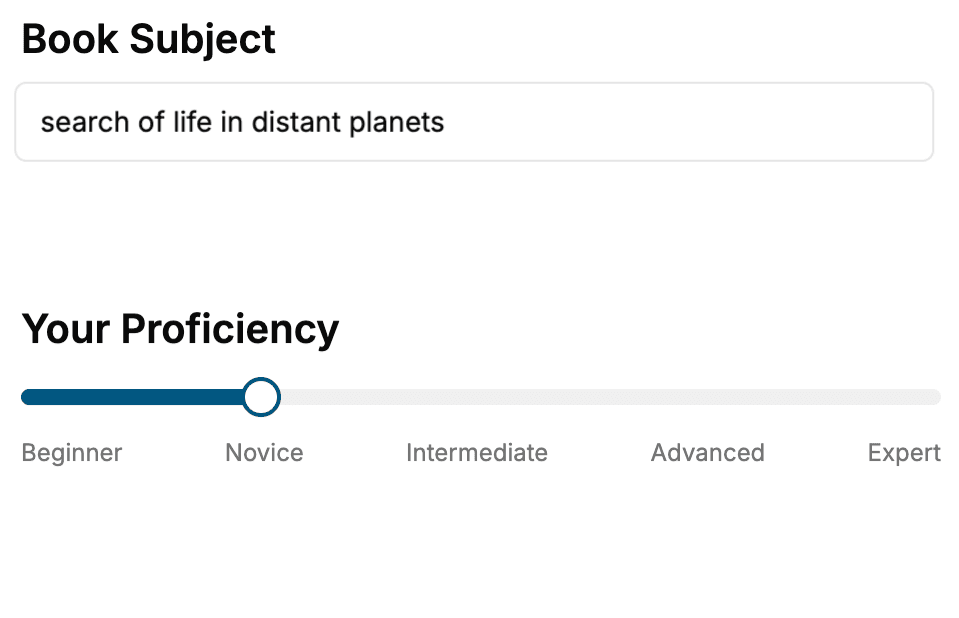
Select the focus of your Software Architecture book and share your background
- 2. Personalize your book
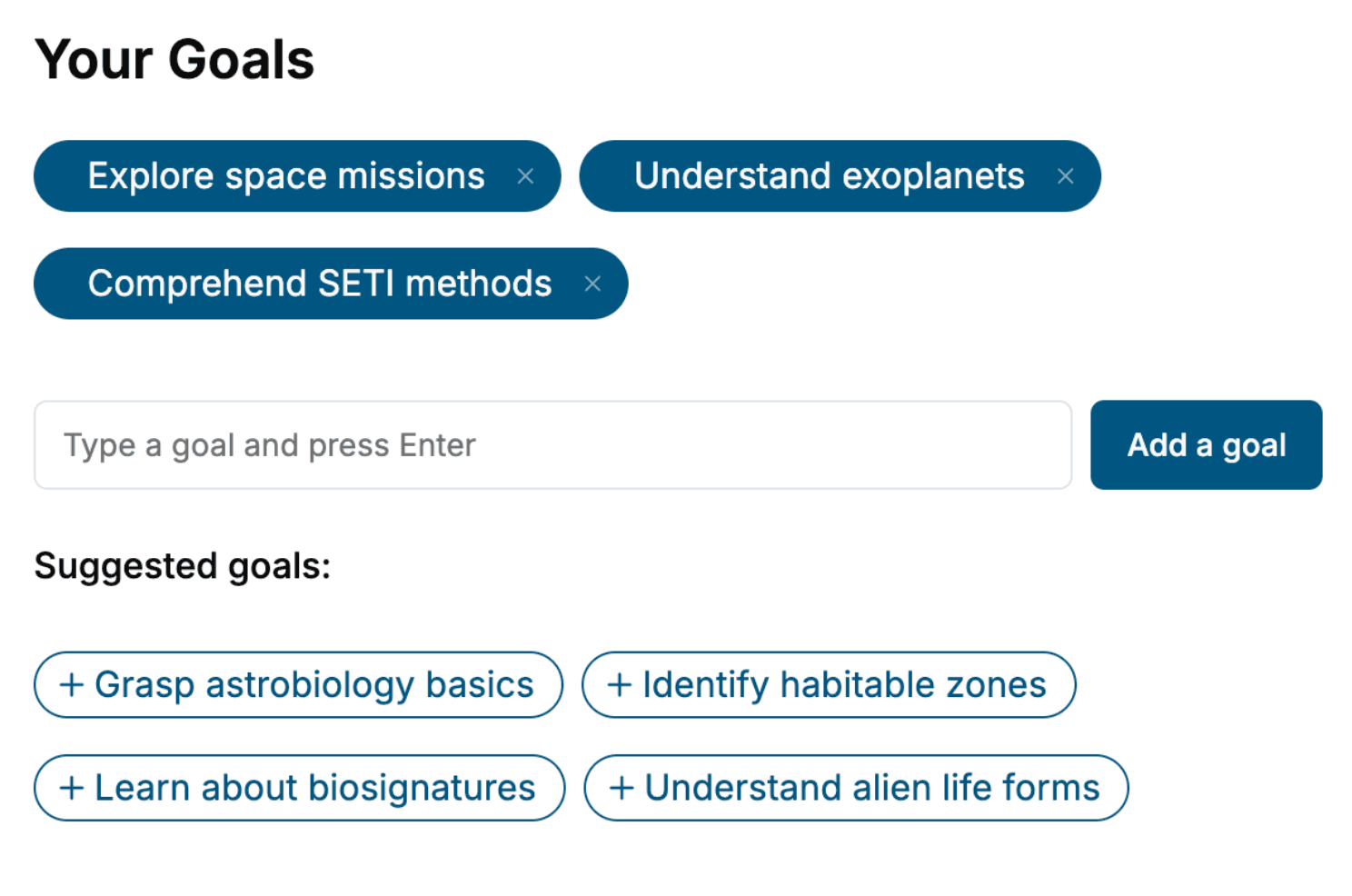
Specify your goals and choose sub-topics to include
- 3. Get your tailored book
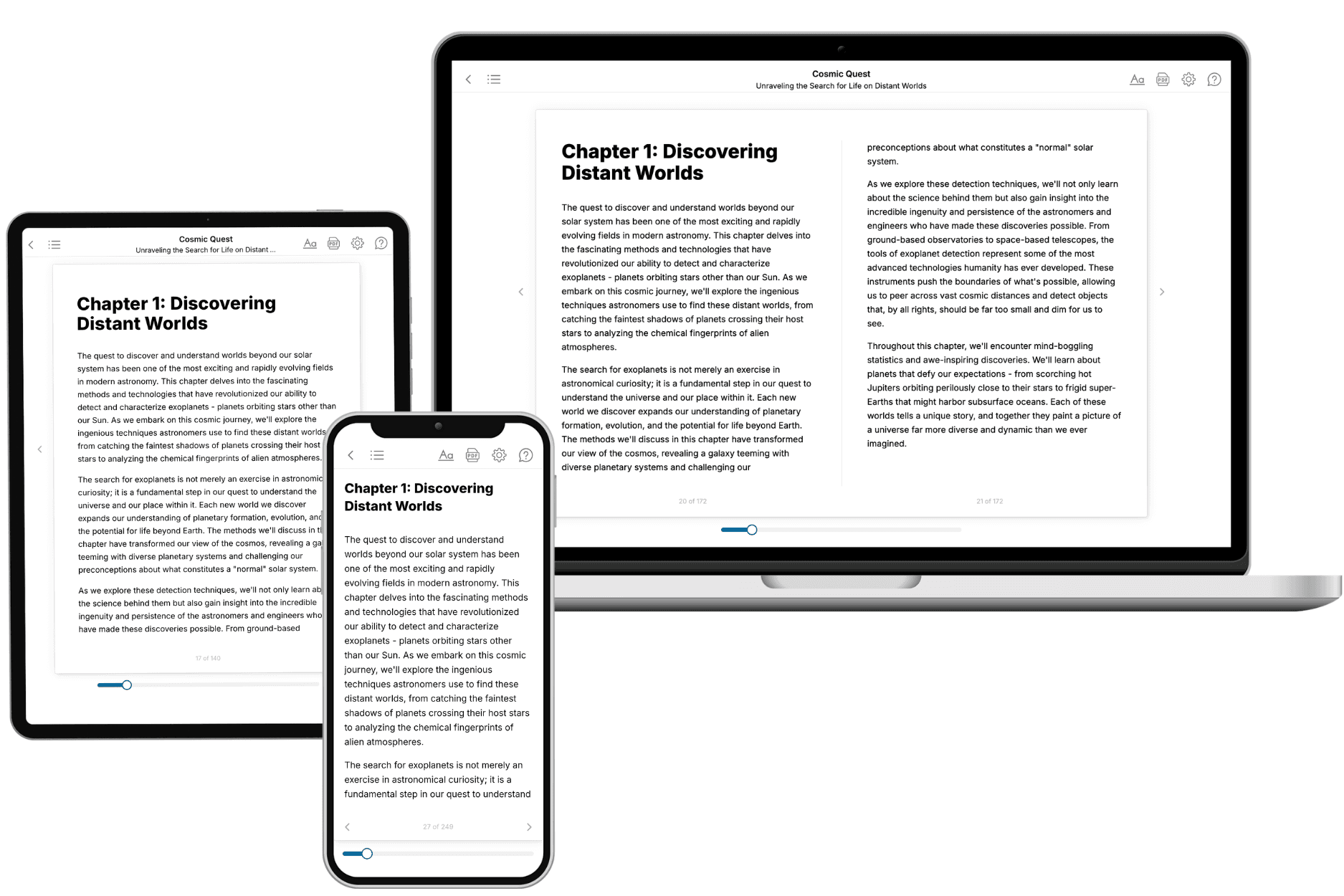
Your book is ready in 10 minutes. Read it online, download as EPUB or PDF, or send to Kindle.
Frequently asked questions
- What is TailoredRead?
TailoredRead creates complete, full-length nonfiction ebooks, written specifically for you. Tell us what you want to learn and why, and TailoredRead writes you a complete ebook on it, with charts, tables, and diagrams throughout. Read it online, on Kindle, or on any e-reader, or download it as a PDF or EPUB. Every book is written fresh the day you order it.
- How is the book tailored to me?
Before anything is written, you answer a few short questions about your goals, your background, and the topics you care about. Your book is then planned around your answers: written at your level, focused on your goals, and covering the topics you chose, instead of the one-size-fits-all book a store sells everyone.
- Will it read like generic AI content?
No. Your book isn't a chat transcript: it's planned chapter by chapter before a single word is written, told in a clear book voice, and explains ideas visually with charts, tables, and diagrams. After writing, every book goes through an editorial pass that polishes chapters so the book reads consistent from start to finish. Judge for yourself: browse thousands of sample books on our Explore Books page.
- How accurate is the content?
Our AI first checks whether your subject needs live research. Niche and fast-moving subjects are researched before writing, and the book plan and chapters are grounded in what it finds. After writing, every book goes through a quality pass that checks its facts and consistency, and researched books list their sources in a Notes section at the back.
- How long is the book?
You choose the length: Comprehensive (250-300 pages), Detailed (150-200 pages), Essential (70-100 pages), or Short (30-50 pages).
- Does the book include visuals?
Yes. Every book includes visual elements such as timelines, checklists, step-by-step guides, decision trees, comparison tables, and matrices, and many include bar charts. A typical book includes dozens of these visual elements.
- Can I read it on Kindle? What formats can I download?
Yes. Every book can be read in our online reader or downloaded as a PDF or EPUB. The EPUB can be opened with Kindle, Apple Books, Kobo, and any e-reader. The Commercial and Author licenses also include an editable Word (DOCX) and Markdown download.
- How much does it cost?
About the price of a regular ebook. The exact price depends on your book's length and complexity, from $2 for the shortest books to $35 for the most comprehensive, and it's shown when you review your book, before you commit to anything. Each book is a one-time purchase, yours to keep, no subscription. Licenses that let you share, teach, or publish your book range from $35.99 to $49.99.
- Can I preview the book before purchasing?
Before you pay, you'll see what your book will cover: the title, a detailed description, the estimated length, and the complete chapter-by-chapter table of contents, so you know what you're getting before you decide. The full text itself is written after you purchase.
- How long does it take to create a book?
About 10 minutes. You can start reading the opening chapters while the rest is still being written.