Phantom Tastes
Understanding Gustatory Hallucinations and the Psychology of Shared Sensory Experiences
Discover how your brain can create vivid taste sensations that don't actually exist—and why entire groups of people sometimes experience the same phantom flavors simultaneously.
238 pages11 chaptersAug 15, 2026Neuroscience
About this book
This book explores the fascinating world of gustatory hallucinations, revealing the psychological and neurological mechanisms behind false taste experiences. You'll learn how suggestion, emotion, and social influence can trick your sensory system, why mass hysteria involving taste occurs, and what distinguishes genuine hallucinations from other sensory phenomena. Through real-world case studies and scientific research, you'll understand the surprising ways your mind constructs reality and how collective psychology can create shared false experiences. Whether you're interested in neuroscience, psychology, or simply understanding the quirks of human perception, this book provides clear, evidence-based insights into one of the mind's most intriguing mysteries.
Table of contents
- IntroductionWhy Taste Matters: The Overlooked Sense, Phantom Flavors: When Taste Deceives, When Groups Share the Same False Taste, What You'll Discover in This BookRead below
- Chapter 1: The Neuroscience of Taste and PerceptionHow Your Taste System Works, The Brain's Role in Processing Flavor, The Gap Between Sensation and Perception
- Chapter 2: Defining Gustatory HallucinationsWhat Makes a Hallucination a Hallucination, Types of Gustatory Hallucinations, Hallucinations vs. Illusions vs. Delusions, How Common Are Gustatory Hallucinations?
- Chapter 3: Neurological and Medical CausesNeurological Disorders That Trigger Taste Hallucinations, Medications and Chemical Triggers, Seizures and Gustatory Experiences, Brain Injury and Taste Disturbances
- Chapter 4: Psychological Mechanisms Behind HallucinationsHow Stress and Anxiety Create False Tastes, The Power of Expectation and Suggestion, Memory, Emotion, and Taste Hallucinations, Attention and the Construction of Taste Experiences
- Chapter 5: Mass Hysteria and Collective Taste ExperiencesUnderstanding Mass Hysteria and Mass Psychogenic Illness, Historical Cases of Shared Taste Hallucinations, How False Tastes Spread Through Groups, Group Psychology and Sensory Conformity
- Chapter 6: The Role of Suggestion and Social InfluenceHow Suggestion Shapes Sensory Experience, Social Proof and Taste Validation, Authority Figures and Sensory Reporting, Narratives and Stories That Create Hallucinations
- Chapter 7: Cultural and Environmental FactorsCultural Beliefs and Taste Interpretation, Environmental Cues and Sensory Expectations, How Context Shapes What We Taste, Media and Information Spread of Taste Phenomena
- Chapter 8: Case Studies and Real-World ExamplesThe Poisoned Food Panic: When Communities Taste Danger, Workplace Taste Incidents: Collective Sensory Experiences, Religious and Spiritual Taste Phenomena, What These Cases Teach Us About Perception
- Chapter 9: Diagnosis and AssessmentHow Clinicians Evaluate Gustatory Hallucinations, Medical Tests and Diagnostic Tools, Psychological Assessment Approaches, Distinguishing Between Different Causes
- Chapter 10: Treatment and Management StrategiesMedical Treatments for Gustatory Hallucinations, Psychological Approaches and Therapies, Lifestyle Changes and Coping Strategies, Addressing Collective Taste Experiences
- Chapter 11: Protecting Yourself from False Taste ExperiencesRecognizing When Suggestion Influences Your Taste, Critical Thinking About Sensory Experiences, Managing Stress to Reduce Hallucinations, Building Community Resilience Against Mass Hysteria
- ConclusionKey Takeaways About Gustatory Hallucinations, The Future of Understanding Taste and Perception, Final Thoughts on Mind and Sensation
- Glossary of Terms
- Further Reading and Resources
Introduction
A metallic tang floods your mouth. You haven't eaten anything. You haven't touched a drink. The sensation is vivid, specific, and completely real to you — yet there is nothing there. This kind of experience, a taste arising from nowhere, sits at the intersection of neuroscience, psychology, and the deeply human question of how much we can trust our own senses. Gustatory Hallucinations are not rare curiosities confined to textbooks. They appear in hospital wards, in school cafeterias, in factory break rooms, and in the accounts of people who have never heard the clinical term for what they experienced.
What makes these phantom tastes so compelling is not just their strangeness. It is what they reveal about the brain's relationship with reality. The sensory system does not passively record the world like a camera. It actively constructs experience, filling gaps, making predictions, and sometimes generating sensations that have no physical source at all. Taste, in particular, is a sense built from multiple streams of information — chemical signals, memory, emotion, expectation, and social context — all woven together by the brain into something that feels seamless and certain.
This book takes that phenomenon seriously. It treats Gustatory Hallucinations not as a fringe topic but as a window into how perception works, how psychology shapes the body, and how shared beliefs can produce shared sensory experiences across entire groups of people. The science here is real, the case studies are documented, and the implications reach well beyond the taste system itself. Understanding why the brain generates false flavors turns out to be a surprisingly direct route to understanding how the mind constructs all of reality.
The chapters ahead move from the biological foundations of taste through the neurological and psychological causes of false taste experiences, then outward into the social and cultural forces that can make phantom flavors contagious. Along the way, you will encounter documented episodes of Mass Psychogenic Illness involving taste, the mechanisms of Sensory Suggestion, and the practical tools that clinicians and communities use to recognize and respond to these events. The goal throughout is clarity: not to mystify the brain, but to make its workings genuinely understandable.
Why Taste Matters: The Overlooked Sense
Among the five classical senses, taste tends to receive the least scientific attention. Vision and hearing dominate neuroscience research, partly because they are easier to study in laboratory settings and partly because their disorders are more immediately disabling. Taste gets treated as a pleasant bonus — useful for nutrition, enjoyable at mealtimes, but not exactly central to how we understand the mind. That framing is a mistake, and the study of Gustatory Hallucinations makes that clear.
Taste is, in fact, one of the most socially and emotionally loaded senses humans possess. The Flavor experience is never purely chemical. It is shaped by memory from early childhood, by cultural identity, by the emotional state of the moment, and by what other people around you are tasting and reporting. A wine described as "earthy and complex" genuinely tastes different to most people after they hear that description than it did before. This is not self-deception. It reflects how the brain actually processes sensory input, integrating top-down expectations with bottom-up signals from Taste Receptor Cells.
The gustatory system is also one of the most direct routes between the external world and the brain's emotional centers. The Gustatory Pathway connects to the amygdala and the insula, regions deeply involved in fear, disgust, and memory consolidation.[1] This anatomical closeness means that emotional states can influence taste perception in ways that feel completely physical. Anxiety can produce a bitter or metallic sensation in the mouth. Stress can alter how sweet or sour something tastes. These are not metaphors. They are measurable physiological effects.
Taste also carries enormous social weight. Sharing food is one of the oldest forms of human bonding. Refusing food can signal distrust or cultural difference. Reporting that food tastes wrong or dangerous triggers immediate social responses — concern, investigation, sometimes panic. This social dimension is precisely why false taste experiences can spread through groups so effectively. When one person reports a strange taste, others around them become primed to notice the same thing, and the brain's predictive machinery does the rest.
The neglect of taste in mainstream neuroscience has left a gap in public understanding. Most people have no framework for thinking about why their taste system might generate false signals, or what it would mean if it did. They lack the vocabulary to distinguish a Gustatory Hallucination from a Dysgeusia (a distortion of actual taste input) or from a purely psychological response to suggestion. This book aims to fill that gap with accessible, evidence-based explanations that respect both the complexity of the science and the reality of the experiences people report.
Taste matters, in short, because it is a sense that sits at the crossroads of biology, psychology, memory, culture, and social behavior. Understanding what happens when it goes wrong — when it generates experiences without any physical cause — illuminates all of those domains at once. The Gustatory Hallucination is a small phenomenon with very large implications.
Phantom Flavors: When Taste Deceives
The term phantom flavor captures something important: these are tastes that feel entirely real to the person experiencing them, yet have no corresponding stimulus in the physical world. A Gustatory Hallucination is not a vague impression or a mild distortion. It can be as vivid and specific as any taste from an actual meal. People describe phantom sweetness, phantom bitterness, phantom blood, phantom chemicals, and phantom rot — each with the full sensory weight of a genuine experience.
What generates these experiences? The answer depends on the cause, and causes vary widely. At the neurological end of the spectrum, conditions like Temporal Lobe Epilepsy can trigger brief, intense taste sensations as part of a seizure aura. The classic form of this is the Uncinate Fit, named for the uncinate gyrus in the temporal lobe, where seizure activity can produce sudden, often unpleasant taste or smell sensations that last seconds to minutes.[2] These episodes are involuntary, neurologically driven, and completely disconnected from anything the person has eaten.
At the psychological end of the spectrum, the mechanisms are different but equally real in their effects. The brain operates on a principle researchers call Predictive Coding: rather than waiting passively for sensory input, it constantly generates predictions about what it expects to sense, and then compares those predictions against incoming data. When expectation is strong enough, or when incoming sensory data is ambiguous, the prediction can dominate. The brain essentially fills in the taste it expected to find, even when nothing is there. This is Top-Down Sensory Construction in action, and it is a normal feature of how perception works — not a malfunction.
Medications represent another significant category of cause. Medication-Induced Dysgeusia is well-documented across dozens of drug classes, from antibiotics to cardiovascular medications to chemotherapy agents. Some drugs alter the chemical environment of saliva. Others affect the Taste Receptor Cells directly, or interfere with the neural signals traveling along the Gustatory Pathway. The result can range from a persistent metallic taste to a complete loss of normal flavor perception, sometimes accompanied by phantom tastes that persist even when the mouth is empty.
Consider a concrete example that illustrates how these mechanisms can overlap. A patient begins a new antibiotic and notices a persistent metallic taste. The medication is genuinely altering their oral chemistry, so there is a real physiological component. But the patient also becomes anxious about the medication's side effects, reads about other people's experiences online, and starts paying close attention to every sensation in their mouth. Attention amplifies sensory signals. Anxiety heightens the brain's sensitivity to threat-related input. The metallic taste intensifies beyond what the drug alone would produce. By the time the prescription ends, the patient may still notice the taste for days afterward, sustained now by expectation and attention rather than by the drug itself.
This kind of layered causation is common in gustatory experiences. Neurological, pharmacological, and psychological factors rarely operate in isolation. They interact, amplify each other, and produce experiences that are genuinely difficult to categorize from the inside. One of the central goals of this book is to give you the conceptual tools to untangle those layers — not to dismiss what people experience, but to understand it more precisely.
The distinction between a Hallucination, an Illusion, and a Delusion matters here, and it is worth flagging early. A Hallucination is a perception without a stimulus. An Illusion is a misinterpretation of a real stimulus. A Delusion is a fixed false belief, which is a cognitive rather than a perceptual phenomenon. These categories overlap in practice, and the chapter dedicated to defining Gustatory Hallucinations explores the boundaries carefully. For now, the key point is that phantom flavors span a wide range of mechanisms, and the word "hallucination" covers more territory than most people realize.
What unites all phantom flavors, regardless of cause, is the brain's role as the final author of the experience. The taste system does not simply report what is in the mouth. It constructs a story about what is there, drawing on chemical signals, memory, expectation, emotional state, and social context. When any of those inputs goes wrong — or when the brain's predictive machinery runs ahead of the evidence — the result is a taste that feels completely real and is, in the most important sense, completely false.
When Groups Share the Same False Taste
Individual Gustatory Hallucinations are striking enough. But some of the most remarkable documented cases involve not one person but dozens, sometimes hundreds, all reporting the same phantom taste at the same time. These collective episodes sit at the intersection of sensory psychology and social behavior, and they raise questions that go well beyond individual neuroscience. How does a false taste experience spread from one person to another? What turns a single report into a group event? And what does it mean when an entire community agrees on a sensation that has no physical source?
The phenomenon has a clinical name: Mass Psychogenic Illness. It describes situations where physical symptoms — including sensory experiences like taste and smell — spread through a group via psychological and social mechanisms rather than through any shared physical exposure.[3] The symptoms are real to those experiencing them. The distress is genuine. But the cause is not a toxin, a pathogen, or a shared neurological event. It is the spread of a psychological state through a social network.
Documented cases of Mass Psychogenic Illness involving taste and smell are more common than most people expect. Schools, factories, and offices have all been sites of collective episodes where workers or students reported strange tastes or odors, became ill, and triggered emergency responses — only for investigators to find no chemical or biological agent that could account for the symptoms. The pattern is consistent across cultures and across centuries. What changes is the specific narrative that frames the experience: contaminated food, chemical leaks, deliberate poisoning, or supernatural causes, depending on the cultural context.
The mechanism behind these episodes involves several overlapping psychological processes. Sociogenic Illness Spread typically begins with an Index Case: one person who reports a symptom, often in a context already primed for concern (a smell in the air, a recent news story about contamination, a history of workplace conflict). Others observe that person's distress, hear the report, and their own brains begin scanning for the same sensation. The Nocebo Effect — the tendency for negative expectations to produce negative physical experiences — amplifies this process. Once the expectation of a bad taste is established, the brain is primed to find it.
Social dynamics accelerate the spread. Social Proof, the tendency to look to others' behavior as evidence of what is real or appropriate, means that when several people report the same taste, others are more likely to report it too. Authority figures matter: if a supervisor or teacher takes the reports seriously and responds with visible concern, that response itself signals to others that the threat is real. The social environment becomes a feedback loop, with each new report reinforcing the expectation that drives the next one.
These episodes are not evidence of weakness or gullibility. They reflect the normal operation of a social brain in a situation of ambiguity and perceived threat. Humans are wired to take sensory cues from each other, especially in uncertain or potentially dangerous situations. That wiring is adaptive in most contexts. In the specific conditions that produce Mass Psychogenic Illness, it generates a collective false experience that can be genuinely difficult to interrupt once it has begun.
Understanding how these collective taste experiences work has practical value beyond satisfying curiosity. Public health officials, school administrators, workplace safety officers, and mental health professionals all encounter these episodes. Knowing the difference between a genuine chemical exposure and a psychogenic event changes the appropriate response entirely. The wrong response — treating a psychogenic event as a chemical emergency, for example — can actually worsen the episode by amplifying the sense of threat. The chapters on Mass Psychogenic Illness and on community-level responses address this directly, with concrete guidance drawn from documented cases.
The collective dimension of phantom taste also raises deeper questions about the nature of sensory experience itself. If a hundred people in the same room all taste the same thing, and that thing has no physical source, what does that tell us about the relationship between individual perception and shared reality? The answer is both humbling and fascinating: shared reality is, to a significant degree, a social construction, built from individual brains that are constantly calibrating their perceptions against each other. Taste is just one domain where that process becomes visible.
What You'll Discover in This Book
This book is organized to build understanding progressively, moving from the biological foundations of taste through increasingly complex psychological and social territory. Each chapter addresses a distinct layer of the phenomenon, and together they form a complete picture of how and why phantom tastes occur — both in individuals and in groups.
The opening chapters establish the scientific foundation. The chapter on the neuroscience of taste explains how the Gustatory Pathway works, from Taste Receptor Cells on the tongue through the brainstem and thalamus to the Primary Gustatory Cortex. It covers Chemosensory Transduction — the process by which chemical molecules become neural signals — and explains the gap between raw sensation and the rich, constructed experience of Flavor. This foundation matters because you cannot fully understand what goes wrong in a Gustatory Hallucination without first understanding what normally goes right.
From there, the book moves into definition and classification. The chapter on defining Gustatory Hallucinations draws careful distinctions between Hallucinations, Illusions, and Delusions, and explains why those distinctions matter clinically and practically. It also addresses prevalence: how common are these experiences, who is most likely to have them, and in what contexts do they typically arise? The answers are more nuanced than most people expect.
The neurological and medical causes of false taste experiences get their own dedicated chapter, covering conditions from Temporal Lobe Epilepsy and Uncinate Fits to brain injury, neurodegenerative disease, and Medication-Induced Dysgeusia. This chapter is not a medical reference, but it provides enough detail to understand the mechanisms involved and to recognize when a phantom taste might signal something that warrants clinical attention.
The psychological mechanisms chapter is where the book's conceptual heart lies. It explores how Predictive Coding and Top-Down Sensory Construction generate false tastes, how stress and anxiety alter sensory processing, how memory and emotion shape what the brain expects to taste, and how attention can amplify or suppress sensory signals. The Nocebo Effect receives particular attention here, because it bridges the gap between individual psychology and the collective phenomena explored in later chapters.
The chapters on Mass Psychogenic Illness, Sensory Suggestion, and Social Proof examine the social and interpersonal mechanisms that turn individual false tastes into group events. These chapters draw on documented historical and contemporary cases, analyzing the role of the Index Case, Narrative Contagion, Demand Characteristics, and the ways that authority figures and media amplify or contain collective episodes. The chapter on cultural and environmental factors adds another layer, examining how Cultural Taste Schemas, Context Effects, and Media Amplification shape what people expect to taste before any individual experience even begins.
The case studies chapter brings all of these mechanisms together through specific, documented episodes. These are not hypothetical scenarios. They are real events, analyzed in enough detail to show how the various factors interact in practice. The lessons drawn from these cases are concrete and transferable.
The final section of the book turns toward assessment and response. The chapter on diagnosis explains the Diagnostic Decision Pathway that clinicians use to evaluate Gustatory Hallucinations, including the role of Gustometry (formal taste testing) and the process of ruling out organic causes before concluding that an experience is psychogenic. The treatment chapter covers both medical interventions and psychological approaches, including CBT for Hallucinations, which has a growing evidence base for reducing the distress and frequency of false sensory experiences.
The closing chapter on protection and resilience is practical and forward-looking. It addresses Sensory Critical Thinking — the habit of examining your own sensory experiences with appropriate skepticism — and Media Literacy as a tool for resisting Narrative Contagion. It also covers Community Resilience: the organizational and social practices that make groups less vulnerable to Mass Psychogenic Illness. These are not abstract recommendations. They are grounded in what the research shows actually works.
Throughout, the tone is analytical but accessible. Technical terms are introduced carefully and used consistently, because precision matters when the subject is as easily misunderstood as hallucination and mass hysteria. But the goal is always understanding, not jargon. By the end, you should have a genuinely new way of thinking about sensory experience — one that is more accurate, more nuanced, and more useful than the common assumption that what you taste is simply what is there.
The brain does not taste the world. It constructs a version of the world that is usually accurate enough to be useful, and occasionally vivid enough to be completely wrong. Understanding that gap is what this book is about.
The phenomenon of phantom taste turns out to be a remarkably clear lens for examining some of the most fundamental questions in psychology and neuroscience: How does the brain build experience from raw signals? How much of what we perceive is shaped by what we expect? And how does the social world reach inside individual minds to shape what those minds sense? These are not small questions. The Gustatory Hallucination, strange and specific as it is, opens directly onto all of them.
This is the end of the free sample. The full book has 11 chapters.
Want this book written for you?
Tell us your goals and background, and get your own version of this book, tailored by AI to you.


Benefits of AI-tailored books
- Read one book, not ten:
- all the Neuroscience knowledge you need, gathered into a single book.
- Save days of learning:
- tell us your goals, choose your topics, and the whole book is built around them.
- Learn effortlessly:
- Neuroscience book written for your specific background and expertise.
- Understand at a glance:
- includes charts, tables, timelines, checklists, decision trees, and more.
- Stay current:
- written the day you order it, not years ago.
- Trust what you read:
- every book is checked for accuracy, with real research when your subject needs it.
Create your unique book in 3 steps
- 1. Select your focus
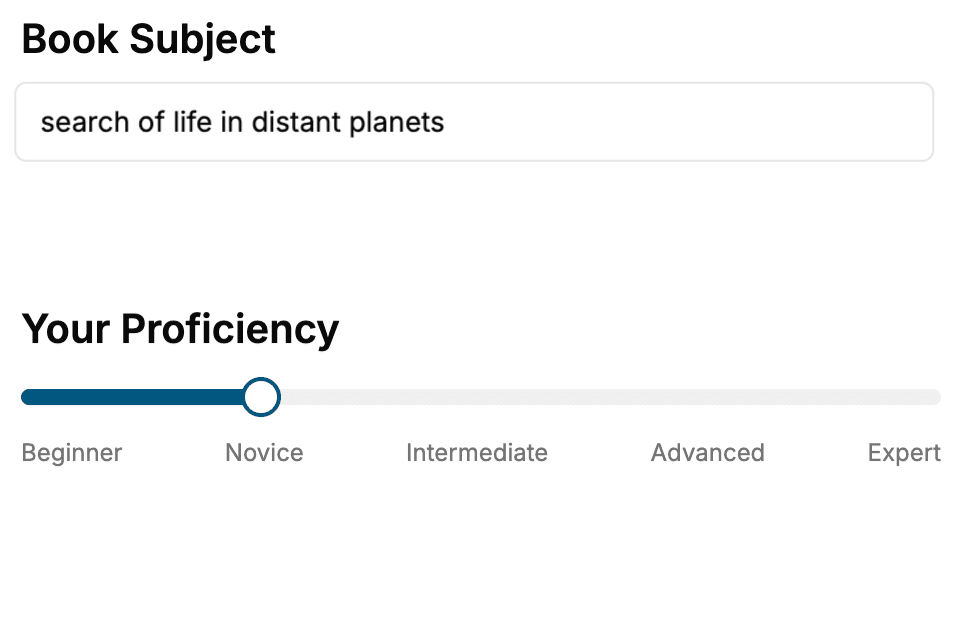
Select the focus of your Neuroscience book and share your background
- 2. Personalize your book
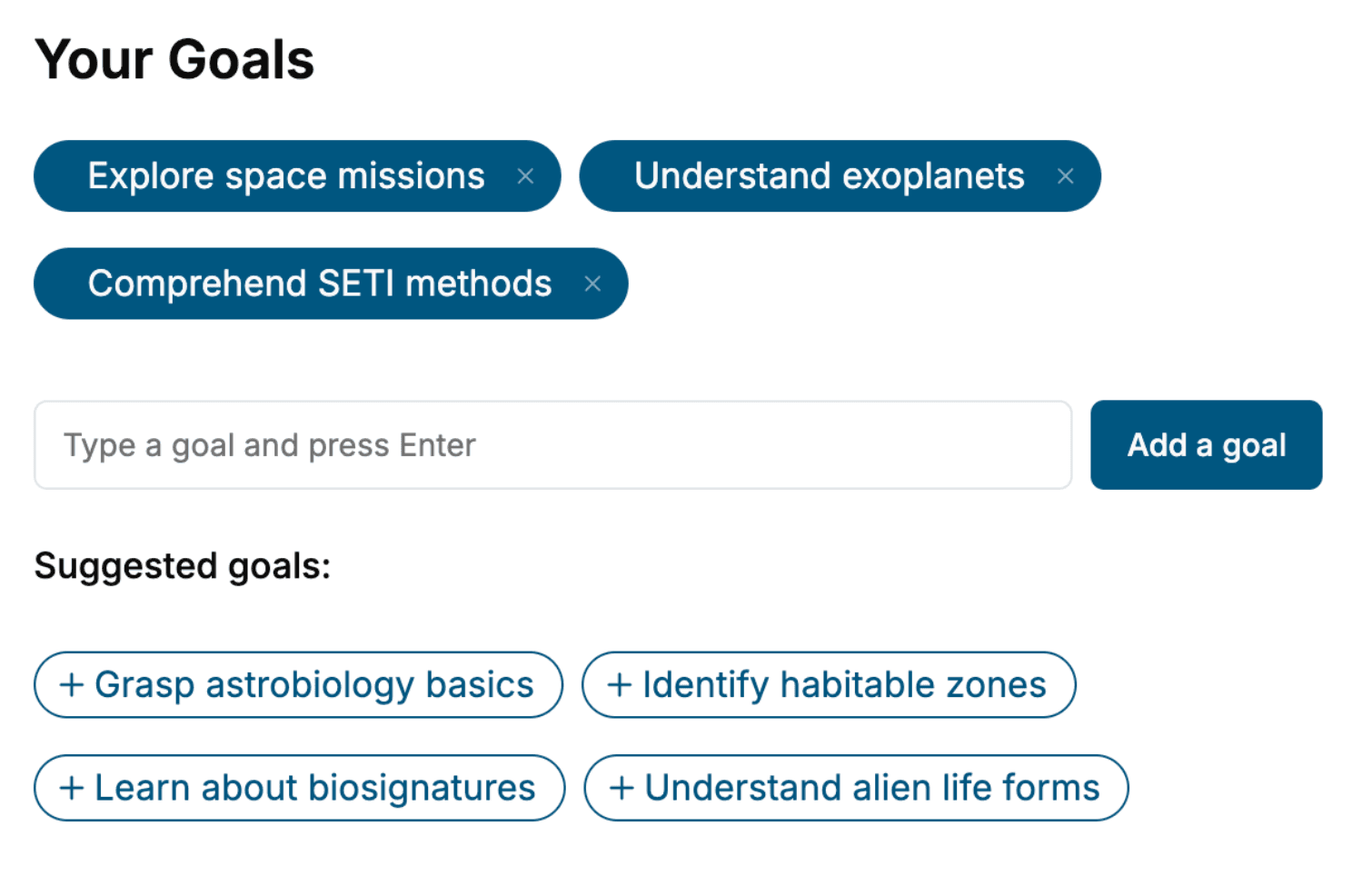
Specify your goals and choose sub-topics to include
- 3. Get your tailored book
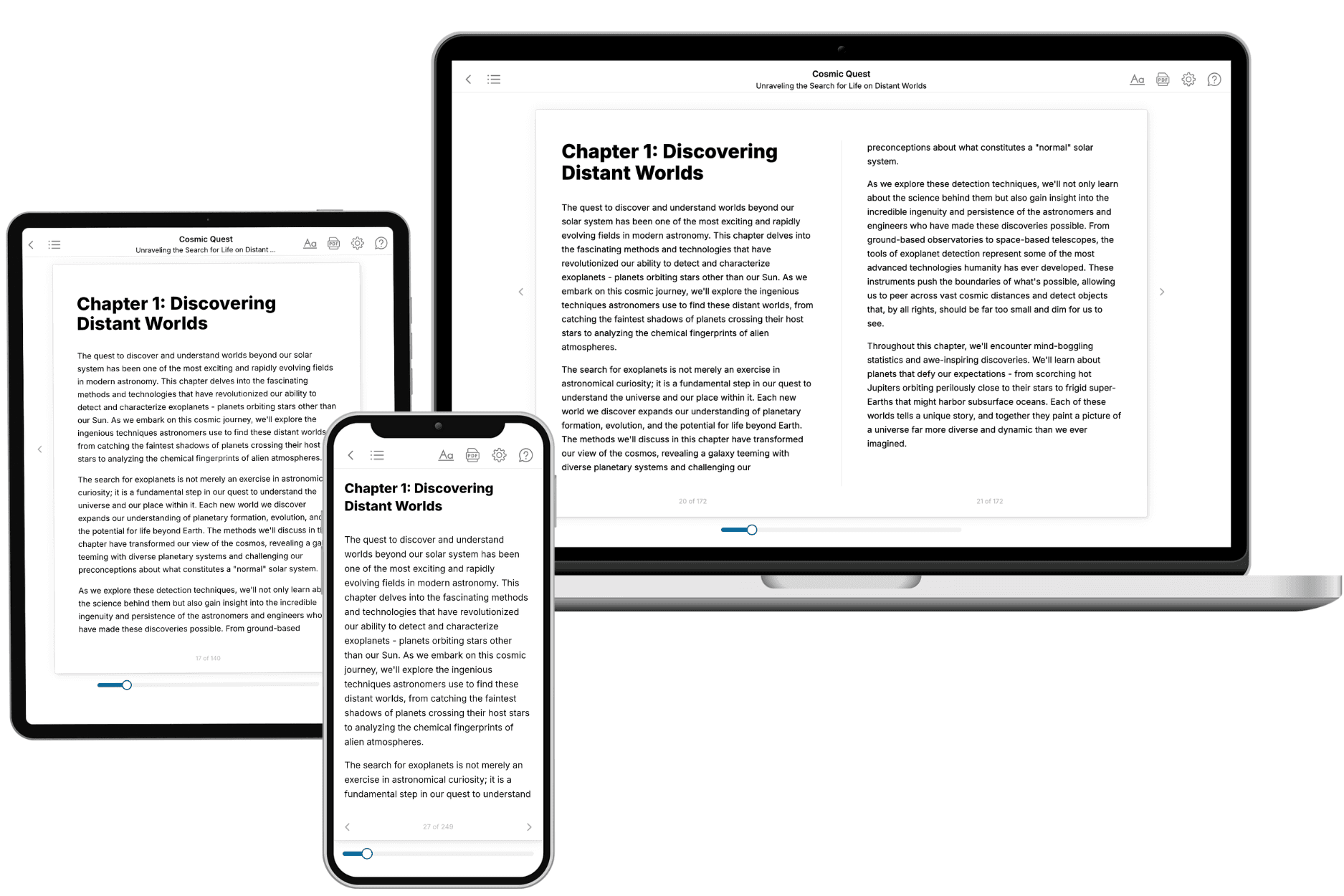
Your book is ready in 10 minutes. Read it online, download as EPUB or PDF, or send to Kindle.
Frequently asked questions
- What is TailoredRead?
TailoredRead creates complete, full-length nonfiction ebooks, written specifically for you. Tell us what you want to learn and why, and TailoredRead writes you a complete ebook on it, with charts, tables, and diagrams throughout. Read it online, on Kindle, or on any e-reader, or download it as a PDF or EPUB. Every book is written fresh the day you order it.
- How is the book tailored to me?
Before anything is written, you answer a few short questions about your goals, your background, and the topics you care about. Your book is then planned around your answers: written at your level, focused on your goals, and covering the topics you chose, instead of the one-size-fits-all book a store sells everyone.
- Will it read like generic AI content?
No. Your book isn't a chat transcript: it's planned chapter by chapter before a single word is written, told in a clear book voice, and explains ideas visually with charts, tables, and diagrams. After writing, every book goes through an editorial pass that polishes chapters so the book reads consistent from start to finish. Judge for yourself: browse thousands of sample books on our Explore Books page.
- How accurate is the content?
Our AI first checks whether your subject needs live research. Niche and fast-moving subjects are researched before writing, and the book plan and chapters are grounded in what it finds. After writing, every book goes through a quality pass that checks its facts and consistency, and researched books list their sources in a Notes section at the back.
- How long is the book?
You choose the length: Comprehensive (250-300 pages), Detailed (150-200 pages), Essential (70-100 pages), or Short (30-50 pages).
- Does the book include visuals?
Yes. Every book includes charts, tables, and diagrams: timelines, checklists, step-by-step guides, decision trees, comparison tables, matrices, and bar charts. A typical book includes dozens of these visual elements.
- Can I read it on Kindle? What formats can I download?
Yes. Every book can be read in our online reader or downloaded as a PDF or EPUB. The EPUB can be opened with Kindle, Apple Books, Kobo, and any e-reader. The Commercial and Author licenses also include an editable Word (DOCX) and Markdown download.
- How much does it cost?
About the price of a regular ebook. The exact price depends on your book's length and complexity, from $2 for the shortest books to $35 for the most comprehensive, and it's shown when you review your book, before you commit to anything. Each book is a one-time purchase, yours to keep, no subscription. Licenses that let you share, teach, or publish your book range from $35.99 to $49.99.
- Can I preview the book before purchasing?
Before you pay, you'll see what your book will cover: the title, a detailed description, the estimated length, and the complete chapter-by-chapter table of contents, so you know what you're getting before you decide. The full text itself is written after you purchase.
- How long does it take to create a book?
About 10 minutes. You can start reading the opening chapters while the rest is still being written.