The Reproductive Strategies of Animals
Understanding How Species Ensure Survival Through Breeding and Development
Many people struggle to understand how animals reproduce because reproductive biology involves complex interactions between physiology, behavior, and evolution.
222 pages10 chaptersMar 15, 2026Biology
About this book
This book demystifies animal reproduction by exploring the fundamental strategies that enable species to survive and thrive. You'll discover why some animals reproduce sexually while others use asexual methods, how hormones orchestrate mating behaviors, and why parental care varies so dramatically across species. From the elaborate courtship displays of birds to the synchronized spawning of coral, you'll see how evolution has shaped reproductive strategies to match each species' unique environment and lifestyle. This accessible guide connects reproductive biology to broader ecological and evolutionary principles, helping you understand not just how animals breed, but why they breed the way they do. Whether you're a student, educator, or curious naturalist, you'll gain practical knowledge about fertilization, development, mating systems, and the trade-offs animals face in balancing reproduction with survival.
Table of contents
- IntroductionWhy Reproduction Matters in the Animal Kingdom, What This Book Covers, How to Use This BookRead below
- Chapter 1: Fundamentals of Animal ReproductionDefining Reproduction and Its Role in Evolution, Sexual Reproduction vs. Asexual Reproduction, The Advantage of Genetic Diversity, The Costs and Benefits of Different Reproductive Modes
- Chapter 2: Hormonal Control of ReproductionThe Endocrine System and Reproductive Hormones, Key Hormones: FSH, LH, Testosterone, and Estrogen, Reproductive Cycles and Seasonal Timing, How Hormones Influence Mating Behavior
- Chapter 3: Mating Systems and Mate SelectionMonogamy, Polygamy, and Promiscuity, How Animals Choose Their Mates, Sexual Selection and Competitive Displays, How Environment Shapes Mating Systems
- Chapter 4: Fertilization StrategiesExternal Fertilization: Spawning and Broadcast Reproduction, Internal Fertilization: Copulation and Insemination, Sperm and Egg Production Across Species, Challenges and Adaptations in Fertilization
- Chapter 5: Embryonic Development and GrowthEarly Embryonic Development: From Zygote to Gastrula, Organogenesis and Tissue Formation, Key Developmental Stages Across Animal Groups, Developmental Plasticity and Environmental Influences
- Chapter 6: Parental Care and InvestmentThe Spectrum of Parental Care: From None to Intensive, Maternal Investment and Lactation, Paternal Care and Male Parental Investment, Trade-offs Between Offspring Number and Parental Care
- Chapter 7: Reproductive Strategies Across Animal GroupsFish: Diverse Strategies in Aquatic Environments, Amphibians: Bridging Aquatic and Terrestrial Worlds, Reptiles: Eggs, Temperature, and Adaptation, Birds: Elaborate Courtship and Egg Care
- Chapter 8: Mammalian Reproduction and ViviparityThe Evolution of Viviparity and Internal Development, Placentation and Maternal-Fetal Exchange, Gestation Periods and Lactation Strategies, Reproductive Diversity in Monotremes, Marsupials, and Placentals
- Chapter 9: Reproductive Ecology and Population DynamicsMeasuring Reproductive Success and Fitness, How Reproduction Drives Population Growth, Environmental Factors Affecting Reproduction, Life History Strategies: r-selection vs. K-selection
- Chapter 10: Unusual and Specialized Reproductive StrategiesHermaphroditism and Sequential Sex Change, Asexual Reproduction: Budding, Fission, and Parthenogenesis, Extreme Reproductive Adaptations in Specialized Niches
- ConclusionSynthesis: The Unity and Diversity of Animal Reproduction, Future Perspectives and Emerging Research
- Glossary
- Further Reading and Resources
Introduction
Every animal alive today exists because of an unbroken chain of successful reproduction stretching back hundreds of millions of years. That chain is not a simple, uniform process. It is a sprawling collection of strategies, trade-offs, and adaptations shaped by evolution, ecology, and the relentless pressure to pass genes to the next generation. From a salmon releasing millions of eggs into a cold river to a chimpanzee nursing a single infant for years, the diversity of reproductive strategies in the animal kingdom is one of biology's most fascinating stories.
Reproductive biology sits at the intersection of physiology, behavior, ecology, and evolution. Understanding it means grappling with questions that go far beyond simple mechanics. Why do some animals invest everything in a single offspring while others produce thousands and walk away? Why do males in some species grow elaborate, costly ornaments that seem to make survival harder? How do hormones coordinate the precise timing of mating across an entire population? These questions do not have simple answers, but they do have deeply satisfying ones once you understand the underlying principles.
This book is designed to give you those answers in a clear, organized, and engaging way. Whether you are a student building on foundational zoology knowledge, an educator looking for a reliable reference, or a curious naturalist who wants to understand the animals you observe, this guide will take you through the full landscape of animal reproduction. You will move from the molecular machinery of hormones to the ecological dynamics of population growth, always connecting the details back to the bigger picture of how and why animals reproduce the way they do.
The chapters ahead cover a wide range of topics, from the basic distinction between sexual and asexual reproduction to the remarkable specialized strategies found in hermaphroditic fish and parthenogenetic lizards. Along the way, you will encounter real examples drawn from research across the animal kingdom, concrete frameworks for understanding trade-offs, and clear explanations of the evolutionary logic behind even the most surprising reproductive behaviors. The goal is not just to inform, but to help you think like a biologist when you look at the natural world.
Why Reproduction Matters in the Animal Kingdom
Reproduction is the single most important activity in any animal's life, at least from an evolutionary perspective. An individual that survives for decades but never reproduces contributes nothing to the next generation. Its genes disappear. By contrast, an individual that reproduces successfully, even briefly, leaves a biological legacy that can persist for generations. This is why natural selection has shaped so many of an animal's traits, from its coloration to its behavior to its immune system, around the demands of reproduction.
The concept of reproductive fitness captures this idea precisely. Fitness, in the biological sense, is not about strength or health in isolation. It refers to an organism's ability to survive long enough to reproduce and to produce offspring that themselves survive and reproduce. A peacock with an enormous, colorful tail may be more vulnerable to predators, but if that tail attracts more mates and produces more surviving offspring, it represents higher fitness than a drab, safer alternative.[1] This kind of trade-off appears throughout reproductive biology.
Reproduction also drives population dynamics in ways that affect entire ecosystems. When prey populations boom due to high reproductive output, predator populations often follow. When environmental conditions suppress reproduction in a keystone species, the effects ripple outward through food webs and habitat structures. Understanding how animals reproduce is therefore not just an academic exercise. It is essential for conservation biology, wildlife management, and predicting how species will respond to environmental change.
Consider the Atlantic cod (Gadus morhua) as a concrete example. Female cod can produce up to nine million eggs per spawning season, a strategy that evolved in an environment where most offspring would be eaten before reaching adulthood. When industrial fishing dramatically reduced adult populations in the late twentieth century, the reproductive output of the remaining population was insufficient to sustain the species at commercial levels. The collapse of the Grand Banks cod fishery in the early 1990s was, at its core, a failure of reproductive biology under human pressure.[2]
Reproduction also matters because it is the engine of evolution itself. Every time an organism reproduces sexually, it shuffles its genetic material in new combinations. Mutations arise, some harmful and some beneficial. Over generations, natural selection filters these combinations, favoring those that improve survival and reproductive success in a given environment. Without reproduction, there is no evolution, and without evolution, there is no adaptation to changing conditions. The diversity of life on Earth is, in a very real sense, the accumulated product of billions of years of reproductive success and failure.
Finally, reproductive biology matters because it reveals the deep logic of animal behavior. Many behaviors that seem puzzling or even counterproductive make perfect sense when viewed through the lens of reproductive strategy. Male elephant seals fight brutal battles for access to females not out of aggression for its own sake, but because controlling a harem dramatically increases reproductive output. Worker bees sacrifice their own reproduction to support the queen because they share a large proportion of their genes with their sisters. Reproduction is the thread that ties behavior, physiology, and ecology together into a coherent biological story.
Key insight: Reproductive success, not mere survival, is the currency of evolution. Every trait, behavior, and physiological system in an animal can be understood, at least in part, as a solution to the challenge of reproducing successfully in a specific environment.
What This Book Covers
This book takes a broad but structured approach to animal reproductive biology. Rather than focusing on a single taxonomic group or a single aspect of reproduction, it builds from foundational principles outward to specific strategies and specialized cases. The goal is to give you a framework that helps you understand any reproductive strategy you encounter, not just the ones covered in these pages.
The book is organized into ten chapters, each addressing a distinct dimension of reproductive biology. Here is a brief overview of what each chapter covers:
- Chapter 1: Fundamentals of Animal Reproduction establishes the core concepts, including the distinction between sexual and asexual reproduction, the role of genetic diversity, and the evolutionary costs and benefits of different reproductive modes.
- Chapter 2: Hormonal Control of Reproduction explains how the endocrine system regulates reproductive cycles, coordinates mating behavior, and synchronizes timing between males and females.
- Chapter 3: Mating Systems and Mate Selection explores the spectrum from monogamy to promiscuity, the mechanisms of mate choice, and how sexual selection drives the evolution of elaborate traits and behaviors.
- Chapter 4: Fertilization Strategies covers external and internal fertilization, gamete production, and the remarkable adaptations animals have evolved to ensure successful fertilization.
- Chapter 5: Embryonic Development and Growth traces the journey from fertilized egg to functional organism, covering early cell division, organogenesis, and the influence of environment on development.
- Chapter 6: Parental Care and Investment examines the full spectrum of parental behavior, from species that provide no care at all to those that invest years of intensive nurturing in a single offspring.
- Chapter 7: Reproductive Strategies Across Animal Groups surveys fish, amphibians, reptiles, and birds, highlighting the unique reproductive adaptations each group has evolved.
- Chapter 8: Mammalian Reproduction and Viviparity focuses on the evolution of internal development, placentation, and the remarkable diversity of reproductive strategies within mammals.
- Chapter 9: Reproductive Ecology and Population Dynamics connects individual reproductive strategies to population-level outcomes, including how environmental factors shape reproductive success and how life history strategies differ between species.
- Chapter 10: Unusual and Specialized Reproductive Strategies explores the edges of reproductive biology, including hermaphroditism, parthenogenesis, and extreme adaptations found in specialized ecological niches.
Throughout the book, the emphasis is on connecting mechanisms to outcomes. It is not enough to know that a hormone triggers ovulation. Understanding why that hormonal trigger evolved, how it coordinates with male behavior, and what happens when the timing goes wrong gives you a much richer and more useful understanding of the biology. Every chapter aims to provide that kind of layered explanation.
The book also pays close attention to evolutionary trade-offs. Reproduction is never free. It costs energy, time, and often increases vulnerability to predators or disease. Every reproductive strategy represents a particular solution to the problem of balancing these costs against the benefits of producing offspring. Recognizing these trade-offs is one of the most powerful tools in a biologist's toolkit, and this book returns to that theme repeatedly across different species and contexts.
Real-world examples are central to every chapter. You will encounter specific species, specific research findings, and specific ecological contexts throughout. These examples are not decorative. They are the evidence base for the principles being discussed. When a chapter explains that environmental temperature can determine the sex of offspring in some reptiles, it does so by walking through the actual mechanism in species like the American alligator (Alligator mississippiensis) and explaining what that means for conservation in a warming climate.[3] Concrete examples make abstract principles stick.
The book also acknowledges the limits of current knowledge. Reproductive biology is an active research field, and many questions remain open. In some areas, competing hypotheses exist and the evidence is still being gathered. Where that is the case, the book presents the state of the debate honestly rather than oversimplifying. Science is a process, and understanding that process is part of developing genuine biological literacy.
Finally, the book connects reproductive biology to broader concerns in ecology and conservation. Many of the world's most pressing environmental challenges, from species extinction to invasive species management to the effects of endocrine-disrupting chemicals in the environment, are fundamentally reproductive problems. Understanding the biology gives you the tools to understand the stakes and, in some cases, to contribute to solutions.
How to Use This Book
This book is designed to be read from beginning to end, but it also works well as a reference you can dip into by topic. The chapters are organized so that earlier ones build the conceptual foundation for later ones. If you read Chapter 1 before Chapter 9, for example, the discussion of life history strategies will make more sense because you will already understand the basic trade-offs between reproductive modes. That said, each chapter is written to be reasonably self-contained, with cross-references to related sections where relevant.
If you are using this book as part of a course or structured study program, a recommended approach is to read each chapter once for overall comprehension, then return to specific sections when working through related problems or case studies. The chapter on hormonal control, for instance, becomes much more useful when you are also working through examples of seasonal breeding or reproductive failure in captive animals. Connecting the reading to real cases accelerates understanding significantly.
For those who already have a strong background in one area of reproductive biology, the book offers a way to fill in gaps in adjacent areas. A student who knows mammalian endocrinology well but has limited exposure to fish reproduction can use Chapter 7 to extend their framework into aquatic systems. A naturalist familiar with bird behavior can use Chapter 3 to understand the evolutionary logic behind the mating systems they observe in the field. The book is structured to reward both linear reading and targeted exploration.
Pay particular attention to the key terms highlighted throughout each chapter. These terms form the vocabulary of reproductive biology, and fluency with them is essential for reading the primary literature or engaging with more advanced texts. A full glossary is provided at the back of the book for quick reference. When you encounter a term you are not sure about, checking the glossary before moving on will prevent confusion from accumulating as you progress through later chapters.
The examples and case studies in each chapter are worth spending time on. It can be tempting to skim past specific examples to get to the next principle, but the examples are where the principles become real. When you read about how male túngara frogs (Engystomops pustulosus) adjust their calls based on the presence of competing males and the risk of attracting predators, you are not just learning a fact about one species.[4] You are seeing the trade-off between reproductive success and survival made visible in real animal behavior. That kind of concrete illustration is what transforms abstract concepts into genuine understanding.
The footnotes throughout the book point to primary research papers and authoritative secondary sources. If a topic captures your interest, these references are your starting point for going deeper. The Further Reading and Resources section at the end of the book also provides curated recommendations organized by topic, including both accessible popular science books and more technical academic resources. Reproductive biology is a field where the primary literature is often surprisingly readable, and exploring it directly is one of the best ways to develop a sophisticated understanding of the subject.
As you work through the book, try to maintain the habit of asking why at every step. Why does this species use external rather than internal fertilization? Why does parental care fall primarily on the female in this group but the male in that one? Why does this hormone peak before mating rather than during it? The answers to these questions are almost always rooted in evolutionary logic, ecological context, or physiological constraint. Developing the habit of asking why, and then looking for the answer in those three domains, is the core skill this book is designed to build.
A practical tip: Keep a running list of species examples as you read. When you encounter a new reproductive strategy, note the species, the strategy, and the ecological or evolutionary reason behind it. By the end of the book, you will have built a personal reference that connects dozens of specific cases to the underlying principles, which is far more useful than memorizing facts in isolation.
Above all, approach this material with curiosity. Animal reproduction is one of the most varied, inventive, and sometimes astonishing domains in all of biology. The strategies animals have evolved to ensure their genes survive into the next generation range from the elegantly simple to the almost unbelievably complex. Understanding those strategies, and the evolutionary pressures that shaped them, is one of the genuine pleasures of studying the natural world. This book is an invitation to that understanding, and the chapters ahead are where the real exploration begins.
Notes
Introduction
- 1. A. Zahavi, "Mate selection," Journal of Theoretical Biology, 1975
- 2. J. A. Hutchings and R. A. Myers, "What can be learned from the collapse of a renewable resource?," Atlantic cod, Gadus morhua, of Newfoundland and Labrador. Canadian Journal of Fisheries and Aquatic Sciences, 1994
- 3. F. J. Janzen, "Climate change and temperature-dependent sex determination in reptiles," Proceedings of the National Academy of Sciences, 1994
- 4. M. J. Ryan and A. S. Rand, "The sensory basis of sexual selection for complex calls in the túngara frog, Physalaemus pustulosus (sexual selection for complex calls)," Evolution, 1990
This is the end of the free sample. The full book has 10 chapters.
Want this book written for you?
Tell us your goals and background, and get your own version of this book, tailored by AI to you.


Benefits of AI-tailored books
- Read one book, not ten:
- all the Biology knowledge you need, gathered into a single book.
- Save days of learning:
- tell us your goals, choose your topics, and the whole book is built around them.
- Learn effortlessly:
- Biology book written for your specific background and expertise.
- Understand at a glance:
- includes charts, tables, timelines, checklists, decision trees, and more.
- Stay current:
- written the day you order it, not years ago.
- Trust what you read:
- every book is checked for accuracy, with real research when your subject needs it.
Create your unique book in 3 steps
- 1. Select your focus
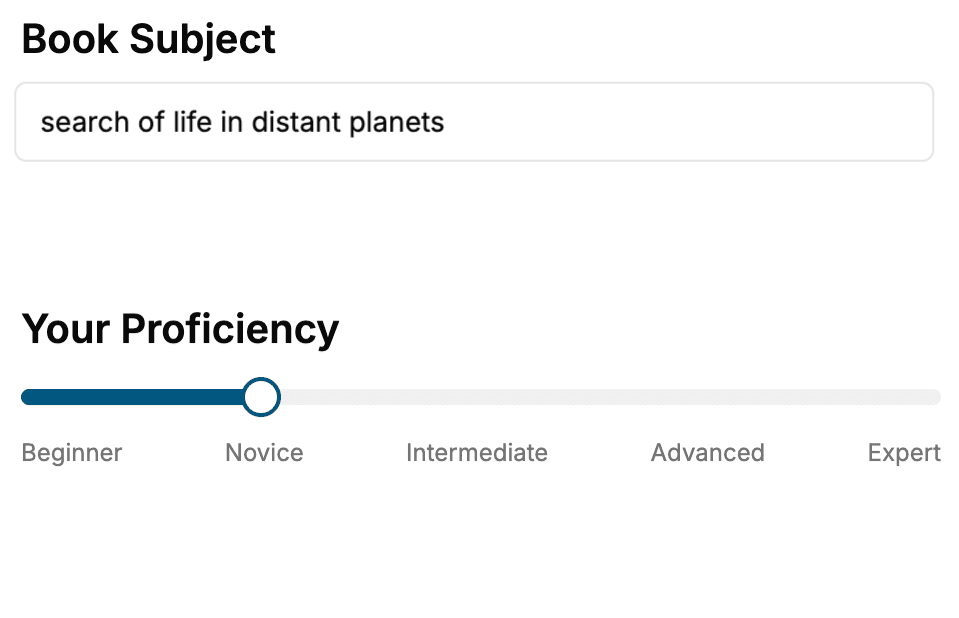
Select the focus of your Biology book and share your background
- 2. Personalize your book
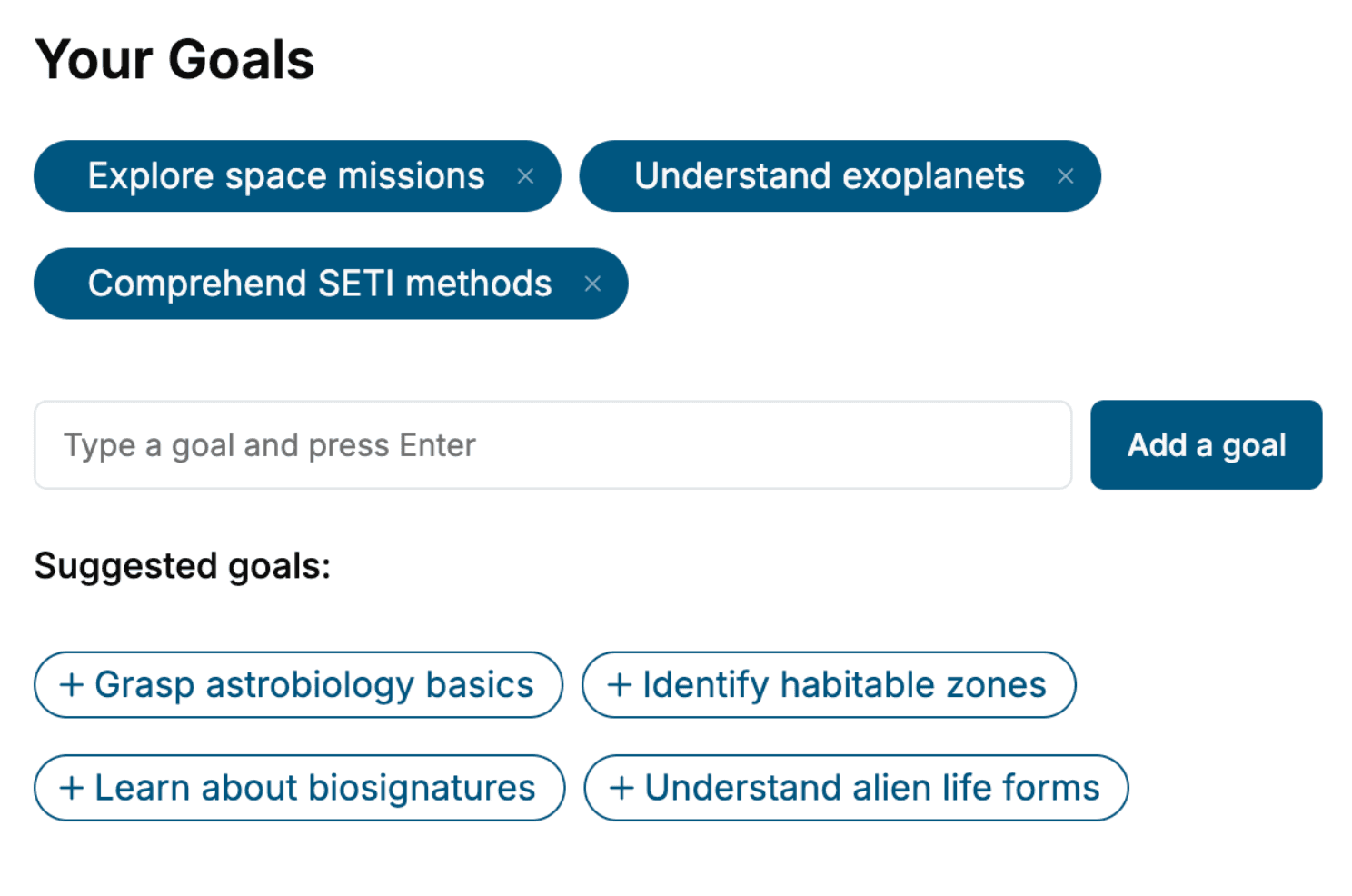
Specify your goals and choose sub-topics to include
- 3. Get your tailored book
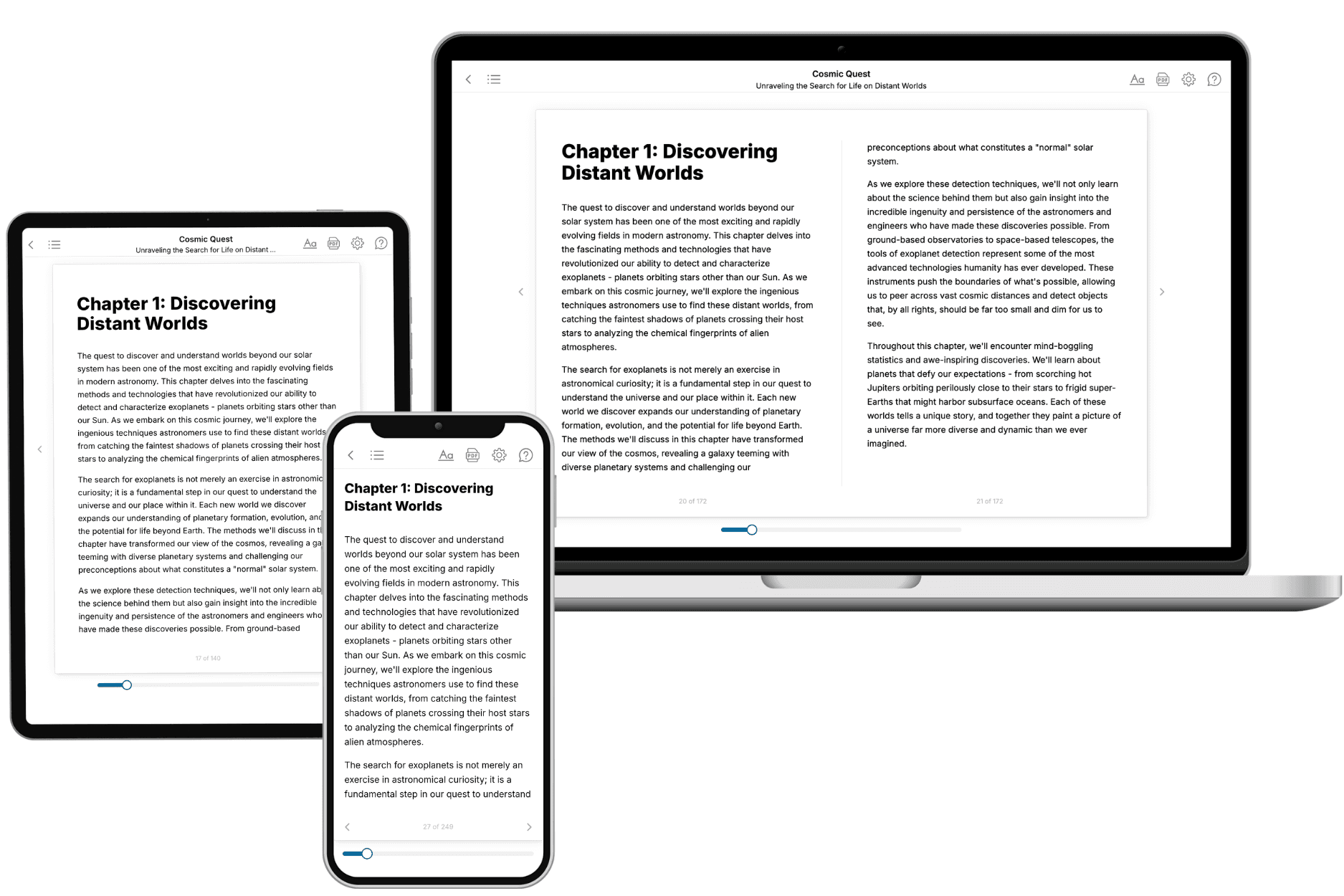
Your book is ready in 10 minutes. Read it online, download as EPUB or PDF, or send to Kindle.
Frequently asked questions
- What is TailoredRead?
TailoredRead creates complete, full-length nonfiction ebooks, written specifically for you. Tell us what you want to learn and why, and TailoredRead writes you a complete ebook on it, with charts, tables, and diagrams throughout. Read it online, on Kindle, or on any e-reader, or download it as a PDF or EPUB. Every book is written fresh the day you order it.
- How is the book tailored to me?
Before anything is written, you answer a few short questions about your goals, your background, and the topics you care about. Your book is then planned around your answers: written at your level, focused on your goals, and covering the topics you chose, instead of the one-size-fits-all book a store sells everyone.
- Will it read like generic AI content?
No. Your book isn't a chat transcript: it's planned chapter by chapter before a single word is written, told in a clear book voice, and explains ideas visually with charts, tables, and diagrams. After writing, every book goes through an editorial pass that polishes chapters so the book reads consistent from start to finish. Judge for yourself: browse thousands of sample books on our Explore Books page.
- How accurate is the content?
Our AI first checks whether your subject needs live research. Niche and fast-moving subjects are researched before writing, and the book plan and chapters are grounded in what it finds. After writing, every book goes through a quality pass that checks its facts and consistency, and researched books list their sources in a Notes section at the back.
- How long is the book?
You choose the length: Comprehensive (250-300 pages), Detailed (150-200 pages), Essential (70-100 pages), or Short (30-50 pages).
- Does the book include visuals?
Yes. Every book includes charts, tables, and diagrams: timelines, checklists, step-by-step guides, decision trees, comparison tables, matrices, and bar charts. A typical book includes dozens of these visual elements.
- Can I read it on Kindle? What formats can I download?
Yes. Every book can be read in our online reader or downloaded as a PDF or EPUB. The EPUB can be opened with Kindle, Apple Books, Kobo, and any e-reader. The Commercial and Author licenses also include an editable Word (DOCX) and Markdown download.
- How much does it cost?
About the price of a regular ebook. The exact price depends on your book's length and complexity, from $2 for the shortest books to $35 for the most comprehensive, and it's shown when you review your book, before you commit to anything. Each book is a one-time purchase, yours to keep, no subscription. Licenses that let you share, teach, or publish your book range from $35.99 to $49.99.
- Can I preview the book before purchasing?
Before you pay, you'll see what your book will cover: the title, a detailed description, the estimated length, and the complete chapter-by-chapter table of contents, so you know what you're getting before you decide. The full text itself is written after you purchase.
- How long does it take to create a book?
About 10 minutes. You can start reading the opening chapters while the rest is still being written.