Safe Pregnancy, Healthy Baby
The Complete Guide to Medication Safety During Pregnancy
Many pregnant women face an impossible choice: take medications they fear might harm their baby, or stop treatment and risk their own health.
207 pages9 chaptersEnglishJul 15, 2026Pregnancy
About this book
This fear is often based on outdated information and misconceptions about how medications affect pregnancy. The truth is more nuanced and hopeful. Most medications can be safely used during pregnancy when prescribed appropriately, and untreated maternal conditions often pose greater risks than the medications themselves. This guide cuts through the confusion with evidence-based information about medication safety across all three trimesters. You'll learn how to evaluate risks and benefits, understand the new FDA labeling system, communicate effectively with your healthcare providers, and make informed decisions that protect both your health and your baby's development. Whether you're managing chronic conditions, treating acute illnesses, or considering supplements and herbal products, this book provides the practical knowledge you need to navigate pregnancy with confidence.
Table of contents
- IntroductionWhy Medication Safety Matters in Pregnancy, How to Use This Book, Working With Your Healthcare TeamRead below
- Chapter 1: Understanding Pregnancy and MedicationHow Pregnancy Changes Your Body's Response to Medication, The Placenta: What It Protects and What It Doesn't, Why Each Trimester Carries Different Risks
- Chapter 2: Evaluating Medication Risk and BenefitUnderstanding the New FDA Pregnancy and Lactation Labeling, How to Assess Risk Versus Benefit for Your Situation, Debunking Common Myths About Pregnancy and Medication
- Chapter 3: Medications for Common Pregnancy ConditionsPain Relief and Fever Management, Managing Nausea, Vomiting, and Heartburn, Treating Infections Safely During Pregnancy
- Chapter 4: Managing Chronic Conditions in PregnancyDiabetes and High Blood Pressure Management, Depression, Anxiety, and Mental Health Medications, Thyroid and Autoimmune Condition Medications
- Chapter 5: Supplements, Herbs, and Over-the-Counter ProductsEssential Vitamins and Minerals for Pregnancy, Herbal Remedies: Safety and Efficacy, Over-the-Counter Products and Natural Remedies
- Chapter 6: Medications to Avoid or Use With CautionMedications With Known Risks to the Fetus, High-Risk Drug Categories and Why, When Timing of Exposure Increases Risk
- Chapter 7: Medication Safety Across Pregnancy StagesFirst Trimester: Organ Development and Critical Periods, Second and Third Trimester: Different Considerations, Medications During Labor and Delivery
- Chapter 8: Medication Management and CommunicationHaving Effective Conversations With Your Doctor, Tracking and Managing Your Medications, When and How to Seek Second Opinions
- Chapter 9: Breastfeeding and Medication SafetyHow Medications Pass Into Breast Milk, Medications Safe During Breastfeeding, Timing Strategies to Minimize Infant Exposure
- ConclusionMaking Empowered Decisions for Your Health and Baby, Moving Forward With Confidence
- Frequently Asked QuestionsCommon Questions About Pregnancy and Medication
- Additional ResourcesTrusted Information Sources and Organizations
Introduction
Pregnancy is one of the most carefully watched periods in a person's life. Every food choice, every activity, and especially every medication gets scrutinized in a way that nothing else quite matches. That scrutiny comes from a good place: you want to protect the life growing inside you. But for millions of pregnant women managing chronic conditions, dealing with infections, or simply trying to get through a miserable bout of nausea, that protective instinct can quickly turn into paralyzing fear. The question "Is this safe to take?" can feel impossible to answer, and the stakes feel impossibly high.
The fear is understandable, but it is often built on outdated information, misunderstood statistics, and a cultural tendency to treat all medication as inherently dangerous during pregnancy. The reality is far more nuanced. Research consistently shows that untreated maternal illness can pose serious risks to a developing baby, sometimes greater risks than the medications used to treat those conditions. A pregnant woman with uncontrolled high blood pressure, untreated depression, or a bacterial infection that goes unaddressed is not playing it safe by avoiding medication. She may actually be placing herself and her baby in greater danger.[1]
This book exists to replace fear with knowledge. It draws on current evidence, updated regulatory guidance, and the practical realities of managing health during pregnancy to give you a clear, honest picture of medication safety. You will not find blanket reassurances here, nor will you find unnecessary alarm. What you will find is the kind of balanced, evidence-based information that helps you have better conversations with your healthcare providers, ask smarter questions, and make decisions you feel genuinely confident about. Pregnancy is not a time to stop thinking critically about your health. It is a time to think about it more carefully than ever.
Throughout these chapters, the goal is always the same: to give you the tools to weigh real risks against real benefits, understand what the science actually says, and work as an informed partner with your medical team. Whether you are newly pregnant and wondering about the medications you were already taking, or you are planning a pregnancy and want to prepare in advance, this guide is designed to meet you where you are and walk you through what you need to know.
Why Medication Safety Matters in Pregnancy
Medication use during pregnancy is far more common than most people realize. Studies estimate that between 80 and 90 percent of pregnant women take at least one medication during pregnancy, and many take several.[2] These range from prenatal vitamins and iron supplements to prescription drugs for diabetes, thyroid disorders, asthma, and mental health conditions. The idea that pregnancy should be a medication-free nine months is simply not the reality for most people, and pretending otherwise does real harm.
When women stop necessary medications out of fear, the consequences can be serious. Consider a pregnant woman with epilepsy who stops her anticonvulsant medication without medical guidance. Uncontrolled seizures during pregnancy carry significant risks for both mother and baby, including oxygen deprivation, placental abruption, and preterm labor. The medication she feared may have been far safer than the seizures she experienced without it. This is not a rare or extreme example. It plays out across many conditions, from asthma to depression to autoimmune disease.
The history of medication safety in pregnancy is shaped by genuine tragedy. The thalidomide disaster of the late 1950s and early 1960s, in which a sedative prescribed for morning sickness caused severe limb malformations in thousands of babies, rightly changed how the world thinks about drug safety in pregnancy.[3] But that history has also left a legacy of overcaution that sometimes prevents women from getting treatments they genuinely need. Understanding the difference between medications with documented fetal risks and those that are simply unstudied is one of the most important skills this book will help you develop.
It is also worth understanding what causes birth defects in the first place. Approximately 3 percent of all babies are born with a major birth defect, and the vast majority of those cases have nothing to do with medication.[4] Genetic factors, chromosomal abnormalities, infections, nutritional deficiencies, and causes that remain entirely unknown account for the overwhelming majority. When a birth defect occurs in a baby whose mother took a medication during pregnancy, it is natural to connect the two events. But correlation is not causation, and this distinction matters enormously when evaluating risk.
Medication safety in pregnancy also matters because the stakes are not one-sided. Your health matters too, not just as a means to a healthy baby, but as an end in itself. A pregnant woman is not simply a vessel. Her mental health, physical wellbeing, and quality of life are legitimate medical concerns. When healthcare providers and patients alike treat maternal health as secondary to fetal health, both can suffer. The best outcomes for babies consistently come from mothers who are healthy, supported, and receiving appropriate medical care throughout pregnancy.
The good news is that the science of medication safety in pregnancy has advanced considerably in recent decades. Pregnancy registries, large epidemiological studies, and improved understanding of how drugs cross the placenta have given researchers and clinicians much better tools for assessing risk. The FDA's updated labeling system, which replaced the old letter-grade categories in 2015, now provides far more specific and useful information about what is actually known about a drug's effects during pregnancy and breastfeeding. This book will help you understand and use that information effectively.
Key principle: The question is never simply "Is this medication safe?" The real question is always "Do the benefits of taking this medication outweigh the risks of taking it, compared to the risks of not taking it?" That comparison requires real information, not fear-based assumptions.
Finally, medication safety matters because the decisions you make during pregnancy can have long-term implications. Some conditions that go untreated during pregnancy become harder to manage afterward. Postpartum depression is more likely in women whose depression was undertreated during pregnancy. Poorly controlled gestational diabetes increases the risk of type 2 diabetes later in life. Getting the right treatment at the right time is not just about the next nine months. It is about your long-term health and your capacity to care for your child after birth.
How to Use This Book
This book is designed to be both a cover-to-cover read and a practical reference you return to throughout your pregnancy. If you are early in your pregnancy or still in the planning stage, reading from the beginning will give you the strongest foundation. The first two chapters cover how pregnancy changes your body's response to medication and how to evaluate risk and benefit, and that framework will make everything else in the book more useful. If you are already further along and dealing with a specific concern, the chapter structure allows you to go directly to what is most relevant to you right now.
Here is a quick map of what each part of the book covers, so you can find what you need quickly:
- Chapters 1 and 2 build the foundational knowledge: how pregnancy affects drug metabolism, what the placenta does and does not protect against, how to read FDA labeling, and how to think through risk-benefit decisions.
- Chapters 3 and 4 cover specific conditions and medications, from common pregnancy discomforts like nausea and heartburn to chronic conditions like diabetes, hypertension, depression, and thyroid disease.
- Chapter 5 addresses supplements, herbal products, and over-the-counter remedies, an area where misinformation is especially common and where "natural" does not automatically mean safe.
- Chapter 6 covers medications with known or significant risks, explaining what makes certain drugs dangerous and why timing of exposure matters so much.
- Chapter 7 walks through medication safety considerations trimester by trimester, including what happens during labor and delivery.
- Chapter 8 focuses on communication and management: how to talk to your healthcare team, how to track your medications, and when to seek a second opinion.
- Chapter 9 covers breastfeeding and medication safety, including how drugs pass into breast milk and strategies for minimizing infant exposure when needed.
Throughout the book, you will find practical tools embedded in the text. These include questions to ask your doctor, frameworks for thinking through decisions, and examples of how real situations play out. These are not hypothetical exercises. They reflect the kinds of conversations and decisions that pregnant women and their healthcare providers navigate every day. Use them as starting points for your own thinking and your own conversations.
One important note about how to use this information: this book is not a substitute for medical advice. It is a tool for becoming a more informed participant in your own care. The goal is not to help you make medical decisions independently, but to help you understand the information your healthcare providers give you, ask better questions, and feel more confident in the decisions you make together. Every pregnancy is different, and the right choice for one person may not be the right choice for another, even with the same condition and the same medication.
You will notice that this book avoids giving specific dosing recommendations or telling you definitively whether a particular medication is safe for you. That is intentional. Dosing and safety depend on factors that only your healthcare provider can assess: your specific health history, the stage of your pregnancy, other medications you are taking, and the severity of your condition. What this book can do is help you understand the principles behind those decisions so that the guidance you receive from your provider makes sense to you and you can engage with it meaningfully.
Some chapters include sidebars and highlighted sections that flag particularly important points or common misconceptions. Pay attention to these. They often address the exact questions that cause the most confusion or anxiety. The FAQ section at the back of the book also addresses the questions that come up most frequently, and the resources section points you toward trusted organizations and databases where you can find additional information on specific medications.
Finally, if you are reading this because you already took a medication before you knew you were pregnant, or because you are facing a difficult decision right now, take a breath. The information in this book is meant to help you move forward with clarity, not to add to your worry. Most medication exposures during pregnancy, especially brief ones in the early weeks, do not result in harm. What matters most is what you do with the information you have now, and this book will help you figure that out.
Working With Your Healthcare Team
One of the most consistent findings in research on pregnancy outcomes is that women who have open, trusting relationships with their healthcare providers do better. Not just emotionally, but medically. When you feel comfortable sharing everything you are taking, including supplements, herbal teas, and over-the-counter products, your provider can give you much more accurate guidance. When you feel able to ask questions and push back when something does not make sense to you, you are more likely to follow through on treatment plans that actually fit your life.
Your healthcare team during pregnancy may include several different providers, and it is important to understand who does what and how they work together. A typical team might look like this:
- Obstetrician (OB) or midwife: Your primary pregnancy care provider, responsible for monitoring your pregnancy and managing most pregnancy-related health decisions.
- Maternal-fetal medicine specialist (MFM): A high-risk pregnancy specialist who may be involved if you have a chronic condition or a complication arises. MFMs have specialized training in managing complex medication decisions during pregnancy.
- Primary care physician or specialist: If you have a chronic condition like diabetes, thyroid disease, or a mental health condition, the specialist managing that condition needs to be in communication with your OB or midwife.
- Pharmacist: An underused resource. Pharmacists have deep expertise in drug interactions and can often answer specific questions about medications quickly and clearly.
The most important thing you can do to support good communication across your care team is to make sure everyone knows everything you are taking. This sounds obvious, but it is surprisingly easy for information to fall through the cracks, especially when different providers are managing different aspects of your care. Keep a current, complete list of every medication, supplement, vitamin, and herbal product you take, including doses and how often you take them. Bring this list to every appointment and update it whenever anything changes.
Practical tool: Your medication list should include the name of each product (brand and generic if you know it), the dose, how often you take it, what you take it for, and who prescribed or recommended it. A simple note on your phone works perfectly. Update it every time something changes.
Effective communication with your healthcare team also means being honest about things you might feel embarrassed to mention. Many women hesitate to tell their provider they have been taking an herbal supplement they read about online, or that they stopped a prescribed medication because they were worried about it. These are exactly the conversations your provider needs to have with you. There is no judgment in good medical care, only information. The more honest you are, the better your provider can help you.
It is also worth knowing that it is completely appropriate to ask your provider to explain their reasoning. If a medication is recommended or discontinued, you have every right to ask why, what the alternatives are, and what the risks of each option look like. A good provider will welcome these questions. If you ever feel dismissed or rushed when you raise concerns, that is worth addressing directly. You might say something like: I want to make sure I understand this decision. Can you walk me through the reasoning?
Most providers respond well to that kind of direct, respectful request.
Sometimes the most helpful thing a provider can do is refer you to a specialist for a particularly complex medication question. Teratology information services, which are specialized centers staffed by experts in drug safety during pregnancy, exist in many countries and can provide detailed, evidence-based guidance on specific medications.[5] In the United States, the MotherToBaby service run by the Organization of Teratology Information Specialists (OTIS) offers free consultations by phone and online. If you have a complex situation, asking your provider about a referral to one of these services is entirely reasonable.
Disagreements with your healthcare provider do happen, and knowing how to handle them constructively is a real skill. If you receive advice that conflicts with what you have read or heard elsewhere, the right response is not to dismiss your provider's guidance or to simply comply without understanding. Instead, bring the conflicting information to your next appointment and ask your provider to help you reconcile it. Something like: I read that this medication carries certain risks in the first trimester. Can you help me understand how that applies to my situation?
This approach keeps the conversation collaborative and focused on your specific circumstances.
Finally, remember that your healthcare team is not the only resource available to you. Patient advocacy organizations for specific conditions, such as the Epilepsy Foundation, the American Diabetes Association, or Postpartum Support International, often have pregnancy-specific resources and can connect you with providers who specialize in managing your condition during pregnancy. These organizations can be especially valuable if you feel like your concerns are not being fully addressed in your regular care. You do not have to navigate this alone, and seeking out additional support and information is always a sign of strength, not weakness.
Notes
Introduction
- 1. A. Lupattelli and others, "Medication use in pregnancy," BMJ Opene004365, 2014
- 2. A. A. Mitchell and others, "Medication use during pregnancy, with particular focus on prescription drugs," American Journal of Obstetrics and Gynecologye1-51.e8, 2011
- 3. J. H. Kim and A. R. Scialli, "Thalidomide: the tragedy of birth defects and the effective treatment of disease," Toxicological Sciences, 2011
- 4. Centers for Disease Control and Prevention, Facts about Birth Defects, Retrieved from cdc.gov, 2023
- 5. Organization of Teratology Information Specialists, MotherToBaby Fact Sheets, Retrieved from mothertobaby.org, 2023
This is the end of the free sample. The full book has 9 chapters.
Want this book written for you?
Tell us your goals and background, and get your own version of this book, tailored by AI to you.


Benefits of AI-tailored books
- Read one book, not ten:
- all the Pregnancy knowledge you need, gathered into a single book.
- Save days of learning:
- tell us your goals, choose your topics, and the whole book is built around them.
- Learn effortlessly:
- Pregnancy book written for your specific background and expertise.
- Understand at a glance:
- includes charts, tables, timelines, checklists, decision trees, and more.
- Stay current:
- written the day you order it, not years ago.
- Trust what you read:
- every book is checked for accuracy, with real research when your subject needs it.
Create your unique book in 3 steps
- 1. Select your focus
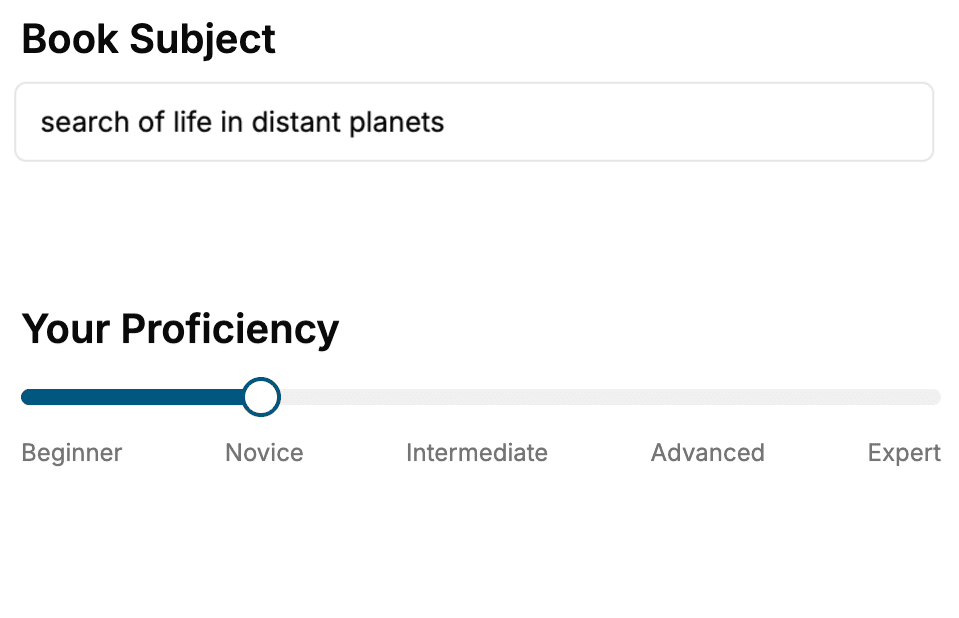
Select the focus of your Pregnancy book and share your background
- 2. Personalize your book
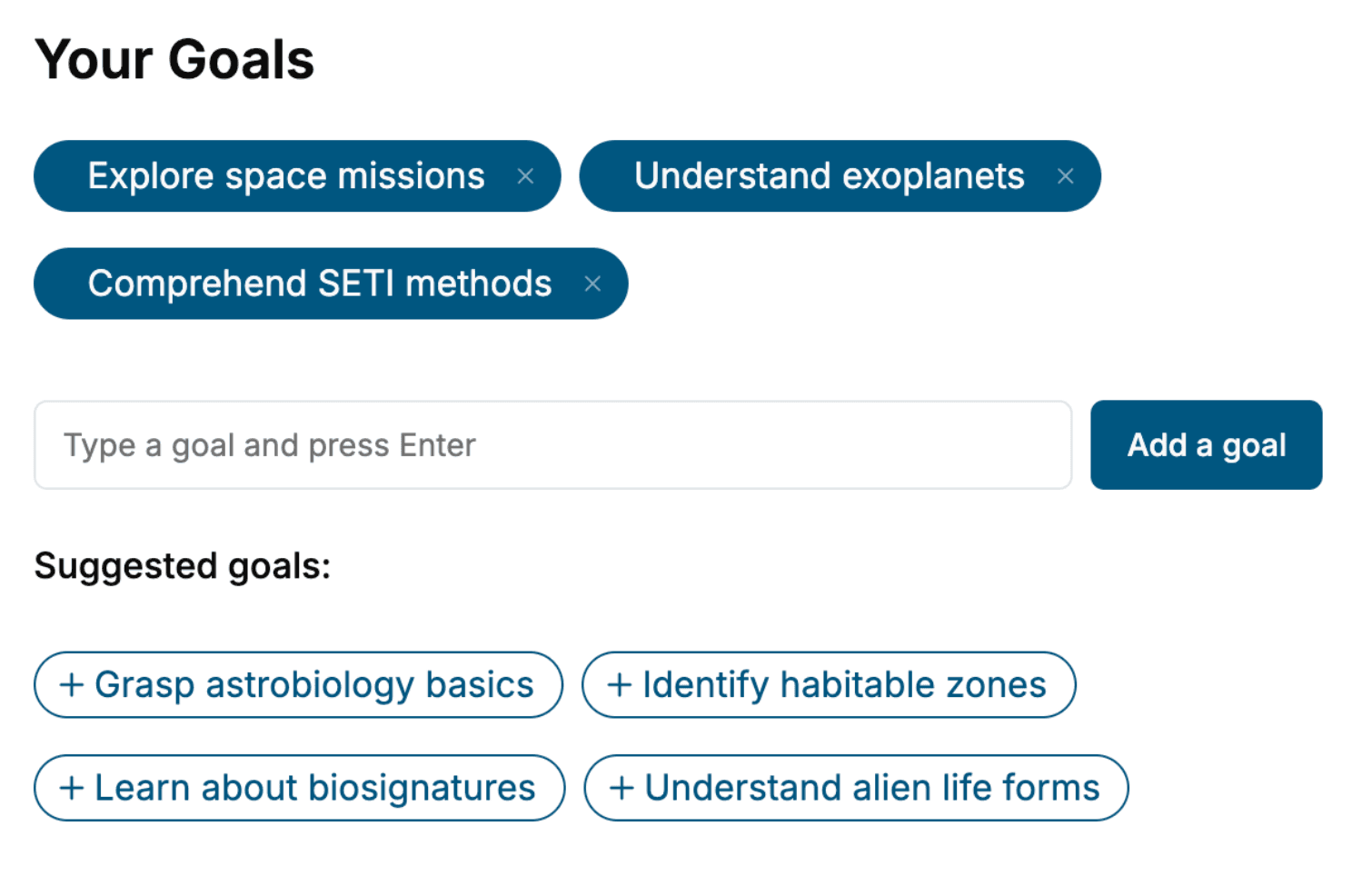
Specify your goals and choose sub-topics to include
- 3. Get your tailored book
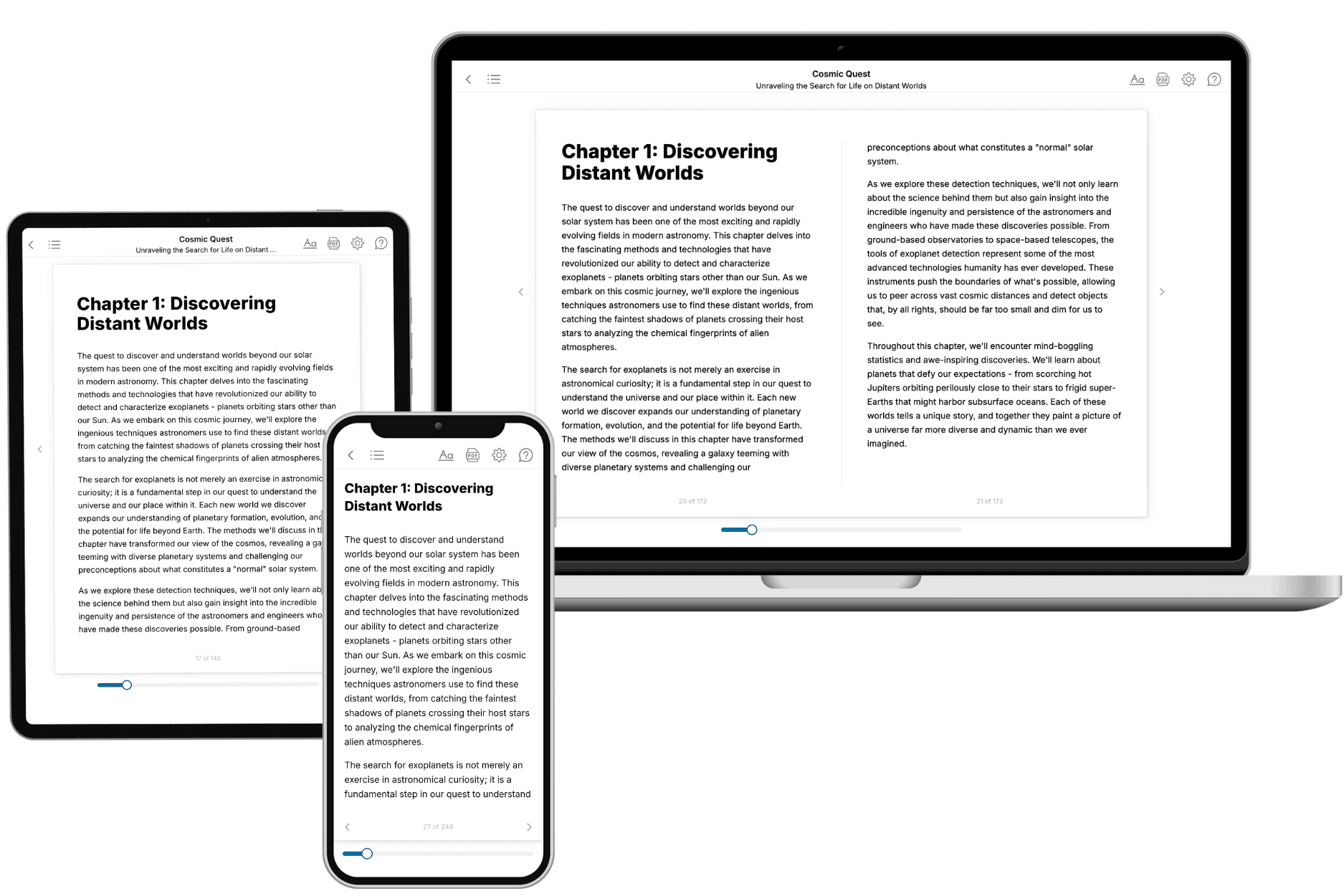
Your book is ready in 10 minutes. Read it online, download as EPUB or PDF, or send to Kindle.
Frequently asked questions
- What is TailoredRead?
TailoredRead creates complete, full-length nonfiction ebooks, written specifically for you. Tell us what you want to learn and why, and TailoredRead writes you a complete ebook on it, with charts, tables, and diagrams throughout. Read it online, on Kindle, or on any e-reader, or download it as a PDF or EPUB. Every book is written fresh the day you order it.
- How is the book tailored to me?
Before anything is written, you answer a few short questions about your goals, your background, and the topics you care about. Your book is then planned around your answers: written at your level, focused on your goals, and covering the topics you chose, instead of the one-size-fits-all book a store sells everyone.
- Will it read like generic AI content?
No. Your book isn't a chat transcript: it's planned chapter by chapter before a single word is written, told in a clear book voice, and explains ideas visually with charts, tables, and diagrams. After writing, every book goes through an editorial pass that polishes chapters so the book reads consistent from start to finish. Judge for yourself: browse thousands of sample books on our Explore Books page.
- How accurate is the content?
Our AI first checks whether your subject needs live research. Niche and fast-moving subjects are researched before writing, and the book plan and chapters are grounded in what it finds. After writing, every book goes through a quality pass that checks its facts and consistency, and researched books list their sources in a Notes section at the back.
- How long is the book?
You choose the length: Comprehensive (250-300 pages), Detailed (150-200 pages), Essential (70-100 pages), or Short (30-50 pages).
- Does the book include visuals?
Yes. Every book includes charts, tables, and diagrams: timelines, checklists, step-by-step guides, decision trees, comparison tables, matrices, and bar charts. A typical book includes dozens of these visual elements.
- Can I read it on Kindle? What formats can I download?
Yes. Every book can be read in our online reader or downloaded as a PDF or EPUB. The EPUB can be opened with Kindle, Apple Books, Kobo, and any e-reader. The Commercial and Author licenses also include an editable Word (DOCX) and Markdown download.
- How much does it cost?
About the price of a regular ebook. The exact price depends on your book's length and complexity, from $2 for the shortest books to $35 for the most comprehensive, and it's shown when you review your book, before you commit to anything. Each book is a one-time purchase, yours to keep, no subscription. Licenses that let you share, teach, or publish your book range from $35.99 to $49.99.
- Can I preview the book before purchasing?
Before you pay, you'll see what your book will cover: the title, a detailed description, the estimated length, and the complete chapter-by-chapter table of contents, so you know what you're getting before you decide. The full text itself is written after you purchase.
- How long does it take to create a book?
About 10 minutes. You can start reading the opening chapters while the rest is still being written.