The Scottish Healer
Alexander Fleming's Journey from Farm Boy to Medical Revolutionary
You'll gain profound insights into one of history's most consequential scientific discoveries through the remarkable life of Alexander Fleming, the Scottish bacteriologist who revolutionized modern medicine.
300 pages17 chaptersSep 14, 2025Scientist Biography
About this book
This comprehensive biography reveals how a humble farm boy from Ayrshire became the man whose accidental discovery of penicillin would save countless millions of lives. You'll explore Fleming's formative years in rural Scotland, understanding how his early experiences shaped the observational skills and methodical approach that would later prove crucial to his groundbreaking work. The narrative traces his educational journey, military service, and the pivotal moments that led him to bacteriology, providing context for the scientific environment that fostered his discoveries. You'll discover the true story behind the penicillin discovery—not merely a fortunate accident, but the result of a prepared mind recognizing the significance of an unexpected observation. The book examines the challenges Fleming faced in developing his findings, the initial skepticism from the scientific community, and the collaborative efforts that eventually brought penicillin to widespread medical use. Through detailed exploration of Fleming's character, you'll understand how his Scottish heritage, modest personality, and unwavering dedication to scientific truth guided him through international fame while remaining grounded in his roots. This biography illuminates not just a scientific breakthrough, but the human story of perseverance, curiosity, and the profound impact one individual can have on humanity's future.
Table of contents
- IntroductionThe Man Who Changed Medicine, Scotland's Gift to Humanity, Beyond the Laboratory Accident, Understanding the Person Behind the DiscoveryRead below
- Chapter 1: Roots in AyrshireThe Fleming Family Heritage, Life at Lochfield Farm, Early Education in Rural Scotland, Formative Experiences and Natural Curiosity
- Chapter 2: The Path to LearningSecondary Education at Kilmarnock Academy, The Move to London, Working Life Before Medicine, Choosing the Medical Path
- Chapter 3: St. Mary's Hospital Medical SchoolAcademic Excellence and Social Life, Influential Teachers and Colleagues, The Swimming Club Connection, Career Choices Upon Graduation
- Chapter 4: The Great War YearsJoining the London Scottish Regiment, Medical Experience in Wartime, Witnessing the Devastation of Infection, Returning to Peacetime Medicine
- Chapter 5: Enter the World of BacteriologyAlmroth Wright's Inoculation Department, Mastering Bacteriological Methods, First Research Projects and Publications, Building Professional Networks
- Chapter 6: The First BreakthroughThe Contaminated Culture Plate, Understanding the Natural Antibiotic, Systematic Investigation Techniques, Scientific Community Response
- Chapter 7: The Man Behind the MicroscopeMarriage to Sarah McElroy, Character and Personal Qualities, Life Outside the Laboratory, Maintaining Ties to Scotland
- Chapter 8: The Fateful September MorningThe State of Fleming's Laboratory, The Mysterious Mold Appears, Recognizing the Significance, First Tests and Confirmations
- Chapter 9: Investigating the Wonder MoldIdentifying Penicillium Notatum, Testing Against Various Bacteria, Attempts at Purification, Recognizing the Obstacles
- Chapter 10: Sharing the DiscoveryWriting the Historic Paper, Publication in British Journal of Experimental Pathology, Initial Lukewarm Reception, Continuing Research Despite Indifference
- Chapter 11: The Oxford ConnectionHoward Florey and Ernst Chain's Interest, Achieving Stable Penicillin, Successful Laboratory Testing, First Human Treatments
- Chapter 12: Penicillin in World War IIThe Urgent Medical Demand, Scaling Up Manufacturing, Saving Lives in Combat, Fleming's Continued Involvement
- Chapter 13: The Reluctant CelebritySudden International Fame, The Nobel Prize in Physiology or Medicine, Knighthood and Other Recognitions, Fleming's Modest Reaction to Fame
- Chapter 14: The Elder Statesman of ScienceOngoing Scientific Work, Guiding the Next Generation, Speaking Engagements Worldwide, Early Warnings About Overuse
- Chapter 15: Forever a ScotsmanRegular Returns to Ayrshire, Recognition from Scotland, Maintaining Scottish Traditions, Impact on Scottish Scientific Reputation
- Chapter 16: Transforming Modern MedicineLaunching the Age of Antibiotics, Quantifying the Human Impact, Changing Surgical and Treatment Practices, Spurring Drug Development
- Chapter 17: The Last ChapterLife After Active Research, Marriage to Amalia Koutsouri-Vourekas, The Final Years, A World Mourns the Loss
- ConclusionThe Continuing Impact, What Fleming's Life Teaches Us
Introduction
In the annals of medical history, few discoveries have had as profound and immediate an impact on human survival as the identification of penicillin's antibacterial properties. This breakthrough, which would eventually save millions of lives and fundamentally transform modern medicine, emerged from the careful observations of a modest Scottish bacteriologist working in a cluttered London laboratory. Alexander Fleming's story represents far more than a fortunate accident in scientific research—it embodies the intersection of prepared minds, methodical inquiry, and the kind of persistent curiosity that drives genuine innovation. His journey from a rural farm in Ayrshire to international acclaim illustrates how individual dedication and scientific rigor can produce discoveries that reshape the trajectory of human health and medical practice.
The narrative of Fleming's life unfolds against the backdrop of a rapidly changing world, where scientific understanding was expanding at an unprecedented pace, yet infectious diseases continued to claim countless lives with devastating regularity. His Scottish heritage and rural upbringing provided him with a unique perspective on observation and problem-solving that would prove instrumental in his later scientific achievements. The values instilled during his formative years in Scotland—patience, thoroughness, and an appreciation for the natural world—became the foundation upon which his revolutionary discoveries were built. Understanding Fleming's personal journey helps illuminate not just the scientific process behind his breakthroughs, but also the human qualities that enabled him to recognize significance in what others might have dismissed as laboratory contamination.
This exploration of Fleming's life reveals the complex interplay between individual genius and collaborative scientific effort, demonstrating how groundbreaking discoveries often require both initial insight and sustained community engagement to reach their full potential. His story challenges common misconceptions about scientific breakthroughs, showing that while serendipity may play a role, it is the prepared mind that recognizes opportunity and the dedicated researcher who pursues it to meaningful conclusion. Through examining Fleming's complete biography, we gain insight into the personal characteristics, educational experiences, and professional relationships that enabled one man's observations to revolutionize medical treatment and establish the foundation for modern antibiotic therapy.
The Man Who Changed Medicine
Alexander Fleming's impact on human health extends far beyond the confines of any single medical breakthrough, representing a fundamental shift in humanity's ability to combat bacterial infections that had plagued civilization for millennia. Before his discoveries, simple wounds could lead to fatal infections, surgical procedures carried enormous risks of post-operative complications, and diseases like pneumonia, meningitis, and sepsis claimed lives with terrifying regularity. Fleming's identification of penicillin's antibacterial properties in 1928 marked the beginning of the antibiotic era, fundamentally altering the relationship between humans and bacterial pathogens. The magnitude of this transformation becomes clear when considering that antibiotics have been credited with adding an average of 20 years to human life expectancy in developed nations[1].
The scope of Fleming's influence extends across multiple dimensions of medical practice and public health policy. His work enabled the development of modern surgical techniques, as procedures that were once considered too risky due to infection potential became routine medical interventions. Organ transplantation, cardiac surgery, and cancer treatments all became feasible largely because physicians could now effectively prevent and treat bacterial infections that would have previously proven fatal. The pharmaceutical industry was similarly transformed, with Fleming's discoveries spurring decades of research into antimicrobial compounds and establishing entirely new categories of therapeutic agents. Major pharmaceutical companies redirected substantial resources toward antibiotic development, leading to the discovery of streptomycin, tetracycline, and numerous other life-saving medications that followed penicillin's initial success.
Beyond the immediate medical applications, Fleming's discoveries had profound social and economic implications that continue to resonate today. The reduction in mortality from infectious diseases allowed for increased productivity and economic development, as populations were no longer decimated by bacterial epidemics that had historically disrupted societies. Military medicine was revolutionized, with battlefield mortality rates dropping dramatically once antibiotics became available to treat wounded soldiers. The impact was particularly evident during World War II, where penicillin's availability significantly reduced deaths from infected wounds and enabled more aggressive surgical interventions in field hospitals. This military application demonstrated the strategic importance of medical research and influenced government policies regarding scientific funding and pharmaceutical development for decades to come.
Fleming's legacy also encompasses his approach to scientific inquiry and his personal characteristics as a researcher, which continue to influence how we understand the process of discovery itself. His meticulous attention to detail, willingness to investigate unexpected observations, and persistence in the face of initial skepticism from the scientific community exemplify the qualities necessary for groundbreaking research. His story has become a cornerstone of scientific education, illustrating how prepared minds can recognize significance in seemingly mundane occurrences. The famous contaminated petri dish that led to penicillin's discovery serves as a powerful metaphor for the importance of:
- Maintaining careful observational skills in laboratory settings
- Questioning unexpected results rather than dismissing them as errors
- Pursuing systematic investigation of anomalous findings
- Persisting with research despite initial lack of recognition or support
The international recognition Fleming received, including the Nobel Prize in Physiology or Medicine in 1945, established him as a symbol of scientific achievement and Scottish intellectual contribution to global knowledge. His knighthood and numerous honorary degrees from universities worldwide reflected not just personal accomplishment, but recognition of how individual scientific work can benefit all humanity. Fleming's humble response to fame and his continued emphasis on collaborative scientific effort demonstrated the personal qualities that enabled his discoveries. He consistently acknowledged the contributions of colleagues and emphasized that scientific progress depends on building upon the work of others, a perspective that influenced how subsequent generations of researchers approached their own investigations.
The continuing relevance of Fleming's work is evident in contemporary discussions about antibiotic resistance and the need for new antimicrobial agents. His early warnings about the potential for bacteria to develop resistance to penicillin proved remarkably prescient, as modern medicine grapples with the emergence of drug-resistant bacterial strains. Fleming's emphasis on responsible antibiotic use and his understanding of bacterial adaptation mechanisms established principles that remain central to current antimicrobial stewardship programs. His legacy thus encompasses not only the initial breakthrough that launched the antibiotic era, but also the scientific wisdom necessary to preserve the effectiveness of these crucial medications for future generations.
Understanding Fleming's complete impact requires recognizing how his discoveries influenced the trajectory of medical research itself, establishing new methodologies and research priorities that continue to shape scientific inquiry. His work demonstrated the importance of basic research in bacteriology and microbiology, leading to increased funding and institutional support for these fields. The success of penicillin validated the potential for laboratory-based research to produce practical medical applications, influencing how universities, governments, and private organizations approached scientific funding. Fleming's story became a powerful argument for supporting fundamental research even when immediate applications were not apparent, a principle that continues to guide scientific policy and research prioritization in medical institutions worldwide.
Scotland's Gift to Humanity
Scotland's contribution to global scientific and medical knowledge through Alexander Fleming represents a continuation of the nation's remarkable intellectual tradition, which has produced an extraordinary number of influential thinkers, inventors, and researchers relative to its population size. The Scottish Enlightenment of the 18th and 19th centuries established a cultural foundation that valued education, rational inquiry, and practical application of knowledge—principles that profoundly influenced Fleming's approach to scientific investigation. This intellectual heritage created an environment where curiosity was encouraged, systematic observation was valued, and the pursuit of knowledge for the betterment of humanity was considered a noble endeavor. Fleming's achievements must be understood within this broader context of Scottish intellectual culture, which emphasized both theoretical understanding and practical application of scientific discoveries.
The specific characteristics of Scottish education and cultural values that shaped Fleming's development reflect broader patterns in how Scotland has historically approached learning and innovation. The Scottish educational system, with its emphasis on broad-based learning and critical thinking, provided Fleming with intellectual tools that proved crucial to his later scientific success. Scottish universities had long traditions of excellence in medicine and natural sciences, creating networks of scholars and practitioners who supported each other's research efforts. The cultural value placed on hard work, persistence, and modest achievement—characteristics often associated with Scottish identity—aligned perfectly with the demands of scientific research and helped Fleming maintain focus during periods when his work received little recognition or support from the broader scientific community.
Fleming's rural Scottish background provided him with observational skills and an understanding of natural processes that proved invaluable in his bacteriological research. Growing up on a farm in Ayrshire exposed him to the complex interactions between different organisms, the importance of environmental conditions in biological processes, and the practical consequences of contamination and infection in agricultural settings. These early experiences developed his ability to notice subtle changes and unexpected patterns—skills that would later enable him to recognize the significance of mold contamination in his laboratory cultures. The connection between his agricultural background and scientific methodology illustrates how diverse life experiences can contribute to research capabilities in unexpected ways.
The broader Scottish scientific community provided Fleming with mentorship, collaboration opportunities, and institutional support that facilitated his research achievements. Scottish medical schools and research institutions had established reputations for excellence that attracted talented students and faculty from around the world, creating intellectually stimulating environments where innovative research could flourish. Fleming's connections to this network, maintained throughout his career despite his relocation to London, provided him with colleagues who understood and supported his research interests. The Scottish approach to scientific collaboration, which emphasized shared knowledge and collective advancement rather than individual competition, influenced Fleming's own collaborative style and his willingness to share his discoveries with other researchers.
Scotland's historical experience with infectious diseases and public health challenges provided additional context for understanding the significance of Fleming's discoveries. The country had experienced devastating epidemics throughout its history, creating cultural awareness of the importance of medical research and disease prevention. Scottish physicians and researchers had long been at the forefront of efforts to understand and combat infectious diseases, establishing traditions of clinical observation and systematic investigation that influenced Fleming's approach to bacteriology. This background helped him appreciate the potential practical applications of his laboratory discoveries and motivated his persistence in developing penicillin despite initial skepticism from other researchers.
The international recognition of Fleming's achievements brought considerable pride to Scotland and reinforced the nation's reputation as a source of scientific innovation and medical advancement. His success demonstrated that significant contributions to global knowledge could emerge from relatively modest backgrounds and smaller institutions, inspiring subsequent generations of Scottish researchers and students. Fleming's story became part of Scotland's national narrative about intellectual achievement and cultural contribution, illustrating how individual excellence could reflect broader national characteristics and values. The celebration of his achievements in Scotland helped maintain cultural support for scientific education and research, contributing to continued Scottish success in medical and scientific fields.
Fleming's maintenance of his Scottish identity throughout his international career exemplified the complex relationship between local cultural roots and global scientific contribution. Despite achieving worldwide fame and recognition, he continued to identify strongly with his Scottish heritage and regularly returned to his homeland throughout his life. His speeches and public appearances often referenced his Scottish background and the influence of his early experiences on his scientific development. This connection between personal identity and professional achievement illustrates how cultural background can provide both motivation and perspective that enhance scientific work. Fleming's example demonstrates that successful participation in international scientific communities does not require abandoning local cultural connections, but rather can be enhanced by maintaining strong roots in particular traditions and communities.
The legacy of Fleming's achievements continues to influence Scotland's approach to scientific education and research, with his story serving as inspiration for current and future generations of Scottish scientists and medical researchers. Educational institutions throughout Scotland use Fleming's biography to illustrate the potential for scientific careers and the importance of persistent inquiry and careful observation. His example has contributed to Scotland's continued prominence in medical research and pharmaceutical development, with Scottish universities and research institutions maintaining strong reputations in bacteriology, infectious disease research, and drug development. The Fleming legacy thus represents not just historical achievement, but ongoing influence on Scotland's scientific culture and international contributions to medical knowledge.
Beyond the Laboratory Accident
The popular narrative surrounding Fleming's discovery of penicillin often emphasizes the accidental nature of the observation, creating a misleading impression that scientific breakthroughs result primarily from fortunate coincidences rather than systematic preparation and methodical investigation. While the initial contamination of Fleming's bacterial culture plates was indeed unplanned, his recognition of the significance of this contamination and his subsequent systematic investigation of its properties reflected years of scientific training, careful observational skills, and deep understanding of bacteriological principles. The famous quote attributed to Louis Pasteur—chance favors the prepared mind
—perfectly captures the reality of Fleming's discovery, which required both the unexpected observation and the scientific expertise necessary to understand its implications.
Fleming's ability to recognize the significance of the mold contamination stemmed from his extensive background in bacteriology and his particular interest in substances that could inhibit bacterial growth. His previous discovery of lysozyme, a natural antibacterial enzyme found in tears and saliva, had already demonstrated his focus on identifying natural antimicrobial agents and his skill in investigating their properties. This earlier research provided him with both the theoretical framework and practical techniques necessary to properly investigate the penicillin-producing mold when it appeared in his laboratory. The systematic approach he applied to studying penicillin—including isolation of the active compound, testing against various bacterial species, and investigation of optimal growth conditions—reflected established scientific methodology rather than random experimentation.
The broader scientific context in which Fleming's discovery occurred reveals the extent to which his work built upon existing knowledge and ongoing research efforts in bacteriology and chemotherapy. The early 20th century had witnessed significant advances in understanding bacterial diseases and the immune system's response to infection, creating a foundation of knowledge that enabled Fleming to interpret his observations correctly. Researchers throughout Europe and North America were actively investigating potential antimicrobial agents, driven by the devastating impact of bacterial infections during World War I and the recognition that existing treatments were inadequate. Fleming's discovery thus represented a culmination of broader scientific trends rather than an isolated breakthrough, though his particular contribution was crucial to subsequent developments.
The systematic investigation that Fleming conducted following his initial observation demonstrates the rigorous scientific methodology that transformed a curious laboratory contamination into a revolutionary medical discovery. His research process included several critical steps that exemplify proper scientific investigation:
- Careful documentation of the initial observation and experimental conditions
- Systematic testing of the mold's effects against different bacterial species
- Investigation of optimal conditions for mold growth and antibiotic production
- Attempts to isolate and purify the active antibacterial compound
- Testing for toxicity and potential therapeutic applications
- Publication of results in peer-reviewed scientific literature
The challenges Fleming encountered in developing his initial observations into practical medical applications illustrate the complex process by which laboratory discoveries become therapeutic interventions. His difficulties in purifying penicillin and producing sufficient quantities for clinical testing reflected the limitations of available technology and resources rather than inadequacies in his research approach. The eventual success of the Oxford team led by Howard Florey and Ernst Chain in developing methods for large-scale penicillin production built directly upon Fleming's foundational work, demonstrating how scientific progress often requires collaboration between researchers with different expertise and resources. This collaborative aspect of scientific discovery challenges simplistic narratives about individual genius and highlights the importance of sustained research communities.
Fleming's persistence in continuing penicillin research despite initial lack of interest from the scientific community exemplifies the dedication required for significant scientific achievements. The lukewarm reception of his 1929 paper describing penicillin's properties could have discouraged further investigation, but Fleming continued his research and maintained cultures of the penicillin-producing mold for more than a decade. His willingness to share these cultures with other researchers, including the Oxford team that eventually developed practical applications, demonstrates the collaborative spirit necessary for scientific progress. This persistence and generosity with research materials proved crucial to penicillin's eventual development as a life-saving medication.
The transformation of Fleming's laboratory observation into a global medical revolution required not only scientific expertise but also recognition of the broader implications for human health and medical practice. Fleming's understanding of the potential significance of effective antibacterial agents was informed by his military service during World War I, where he had witnessed firsthand the devastating impact of infected wounds and the limitations of available treatments. This practical experience with the consequences of bacterial infection provided motivation for his research and helped him appreciate the potential applications of his discoveries. The connection between personal experience and scientific investigation illustrates how diverse backgrounds and experiences can contribute to research insight and persistence.
The legacy of Fleming's discovery extends beyond the immediate medical applications to influence how we understand the process of scientific discovery itself. His story has become a cornerstone of science education, illustrating the importance of careful observation, systematic investigation, and persistence in research. However, the emphasis on the accidental nature of his discovery sometimes obscures the extensive preparation and expertise that enabled him to recognize and develop its significance. A more complete understanding of Fleming's achievement recognizes both the role of unexpected observations and the crucial importance of scientific training, methodical investigation, and collaborative development in transforming laboratory curiosities into practical applications that benefit humanity.
Understanding the Person Behind the Discovery
Examining Alexander Fleming's life through a comprehensive biographical lens reveals how personal characteristics, cultural background, and life experiences combined to create the conditions necessary for his revolutionary scientific achievements. Understanding Fleming as a complete person—rather than simply as the discoverer of penicillin—provides crucial insights into the human qualities that enable significant scientific contributions and the complex interplay between individual characteristics and historical circumstances that produce breakthrough discoveries. His story illustrates how personal traits such as curiosity, persistence, humility, and careful observation, when combined with appropriate education and opportunities, can lead to achievements that transform human experience and save countless lives.
Fleming's personality and character traits played crucial roles in his scientific success, demonstrating how individual qualities can influence research outcomes and the development of discoveries. His natural curiosity and tendency to investigate unexpected observations rather than dismissing them as experimental errors proved essential to both his lysozyme and penicillin discoveries. His methodical approach to research, influenced by his Scottish upbringing and agricultural background, enabled him to conduct systematic investigations that revealed the full significance of his initial observations. Perhaps most importantly, his humility and willingness to collaborate with other researchers facilitated the eventual development of his discoveries into practical medical applications, as he readily shared his research materials and findings with colleagues who had the resources and expertise to advance the work further.
The influence of Fleming's Scottish heritage on his scientific approach and personal values provides important context for understanding both his research methodology and his response to international fame. The Scottish cultural emphasis on education, hard work, and practical application of knowledge shaped his approach to scientific investigation and his understanding of research as a means of benefiting humanity rather than achieving personal glory. His rural background provided him with observational skills and an appreciation for natural processes that proved invaluable in bacteriological research. The Scottish tradition of intellectual modesty and skepticism of excessive self-promotion influenced his response to the fame that followed his discoveries, as he consistently emphasized the collaborative nature of scientific progress and the contributions of colleagues to the development of penicillin.
Fleming's educational journey and professional development illustrate how diverse experiences and influences can contribute to scientific achievement in unexpected ways. His early education in rural Scottish schools provided a broad foundation of knowledge and critical thinking skills, while his later medical training at St. Mary's Hospital Medical School introduced him to the rigorous methodology of scientific research. His military service during World War I exposed him to the practical consequences of bacterial infection and the limitations of available treatments, providing motivation and context for his later research interests. His work in Almroth Wright's inoculation department introduced him to cutting-edge bacteriological techniques and connected him with a network of researchers who shared his interests in infectious disease and immunity.
The personal relationships and professional networks that Fleming developed throughout his career played crucial roles in both his research success and the eventual application of his discoveries. His long association with St. Mary's Hospital provided him with institutional support, laboratory facilities, and colleagues who appreciated his research interests even when the broader scientific community showed little enthusiasm. His friendship with colleagues who shared his research materials with the Oxford team proved essential to penicillin's eventual development as a therapeutic agent. His marriage and family relationships provided personal stability and support that enabled him to persist with research during periods of limited recognition or funding. These relationships illustrate how scientific achievement depends not only on individual talent but also on supportive communities and collaborative networks.
Fleming's response to fame and international recognition reveals important aspects of his character and provides insights into how personal values can influence the impact of scientific achievement. His discomfort with publicity and preference for laboratory work over public appearances reflected his genuine commitment to research rather than personal aggrandizement. His consistent acknowledgment of colleagues' contributions and his emphasis on the collaborative nature of scientific progress demonstrated intellectual honesty and helped maintain the relationships necessary for continued research success. His use of his fame to promote scientific education and research funding showed how personal recognition can be leveraged to benefit broader scientific communities and future generations of researchers.
The biographical approach to understanding Fleming's achievements also illuminates the historical and social contexts that enabled his discoveries and their development into practical applications. His work occurred during a period of rapid advancement in bacteriology and medical research, when institutional support for scientific investigation was expanding and international collaboration was becoming more common. The devastating impact of bacterial infections during World War I created both motivation for antimicrobial research and eventual support for developing Fleming's discoveries into practical treatments. The growth of pharmaceutical industries provided the resources and expertise necessary for large-scale production of antibiotics, transforming laboratory discoveries into widely available medications.
Understanding Fleming's complete life story provides valuable lessons about the nature of scientific discovery and the personal qualities that contribute to research success. His example demonstrates that significant scientific achievements often result from the combination of careful preparation, persistent investigation, and willingness to pursue unexpected observations. His story illustrates how diverse life experiences—from rural childhood to military service to laboratory research—can contribute to scientific insight and provide motivation for sustained investigation. Most importantly, his biography shows how individual scientific achievement depends on collaborative relationships, institutional support, and the broader social context that values and supports research aimed at benefiting humanity. These lessons remain relevant for current and future generations of scientists and researchers seeking to make meaningful contributions to human knowledge and welfare.
Notes
Introduction
- 1. Centers for Disease Control and Prevention, Antibiotic Resistance Threats in the United States, 2013, CDC, 2013
This is the end of the free sample. The full book has 17 chapters.
Want this book written for you?
Tell us your goals and background, and get your own version of this book, tailored by AI to you.


Benefits of AI-tailored books
- Read one book, not ten:
- all the Scientist Biography knowledge you need, gathered into a single book.
- Save days of learning:
- tell us your goals, choose your topics, and the whole book is built around them.
- Learn effortlessly:
- Scientist Biography book written for your specific background and expertise.
- Understand at a glance:
- includes charts, tables, timelines, checklists, decision trees, and more.
- Stay current:
- written the day you order it, not years ago.
- Trust what you read:
- every book is checked for accuracy, with real research when your subject needs it.
Create your unique book in 3 steps
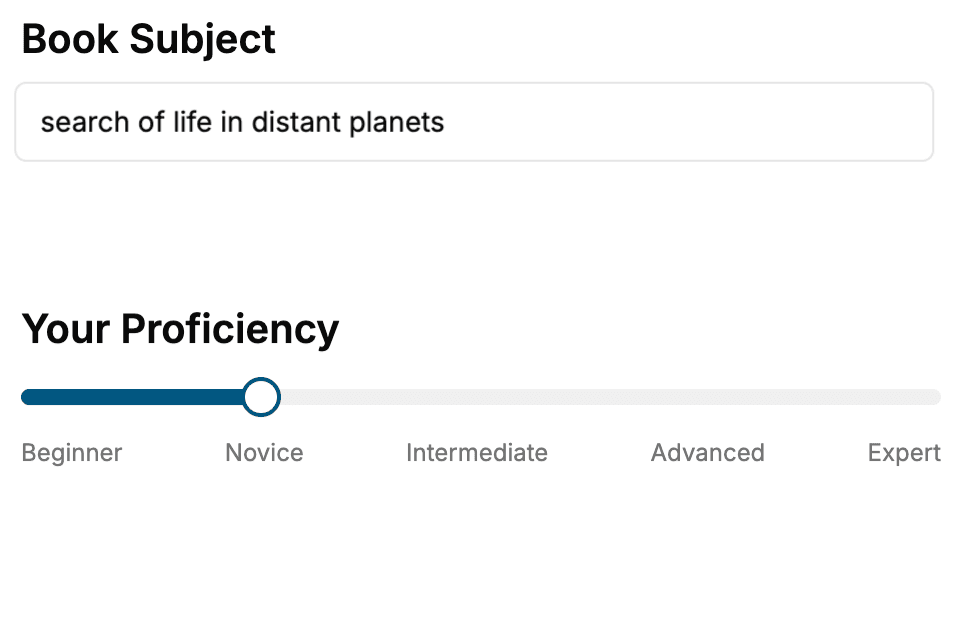
- 1. Select your focus
Select the focus of your Scientist Biography book and share your background
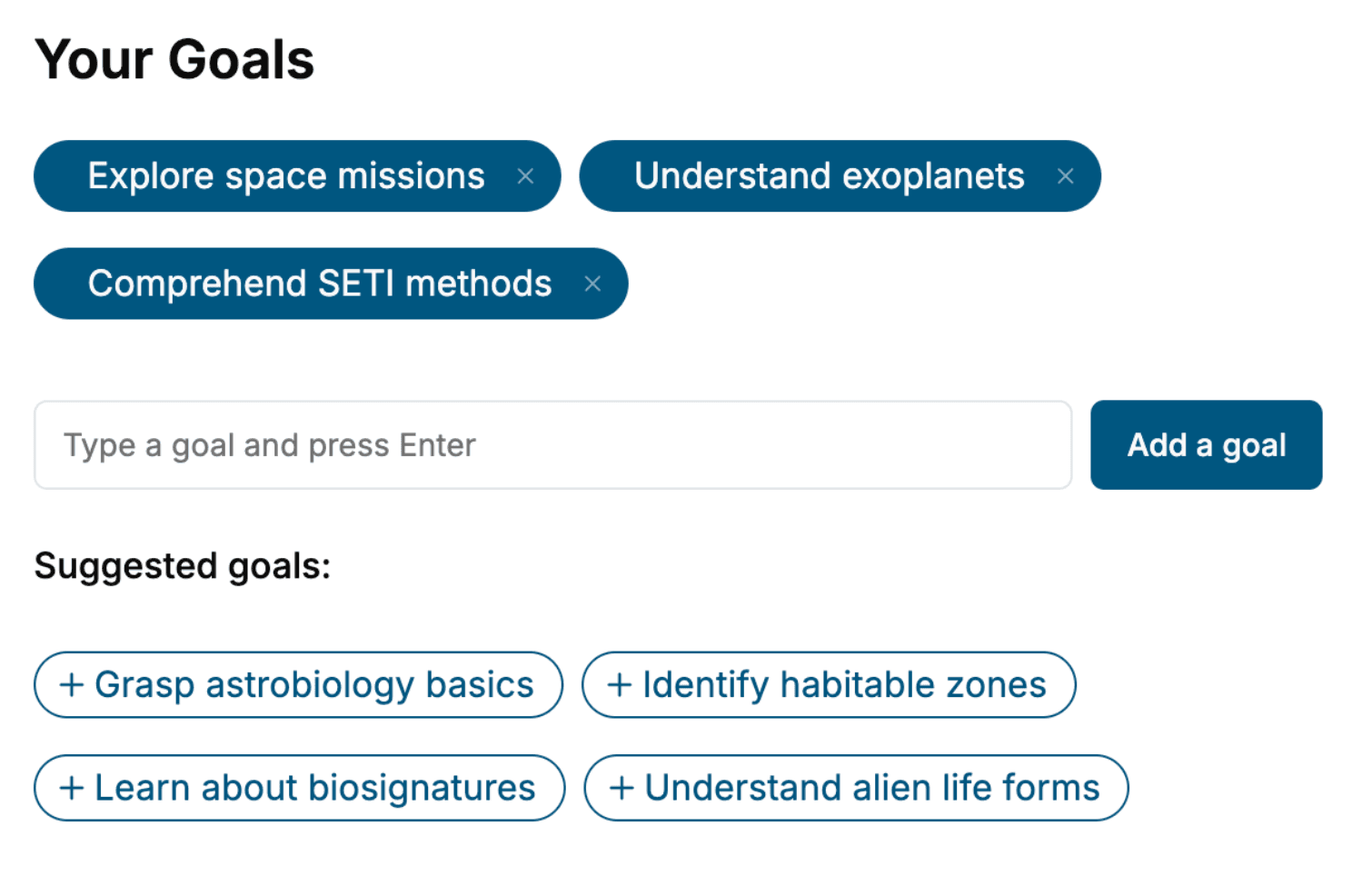
- 2. Personalize your book
Specify your goals and choose sub-topics to include
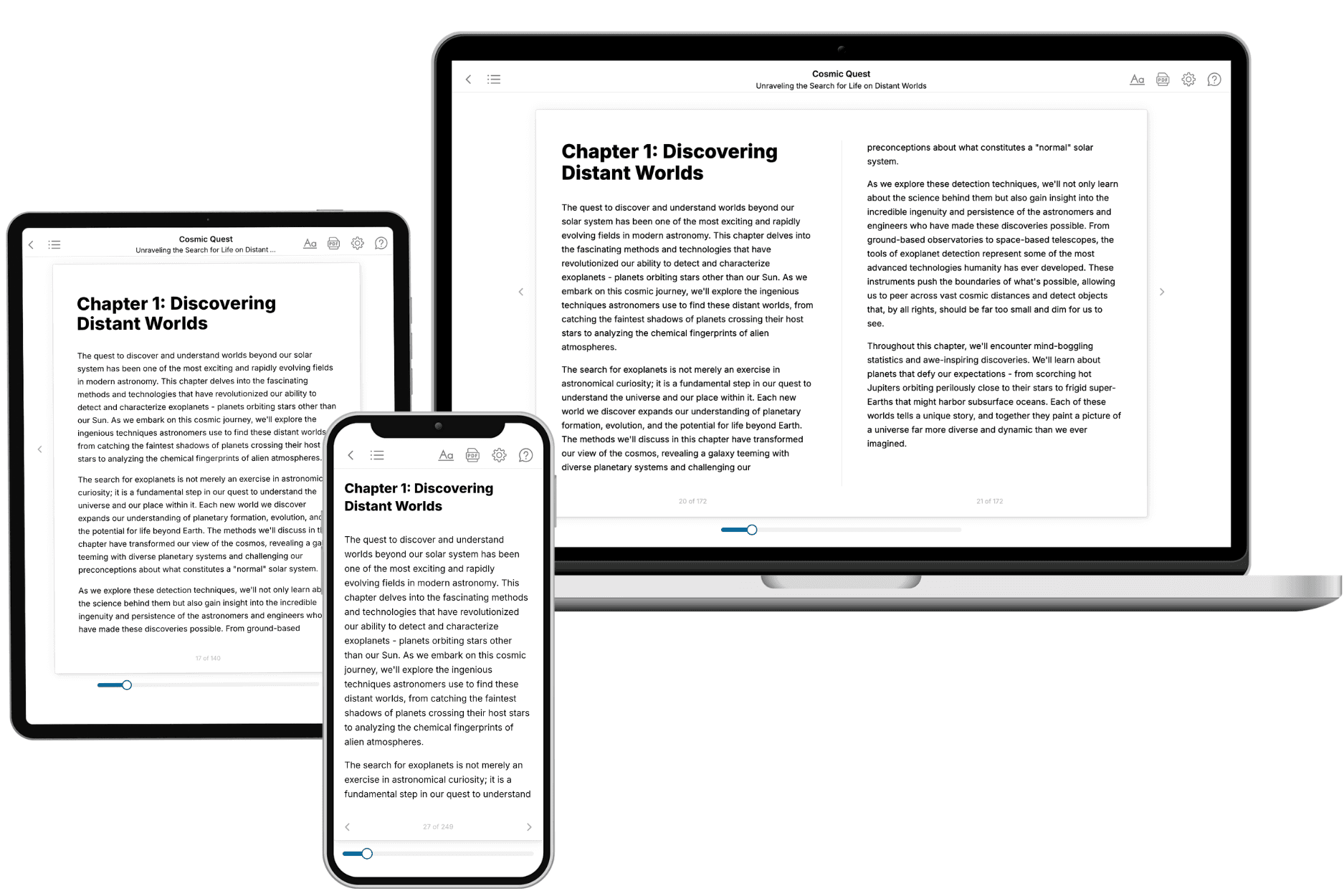
- 3. Get your tailored book
Your book is ready in 10 minutes. Read it online, download as EPUB or PDF, or send to Kindle.
Frequently asked questions
- What is TailoredRead?
TailoredRead creates complete, full-length nonfiction ebooks, written specifically for you. Tell us what you want to learn and why, and TailoredRead writes you a complete ebook on it, with charts, tables, and diagrams throughout. Read it online, on Kindle, or on any e-reader, or download it as a PDF or EPUB. Every book is written fresh the day you order it.
- How is the book tailored to me?
Before anything is written, you answer a few short questions about your goals, your background, and the topics you care about. Your book is then planned around your answers: written at your level, focused on your goals, and covering the topics you chose, instead of the one-size-fits-all book a store sells everyone.
- Will it read like generic AI content?
No. Your book isn't a chat transcript: it's planned chapter by chapter before a single word is written, told in a clear book voice, and explains ideas visually with charts, tables, and diagrams. After writing, every book goes through an editorial pass that polishes chapters so the book reads consistent from start to finish. Judge for yourself: browse thousands of sample books on our Explore Books page.
- How accurate is the content?
Our AI first checks whether your subject needs live research. Niche and fast-moving subjects are researched before writing, and the book plan and chapters are grounded in what it finds. After writing, every book goes through a quality pass that checks its facts and consistency, and researched books list their sources in a Notes section at the back.
- How long is the book?
You choose the length: Comprehensive (250-300 pages), Detailed (150-200 pages), Essential (70-100 pages), or Short (30-50 pages).
- Does the book include visuals?
Yes. Every book includes charts, tables, and diagrams: timelines, checklists, step-by-step guides, decision trees, comparison tables, matrices, and bar charts. A typical book includes dozens of these visual elements.
- Can I read it on Kindle? What formats can I download?
Yes. Every book can be read in our online reader or downloaded as a PDF or EPUB. The EPUB can be opened with Kindle, Apple Books, Kobo, and any e-reader. The Commercial and Author licenses also include an editable Word (DOCX) and Markdown download.
- How much does it cost?
About the price of a regular ebook. The exact price depends on your book's length and complexity, from $2 for the shortest books to $35 for the most comprehensive, and it's shown when you review your book, before you commit to anything. Each book is a one-time purchase, yours to keep, no subscription. Licenses that let you share, teach, or publish your book range from $35.99 to $49.99.
- Can I preview the book before purchasing?
Before you pay, you'll see what your book will cover: the title, a detailed description, the estimated length, and the complete chapter-by-chapter table of contents, so you know what you're getting before you decide. The full text itself is written after you purchase.
- How long does it take to create a book?
About 10 minutes. You can start reading the opening chapters while the rest is still being written.