Shadow Tactics
The Art and Evolution of Guerrilla Warfare
You're about to dive into the shadowy world of guerrilla warfare, where unconventional tactics reshape the landscape of battle.
269 pages13 chaptersApr 12, 2025Military History
About this book
"Shadow Tactics: The Art and Evolution of Guerrilla Warfare" takes you on a riveting exploration of the strategies that have toppled empires and rewritten military doctrine. From the dense jungles of Vietnam to the rugged mountains of Afghanistan, you'll uncover the principles that guide these elusive fighters and the profound impact they've had on global conflicts. This book doesn't just recount history; it analyzes the evolution of guerrilla tactics and their integration into modern warfare. You'll gain insights into the minds of legendary guerrilla leaders, understand the socio-political factors that fuel these conflicts, and examine how conventional forces adapt to counter these shadowy opponents. Whether you're a military professional, a history buff, or simply intrigued by the art of strategy, this book will challenge your perceptions and deepen your understanding of warfare in its most unpredictable form. Prepare to see conflict through a new lens as you master the art of guerrilla warfare.
Table of contents
- IntroductionDefining Guerrilla Warfare, Historical Significance and Modern Relevance, Book Overview and StructureRead below
- Chapter 1: The Origins of Guerrilla WarfareAncient Roots and Early Examples, Guerrilla Warfare in the Napoleonic Era, The American Revolution and Guerrilla Tactics, 19th Century Guerrilla Conflicts
- Chapter 2: Core Principles of Guerrilla WarfareMobility and Surprise, Intelligence Gathering and Local Support, Psychological Warfare and Propaganda, Resource Management and Sustainability
- Chapter 3: Guerrilla Tactics and StrategiesHit-and-Run Operations, Ambushes and Raids, Sabotage and Disruption, Infiltration and Subversion
- Chapter 4: Terrain and Environment in Guerrilla WarfareJungle Warfare Tactics, Urban Guerrilla Warfare, Mountain and Highland Tactics, Desert and Arid Environment Operations
- Chapter 5: Guerrilla Warfare in the 20th CenturyWorld War II Resistance Movements, The Chinese Revolution and Mao's Guerrilla Doctrine, The Cuban Revolution and Che Guevara's Foco Theory, Guerrilla Tactics in the Vietnam War
- Chapter 6: Iconic Guerrilla Leaders and Their StrategiesMao Zedong and People's War, Ho Chi Minh and the Viet Cong, Che Guevara and Revolutionary Guerrilla Warfare, Vo Nguyen Giap's Military Genius
- Chapter 7: Technology and Guerrilla WarfareCommunication Technologies in Guerrilla Operations, The Evolution of Guerrilla Weaponry, Surveillance and Counter-Surveillance Techniques, Cyber Guerrilla Warfare
- Chapter 8: The Psychology of Guerrilla WarfareMotivation and Ideology in Guerrilla Movements, Fear as a Weapon: Psychological Tactics, Group Dynamics and Cohesion in Guerrilla Units, Winning Hearts and Minds: Population Support
- Chapter 9: Counterinsurgency StrategiesPopulation-Centric Approaches, Intelligence Operations and Network Disruption, Special Forces in Counter-Guerrilla Operations, Winning Local Support and Legitimacy
- Chapter 10: Modern Case Studies in Guerrilla WarfareThe Soviet-Afghan War and the Mujahideen, FARC in Colombia, The Tamil Tigers in Sri Lanka, The Iraq Insurgency (2003-2011)
- Chapter 11: Ethical Considerations in Guerrilla WarfareImpact on Civilian Populations, The Line Between Guerrilla Warfare and Terrorism, Child Soldiers in Guerrilla Conflicts, Guerrilla Warfare and International Law
- Chapter 12: The Future of Guerrilla WarfareHybrid Warfare and New Battlefields, AI and Robotics in Guerrilla Tactics, The Potential for Space-Based Guerrilla Operations, Adapting Guerrilla Strategies for Future Conflicts
- Chapter 13: Lessons from Guerrilla WarfareImpact on Modern Military Doctrine, Guerrilla Tactics in Political Movements, Guerrilla Principles in Business Strategy, Implications for Conflict Resolution and Peacekeeping
- ConclusionSummary of Key Insights, Future Implications of Guerrilla Warfare
- Glossary
- Further Reading
Introduction
In the annals of military history, few strategies have proven as enduring, adaptable, and impactful as guerrilla warfare. This unconventional approach to combat has shaped conflicts, toppled regimes, and influenced military doctrine for centuries. As you embark on this exploration of guerrilla warfare, you'll discover a world where ingenuity often trumps brute force, where the underdog can challenge superpowers, and where the lines between combatant and civilian blur. "Shadow Tactics: The Art and Evolution of Guerrilla Warfare" is your comprehensive guide to understanding this complex and often misunderstood form of conflict.
Guerrilla warfare has been a constant presence in human conflict, from ancient times to the modern day. It has been employed by resistance movements, revolutionaries, and even conventional armies adapting to asymmetric threats. The principles of guerrilla warfare have influenced military thinking far beyond the scope of irregular conflicts, shaping how modern armies approach everything from special operations to counterinsurgency. As you delve deeper into this subject, you'll gain insights that will enhance your understanding of military strategy, political movements, and the complex interplay between armed conflict and social change.
This introduction will lay the groundwork for your journey through the shadowy world of guerrilla warfare. You'll begin by exploring the definition and key characteristics of guerrilla tactics, understanding what sets them apart from conventional warfare. Then, you'll examine the historical significance of guerrilla warfare and its continued relevance in modern conflicts. Finally, you'll get an overview of the book's structure, preparing you for the in-depth exploration that lies ahead. By the end of this introduction, you'll have a solid foundation for understanding the complexities and nuances of guerrilla warfare, setting the stage for a deeper dive into its history, tactics, and impact on military thought.
Defining Guerrilla Warfare
Guerrilla warfare, derived from the Spanish word for "little war," is a form of irregular warfare characterized by its use of small, mobile groups to carry out military operations against a larger, less mobile enemy. At its core, guerrilla warfare is a strategy of asymmetric conflict, where a weaker force uses unconventional tactics to combat a stronger opponent. This approach to warfare is defined by several key characteristics that set it apart from traditional, conventional military engagements.
First and foremost, guerrilla warfare is characterized by its emphasis on mobility and surprise. Guerrilla forces typically operate in small units, moving quickly and striking unexpectedly before withdrawing to avoid direct confrontation with superior enemy forces. This hit-and-run approach allows guerrilla fighters to inflict damage on their opponents while minimizing their own losses. The ability to appear and disappear at will is crucial to the success of guerrilla operations, as it keeps the enemy off-balance and creates an atmosphere of constant tension and uncertainty.
Another defining feature of guerrilla warfare is its reliance on popular support and knowledge of local terrain. Successful guerrilla movements often enjoy the backing of the local population, who provide food, shelter, information, and new recruits. This support allows guerrilla forces to blend in with civilians, making it difficult for conventional armies to distinguish between combatants and non-combatants. Additionally, intimate knowledge of the local geography gives guerrilla fighters a significant advantage, allowing them to use the terrain to their benefit for both offensive operations and evasion.
Psychological warfare and propaganda play a crucial role in guerrilla strategies. By targeting the morale of enemy forces and the resolve of their political leadership, guerrilla movements aim to achieve victories that extend beyond the battlefield. This often involves the use of media, both traditional and modern, to spread their message, gain sympathy for their cause, and demoralize their opponents. The psychological impact of guerrilla warfare can be as significant as its physical effects, wearing down the enemy's will to fight over extended periods.
Adaptability and innovation are hallmarks of successful guerrilla movements. Operating with limited resources and often facing technologically superior foes, guerrilla forces must be creative in their use of weapons, tactics, and strategy. This might involve improvising explosive devices, repurposing civilian technology for military use, or developing new tactics to counter enemy advantages. The ability to adapt quickly to changing circumstances is essential for survival and success in guerrilla warfare.
It's important to note that guerrilla warfare often blurs the line between military and political action. Many guerrilla movements are driven by political ideologies or goals, and their military actions are closely intertwined with political strategies. This integration of military and political objectives distinguishes guerrilla warfare from purely military conflicts and contributes to its complexity and longevity.
The definition of guerrilla warfare has evolved over time, influenced by changes in technology, geopolitics, and military doctrine. In the modern era, the concept has expanded to include urban guerrilla warfare, cyber guerrilla tactics, and even elements of hybrid warfare that combine conventional and irregular methods. Despite these evolutions, the core principles of mobility, surprise, popular support, and asymmetric tactics remain central to the concept of guerrilla warfare.
Understanding the definition and characteristics of guerrilla warfare is crucial for military professionals, policymakers, and students of history alike. It provides a framework for analyzing conflicts that don't fit neatly into the paradigm of conventional warfare and offers insights into the challenges faced by both guerrilla forces and those tasked with countering them. As you progress through this book, you'll see how these defining elements of guerrilla warfare have manifested in various historical contexts and how they continue to shape military thinking in the 21st century.
By grasping the fundamental nature of guerrilla warfare, you'll be better equipped to analyze historical conflicts, understand current asymmetric threats, and anticipate future challenges in the ever-evolving landscape of global security. The principles that define guerrilla warfare are not just historical curiosities; they are living concepts that continue to influence military strategy, political movements, and even business tactics in our interconnected world.
Historical Significance and Modern Relevance
The historical significance of guerrilla warfare cannot be overstated. Throughout history, this form of combat has played a pivotal role in shaping the outcome of conflicts, influencing political landscapes, and challenging the dominance of established powers. From ancient times to the modern era, guerrilla tactics have been employed by various groups, often with profound consequences that extend far beyond the immediate battlefield.
One of the earliest recorded instances of guerrilla warfare dates back to the 5th century BCE, when the Persian Empire faced resistance from Greek city-states. The Greek historian Herodotus described how smaller Greek forces used hit-and-run tactics to harass and weaken the much larger Persian army. This early example set a precedent for how smaller, more agile forces could effectively combat larger, more conventional armies[1].
Throughout the centuries, guerrilla warfare has been a recurring theme in conflicts across the globe. During the American Revolution, colonial forces employed guerrilla tactics against the British, using their knowledge of local terrain and support from the population to their advantage. In the Napoleonic Wars, Spanish guerrillas (from which the term "guerrilla warfare" originates) played a crucial role in resisting French occupation, tying down significant numbers of French troops and contributing to Napoleon's eventual defeat.
The 20th century saw a dramatic increase in the use and effectiveness of guerrilla warfare. The Chinese Communist Revolution, led by Mao Zedong, provided a blueprint for guerrilla warfare that would influence movements around the world. Mao's concept of "People's War" emphasized the importance of popular support and the gradual transition from guerrilla tactics to conventional warfare. This approach was successfully employed in conflicts such as the Vietnam War, where the Viet Cong and North Vietnamese Army effectively combated the technologically superior United States military.
Guerrilla warfare has been particularly significant in the context of anti-colonial struggles and national liberation movements. In Africa, Asia, and Latin America, guerrilla tactics were instrumental in challenging colonial powers and establishing independent nations. The Algerian War of Independence, the Cuban Revolution, and numerous other conflicts demonstrated the potential of guerrilla warfare to overcome seemingly insurmountable odds and bring about dramatic political change.
The impact of guerrilla warfare extends beyond military outcomes. It has influenced political ideologies, shaped national identities, and challenged traditional notions of state power. Iconic figures such as Che Guevara and Ho Chi Minh have become symbols of resistance and revolution, their legacies intertwined with the guerrilla movements they led. The psychological and cultural impact of guerrilla warfare has been profound, often resonating long after the cessation of hostilities.
In the modern era, guerrilla warfare remains highly relevant, adapting to new technologies and geopolitical realities. The rise of global terrorism has seen the principles of guerrilla warfare applied on an international scale, with non-state actors using asymmetric tactics to challenge powerful nations. Conflicts in Afghanistan, Iraq, and Syria have demonstrated the continued effectiveness of guerrilla tactics against conventional military forces, even in the face of advanced technology and overwhelming firepower.
The relevance of guerrilla warfare in the 21st century extends beyond traditional armed conflict. The principles of guerrilla strategy have been applied to various fields, including business (guerrilla marketing), politics (grassroots movements), and even cyber warfare. The adaptability, resourcefulness, and emphasis on asymmetric advantage that characterize guerrilla warfare have proven valuable in many contexts where smaller entities seek to challenge larger, more established opponents.
Understanding the historical significance and modern relevance of guerrilla warfare is crucial for several reasons. First, it provides valuable insights into the nature of asymmetric conflict, which continues to be a dominant form of warfare in the contemporary world. By studying historical examples of guerrilla warfare, military planners and policymakers can better understand the challenges posed by irregular forces and develop more effective strategies for addressing them.
Second, the study of guerrilla warfare offers important lessons in strategy and tactics that can be applied in various contexts. The emphasis on flexibility, innovation, and leveraging local support are principles that have value beyond the military sphere. Leaders in business, politics, and other fields can draw inspiration from guerrilla strategies to overcome challenges and compete effectively against larger, more established entities.
Finally, understanding guerrilla warfare is essential for comprehending many of the conflicts and political movements that have shaped the modern world. From the formation of new nations to ongoing insurgencies, guerrilla warfare has been a driving force in global affairs. A deep understanding of this form of conflict provides valuable context for interpreting current events and anticipating future developments in international relations and security.
As you delve deeper into the subject of guerrilla warfare in the following chapters, keep in mind its profound historical significance and ongoing relevance. The lessons drawn from centuries of guerrilla conflicts continue to inform military doctrine, political strategy, and our understanding of power dynamics in the modern world. By studying the evolution and impact of guerrilla warfare, you'll gain valuable insights that extend far beyond the realm of military history, offering a unique perspective on the complex interplay of force, strategy, and social change that shapes our world.
Book Overview and Structure
"Shadow Tactics: The Art and Evolution of Guerrilla Warfare" is designed to provide you with a comprehensive understanding of guerrilla warfare, from its historical roots to its modern applications and future implications. This book is structured to guide you through the complex world of guerrilla tactics, strategies, and their impact on military and political landscapes. Each chapter builds upon the previous ones, offering a logical progression that will deepen your knowledge and broaden your perspective on this fascinating subject.
The book begins with an exploration of the origins of guerrilla warfare in Chapter 1, tracing its development from ancient times through the Napoleonic era and into the 19th century. This historical foundation is crucial for understanding how guerrilla tactics have evolved and why they have remained relevant across different eras and cultures. You'll discover how early forms of irregular warfare laid the groundwork for the more sophisticated guerrilla strategies that would emerge in later conflicts.
Chapter 2 delves into the core principles of guerrilla warfare, examining the fundamental concepts that underpin this form of combat. You'll learn about the importance of mobility, surprise, intelligence gathering, and psychological warfare in guerrilla operations. This chapter provides the theoretical framework that will inform your understanding of specific tactics and historical examples discussed later in the book.
The next several chapters focus on the practical aspects of guerrilla warfare. Chapter 3 explores specific guerrilla tactics and strategies, detailing the methods used by guerrilla forces to combat larger, more conventional armies. Chapter 4 examines the crucial role of terrain and environment in guerrilla warfare, showing how different landscapes shape guerrilla tactics and influence the outcome of conflicts. These chapters will give you a concrete understanding of how guerrilla warfare is conducted in various contexts.
The book then moves into a more detailed historical analysis, with Chapter 5 focusing on guerrilla warfare in the 20th century. This chapter covers major conflicts such as World War II resistance movements, the Chinese Revolution, and the Vietnam War, demonstrating how guerrilla tactics evolved and adapted to the challenges of modern warfare. Chapter 6 profiles iconic guerrilla leaders and their strategies, offering insights into the minds of those who have shaped guerrilla warfare doctrine.
As the book progresses, it explores more contemporary aspects of guerrilla warfare. Chapter 7 examines the role of technology in guerrilla operations, from communication technologies to modern weaponry and cyber warfare. Chapter 8 delves into the psychology of guerrilla warfare, exploring the motivations, group dynamics, and psychological tactics employed by guerrilla movements.
The latter part of the book broadens the perspective, looking at guerrilla warfare from different angles. Chapter 9 discusses counterinsurgency strategies, examining how conventional forces have adapted to combat guerrilla threats. Chapter 10 presents modern case studies in guerrilla warfare, offering in-depth analyses of recent conflicts that illustrate the ongoing relevance of guerrilla tactics.
Ethical considerations in guerrilla warfare are addressed in Chapter 11, exploring the complex moral questions raised by this form of combat. This chapter encourages you to think critically about the implications of guerrilla warfare on civilian populations and international law.
The book concludes with a look towards the future in Chapter 12, speculating on how guerrilla warfare might evolve in response to technological advancements and changing geopolitical landscapes. Chapter 13 draws broader lessons from guerrilla warfare, examining its impact on military doctrine, political movements, and even business strategy.
Throughout the book, you'll find detailed analyses, historical examples, and thought-provoking discussions that will challenge your understanding of warfare and strategy. Each chapter is designed to build upon the previous ones, creating a comprehensive picture of guerrilla warfare that encompasses its historical development, practical applications, and broader implications.
To enhance your learning experience, the book includes various features such as case studies, maps, and diagrams that illustrate key concepts and historical events. Quotes from guerrilla leaders, military theorists, and historians provide additional context and perspectives. At the end of each chapter, you'll find discussion questions and suggestions for further reading, encouraging you to deepen your understanding and explore specific topics in more detail.
By the time you reach the conclusion, you'll have gained a nuanced understanding of guerrilla warfare that goes beyond simple tactics and strategies. You'll be equipped to analyze historical conflicts, understand current asymmetric threats, and consider the future of warfare in an increasingly complex world. Whether you're a military professional, a student of history, or simply someone interested in understanding the dynamics of conflict, "Shadow Tactics" will provide you with valuable insights and a new perspective on the art and evolution of guerrilla warfare.
Notes
Introduction
- 1. Robert Taber, War of the Flea, Potomac Books, 2002
This is the end of the free sample. The full book has 13 chapters.
Want this book written for you?
Tell us your goals and background, and get your own version of this book, tailored by AI to you.


Benefits of AI-tailored books
- Read one book, not ten:
- all the Military History knowledge you need, gathered into a single book.
- Save days of learning:
- tell us your goals, choose your topics, and the whole book is built around them.
- Learn effortlessly:
- Military History book written for your specific background and expertise.
- Understand at a glance:
- includes charts, tables, timelines, checklists, decision trees, and more.
- Stay current:
- written the day you order it, not years ago.
- Trust what you read:
- every book is checked for accuracy, with real research when your subject needs it.
Create your unique book in 3 steps
- 1. Select your focus
Select the focus of your Military History book and share your background
- 2. Personalize your book
Specify your goals and choose sub-topics to include
- 3. Get your tailored book
Your book is ready in 10 minutes. Read it online, download as EPUB or PDF, or send to Kindle.


Frequently asked questions
- What is TailoredRead?
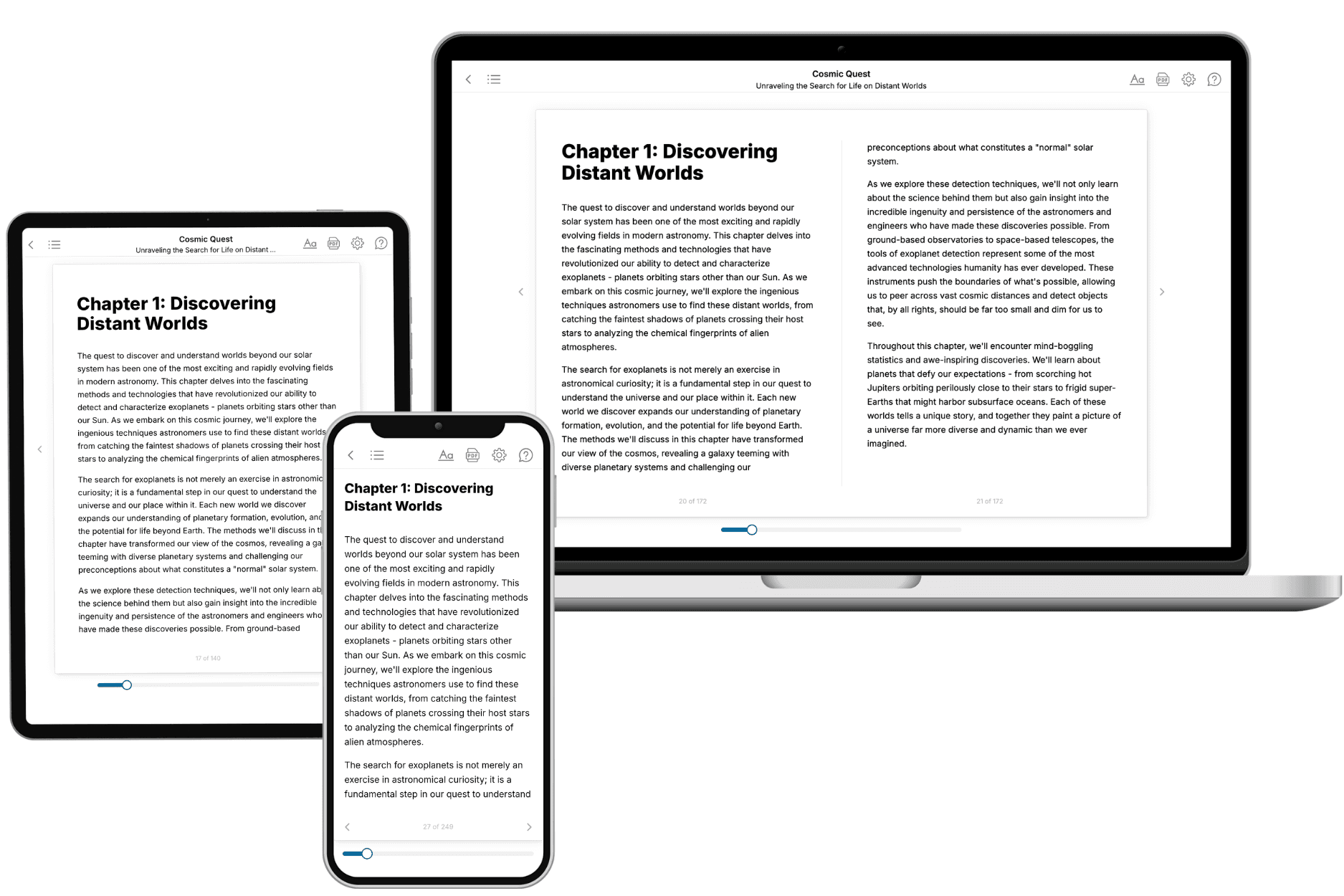
TailoredRead creates complete, full-length nonfiction ebooks, written specifically for you. Tell us what you want to learn and why, and TailoredRead writes you a complete ebook on it, with charts, tables, and diagrams throughout. Read it online, on Kindle, or on any e-reader, or download it as a PDF or EPUB. Every book is written fresh the day you order it.
- How is the book tailored to me?
Before anything is written, you answer a few short questions about your goals, your background, and the topics you care about. Your book is then planned around your answers: written at your level, focused on your goals, and covering the topics you chose, instead of the one-size-fits-all book a store sells everyone.
- Will it read like generic AI content?
No. Your book isn't a chat transcript: it's planned chapter by chapter before a single word is written, told in a clear book voice, and explains ideas visually with charts, tables, and diagrams. After writing, every book goes through an editorial pass that polishes chapters so the book reads consistent from start to finish. Judge for yourself: browse thousands of sample books on our Explore Books page.
- How accurate is the content?
Our AI first checks whether your subject needs live research. Niche and fast-moving subjects are researched before writing, and the book plan and chapters are grounded in what it finds. After writing, every book goes through a quality pass that checks its facts and consistency, and researched books list their sources in a Notes section at the back.
- How long is the book?
You choose the length: Comprehensive (250-300 pages), Detailed (150-200 pages), Essential (70-100 pages), or Short (30-50 pages).
- Does the book include visuals?
Yes. Every book includes visual elements such as timelines, checklists, step-by-step guides, decision trees, comparison tables, and matrices, and many include bar charts. A typical book includes dozens of these visual elements.
- Can I read it on Kindle? What formats can I download?
Yes. Every book can be read in our online reader or downloaded as a PDF or EPUB. The EPUB can be opened with Kindle, Apple Books, Kobo, and any e-reader. The Commercial and Author licenses also include an editable Word (DOCX) and Markdown download.
- How much does it cost?
About the price of a regular ebook. The exact price depends on your book's length and complexity, from $2 for the shortest books to $35 for the most comprehensive, and it's shown when you review your book, before you commit to anything. Each book is a one-time purchase, yours to keep, no subscription. Licenses that let you share, teach, or publish your book range from $35.99 to $49.99.
- Can I preview the book before purchasing?
Before you pay, you'll see what your book will cover: the title, a detailed description, the estimated length, and the complete chapter-by-chapter table of contents, so you know what you're getting before you decide. The full text itself is written after you purchase.
- How long does it take to create a book?
About 10 minutes. You can start reading the opening chapters while the rest is still being written.