Supervised Machine Learning for Big Data
Build Predictive Models That Scale with Your Data
This guide takes you through the complete process of building supervised machine learning models that work at scale.
238 pages11 chaptersDec 2, 2025Machine Learning
About this book
You'll start by understanding how to structure your data pipeline from databases to training algorithms, then progress through essential preprocessing techniques that transform raw data into model-ready features. The book covers the core supervised learning algorithms—regression, classification, and ensemble methods—with practical guidance on when and how to use each. You'll learn how to handle the unique challenges of big data, including distributed training, memory optimization, and computational efficiency. Throughout, you'll discover how to evaluate your models rigorously, tune hyperparameters effectively, and deploy systems that maintain performance in production. Whether you're working with millions or billions of records, this book provides the frameworks and techniques to build models that deliver real business value.
Table of contents
- IntroductionWhy Supervised Learning Matters in the Big Data Era, What This Book Covers and How to Use It, Prerequisites and Assumed KnowledgeRead below
- Chapter 1: Foundations of Supervised LearningSupervised vs. Unsupervised Learning: Key Differences, Classification, Regression, and Ranking Problems, The Training, Validation, and Testing Paradigm
- Chapter 2: Data Pipelines and Database IntegrationConnecting to Data Sources and Databases, Building ETL Pipelines for Machine Learning, Assessing and Ensuring Data Quality at Scale, Sampling Strategies for Large Datasets
- Chapter 3: Feature Engineering and PreprocessingExtracting and Creating Meaningful Features, Strategies for Handling Missing Values, Scaling, Normalization, and Standardization Techniques, Encoding Categorical Variables Effectively
- Chapter 4: Linear Models and RegressionLinear Regression: Theory and Implementation, Logistic Regression for Binary Classification, Ridge, Lasso, and Elastic Net Regularization
- Chapter 5: Tree-Based Methods and Ensemble LearningDecision Trees: Building and Pruning, Random Forests and Bagging Techniques, Gradient Boosting and XGBoost for Superior Performance, Combining Models: Stacking and Voting Strategies
- Chapter 6: Support Vector Machines and Kernel MethodsSupport Vector Machine Fundamentals, Kernel Methods and Non-linear Classification, Scaling SVMs for Big Data Applications
- Chapter 7: Model Evaluation and SelectionChoosing the Right Evaluation Metrics, Cross-Validation Strategies for Robust Assessment, Understanding Bias-Variance Tradeoff, Comparing and Selecting Between Models
- Chapter 8: Hyperparameter Tuning and OptimizationGrid Search and Random Search Methods, Bayesian Optimization for Efficient Tuning, Early Stopping and Adaptive Learning Strategies
- Chapter 9: Distributed Computing and ScalabilitySpark, Hadoop, and Distributed Processing Frameworks, Parallel Training Algorithms and Data Partitioning, Memory Management and Computational Efficiency, Leveraging Cloud Platforms for ML at Scale
- Chapter 10: Production Deployment and MonitoringDeploying Models to Production Environments, Monitoring Model Performance and Data Drift, Building Automated Retraining Pipelines
- Chapter 11: Real-World Case Studies and Best PracticesCase Study: Large-Scale Classification Problem, Case Study: Regression with Massive Datasets, Common Pitfalls and Lessons from Industry
- ConclusionKey Takeaways and Next Steps, The Future of Supervised Learning at Scale
- Glossary of Terms
- Further Reading and Resources
Introduction
Machine learning has transformed from an academic curiosity into a fundamental business capability. Organizations across every industry now rely on predictive models to make decisions, automate processes, and extract value from their data. Yet as datasets grow from gigabytes to terabytes and beyond, the techniques that work beautifully on small samples often fail spectacularly at scale. The challenge isn't just about having more data—it's about fundamentally rethinking how you build, train, and deploy models when traditional approaches break down under the weight of big data.
Supervised learning sits at the heart of most practical machine learning applications. Unlike unsupervised methods that search for hidden patterns, supervised learning uses labeled examples to teach models explicit relationships between inputs and outputs. This approach powers recommendation engines, fraud detection systems, demand forecasting tools, and countless other applications that drive real business value. When you have millions of historical examples showing what happened in the past, supervised learning gives you the framework to predict what will happen next. The question is how to make these techniques work when your training data won't fit in memory and your models take days to train.
This book bridges the gap between foundational machine learning concepts and the practical realities of working with massive datasets. You already understand the basics of machine learning algorithms and have experience with standard tools and libraries. Now you need to scale those skills to handle the volume, velocity, and variety of big data. You'll learn how to design data pipelines that efficiently move information from databases to models, how to preprocess features when you can't load everything into RAM, and how to choose algorithms that balance accuracy with computational feasibility. Most importantly, you'll discover the architectural patterns and engineering practices that separate models that work in notebooks from systems that deliver value in production.
The journey from small-scale experimentation to production-grade machine learning systems requires more than just bigger computers. It demands a shift in mindset about how you approach every stage of the modeling process. Data preparation becomes a distributed computing problem. Feature engineering requires careful consideration of memory constraints and processing time. Model training involves parallelization strategies and incremental learning techniques. Evaluation must account for sampling biases and computational costs. Throughout this book, you'll encounter these challenges and learn proven solutions that work at scale.
Why Supervised Learning Matters in the Big Data Era
The explosion of digital data has created unprecedented opportunities for organizations to learn from their past and predict their future. Every transaction, click, sensor reading, and interaction generates a record that potentially contains valuable signals. Supervised learning excels in this environment because it directly leverages historical outcomes to build predictive models. When you have labeled data showing which customers churned, which transactions were fraudulent, or which products sold well, supervised learning algorithms can identify the patterns that distinguish positive from negative outcomes. This direct connection between historical labels and future predictions makes supervised learning the most immediately actionable branch of machine learning for most business applications.
Consider the scale at which modern organizations operate. A large e-commerce platform might process millions of transactions daily, each generating dozens of features about the customer, product, context, and behavior. A telecommunications company tracks billions of network events that could signal equipment failures or service degradation. A financial institution evaluates thousands of loan applications each day, drawing on years of historical performance data. In each case, the volume of available training data far exceeds what traditional machine learning tools were designed to handle. Yet this abundance of data represents an asset, not just a challenge—more training examples generally lead to better models, provided you have the infrastructure and techniques to use them effectively.
The business value of supervised learning at scale manifests in multiple ways. First, larger training datasets enable models to capture subtle patterns and rare events that would be invisible in smaller samples. A fraud detection model trained on millions of transactions can identify sophisticated attack patterns that appear only once in every hundred thousand cases. Second, big data allows for more granular segmentation and personalization. Instead of building one model for all customers, you can train specialized models for different segments while still maintaining statistical validity. Third, continuous learning from streaming data keeps models current as patterns evolve. Your model doesn't become stale because it constantly incorporates fresh examples reflecting the latest trends and behaviors.
However, the transition to big data supervised learning introduces fundamental technical challenges that require new approaches. Memory constraints mean you can't simply load your entire dataset into a pandas DataFrame or NumPy array. Training times that were measured in seconds or minutes now stretch to hours or days. Model evaluation requires careful sampling strategies to balance statistical rigor with computational feasibility. Feature engineering must consider not just predictive power but also computational cost and storage requirements. These challenges explain why many organizations struggle to move beyond proof-of-concept models to production systems that deliver consistent value at scale.
The competitive advantage of mastering supervised learning at scale extends beyond just building better models. Organizations that can efficiently train and deploy models on massive datasets can iterate faster, experiment more freely, and respond more quickly to changing conditions. When your competitors need weeks to retrain their models, you can do it in hours. When they're limited to sampling small subsets of data, you can leverage your entire history. When they struggle with deployment complexity, you have automated pipelines that move from training to production seamlessly. These operational advantages compound over time, creating a widening gap between organizations that treat machine learning as a research activity and those that treat it as a core engineering capability.
The democratization of big data technologies has made these capabilities accessible to a broader range of organizations. Cloud platforms provide elastic compute resources that scale with your needs. Open-source frameworks like Apache Spark and distributed machine learning libraries handle the complexity of parallel processing. Modern databases offer built-in machine learning capabilities that bring models closer to the data. Yet technology alone isn't sufficient—you need to understand the principles, patterns, and practices that make these tools effective. This book provides that understanding, showing you not just which buttons to push but why certain approaches work and others fail when dealing with massive datasets.
Looking forward, the importance of supervised learning at scale will only increase. As organizations collect more data, as IoT devices proliferate, and as real-time decision-making becomes the norm, the ability to build and maintain predictive models on big data becomes a fundamental competitive requirement. The techniques you'll learn in this book aren't just relevant for today's challenges—they're foundational skills for the next generation of machine learning applications. Whether you're working with structured data in databases, streaming data from sensors, or hybrid architectures that combine multiple sources, the principles of supervised learning at scale provide the framework for turning data into decisions.
What This Book Covers and How to Use It
This book takes you through the complete lifecycle of building supervised machine learning systems that work at scale. The content is organized to mirror the actual workflow you'll follow in practice, starting with data acquisition and preparation, moving through model development and evaluation, and concluding with deployment and monitoring. Each chapter builds on previous concepts while remaining focused on practical implementation rather than theoretical derivations. You'll find concrete examples, code patterns, and architectural guidance that you can apply directly to your own projects. The goal isn't to make you an expert in every algorithm's mathematical foundations, but to give you the practical knowledge needed to build systems that deliver value.
The early chapters establish the foundation by covering data pipelines and preprocessing techniques specific to big data environments. You'll learn how to connect to various data sources, build efficient ETL processes, and handle data quality issues at scale. The feature engineering chapter goes deep on techniques for transforming raw data into model-ready features while managing memory constraints and computational costs. These chapters are critical because poor data preparation is the most common reason models fail in production. Even the most sophisticated algorithm can't overcome garbage input, and at scale, data quality issues that seem minor in samples become catastrophic in full datasets.
The middle chapters cover the core supervised learning algorithms, organized by approach rather than chronologically. You'll explore linear models and their regularization techniques, understanding when simple approaches outperform complex ones. The tree-based methods chapter covers decision trees, random forests, and gradient boosting—algorithms that often provide the best performance on structured data. Support vector machines and kernel methods receive focused attention for their unique capabilities in high-dimensional spaces. Each algorithm chapter follows a consistent structure:
- Conceptual overview: Understanding how the algorithm works and when to use it
- Implementation details: Practical guidance on applying the algorithm to big data
- Scalability considerations: Memory requirements, training time, and distributed computing options
- Hyperparameter guidance: Which parameters matter most and how to tune them efficiently
- Real-world examples: Concrete scenarios showing the algorithm in action
Model evaluation and optimization receive extensive coverage because these activities consume the majority of time in real projects. The evaluation chapter teaches you how to choose appropriate metrics for different problem types, implement robust cross-validation strategies at scale, and understand the bias-variance tradeoff in practical terms. The hyperparameter tuning chapter moves beyond naive grid search to cover efficient optimization techniques like Bayesian optimization and early stopping strategies. These chapters emphasize the economic dimension of model development—your goal isn't just to find the best possible model, but to find a sufficiently good model within reasonable time and resource constraints.
The distributed computing chapter addresses the infrastructure and architectural patterns needed to train models on datasets that exceed single-machine capabilities. You'll learn about frameworks like Apache Spark, understand data partitioning strategies, and discover techniques for parallel training. This chapter also covers memory optimization approaches and cloud platform options, giving you the knowledge to make informed decisions about where and how to run your training workloads. The focus is on practical patterns you can implement rather than exhaustive coverage of every distributed computing framework.
The final chapters bring everything together by covering deployment, monitoring, and real-world case studies. The deployment chapter shows you how to move models from development to production environments, including serialization strategies, API design patterns, and integration approaches. The monitoring chapter addresses the ongoing challenge of maintaining model performance over time, detecting data drift, and building automated retraining pipelines. The case studies demonstrate complete end-to-end implementations, showing how the techniques from earlier chapters combine to solve real business problems. These examples include both successes and failures, highlighting common pitfalls and lessons learned from production deployments.
You can approach this book in multiple ways depending on your needs and background. If you're new to working with big data, read sequentially from beginning to end to build a comprehensive understanding. Each chapter assumes familiarity with concepts from previous chapters, and the progression follows the natural workflow of a machine learning project. If you're already experienced with certain topics, you can skip directly to chapters covering unfamiliar areas. The algorithm chapters are relatively independent, allowing you to focus on specific techniques you need for your current project. The case study chapter works well as a starting point if you prefer learning from examples before diving into detailed explanations.
Throughout the book, you'll encounter several types of highlighted content designed to reinforce key concepts:
- Code examples: Practical implementations showing how to apply concepts using common libraries and frameworks
- Architecture diagrams: Visual representations of system designs and data flows
- Decision frameworks: Structured approaches for choosing between alternatives
- Performance benchmarks: Concrete numbers showing computational costs and accuracy tradeoffs
- Common pitfalls: Warnings about mistakes that frequently trip up practitioners
- Best practices: Proven patterns that work reliably in production environments
The book deliberately focuses on techniques and patterns that remain relevant across different tools and platforms. While specific examples use popular libraries like scikit-learn, XGBoost, and PySpark, the underlying principles apply regardless of your technology stack. You'll learn to think about problems in ways that transcend particular implementations, giving you the flexibility to adapt as tools evolve. This approach ensures the book remains valuable even as specific libraries and frameworks change over time. The goal is to develop your judgment about what approaches work in different situations, not just to memorize API calls.
Prerequisites and Assumed Knowledge
This book assumes you have foundational knowledge of machine learning concepts and practical experience applying basic algorithms. You should be comfortable with the fundamental distinction between supervised and unsupervised learning, understand what training and testing data represent, and have experience using at least one machine learning library like scikit-learn. You don't need to be an expert, but you should have successfully trained and evaluated simple models on small to medium-sized datasets. If terms like "training set," "features," "labels," and "cross-validation" are unfamiliar, you'll benefit from working through an introductory machine learning course or book before tackling this material.
Programming proficiency in Python is essential because most examples and code patterns use Python and its ecosystem of data science libraries. You should be comfortable with Python syntax, data structures, and object-oriented programming concepts. Experience with NumPy for numerical computing and pandas for data manipulation will help you understand the examples more quickly, though the book explains key operations when they appear. You don't need to be a Python expert, but you should be able to read and understand moderately complex Python code without getting lost in syntax. If you're coming from another programming language like R or Java, you'll find the concepts translate well even if the specific syntax differs.
Basic statistical knowledge forms another important foundation. You should understand descriptive statistics like mean, median, and standard deviation, and have some familiarity with probability concepts. Knowledge of hypothesis testing and confidence intervals helps but isn't strictly required. The book explains statistical concepts when they're critical to understanding a technique, but it doesn't provide a comprehensive statistics education. If you've taken an introductory statistics course or have practical experience analyzing data, you have sufficient background. The focus is on applying statistical thinking to machine learning problems rather than on theoretical statistics.
Database experience will help you understand the data pipeline chapters, though extensive database administration skills aren't necessary. You should know how to write basic SQL queries to select, filter, and join tables. Familiarity with database concepts like indexes, schemas, and query optimization is helpful but not required. The book explains database-specific concepts when they're relevant to machine learning workflows. If you've worked with data stored in databases and have written queries to extract information, you have adequate preparation. The emphasis is on integrating databases into machine learning pipelines rather than on advanced database management.
No prior experience with distributed computing frameworks is required, though familiarity with these tools will help you move faster through the relevant chapters. The book introduces concepts like MapReduce, data partitioning, and parallel processing from first principles before showing how they apply to machine learning. If you've never used Apache Spark or Hadoop, you'll learn what you need to know. If you have experience with these frameworks, you'll gain new perspective on how to use them specifically for machine learning workloads. The goal is to make distributed computing accessible to practitioners who haven't specialized in big data infrastructure.
Mathematical background requirements are modest compared to academic machine learning texts. You should be comfortable with basic algebra and understand what functions, variables, and equations represent. Familiarity with linear algebra concepts like vectors and matrices helps, particularly for understanding how algorithms process features. Calculus knowledge isn't required because the book focuses on applying algorithms rather than deriving them from first principles. When mathematical notation appears, it's accompanied by intuitive explanations and practical interpretations. The emphasis is on developing conceptual understanding and practical skills rather than on mathematical rigor.
Experience with version control systems like Git and familiarity with software engineering practices will enhance your ability to implement the patterns described in the book. Modern machine learning development involves managing code, data, and models across multiple environments, and version control is essential for this workflow. However, the book doesn't assume advanced software engineering expertise. If you've worked on collaborative coding projects and understand basic concepts like repositories, branches, and commits, you have sufficient background. The focus is on machine learning-specific engineering practices rather than on general software development.
Cloud computing experience is helpful but not required. Many examples reference cloud platforms like AWS, Google Cloud, or Azure because these platforms provide accessible infrastructure for big data machine learning. However, the book explains cloud concepts when they're introduced and focuses on patterns that work across different environments. If you've never used cloud services, you'll learn what you need to know. If you're already comfortable with cloud platforms, you'll discover how to use them more effectively for machine learning workloads. The principles apply whether you're working in the cloud, on-premises, or in hybrid environments.
Finally, this book assumes you're motivated by practical results rather than theoretical completeness. The target reader wants to build systems that work, solve real problems, and deliver business value. You're willing to accept some complexity and invest time in understanding infrastructure and engineering practices, not just algorithms. You recognize that production machine learning involves much more than training models—it requires data pipelines, monitoring systems, and operational processes. If you're looking for a purely academic treatment of machine learning theory, this isn't the right book. If you want to build and deploy models that handle real-world data at scale, you're in the right place.
Throughout the book, references to additional resources appear when deeper knowledge of a topic would be beneficial. These pointers help you fill gaps in your background or explore topics in greater depth. The Further Reading section at the end provides curated recommendations for extending your knowledge beyond what this book covers. Don't feel you need to master every prerequisite before starting—the best way to learn is often to dive in and fill gaps as you encounter them. The book is designed to be accessible to practitioners with the background described above while providing enough depth to be valuable even to more experienced readers.
This is the end of the free sample. The full book has 11 chapters.
Want this book written for you?
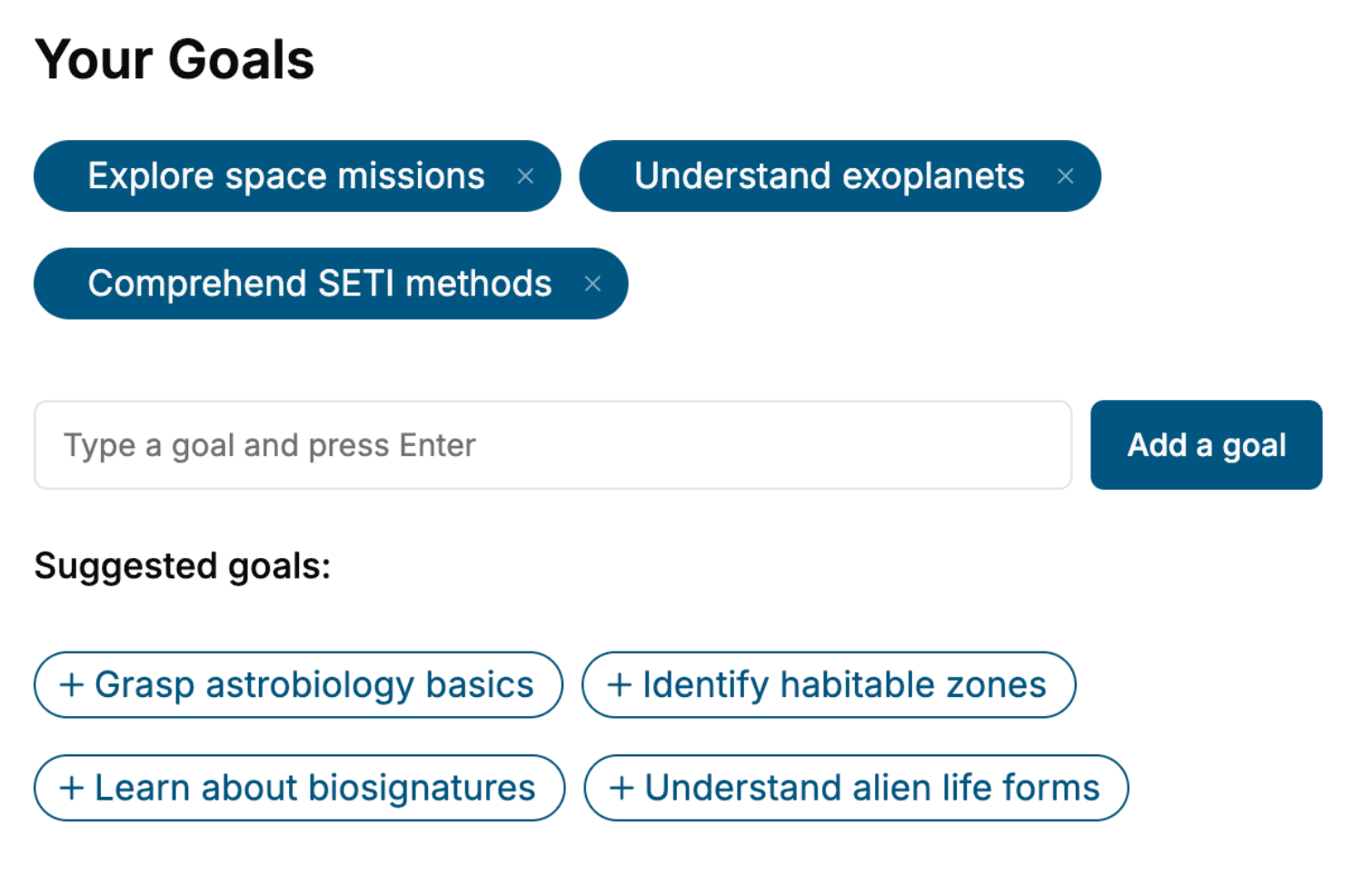
Tell us your goals and background, and get your own version of this book, tailored by AI to you.


Benefits of AI-tailored books
- Read one book, not ten:
- all the Machine Learning knowledge you need, gathered into a single book.
- Save days of learning:
- tell us your goals, choose your topics, and the whole book is built around them.
- Learn effortlessly:
- Machine Learning book written for your specific background and expertise.
- Understand at a glance:
- includes charts, tables, timelines, checklists, decision trees, and more.
- Stay current:
- written the day you order it, not years ago.
- Trust what you read:
- every book is checked for accuracy, with real research when your subject needs it.
Create your unique book in 3 steps
- 1. Select your focus
Select the focus of your Machine Learning book and share your background
- 2. Personalize your book
Specify your goals and choose sub-topics to include
- 3. Get your tailored book
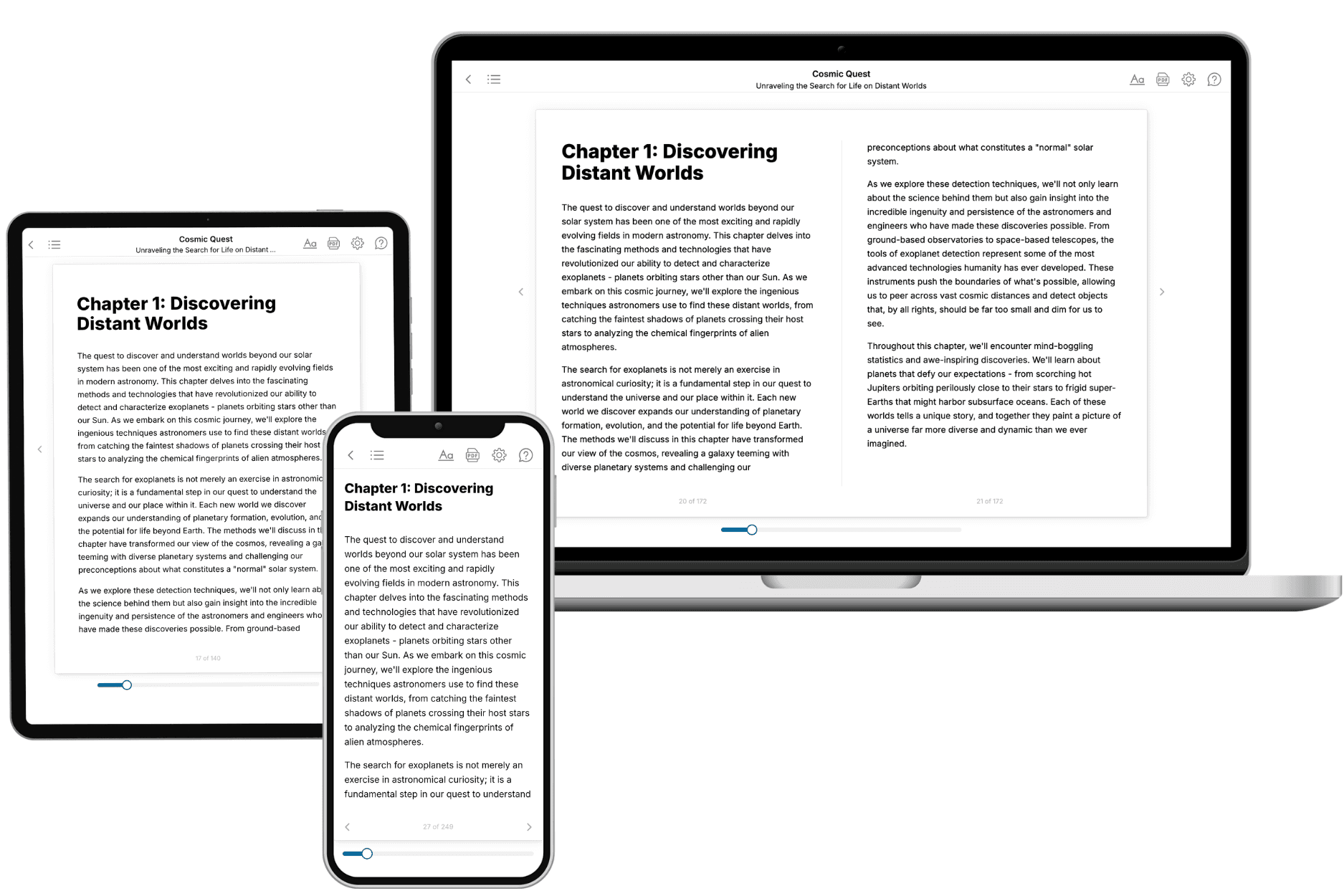
Your book is ready in 10 minutes. Read it online, download as EPUB or PDF, or send to Kindle.

Frequently asked questions
- What is TailoredRead?
TailoredRead creates complete, full-length nonfiction ebooks, written specifically for you. Tell us what you want to learn and why, and TailoredRead writes you a complete ebook on it, with charts, tables, and diagrams throughout. Read it online, on Kindle, or on any e-reader, or download it as a PDF or EPUB. Every book is written fresh the day you order it.
- How is the book tailored to me?
Before anything is written, you answer a few short questions about your goals, your background, and the topics you care about. Your book is then planned around your answers: written at your level, focused on your goals, and covering the topics you chose, instead of the one-size-fits-all book a store sells everyone.
- Will it read like generic AI content?
No. Your book isn't a chat transcript: it's planned chapter by chapter before a single word is written, told in a clear book voice, and explains ideas visually with charts, tables, and diagrams. After writing, every book goes through an editorial pass that polishes chapters so the book reads consistent from start to finish. Judge for yourself: browse thousands of sample books on our Explore Books page.
- How accurate is the content?
Our AI first checks whether your subject needs live research. Niche and fast-moving subjects are researched before writing, and the book plan and chapters are grounded in what it finds. After writing, every book goes through a quality pass that checks its facts and consistency, and researched books list their sources in a Notes section at the back.
- How long is the book?
You choose the length: Comprehensive (250-300 pages), Detailed (150-200 pages), Essential (70-100 pages), or Short (30-50 pages).
- Does the book include visuals?
Yes. Every book includes visual elements such as timelines, checklists, step-by-step guides, decision trees, comparison tables, and matrices, and many include bar charts. A typical book includes dozens of these visual elements.
- Can I read it on Kindle? What formats can I download?
Yes. Every book can be read in our online reader or downloaded as a PDF or EPUB. The EPUB can be opened with Kindle, Apple Books, Kobo, and any e-reader. The Commercial and Author licenses also include an editable Word (DOCX) and Markdown download.
- How much does it cost?
About the price of a regular ebook. The exact price depends on your book's length and complexity, from $2 for the shortest books to $35 for the most comprehensive, and it's shown when you review your book, before you commit to anything. Each book is a one-time purchase, yours to keep, no subscription. Licenses that let you share, teach, or publish your book range from $35.99 to $49.99.
- Can I preview the book before purchasing?
Before you pay, you'll see what your book will cover: the title, a detailed description, the estimated length, and the complete chapter-by-chapter table of contents, so you know what you're getting before you decide. The full text itself is written after you purchase.
- How long does it take to create a book?
About 10 minutes. You can start reading the opening chapters while the rest is still being written.