The Survey Research Handbook
Master the Art and Science of Collecting Reliable Data
Elevate your research capabilities by mastering the complete survey research process from conception to insight.
222 pages10 chaptersJan 12, 2026Research Methods
About this book
This comprehensive guide walks you through every critical decision point in survey methodology, from defining your research questions and designing instruments that minimize bias, to selecting appropriate samples and managing response rates. You'll learn how to navigate the tension between statistical rigor and practical constraints, understand the mathematical foundations underlying sampling and analysis, and discover how to extract meaningful insights from your data. Whether you're conducting academic research, market studies, or organizational assessments, this handbook provides the frameworks, tools, and real-world strategies you need to produce surveys that stakeholders trust and act upon. Move beyond surface-level understanding to develop the judgment and expertise that separates mediocre surveys from exceptional ones.
Table of contents
- IntroductionWhy Surveys Matter in Modern Research, The Evolving Landscape of Survey Research, How to Use This HandbookRead below
- Chapter 1: Foundations of Survey ResearchDefining Clear Research Questions and Objectives, Types of Surveys and When to Use Each, Understanding Validity and Reliability
- Chapter 2: Designing Your Survey InstrumentChoosing Question Types and Response Formats, Crafting Unbiased and Clear Questions, Sequencing Questions for Optimal Response, Pilot Testing and Refinement
- Chapter 3: Sampling Strategy and Population SelectionCore Sampling Concepts and Terminology, Probability Sampling Methods, Non-Probability Sampling Methods, Calculating Appropriate Sample Size
- Chapter 4: Administering Your SurveySurvey Delivery Modes and Technology, Recruitment and Participant Engagement, Managing Response Rates and Non-Response Bias, Ensuring Data Quality During Collection
- Chapter 5: Preparing Data for AnalysisData Entry and Coding Procedures, Cleaning and Validating Your Dataset, Handling Missing Data Strategically
- Chapter 6: Descriptive Analysis and ExplorationCalculating and Interpreting Descriptive Statistics, Understanding Data Distributions, Visualizing Survey Results Effectively
- Chapter 7: Inferential Analysis and Hypothesis TestingFoundations of Hypothesis Testing, Selecting and Conducting Appropriate Statistical Tests, Interpreting Confidence Intervals and Significance, Understanding Effect Sizes and Practical Significance
- Chapter 8: Advanced Analysis TechniquesIntroduction to Multivariate Analysis, Factor Analysis and Scale Development, Regression Analysis for Prediction and Explanation
- Chapter 9: Ethics, Quality, and LimitationsEthical Principles in Survey Research, Identifying and Mitigating Sources of Bias, Acknowledging Limitations and Ensuring Transparency
- Chapter 10: Reporting and Communicating ResultsStructuring Your Research Report, Presenting Findings to Different Audiences, Translating Results into Actionable Insights
- ConclusionYour Path to Survey Research Mastery, Staying Current in a Changing Field
- Glossary of Key Terms
- Further Reading and Resources
Introduction
Survey research stands as one of the most powerful tools available for understanding human behavior, opinions, and experiences. Whether you're investigating customer satisfaction, measuring public health outcomes, assessing employee engagement, or exploring social phenomena, surveys provide a systematic method for collecting data from populations too large to observe directly. The insights generated from well-designed surveys inform policy decisions, guide business strategies, advance scientific knowledge, and shape our understanding of the world. Yet despite their ubiquity—from political polls to market research studies—many surveys fail to deliver reliable, actionable insights because they're built on shaky methodological foundations.
The difference between a mediocre survey and an exceptional one rarely lies in the topic being studied or the resources available. Instead, it comes down to the researcher's understanding of fundamental principles and their ability to make informed decisions at every stage of the research process. Small choices in question wording can introduce bias that skews results. Sampling decisions determine whether findings can be generalized beyond your immediate respondents. Data analysis techniques must align with both your research questions and the structure of your data. These decisions require more than following a template—they demand judgment developed through understanding the underlying logic of survey methodology.
This handbook bridges the gap between theoretical knowledge and practical application. You already understand basic research concepts, but you're ready to deepen your expertise and develop the sophisticated judgment that separates competent researchers from exceptional ones. Throughout these pages, you'll encounter frameworks for making methodological decisions, strategies for navigating common challenges, and insights into the trade-offs inherent in survey research. The goal isn't simply to teach you procedures to follow, but to help you understand the reasoning behind those procedures so you can adapt them to your unique research contexts. By the end of this handbook, you'll possess both the technical skills and the conceptual understanding needed to design, implement, and analyze surveys that produce insights stakeholders trust and act upon.
Survey research exists at the intersection of art and science. The science provides rigorous methods for sampling, measurement, and analysis that ensure your findings are valid and reliable. The art involves crafting questions that respondents understand and answer honestly, designing instruments that maintain engagement without inducing fatigue, and interpreting results within their broader context. Mastering survey research means developing competence in both dimensions—understanding the mathematical foundations of sampling theory while also recognizing how subtle changes in question order can influence responses. This dual nature makes survey research both challenging and intellectually rewarding.
Why Surveys Matter in Modern Research
Surveys have become indispensable across virtually every domain of human inquiry because they solve a fundamental problem: how do we systematically understand the thoughts, behaviors, and experiences of large populations? Direct observation becomes impractical or impossible when studying phenomena that occur privately, infrequently, or across geographically dispersed populations. Experiments, while powerful for establishing causation, often cannot address questions about naturally occurring attitudes or behaviors. Qualitative methods provide rich insights but typically cannot quantify prevalence or test hypotheses across large samples. Surveys fill these gaps by enabling researchers to collect standardized data from hundreds or thousands of respondents, making it possible to identify patterns, test relationships, and draw inferences about broader populations.
The applications of survey research span an remarkable range of fields and purposes. In public health, surveys track disease prevalence, monitor health behaviors, and evaluate intervention effectiveness across entire populations. The Behavioral Risk Factor Surveillance System, conducted annually by the Centers for Disease Control and Prevention, surveys over 400,000 adults to monitor health conditions and risk behaviors, providing data that shapes public health priorities and resource allocation[1]. In business contexts, customer satisfaction surveys inform product development, service improvements, and strategic decisions. Employee engagement surveys help organizations identify retention risks and workplace issues before they escalate. Market research surveys guide companies in understanding consumer preferences, testing new concepts, and segmenting markets for targeted strategies.
Academic researchers across disciplines rely on surveys to test theories and advance knowledge. Political scientists use surveys to understand voting behavior, public opinion formation, and political participation. Sociologists employ surveys to study social stratification, family dynamics, and community structures. Psychologists develop and validate measurement instruments through survey research, creating scales that assess constructs from personality traits to mental health symptoms. Educational researchers use surveys to evaluate teaching methods, understand student experiences, and assess learning outcomes. The versatility of survey methodology makes it relevant regardless of your specific field or research focus.
Beyond their practical applications, surveys serve a democratic function by giving voice to populations whose perspectives might otherwise remain invisible. Well-designed surveys can capture the experiences of marginalized communities, document disparities in access or outcomes, and provide evidence that challenges assumptions or conventional wisdom. When conducted ethically and rigorously, surveys democratize knowledge production by making it possible to systematically represent diverse viewpoints rather than relying solely on the perspectives of elites or those with privileged access to decision-makers. This capacity to amplify underrepresented voices carries both opportunity and responsibility—surveys can either reinforce existing power structures or challenge them, depending on how researchers design and deploy them.
The credibility of survey research, however, depends entirely on methodological rigor. Poorly designed surveys don't just fail to provide useful insights—they actively mislead by generating data that appears authoritative but reflects biases, measurement errors, or sampling problems. Consider the infamous 1936 Literary Digest poll that predicted Alf Landon would defeat Franklin D. Roosevelt in a landslide, based on responses from over two million people. The survey failed spectacularly because its sampling frame—drawn from telephone directories and automobile registrations—systematically excluded lower-income voters who overwhelmingly supported Roosevelt[2]. This historical example illustrates a crucial principle: sample size cannot compensate for fundamental methodological flaws. A survey of two million respondents drawn from a biased sample produces less accurate results than a survey of 1,000 respondents drawn through probability sampling.
Modern survey research faces new challenges that make methodological expertise more important than ever. Response rates have declined across survey modes, raising concerns about non-response bias. The proliferation of online survey platforms has made it easier to field surveys but hasn't necessarily improved quality—many researchers now have access to tools without understanding the principles that should guide their use. The speed and low cost of online surveys can tempt researchers to skip essential steps like pilot testing or careful sampling design. Meanwhile, growing concerns about privacy and data security have made some populations more reluctant to participate in surveys, particularly on sensitive topics. Navigating these challenges requires understanding not just what to do, but why certain practices matter and how to adapt principles to changing contexts.
The stakes of survey quality extend beyond academic concerns. Organizations make consequential decisions based on survey data—allocating budgets, changing policies, launching products, or discontinuing services. Policymakers rely on survey evidence when crafting legislation or regulations that affect millions of people. Journalists cite survey findings in stories that shape public discourse. When surveys are methodologically sound, they serve these functions well, providing reliable evidence for decision-making. When surveys are flawed, they can lead to misguided decisions with real consequences. Your competence as a survey researcher directly impacts the quality of decisions made by those who rely on your findings. This responsibility motivates the careful attention to methodology that this handbook emphasizes throughout.
Understanding why surveys matter also means recognizing their limitations. Surveys excel at describing populations, identifying associations between variables, and tracking changes over time. They're less effective at establishing causation, understanding complex processes, or capturing nuanced meanings that respondents attach to their experiences. Surveys reduce the richness of human experience to standardized response categories, necessarily losing some information in the process. Respondents may not accurately recall past behaviors, may not be consciously aware of factors influencing their attitudes, or may provide socially desirable responses rather than truthful ones. Recognizing these limitations doesn't diminish the value of surveys—it simply means understanding when surveys are the right tool for your research questions and when other methods might be more appropriate. The best researchers know not only how to conduct excellent surveys but also when not to use surveys at all.
The Evolving Landscape of Survey Research
Survey research has undergone dramatic transformation over the past several decades, driven by technological advances, changing social patterns, and evolving methodological understanding. The field that once relied primarily on face-to-face interviews and mail surveys now encompasses web surveys, mobile surveys, mixed-mode designs, and innovative approaches that blend survey data with other data sources. These changes have created both opportunities and challenges for researchers. Understanding the current landscape helps you make informed decisions about which approaches best serve your research objectives while navigating the trade-offs inherent in different methodologies.
The shift from traditional to digital survey modes represents perhaps the most visible change in survey research practice. Web surveys have become dominant in many contexts due to their speed, cost-effectiveness, and ability to incorporate multimedia elements and complex skip patterns. Online panels—pre-recruited groups of individuals willing to complete surveys—enable researchers to field studies within days rather than weeks or months. Mobile surveys leverage the ubiquity of smartphones to reach respondents wherever they are, potentially capturing experiences closer to when they occur. These technological capabilities have democratized survey research in some ways, making it accessible to organizations and researchers who couldn't afford traditional methods. However, digital modes also introduce new sources of error and bias that researchers must understand and address.
The decline in response rates across survey modes has emerged as one of the most pressing challenges facing contemporary survey research. Telephone surveys that once achieved response rates of 60-70% now often struggle to reach 10-15%[3]. Mail surveys face similar declines, while web surveys often achieve even lower rates. This trend raises critical questions about non-response bias—the possibility that people who respond differ systematically from those who don't, potentially skewing results. Lower response rates don't automatically invalidate findings, but they do require researchers to think more carefully about who their respondents represent and to employ strategies for assessing and adjusting for potential bias. Understanding response rate trends helps you set realistic expectations and design recruitment strategies that maximize participation within your target population.
Mixed-mode survey designs have gained prominence as researchers seek to balance the advantages and limitations of different approaches. A mixed-mode design might begin with a web survey invitation, follow up with mail surveys to non-respondents, and conclude with telephone interviews to a sample of remaining non-respondents. This approach can improve response rates and reduce coverage bias by reaching people who lack internet access or prefer different modes. However, mixed-mode designs introduce complexity—responses may differ across modes due to interviewer effects, visual versus aural presentation of questions, or social desirability concerns. Researchers must carefully consider whether mode effects might confound their substantive findings and implement design strategies to minimize these effects. The decision to use single-mode versus mixed-mode approaches involves weighing trade-offs between coverage, cost, response rates, and data quality.
The integration of survey data with other data sources represents an emerging frontier in survey research. Researchers increasingly link survey responses to administrative records, social media data, geospatial information, or sensor data from wearable devices. These linkages can reduce respondent burden by eliminating questions about information available from other sources, enable validation of self-reported data, and facilitate analyses that would be impossible with survey data alone. For example, a health survey might link respondents' self-reported health behaviors to their electronic medical records, providing objective measures of health outcomes and healthcare utilization. However, data linkage raises important ethical considerations around consent, privacy, and data security that researchers must navigate carefully. The technical and ethical complexity of these approaches requires expertise beyond traditional survey methodology.
Methodological research continues to advance our understanding of how survey design choices affect data quality. Recent studies have examined topics such as:
- How question format affects responses on mobile devices with small screens
- Whether providing incentives improves response rates without biasing the sample
- How to optimize the timing and frequency of survey invitations and reminders
- Which techniques most effectively reduce satisficing—when respondents provide low-effort answers
- How to design questions that minimize social desirability bias on sensitive topics
- Whether gamification elements improve engagement without compromising data quality
The growing emphasis on transparency and reproducibility in research has implications for survey methodology. Funding agencies, journals, and professional organizations increasingly expect researchers to document their methods in detail, share survey instruments and data when possible, and pre-register studies to distinguish confirmatory from exploratory analyses. These expectations promote rigor and accountability but also require researchers to think through their methodological decisions more carefully and document them more thoroughly. The movement toward open science practices in survey research includes initiatives to develop shared question banks, standardize reporting of survey methods, and create repositories where researchers can access and learn from others' survey instruments. Engaging with these resources and practices strengthens both your individual research and the broader field.
Concerns about data privacy and security have intensified in recent years, affecting both survey design and respondent willingness to participate. High-profile data breaches, revelations about how companies use personal data, and implementation of regulations like the European Union's General Data Protection Regulation have made people more cautious about sharing information. Survey researchers must implement robust data protection measures, communicate clearly about how data will be used and protected, and obtain meaningful informed consent. These requirements go beyond mere compliance—they're essential for maintaining public trust in research and ensuring that people continue to participate in surveys. Understanding the ethical and legal landscape around data privacy helps you design studies that protect participants while collecting the information you need.
The diversification of survey research applications has expanded the range of skills and knowledge researchers need. Traditional academic survey research emphasized probability sampling, hypothesis testing, and contribution to theoretical knowledge. Contemporary survey research also includes rapid-turnaround applied studies, continuous monitoring systems, user experience research, and surveys embedded within digital products or services. These different contexts involve different constraints, standards, and stakeholder expectations. A market researcher conducting quick concept tests faces different challenges than an epidemiologist fielding a longitudinal cohort study, yet both benefit from understanding core methodological principles. This handbook addresses fundamental principles that apply across contexts while acknowledging that implementation details vary depending on your specific research setting and objectives.
How to Use This Handbook
This handbook is structured to guide you through the complete survey research process, from initial conceptualization through final reporting. Each chapter addresses a distinct phase of survey research, building on concepts introduced in earlier chapters while standing alone as a reference for specific topics. You can read the handbook sequentially to develop comprehensive understanding, or you can focus on particular chapters that address your immediate needs. The organization reflects the typical workflow of survey research, though in practice you'll often move iteratively between stages—refining your research questions as you develop your instrument, reconsidering sampling decisions based on pilot test results, or adjusting analysis plans as you explore your data.
The handbook begins with foundational concepts that inform all subsequent decisions. Chapter 1 explores how to define clear research questions, select appropriate survey types, and understand the crucial concepts of validity and reliability. These foundations matter because every methodological decision you make should connect back to your research objectives and your need to produce valid, reliable data. Without clear research questions, you cannot make principled decisions about instrument design, sampling, or analysis. Without understanding validity and reliability, you cannot evaluate whether your survey actually measures what you intend it to measure or whether your results would be consistent if you repeated the study.
Chapters 2 through 4 address the design and implementation phases of survey research. Chapter 2 focuses on instrument design—choosing question types, crafting clear and unbiased wording, sequencing questions effectively, and pilot testing your instrument. This chapter provides detailed guidance on the decisions that most directly affect data quality, with numerous examples of both effective and problematic questions. Chapter 3 covers sampling strategy, explaining different sampling methods, their assumptions and limitations, and how to calculate appropriate sample sizes. Chapter 4 addresses survey administration, including delivery modes, recruitment strategies, response rate management, and data quality monitoring. Together, these chapters equip you to design and field surveys that collect high-quality data from appropriate samples.
Chapters 5 through 8 guide you through data preparation and analysis. Chapter 5 covers the often-overlooked but critical tasks of data entry, coding, cleaning, and handling missing data. These preparatory steps directly affect the validity of your analyses, yet they're frequently rushed or conducted without sufficient care. Chapters 6 and 7 address descriptive and inferential analysis respectively, explaining how to summarize your data, test hypotheses, and draw appropriate conclusions. Chapter 8 introduces advanced techniques including multivariate analysis, factor analysis, and regression. These analysis chapters emphasize not just how to conduct statistical procedures but how to select appropriate techniques based on your research questions and data characteristics, and how to interpret results in meaningful ways.
The final chapters address broader considerations that span the entire research process. Chapter 9 examines ethics, quality, and limitations—topics that should inform your decisions from initial design through final reporting. This chapter helps you identify potential sources of bias, implement ethical research practices, and acknowledge limitations transparently. Chapter 10 focuses on reporting and communicating results, covering how to structure research reports, present findings to different audiences, and translate results into actionable insights. Effective communication ensures that your methodologically sound research actually influences decisions and advances knowledge rather than sitting unread in a file drawer.
Throughout the handbook, you'll encounter several types of content designed to deepen your understanding and support practical application:
- Conceptual explanations that clarify the logic underlying methodological principles
- Concrete examples that illustrate concepts with specific scenarios and details
- Step-by-step procedures that guide you through complex processes
- Decision frameworks that help you evaluate trade-offs and choose among alternatives
- Common pitfalls that highlight mistakes to avoid and how to prevent them
- Practical tips that share strategies for addressing real-world challenges
The handbook assumes you have intermediate knowledge of research methods and basic statistical concepts. You should be familiar with fundamental ideas like variables, measurement levels, sampling, and common statistical procedures such as means, standard deviations, and correlation. The handbook builds on this foundation rather than reviewing basic concepts, allowing deeper exploration of survey-specific methodology. When statistical concepts are introduced, the focus is on understanding what they mean and how to apply them in survey contexts rather than on mathematical derivations. If you encounter unfamiliar terms, the glossary at the end of the handbook provides concise definitions of key concepts.
To maximize the value of this handbook, approach it actively rather than passively. As you read about instrument design, examine surveys you've encountered as a respondent with a critical eye—what makes some questions clear and others confusing? When learning about sampling methods, consider which approaches would be feasible for populations you might study. As you explore analysis techniques, think about how they might apply to your research questions. Consider keeping a notebook where you record insights, questions, and ideas for applying concepts to your own research. The goal isn't simply to absorb information but to develop the judgment and expertise that comes from actively engaging with methodological principles and considering how they apply in varied contexts.
Survey research mastery develops through practice, reflection, and continuous learning. This handbook provides the knowledge base and frameworks you need, but expertise comes from applying these principles to real research challenges, learning from both successes and mistakes, and staying current with evolving best practices. As you work through the handbook, look for opportunities to apply what you're learning—whether through formal research projects, informal experiments with survey design, or critical evaluation of surveys you encounter. Each application deepens your understanding and builds the intuition that distinguishes expert researchers from novices. The journey from competent to exceptional survey researcher is ongoing, but this handbook provides the roadmap and tools you need to navigate that journey successfully.
Notes
Introduction
- 1. Centers for Disease Control and Prevention, Behavioral Risk Factor Surveillance System, U.S. Department of Health and Human Services, 2021
- 2. P. Squire, "Why the 1936 Literary Digest Poll Failed," Public Opinion Quarterly, 1988
- 3. Pew Research Center, Response Rates in Telephone Surveys Have Resumed Their Decline, Pew Research Center Methods, 2019
This is the end of the free sample. The full book has 10 chapters.
Want this book written for you?
Tell us your goals and background, and get your own version of this book, tailored by AI to you.


Benefits of AI-tailored books
- Read one book, not ten:
- all the Research Methods knowledge you need, gathered into a single book.
- Save days of learning:
- tell us your goals, choose your topics, and the whole book is built around them.
- Learn effortlessly:
- Research Methods book written for your specific background and expertise.
- Understand at a glance:
- includes charts, tables, timelines, checklists, decision trees, and more.
- Stay current:
- written the day you order it, not years ago.
- Trust what you read:
- every book is checked for accuracy, with real research when your subject needs it.
Create your unique book in 3 steps
- 1. Select your focus
Select the focus of your Research Methods book and share your background
- 2. Personalize your book
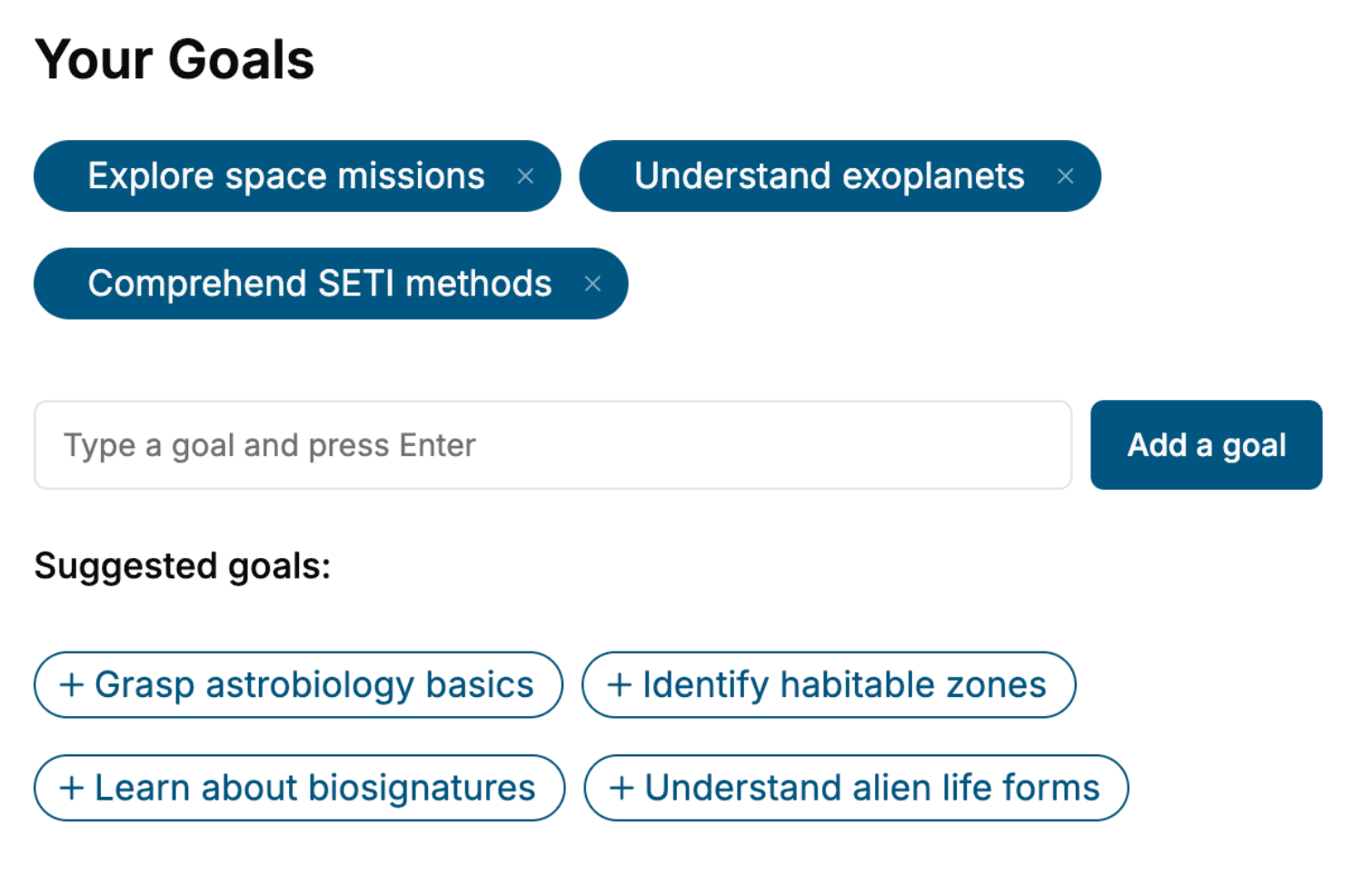
Specify your goals and choose sub-topics to include
- 3. Get your tailored book
Your book is ready in 10 minutes. Read it online, download as EPUB or PDF, or send to Kindle.

Frequently asked questions
- What is TailoredRead?
TailoredRead creates complete, full-length nonfiction ebooks, written specifically for you. Tell us what you want to learn and why, and TailoredRead writes you a complete ebook on it, with charts, tables, and diagrams throughout. Read it online, on Kindle, or on any e-reader, or download it as a PDF or EPUB. Every book is written fresh the day you order it.
- How is the book tailored to me?
Before anything is written, you answer a few short questions about your goals, your background, and the topics you care about. Your book is then planned around your answers: written at your level, focused on your goals, and covering the topics you chose, instead of the one-size-fits-all book a store sells everyone.
- Will it read like generic AI content?
No. Your book isn't a chat transcript: it's planned chapter by chapter before a single word is written, told in a clear book voice, and explains ideas visually with charts, tables, and diagrams. After writing, every book goes through an editorial pass that polishes chapters so the book reads consistent from start to finish. Judge for yourself: browse thousands of sample books on our Explore Books page.
- How accurate is the content?
Our AI first checks whether your subject needs live research. Niche and fast-moving subjects are researched before writing, and the book plan and chapters are grounded in what it finds. After writing, every book goes through a quality pass that checks its facts and consistency, and researched books list their sources in a Notes section at the back.
- How long is the book?
You choose the length: Comprehensive (250-300 pages), Detailed (150-200 pages), Essential (70-100 pages), or Short (30-50 pages).
- Does the book include visuals?
Yes. Every book includes visual elements such as timelines, checklists, step-by-step guides, decision trees, comparison tables, and matrices, and many include bar charts. A typical book includes dozens of these visual elements.
- Can I read it on Kindle? What formats can I download?
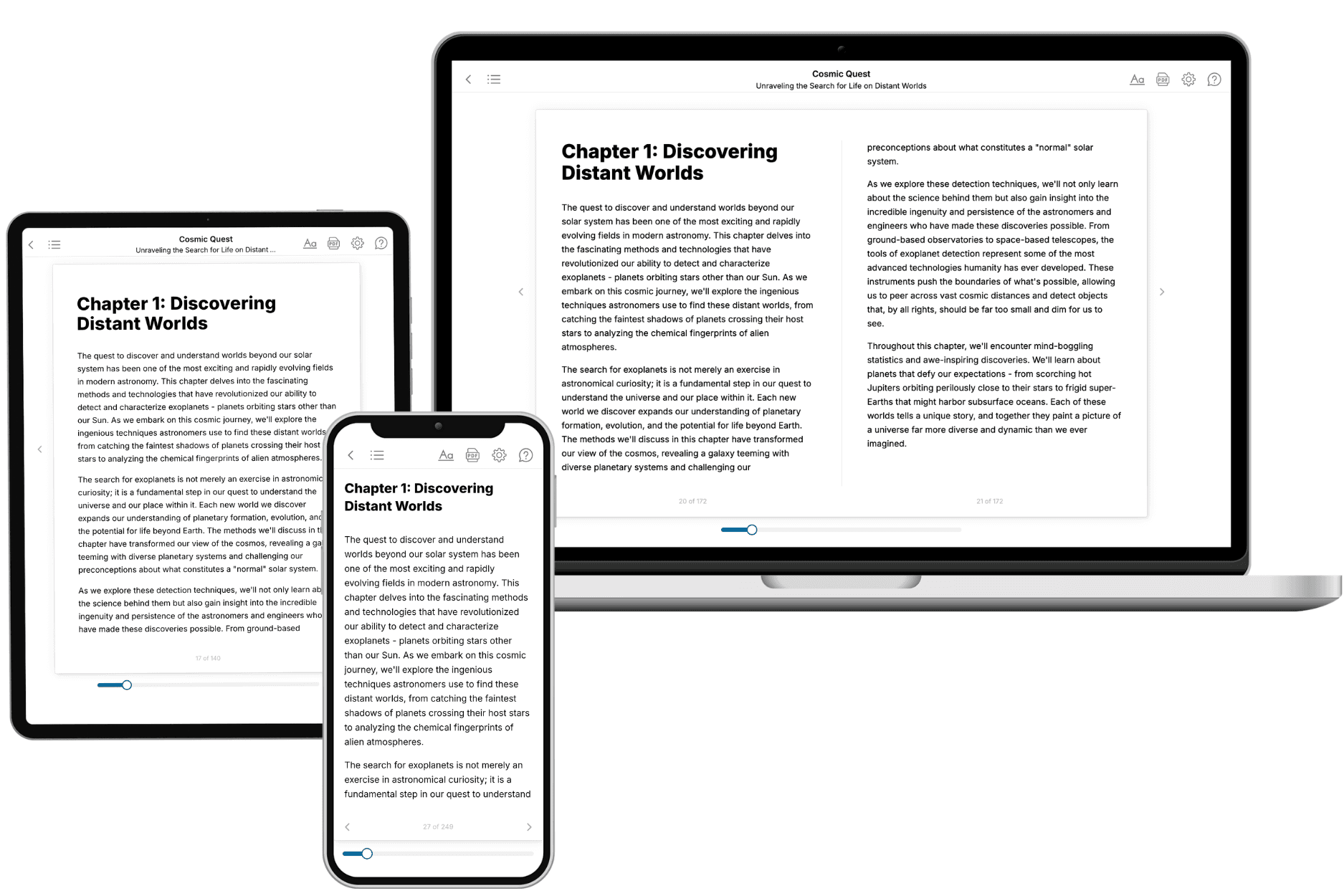
Yes. Every book can be read in our online reader or downloaded as a PDF or EPUB. The EPUB can be opened with Kindle, Apple Books, Kobo, and any e-reader. The Commercial and Author licenses also include an editable Word (DOCX) and Markdown download.
- How much does it cost?
About the price of a regular ebook. The exact price depends on your book's length and complexity, from $2 for the shortest books to $35 for the most comprehensive, and it's shown when you review your book, before you commit to anything. Each book is a one-time purchase, yours to keep, no subscription. Licenses that let you share, teach, or publish your book range from $35.99 to $49.99.
- Can I preview the book before purchasing?
Before you pay, you'll see what your book will cover: the title, a detailed description, the estimated length, and the complete chapter-by-chapter table of contents, so you know what you're getting before you decide. The full text itself is written after you purchase.
- How long does it take to create a book?
About 10 minutes. You can start reading the opening chapters while the rest is still being written.