The Testing Mindset
Master Software Testing Strategies to Build Reliable Systems
Most developers treat testing as an afterthought—a checkbox to complete before deployment.
191 pages9 chaptersJun 22, 2026Software QA
About this book
This approach leaves critical defects undiscovered, wastes time on ineffective test cases, and creates systems that fail in production. The real problem isn't that you don't test; it's that you lack a strategic framework for testing that aligns with your system's architecture and business priorities. This book provides a comprehensive guide to software testing strategies grounded in system analysis and computer science principles. You'll learn how to design test plans that actually catch defects, apply proven test design techniques to maximize coverage with minimal effort, and integrate testing into your development workflow. Whether you're building algorithms, designing system components, or managing integration points, you'll discover how to test strategically rather than reactively. By the end, you'll have the knowledge and confidence to build systems that work reliably from the start.
Table of contents
- IntroductionWhy Testing Matters More Than You Think, Testing vs. Debugging: Understanding the Difference, How to Use This BookRead below
- Chapter 1: Testing FundamentalsWhat Is Software Testing?, Core Testing Principles, The Testing Lifecycle
- Chapter 2: Testing Levels and ScopeUnit Testing: Testing Individual Components, Integration Testing: Testing Component Interactions, System Testing: Testing the Complete Application, Acceptance Testing: Validating Business Requirements
- Chapter 3: Test Design TechniquesEquivalence Partitioning: Grouping Similar Inputs, Boundary Value Analysis: Testing Edge Cases, Decision Table Testing: Handling Complex Logic, State Transition Testing: Validating State Changes
- Chapter 4: Testing Algorithms and Data StructuresVerifying Algorithm Correctness, Performance Testing and Complexity Analysis, Testing Data Structure Behavior
- Chapter 5: Test Coverage and MetricsTypes of Code Coverage, Setting Meaningful Coverage Goals, Understanding Coverage Limitations
- Chapter 6: Risk-Based Testing StrategyIdentifying System Risks, Prioritizing Tests by Risk Level, Allocating Testing Resources Effectively
- Chapter 7: Test Automation and FrameworksBenefits and Challenges of Test Automation, Choosing the Right Testing Framework, Building Maintainable Automated Tests, Integrating Tests into CI/CD Pipelines
- Chapter 8: Testing System ArchitectureTesting Architectural Patterns, Testing Distributed Systems, API and Interface Testing
- Chapter 9: Practical Testing StrategiesCreating Effective Test Plans, Managing Defects and Test Results, Overcoming Common Testing Challenges
- ConclusionKey Takeaways, Your Next Steps
- Glossary
Introduction
Picture this: a development team ships a new payment feature after weeks of work. The code looks clean, the logic seems sound, and a quick manual check confirms the happy path works fine. Three days after deployment, customer support is flooded with reports of failed transactions. The bug? A boundary condition in the amount validation that nobody thought to test. The fix takes two hours. The damage to customer trust takes months to repair. This scenario plays out in software teams every single day, and the root cause is almost never a lack of effort. It's a lack of strategy.
Software testing has a reputation problem. Many developers see it as the unglamorous part of the job, something you do after the real work is finished. You write the code, it seems to work, you run it a few times, and you ship it. Testing, in this view, is just a formality. But this mindset is exactly what leads to production failures, emergency patches, and the kind of technical debt that slowly suffocates a codebase. The developers who build the most reliable systems aren't the ones who write the most tests. They're the ones who test with intention and strategy.
This book is built around a single core idea: testing is not a phase that happens after development. It's a way of thinking that runs through every decision you make while building software. When you understand how to test strategically, you start writing better code from the beginning. You design components that are easier to verify. You catch problems when they're cheap to fix rather than after they've compounded into something much harder to untangle. The goal of this book is to give you that strategic mindset, along with the concrete techniques and frameworks to put it into practice.
The chapters ahead cover the full spectrum of software testing, from foundational principles to advanced automation strategies. You'll work through test design techniques that maximize defect detection, explore how to test algorithms and system architecture, and learn how to integrate testing into modern development workflows. Each chapter builds on the last, so by the time you reach the end, you'll have a complete, coherent framework for testing any system you work on. Whether you're a developer who wants to write more reliable code or a system analyst looking to improve quality processes, this book gives you the tools to do it.
Why Testing Matters More Than You Think
The cost of software defects is staggering, and most of it is invisible until something breaks. A study by the National Institute of Standards and Technology estimated that software bugs cost the U.S. economy approximately $59.5 billion per year, with a significant portion of that cost coming from defects that could have been caught earlier in the development process.[1] The pattern is consistent across industries: the later a defect is found, the more expensive it becomes to fix. A bug caught during unit testing might take 30 minutes to resolve. The same bug found in production can require hours of debugging, hotfix deployment, rollback procedures, and customer communication.
This cost escalation follows a well-documented pattern in software engineering. Research from IBM Systems Sciences Institute found that the relative cost of fixing a defect increases dramatically at each stage of development.[2] A defect that costs $1 to fix during requirements analysis can cost $100 or more to fix after deployment. These aren't just abstract numbers. They represent real hours, real money, and real damage to user trust. Understanding this relationship is the first step toward taking testing seriously as a professional discipline.
Beyond the financial argument, testing matters because software systems have real consequences for real people. Consider the range of systems that developers build and maintain every day:
- Financial applications that process transactions and manage account balances
- Healthcare systems that store patient records and support clinical decisions
- E-commerce platforms that handle personal data and payment information
- Infrastructure tools that other developers and systems depend on
- Communication platforms that millions of people rely on daily
In each of these contexts, a defect isn't just a technical inconvenience. It can mean a patient receiving incorrect medication information, a customer losing money, or a business losing the trust it took years to build. Testing is the primary mechanism by which software teams verify that their systems behave correctly before those systems affect real users. That's not a minor responsibility.
Testing also serves a purpose that goes beyond defect detection. A well-designed test suite is a form of living documentation. When you write a test that verifies a specific behavior, you're creating a precise, executable description of what the system is supposed to do. Future developers who work on the codebase can read those tests to understand the intended behavior of each component. When requirements change, the tests tell you exactly what needs to be updated. This documentation value is often overlooked, but it becomes enormously important as systems grow in complexity and team membership changes over time.
There's also a design benefit that experienced testers consistently report. Writing tests for a piece of code forces you to think about that code from the outside, as a consumer rather than an author. This perspective shift often reveals design problems that aren't obvious when you're deep in the implementation. Code that's hard to test is usually code that's too tightly coupled, too complex, or too dependent on global state. The act of testing pushes you toward cleaner, more modular designs. This is one of the reasons test-driven development (TDD) has such a strong following: the tests don't just verify the code, they actively shape it.
Finally, testing matters because it gives development teams confidence. Confidence to refactor without fear of breaking things. Confidence to deploy on a Friday afternoon. Confidence to add new features without worrying that something unrelated will break. A comprehensive test suite is a safety net that enables teams to move faster, not slower. The common perception that testing slows down development is exactly backwards. Teams with strong testing practices consistently deliver more reliably and with fewer production incidents than teams that skip testing in the name of speed.[3]
Testing vs. Debugging: Understanding the Difference
One of the most common sources of confusion for developers new to structured testing is the relationship between testing and debugging. These two activities are related, but they're fundamentally different in purpose, timing, and approach. Conflating them leads to a reactive quality process where teams spend most of their time chasing bugs rather than preventing them. Understanding the distinction is essential for building a proactive testing mindset.
Testing is the process of executing a system or component with the intent of finding defects. It's a planned, systematic activity that happens before and during development. Testing asks the question: "Does this system behave as expected under these conditions?" It involves designing test cases, executing them against the software, and comparing actual results to expected results. Testing is proactive. Its goal is to surface problems before they reach users.
Debugging, on the other hand, is the process of diagnosing and fixing a defect that has already been identified. Debugging asks: "Why is this system behaving incorrectly, and how do I fix it?" It's reactive by nature. You debug because something has already gone wrong. Debugging involves tools like breakpoints, log analysis, and stack trace inspection. It's a necessary skill, but it's not a substitute for testing.
A useful analogy: testing is like a health screening that catches problems early, while debugging is like emergency surgery after symptoms become severe. Both are necessary, but you'd much rather catch the problem in the screening.
The practical difference shows up clearly in how each activity scales. Debugging a single defect might take anywhere from minutes to days, depending on the complexity of the system and the subtlety of the bug. If your quality process relies primarily on debugging, your team's capacity to deliver reliable software is limited by how fast you can find and fix individual bugs. Testing, by contrast, can be automated and run continuously. A well-maintained test suite can check thousands of behaviors in minutes, catching regressions the moment they're introduced.
Another key difference is the information each activity produces. Debugging tells you about one specific defect in one specific scenario. Testing tells you about the overall health of the system across a wide range of conditions. When a test suite runs and 95% of tests pass, you have meaningful information about what's working. When 5% fail, you have a prioritized list of problems to investigate. This kind of systematic feedback is impossible to get from debugging alone.
It's also worth noting that testing and debugging work together in a productive cycle. Testing finds defects. Debugging fixes them. Then testing verifies the fix and checks that nothing else broke in the process. This cycle is sometimes called test-fix-retest, and it's the foundation of any healthy quality process. The key is that testing drives the cycle. Without structured testing, debugging becomes a never-ending game of whack-a-mole where fixing one bug reveals another, and there's no systematic way to know when the system is actually stable.
Many developers fall into a pattern of what might be called exploratory debugging: running the application, noticing something looks wrong, poking around until they find the cause, fixing it, and moving on. This approach has its place, especially in early development when requirements are still fluid. But it doesn't scale, and it doesn't provide the kind of repeatable verification that production software requires. The goal of this book is to help you move from that reactive pattern toward a structured testing practice that catches problems systematically and gives you confidence in your system's behavior.
Here's a practical way to think about the boundary between the two activities:
- Before you write code: Think about what tests will verify the behavior you're about to implement.
- While you write code: Run tests frequently to catch problems immediately.
- When a test fails: Use debugging tools to understand why, then fix the defect.
- After fixing: Re-run the full test suite to confirm the fix and check for regressions.
- Before deployment: Ensure all tests pass and coverage meets your team's standards.
This workflow keeps testing in the driver's seat and debugging in its proper supporting role. It's a simple shift in process, but it has a profound effect on the reliability of the software you ship.
How to Use This Book
This book is designed for intermediate software developers and system analysts who already understand the basics of programming and want to build a more rigorous, strategic approach to testing. You don't need to be a testing expert to get value from it, but you should be comfortable reading code examples and familiar with concepts like functions, data structures, and basic software architecture. The examples throughout the book use pseudocode and common languages like Python and JavaScript, chosen for their readability rather than any specific platform preference.
The book is structured to build your understanding progressively. The early chapters establish the foundational concepts and vocabulary of software testing. The middle chapters dive into specific techniques and strategies. The later chapters address more advanced topics like automation, architecture testing, and risk-based prioritization. If you're new to structured testing, reading the chapters in order will give you the most coherent learning experience. Each chapter builds on concepts introduced in previous ones, so skipping ahead may leave gaps in your understanding.
That said, if you already have a solid grounding in testing fundamentals, the book is also designed to work as a reference. Each chapter is self-contained enough that you can jump to a specific topic when you need it. Looking for guidance on boundary value analysis? Go straight to Chapter 3. Need to understand how to integrate tests into a CI/CD pipeline? Chapter 7 covers that in detail. The table of contents and chapter summaries are designed to help you navigate quickly to the content most relevant to your current work.
Throughout the book, you'll find several recurring elements designed to make the content more practical and actionable:
- Concrete examples: Every major concept is illustrated with a specific, realistic scenario. These aren't toy problems. They're drawn from the kinds of systems developers actually build.
- Code samples: Where relevant, code examples show exactly how to implement a testing technique or framework pattern.
- Common mistakes: Each chapter highlights the pitfalls that developers most often fall into, so you can recognize and avoid them.
- Actionable steps: Key concepts are followed by specific actions you can take to apply them in your own projects.
- Frameworks and checklists: Where a structured approach is helpful, the book provides templates and frameworks you can adapt to your context.
One important note about the code examples in this book: they're written to illustrate testing concepts clearly, not to serve as production-ready implementations. You'll sometimes see simplified versions of real patterns, with complexity reduced to keep the focus on the testing principle being demonstrated. When you apply these patterns in your own work, you'll need to adapt them to your specific language, framework, and system requirements. The goal is to give you the understanding to do that adaptation confidently, not to hand you copy-paste solutions.
The book also assumes that you're working in a professional or semi-professional context where software quality actually matters. The strategies here are designed for systems that need to be reliable, maintainable, and verifiable over time. If you're building a quick prototype or a personal project where reliability isn't a priority, some of the more rigorous techniques may feel like overkill. That's fine. The value of these strategies scales with the stakes of the system you're building. As your projects grow in complexity and consequence, you'll find yourself returning to these techniques more and more.
A word on mindset before you dive in: the most important thing this book can give you isn't a collection of techniques. It's a way of thinking about software quality. The developers who build the most reliable systems aren't following a checklist. They're asking the right questions at every stage of development. Questions like: What could go wrong here? How would I know if it did? What's the simplest test that would catch this failure? These questions become second nature with practice, and this book is designed to help you develop that habit. By the time you finish, testing won't feel like an extra step. It'll feel like a natural part of how you think about building software.
Finally, don't try to absorb everything at once. Software testing is a deep discipline with decades of research and practice behind it. This book covers the most important and practical aspects of that discipline, but it's a starting point, not an endpoint. The best way to use it is to read a chapter, apply what you've learned to a real project, and then come back to the next chapter. Learning by doing is far more effective than reading alone, and the concepts here will stick much better when you've seen them work in your own code. With that in mind, let's get started.
Notes
Introduction
- 1. National Institute of Standards and Technology, "The Economic Impacts of Inadequate Infrastructure for Software Testing," NIST Planning Report 02-3, 2002
- 2. B. Boehm, Software Engineering Economics, Prentice Hall, 1981
- 3. N. Forsgren and others, Accelerate: The Science of Lean Software and DevOps, IT Revolution Press, 2018
This is the end of the free sample. The full book has 9 chapters.
Want this book written for you?
Tell us your goals and background, and get your own version of this book, tailored by AI to you.


Benefits of AI-tailored books
- Read one book, not ten:
- all the Software QA knowledge you need, gathered into a single book.
- Save days of learning:
- tell us your goals, choose your topics, and the whole book is built around them.
- Learn effortlessly:
- Software QA book written for your specific background and expertise.
- Understand at a glance:
- includes charts, tables, timelines, checklists, decision trees, and more.
- Stay current:
- written the day you order it, not years ago.
- Trust what you read:
- every book is checked for accuracy, with real research when your subject needs it.
Create your unique book in 3 steps
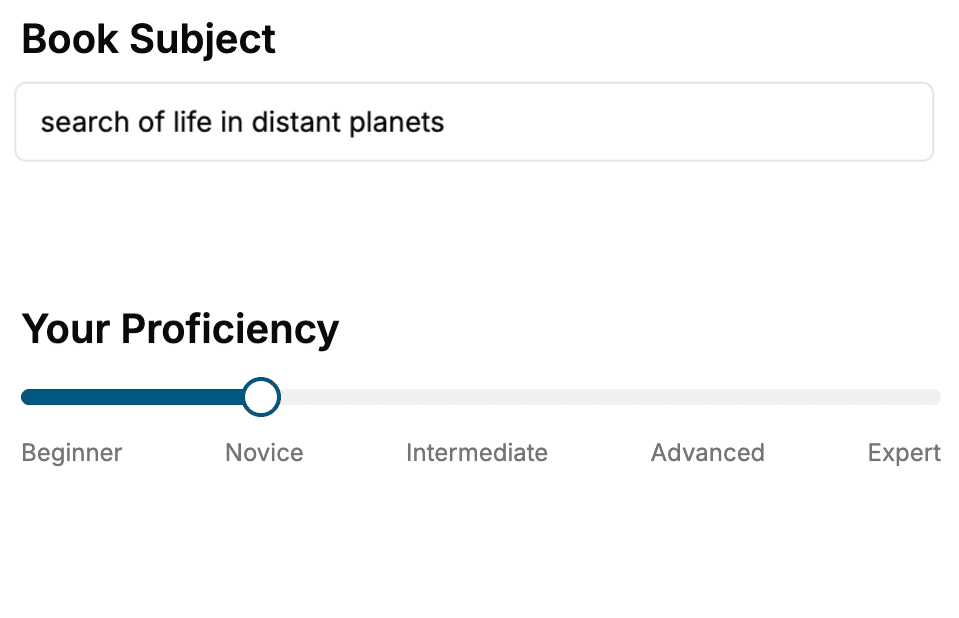
- 1. Select your focus
Select the focus of your Software QA book and share your background
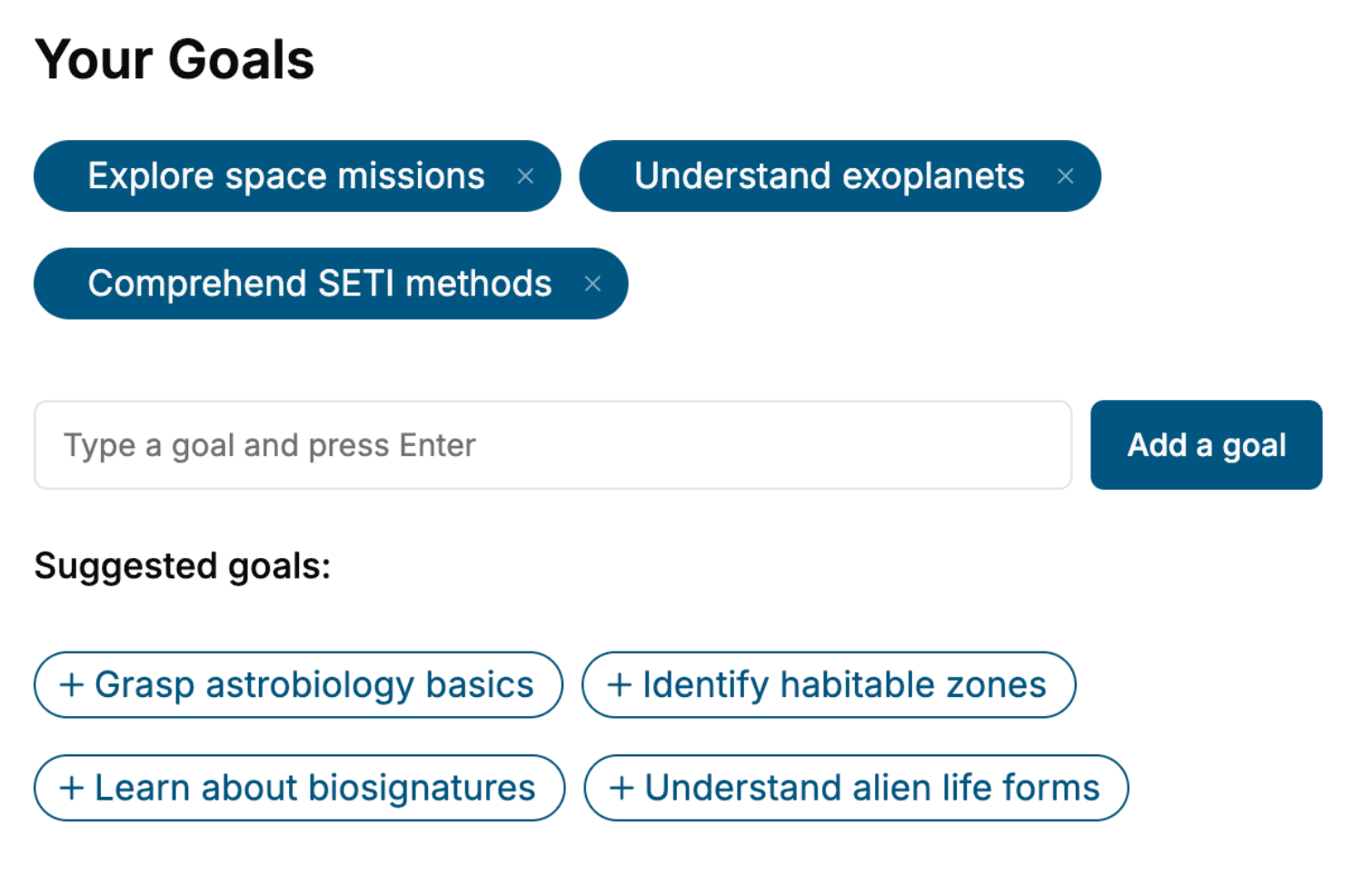
- 2. Personalize your book
Specify your goals and choose sub-topics to include
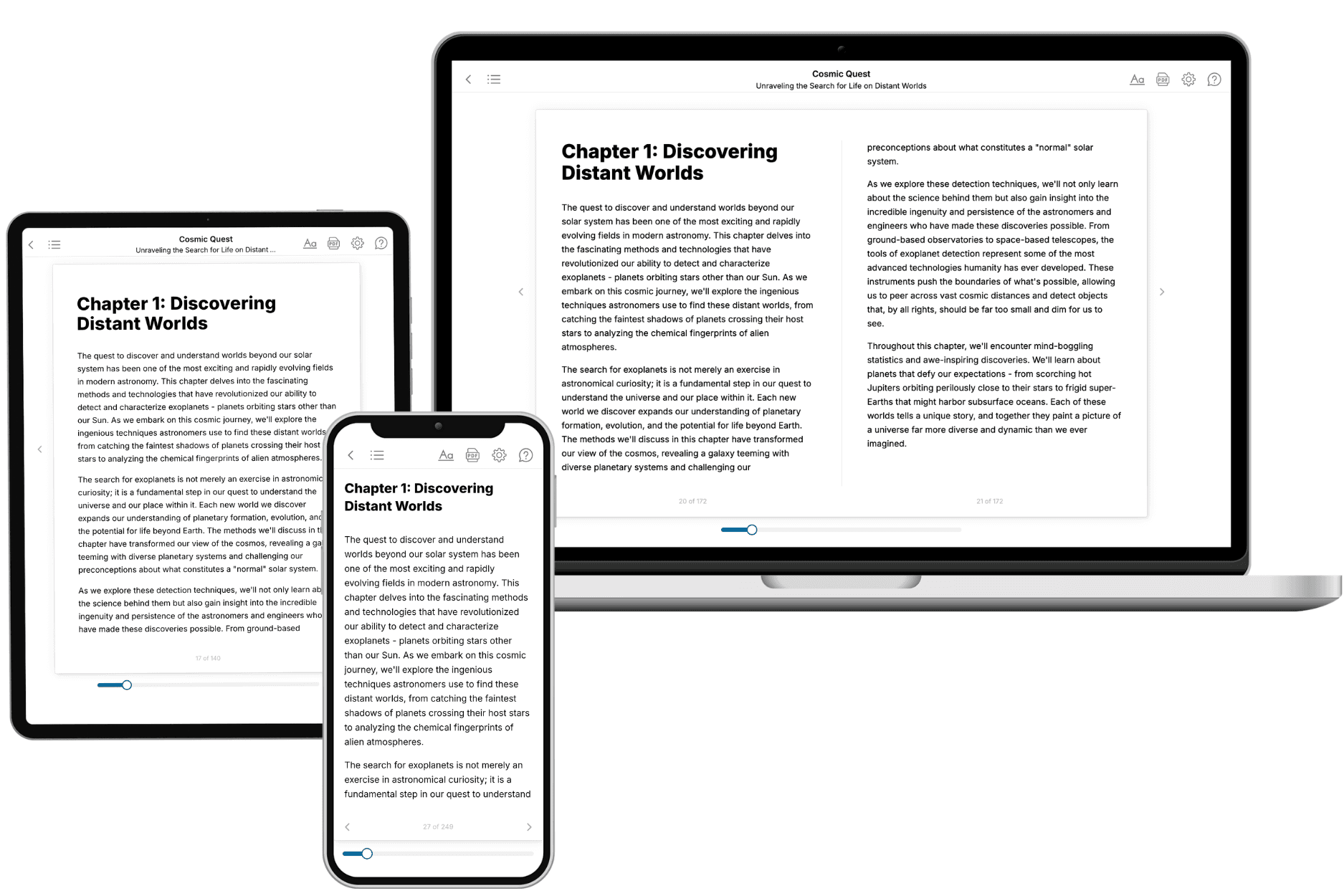
- 3. Get your tailored book
Your book is ready in 10 minutes. Read it online, download as EPUB or PDF, or send to Kindle.
Frequently asked questions
- What is TailoredRead?
TailoredRead creates complete, full-length nonfiction ebooks, written specifically for you. Tell us what you want to learn and why, and TailoredRead writes you a complete ebook on it, with charts, tables, and diagrams throughout. Read it online, on Kindle, or on any e-reader, or download it as a PDF or EPUB. Every book is written fresh the day you order it.
- How is the book tailored to me?
Before anything is written, you answer a few short questions about your goals, your background, and the topics you care about. Your book is then planned around your answers: written at your level, focused on your goals, and covering the topics you chose, instead of the one-size-fits-all book a store sells everyone.
- Will it read like generic AI content?
No. Your book isn't a chat transcript: it's planned chapter by chapter before a single word is written, told in a clear book voice, and explains ideas visually with charts, tables, and diagrams. After writing, every book goes through an editorial pass that polishes chapters so the book reads consistent from start to finish. Judge for yourself: browse thousands of sample books on our Explore Books page.
- How accurate is the content?
Our AI first checks whether your subject needs live research. Niche and fast-moving subjects are researched before writing, and the book plan and chapters are grounded in what it finds. After writing, every book goes through a quality pass that checks its facts and consistency, and researched books list their sources in a Notes section at the back.
- How long is the book?
You choose the length: Comprehensive (250-300 pages), Detailed (150-200 pages), Essential (70-100 pages), or Short (30-50 pages).
- Does the book include visuals?
Yes. Every book includes visual elements such as timelines, checklists, step-by-step guides, decision trees, comparison tables, and matrices, and many include bar charts. A typical book includes dozens of these visual elements.
- Can I read it on Kindle? What formats can I download?
Yes. Every book can be read in our online reader or downloaded as a PDF or EPUB. The EPUB can be opened with Kindle, Apple Books, Kobo, and any e-reader. The Commercial and Author licenses also include an editable Word (DOCX) and Markdown download.
- How much does it cost?
About the price of a regular ebook. The exact price depends on your book's length and complexity, from $2 for the shortest books to $35 for the most comprehensive, and it's shown when you review your book, before you commit to anything. Each book is a one-time purchase, yours to keep, no subscription. Licenses that let you share, teach, or publish your book range from $35.99 to $49.99.
- Can I preview the book before purchasing?
Before you pay, you'll see what your book will cover: the title, a detailed description, the estimated length, and the complete chapter-by-chapter table of contents, so you know what you're getting before you decide. The full text itself is written after you purchase.
- How long does it take to create a book?
About 10 minutes. You can start reading the opening chapters while the rest is still being written.