Comparative Biology Books
Explore tailored Comparative Biology books created by our AI
The Animal Heart
Understanding Cardiovascular Systems Across the Animal Kingdom
Discover how hearts evolved from simple tubes to powerful pumps, and why a hummingbird's heart beats 1,200 times per minute while a whale's beats only 10. This exploration takes you through the remarkable diversity of cardiovascular systems across the animal kingdom, revealing the elegant solutions nature has engineered for moving blood, delivering oxygen, and sustaining life. You'll learn how fish gills work with their hearts, why some animals have blue blood, and how a giraffe's cardiovascular system prevents fainting when it lowers its head. By examining hearts and circulatory systems from invertebrates to mammals, you'll gain a deeper appreciation for the physiological principles that govern all animal life. Whether you're studying biology, pursuing a career in veterinary medicine, or simply curious about the natural world, this book illuminates the cardiovascular innovations that make the animal kingdom possible.
Master the mechanics of cardiovascular physiology and gain a deeper appreciation for how your heart and circulatory system sustain life. This comprehensive guide takes you from the fundamental anatomy of the heart through the complex regulatory systems that keep blood flowing efficiently throughout your body. You'll discover how the heart's structure enables its remarkable pumping function, explore the physics of blood pressure and flow, and understand how your nervous system fine-tunes cardiovascular performance moment by moment. Learn how different animal species have evolved unique circulatory solutions, and explore the intricate relationship between oxygen delivery and tissue metabolism. Whether you're a biology student, healthcare professional, or curious learner, this book provides clear explanations, practical examples, and integrated knowledge that connects structure to function across the entire cardiovascular system.
Many people think evolution is just a theory with gaps and limitations, or that it contradicts religious belief. In reality, Darwin's theory of evolution is one of science's most robust and well-supported explanations for the diversity of life on Earth. This book explores how Darwin developed his revolutionary ideas, the evidence that supports evolution, and why it matters today. You'll discover how natural selection works, why evolution is central to modern biology, and how evolutionary thinking applies to real-world challenges like disease resistance and conservation. Whether you're curious about your own origins, want to understand the science behind evolution, or simply wish to engage more thoughtfully with one of history's most important ideas, this book provides the clarity and context you need to grasp evolution's true significance.
The Behavior Blueprint
Understanding How Animals Think, Survive, and Thrive in the Wild
Discover why animals behave the way they do—and how these behaviors shape entire ecosystems. This book takes you through the fascinating world of behavioral ecology, revealing the hidden logic behind animal actions that might seem mysterious or random at first glance. You'll explore how evolution has sculpted behaviors as precisely as it has shaped bodies, and how animals make split-second decisions that determine their survival. From the intricate dance of courtship rituals to the strategic calculations of predators hunting prey, each behavior serves a purpose rooted in millions of years of natural selection. You'll learn how animals communicate, compete, cooperate, and care for their young—and how these behaviors interconnect to create the complex web of life. Whether you're fascinated by wildlife, studying ecology, or simply curious about the natural world, this book provides the conceptual tools to understand animal behavior not as isolated curiosities, but as elegant solutions to the challenges of survival and reproduction.
Discover how the nervous systems of animals work at every level—from individual neurons firing to complex behaviors that ensure survival. This book takes you beyond basic biology to reveal the elegant mechanisms that allow animals to sense their environment, process information, and respond with precision. You'll explore how electrical impulses travel along nerve fibers, how chemical signals bridge the gaps between cells, and how billions of neural connections create everything from reflexes to learning. Whether you're curious about how a dog's brain processes scent, how a bird navigates migration, or how your own nervous system controls movement and thought, you'll gain practical insights into the neurophysiology that drives animal behavior. Written for those with some biology background, this guide makes complex neural concepts accessible through clear explanations, real-world examples, and visual frameworks that illuminate how nervous systems have evolved to meet each species' unique demands.
The Living Machine
Understanding How Animals Work From the Inside Out
Discover how the bodies of animals—from tiny insects to massive whales—accomplish the extraordinary feat of staying alive. This book takes you inside the living machine, revealing the physiological systems that enable animals to breathe, move, sense their world, and reproduce. You'll explore how cells work together to create organs, how organs coordinate through nervous and chemical signals, and how different species have evolved ingenious solutions to universal survival challenges. Whether you're curious about how a hummingbird's heart beats 1,200 times per minute, why fish gills work differently than mammalian lungs, or how animals maintain their body temperature in extreme environments, you'll find clear explanations grounded in real examples. This accessible guide bridges the gap between basic biology and specialized knowledge, making animal physiology engaging and understandable for anyone who wants to appreciate the remarkable engineering of life itself.
Related books you may like:
Discover how advanced functional materials are reshaping industries and enabling solutions to humanity's greatest challenges. This comprehensive guide takes you beyond basic materials science to explore the cutting-edge world of engineered materials designed to perform specific, transformative functions. You'll learn how scientists and engineers manipulate atomic structures and processing conditions to create materials that respond to stimuli, conduct electricity with unprecedented efficiency, or heal themselves. From smart polymers that change properties on demand to nanomaterials with revolutionary capabilities, this book reveals the principles behind these innovations and their practical applications in healthcare, energy, electronics, and aerospace. Whether you're advancing your career, developing new products, or simply fascinated by the materials shaping our future, you'll gain the knowledge to understand, evaluate, and potentially contribute to this rapidly evolving field.
Most chemical reactions should happen instantly, yet they don't. The culprit? Activation energy—the invisible barrier that keeps reactants locked in place until enough energy arrives to break them free. Without understanding this fundamental concept, enzyme kinetics remains a mystery, and the elegant mechanisms by which life accelerates reactions seem like magic. This book demystifies activation energy and enzyme kinetics through clear explanations, practical examples, and visual frameworks. You'll discover how enzymes perform their catalytic miracles by lowering activation energy, explore the mathematics of reaction rates through the Arrhenius equation and Michaelis-Menten kinetics, and learn how inhibition mechanisms control biological processes. Whether you're studying biochemistry, developing pharmaceuticals, or optimizing industrial processes, this guide equips you with both the conceptual understanding and quantitative tools needed to predict, analyze, and manipulate enzyme-catalyzed reactions with confidence.
Achieve reliable, reproducible separations of complex chemical mixtures using adsorption chromatography. This practical guide bridges the gap between theoretical principles and real-world laboratory application, providing you with the knowledge and skills to design effective separation strategies for your specific analytical needs. You'll explore the fundamental science of how compounds interact with adsorbent materials, learn to select optimal stationary and mobile phases, and master the practical techniques that ensure consistent results. Whether you're working with thin-layer chromatography, column chromatography, or HPLC systems, this book equips you with systematic approaches to troubleshooting common problems, optimizing separations, and interpreting data with confidence. Packed with practical examples, decision-making frameworks, and evidence-based strategies, you'll develop the expertise to tackle challenging separation problems and advance your analytical capabilities in pharmaceutical, environmental, or materials research.
Many assume adipose tissue is simply inert fat to be minimized or removed. In reality, it's a sophisticated, metabolically active organ with remarkable regenerative potential. This book reveals how adipose tissue engineering is revolutionizing medicine by creating functional tissue solutions for reconstruction, regeneration, and therapeutic applications. You'll discover the biological foundations of adipose tissue, learn how scientists harvest and cultivate adipose-derived stem cells, and explore cutting-edge engineering strategies that transform these cells into viable tissue constructs. From scaffold design and bioreactor optimization to vascularization techniques and clinical translation, this guide provides practical insights into the science and engineering behind adipose tissue regeneration. Whether you're a researcher, student, or healthcare professional, you'll gain actionable knowledge about the current state of the field, emerging technologies, and the real-world challenges of bringing engineered tissues from the laboratory to clinical practice.
In the rapidly evolving world of ultra-high-speed communications, the challenge of designing secure and efficient chips has never been more daunting. As a Principal Architect, you face the complex task of integrating cutting-edge VLSI techniques with robust cryptographic solutions. This book is your comprehensive guide to conquering these challenges. "Advanced VLSI Design" delves deep into the intricacies of modern chip architecture, offering you practical insights into overcoming CMOS scaling limitations, harnessing the power of 3D IC integration, and implementing state-of-the-art FinFET technology. You'll explore innovative approaches to low-power design and high-speed SerDes, crucial for next-generation communication systems. This book doesn't just stop at performance; it equips you with the knowledge to build security from the ground up. From hardware Trojan detection to side-channel analysis resistance, you'll learn how to create chips that are not only fast but also fortified against modern security threats. Dive into advanced topics like quantum-dot cellular automata and EUV lithography, positioning yourself at the forefront of VLSI innovation.
Create a Comparative Biology Book Tailored to You
Create an AI-crafted book tailored to your goals, interests, and background





Benefits of AI-tailored books
- Read one book, not ten:
- all the Comparative Biology knowledge you need, gathered into a single book.
- Save days of learning:
- tell us your goals, choose your topics, and the whole book is built around them.
- Learn effortlessly:
- Comparative Biology book written for your specific background and expertise.
- Understand at a glance:
- includes charts, tables, timelines, checklists, decision trees, and more.
- Stay current:
- written the day you order it, not years ago.
- Trust what you read:
- every book is checked for accuracy, with real research when your subject needs it.
Create your unique book in 3 steps
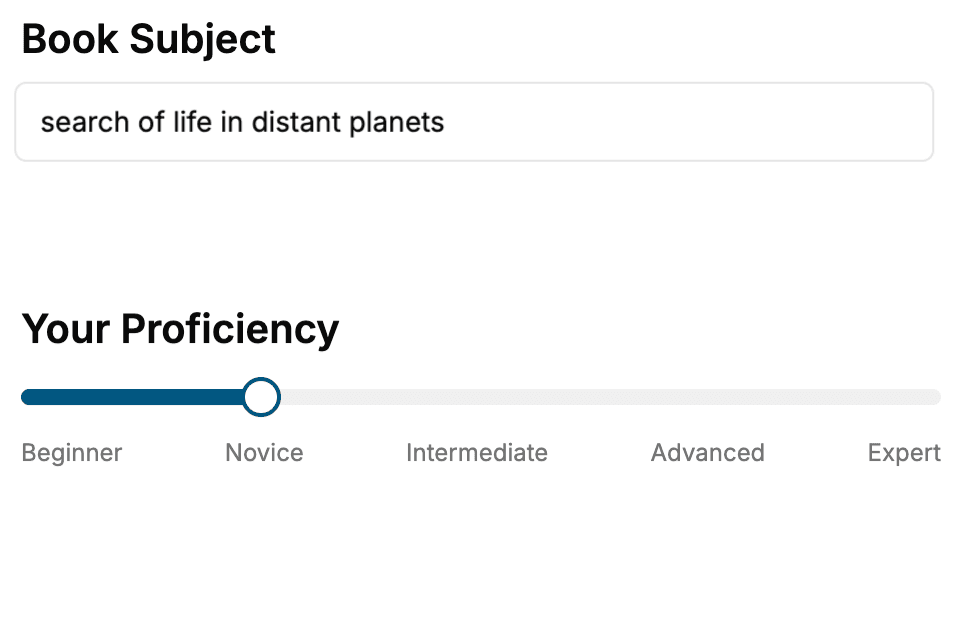
- 1. Select your focus
Select the focus of your Comparative Biology book and share your background
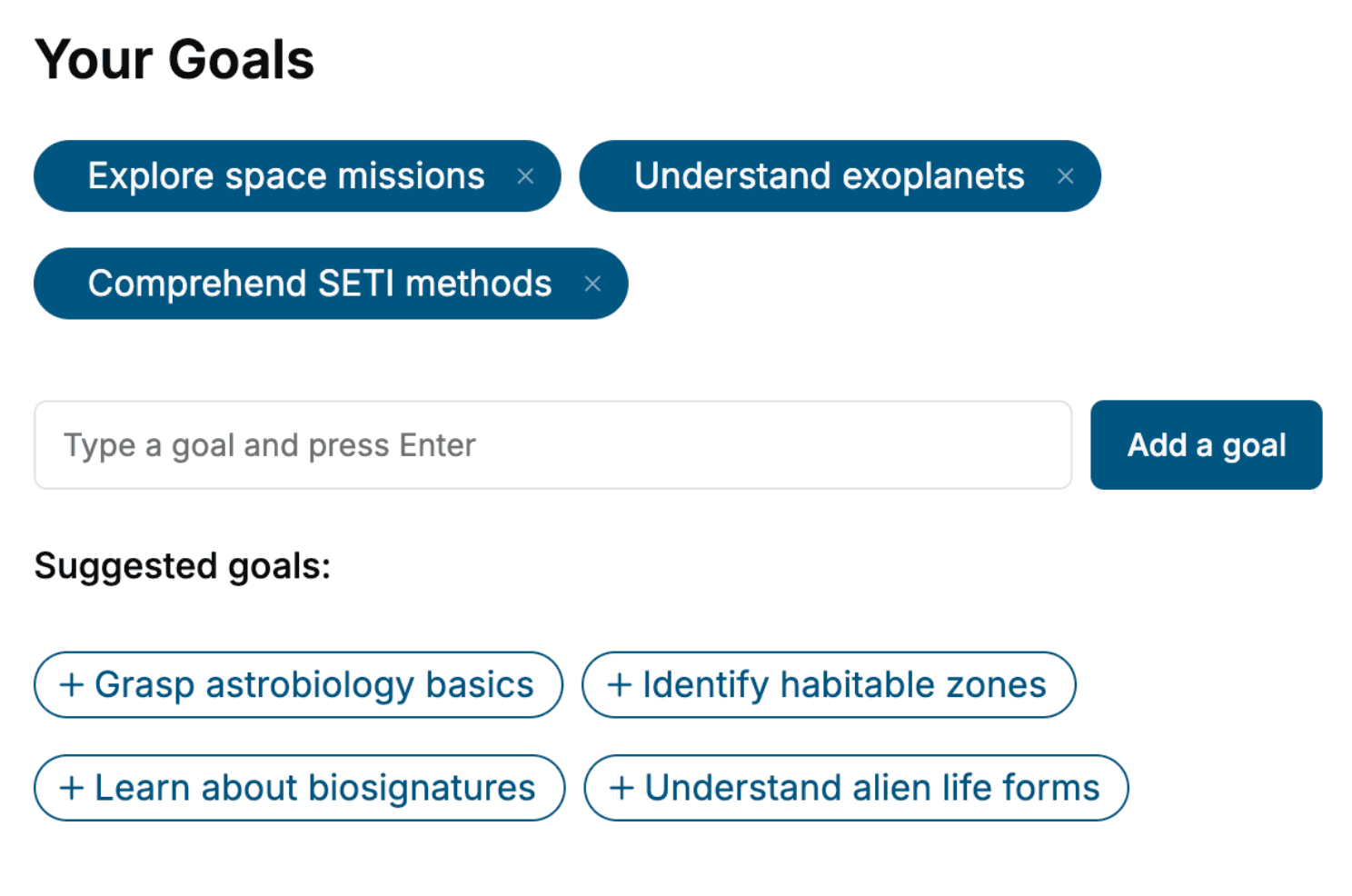
- 2. Personalize your book
Specify your goals and choose sub-topics to include
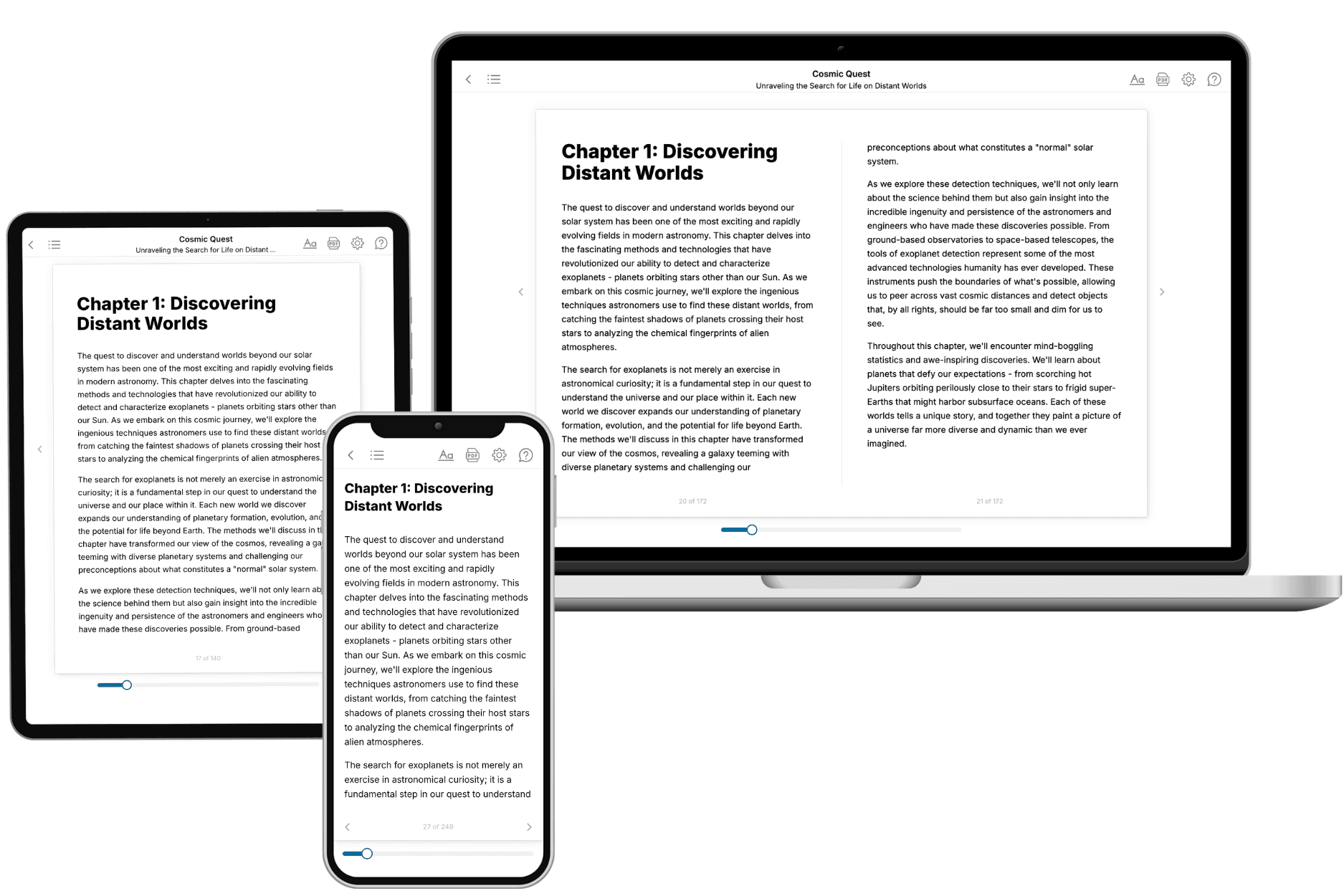
- 3. Get your tailored book
Your book is ready in 10 minutes. Read it online, download as EPUB or PDF, or send to Kindle.
Frequently asked questions
- What is TailoredRead?
TailoredRead creates complete, full-length nonfiction ebooks, written specifically for you. Tell us what you want to learn and why, and TailoredRead writes you a complete ebook on it, with charts, tables, and diagrams throughout. Read it online, on Kindle, or on any e-reader, or download it as a PDF or EPUB. Every book is written fresh the day you order it.
- How is the book tailored to me?
Before anything is written, you answer a few short questions about your goals, your background, and the topics you care about. Your book is then planned around your answers: written at your level, focused on your goals, and covering the topics you chose, instead of the one-size-fits-all book a store sells everyone.
- Will it read like generic AI content?
No. Your book isn't a chat transcript: it's planned chapter by chapter before a single word is written, told in a clear book voice, and explains ideas visually with charts, tables, and diagrams. After writing, every book goes through an editorial pass that polishes chapters so the book reads consistent from start to finish. Judge for yourself: browse thousands of sample books on our Explore Books page.
- How accurate is the content?
Our AI first checks whether your subject needs live research. Niche and fast-moving subjects are researched before writing, and the book plan and chapters are grounded in what it finds. After writing, every book goes through a quality pass that checks its facts and consistency, and researched books list their sources in a Notes section at the back.
- How long is the book?
You choose the length: Comprehensive (250-300 pages), Detailed (150-200 pages), Essential (70-100 pages), or Short (30-50 pages).
- Does the book include visuals?
Yes. Every book includes charts, tables, and diagrams: timelines, checklists, step-by-step guides, decision trees, comparison tables, matrices, and bar charts. A typical book includes dozens of these visual elements.
- Can I read it on Kindle? What formats can I download?
Yes. Every book can be read in our online reader or downloaded as a PDF or EPUB. The EPUB can be opened with Kindle, Apple Books, Kobo, and any e-reader. The Commercial and Author licenses also include an editable Word (DOCX) and Markdown download.
- How much does it cost?
About the price of a regular ebook. The exact price depends on your book's length and complexity, from $2 for the shortest books to $35 for the most comprehensive, and it's shown when you review your book, before you commit to anything. Each book is a one-time purchase, yours to keep, no subscription. Licenses that let you share, teach, or publish your book range from $35.99 to $49.99.
- Can I preview the book before purchasing?
Before you pay, you'll see what your book will cover: the title, a detailed description, the estimated length, and the complete chapter-by-chapter table of contents, so you know what you're getting before you decide. The full text itself is written after you purchase.
- How long does it take to create a book?
About 10 minutes. You can start reading the opening chapters while the rest is still being written.