Technical Chemistry Books
Explore tailored Technical Chemistry books created by our AI
Master the analytical power of Nuclear Magnetic Resonance to solve complex chemical problems and advance your technical expertise. This comprehensive guide bridges the gap between fundamental NMR theory and practical laboratory applications, providing you with the knowledge and skills needed to confidently interpret spectra, optimize experimental conditions, and extract meaningful chemical information from your samples. You'll discover how to leverage NMR's unique capabilities for structural elucidation, quantitative analysis, and quality control in technical chemistry environments. From understanding the physics behind nuclear spin interactions to implementing advanced two-dimensional techniques, this book provides clear explanations of complex concepts supported by practical examples and real-world applications. Whether you're analyzing organic compounds, monitoring reaction progress, or characterizing new materials, you'll gain the analytical confidence to tackle challenging problems with precision. The systematic approach progresses from basic principles through advanced techniques, ensuring you develop both theoretical understanding and practical proficiency. This essential resource combines rigorous scientific principles with hands-on guidance, making it an invaluable tool for enhancing your analytical capabilities and advancing your expertise in modern chemical analysis.
The Wittig Reaction
Mastering Olefin Synthesis from Mechanism to Application
What if the key to mastering one of organic chemistry's most powerful carbon-carbon bond-forming reactions lies not just in memorizing conditions, but in truly understanding its elegant mechanism? The Wittig reaction has been a cornerstone of synthetic chemistry for decades, yet many practitioners struggle to predict outcomes, optimize conditions, or troubleshoot unexpected results. This book bridges the gap between textbook theory and laboratory reality, providing you with a comprehensive understanding of Wittig olefination that goes beyond surface-level knowledge. You'll explore the mechanistic intricacies that govern stereoselectivity, discover how to choose between classical Wittig and modern modifications, and learn to apply these transformations strategically in complex synthesis. Through detailed analysis of reaction pathways, practical guidance on experimental execution, and real-world examples from natural product synthesis, you'll develop the confidence to deploy Wittig chemistry effectively in your own work. Whether you're planning a multi-step synthesis or optimizing a key transformation, this book equips you with the knowledge to make informed decisions and achieve your synthetic goals.
Redox Mastery
Unlocking the Power of Oxidation-Reduction in Organic Reactions
Dive into the fascinating world of oxidation-reduction reactions in organic chemistry with "Redox Mastery." This comprehensive guide takes you on a journey through the fundamental principles and advanced applications of redox reactions in organic synthesis. From the basics of electron transfer to complex reaction mechanisms, you'll gain a deep understanding of how these transformations shape the field of organic chemistry. Explore real-world examples, cutting-edge research, and practical techniques that will elevate your knowledge and skills in the lab. Whether you're a student looking to excel in your studies or a professional aiming to enhance your synthetic toolkit, "Redox Mastery" provides the insights and strategies you need to confidently navigate the intricacies of oxidation-reduction reactions. Unlock the power of redox chemistry and transform your approach to organic synthesis.
Navigate the complexities of reversed phase chromatography with a guide designed for scientists ready to move beyond basics. This book walks you through the fundamental principles governing hydrophobic interactions and stationary phase chemistry, then progresses to practical method development strategies that work in real laboratory settings. You'll learn how to select appropriate columns, optimize mobile phase conditions, and design robust gradient methods that deliver consistent results. The book addresses the troubleshooting challenges you'll actually encounter—peak tailing, resolution problems, and detector issues—with systematic diagnostic approaches. Whether you're developing pharmaceutical assays, environmental analyses, or food safety methods, you'll discover how to apply reversed phase chromatography strategically. Each chapter combines theoretical understanding with hands-on guidance, helping you make informed decisions about method parameters and validation requirements. By the end, you'll have the knowledge and confidence to develop, optimize, and troubleshoot reversed phase methods independently.
Thermodynamic Mastery
Unraveling the Principles of Chemical Energy and Equilibrium
Contrary to popular belief, chemical thermodynamics isn't just a collection of abstract equations and intimidating concepts. In reality, it's the key to understanding the very essence of chemical reactions and the driving forces behind them. Thermodynamic Mastery takes you on an enlightening exploration of the fundamental principles governing energy transformations in chemical systems. You'll discover how these principles shape the world around us, from the simplest chemical reactions to complex industrial processes. Through clear explanations, practical examples, and thought-provoking exercises, this book demystifies concepts like enthalpy, entropy, and Gibbs free energy. You'll learn to apply these principles to real-world scenarios, predict the direction of chemical reactions, and understand the delicate balance of energy in chemical equilibrium. By the time you finish this book, you'll have developed a intuitive grasp of thermodynamic concepts, enabling you to tackle complex problems with confidence. Whether you're a student aiming to excel in your studies or a professional looking to enhance your expertise, Thermodynamic Mastery equips you with the knowledge and skills to navigate the fascinating world of chemical energy and equilibrium.
Green Chemistry Revolution
Principles and Practices for a Sustainable Chemical Future
Discover the power of green chemistry to revolutionize the way we approach chemical processes and products. In "Green Chemistry Revolution," you'll gain a deep understanding of the principles that are reshaping the chemical industry and our world. This comprehensive guide takes you through the fundamental concepts, innovative techniques, and real-world applications of green chemistry. You'll explore how these principles can be applied to reduce waste, minimize environmental impact, and create safer, more efficient chemical processes. From atom economy to renewable feedstocks, this book covers the essential strategies that are driving the shift towards sustainable chemistry. Whether you're a chemistry professional looking to incorporate sustainable practices into your work or an advanced student preparing for a career in the field, "Green Chemistry Revolution" equips you with the knowledge and tools to become a leader in sustainable chemical innovation. By the end of this book, you'll be ready to contribute to a greener, cleaner future for chemistry and beyond.
Many chemistry students and researchers assume that the Williamson Ether Synthesis is just another simple substitution reaction to memorize and forget. This misconception leads to failed experiments, poor yields, and missed opportunities to leverage one of organic chemistry's most powerful and versatile tools. The Williamson Ether Synthesis is far more than a textbook reaction—it's a gateway to understanding nucleophilic substitution mechanisms, strategic bond formation, and elegant synthetic design. This comprehensive guide takes you beyond the basic equation to reveal the deeper principles that govern this fundamental transformation. You'll discover how substrate structure, base selection, and reaction conditions work together to determine success or failure. From the classical intermolecular reactions that form simple ethers to sophisticated intramolecular cyclizations that create complex ring systems, you'll explore the full spectrum of possibilities this reaction offers. Modern catalytic variations, green chemistry approaches, and industrial applications demonstrate how this century-old reaction continues to evolve and find new uses in contemporary synthesis. Whether you're planning your next synthetic route, troubleshooting a stubborn reaction, or seeking to understand the mechanistic foundations that make this transformation so reliable, this book provides the knowledge and confidence you need to harness the full potential of the Williamson Ether Synthesis in your own work.
The Scotch Whisky Codex
Mastering the Art and Science of Scotland's Finest Spirit
Picture yourself confidently navigating a whisky tasting, effortlessly identifying the nuances of each dram, and impressing friends with your in-depth knowledge of Scotch production. "The Scotch Whisky Codex" is your comprehensive guide to achieving this level of expertise. This meticulously crafted volume delves into every aspect of Scotch whisky, from the intricacies of the malting process to the subtle influences of terroir. You'll explore the mechanics of mash tuns, unravel the science behind fermentation, and discover how the shape of a pot still affects the final product. As you progress through the book, you'll develop a nuanced understanding of Scotland's whisky regions, each with its distinct flavor profiles and production methods. You'll learn to differentiate between the peaty notes of Islay and the fruity characteristics of Speyside, all while mastering the art of nosing and tasting. The Scotch Whisky Codex doesn't just teach you about whisky; it equips you with the skills to appreciate it fully. You'll learn how to use flavor wheels, create your own whisky maps, and develop a rich vocabulary to describe your tasting experiences. By the end, you'll have the knowledge and confidence to conduct your own tastings, select the perfect dram for any occasion, and truly savor the complexity of Scotland's national spirit.
Grignard reactions intimidate many chemists because they seem unpredictable—sometimes delivering excellent yields, other times failing mysteriously. The real problem isn't the reaction itself; it's incomplete understanding of the underlying principles that govern reactivity and selectivity. This book bridges that gap by combining rigorous mechanistic insight with practical, hands-on guidance. You'll learn not just how to perform Grignard reactions, but why they work the way they do, how to predict outcomes before you start, and how to troubleshoot when things go wrong. From fundamental concepts like carbanion formation and nucleophilic addition to advanced strategies for functional group compatibility and complex synthesis, each chapter builds your confidence and capability. Real-world examples, detailed reaction schemes, and practical tips throughout show you how to apply these principles in your own work. Whether you're optimizing a reaction for your research, preparing for exams, or developing new synthetic routes, this guide provides the clarity and depth you need to master one of organic chemistry's most essential transformations.
Elevate your understanding of organic chemistry with "Nucleophilic Substitution Unveiled." This comprehensive guide takes you on a deep dive into the fascinating world of nucleophilic substitution reactions, a cornerstone of organic synthesis. You'll gain a thorough understanding of reaction mechanisms, stereochemistry, and the factors that influence these crucial processes. From the basics to advanced concepts, this book equips you with the knowledge to predict reaction outcomes, design efficient syntheses, and apply your skills in real-world scenarios. Each chapter builds upon the last, offering clear explanations, practical examples, and thought-provoking problems that challenge you to think like a seasoned chemist. Whether you're a student aiming to excel in your organic chemistry courses or a professional looking to refine your synthetic skills, "Nucleophilic Substitution Unveiled" is your key to mastering this essential aspect of organic chemistry. By the end of this book, you'll approach nucleophilic substitutions with confidence, armed with the insights and techniques needed to tackle complex organic synthesis problems.
The Green Synthesis Handbook
Practical Strategies for Sustainable Organic Chemistry
Most chemists recognize that sustainability matters, but struggle to translate environmental ideals into practical laboratory decisions. You face a real tension: how do you design efficient, cost-effective syntheses while minimizing waste, toxicity, and environmental harm? This handbook bridges that gap by showing you exactly how to apply green chemistry principles to organic synthesis in ways that actually work. Rather than abstract theory, you'll discover concrete strategies for selecting safer solvents, designing catalytic reactions, optimizing atom economy, and leveraging emerging technologies like flow chemistry. Each chapter connects environmental benefits directly to practical advantages—reduced costs, faster reactions, easier purification, and better regulatory compliance. Whether you're optimizing an existing synthesis or designing a new one from scratch, you'll learn how to make decisions that benefit both your research and the planet.
Related books you may like:
Discover how advanced functional materials are reshaping industries and enabling solutions to humanity's greatest challenges. This comprehensive guide takes you beyond basic materials science to explore the cutting-edge world of engineered materials designed to perform specific, transformative functions. You'll learn how scientists and engineers manipulate atomic structures and processing conditions to create materials that respond to stimuli, conduct electricity with unprecedented efficiency, or heal themselves. From smart polymers that change properties on demand to nanomaterials with revolutionary capabilities, this book reveals the principles behind these innovations and their practical applications in healthcare, energy, electronics, and aerospace. Whether you're advancing your career, developing new products, or simply fascinated by the materials shaping our future, you'll gain the knowledge to understand, evaluate, and potentially contribute to this rapidly evolving field.
Most chemical reactions should happen instantly, yet they don't. The culprit? Activation energy—the invisible barrier that keeps reactants locked in place until enough energy arrives to break them free. Without understanding this fundamental concept, enzyme kinetics remains a mystery, and the elegant mechanisms by which life accelerates reactions seem like magic. This book demystifies activation energy and enzyme kinetics through clear explanations, practical examples, and visual frameworks. You'll discover how enzymes perform their catalytic miracles by lowering activation energy, explore the mathematics of reaction rates through the Arrhenius equation and Michaelis-Menten kinetics, and learn how inhibition mechanisms control biological processes. Whether you're studying biochemistry, developing pharmaceuticals, or optimizing industrial processes, this guide equips you with both the conceptual understanding and quantitative tools needed to predict, analyze, and manipulate enzyme-catalyzed reactions with confidence.
Achieve reliable, reproducible separations of complex chemical mixtures using adsorption chromatography. This practical guide bridges the gap between theoretical principles and real-world laboratory application, providing you with the knowledge and skills to design effective separation strategies for your specific analytical needs. You'll explore the fundamental science of how compounds interact with adsorbent materials, learn to select optimal stationary and mobile phases, and master the practical techniques that ensure consistent results. Whether you're working with thin-layer chromatography, column chromatography, or HPLC systems, this book equips you with systematic approaches to troubleshooting common problems, optimizing separations, and interpreting data with confidence. Packed with practical examples, decision-making frameworks, and evidence-based strategies, you'll develop the expertise to tackle challenging separation problems and advance your analytical capabilities in pharmaceutical, environmental, or materials research.
Many assume adipose tissue is simply inert fat to be minimized or removed. In reality, it's a sophisticated, metabolically active organ with remarkable regenerative potential. This book reveals how adipose tissue engineering is revolutionizing medicine by creating functional tissue solutions for reconstruction, regeneration, and therapeutic applications. You'll discover the biological foundations of adipose tissue, learn how scientists harvest and cultivate adipose-derived stem cells, and explore cutting-edge engineering strategies that transform these cells into viable tissue constructs. From scaffold design and bioreactor optimization to vascularization techniques and clinical translation, this guide provides practical insights into the science and engineering behind adipose tissue regeneration. Whether you're a researcher, student, or healthcare professional, you'll gain actionable knowledge about the current state of the field, emerging technologies, and the real-world challenges of bringing engineered tissues from the laboratory to clinical practice.
In the rapidly evolving world of ultra-high-speed communications, the challenge of designing secure and efficient chips has never been more daunting. As a Principal Architect, you face the complex task of integrating cutting-edge VLSI techniques with robust cryptographic solutions. This book is your comprehensive guide to conquering these challenges. "Advanced VLSI Design" delves deep into the intricacies of modern chip architecture, offering you practical insights into overcoming CMOS scaling limitations, harnessing the power of 3D IC integration, and implementing state-of-the-art FinFET technology. You'll explore innovative approaches to low-power design and high-speed SerDes, crucial for next-generation communication systems. This book doesn't just stop at performance; it equips you with the knowledge to build security from the ground up. From hardware Trojan detection to side-channel analysis resistance, you'll learn how to create chips that are not only fast but also fortified against modern security threats. Dive into advanced topics like quantum-dot cellular automata and EUV lithography, positioning yourself at the forefront of VLSI innovation.
Create a Technical Chemistry Book Tailored to You
Create an AI-crafted book tailored to your goals, interests, and background






Benefits of AI-tailored books
- Read one book, not ten:
- all the Technical Chemistry knowledge you need, gathered into a single book.
- Save days of learning:
- tell us your goals, choose your topics, and the whole book is built around them.
- Learn effortlessly:
- Technical Chemistry book written for your specific background and expertise.
- Understand at a glance:
- includes charts, tables, timelines, checklists, decision trees, and more.
- Stay current:
- written the day you order it, not years ago.
- Trust what you read:
- every book is checked for accuracy, with real research when your subject needs it.
Create your unique book in 3 steps
- 1. Select your focus
Select the focus of your Technical Chemistry book and share your background
- 2. Personalize your book
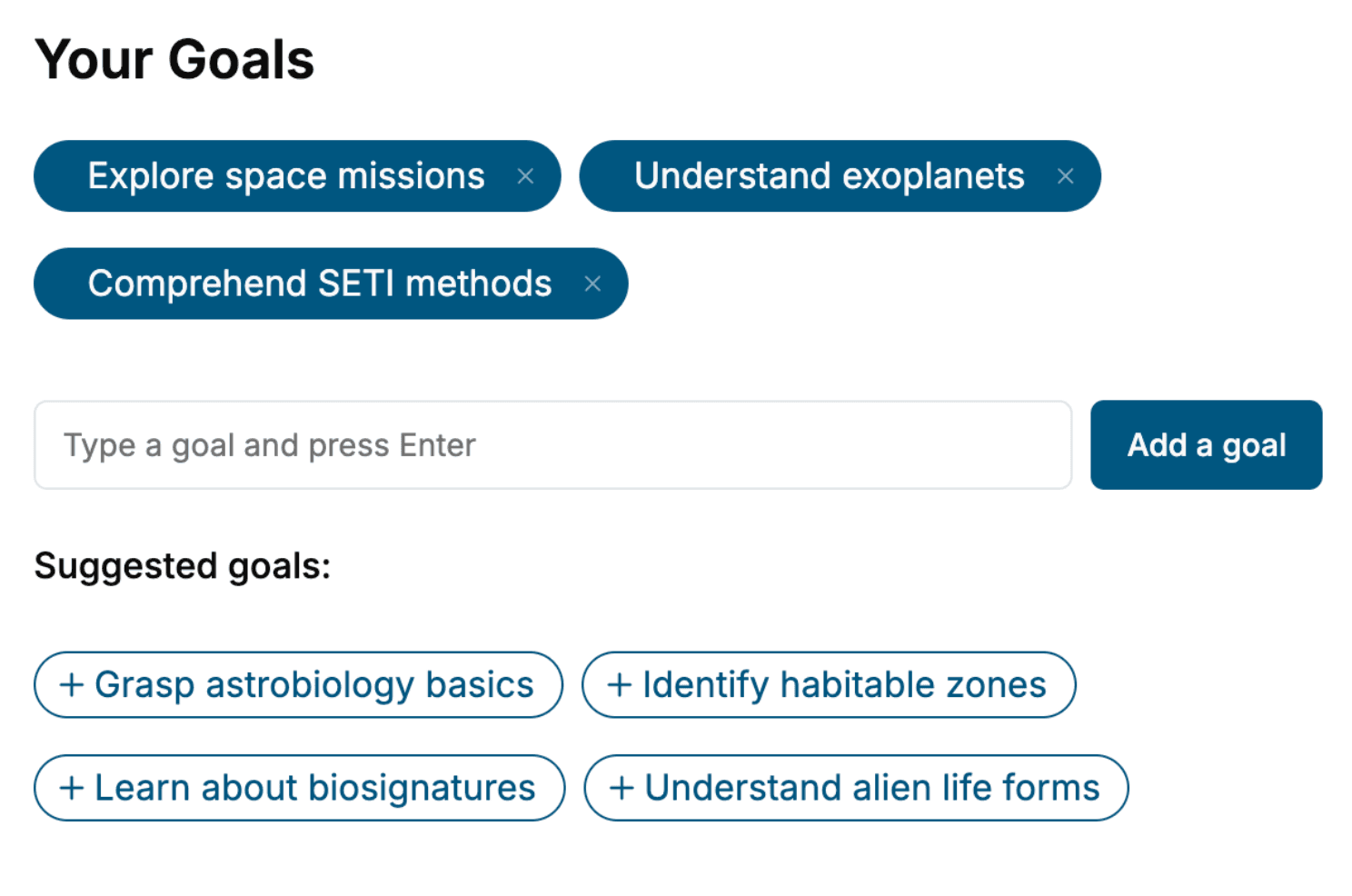
Specify your goals and choose sub-topics to include
- 3. Get your tailored book
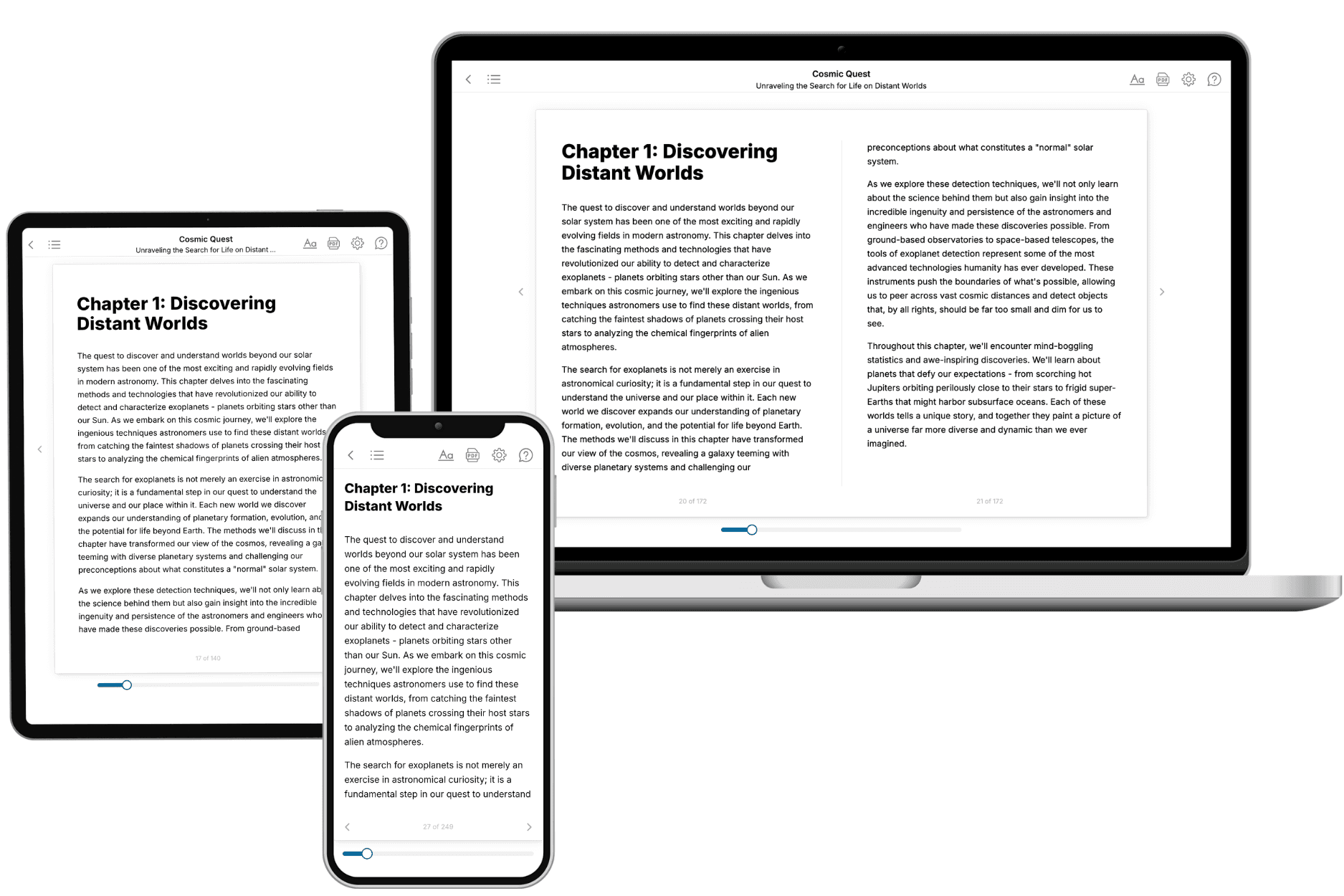
Your book is ready in 10 minutes. Read it online, download as EPUB or PDF, or send to Kindle.

Start from a template
Frequently asked questions
- What is TailoredRead?
TailoredRead creates complete, full-length nonfiction ebooks, written specifically for you. Tell us what you want to learn and why, and TailoredRead writes you a complete ebook on it, with charts, tables, and diagrams throughout. Read it online, on Kindle, or on any e-reader, or download it as a PDF or EPUB. Every book is written fresh the day you order it.
- How is the book tailored to me?
Before anything is written, you answer a few short questions about your goals, your background, and the topics you care about. Your book is then planned around your answers: written at your level, focused on your goals, and covering the topics you chose, instead of the one-size-fits-all book a store sells everyone.
- Will it read like generic AI content?
No. Your book isn't a chat transcript: it's planned chapter by chapter before a single word is written, told in a clear book voice, and explains ideas visually with charts, tables, and diagrams. After writing, every book goes through an editorial pass that polishes chapters so the book reads consistent from start to finish. Judge for yourself: browse thousands of sample books on our Explore Books page.
- How accurate is the content?
Our AI first checks whether your subject needs live research. Niche and fast-moving subjects are researched before writing, and the book plan and chapters are grounded in what it finds. After writing, every book goes through a quality pass that checks its facts and consistency, and researched books list their sources in a Notes section at the back.
- How long is the book?
You choose the length: Comprehensive (250-300 pages), Detailed (150-200 pages), Essential (70-100 pages), or Short (30-50 pages).
- Does the book include visuals?
Yes. Every book includes charts, tables, and diagrams: timelines, checklists, step-by-step guides, decision trees, comparison tables, matrices, and bar charts. A typical book includes dozens of these visual elements.
- Can I read it on Kindle? What formats can I download?
Yes. Every book can be read in our online reader or downloaded as a PDF or EPUB. The EPUB can be opened with Kindle, Apple Books, Kobo, and any e-reader. The Commercial and Author licenses also include an editable Word (DOCX) and Markdown download.
- How much does it cost?
About the price of a regular ebook. The exact price depends on your book's length and complexity, from $2 for the shortest books to $35 for the most comprehensive, and it's shown when you review your book, before you commit to anything. Each book is a one-time purchase, yours to keep, no subscription. Licenses that let you share, teach, or publish your book range from $35.99 to $49.99.
- Can I preview the book before purchasing?
Before you pay, you'll see what your book will cover: the title, a detailed description, the estimated length, and the complete chapter-by-chapter table of contents, so you know what you're getting before you decide. The full text itself is written after you purchase.
- How long does it take to create a book?
About 10 minutes. You can start reading the opening chapters while the rest is still being written.