Political Systems Books
Explore tailored Political Systems books created by our AI
Autocratic Leadership
Understanding Power, Control, and Governance in Authoritarian Systems
Imagine understanding the hidden mechanics of how authoritarian regimes actually function—not through speculation, but through clear analysis of proven patterns and real-world examples. This book cuts through the complexity of autocratic leadership systems to reveal how power is consolidated, maintained, and sometimes lost. You'll discover the specific strategies autocrats use to control populations, manage elites, and suppress opposition. From the institutional structures that enable authoritarian rule to the economic and social consequences that ripple through societies, this comprehensive guide examines both historical and contemporary examples. Whether you're studying political science, analyzing current events, or simply seeking to understand how different governance systems work, you'll gain practical knowledge about the mechanisms of autocracy, the vulnerabilities within authoritarian systems, and the conditions that lead to political change. This is essential reading for anyone who wants to move beyond headlines and truly comprehend how autocratic leadership shapes nations and impacts millions of lives.
Power Sharing
How Distributed Authority Creates Stronger, More Resilient Governments
Imagine a government where no single leader or party can unilaterally impose their will, where decisions require genuine negotiation and compromise, and where minority voices have real influence over outcomes. This is the promise of power-sharing systems—political structures designed to distribute authority across multiple institutions, branches, and stakeholders. This book explores how democracies around the world implement power-sharing mechanisms and why these systems matter for stability, representation, and justice. You'll discover the constitutional frameworks, institutional arrangements, and cultural practices that make power-sharing work, from separation of powers to federalism to proportional representation. Through real-world examples and practical analysis, you'll understand how different societies balance efficiency with representation, prevent tyranny of the majority, and create governments that serve broader populations. Whether you're interested in comparative politics, democratic reform, or simply understanding how your own government functions, this book provides the insights needed to evaluate power-sharing systems critically and appreciate their role in creating more resilient democracies.
Understand how Cuba transformed from a Caribbean nation under authoritarian rule into the Western Hemisphere's only communist state. This comprehensive guide examines the historical forces that propelled Fidel Castro to power, the ideological foundations of Cuban communism, and how the system has evolved over six decades. You'll explore the revolution's early promises and achievements, the mechanisms of communist governance, Cuba's complex relationship with the Soviet Union, and the economic challenges that reshaped the island after 1991. By analyzing both the system's accomplishments in healthcare and education alongside its restrictions on political freedom and economic innovation, you'll gain a balanced perspective on what Cuban communism means for its people. This book cuts through propaganda and oversimplification to present the nuanced reality of how communism functions in practice, the consequences of international isolation, and Cuba's ongoing struggle to sustain its revolutionary model in a changing world.
Most people watch regime change unfold on the news without understanding the deeper forces at work. When governments fall, democracies collapse, or authoritarian systems transform, it seems sudden and chaotic. But regime change follows patterns. This book reveals the structural conditions, mechanisms, and actors that drive political transformation across the globe. You'll learn why some regimes are vulnerable to collapse, how different pathways of change—from elections to revolutions to coups—produce different outcomes, and why some transitions succeed while others fail. By examining historical cases and contemporary examples, you'll develop a framework for analyzing political instability and understanding the forces reshaping nations. Whether you're interested in global politics, history, or simply making sense of current events, this book equips you with the analytical tools to understand one of the most consequential phenomena in human affairs.
The assumption that political parties are natural, inevitable, or even desirable features of democracy is surprisingly recent. For most of Western political history, the most sophisticated thinkers viewed organized factions as corrupting forces that distorted the pursuit of the common good. This book traces the genealogy of anti-party political thought from Plato's critique of democratic factionalism through contemporary populist movements, examining how philosophers, statesmen, and theorists have conceptualized the dangers of partisanship and imagined alternatives. You'll encounter Rousseau's vision of a general will transcending faction, the Federalist Papers' constitutional anxiety about party machinery, Tocqueville's ambivalent analysis of American partisanship, and the radical rejection of parties by socialist and anarchist movements. Rather than treating anti-party sentiment as mere nostalgia or populist demagoguery, this analysis reveals it as a coherent intellectual tradition grappling with enduring tensions between democratic participation and organized political competition. By understanding how different historical periods and ideological traditions have confronted the problem of faction, you gain critical perspective on contemporary debates about party reform, populism, and democratic alternatives.
How Government Works
A Practical Guide to Understanding the Federal System
Navigate the complex machinery of American federal government with clarity and confidence. This guide walks you through the foundational architecture that shapes policy, from the constitutional framework that divides power among three branches to the intricate committee systems that determine which bills become law. You'll discover how the President's executive authority works in practice, explore the federal bureaucracy that implements policies affecting your daily life, and understand the Supreme Court's role in interpreting constitutional limits on government power. Each chapter builds on the previous one, revealing how checks and balances actually function when branches compete for influence. Whether you're seeking to understand current political debates, engage more meaningfully in civic participation, or simply grasp how decisions get made in Washington, this book demystifies the structures and processes that define American governance. By the end, you'll see government not as an abstract concept but as a dynamic system where competing interests, constitutional constraints, and institutional traditions shape outcomes.
Related books you may like:
You're about to supercharge your animal advocacy efforts and nonprofit management skills with the power of AI. This groundbreaking guide is tailored specifically for leaders in the animal rights movement who are ready to harness cutting-edge technology to make a bigger impact. Discover how to leverage AI tools to streamline your operations, enhance your strategic planning, and amplify your advocacy campaigns. You'll learn practical techniques for automating administrative tasks, optimizing your workflow, and making data-driven decisions that will take your organization to the next level. From improving time management and task delegation to enhancing donor engagement and project tracking, this book offers a comprehensive roadmap for integrating AI into every aspect of your work. You'll gain insights into AI-driven research methods, problem-solving techniques, and productivity metrics that will revolutionize the way you approach animal advocacy.
Discover how air sign energy shapes your thinking, communication style, and approach to relationships. Whether you have a Gemini, Libra, or Aquarius placement in your birth chart, this guide reveals the intellectual and social gifts these signs bring—along with the blind spots worth understanding. You'll learn why air signs are natural communicators and idea-generators, how each sign expresses itself uniquely, and how your specific air sign placements influence your personality across different life areas. Through practical insights and real-world examples, you'll recognize air sign patterns in yourself and others, harness your natural strengths in connection and innovation, and navigate the challenges of overthinking and emotional detachment. Whether you're exploring your Sun, Moon, Rising, or other planetary placements, this book provides the clarity you need to work with your air sign energy authentically and effectively.
What if you could resolve years of trauma in just a handful of therapy sessions instead of months or years of traditional talk therapy? Accelerated Resolution Therapy (ART) offers a scientifically-grounded approach that harnesses your brain's natural healing capacity to process traumatic memories and emotional distress rapidly. This book demystifies how ART works at the neurological level, explains why it's so effective for conditions like PTSD, anxiety, and phobias, and explores how it differs from conventional therapeutic approaches. Whether you're a mental health professional considering adding ART to your practice, someone exploring treatment options for yourself or a loved one, or simply curious about innovative psychological interventions, this guide provides practical insights into one of the most promising developments in modern therapy. Discover how guided imagery and eye movement can facilitate profound emotional healing, what the research shows about its effectiveness, and whether ART might be the breakthrough approach you've been seeking.
Many people believe that behavior is determined either by our genetics or by direct rewards and punishments we experience. However, Albert Bandura's groundbreaking research revealed a more nuanced truth: we learn by watching others. This book explores the life and work of one of psychology's most influential figures and the revolutionary theory that transformed our understanding of human behavior. You'll discover how Bandura's concept of self-efficacy explains why some people persevere through challenges while others give up, how observational learning shapes everything from aggression to prosocial behavior, and why the environment, our thoughts, and our actions are constantly influencing each other. Whether you're an educator seeking to improve student outcomes, a professional interested in behavior change, or simply curious about the science of learning, this comprehensive guide illuminates the principles that govern human development and provides practical insights into how these theories apply to everyday life.
Create a Political Systems Book Tailored to You
Create an AI-crafted book tailored to your goals, interests, and background






Benefits of AI-tailored books
- Read one book, not ten:
- all the Political Systems knowledge you need, gathered into a single book.
- Save days of learning:
- tell us your goals, choose your topics, and the whole book is built around them.
- Learn effortlessly:
- Political Systems book written for your specific background and expertise.
- Understand at a glance:
- includes charts, tables, timelines, checklists, decision trees, and more.
- Stay current:
- written the day you order it, not years ago.
- Trust what you read:
- every book is checked for accuracy, with real research when your subject needs it.
Create your unique book in 3 steps
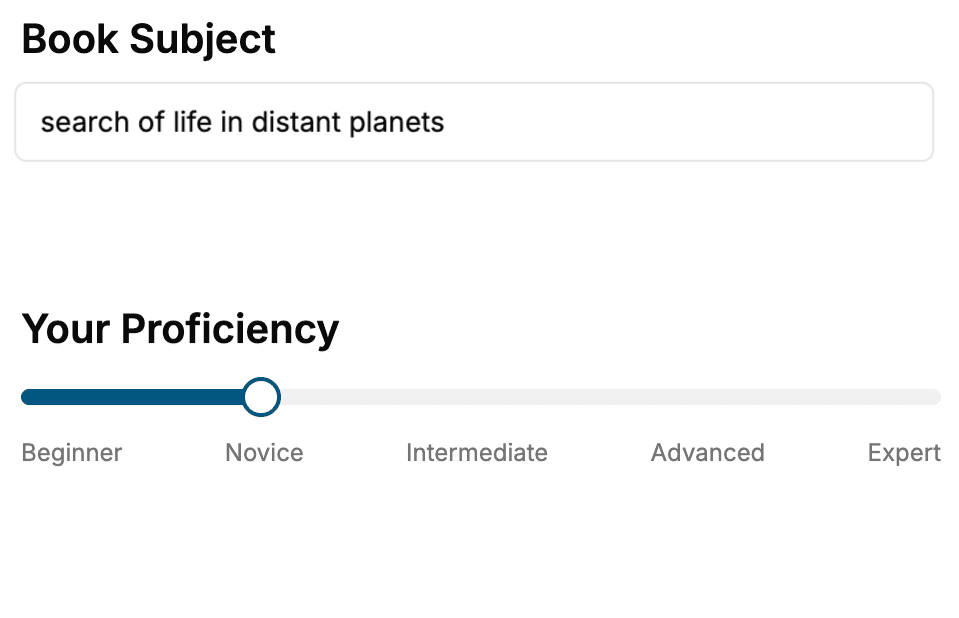
- 1. Select your focus
Select the focus of your Political Systems book and share your background
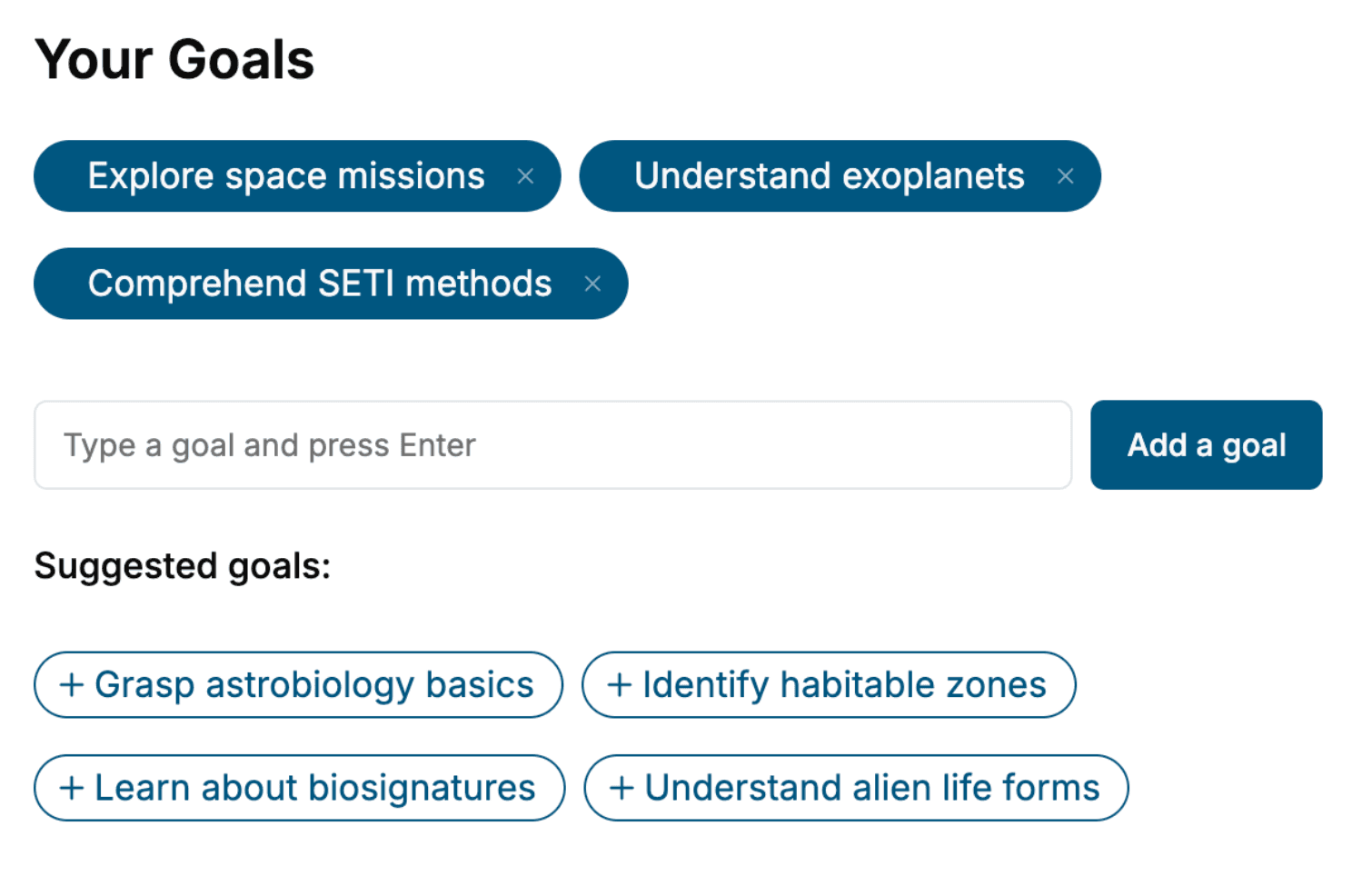
- 2. Personalize your book
Specify your goals and choose sub-topics to include
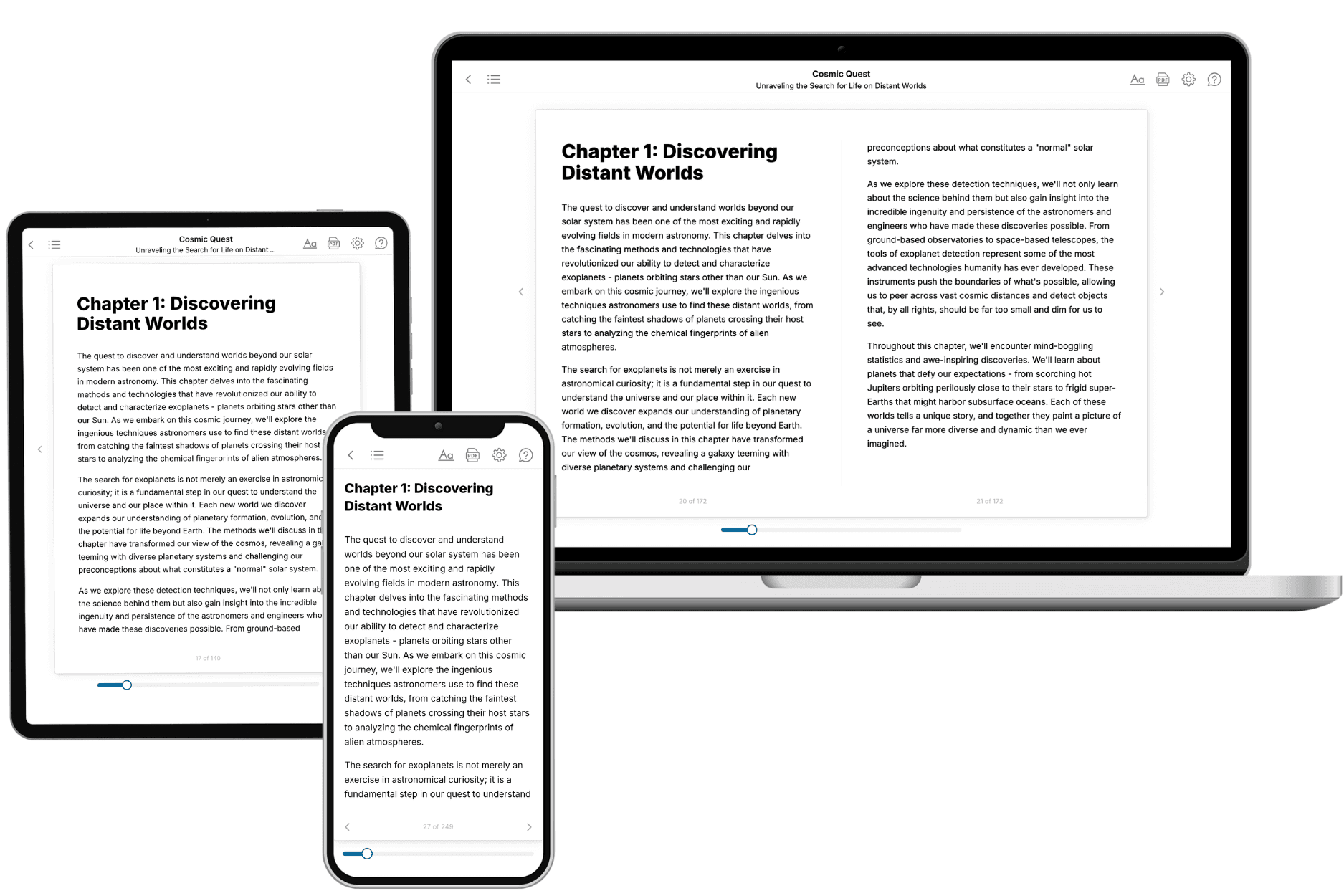
- 3. Get your tailored book
Your book is ready in 10 minutes. Read it online, download as EPUB or PDF, or send to Kindle.
Frequently asked questions
- What is TailoredRead?
TailoredRead creates complete, full-length nonfiction ebooks, written specifically for you. Tell us what you want to learn and why, and TailoredRead writes you a complete ebook on it, with charts, tables, and diagrams throughout. Read it online, on Kindle, or on any e-reader, or download it as a PDF or EPUB. Every book is written fresh the day you order it.
- How is the book tailored to me?
Before anything is written, you answer a few short questions about your goals, your background, and the topics you care about. Your book is then planned around your answers: written at your level, focused on your goals, and covering the topics you chose, instead of the one-size-fits-all book a store sells everyone.
- Will it read like generic AI content?
No. Your book isn't a chat transcript: it's planned chapter by chapter before a single word is written, told in a clear book voice, and explains ideas visually with charts, tables, and diagrams. After writing, every book goes through an editorial pass that polishes chapters so the book reads consistent from start to finish. Judge for yourself: browse thousands of sample books on our Explore Books page.
- How accurate is the content?
Our AI first checks whether your subject needs live research. Niche and fast-moving subjects are researched before writing, and the book plan and chapters are grounded in what it finds. After writing, every book goes through a quality pass that checks its facts and consistency, and researched books list their sources in a Notes section at the back.
- How long is the book?
You choose the length: Comprehensive (250-300 pages), Detailed (150-200 pages), Essential (70-100 pages), or Short (30-50 pages).
- Does the book include visuals?
Yes. Every book includes charts, tables, and diagrams: timelines, checklists, step-by-step guides, decision trees, comparison tables, matrices, and bar charts. A typical book includes dozens of these visual elements.
- Can I read it on Kindle? What formats can I download?
Yes. Every book can be read in our online reader or downloaded as a PDF or EPUB. The EPUB can be opened with Kindle, Apple Books, Kobo, and any e-reader. The Commercial and Author licenses also include an editable Word (DOCX) and Markdown download.
- How much does it cost?
About the price of a regular ebook. The exact price depends on your book's length and complexity, from $2 for the shortest books to $35 for the most comprehensive, and it's shown when you review your book, before you commit to anything. Each book is a one-time purchase, yours to keep, no subscription. Licenses that let you share, teach, or publish your book range from $35.99 to $49.99.
- Can I preview the book before purchasing?
Before you pay, you'll see what your book will cover: the title, a detailed description, the estimated length, and the complete chapter-by-chapter table of contents, so you know what you're getting before you decide. The full text itself is written after you purchase.
- How long does it take to create a book?
About 10 minutes. You can start reading the opening chapters while the rest is still being written.