Crystallography Books
Explore tailored Crystallography books created by our AI
Books readers created
19 Crystallography books, each written for the reader who ordered it. Read its introduction, then personalize it to get a book of your own.
As a lecturer with advanced academic credentials but limited crystallography background, you face a significant challenge: teaching complex structural concepts without deep practical experience in the field. This comprehensive guide bridges that gap by providing the complete knowledge framework you need to become an authoritative crystallography educator. This book takes you systematically from crystallography fundamentals through advanced applications, with particular emphasis on the techniques and concepts you'll teach most frequently. You'll master X-ray diffraction physics, learn to interpret crystal symmetry systematically, understand how the phase problem is solved in practice, and gain hands-on knowledge of protein crystallography methods. Each chapter builds progressively, connecting theory to real-world applications while emphasizing the pedagogical approaches that make complex concepts accessible to students. By the end, you'll possess both the theoretical depth and practical understanding needed to teach crystallography with confidence, answer student questions authoritatively, and guide research projects effectively. You'll understand not just the "what" but the "why" behind crystallographic methods—essential for any educator.
Determining the atomic structure of molecules has long been one of science's greatest challenges. X-ray crystallography stands as the primary method for solving these structures, yet many find the field intimidating due to its apparent complexity. This book demystifies X-ray crystallography by explaining the core physics, practical techniques, and real-world applications in clear, accessible language. You'll learn how X-rays interact with crystal lattices, discover the mathematical elegance of symmetry in crystallography, and understand the complete workflow from crystal growth to structure refinement. Through concrete examples and step-by-step explanations, you'll gain insight into how scientists have used this technique to revolutionize drug discovery, materials science, and our fundamental understanding of molecular biology. Whether you're a student, researcher, or curious learner, this book provides the knowledge you need to appreciate and apply X-ray crystallography in your work.
The Crystal Code
Understanding Atomic Structures and the Science Behind Solid Materials
Most people think crystals are rare, beautiful gemstones found in nature. In reality, crystals are everywhere—in your phone, your medications, the metals in your car, and even the salt on your table. The difference between a material that's strong and one that's brittle, a semiconductor that conducts electricity and one that doesn't, often comes down to how atoms are arranged at the microscopic level. This book demystifies crystallography by showing you how atoms organize themselves into ordered structures and why this arrangement matters. You'll discover how scientists use X-ray diffraction to see atomic patterns invisible to the naked eye, learn why some crystals have defects that actually make them more useful, and understand how crystal structure determines everything from a diamond's hardness to a metal's melting point. Whether you're studying chemistry, materials science, or simply curious about the hidden architecture of the physical world, this guide makes crystallography accessible and relevant to your life.
Are you struggling to move beyond basic X-ray diffraction analysis and unlock the full potential of your crystallographic data? Rietveld refinement is the gateway to extracting detailed structural information from powder diffraction patterns, yet many researchers find the technique intimidating or produce unreliable results. This guide demystifies the process by combining theoretical foundations with practical, step-by-step workflows. You'll learn how to prepare quality data, construct accurate structural models, navigate refinement software, troubleshoot common problems, and validate your results with confidence. Whether you're analyzing new materials, characterizing phase compositions, or refining complex crystal structures, this book provides the knowledge and strategies you need to perform rigorous, publication-ready Rietveld refinement. Move from uncertainty to mastery with clear explanations, real-world examples, and actionable guidance grounded in crystallographic principles.
What determines whether a material is hard or soft, conductive or insulating, transparent or opaque? The answer lies in solid state chemistry—the science of how atoms arrange themselves in crystalline solids and how these arrangements create the properties we observe. This book demystifies the atomic world of solids, showing you how the invisible architecture of materials directly shapes their behavior and applications. From the semiconductors powering your devices to the ceramics in your kitchen, solid state chemistry is everywhere. You'll discover how scientists use X-ray diffraction to "see" atomic arrangements, why tiny defects can dramatically change material properties, and how understanding crystal structures enables the design of better batteries, stronger alloys, and more efficient solar cells. Whether you're a student building foundational knowledge or a professional seeking deeper insight into materials science, this book provides the conceptual framework and practical understanding needed to grasp why materials behave the way they do.
The Mineral World
A Practical Guide to Understanding Earth's Crystalline Treasures
Many people struggle to move beyond basic mineral recognition, missing the deeper connections between crystal structure, geological processes, and Earth's dynamic systems. This book transforms your understanding of mineralogy by revealing how minerals form, why they matter, and how to identify them with confidence. You'll explore the atomic architecture that defines each mineral, master the physical properties that distinguish one from another, and discover how minerals tell the story of Earth's geological history. From the silicates that make up most of the planet to the rare minerals that drive modern technology, you'll gain practical knowledge applicable to field work, academic study, or simply appreciating the remarkable crystals beneath your feet. Whether you're a geology student, amateur collector, or curious learner, this guide provides the tools and insights needed to truly understand the mineral world.
Molecular Architecture
Understanding Structure, Bonding, and Properties in Physical Chemistry
Master the fundamental principles that govern how atoms combine to form molecules and how molecular structure determines chemical behavior. This comprehensive guide takes you beyond basic bonding concepts to explore the sophisticated relationships between molecular geometry, electronic structure, and physical properties. You'll discover how quantum mechanics shapes molecular orbitals, how symmetry principles simplify complex molecular analysis, and how spectroscopic techniques reveal structural details invisible to the naked eye. Through clear explanations and practical examples, you'll learn to predict molecular behavior, understand intermolecular interactions, and apply structural knowledge to real-world chemical problems. From simple diatomic molecules to complex crystalline structures, this book provides the tools you need to analyze molecular systems with confidence. You'll explore computational methods that complement experimental techniques, understand how temperature and pressure affect molecular arrangements, and gain insights into the structure-property relationships that drive modern materials science. Whether you're advancing your studies or applying chemistry in professional settings, this book will strengthen your ability to think molecularly and solve problems through structural analysis.
Desert Rocks Revealed
Master Mineral Identification and Geological Fieldwork in Arid Regions
What if the rocks beneath your feet in the desert hold secrets that most collectors never discover? This practical guide transforms your rockhounding passion into genuine geological expertise by teaching you to read the mineral composition, crystal structures, and weathering patterns that make desert rocks unique. You'll master systematic mineral identification techniques—from hardness and streak testing to luster classification—while learning how extreme heat, aridity, and thermal stress create distinctive formations found nowhere else. Discover why desert varnish, exfoliation patterns, and oxidation staining matter to serious collectors, and develop the field skills to document, photograph, and preserve specimens scientifically. Whether you're exploring the San Bernardino mountains or other arid regions, this book equips you with geological mapping techniques, expedition planning strategies, and safety protocols used by professional geologists. Move beyond casual collecting to become a knowledgeable interpreter of desert geology.
What if the materials you need to create don't exist through conventional chemistry? Hydrothermal synthesis offers a powerful alternative, harnessing water's extraordinary properties under extreme conditions to grow crystals with unprecedented control. This book demystifies the science behind this transformative technique, taking you from fundamental principles to practical mastery. You'll discover how temperature, pressure, and solvent chemistry work together to produce advanced inorganic materials—from zeolites and metal oxides to complex phosphates and silicates. Whether you're optimizing existing procedures or designing novel syntheses, you'll learn the systematic approach to manipulating reaction parameters for desired outcomes. The book covers essential safety practices, reactor selection, characterization methods, and real-world troubleshooting strategies. With clear explanations of thermodynamic and kinetic principles, practical experimental guidance, and insights into sustainable applications, this resource equips you to confidently conduct hydrothermal experiments and advance your materials chemistry expertise.
Metal Organic Frameworks
Building Blocks of Modern Chemistry and Materials Science
What if you could design a material from the ground up, controlling its pore size, chemical environment, and functionality with atomic precision? Metal Organic Frameworks make this possible. This book demystifies MOFs—hybrid crystalline materials that combine metal ions with organic molecules to create structures with extraordinary properties. You'll discover how these materials work at the molecular level, why they're revolutionizing gas storage and separation, and how chemists are engineering them for catalysis and environmental remediation. Whether you're studying chemistry, working in materials science, or simply fascinated by cutting-edge materials, this guide walks you through the fundamental concepts, synthesis strategies, and real-world applications that make MOFs one of the most exciting frontiers in modern chemistry. Learn the science behind the hype and understand why MOFs are poised to solve some of our most pressing challenges in energy, environment, and sustainability.
Group Theory Essentials
From Abstract Algebra to Quantum Mechanics and Crystallography
Discover how the elegant mathematics of group theory illuminates the symmetries underlying quantum mechanics, crystallography, and molecular physics. This book bridges the gap between abstract algebra and physical applications, designed specifically for those with physics expertise seeking to master group theory's practical power. You'll progress from fundamental group concepts through cyclic structures, then explore how symmetry operations organize crystal lattices and molecular geometries. Learn how quantum mechanical systems exploit symmetries to determine energy levels and selection rules, and understand why point groups and space groups completely characterize physical systems. Each concept connects directly to real physics problems, showing you how abstract mathematical structures translate into measurable phenomena. Whether you're revisiting group theory with fresh perspective or building deeper intuition for its applications, this book provides the conceptual clarity and practical examples needed to confidently apply group theory to your physics interests.
You stand at the threshold of understanding one of physics' most fascinating realms—where individual atoms and molecules come together to create the rich tapestry of materials that surround us. This comprehensive exploration takes you from the quantum mechanical behavior of electrons and atoms to the emergence of macroscopic properties in solids and liquids. You'll discover how the same fundamental forces that govern molecular interactions scale up to determine whether a material conducts electricity, exhibits magnetism, or transforms between different phases. Through clear explanations and practical examples, you'll learn to connect the microscopic world of quantum mechanics with the tangible properties of metals, semiconductors, insulators, and exotic quantum materials. Your understanding will deepen as you explore how crystal structures, electronic bands, and many-body interactions work together to create phenomena like superconductivity, magnetism, and phase transitions. You'll gain insight into how defects and surfaces influence material behavior, and why these seemingly imperfect features often control the most important technological applications. By the end of this journey, you'll possess a solid foundation for understanding how the molecular world shapes the materials that define our technological civilization, from the silicon in computer chips to the exotic quantum materials driving tomorrow's innovations.
Most rockhounders spend countless hours searching randomly across the landscape, missing productive sites and collecting the same common specimens repeatedly. This comprehensive atlas changes that approach by providing you with systematic methods to map geological formations, identify rare minerals in the field, and access the most productive collecting locations in Western Colorado and Eastern Utah. You'll master field identification techniques including streak testing, acid testing, and crystalline structure analysis—skills that work without laboratory equipment. Learn how to read geological maps, understand pegmatite deposits and hydrothermal veins, and recognize the specific formations where rare gemstones concentrate. This guide covers permit requirements, safety protocols, and accessibility information for major collecting regions, ensuring you collect legally and responsibly. Build a documented specimen collection with photography and database systems that transform your hobby into a valuable geological reference. Whether you're hunting tourmalines, beryls, quartz varieties, or rare earth element minerals, you'll discover how to locate productive sites systematically and expand your collection with confidence.
The Mineral Kingdom
A Comprehensive Guide to Earth's Treasures
Dive into the fascinating world of minerals with "The Mineral Kingdom: A Comprehensive Guide to Earth's Treasures." This book takes you on an exhilarating exploration of the Earth's hidden gems, from the common to the rare, unraveling the mysteries of their formation and properties. As you progress through the pages, you'll develop a keen eye for mineral identification and classification. You'll learn to decipher the intricate crystal systems that give minerals their unique structures and discover how these microscopic arrangements influence their macroscopic properties. "The Mineral Kingdom" doesn't just stop at identification; it delves deep into the geological processes that shape our planet. You'll gain insights into the formation of igneous, metamorphic, and sedimentary rocks, and understand how minerals play a crucial role in each. From the fiery depths of volcanoes to the intense pressures of the Earth's crust, you'll witness the incredible journey of mineral creation. This guide also serves as your passport to mineral localities around the globe. You'll explore famous sites and hidden treasures, learning about the unique geological conditions that make each location special. By the end of this journey, you'll have a newfound appreciation for the mineral wealth beneath our feet and the scientific wonders it represents.
Protein Architecture
Understanding How Proteins Work at the Molecular Level
You'll journey through the fascinating world of proteins, discovering how these molecular machines are built and why their structure matters so profoundly. Starting with the fundamental building blocks—amino acids—you'll learn how simple chemical units assemble into complex three-dimensional structures that perform virtually every function in living cells. As you progress, you'll explore the forces that shape protein folding, the experimental techniques that reveal atomic-level details, and how protein dysfunction leads to disease. You'll understand why a single misplaced atom can destroy a protein's function, and how scientists are now designing entirely new proteins to solve medical challenges. By the end, you'll see proteins not as static textbook diagrams, but as dynamic, elegant solutions to biological problems—and you'll grasp why understanding protein structure is essential for advancing medicine, biotechnology, and our fundamental knowledge of life itself.
Discover how scientists and engineers build advanced materials one atom at a time using molecular beam epitaxy. This book takes you through the complete landscape of MBE technology—from the fundamental physics governing molecular beam behavior and crystal growth to the practical realities of operating sophisticated deposition systems. You'll learn how MBE achieves the atomic-level precision that makes modern semiconductors, quantum devices, and photonic materials possible. Through clear explanations of growth mechanisms, system components, and real-world applications, you'll understand why MBE remains the gold standard for creating high-quality thin films and heterostructures. Whether you're entering the field, optimizing existing processes, or exploring MBE's potential for your research, this guide provides the knowledge and insights needed to work effectively with this transformative technology.
Reading the Ground Beneath Your Feet
A Practical Path Into Rocks, Minerals, and Deep Time
Some of the most fascinating stories on Earth are written in stone, but they only become readable once you know the language. This book opens that language one concept at a time. You begin with the minerals that make up every rock, learning how to recognize them through luster, streak, and hardness, and how crystal structures explain the patterns you see. From there you move through the three great rock families, following the heat, pressure, and sediment that shape each one, and you learn to read the textures that reveal their origins. Along the way you explore the layered interior of the planet, the moving plates above it, and the processes that build mountains and open oceans. You also gain the tools to place events in order, from relative relationships and unconformities to radiometric dating, and to see how life's history is recorded within the same layers. The final chapters turn to field work, showing how geologic maps and field mapping techniques bring it all together. Written for curious readers with a technical mindset, this book builds understanding step by step, so every new idea connects to the one before it.
Many collectors assume that once a gemstone is acquired, its preservation is automatic. The reality is far different. Without proper protective coatings, your valuable pieces face oxidation, fading, dust accumulation, and environmental damage that can permanently diminish their beauty and worth. This guide reveals the professional-grade techniques used by museum conservators and expert collectors to protect and enhance gemstone collections. You'll discover how to select the right coating for each piece, master application methods that deliver flawless results, and implement maintenance routines that keep your collection pristine for decades. Whether you're protecting rare specimens, restoring vintage pieces, or enhancing display quality, this book provides the practical knowledge and step-by-step instructions needed to achieve museum-quality finishes while preserving your collection's long-term value.
What makes a simple sugar fundamentally different from the starch in your bread, and why does that difference matter? This book demystifies carbohydrate chemistry by connecting molecular structures to real-world behavior. You'll explore how carbon, hydrogen, and oxygen atoms arrange themselves into the molecules that power life itself—from the glucose fueling your cells to the cellulose building plant structures. Each chapter builds systematically from foundational concepts through increasingly complex topics, using clear explanations and practical examples. Whether you're studying chemistry, working in biochemistry, or simply curious about the molecules around you, this guide makes carbohydrate chemistry accessible without oversimplifying. You'll understand not just what carbohydrates are, but how their structures determine their properties and functions, and how chemists manipulate these molecules for practical applications.
Related books you may like:
Discover how advanced functional materials are reshaping industries and enabling solutions to humanity's greatest challenges. This comprehensive guide takes you beyond basic materials science to explore the cutting-edge world of engineered materials designed to perform specific, transformative functions. You'll learn how scientists and engineers manipulate atomic structures and processing conditions to create materials that respond to stimuli, conduct electricity with unprecedented efficiency, or heal themselves. From smart polymers that change properties on demand to nanomaterials with revolutionary capabilities, this book reveals the principles behind these innovations and their practical applications in healthcare, energy, electronics, and aerospace. Whether you're advancing your career, developing new products, or simply fascinated by the materials shaping our future, you'll gain the knowledge to understand, evaluate, and potentially contribute to this rapidly evolving field.
Most chemical reactions should happen instantly, yet they don't. The culprit? Activation energy—the invisible barrier that keeps reactants locked in place until enough energy arrives to break them free. Without understanding this fundamental concept, enzyme kinetics remains a mystery, and the elegant mechanisms by which life accelerates reactions seem like magic. This book demystifies activation energy and enzyme kinetics through clear explanations, practical examples, and visual frameworks. You'll discover how enzymes perform their catalytic miracles by lowering activation energy, explore the mathematics of reaction rates through the Arrhenius equation and Michaelis-Menten kinetics, and learn how inhibition mechanisms control biological processes. Whether you're studying biochemistry, developing pharmaceuticals, or optimizing industrial processes, this guide equips you with both the conceptual understanding and quantitative tools needed to predict, analyze, and manipulate enzyme-catalyzed reactions with confidence.
Achieve reliable, reproducible separations of complex chemical mixtures using adsorption chromatography. This practical guide bridges the gap between theoretical principles and real-world laboratory application, providing you with the knowledge and skills to design effective separation strategies for your specific analytical needs. You'll explore the fundamental science of how compounds interact with adsorbent materials, learn to select optimal stationary and mobile phases, and master the practical techniques that ensure consistent results. Whether you're working with thin-layer chromatography, column chromatography, or HPLC systems, this book equips you with systematic approaches to troubleshooting common problems, optimizing separations, and interpreting data with confidence. Packed with practical examples, decision-making frameworks, and evidence-based strategies, you'll develop the expertise to tackle challenging separation problems and advance your analytical capabilities in pharmaceutical, environmental, or materials research.
Many assume adipose tissue is simply inert fat to be minimized or removed. In reality, it's a sophisticated, metabolically active organ with remarkable regenerative potential. This book reveals how adipose tissue engineering is revolutionizing medicine by creating functional tissue solutions for reconstruction, regeneration, and therapeutic applications. You'll discover the biological foundations of adipose tissue, learn how scientists harvest and cultivate adipose-derived stem cells, and explore cutting-edge engineering strategies that transform these cells into viable tissue constructs. From scaffold design and bioreactor optimization to vascularization techniques and clinical translation, this guide provides practical insights into the science and engineering behind adipose tissue regeneration. Whether you're a researcher, student, or healthcare professional, you'll gain actionable knowledge about the current state of the field, emerging technologies, and the real-world challenges of bringing engineered tissues from the laboratory to clinical practice.
In the rapidly evolving world of ultra-high-speed communications, the challenge of designing secure and efficient chips has never been more daunting. As a Principal Architect, you face the complex task of integrating cutting-edge VLSI techniques with robust cryptographic solutions. This book is your comprehensive guide to conquering these challenges. "Advanced VLSI Design" delves deep into the intricacies of modern chip architecture, offering you practical insights into overcoming CMOS scaling limitations, harnessing the power of 3D IC integration, and implementing state-of-the-art FinFET technology. You'll explore innovative approaches to low-power design and high-speed SerDes, crucial for next-generation communication systems. This book doesn't just stop at performance; it equips you with the knowledge to build security from the ground up. From hardware Trojan detection to side-channel analysis resistance, you'll learn how to create chips that are not only fast but also fortified against modern security threats. Dive into advanced topics like quantum-dot cellular automata and EUV lithography, positioning yourself at the forefront of VLSI innovation.
Create a Crystallography Book Tailored to You
Create an AI-crafted book tailored to your goals, interests, and background






Benefits of AI-tailored books
- Read one book, not ten:
- all the Crystallography knowledge you need, gathered into a single book.
- Save days of learning:
- tell us your goals, choose your topics, and the whole book is built around them.
- Learn effortlessly:
- Crystallography book written for your specific background and expertise.
- Understand at a glance:
- includes charts, tables, timelines, checklists, decision trees, and more.
- Stay current:
- written the day you order it, not years ago.
- Trust what you read:
- every book is checked for accuracy, with real research when your subject needs it.
Create your unique book in 3 steps
- 1. Select your focus
Select the focus of your Crystallography book and share your background
- 2. Personalize your book
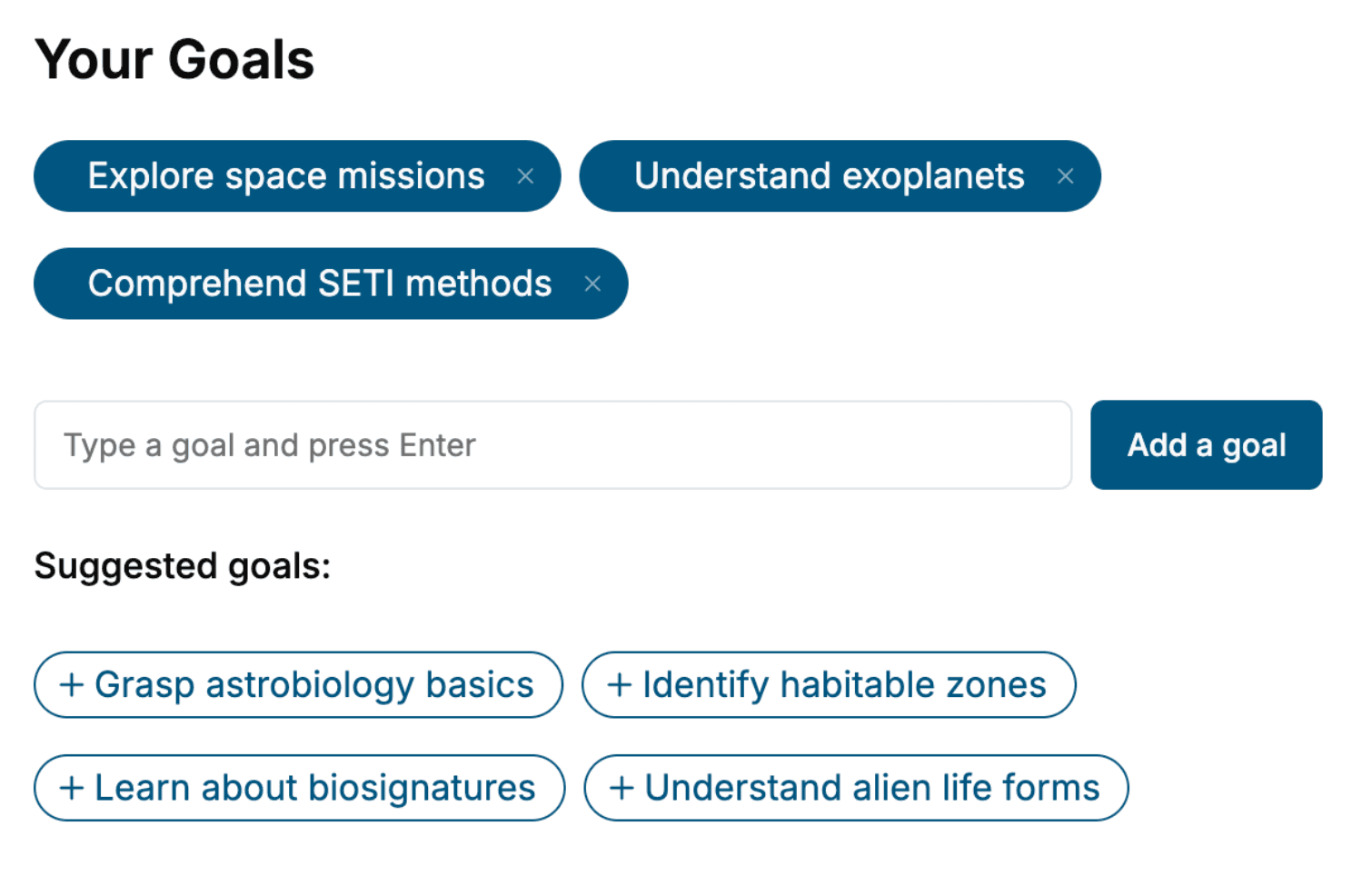
Specify your goals and choose sub-topics to include
- 3. Get your tailored book
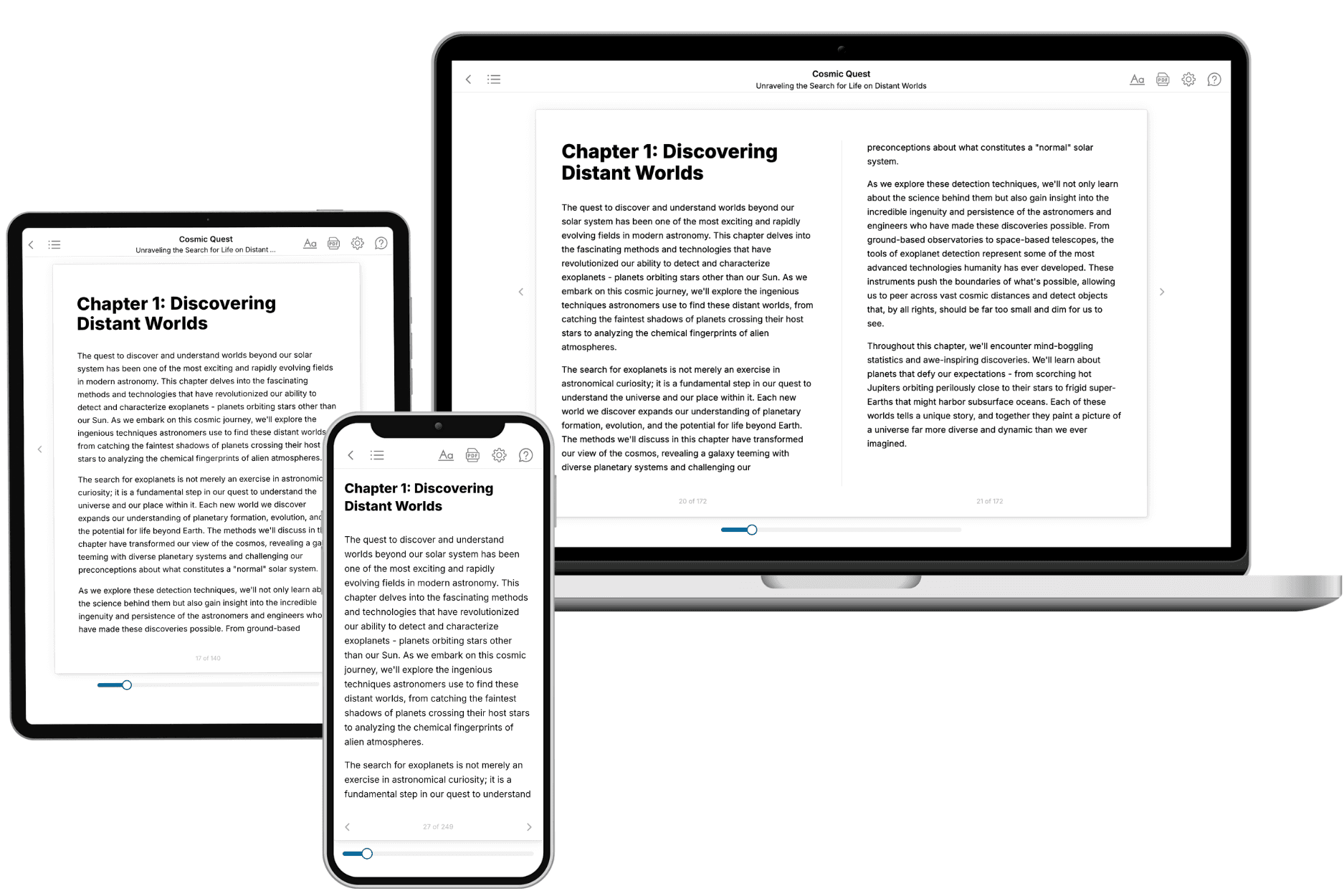
Your book is ready in 10 minutes. Read it online, download as EPUB or PDF, or send to Kindle.

Start from a template
Frequently asked questions
- What is TailoredRead?
TailoredRead creates complete, full-length nonfiction ebooks, written specifically for you. Tell us what you want to learn and why, and TailoredRead writes you a complete ebook on it, with charts, tables, and diagrams throughout. Read it online, on Kindle, or on any e-reader, or download it as a PDF or EPUB. Every book is written fresh the day you order it.
- How is the book tailored to me?
Before anything is written, you answer a few short questions about your goals, your background, and the topics you care about. Your book is then planned around your answers: written at your level, focused on your goals, and covering the topics you chose, instead of the one-size-fits-all book a store sells everyone.
- Will it read like generic AI content?
No. Your book isn't a chat transcript: it's planned chapter by chapter before a single word is written, told in a clear book voice, and explains ideas visually with charts, tables, and diagrams. After writing, every book goes through an editorial pass that polishes chapters so the book reads consistent from start to finish. Judge for yourself: browse thousands of sample books on our Explore Books page.
- How accurate is the content?
Our AI first checks whether your subject needs live research. Niche and fast-moving subjects are researched before writing, and the book plan and chapters are grounded in what it finds. After writing, every book goes through a quality pass that checks its facts and consistency, and researched books list their sources in a Notes section at the back.
- How long is the book?
You choose the length: Comprehensive (250-300 pages), Detailed (150-200 pages), Essential (70-100 pages), or Short (30-50 pages).
- Does the book include visuals?
Yes. Every book includes charts, tables, and diagrams: timelines, checklists, step-by-step guides, decision trees, comparison tables, matrices, and bar charts. A typical book includes dozens of these visual elements.
- Can I read it on Kindle? What formats can I download?
Yes. Every book can be read in our online reader or downloaded as a PDF or EPUB. The EPUB can be opened with Kindle, Apple Books, Kobo, and any e-reader. The Commercial and Author licenses also include an editable Word (DOCX) and Markdown download.
- How much does it cost?
About the price of a regular ebook. The exact price depends on your book's length and complexity, from $2 for the shortest books to $35 for the most comprehensive, and it's shown when you review your book, before you commit to anything. Each book is a one-time purchase, yours to keep, no subscription. Licenses that let you share, teach, or publish your book range from $35.99 to $49.99.
- Can I preview the book before purchasing?
Before you pay, you'll see what your book will cover: the title, a detailed description, the estimated length, and the complete chapter-by-chapter table of contents, so you know what you're getting before you decide. The full text itself is written after you purchase.
- How long does it take to create a book?
About 10 minutes. You can start reading the opening chapters while the rest is still being written.