Structural Chemistry Books
Explore tailored Structural Chemistry books created by our AI
Are you struggling to move beyond basic X-ray diffraction analysis and unlock the full potential of your crystallographic data? Rietveld refinement is the gateway to extracting detailed structural information from powder diffraction patterns, yet many researchers find the technique intimidating or produce unreliable results. This guide demystifies the process by combining theoretical foundations with practical, step-by-step workflows. You'll learn how to prepare quality data, construct accurate structural models, navigate refinement software, troubleshoot common problems, and validate your results with confidence. Whether you're analyzing new materials, characterizing phase compositions, or refining complex crystal structures, this book provides the knowledge and strategies you need to perform rigorous, publication-ready Rietveld refinement. Move from uncertainty to mastery with clear explanations, real-world examples, and actionable guidance grounded in crystallographic principles.
Determining the atomic structure of molecules has long been one of science's greatest challenges. X-ray crystallography stands as the primary method for solving these structures, yet many find the field intimidating due to its apparent complexity. This book demystifies X-ray crystallography by explaining the core physics, practical techniques, and real-world applications in clear, accessible language. You'll learn how X-rays interact with crystal lattices, discover the mathematical elegance of symmetry in crystallography, and understand the complete workflow from crystal growth to structure refinement. Through concrete examples and step-by-step explanations, you'll gain insight into how scientists have used this technique to revolutionize drug discovery, materials science, and our fundamental understanding of molecular biology. Whether you're a student, researcher, or curious learner, this book provides the knowledge you need to appreciate and apply X-ray crystallography in your work.
The Crystal Code
Understanding Atomic Structures and the Science Behind Solid Materials
Most people think crystals are rare, beautiful gemstones found in nature. In reality, crystals are everywhere—in your phone, your medications, the metals in your car, and even the salt on your table. The difference between a material that's strong and one that's brittle, a semiconductor that conducts electricity and one that doesn't, often comes down to how atoms are arranged at the microscopic level. This book demystifies crystallography by showing you how atoms organize themselves into ordered structures and why this arrangement matters. You'll discover how scientists use X-ray diffraction to see atomic patterns invisible to the naked eye, learn why some crystals have defects that actually make them more useful, and understand how crystal structure determines everything from a diamond's hardness to a metal's melting point. Whether you're studying chemistry, materials science, or simply curious about the hidden architecture of the physical world, this guide makes crystallography accessible and relevant to your life.
You'll navigate through the fascinating world where chemistry meets electricity, discovering how electrons move between atoms to create the reactions that power modern technology. This comprehensive guide takes you from the fundamental principles of electron transfer through increasingly sophisticated electrochemical systems, building your confidence with each concept. You'll explore the architecture of electrochemical cells, learn to predict reaction outcomes using quantitative tools, and discover how these principles apply to batteries, corrosion, electroplating, and emerging energy technologies. Through clear explanations, practical examples, and connections to structural chemistry, you'll develop both the theoretical understanding and practical skills needed to analyze electrochemical systems. Whether you're preparing for advanced coursework, supporting professional work in chemistry or materials science, or simply deepening your scientific knowledge, this book provides the clarity and depth you need to master electrochemistry and see how it shapes the world around you.
What if the key to designing molecules that work together perfectly lies not in complex chemistry, but in understanding the simple building blocks that make them interact? Functional groups are the chemical signatures that determine how molecules recognize and bind to one another—yet many chemists treat them as isolated concepts rather than the foundation of supramolecular design. This book bridges that gap by exploring how functional groups orchestrate molecular recognition, assembly, and function in supramolecular systems. You'll discover how hydrogen bond donors and acceptors create selective interactions, how aromatic rings engage in π-π stacking, and how electrostatic forces guide molecular organization. Through practical examples and clear explanations, you'll learn to predict molecular behavior, design supramolecular architectures with precision, and apply these principles to real-world challenges in drug delivery, catalysis, and materials science. Whether you're advancing your chemistry knowledge or solving practical design problems, this book equips you with the conceptual tools to harness functional groups as the foundation of supramolecular chemistry.
What makes a simple sugar fundamentally different from the starch in your bread, and why does that difference matter? This book demystifies carbohydrate chemistry by connecting molecular structures to real-world behavior. You'll explore how carbon, hydrogen, and oxygen atoms arrange themselves into the molecules that power life itself—from the glucose fueling your cells to the cellulose building plant structures. Each chapter builds systematically from foundational concepts through increasingly complex topics, using clear explanations and practical examples. Whether you're studying chemistry, working in biochemistry, or simply curious about the molecules around you, this guide makes carbohydrate chemistry accessible without oversimplifying. You'll understand not just what carbohydrates are, but how their structures determine their properties and functions, and how chemists manipulate these molecules for practical applications.
Liquid Crystals Unlocked
Master the Science of Molecular Order and Practical Applications
Understanding liquid crystals feels overwhelming when you're caught between basic chemistry and advanced materials science. Most resources either oversimplify the concepts or dive too deep into mathematical complexity, leaving you struggling to grasp how these fascinating materials actually work. This book bridges that gap by explaining liquid crystals through the lens of supramolecular chemistry—showing you exactly how molecular interactions create ordered structures with extraordinary properties. You'll discover why certain molecules form liquid crystals while others don't, how these materials respond to external stimuli, and why they've become indispensable in modern technology. From display screens to biosensors, you'll see liquid crystals in action and understand the science behind their remarkable behavior. Whether you're studying chemistry, working in materials science, or simply fascinated by how molecules organize themselves, this guide provides the clarity and depth you need to truly master this captivating field.
As a lecturer with advanced academic credentials but limited crystallography background, you face a significant challenge: teaching complex structural concepts without deep practical experience in the field. This comprehensive guide bridges that gap by providing the complete knowledge framework you need to become an authoritative crystallography educator. This book takes you systematically from crystallography fundamentals through advanced applications, with particular emphasis on the techniques and concepts you'll teach most frequently. You'll master X-ray diffraction physics, learn to interpret crystal symmetry systematically, understand how the phase problem is solved in practice, and gain hands-on knowledge of protein crystallography methods. Each chapter builds progressively, connecting theory to real-world applications while emphasizing the pedagogical approaches that make complex concepts accessible to students. By the end, you'll possess both the theoretical depth and practical understanding needed to teach crystallography with confidence, answer student questions authoritatively, and guide research projects effectively. You'll understand not just the "what" but the "why" behind crystallographic methods—essential for any educator.
Many people think molecular biotechnology is purely about genetics or laboratory techniques, but the real power lies in understanding molecular structure. Your ability to grasp how atoms bond together, how proteins fold, and how molecules interact determines whether you can truly understand—and innovate in—biotechnology. This book bridges the gap between structural chemistry and biotechnology by showing you exactly how molecular architecture drives biological function. You'll discover why certain drug molecules bind to specific proteins, how genetic engineers modify DNA at the molecular level, and how structural knowledge enables the development of new therapies and industrial applications. Whether you're pursuing a career in biotech, studying for advanced coursework, or simply curious about how modern medicine works at the molecular level, this guide provides the conceptual foundation and practical insights you need to understand the field with confidence and clarity.
Many researchers struggle with X-ray absorption spectroscopy because they view it as an intimidating black box—complex equipment producing cryptic data. In reality, XAS is a powerful, elegant technique that directly reveals what elements are present in your sample and how they're arranged at the atomic level. This guide demystifies the science behind X-ray absorption, walking you through the physics of how X-rays interact with matter, the practical realities of conducting experiments at synchrotron facilities, and the systematic approach to analyzing your data. Whether you're characterizing catalysts, studying environmental contaminants, or investigating novel materials, you'll learn how to design experiments that answer your specific questions, collect high-quality data, and extract meaningful insights. With clear explanations, real-world examples, and practical troubleshooting advice, this book transforms XAS from mysterious to manageable—giving you the confidence to leverage this technique for breakthrough discoveries in your research.
Molecular Design Essentials
How Structural Chemistry Creates Life-Saving Medicines
Most people think drug discovery is pure luck—scientists randomly testing thousands of compounds until something works. The reality is far more elegant. Every effective medicine is the result of deliberate molecular engineering, where chemists strategically modify structures to create compounds that fit perfectly into disease-causing proteins like keys in locks. This book reveals how structural chemistry transforms from abstract theory into life-saving treatments. You'll discover why a single atom's position matters, how chemists predict drug behavior before testing, and why some molecules succeed while others fail. Whether you're studying chemistry, working in pharmaceuticals, or simply curious about how medicines actually work, this guide connects the dots between molecular structure and therapeutic power. Learn the principles that guide modern drug design, explore real examples of structural modifications that saved lives, and understand the science behind the medicines in your medicine cabinet.
Heterocyclic Chemistry Essentials
Master Ring Systems and Organic Reactions with Confidence
Many chemists struggle with heterocyclic chemistry because traditional organic chemistry textbooks treat ring systems as exceptions rather than logical extensions of fundamental principles. This book bridges that gap by presenting heterocyclic chemistry as an integrated discipline grounded in core concepts you already understand. You'll discover how heteroatoms fundamentally alter aromaticity, reactivity, and synthesis strategies compared to benzene. Through clear explanations of electron distribution, resonance effects, and practical reaction mechanisms, you'll develop the intuition to predict how different heterocycles behave. The book progresses from foundational concepts through synthesis strategies and real-world applications, equipping you with both theoretical knowledge and practical problem-solving skills. Whether you're preparing for advanced coursework, conducting research, or working in pharmaceutical development, this guide provides the clarity and depth needed to master heterocyclic chemistry and apply it confidently in your work.
Gain a thorough understanding of pyrrolidine alkaloids and their significance in modern chemistry. This book bridges the gap between basic organic chemistry and specialized alkaloid research, providing you with the knowledge to recognize, synthesize, and apply these important compounds. You'll explore the fundamental structures that make pyrrolidine alkaloids unique, discover how chemists create them in the laboratory, and learn about their remarkable biological properties. Whether you're interested in pharmaceutical development, natural product chemistry, or advancing your expertise in organic synthesis, this guide equips you with practical insights and theoretical foundations. Each chapter builds progressively, from foundational concepts to advanced applications, ensuring you can apply this knowledge to real-world research and industrial challenges. Discover why pyrrolidine alkaloids remain at the forefront of drug discovery and chemical innovation.
Discover how molecules communicate, recognize each other, and orchestrate complex reactions without forming covalent bonds. This comprehensive guide takes you beyond traditional chemistry to explore the elegant world of supramolecular reaction mechanisms—where weak interactions create powerful effects. You'll learn how hydrogen bonds, van der Waals forces, and electrostatic interactions drive molecular recognition and catalysis. Through clear explanations and practical examples, you'll understand binding kinetics, thermodynamic principles, and the design strategies behind host-guest complexes. Whether you're studying chemistry, conducting research, or developing new materials and pharmaceuticals, this book equips you with the conceptual framework and analytical tools to predict, design, and control supramolecular reactions. Master the mechanisms that nature uses to build life itself and harness them for innovation.
Beyond the Molecule
Mastering Supramolecular Chemistry and the Art of Molecular Assembly
Discover how molecules organize themselves into sophisticated structures and systems without forming traditional chemical bonds. This book reveals the hidden forces that govern molecular assembly, from the hydrogen bonds holding DNA together to the self-organizing materials revolutionizing nanotechnology. You'll explore the fundamental non-covalent interactions that make supramolecular chemistry possible, understand how molecules recognize and bind to each other with remarkable specificity, and learn how these principles drive innovation in drug delivery, catalysis, and smart materials. Through clear explanations, practical examples, and real-world applications, you'll gain the knowledge to recognize supramolecular phenomena in everyday chemistry and apply these concepts to solve complex molecular design challenges. Whether you're advancing your chemistry education or seeking to understand the molecular basis of cutting-edge technologies, this comprehensive guide makes supramolecular chemistry accessible and immediately applicable.
This comprehensive guide takes you from IR spectroscopy fundamentals to confident practical application in your laboratory. You'll start by understanding the physics behind infrared absorption and how molecules interact with IR radiation, then progress through the essential techniques for sample preparation and instrument operation. The book systematically covers functional group identification, teaching you to recognize characteristic absorption patterns that reveal molecular structure. You'll explore both qualitative and quantitative analysis methods, learning how to extract meaningful data from spectra and avoid common pitfalls. Real-world case studies demonstrate how IR spectroscopy solves actual analytical challenges in pharmaceutical, polymer, and materials research. Whether you're troubleshooting instrument problems, optimizing methods, or interpreting complex spectra, this book provides the practical knowledge and theoretical understanding needed to master infrared spectroscopy in your chemical analysis work.
Master the chemistry behind the materials that shape our world. This comprehensive guide connects organic reaction mechanisms to polymer synthesis, giving you the knowledge to understand how polymers are made and why they behave the way they do. You'll explore addition and condensation polymerization pathways, learn how reaction conditions control polymer properties, and discover the organic chemistry principles that govern macromolecular formation. Whether you're studying polymer science, working in materials development, or simply curious about the chemistry of everyday plastics and fibers, this book provides clear explanations, practical examples, and mechanistic insights. From radical polymerization to coordination catalysis, from linear chains to cross-linked networks, you'll gain the analytical tools to predict polymer behavior and optimize synthesis routes. Perfect for bridging the gap between organic chemistry fundamentals and advanced polymer science.
Molecular Interactions
Understanding Chemical Biology Through Physical Chemistry Principles
Many chemistry students struggle to see how the abstract equations and concepts of physical chemistry actually matter in the real world—especially in biology. You might memorize thermodynamic formulas or kinetic rate laws without understanding why a protein folds the way it does, how enzymes achieve their remarkable specificity, or what makes certain drugs effective while others fail. This book bridges that critical gap by showing how physical chemistry principles directly govern biological processes at the molecular level. Rather than treating chemistry and biology as separate subjects, you'll discover how enthalpy, entropy, activation energy, and molecular forces work together to create the chemistry of life. Through clear explanations, practical examples, and visual frameworks, you'll develop the ability to predict molecular behavior, understand disease mechanisms, and appreciate the elegant chemistry underlying all living systems.
Related books you may like:
Discover how advanced functional materials are reshaping industries and enabling solutions to humanity's greatest challenges. This comprehensive guide takes you beyond basic materials science to explore the cutting-edge world of engineered materials designed to perform specific, transformative functions. You'll learn how scientists and engineers manipulate atomic structures and processing conditions to create materials that respond to stimuli, conduct electricity with unprecedented efficiency, or heal themselves. From smart polymers that change properties on demand to nanomaterials with revolutionary capabilities, this book reveals the principles behind these innovations and their practical applications in healthcare, energy, electronics, and aerospace. Whether you're advancing your career, developing new products, or simply fascinated by the materials shaping our future, you'll gain the knowledge to understand, evaluate, and potentially contribute to this rapidly evolving field.
Most chemical reactions should happen instantly, yet they don't. The culprit? Activation energy—the invisible barrier that keeps reactants locked in place until enough energy arrives to break them free. Without understanding this fundamental concept, enzyme kinetics remains a mystery, and the elegant mechanisms by which life accelerates reactions seem like magic. This book demystifies activation energy and enzyme kinetics through clear explanations, practical examples, and visual frameworks. You'll discover how enzymes perform their catalytic miracles by lowering activation energy, explore the mathematics of reaction rates through the Arrhenius equation and Michaelis-Menten kinetics, and learn how inhibition mechanisms control biological processes. Whether you're studying biochemistry, developing pharmaceuticals, or optimizing industrial processes, this guide equips you with both the conceptual understanding and quantitative tools needed to predict, analyze, and manipulate enzyme-catalyzed reactions with confidence.
Achieve reliable, reproducible separations of complex chemical mixtures using adsorption chromatography. This practical guide bridges the gap between theoretical principles and real-world laboratory application, providing you with the knowledge and skills to design effective separation strategies for your specific analytical needs. You'll explore the fundamental science of how compounds interact with adsorbent materials, learn to select optimal stationary and mobile phases, and master the practical techniques that ensure consistent results. Whether you're working with thin-layer chromatography, column chromatography, or HPLC systems, this book equips you with systematic approaches to troubleshooting common problems, optimizing separations, and interpreting data with confidence. Packed with practical examples, decision-making frameworks, and evidence-based strategies, you'll develop the expertise to tackle challenging separation problems and advance your analytical capabilities in pharmaceutical, environmental, or materials research.
Many assume adipose tissue is simply inert fat to be minimized or removed. In reality, it's a sophisticated, metabolically active organ with remarkable regenerative potential. This book reveals how adipose tissue engineering is revolutionizing medicine by creating functional tissue solutions for reconstruction, regeneration, and therapeutic applications. You'll discover the biological foundations of adipose tissue, learn how scientists harvest and cultivate adipose-derived stem cells, and explore cutting-edge engineering strategies that transform these cells into viable tissue constructs. From scaffold design and bioreactor optimization to vascularization techniques and clinical translation, this guide provides practical insights into the science and engineering behind adipose tissue regeneration. Whether you're a researcher, student, or healthcare professional, you'll gain actionable knowledge about the current state of the field, emerging technologies, and the real-world challenges of bringing engineered tissues from the laboratory to clinical practice.
In the rapidly evolving world of ultra-high-speed communications, the challenge of designing secure and efficient chips has never been more daunting. As a Principal Architect, you face the complex task of integrating cutting-edge VLSI techniques with robust cryptographic solutions. This book is your comprehensive guide to conquering these challenges. "Advanced VLSI Design" delves deep into the intricacies of modern chip architecture, offering you practical insights into overcoming CMOS scaling limitations, harnessing the power of 3D IC integration, and implementing state-of-the-art FinFET technology. You'll explore innovative approaches to low-power design and high-speed SerDes, crucial for next-generation communication systems. This book doesn't just stop at performance; it equips you with the knowledge to build security from the ground up. From hardware Trojan detection to side-channel analysis resistance, you'll learn how to create chips that are not only fast but also fortified against modern security threats. Dive into advanced topics like quantum-dot cellular automata and EUV lithography, positioning yourself at the forefront of VLSI innovation.
Create a Structural Chemistry Book Tailored to You
Create an AI-crafted book tailored to your goals, interests, and background






Benefits of AI-tailored books
- Read one book, not ten:
- all the Structural Chemistry knowledge you need, gathered into a single book.
- Save days of learning:
- tell us your goals, choose your topics, and the whole book is built around them.
- Learn effortlessly:
- Structural Chemistry book written for your specific background and expertise.
- Understand at a glance:
- includes charts, tables, timelines, checklists, decision trees, and more.
- Stay current:
- written the day you order it, not years ago.
- Trust what you read:
- every book is checked for accuracy, with real research when your subject needs it.
Create your unique book in 3 steps
- 1. Select your focus
Select the focus of your Structural Chemistry book and share your background
- 2. Personalize your book
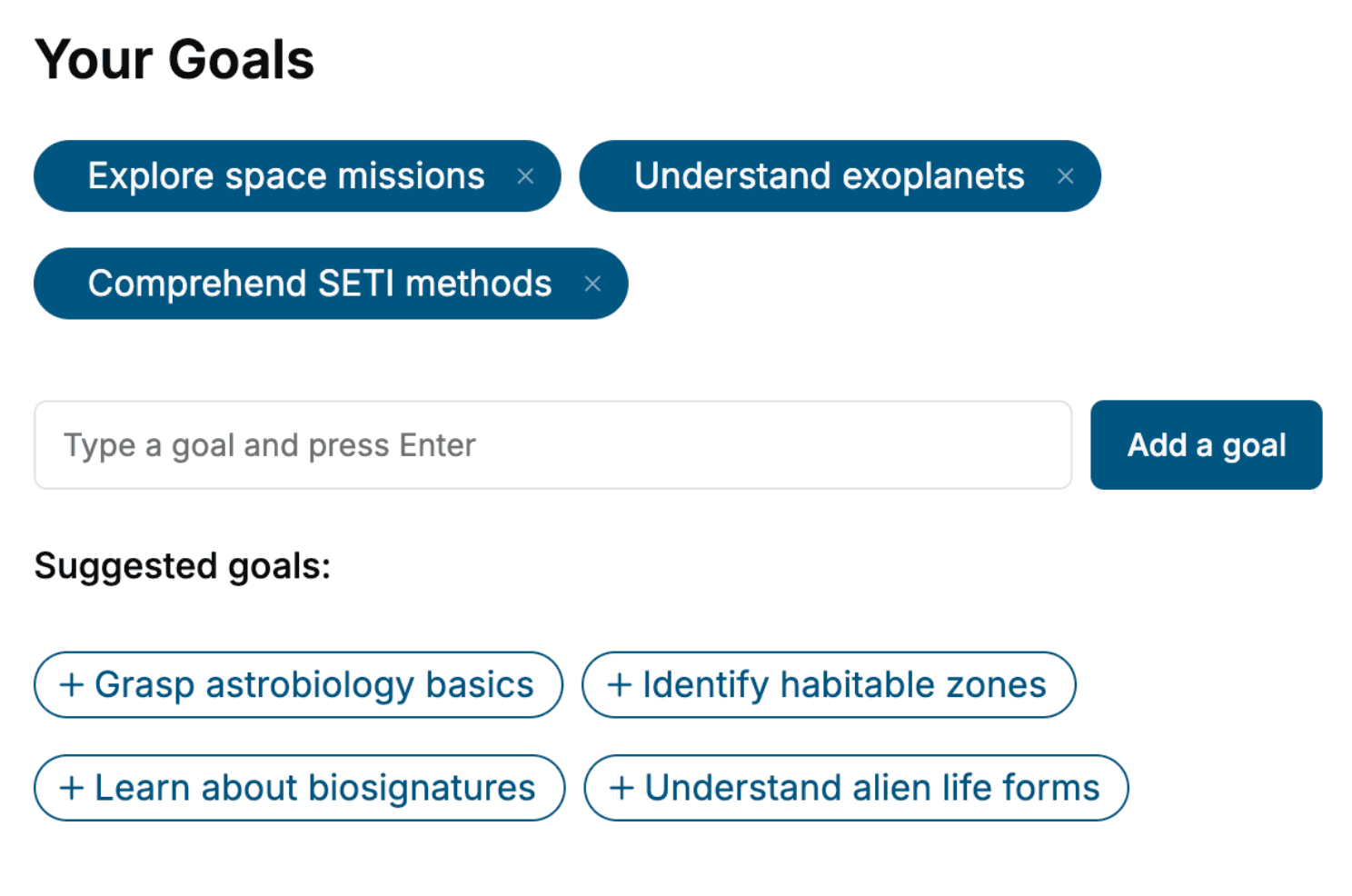
Specify your goals and choose sub-topics to include
- 3. Get your tailored book
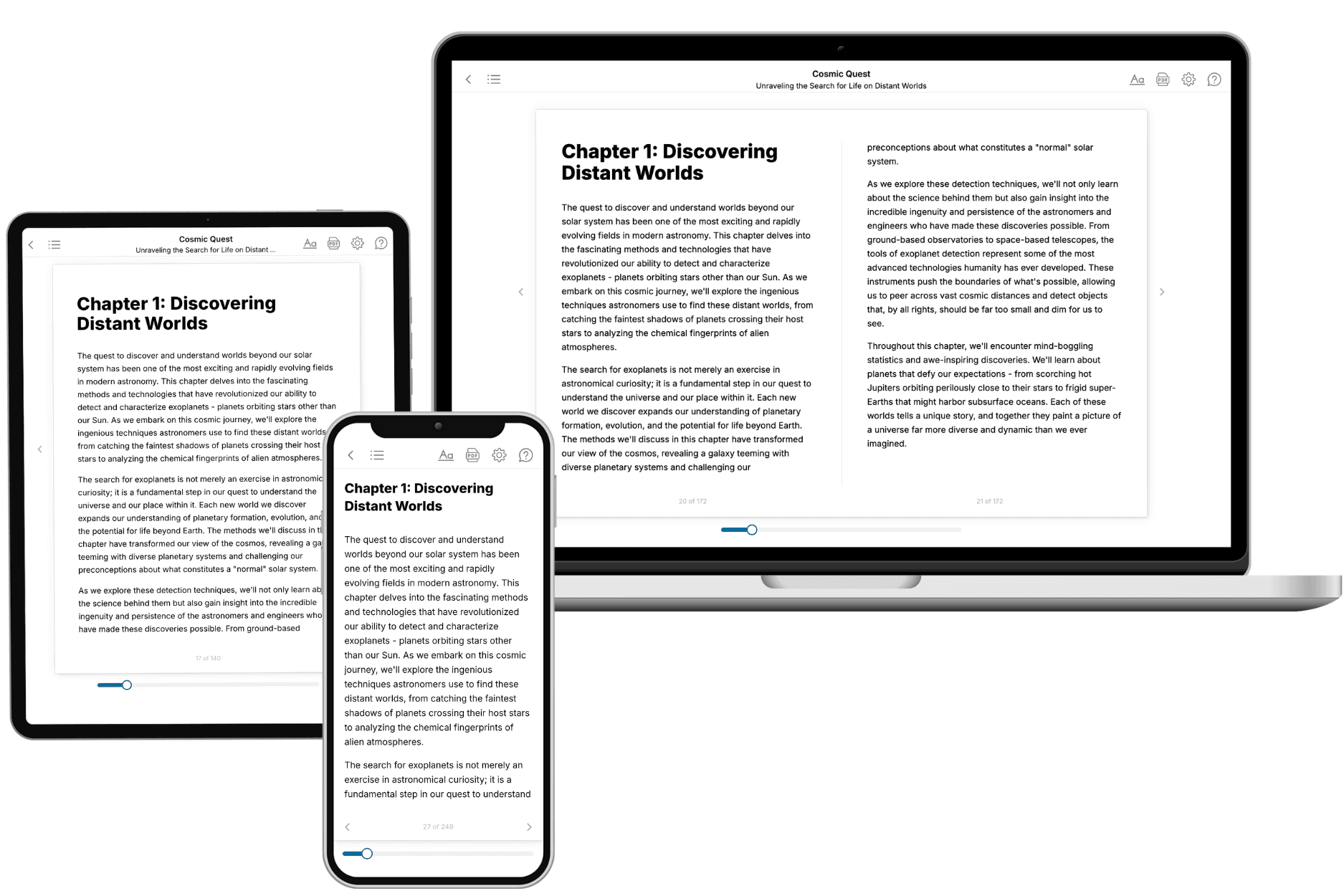
Your book is ready in 10 minutes. Read it online, download as EPUB or PDF, or send to Kindle.

Frequently asked questions
- What is TailoredRead?
TailoredRead creates complete, full-length nonfiction ebooks, written specifically for you. Tell us what you want to learn and why, and TailoredRead writes you a complete ebook on it, with charts, tables, and diagrams throughout. Read it online, on Kindle, or on any e-reader, or download it as a PDF or EPUB. Every book is written fresh the day you order it.
- How is the book tailored to me?
Before anything is written, you answer a few short questions about your goals, your background, and the topics you care about. Your book is then planned around your answers: written at your level, focused on your goals, and covering the topics you chose, instead of the one-size-fits-all book a store sells everyone.
- Will it read like generic AI content?
No. Your book isn't a chat transcript: it's planned chapter by chapter before a single word is written, told in a clear book voice, and explains ideas visually with charts, tables, and diagrams. After writing, every book goes through an editorial pass that polishes chapters so the book reads consistent from start to finish. Judge for yourself: browse thousands of sample books on our Explore Books page.
- How accurate is the content?
Our AI first checks whether your subject needs live research. Niche and fast-moving subjects are researched before writing, and the book plan and chapters are grounded in what it finds. After writing, every book goes through a quality pass that checks its facts and consistency, and researched books list their sources in a Notes section at the back.
- How long is the book?
You choose the length: Comprehensive (250-300 pages), Detailed (150-200 pages), Essential (70-100 pages), or Short (30-50 pages).
- Does the book include visuals?
Yes. Every book includes charts, tables, and diagrams: timelines, checklists, step-by-step guides, decision trees, comparison tables, matrices, and bar charts. A typical book includes dozens of these visual elements.
- Can I read it on Kindle? What formats can I download?
Yes. Every book can be read in our online reader or downloaded as a PDF or EPUB. The EPUB can be opened with Kindle, Apple Books, Kobo, and any e-reader. The Commercial and Author licenses also include an editable Word (DOCX) and Markdown download.
- How much does it cost?
About the price of a regular ebook. The exact price depends on your book's length and complexity, from $2 for the shortest books to $35 for the most comprehensive, and it's shown when you review your book, before you commit to anything. Each book is a one-time purchase, yours to keep, no subscription. Licenses that let you share, teach, or publish your book range from $35.99 to $49.99.
- Can I preview the book before purchasing?
Before you pay, you'll see what your book will cover: the title, a detailed description, the estimated length, and the complete chapter-by-chapter table of contents, so you know what you're getting before you decide. The full text itself is written after you purchase.
- How long does it take to create a book?
About 10 minutes. You can start reading the opening chapters while the rest is still being written.