Technical Leadership Books
Explore tailored Technical Leadership books created by our AI
Many CTOs excel at technical architecture but struggle when stepping into executive leadership. You understand microservices and cloud infrastructure, yet find yourself unprepared for board presentations, team scaling challenges, or the political dynamics of C-suite decision-making. This gap between technical mastery and leadership effectiveness is the defining challenge of the CTO role. This book bridges that gap by providing a comprehensive framework for technical leadership at the executive level. You'll learn how to design hiring processes that build world-class teams, establish engineering cultures that scale, make technology decisions aligned with business strategy, and communicate technical complexity to non-technical stakeholders. Drawing on proven practices from high-growth technology organizations, this guide addresses the specific challenges CTOs face: balancing technical depth with leadership breadth, scaling teams without sacrificing quality, and maintaining engineering excellence while driving business outcomes. Whether you're building your first engineering organization or scaling from dozens to hundreds of engineers, this playbook provides actionable strategies grounded in both technical rigor and organizational psychology.
You're navigating a tech industry that wasn't built with you in mind. Whether you're facing subtle biases in meetings, struggling to negotiate your worth, or questioning if you belong in the room, you're not alone—and this book is your roadmap forward. This guide combines research-backed strategies with real-world insights from women who've successfully advanced in technology careers. You'll discover how to identify and overcome the specific barriers women face, build networks that actually support your growth, negotiate with confidence, and develop the leadership presence that opens doors to senior roles. Rather than asking you to fit into existing systems, this book teaches you to navigate them strategically while staying true to yourself. From managing imposter syndrome to finding mentors who champion your success, you'll gain practical tools you can implement immediately. This isn't about working harder—it's about working smarter, building genuine connections, and claiming the career you deserve in technology.
Managing enterprise firewalls feels like fighting a losing battle—you're drowning in false positive alerts, struggling to optimize performance without compromising security, and watching your VPN configurations become increasingly complex. Meanwhile, the gap between your current role and senior network engineer positions seems impossibly wide. This book bridges that gap by teaching you the advanced techniques that separate competent administrators from strategic security architects. You'll learn how to dramatically reduce false positives through intelligent DPI tuning and stateful packet inspection optimization, master VPN encryption protocol selection and failover configuration, implement network segmentation that actually scales, and develop the architectural thinking required for senior roles. Each chapter builds practical skills while developing your strategic perspective on enterprise security. By the end, you'll have the knowledge and confidence to handle sophisticated threat prevention scenarios, lead security initiatives, and position yourself for advancement into senior network engineering leadership.
Most enterprise architects struggle to bridge the gap between ArchiMate notation theory and practical application at scale. You understand the basics, but translating complex organizational requirements into coherent, reusable architecture models remains challenging. This book moves beyond introductory concepts to equip you with advanced modeling patterns, governance frameworks, and strategic approaches that leading enterprises use to design resilient, scalable systems. You'll master ArchiMate viewpoint modeling for different stakeholder audiences, develop reusable architecture patterns that accelerate future designs, and implement governance frameworks that ensure organization-wide consistency. Learn how to create Architecture Decision Records that capture critical reasoning, mentor junior architects effectively, and lead enterprise transformation initiatives with confidence. This practical guide combines semantic precision with real-world application, enabling you to design complex integrations, modernize legacy systems, and align technology portfolios with business capabilities. Whether you're optimizing stakeholder communication, strengthening risk management, or accelerating digital transformation, you'll gain the frameworks and patterns needed to advance your enterprise architecture expertise and deliver measurable business value.
DRY Code
Master the Don't Repeat Yourself Principle for Cleaner, More Maintainable Software
Imagine a codebase where changes ripple through your system with confidence, where bugs are fixed once instead of hunting through duplicated logic scattered across files, and where new team members can understand your code's intent without deciphering the same patterns repeated a dozen different ways. This is what the DRY principle makes possible. Whether you're maintaining legacy systems, building new features, or leading a development team, understanding how to apply DRY effectively transforms how you write and maintain code. This book cuts through the confusion about what DRY really means—it's not about eliminating every similar line, but about identifying where knowledge is unnecessarily duplicated and consolidating it strategically. You'll learn practical techniques for recognizing duplication, refactoring safely, and knowing when to abstract versus when to leave code as-is. With real-world examples and clear guidance on common pitfalls, you'll develop the judgment to apply DRY in ways that genuinely improve your codebase.
What if the code you wrote last sprint could save your team weeks of work on the next project? Most developers understand that code reuse is valuable, yet many struggle to implement it effectively within fast-paced Agile environments. This book bridges that gap by showing you how to build, maintain, and scale reusable code while staying true to Agile principles. You'll discover practical strategies for designing components that teams actually want to reuse, establishing shared libraries that evolve with your needs, and creating a culture where code reuse becomes second nature. Through real-world examples and actionable techniques, you'll learn how to reduce development cycles, minimize technical debt, and help your team deliver better software faster. Whether you're working on a single team or coordinating across multiple squads, this guide provides the frameworks and practices you need to make code reuse a competitive advantage.
Imagine your Scrum team operating with crystal clarity—each member understanding exactly what they're responsible for, how they contribute to success, and how to collaborate effectively with their teammates. No confusion about who makes decisions. No bottlenecks from unclear authority. No wasted time in meetings debating roles instead of delivering value. This handbook cuts through the confusion surrounding Scrum roles and gives you a practical, actionable framework for implementing them in your organization. Whether you're stepping into a Product Owner role for the first time, learning to lead as a Scrum Master, or joining a Development Team, you'll discover the specific responsibilities, skills, and behaviors that define each role. You'll learn how to navigate the complex relationships between roles, handle common conflicts, and build a culture where role clarity drives performance. With real-world examples and practical guidance, this book transforms abstract Scrum theory into concrete actions you can take immediately to strengthen your team's effectiveness and delivery.
The Software Architect's Blueprint
Designing Systems That Scale, Endure, and Deliver Value
Designing software systems that work is hard. Designing systems that scale, remain maintainable, and deliver business value over years is harder still. This book gives you the frameworks, patterns, and decision-making approaches that experienced software architects use to navigate complex technical and organizational challenges. You'll learn how to evaluate architectural trade-offs, select appropriate design patterns for your context, and communicate your decisions effectively to both technical teams and business stakeholders. Through real-world scenarios and practical guidance, you'll discover how to balance competing concerns—scalability versus simplicity, innovation versus stability, technical purity versus pragmatism. Whether you're transitioning into an architecture role or deepening your existing expertise, this book provides the strategic and technical foundation you need to design systems that endure. You'll understand not just the "what" and "how" of architecture, but the "why" behind critical decisions that shape entire organizations.
The Mindful Engineer
Master Stress, Burnout, and Mental Clarity in Your Tech Career
Many software engineers believe that stress and burnout are inevitable costs of working in tech—that pushing harder and longer is the only path to success. The reality is that your mind and body have built-in mechanisms for managing pressure, focus, and creativity that you've likely never been taught to access. This book bridges the gap between ancient mindfulness practices and the specific challenges you face as a software engineer: crushing deadlines, imposter syndrome, debugging frustration, difficult code reviews, and the constant pressure to perform. You'll discover practical, science-backed techniques that integrate seamlessly into your workday—from micro-breaks that restore mental clarity to communication practices that transform team dynamics. Rather than adding another task to your overloaded schedule, these methods replace stress-inducing habits with sustainable alternatives. By the end, you'll have a personalized toolkit for maintaining focus during complex coding sessions, making better decisions under pressure, building genuine resilience against burnout, and creating a career that feels fulfilling rather than exhausting.
Keep It Simple, Stupid
Master the KISS Principle for Cleaner, More Maintainable Code
Write code that your team actually wants to maintain. The KISS principle—Keep It Simple, Stupid—is one of the most powerful yet underutilized concepts in software development. This book shows you how to apply it systematically to every aspect of your codebase, from architecture decisions to daily coding practices. You'll discover why complexity sneaks into projects, how to recognize it before it becomes a problem, and practical techniques to eliminate it. Whether you're struggling with legacy code, designing new systems, or trying to improve team productivity, this guide provides actionable strategies backed by real-world examples. Learn how simplicity reduces bugs, accelerates development, and makes your code more resilient to change. By the end, you'll understand that the best code isn't the cleverest—it's the simplest code that solves the problem.
Mindful Engineering
Building Resilience, Clarity, and Calm in High-Pressure Technical Work
Stop letting perfectionism, reactive habits, and burnout control your technical career. This book gives you practical mindfulness techniques designed specifically for database reliability engineers and technical professionals who need to make better decisions under pressure, manage team conflicts with clarity, and build genuine resilience without burning out. You'll learn how to recognize the patterns that trigger reactive problem-solving, understand the roots of engineering perfectionism, and develop the emotional awareness needed to navigate conflicts with colleagues. Through concrete practices—not abstract philosophy—you'll discover how to accept technical debt without shame, prioritize effectively under stress, and cultivate patience with team members who work differently than you do. Whether you're struggling with imposter syndrome, drowning in technical debt, or exhausted from constant firefighting, this book provides a roadmap to sustainable high performance. The techniques are grounded in neuroscience and tested in real technical environments. You'll finish with actionable practices you can implement immediately, starting today.
Imagine delivering a system that perfectly aligns with what stakeholders actually need—not what you assumed they wanted. This book bridges the gap between vague business problems and precise technical specifications. You'll discover how to systematically extract hidden requirements, navigate conflicting stakeholder demands, and create specifications that guide development teams with clarity and confidence. Whether you're building enterprise software, designing algorithms, or architecting complex systems, mastering requirements engineering transforms how you approach every project. This practical guide walks you through proven elicitation techniques, analysis frameworks, and management strategies used by leading organizations. You'll learn to identify non-functional requirements that make or break systems, handle ambiguity with structured approaches, and maintain requirements throughout the entire development lifecycle. By applying these methods, you'll reduce costly rework, accelerate time-to-market, and build systems that stakeholders actually want to use.
Related books you may like:
In "Agile Governance: Mastering Software Product Management in Public Sector Projects," readers will discover a comprehensive guide to navigating the unique challenges of government software development. This book bridges the gap between traditional bureaucratic processes and modern agile methodologies, offering practical strategies for implementing user-centric design, effective stakeholder management, and iterative development in public sector environments. Tailored for team leads and aspiring product managers in government tech, this book provides invaluable insights into creating citizen-centric KPIs, managing cross-agency collaborations, and optimizing government tech stacks. Readers will learn how to adapt Scrum and Kanban for government projects, conduct effective requirement workshops, and create impactful product roadmaps that align with public value creation. With a focus on real-world application, "Agile Governance" equips you with the tools to enhance team leadership, master change management, and improve sprint planning within the constraints of government bureaucracy. Whether you're looking to implement a country-level solution or simply improve your agency's software development processes, this book provides the knowledge and strategies needed to succeed in the evolving landscape of public sector technology.
Imagine confidently deploying machine learning models that not only predict accurately but also earn stakeholder trust through transparency and business impact. This comprehensive guide bridges the gap between statistical theory and real-world analytics practice, equipping you with advanced techniques that transform raw data into strategic business value. You'll master predictive modeling frameworks, learn to communicate complex findings through data storytelling, and implement production-ready systems that scale. From time series forecasting and anomaly detection to natural language processing and Bayesian methods, each chapter builds practical skills grounded in statistical rigor. Whether you're optimizing SQL queries, validating clustering results, or deploying A/B testing frameworks, you'll discover how to combine technical excellence with business acumen. This book moves beyond textbook examples to address real deployment challenges: handling missing data intelligently, correcting for multiple testing, interpreting complex models, and measuring true business impact. Perfect for data scientists ready to elevate their impact from analysis to action.
How many times has your development team built something that technically met the requirements but wasn't what the business actually needed? The gap between what gets built and what was intended often comes down to one thing: poorly written acceptance criteria. This book teaches you how to write acceptance criteria that eliminate ambiguity, align your entire team, and ensure successful delivery. You'll learn the proven frameworks and techniques used by leading product organizations, discover the common pitfalls that derail even experienced teams, and master the collaborative process that turns vague ideas into crystal-clear requirements. Whether you're writing your first user story or refining your team's process, this practical guide provides actionable templates, real-world examples, and step-by-step guidance to help you write acceptance criteria that actually work.
Poor team communication is the silent killer of organizational success. In today's fast-paced business world, leaders who can't effectively convey their vision or listen to their team's concerns find themselves struggling to keep up with change and losing their competitive edge. Adaptive Leadership Mastery: Elevating Team Communication for Dynamic Success offers a fresh perspective on leadership in the modern workplace. This book provides you with practical strategies to overcome communication barriers, foster a culture of open dialogue, and lead your team through times of uncertainty and change. You'll discover how to adapt your leadership style to different situations, personalities, and challenges. From navigating difficult conversations to inspiring your team during periods of transformation, this guide equips you with the tools to become a more versatile and effective leader. By mastering the art of adaptive leadership and honing your communication skills, you'll be able to build a more resilient, innovative, and high-performing team ready to tackle any challenge that comes your way.
Are you struggling to balance company growth with personal well-being in today's fast-paced business world? "Agile Leadership Mastery" is your comprehensive guide to revolutionizing your leadership approach. This book offers a unique blend of cutting-edge leadership strategies and practical stress management techniques tailored for the modern executive. You'll discover how to implement agile methodologies, foster psychological safety, and drive digital transformation while maintaining your personal equilibrium. From cultivating emotional intelligence to mastering the art of strategic partnerships, this book provides the tools you need to not only lead your company to new heights but also to thrive personally in your role. Packed with actionable insights and real-world examples, "Agile Leadership Mastery" is an essential resource for any leader ready to embrace change, inspire innovation, and create a resilient, high-performing team in the digital age.
Create a Technical Leadership Book Tailored to You
Create an AI-crafted book tailored to your goals, interests, and background





Benefits of AI-tailored books
- Read one book, not ten:
- all the Technical Leadership knowledge you need, gathered into a single book.
- Save days of learning:
- tell us your goals, choose your topics, and the whole book is built around them.
- Learn effortlessly:
- Technical Leadership book written for your specific background and expertise.
- Understand at a glance:
- includes charts, tables, timelines, checklists, decision trees, and more.
- Stay current:
- written the day you order it, not years ago.
- Trust what you read:
- every book is checked for accuracy, with real research when your subject needs it.
Create your unique book in 3 steps
- 1. Select your focus
Select the focus of your Technical Leadership book and share your background
- 2. Personalize your book
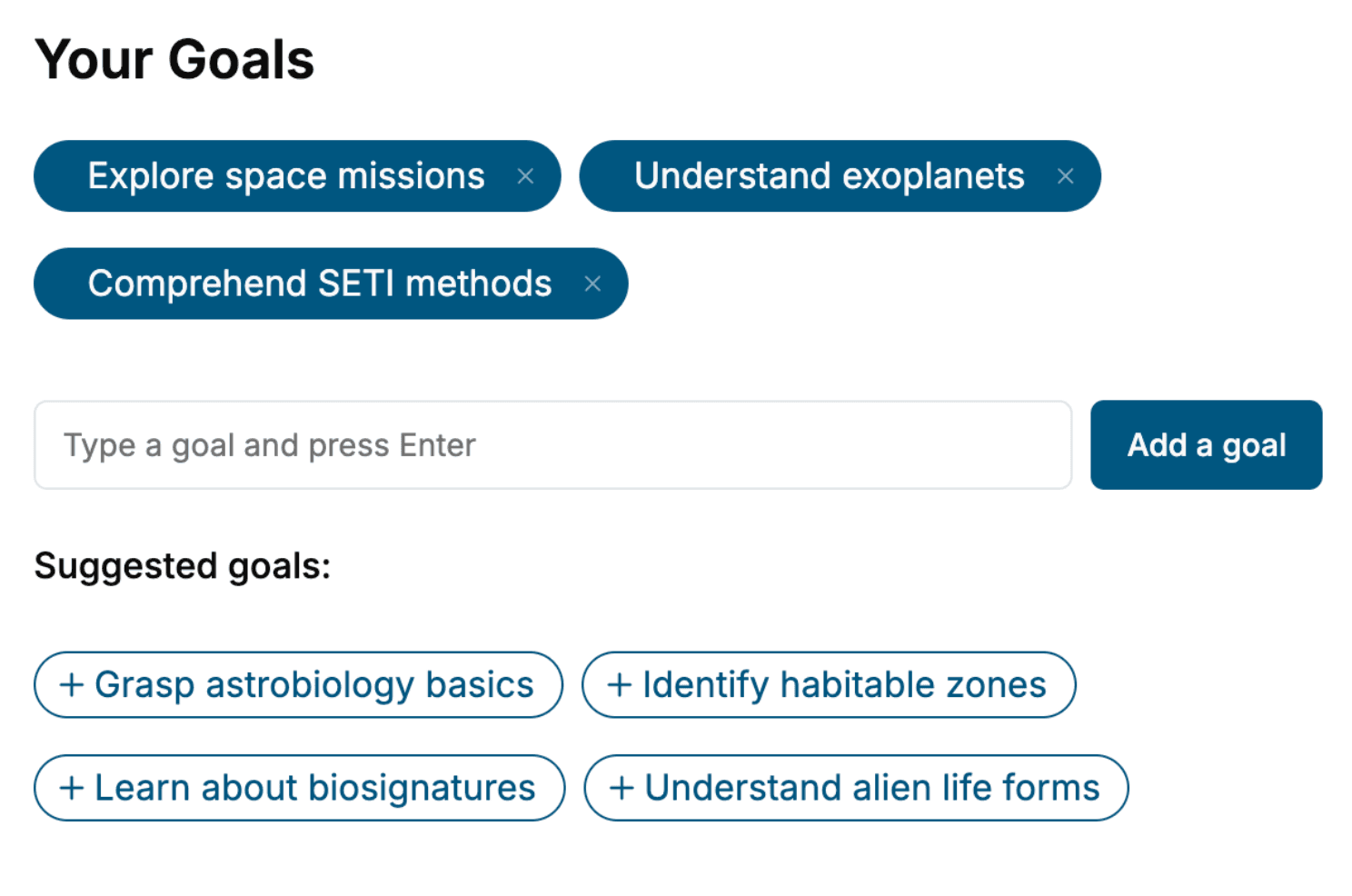
Specify your goals and choose sub-topics to include
- 3. Get your tailored book
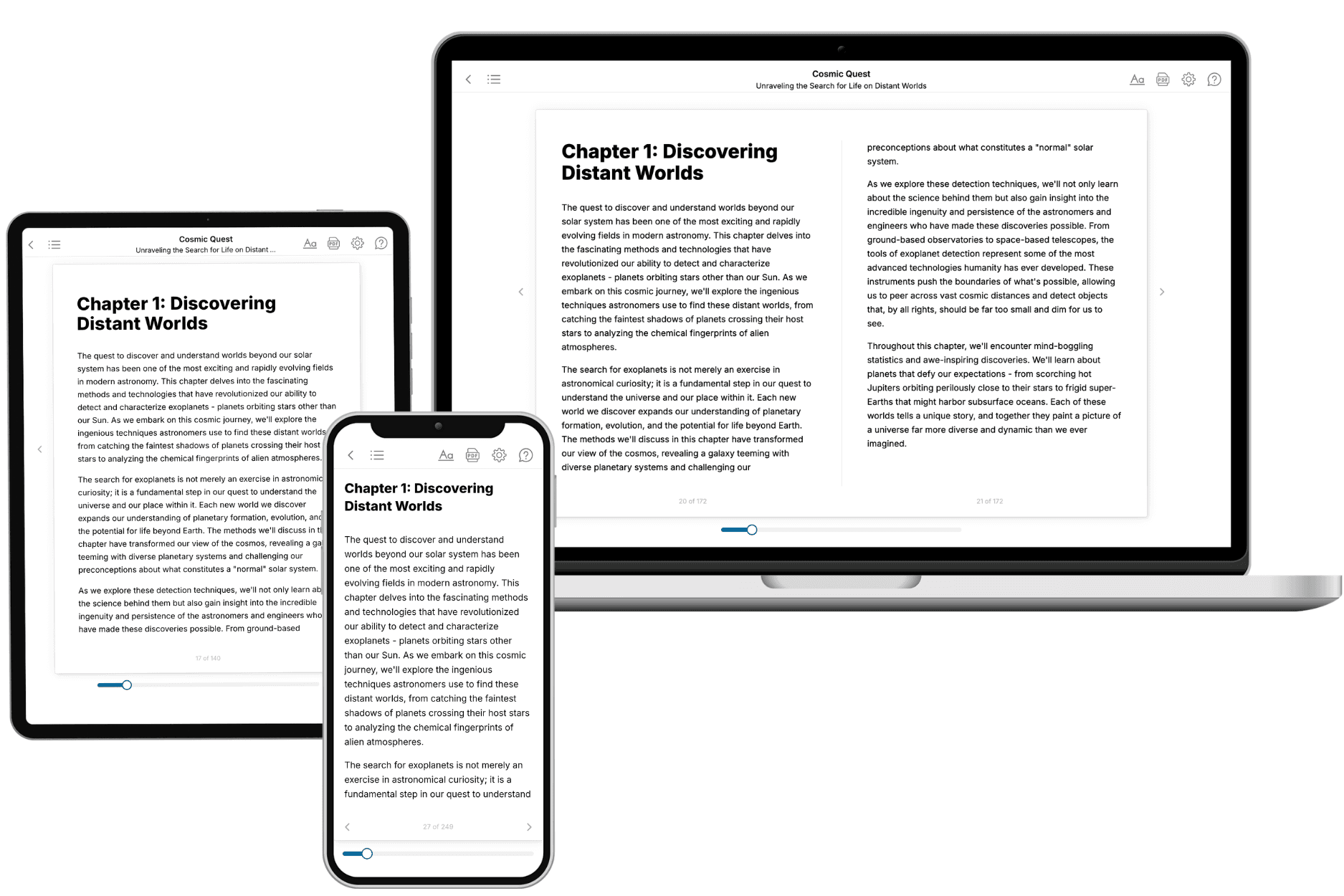
Your book is ready in 10 minutes. Read it online, download as EPUB or PDF, or send to Kindle.

Frequently asked questions
- What is TailoredRead?
TailoredRead creates complete, full-length nonfiction ebooks, written specifically for you. Tell us what you want to learn and why, and TailoredRead writes you a complete ebook on it, with charts, tables, and diagrams throughout. Read it online, on Kindle, or on any e-reader, or download it as a PDF or EPUB. Every book is written fresh the day you order it.
- How is the book tailored to me?
Before anything is written, you answer a few short questions about your goals, your background, and the topics you care about. Your book is then planned around your answers: written at your level, focused on your goals, and covering the topics you chose, instead of the one-size-fits-all book a store sells everyone.
- Will it read like generic AI content?
No. Your book isn't a chat transcript: it's planned chapter by chapter before a single word is written, told in a clear book voice, and explains ideas visually with charts, tables, and diagrams. After writing, every book goes through an editorial pass that polishes chapters so the book reads consistent from start to finish. Judge for yourself: browse thousands of sample books on our Explore Books page.
- How accurate is the content?
Our AI first checks whether your subject needs live research. Niche and fast-moving subjects are researched before writing, and the book plan and chapters are grounded in what it finds. After writing, every book goes through a quality pass that checks its facts and consistency, and researched books list their sources in a Notes section at the back.
- How long is the book?
You choose the length: Comprehensive (250-300 pages), Detailed (150-200 pages), Essential (70-100 pages), or Short (30-50 pages).
- Does the book include visuals?
Yes. Every book includes charts, tables, and diagrams: timelines, checklists, step-by-step guides, decision trees, comparison tables, matrices, and bar charts. A typical book includes dozens of these visual elements.
- Can I read it on Kindle? What formats can I download?
Yes. Every book can be read in our online reader or downloaded as a PDF or EPUB. The EPUB can be opened with Kindle, Apple Books, Kobo, and any e-reader. The Commercial and Author licenses also include an editable Word (DOCX) and Markdown download.
- How much does it cost?
About the price of a regular ebook. The exact price depends on your book's length and complexity, from $2 for the shortest books to $35 for the most comprehensive, and it's shown when you review your book, before you commit to anything. Each book is a one-time purchase, yours to keep, no subscription. Licenses that let you share, teach, or publish your book range from $35.99 to $49.99.
- Can I preview the book before purchasing?
Before you pay, you'll see what your book will cover: the title, a detailed description, the estimated length, and the complete chapter-by-chapter table of contents, so you know what you're getting before you decide. The full text itself is written after you purchase.
- How long does it take to create a book?
About 10 minutes. You can start reading the opening chapters while the rest is still being written.