Dynamical Systems Books
Explore tailored Dynamical Systems books created by our AI
Dynamical systems research demands computational power that matches the complexity of your problems. While Julia offers exceptional performance capabilities, translating that potential into optimized code for chaos analysis, bifurcation detection, and attractor reconstruction requires deep understanding of both the mathematics and the language's unique features. This book bridges that gap, providing expert-level guidance on implementing sophisticated dynamical systems algorithms in Julia. You'll master high-performance techniques for computing Lyapunov exponents, analyzing phase space dynamics, solving nonlinear and stochastic differential equations, and reconstructing attractors from experimental data. Each chapter combines rigorous mathematical foundations with practical Julia implementations, demonstrating how to leverage multiple dispatch, automatic differentiation, GPU acceleration, and specialized libraries to achieve research-grade performance. Whether you're investigating chaotic behavior, tracking bifurcation cascades, or reconstructing complex attractors, this book equips you with the tools and knowledge to conduct cutting-edge computational research efficiently.
What if the brain's most complex functions could be reduced to elegant mathematical equations? Computational neuroscience reveals that they can. This book shows you how mathematical models transform our understanding of neural systems—from the firing patterns of individual neurons to the coordinated activity of millions of brain cells. You'll discover why a simple equation can predict when a neuron fires, how networks of neurons create memories through mathematical rules, and why understanding the brain's mathematics matters for treating neurological diseases. Rather than treating biology and mathematics as separate disciplines, this book demonstrates their deep integration, showing you the concrete models that neuroscientists use to decode brain function. Whether you're curious about how your brain works or seeking to understand the cutting edge of neuroscience research, you'll gain practical insight into the mathematical principles that govern neural computation and behavior.
This comprehensive treatment develops the mathematical formalism of classical mechanics from first principles, guiding you through the geometric structures that underlie dynamical systems. Beginning with the calculus of variations on manifolds, you'll establish the Lagrangian framework on tangent bundles and discover how symmetries generate conservation laws. The text then transitions to Hamiltonian mechanics, where symplectic geometry becomes your primary tool for understanding phase space dynamics. You'll master canonical transformations, Hamilton-Jacobi theory, and the momentum map—tools that reveal hidden symmetries and enable systematic reduction of complex systems. As you progress, you'll explore completely integrable systems and their action-angle variables, then venture into perturbation theory and KAM theory to understand stability in nearly-integrable regimes. The final sections address Hamiltonian chaos through ergodic theory, extend mechanics to time-dependent systems via contact geometry, and introduce infinite-dimensional systems and geometric quantization. Throughout, rigorous mathematical development is balanced with physical intuition, preparing you for advanced research in dynamical systems, mathematical physics, and geometric analysis.
Celestial Mechanics Essentials
Understanding Orbital Dynamics and Dynamical Systems
What determines whether a satellite stays in orbit or crashes to Earth? How do planets maintain stable paths around stars despite countless gravitational influences? The answers lie at the intersection of celestial mechanics and dynamical systems—a field that transforms how we understand motion in space. This book bridges classical orbital mechanics with modern dynamical systems theory, revealing the mathematical structures that govern everything from planetary orbits to spacecraft trajectories. You'll discover how phase space analysis exposes hidden patterns in orbital behavior, why some orbits are stable while others spiral into chaos, and how perturbation theory helps us predict real-world motion. Whether you're studying physics, engineering, or applied mathematics, this guide provides the conceptual foundation and practical tools to analyze celestial motion with confidence and precision.
Chaos Control
Mastering Nonlinear Dynamics and Finding Order in Complex Systems
Discover how to identify, analyze, and control chaotic behavior in complex systems. This book bridges the gap between theoretical nonlinear dynamics and practical applications, showing you how seemingly random systems actually follow predictable mathematical rules. You'll learn to recognize bifurcation points where systems shift behavior, calculate Lyapunov exponents to measure sensitivity, and apply proven control techniques to stabilize unstable orbits. Whether you're working with engineering systems, biological processes, or environmental models, you'll gain the mathematical tools and conceptual frameworks needed to understand what drives chaos and how minimal interventions can restore order. Through clear explanations, worked examples, and real-world case studies, this book transforms chaos theory from abstract mathematics into actionable knowledge you can apply to your own research and professional challenges.
Hamiltonian Mechanics Demystified
Master the Elegant Framework of Classical Physics
Master the mathematical elegance and physical power of Hamiltonian mechanics—the framework that transformed how physicists understand motion and energy. This comprehensive guide takes you from foundational concepts through advanced applications, revealing why this formulation has become indispensable in modern physics. You'll discover how the Hamiltonian approach simplifies complex problems, uncovers hidden symmetries, and connects classical mechanics seamlessly to quantum theory. Through clear explanations, practical examples, and progressive complexity, you'll learn to work confidently with generalized coordinates, phase space dynamics, canonical transformations, and Poisson brackets. Whether you're preparing for advanced coursework, deepening your theoretical understanding, or building a foundation for quantum mechanics, this book provides the conceptual clarity and mathematical tools you need. By the end, you'll appreciate why physicists consider Hamiltonian mechanics not just an alternative formulation, but a superior lens for understanding the fundamental laws of motion.
Most problem-solving approaches assume the world works like a machine: identify the problem, apply the solution, get the result. But this linear thinking fails spectacularly in complex environments where systems are interconnected, constantly evolving, and full of surprises. Whether you're managing an organization, launching a product, or tackling a social challenge, you're likely dealing with a complex adaptive system—and your traditional tools aren't equipped to handle it. This book reveals how complex adaptive systems actually work and why understanding them transforms how you make decisions. You'll discover why small interventions sometimes create massive ripple effects, how feedback loops secretly drive outcomes, and why the best solutions emerge from experimentation rather than prediction. Through practical frameworks and real-world examples, you'll learn to recognize complexity, think systemically, and make decisions that account for interconnection, emergence, and adaptation. Stop fighting complexity and start working with it.
Most people think of the brain as a mysterious black box—too complex to understand through science. But the brain is fundamentally a computational system, and once you understand its logic, its behavior becomes predictable and explainable. This book reveals how neuroscientists use mathematics, computer simulations, and algorithms to decode the brain's secrets. You'll discover how individual neurons perform calculations, how networks of neurons create thought and memory, and how computational models help us understand everything from sensory perception to decision-making. Whether you're curious about artificial intelligence, interested in neuroscience, or want to understand the biological basis of cognition, this book provides the conceptual foundation and practical knowledge you need. By exploring real examples and avoiding unnecessary jargon, you'll gain genuine insight into how the brain computes, learns, and adapts—and why this computational perspective is revolutionizing neuroscience.
Related books you may like:
Discover how advanced functional materials are reshaping industries and enabling solutions to humanity's greatest challenges. This comprehensive guide takes you beyond basic materials science to explore the cutting-edge world of engineered materials designed to perform specific, transformative functions. You'll learn how scientists and engineers manipulate atomic structures and processing conditions to create materials that respond to stimuli, conduct electricity with unprecedented efficiency, or heal themselves. From smart polymers that change properties on demand to nanomaterials with revolutionary capabilities, this book reveals the principles behind these innovations and their practical applications in healthcare, energy, electronics, and aerospace. Whether you're advancing your career, developing new products, or simply fascinated by the materials shaping our future, you'll gain the knowledge to understand, evaluate, and potentially contribute to this rapidly evolving field.
Most chemical reactions should happen instantly, yet they don't. The culprit? Activation energy—the invisible barrier that keeps reactants locked in place until enough energy arrives to break them free. Without understanding this fundamental concept, enzyme kinetics remains a mystery, and the elegant mechanisms by which life accelerates reactions seem like magic. This book demystifies activation energy and enzyme kinetics through clear explanations, practical examples, and visual frameworks. You'll discover how enzymes perform their catalytic miracles by lowering activation energy, explore the mathematics of reaction rates through the Arrhenius equation and Michaelis-Menten kinetics, and learn how inhibition mechanisms control biological processes. Whether you're studying biochemistry, developing pharmaceuticals, or optimizing industrial processes, this guide equips you with both the conceptual understanding and quantitative tools needed to predict, analyze, and manipulate enzyme-catalyzed reactions with confidence.
Achieve reliable, reproducible separations of complex chemical mixtures using adsorption chromatography. This practical guide bridges the gap between theoretical principles and real-world laboratory application, providing you with the knowledge and skills to design effective separation strategies for your specific analytical needs. You'll explore the fundamental science of how compounds interact with adsorbent materials, learn to select optimal stationary and mobile phases, and master the practical techniques that ensure consistent results. Whether you're working with thin-layer chromatography, column chromatography, or HPLC systems, this book equips you with systematic approaches to troubleshooting common problems, optimizing separations, and interpreting data with confidence. Packed with practical examples, decision-making frameworks, and evidence-based strategies, you'll develop the expertise to tackle challenging separation problems and advance your analytical capabilities in pharmaceutical, environmental, or materials research.
Many assume adipose tissue is simply inert fat to be minimized or removed. In reality, it's a sophisticated, metabolically active organ with remarkable regenerative potential. This book reveals how adipose tissue engineering is revolutionizing medicine by creating functional tissue solutions for reconstruction, regeneration, and therapeutic applications. You'll discover the biological foundations of adipose tissue, learn how scientists harvest and cultivate adipose-derived stem cells, and explore cutting-edge engineering strategies that transform these cells into viable tissue constructs. From scaffold design and bioreactor optimization to vascularization techniques and clinical translation, this guide provides practical insights into the science and engineering behind adipose tissue regeneration. Whether you're a researcher, student, or healthcare professional, you'll gain actionable knowledge about the current state of the field, emerging technologies, and the real-world challenges of bringing engineered tissues from the laboratory to clinical practice.
In the rapidly evolving world of ultra-high-speed communications, the challenge of designing secure and efficient chips has never been more daunting. As a Principal Architect, you face the complex task of integrating cutting-edge VLSI techniques with robust cryptographic solutions. This book is your comprehensive guide to conquering these challenges. "Advanced VLSI Design" delves deep into the intricacies of modern chip architecture, offering you practical insights into overcoming CMOS scaling limitations, harnessing the power of 3D IC integration, and implementing state-of-the-art FinFET technology. You'll explore innovative approaches to low-power design and high-speed SerDes, crucial for next-generation communication systems. This book doesn't just stop at performance; it equips you with the knowledge to build security from the ground up. From hardware Trojan detection to side-channel analysis resistance, you'll learn how to create chips that are not only fast but also fortified against modern security threats. Dive into advanced topics like quantum-dot cellular automata and EUV lithography, positioning yourself at the forefront of VLSI innovation.
Create a Dynamical Systems Book Tailored to You
Create an AI-crafted book tailored to your goals, interests, and background






Benefits of AI-tailored books
- Read one book, not ten:
- all the Dynamical Systems knowledge you need, gathered into a single book.
- Save days of learning:
- tell us your goals, choose your topics, and the whole book is built around them.
- Learn effortlessly:
- Dynamical Systems book written for your specific background and expertise.
- Understand at a glance:
- includes charts, tables, timelines, checklists, decision trees, and more.
- Stay current:
- written the day you order it, not years ago.
- Trust what you read:
- every book is checked for accuracy, with real research when your subject needs it.
Create your unique book in 3 steps
- 1. Select your focus
Select the focus of your Dynamical Systems book and share your background
- 2. Personalize your book
Specify your goals and choose sub-topics to include
- 3. Get your tailored book
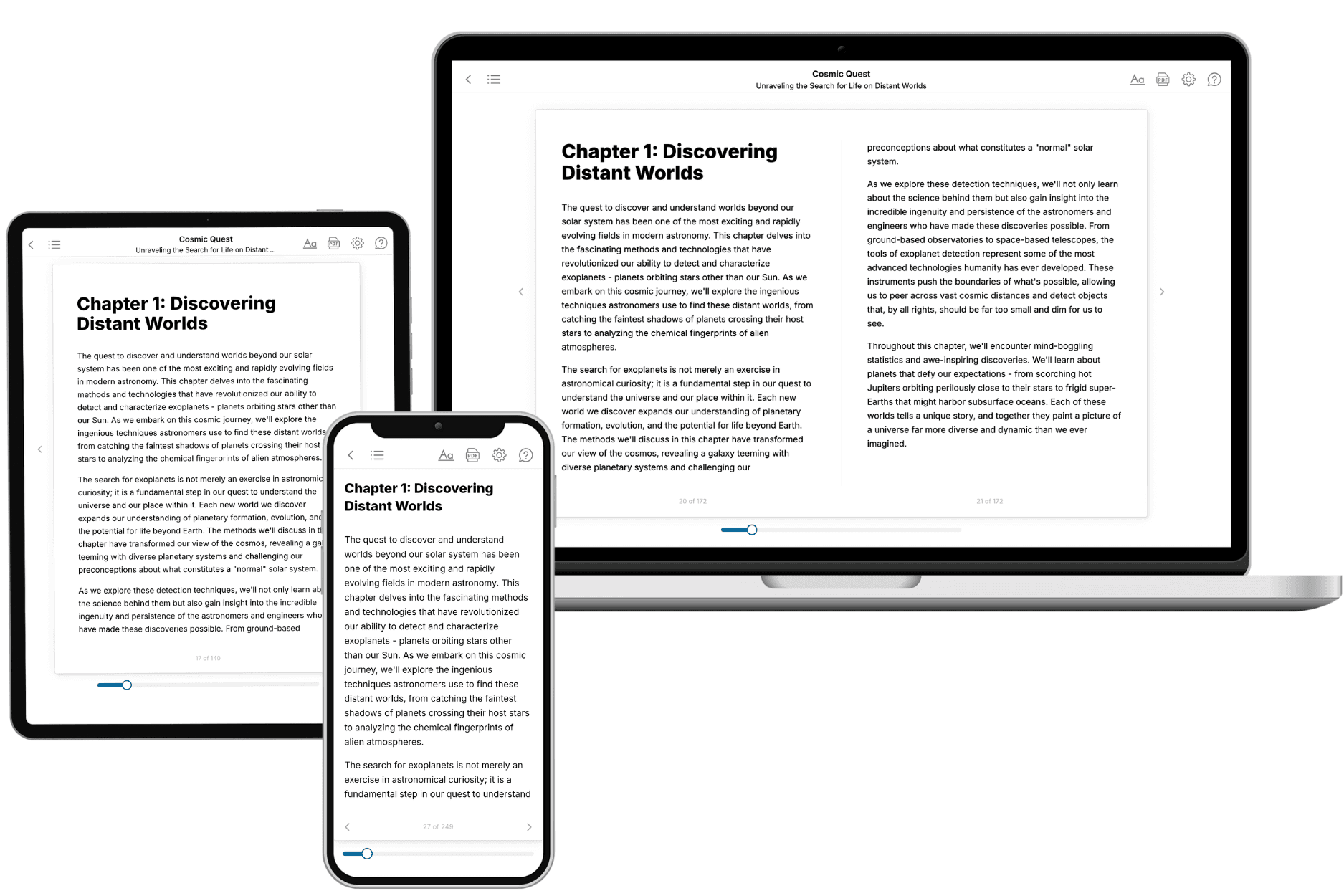
Your book is ready in 10 minutes. Read it online, download as EPUB or PDF, or send to Kindle.

Frequently asked questions
- What is TailoredRead?
TailoredRead creates complete, full-length nonfiction ebooks, written specifically for you. Tell us what you want to learn and why, and TailoredRead writes you a complete ebook on it, with charts, tables, and diagrams throughout. Read it online, on Kindle, or on any e-reader, or download it as a PDF or EPUB. Every book is written fresh the day you order it.
- How is the book tailored to me?
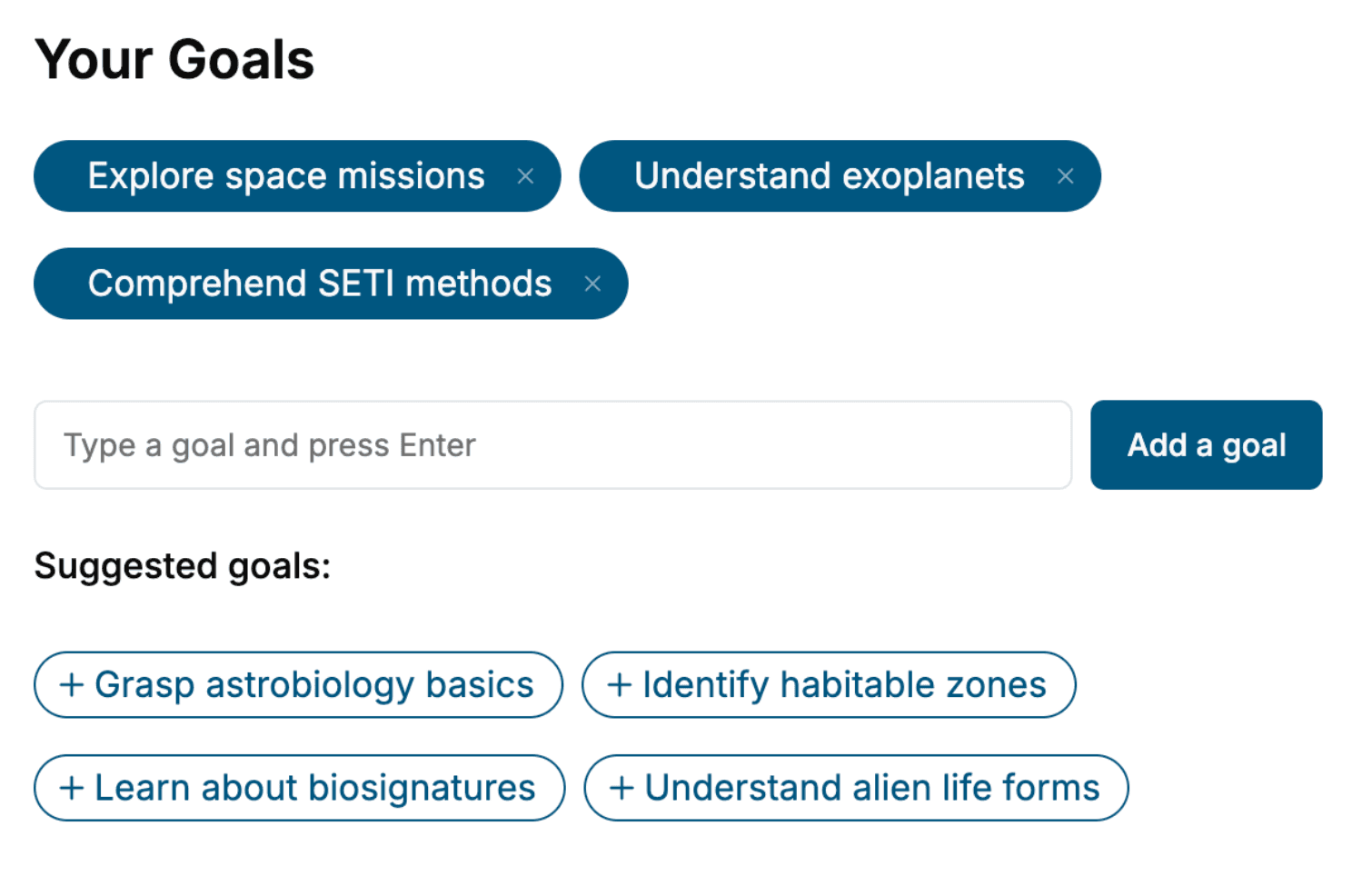
Before anything is written, you answer a few short questions about your goals, your background, and the topics you care about. Your book is then planned around your answers: written at your level, focused on your goals, and covering the topics you chose, instead of the one-size-fits-all book a store sells everyone.
- Will it read like generic AI content?
No. Your book isn't a chat transcript: it's planned chapter by chapter before a single word is written, told in a clear book voice, and explains ideas visually with charts, tables, and diagrams. After writing, every book goes through an editorial pass that polishes chapters so the book reads consistent from start to finish. Judge for yourself: browse thousands of sample books on our Explore Books page.
- How accurate is the content?
Our AI first checks whether your subject needs live research. Niche and fast-moving subjects are researched before writing, and the book plan and chapters are grounded in what it finds. After writing, every book goes through a quality pass that checks its facts and consistency, and researched books list their sources in a Notes section at the back.
- How long is the book?
You choose the length: Comprehensive (250-300 pages), Detailed (150-200 pages), Essential (70-100 pages), or Short (30-50 pages).
- Does the book include visuals?
Yes. Every book includes charts, tables, and diagrams: timelines, checklists, step-by-step guides, decision trees, comparison tables, matrices, and bar charts. A typical book includes dozens of these visual elements.
- Can I read it on Kindle? What formats can I download?
Yes. Every book can be read in our online reader or downloaded as a PDF or EPUB. The EPUB can be opened with Kindle, Apple Books, Kobo, and any e-reader. The Commercial and Author licenses also include an editable Word (DOCX) and Markdown download.
- How much does it cost?
About the price of a regular ebook. The exact price depends on your book's length and complexity, from $2 for the shortest books to $35 for the most comprehensive, and it's shown when you review your book, before you commit to anything. Each book is a one-time purchase, yours to keep, no subscription. Licenses that let you share, teach, or publish your book range from $35.99 to $49.99.
- Can I preview the book before purchasing?
Before you pay, you'll see what your book will cover: the title, a detailed description, the estimated length, and the complete chapter-by-chapter table of contents, so you know what you're getting before you decide. The full text itself is written after you purchase.
- How long does it take to create a book?
About 10 minutes. You can start reading the opening chapters while the rest is still being written.