Computational Biology Books
Explore tailored Computational Biology books created by our AI
Most people think of the brain as a mysterious black box—too complex to understand through science. But the brain is fundamentally a computational system, and once you understand its logic, its behavior becomes predictable and explainable. This book reveals how neuroscientists use mathematics, computer simulations, and algorithms to decode the brain's secrets. You'll discover how individual neurons perform calculations, how networks of neurons create thought and memory, and how computational models help us understand everything from sensory perception to decision-making. Whether you're curious about artificial intelligence, interested in neuroscience, or want to understand the biological basis of cognition, this book provides the conceptual foundation and practical knowledge you need. By exploring real examples and avoiding unnecessary jargon, you'll gain genuine insight into how the brain computes, learns, and adapts—and why this computational perspective is revolutionizing neuroscience.
You'll move from understanding PyTorch fundamentals to building production-ready deep learning models that solve real biological challenges. This book guides you through the complete workflow of computational biology projects: from formulating biological questions as machine learning problems, through data acquisition and preprocessing, to model development, validation, and deployment. You'll learn how to work with diverse biological data types—genomic sequences, protein structures, medical images, and time-series measurements—using PyTorch's flexible architecture. Each chapter combines theoretical foundations with practical code examples, showing you how to handle the messy realities of biological data including class imbalance, missing values, and limited samples. You'll discover how to leverage transfer learning, implement custom loss functions for biological objectives, and validate models using domain-specific metrics. By the end, you'll have the skills to design computational solutions that bridge the gap between cutting-edge machine learning and meaningful biological discovery.
GROMACS Essentials
A Practical Guide to Molecular Dynamics Simulation from Setup to Analysis
Starting a molecular dynamics simulation without proper preparation is like launching a research project without a clear hypothesis—you'll waste time and get unreliable results. This book bridges the gap between theoretical knowledge and practical GROMACS competency, guiding you through every step of the simulation pipeline with clear explanations and actionable workflows. You'll learn how to prepare protein structures correctly, select appropriate force fields for your system, generate topology files, create solvation boxes, and execute equilibration protocols that ensure system stability. The book then walks you through production runs, trajectory analysis, and interpretation of results using RMSD, RMSF, and hydrogen bonding analysis. You'll master Linux command-line essentials, visualization with VMD, and systematic troubleshooting strategies that solve real problems. Whether you're studying protein stability, drug-protein interactions, or conformational dynamics, this guide provides the practical foundation to design credible simulations, generate publication-quality figures, and advance your computational biology career with confidence.
What if the brain's most complex functions could be reduced to elegant mathematical equations? Computational neuroscience reveals that they can. This book shows you how mathematical models transform our understanding of neural systems—from the firing patterns of individual neurons to the coordinated activity of millions of brain cells. You'll discover why a simple equation can predict when a neuron fires, how networks of neurons create memories through mathematical rules, and why understanding the brain's mathematics matters for treating neurological diseases. Rather than treating biology and mathematics as separate disciplines, this book demonstrates their deep integration, showing you the concrete models that neuroscientists use to decode brain function. Whether you're curious about how your brain works or seeking to understand the cutting edge of neuroscience research, you'll gain practical insight into the mathematical principles that govern neural computation and behavior.
Imagine confidently reading a bioinformatics research paper and immediately understanding the mathematical machinery behind the algorithms. Picture yourself implementing genomic analysis tools, knowing exactly why each linear algebra operation matters. This book bridges the gap between abstract mathematics and practical bioinformatics, showing you how linear algebra powers everything from DNA sequence alignment to protein structure prediction and gene expression analysis. You'll move beyond memorizing formulas to truly understanding the mathematical foundations that drive modern computational biology. Through clear explanations, intuitive examples grounded in real biological problems, and practical applications, you'll discover how vectors, matrices, and transformations solve the most pressing challenges in bioinformatics. Whether you're analyzing CRISPR data, building machine learning models for disease prediction, or optimizing sequence databases, the linear algebra concepts in this book will become your most valuable toolkit.
Genome Annotation Essentials
From Raw Sequences to Functional Insights
Master the critical skill of transforming raw genomic sequences into actionable biological knowledge. This comprehensive guide takes you from understanding basic annotation concepts to implementing sophisticated annotation pipelines in real-world research. You'll learn how computational tools identify genes and regulatory elements, discover why manual curation remains irreplaceable, and explore how comparative genomics validates your findings. Through practical examples and clear explanations, you'll gain the expertise to evaluate annotation quality, troubleshoot common challenges, and stay current with emerging technologies. Whether you're analyzing a newly sequenced genome or refining existing annotations, this book equips you with the knowledge and strategies to extract maximum biological insight from genomic data. Perfect for researchers, bioinformaticians, and students ready to move beyond sequence databases into genuine genomic interpretation.
Imagine confidently tackling complex biological datasets with the right computational tools at your fingertips. This book bridges the gap between theoretical computer science and practical bioinformatics, giving you the algorithmic foundation needed to analyze genomic sequences, predict protein structures, and extract meaningful insights from biological data. You'll explore how numerical algorithms power modern bioinformatics—from sequence alignment and phylogenetic analysis to machine learning applications in genomics. Each concept is grounded in real-world applications, showing you not just the "how" but the "why" behind computational approaches to biological problems. Whether you're analyzing DNA sequences, comparing genomes, or building predictive models for disease, this book provides the practical knowledge and algorithmic understanding to work efficiently with biological data. You'll learn to evaluate algorithm performance, optimize computational workflows, and make informed decisions about which techniques best suit your research questions. Master the computational methods that drive modern biological discovery.
Many students approach bioinformatics thinking it's primarily about biology, only to discover they need deep algorithmic expertise. This book bridges that gap by teaching you the computational methods that actually power modern biological research. You'll learn how fundamental algorithms—dynamic programming, graph theory, and probabilistic models—solve real problems in sequence analysis, genome assembly, and protein prediction. Rather than abstract theory, each algorithm is grounded in biological context: why Smith-Waterman alignment matters for finding similar proteins, how De Bruijn graphs assemble genomes from millions of fragments, and why Hidden Markov Models predict gene structures. You'll develop practical problem-solving skills by understanding complexity analysis, algorithm design patterns, and optimization techniques. Whether you're preparing for advanced bioinformatics research, building computational biology tools, or simply connecting your computer science knowledge to biological applications, this book provides the foundational knowledge and analytical frameworks you need to think algorithmically about biological data.
Mastering GROMACS
A Practical Guide to Molecular Dynamics Simulation from Setup to Analysis
Imagine running sophisticated molecular dynamics simulations that reveal how proteins fold, move, and interact at the atomic level—with complete confidence in your setup and results. This practical guide transforms GROMACS from an intimidating command-line tool into an accessible instrument for computational research. Whether you're studying protein dynamics, membrane interactions, or binding mechanisms, you'll learn the systematic workflow that separates successful simulations from failed experiments. Starting with essential concepts like topology files and energy minimization, you'll progress through real-world protocols for soluble and membrane proteins, advanced free energy calculations, and professional trajectory analysis. Each chapter builds on previous knowledge while remaining grounded in practical application. By the end, you'll understand not just how to run GROMACS, but why each step matters and how to troubleshoot when things go wrong. This is the hands-on resource you need to move from observer to practitioner in molecular dynamics simulation.
Bioinformatics Mastery
A Comprehensive Guide to Multi-Omic Data Analysis and Integration
You're a skilled healthcare professional with a strong foundation in medicine and epidemiology. Now, you're ready to take your expertise to the next level by mastering the intricate world of bioinformatics. This book is your roadmap to becoming proficient in genomic, proteomic, transcriptomic, and epigenomic analyses. As you progress through the pages, you'll gain the confidence to navigate complex datasets, develop and test hypotheses, and make groundbreaking discoveries. You'll learn to harness the power of programming tools, with a special focus on R, to conduct detailed multi-omic analyses that can answer your most pressing research questions. By the time you finish this book, you'll have transformed from a bioinformatics novice to a capable analyst, ready to tackle the challenges of modern biological research. You'll be equipped with the skills to mine genomic data, analyze transcriptomes, and integrate multiple -omics approaches. Whether you're interested in biomarker discovery, pathway analysis, or applying machine learning to omics data, this book will provide you with the knowledge and practical skills to excel in your field and push the boundaries of scientific understanding.
Navigate the intersection of software engineering and synthetic biology while exploring China's emergence as a biotech innovation leader. This book guides you through the fundamentals of genetic engineering, CRISPR technology, and computational biology tools that are reshaping how we design and manufacture biological systems. You'll discover how machine learning accelerates drug discovery, explore the architecture of synthetic gene circuits, and understand the regulatory landscape driving China's biotech strategy. Through practical examples and technical insights, you'll learn how software engineers are becoming essential contributors to biological innovation. The book maps China's thriving startup ecosystem, patent strategies, and talent pipeline while demystifying genome editing software, bioinformatics platforms, and metabolic engineering approaches. Whether you're building biotech tools, analyzing genomic data, or exploring career opportunities in synthetic biology, this comprehensive guide connects computational thinking to biological reality and positions you to participate in the biotech revolution reshaping global innovation.
Steered molecular dynamics simulations often produce puzzling results that don't match your expectations or experimental data. The challenge lies in understanding how to properly apply external forces to guide molecular systems while maintaining scientific rigor and avoiding artifacts. This comprehensive guide bridges the gap between theory and practice, providing you with the knowledge and tools to master SMD simulations. You'll learn how to design pulling protocols that reveal true molecular mechanisms, select appropriate steering strategies for your specific research questions, and interpret complex trajectory data with confidence. The book covers essential foundations including force field selection and system preparation, walks you through multiple steering approaches with real-world examples, and teaches you advanced analysis techniques that extract meaningful insights from your simulations. Whether you're exploring protein unfolding, ligand binding, or membrane dynamics, this guide equips you with the expertise to conduct publication-quality SMD research that advances your field.
Mathematical Biology
Modeling Life's Complexities through Numbers
The intricate world of biology often seems too complex to be captured by mathematical equations. Yet, hidden within this complexity lie patterns and principles that can be elegantly described through the language of mathematics. In "Mathematical Biology: Modeling Life's Complexities through Numbers," you'll discover how these two seemingly disparate fields intertwine to create a powerful toolkit for understanding life itself. This book takes you on a journey through the fascinating intersection of mathematics and biology. You'll learn how to construct models that simulate everything from population dynamics to cellular processes, gaining insights that neither field could provide alone. Through carefully crafted examples and exercises, you'll develop the skills to translate biological phenomena into mathematical language and vice versa. By the end of this book, you'll possess a unique set of analytical tools that will allow you to approach biological problems from a mathematical perspective. Whether you're a mathematician seeking to apply your skills to real-world problems or a biologist looking to harness the power of quantitative analysis, this book will equip you with the knowledge and techniques to push the boundaries of your research and contribute to this exciting interdisciplinary field.
Imagine confidently designing and running molecular dynamics simulations that reveal the hidden dynamics of molecular systems—from protein folding to material properties—with results you can trust and defend. This comprehensive guide takes you from foundational concepts to practical implementation, bridging the gap between theory and real-world computational work. You'll master the physics principles underlying molecular dynamics, learn how to set up simulations correctly, navigate the landscape of force fields and software tools, and develop the critical thinking skills needed to validate your results. Whether you're exploring drug-protein interactions, optimizing materials, or investigating biological processes at the atomic scale, this book provides the practical knowledge and problem-solving frameworks you need. Packed with clear explanations, practical examples, and guidance on avoiding common pitfalls, you'll gain the confidence to tackle complex molecular systems and contribute meaningfully to your field's scientific understanding.
Imagine understanding the mathematical principles that govern why animals fight, cooperate, or employ mixed strategies—and being able to predict evolutionary outcomes with precision. This book provides the rigorous mathematical foundation you need to master evolutionary game theory, moving beyond intuition to quantitative analysis. You'll explore how replicator dynamics equations model strategy evolution in populations, discover why mixed strategy equilibria emerge naturally in competitive systems, and learn how spatial structure and network topology reshape evolutionary dynamics. Through differential equations and bifurcation analysis, you'll gain tools to identify critical transition points in biological systems and understand evolutionary arms races at a mathematical level. Designed for those with strong quantitative backgrounds, this book bridges your mathematical expertise with biological applications. Each concept builds systematically from foundational principles to sophisticated models, with emphasis on the mathematical machinery that makes evolutionary game theory predictive and powerful. Whether you're exploring population genetics, analyzing spatial dynamics, or investigating complex adaptive systems, you'll develop both theoretical understanding and practical modeling skills.
Discover how comparing genomes across species unlocks profound insights into evolution, function, and disease. This book elevates your understanding from basic genomics to sophisticated comparative analysis, showing you how scientists decode the evolutionary story written in DNA. You'll learn the essential techniques for aligning sequences, identifying conserved genes, and mapping chromosomal changes that reveal how life diversified. Through real-world examples—from identifying disease genes in humans by studying model organisms to tracking pathogen evolution—you'll see how comparative genomics drives medical breakthroughs and biotechnology innovation. Whether you're studying evolutionary biology, pursuing a career in genomics, or simply curious about how we read the genetic code of life, this book provides the conceptual framework and practical knowledge to understand one of biology's most powerful tools. Master the methods, grasp the implications, and appreciate how comparing genomes transforms our understanding of life itself.
Discover how the brain's elegant system of chemical signal modulation holds the key to building smarter, more adaptive artificial intelligence. This book takes you through the fascinating intersection of neuroscience and machine learning, revealing how neuromodulation principles—the mechanisms that allow biological neural systems to dynamically adjust and optimize their responses—directly translate into powerful AI techniques. You'll explore how attention mechanisms work as computational neuromodulators, how adaptive optimizers mirror biological learning processes, and how reward-based systems inspired by dopamine create more intelligent machines. Through clear explanations, practical examples, and visual frameworks, you'll understand why some neural networks learn faster, generalize better, and adapt more effectively than others. Whether you're building deep learning models, optimizing training pipelines, or designing adaptive systems, this book equips you with the conceptual foundation and practical insights to leverage neuromodulation principles for superior AI performance.
Protein Architecture
Understanding How Proteins Work at the Molecular Level
You'll journey through the fascinating world of proteins, discovering how these molecular machines are built and why their structure matters so profoundly. Starting with the fundamental building blocks—amino acids—you'll learn how simple chemical units assemble into complex three-dimensional structures that perform virtually every function in living cells. As you progress, you'll explore the forces that shape protein folding, the experimental techniques that reveal atomic-level details, and how protein dysfunction leads to disease. You'll understand why a single misplaced atom can destroy a protein's function, and how scientists are now designing entirely new proteins to solve medical challenges. By the end, you'll see proteins not as static textbook diagrams, but as dynamic, elegant solutions to biological problems—and you'll grasp why understanding protein structure is essential for advancing medicine, biotechnology, and our fundamental knowledge of life itself.
Zinc Finger Nucleases
Precision Gene Editing Tools for the Modern Biologist
Gene editing has revolutionized biology, yet choosing the right tool for your research or therapeutic goals remains challenging. Zinc finger nucleases represent a powerful yet often misunderstood approach to precision genome modification. This book cuts through the complexity to explain how ZFNs work at the molecular level, why their modular design makes them uniquely programmable, and how to evaluate whether they're the right choice for your project. You'll discover the practical considerations that separate successful ZFN applications from failed attempts—from designing specific DNA-binding domains to managing off-target effects and optimizing cellular delivery. Whether you're developing a therapeutic intervention, improving crop traits, or advancing fundamental research, this guide provides the knowledge and frameworks you need to harness ZFN technology effectively. Learn from real-world applications, understand the science behind the engineering, and gain confidence in making informed decisions about gene editing strategies.
Imagine being able to look at a protein and understand exactly why it folds the way it does, or predict how a drug will interact with its target at the molecular level. This book makes that possible by revealing the physical chemistry principles that govern all biological systems. Rather than treating chemistry and biology as separate subjects, you'll discover how the same fundamental forces that move atoms and molecules also orchestrate the complex dance of life. From the hydrogen bonds holding DNA together to the electrostatic interactions that drive enzyme catalysis, every biological process has a physical chemistry explanation. This practical guide connects theory to real applications, showing you how to use thermodynamics, kinetics, and spectroscopy to understand and predict biological behavior. Whether you're designing new drugs, optimizing biotechnology processes, or simply deepening your scientific understanding, this book provides the conceptual framework and practical tools you need to see biology through the lens of physical chemistry.
Molecular dynamics has become an indispensable tool for understanding how molecules actually behave at the atomic level. This book guides you through the complete landscape of MD simulations—from fundamental principles to practical applications in structural chemistry. You'll discover how computational methods can reveal molecular motion, predict chemical properties, and explore reaction mechanisms that experiments alone cannot easily access. Starting with the physics foundations, you'll learn how force fields work, how to set up realistic simulations, and how to extract meaningful data from millions of atomic coordinates. Whether you're studying protein folding, drug interactions, material properties, or chemical reactions, this book provides the conceptual framework and practical knowledge to design, execute, and interpret molecular dynamics simulations with confidence and scientific rigor.
What if the shapes of living organisms follow mathematical laws as precise as those governing planetary motion? This book reveals how differential geometry, topology, and advanced algorithms decode the hidden mathematics of biological growth. You'll discover why fractal patterns appear across scales in nature, how entropy quantifies complexity in living systems, and why symmetry groups constrain evolutionary possibilities. Moving beyond abstract theory, you'll learn to apply manifold learning algorithms to biological networks, use topological invariants to predict system behavior, and implement computational methods that transform raw biological data into actionable insights. Whether analyzing tumor growth dynamics, understanding neural network organization, or predicting protein folding patterns, these mathematical frameworks provide the precision tools needed for 21st-century biological research. This book integrates recent 2025 discoveries with established theory, offering both the conceptual depth mathematicians demand and the practical applications biologists require.
The Algorithm of Life
How Nature's Problem-Solving Strategy Powers Modern Computation
Master the elegant intersection where nature's evolutionary wisdom meets computational problem-solving. This book reveals how the principles that shaped life on Earth—natural selection, genetic variation, and adaptation—can be harnessed to solve complex optimization problems that traditional algorithms struggle with. You'll discover how evolutionary algorithms mimic biological processes to find solutions in fields ranging from engineering design to artificial intelligence. Through clear explanations grounded in evolutionary biology, you'll understand why these algorithms work, when to apply them, and how to implement them effectively. Each concept builds naturally from biological foundations to computational applications, making sophisticated techniques accessible without sacrificing depth. Whether you're optimizing neural networks, designing efficient systems, or tackling multi-objective problems, you'll gain practical frameworks for applying evolutionary computation. The book bridges theory and practice, showing you how mutation, crossover, and selection pressure translate into powerful problem-solving tools. You'll learn to recognize problems where evolutionary approaches excel and develop intuition for tuning algorithms to your specific challenges. By understanding evolution's computational power, you'll add a versatile and robust toolkit to your problem-solving arsenal.
What if the key to understanding animal behavior, disease resistance, and evolutionary success lies hidden in the double helix? Animal genetics isn't just an academic subject—it's the foundation for understanding why some species thrive while others struggle, how traits pass through generations, and how life itself adapts to changing environments. This book demystifies the science of heredity and genetic variation, showing you how DNA orchestrates everything from a butterfly's wing patterns to a wolf pack's hunting instincts. Whether you're curious about conservation efforts, interested in how selective breeding works, or want to grasp the mechanisms behind evolution, you'll discover how genetic principles shape the animal kingdom. Through clear explanations, real-world examples, and practical applications, you'll gain the knowledge to appreciate the genetic complexity underlying all animal life and understand why genetic diversity matters for species survival.
The Genetic Code Unlocked
Hands-On Experiments in Biotechnology and Genetic Engineering
Master the fundamentals of genetic engineering through hands-on experimentation and clear scientific explanation. This book guides you through the essential techniques and concepts that form the foundation of modern biotechnology, from DNA extraction to gene editing. You'll learn how to design and conduct meaningful experiments in your own lab space, understand the molecular mechanisms behind genetic modification, and explore real-world applications that are transforming medicine and agriculture. Each chapter combines theoretical knowledge with practical protocols, troubleshooting tips, and safety guidelines. Whether you're preparing for advanced studies, pursuing a career in biotechnology, or simply curious about how genetic engineering works, you'll gain the confidence and competence to engage with this rapidly evolving field. Discover how cutting-edge techniques like CRISPR are making genetic engineering more accessible than ever before.
The Protein Factory
Understanding How Animals Build the Molecules of Life
Master the intricate world of protein synthesis and discover how animals create the essential molecules that power every aspect of life. This comprehensive guide takes you deep into the cellular machinery that transforms genetic blueprints into functional proteins, revealing the elegant processes that occur millions of times each second in every animal cell. You'll explore the sophisticated molecular mechanisms behind transcription and translation, understanding how ribosomes, transfer RNAs, and countless regulatory factors work together in perfect harmony. From the initial reading of DNA sequences to the final folding of complex protein structures, you'll gain insight into each critical step of this fundamental biological process. The book examines how different animal tissues adapt their protein synthesis machinery to meet specialized needs, from the rapid muscle protein production required for movement to the precise enzyme synthesis needed for digestion. You'll also discover how cells respond to stress and changing conditions by modifying their protein production patterns. Through clear explanations and practical examples, you'll develop a thorough understanding of quality control mechanisms, post-translational modifications, and the evolutionary significance of protein synthesis variations across animal species. This knowledge will enhance your appreciation for the remarkable complexity and efficiency of biological systems.
Enzyme Kinetics Essentials
Master the Dynamics of Biological Catalysis and Biosynthesis
What if you could predict exactly how fast an enzyme will work under any given condition? Enzyme kinetics is the science that makes this possible—and it's far more practical than you might think. Whether you're designing biosynthetic pathways, optimizing fermentation processes, or simply trying to understand how your cells regulate metabolism, enzyme kinetics provides the quantitative tools you need. This book cuts through the complexity to show you how enzymes actually work, why reaction rates matter, and how to apply kinetic principles to real biological systems. You'll learn the mathematics behind enzyme behavior without getting lost in abstract theory, explore how cells control biosynthesis through elegant regulatory mechanisms, and discover how modern techniques are revealing enzyme secrets at the molecular level. From Michaelis-Menten kinetics to allosteric regulation, from cofactor requirements to multi-enzyme systems, this guide equips you with both the conceptual understanding and practical knowledge to master enzyme kinetics in biosynthetic contexts.
Achieve dramatic speedups in your molecular dynamics simulations by mastering parallel computing techniques tailored for chemistry applications. This practical guide bridges the gap between theoretical parallel computing concepts and real-world molecular dynamics implementation. You'll learn how to leverage modern multi-core processors and GPUs to simulate larger molecular systems and longer timescales than ever before. Discover domain decomposition strategies that scale efficiently across hundreds of processors, optimize communication patterns that eliminate performance bottlenecks, and implement GPU acceleration that delivers 10-100x speedups. Through concrete examples and performance analysis techniques, you'll understand exactly where your simulation spends time and how to target optimizations for maximum impact. Whether you're simulating protein dynamics, materials properties, or chemical reactions, this book equips you with the knowledge to transform your computational chemistry work from waiting hours for results to getting answers in minutes.
What if the most fundamental process in all living cells operated on principles completely different from how you might imagine? DNA replication isn't simply about making copies—it's about orchestrating one of nature's most complex molecular dances. This book reveals how cells faithfully duplicate billions of nucleotides with stunning accuracy, exploring the intricate machinery that unwinds DNA, synthesizes new strands, and corrects errors in real time. You'll discover why evolution designed two different synthesis pathways for the same DNA molecule, how proofreading mechanisms catch mistakes before they become mutations, and why understanding replication is essential for grasping everything from cell division to genetic disease. Whether you're a student seeking deeper comprehension, a professional in biology or medicine, or simply someone fascinated by how life perpetuates itself, this book translates cutting-edge molecular biology into clear, engaging explanations that connect abstract concepts to tangible cellular reality.
Related books you may like:
Discover how advanced functional materials are reshaping industries and enabling solutions to humanity's greatest challenges. This comprehensive guide takes you beyond basic materials science to explore the cutting-edge world of engineered materials designed to perform specific, transformative functions. You'll learn how scientists and engineers manipulate atomic structures and processing conditions to create materials that respond to stimuli, conduct electricity with unprecedented efficiency, or heal themselves. From smart polymers that change properties on demand to nanomaterials with revolutionary capabilities, this book reveals the principles behind these innovations and their practical applications in healthcare, energy, electronics, and aerospace. Whether you're advancing your career, developing new products, or simply fascinated by the materials shaping our future, you'll gain the knowledge to understand, evaluate, and potentially contribute to this rapidly evolving field.
Most chemical reactions should happen instantly, yet they don't. The culprit? Activation energy—the invisible barrier that keeps reactants locked in place until enough energy arrives to break them free. Without understanding this fundamental concept, enzyme kinetics remains a mystery, and the elegant mechanisms by which life accelerates reactions seem like magic. This book demystifies activation energy and enzyme kinetics through clear explanations, practical examples, and visual frameworks. You'll discover how enzymes perform their catalytic miracles by lowering activation energy, explore the mathematics of reaction rates through the Arrhenius equation and Michaelis-Menten kinetics, and learn how inhibition mechanisms control biological processes. Whether you're studying biochemistry, developing pharmaceuticals, or optimizing industrial processes, this guide equips you with both the conceptual understanding and quantitative tools needed to predict, analyze, and manipulate enzyme-catalyzed reactions with confidence.
Achieve reliable, reproducible separations of complex chemical mixtures using adsorption chromatography. This practical guide bridges the gap between theoretical principles and real-world laboratory application, providing you with the knowledge and skills to design effective separation strategies for your specific analytical needs. You'll explore the fundamental science of how compounds interact with adsorbent materials, learn to select optimal stationary and mobile phases, and master the practical techniques that ensure consistent results. Whether you're working with thin-layer chromatography, column chromatography, or HPLC systems, this book equips you with systematic approaches to troubleshooting common problems, optimizing separations, and interpreting data with confidence. Packed with practical examples, decision-making frameworks, and evidence-based strategies, you'll develop the expertise to tackle challenging separation problems and advance your analytical capabilities in pharmaceutical, environmental, or materials research.
Many assume adipose tissue is simply inert fat to be minimized or removed. In reality, it's a sophisticated, metabolically active organ with remarkable regenerative potential. This book reveals how adipose tissue engineering is revolutionizing medicine by creating functional tissue solutions for reconstruction, regeneration, and therapeutic applications. You'll discover the biological foundations of adipose tissue, learn how scientists harvest and cultivate adipose-derived stem cells, and explore cutting-edge engineering strategies that transform these cells into viable tissue constructs. From scaffold design and bioreactor optimization to vascularization techniques and clinical translation, this guide provides practical insights into the science and engineering behind adipose tissue regeneration. Whether you're a researcher, student, or healthcare professional, you'll gain actionable knowledge about the current state of the field, emerging technologies, and the real-world challenges of bringing engineered tissues from the laboratory to clinical practice.
In the rapidly evolving world of ultra-high-speed communications, the challenge of designing secure and efficient chips has never been more daunting. As a Principal Architect, you face the complex task of integrating cutting-edge VLSI techniques with robust cryptographic solutions. This book is your comprehensive guide to conquering these challenges. "Advanced VLSI Design" delves deep into the intricacies of modern chip architecture, offering you practical insights into overcoming CMOS scaling limitations, harnessing the power of 3D IC integration, and implementing state-of-the-art FinFET technology. You'll explore innovative approaches to low-power design and high-speed SerDes, crucial for next-generation communication systems. This book doesn't just stop at performance; it equips you with the knowledge to build security from the ground up. From hardware Trojan detection to side-channel analysis resistance, you'll learn how to create chips that are not only fast but also fortified against modern security threats. Dive into advanced topics like quantum-dot cellular automata and EUV lithography, positioning yourself at the forefront of VLSI innovation.
Create a Computational Biology Book Tailored to You
Create an AI-crafted book tailored to your goals, interests, and background






Benefits of AI-tailored books
- Read one book, not ten:
- all the Computational Biology knowledge you need, gathered into a single book.
- Save days of learning:
- tell us your goals, choose your topics, and the whole book is built around them.
- Learn effortlessly:
- Computational Biology book written for your specific background and expertise.
- Understand at a glance:
- includes charts, tables, timelines, checklists, decision trees, and more.
- Stay current:
- written the day you order it, not years ago.
- Trust what you read:
- every book is checked for accuracy, with real research when your subject needs it.
Create your unique book in 3 steps
- 1. Select your focus
Select the focus of your Computational Biology book and share your background
- 2. Personalize your book
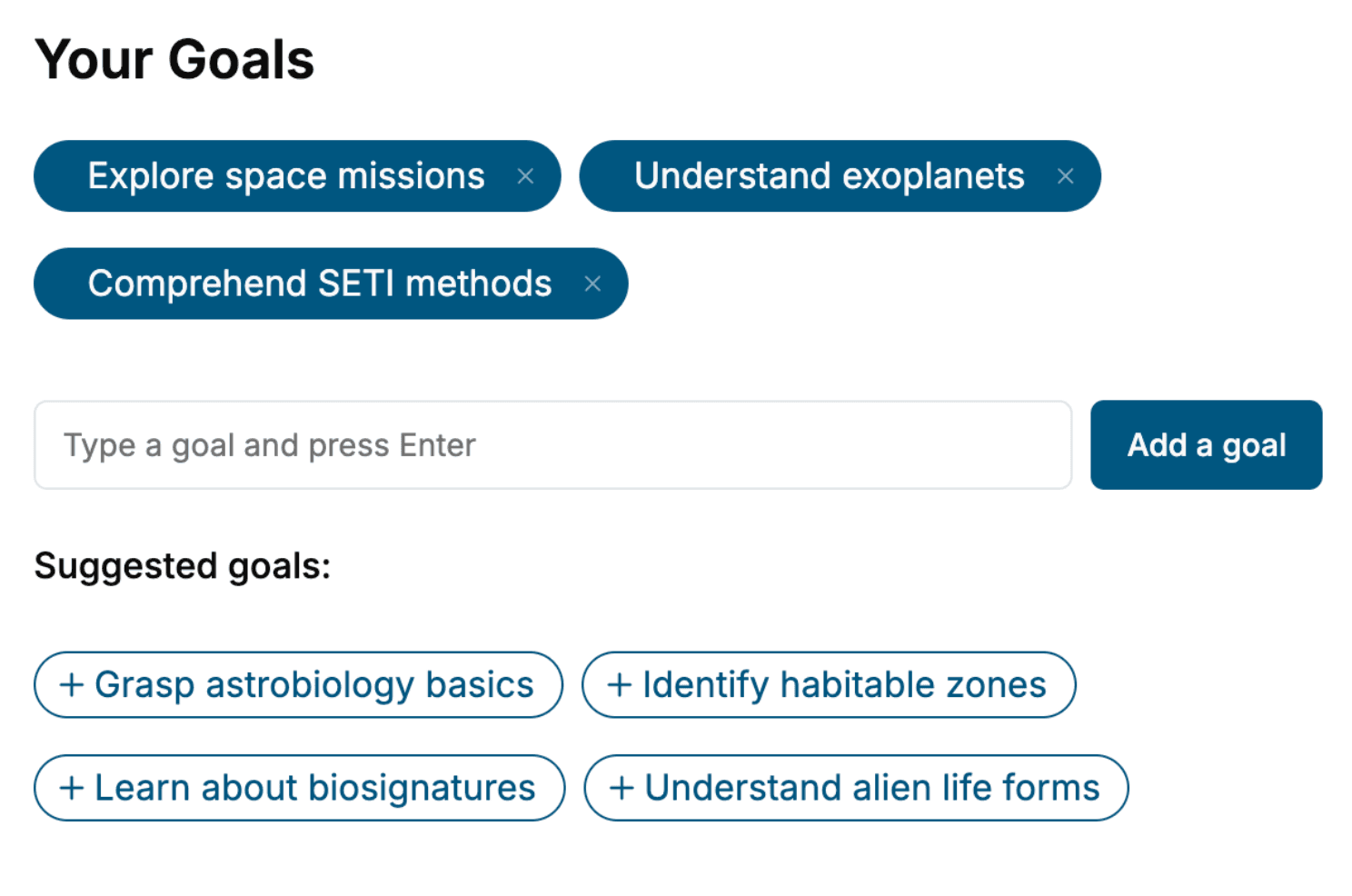
Specify your goals and choose sub-topics to include
- 3. Get your tailored book
Your book is ready in 10 minutes. Read it online, download as EPUB or PDF, or send to Kindle.

Frequently asked questions
- What is TailoredRead?
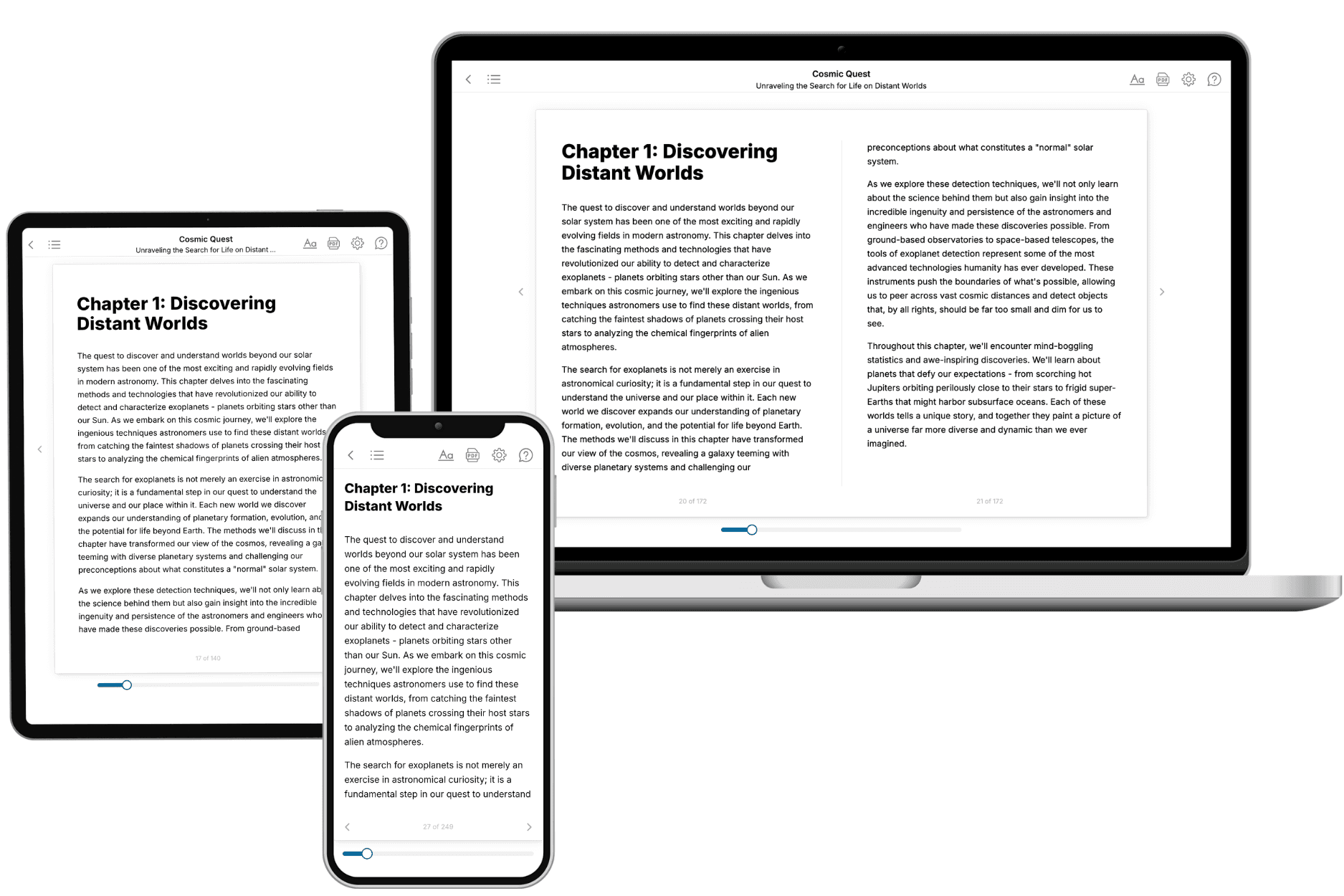
TailoredRead creates complete, full-length nonfiction ebooks, written specifically for you. Tell us what you want to learn and why, and TailoredRead writes you a complete ebook on it, with charts, tables, and diagrams throughout. Read it online, on Kindle, or on any e-reader, or download it as a PDF or EPUB. Every book is written fresh the day you order it.
- How is the book tailored to me?
Before anything is written, you answer a few short questions about your goals, your background, and the topics you care about. Your book is then planned around your answers: written at your level, focused on your goals, and covering the topics you chose, instead of the one-size-fits-all book a store sells everyone.
- Will it read like generic AI content?
No. Your book isn't a chat transcript: it's planned chapter by chapter before a single word is written, told in a clear book voice, and explains ideas visually with charts, tables, and diagrams. After writing, every book goes through an editorial pass that polishes chapters so the book reads consistent from start to finish. Judge for yourself: browse thousands of sample books on our Explore Books page.
- How accurate is the content?
Our AI first checks whether your subject needs live research. Niche and fast-moving subjects are researched before writing, and the book plan and chapters are grounded in what it finds. After writing, every book goes through a quality pass that checks its facts and consistency, and researched books list their sources in a Notes section at the back.
- How long is the book?
You choose the length: Comprehensive (250-300 pages), Detailed (150-200 pages), Essential (70-100 pages), or Short (30-50 pages).
- Does the book include visuals?
Yes. Every book includes charts, tables, and diagrams: timelines, checklists, step-by-step guides, decision trees, comparison tables, matrices, and bar charts. A typical book includes dozens of these visual elements.
- Can I read it on Kindle? What formats can I download?
Yes. Every book can be read in our online reader or downloaded as a PDF or EPUB. The EPUB can be opened with Kindle, Apple Books, Kobo, and any e-reader. The Commercial and Author licenses also include an editable Word (DOCX) and Markdown download.
- How much does it cost?
About the price of a regular ebook. The exact price depends on your book's length and complexity, from $2 for the shortest books to $35 for the most comprehensive, and it's shown when you review your book, before you commit to anything. Each book is a one-time purchase, yours to keep, no subscription. Licenses that let you share, teach, or publish your book range from $35.99 to $49.99.
- Can I preview the book before purchasing?
Before you pay, you'll see what your book will cover: the title, a detailed description, the estimated length, and the complete chapter-by-chapter table of contents, so you know what you're getting before you decide. The full text itself is written after you purchase.
- How long does it take to create a book?
About 10 minutes. You can start reading the opening chapters while the rest is still being written.