Digital Logic Books
Explore tailored Digital Logic books created by our AI
Arithmetic Logic Unit Design
Building the Digital Brain of Modern Processors
Discover how the Arithmetic Logic Unit—the computational engine at the heart of every processor—transforms simple logic gates into powerful mathematical and logical operations. This book guides you through the essential principles of ALU design, starting with binary fundamentals and Boolean algebra before progressing to practical circuit implementations. You'll explore how basic logic gates combine to create adders, multipliers, and comparison circuits, then learn how multiplexers and control signals orchestrate these components into a unified computational unit. Each chapter builds systematically on previous concepts, revealing the elegant simplicity underlying complex digital operations. By understanding ALU architecture, you'll gain deeper insight into how processors execute instructions, manage data, and achieve the performance characteristics that define modern computing. Whether you're designing circuits, studying computer architecture, or simply curious about the hardware that powers digital devices, this book provides the knowledge and practical understanding needed to grasp one of computing's most fundamental components.
Binary Decoded
Mastering the Language of Computers and Digital Logic
Embark on a fascinating journey into the world of binary numbers with "Binary Decoded: Mastering the Language of Computers and Digital Logic." This comprehensive guide demystifies the fundamental building blocks of digital information, offering you a deep dive into the binary number system that powers our modern technological landscape. From the basics of binary representation to advanced applications in computing and mathematics, this book provides a clear and engaging exploration of how binary works and why it matters. You'll discover the elegant simplicity of base-2 mathematics and how it forms the foundation for all digital systems. Whether you're a student, a technology enthusiast, or simply curious about the inner workings of computers, "Binary Decoded" will equip you with the knowledge to understand and appreciate the binary world around us. By the end of this book, you'll see numbers in a whole new light and gain insights that will enhance your understanding of both mathematics and modern technology.
This book guides you through the essential techniques of Boolean algebra simplification, transforming complex logic expressions into elegant, efficient designs. You'll start by reviewing fundamental Boolean operations and their properties, then progress through proven simplification methods—from algebraic manipulation to visual Karnaugh mapping to systematic algorithmic approaches. Each technique is presented with clear explanations, worked examples, and practical exercises that build your intuition and confidence. You'll discover how minimizing Boolean expressions directly reduces circuit complexity, power consumption, and manufacturing costs. The book connects theory to practice by showing how simplified expressions translate into actual digital circuits and systems. Whether you're designing logic circuits, optimizing digital systems, or preparing for advanced coursework, you'll gain the analytical skills and practical knowledge needed to tackle real-world problems. By the end, you'll understand not just how to simplify Boolean expressions, but why each technique works and when to apply it for maximum effectiveness.
FPGAs Demystified
From Logic Gates to High-Performance Computing
What if the bottleneck in your computational pipeline isn't your algorithm, but the processor executing it? FPGAs represent a fundamentally different approach to computing—one where you design the hardware itself to match your problem, rather than forcing your problem to fit generic hardware. This book bridges the gap between digital logic theory and practical FPGA implementation, providing you with the knowledge to harness massive parallelism and reconfigurability. You'll explore FPGA architecture from the ground up, learn how to think in hardware rather than software, and discover optimization techniques that can accelerate your algorithms by orders of magnitude. Whether you're working on signal processing, machine learning, cryptography, or custom computing solutions, this guide equips you with both the conceptual foundation and practical skills to design, implement, and optimize FPGA solutions that outperform traditional processors.
In the rapidly evolving world of ultra-high-speed communications, the challenge of designing secure and efficient chips has never been more daunting. As a Principal Architect, you face the complex task of integrating cutting-edge VLSI techniques with robust cryptographic solutions. This book is your comprehensive guide to conquering these challenges. "Advanced VLSI Design" delves deep into the intricacies of modern chip architecture, offering you practical insights into overcoming CMOS scaling limitations, harnessing the power of 3D IC integration, and implementing state-of-the-art FinFET technology. You'll explore innovative approaches to low-power design and high-speed SerDes, crucial for next-generation communication systems. This book doesn't just stop at performance; it equips you with the knowledge to build security from the ground up. From hardware Trojan detection to side-channel analysis resistance, you'll learn how to create chips that are not only fast but also fortified against modern security threats. Dive into advanced topics like quantum-dot cellular automata and EUV lithography, positioning yourself at the forefront of VLSI innovation.
The Logic Toolbox
A Practical Guide to Mathematical Reasoning for Curious Minds
Imagine having the power to analyze complex arguments, solve intricate puzzles, and navigate the world of abstract reasoning with confidence. "The Logic Toolbox: A Practical Guide to Mathematical Reasoning for Curious Minds" is your key to unlocking this potential. This book is tailored for those with a curious mind and a desire to sharpen their logical thinking skills. Whether you're a retired IT professional looking to expand your knowledge or simply someone fascinated by the mechanics of reasoning, this guide will take you on an enlightening journey through the foundations of logic and mathematical reasoning. From the basics of propositional logic to the intricacies of predicate calculus, you'll discover a wealth of tools to enhance your analytical abilities. Each chapter builds upon the last, introducing you to logical connectives, set theory, Boolean algebra, and much more. You'll learn to construct valid arguments, recognize logical fallacies, and apply your newfound skills to real-world scenarios. With clear explanations, engaging examples, and practical exercises, "The Logic Toolbox" ensures that even complex concepts become accessible and applicable. By the end of this book, you'll have a robust understanding of formal logic, equipping you with the mental agility to tackle challenges in various aspects of life and continue your intellectual growth long after your professional career.
Related books you may like:
What if your app could serve twice as many users simply by making it accessible? Millions of people with disabilities want to use Android apps but face barriers created by poor design choices. This book shows you how to remove those barriers and build applications that work seamlessly for everyone. You'll learn the practical techniques for implementing screen reader support, voice control, and other assistive technologies. Discover how semantic markup, proper content descriptions, and inclusive design patterns create apps that are easier to use for all users. Through real-world examples and step-by-step guidance, you'll master the Android Accessibility Framework and understand WCAG 2.1 standards. Learn testing strategies that reveal accessibility issues before your users encounter them. By the end, you'll have the knowledge to make accessibility a core part of your development process, not an afterthought—expanding your market reach while creating genuinely inclusive digital experiences.
Imagine delivering software that consistently meets stakeholder expectations, where every feature works exactly as intended, and your team moves with confidence through changes and refactoring. This is the reality when you master acceptance test-driven development. This comprehensive guide takes you beyond the basics to show you how ATDD transforms the way teams develop software. You'll learn how to write acceptance tests that serve as living documentation, collaborate effectively with business stakeholders to define clear acceptance criteria, and integrate ATDD seamlessly into your Extreme Programming workflow. Whether you're struggling with unclear requirements, dealing with late-stage defect discovery, or simply want to elevate your development practices, this book provides practical strategies, real-world examples, and proven techniques. You'll understand not just the "how" but the "why" behind acceptance test-driven development, enabling you to make informed decisions about implementation in your own context. Master this essential XP practice and watch your team's productivity and code quality soar.
Take your TypeScript skills from intermediate to advanced in just 30 days with a structured, project-driven approach. This book guides you through focused techniques that matter most: mastering advanced types like generics and conditional types, writing reliable async code with proper error handling, integrating TypeScript with modern frameworks, and building confidence through comprehensive testing strategies. Each day builds on the previous one, combining theory with hands-on coding projects that you'll actually use. You'll refactor real code, understand why type safety matters, and develop the patterns that separate good TypeScript developers from great ones. By day 30, you'll have the skills to write safer, more maintainable code and the portfolio projects to prove it. This isn't theory—it's practical, accelerated learning designed for developers ready to level up.
Discover how to build software that meets expectations from day one. Acceptance test-driven development (ATDD) transforms how teams define, test, and deliver quality software by writing acceptance tests before development begins. This practical guide shows you how to collaborate with stakeholders to define clear acceptance criteria, automate those criteria into executable tests, and use them to guide development and beta testing efforts. You'll learn to bridge the communication gap between business requirements and technical implementation, reduce costly defects discovered late in the cycle, and create living documentation that keeps pace with your product. Whether you're a QA professional, beta tester, or developer, this book provides actionable strategies, real-world examples, and proven frameworks to implement ATDD in your organization. Move beyond traditional testing approaches and join teams that are catching defects earlier, improving stakeholder alignment, and delivering software with confidence.
Building systems that reliably handle data is one of the hardest challenges in backend development. Without a solid understanding of ACID properties, you risk data corruption, lost transactions, and system failures that cascade through your application. This book demystifies the four pillars of database reliability—Atomicity, Consistency, Isolation, and Durability—and shows you exactly how to apply them in real-world scenarios. You'll learn why these properties matter, how they work under the hood, and how to leverage them when designing transactions, choosing databases, and handling failures. Whether you're building a financial system that can't afford to lose a penny or a high-traffic application that needs to scale, understanding ACID properties gives you the confidence to make architectural decisions that keep your data safe and your systems running smoothly.
Create a Digital Logic Book Tailored to You
Create an AI-crafted book tailored to your goals, interests, and background





Benefits of AI-tailored books
- Read one book, not ten:
- all the Digital Logic knowledge you need, gathered into a single book.
- Save days of learning:
- tell us your goals, choose your topics, and the whole book is built around them.
- Learn effortlessly:
- Digital Logic book written for your specific background and expertise.
- Understand at a glance:
- includes charts, tables, timelines, checklists, decision trees, and more.
- Stay current:
- written the day you order it, not years ago.
- Trust what you read:
- every book is checked for accuracy, with real research when your subject needs it.
Create your unique book in 3 steps
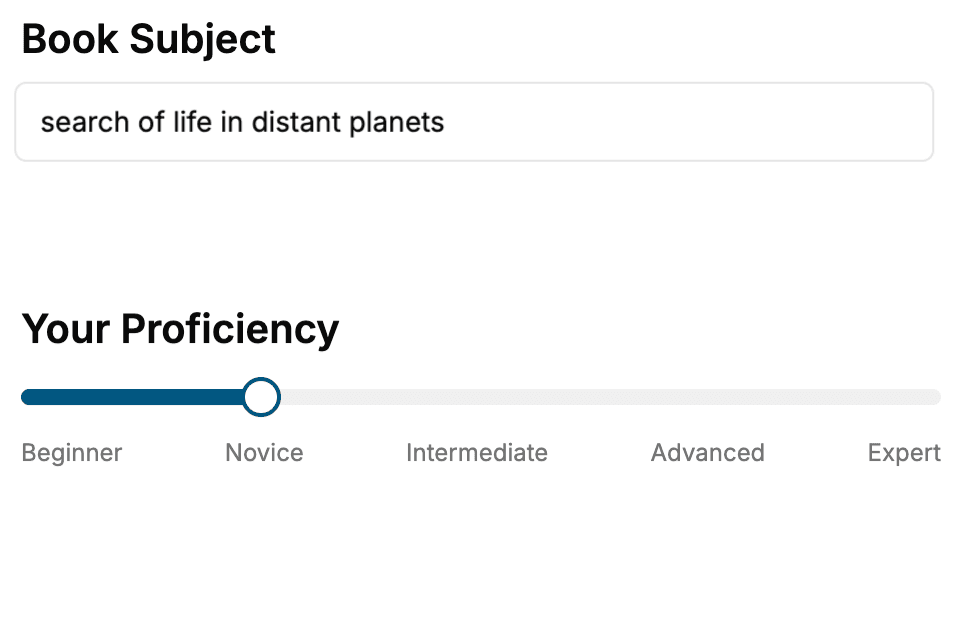
- 1. Select your focus
Select the focus of your Digital Logic book and share your background
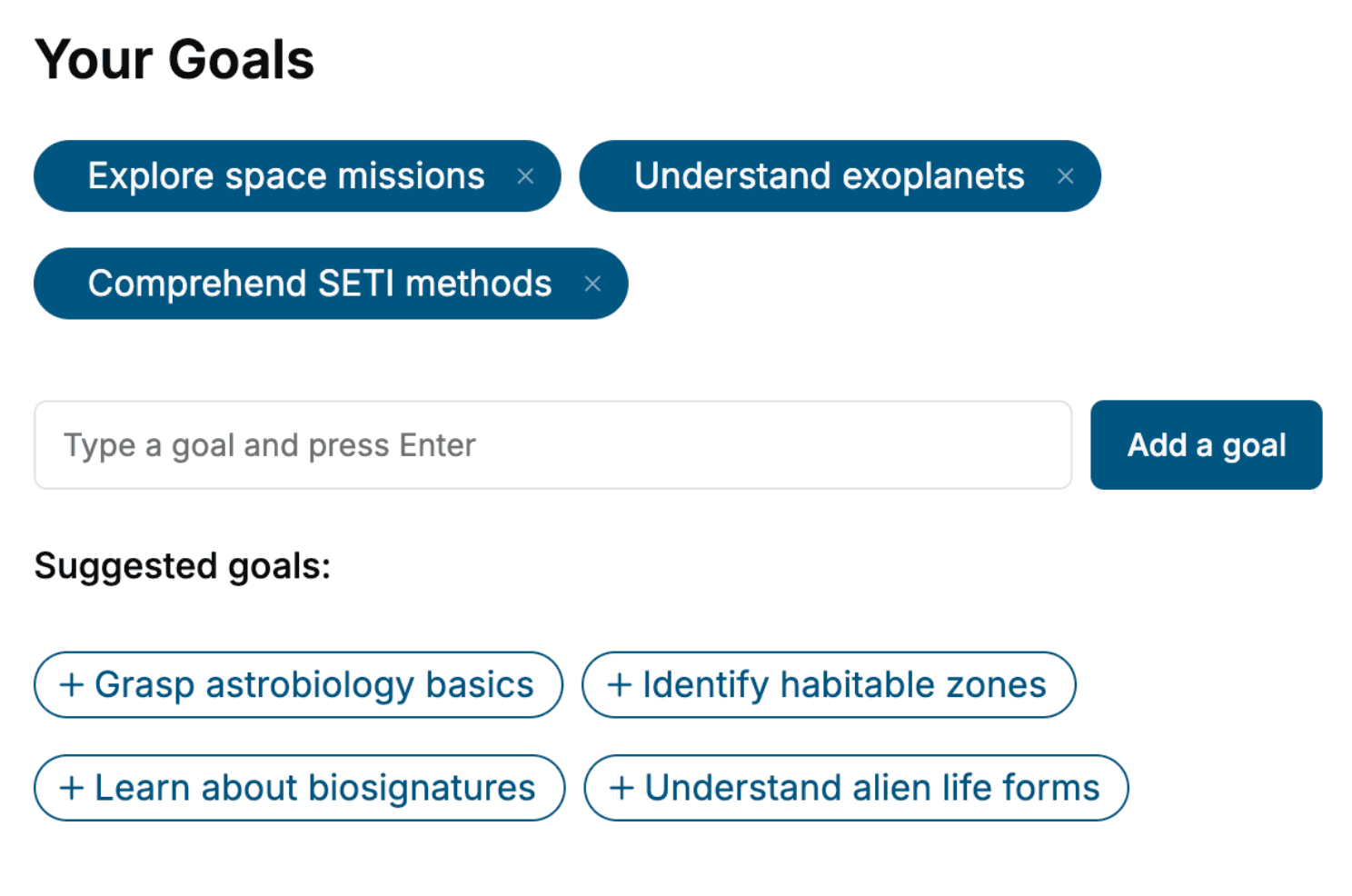
- 2. Personalize your book
Specify your goals and choose sub-topics to include
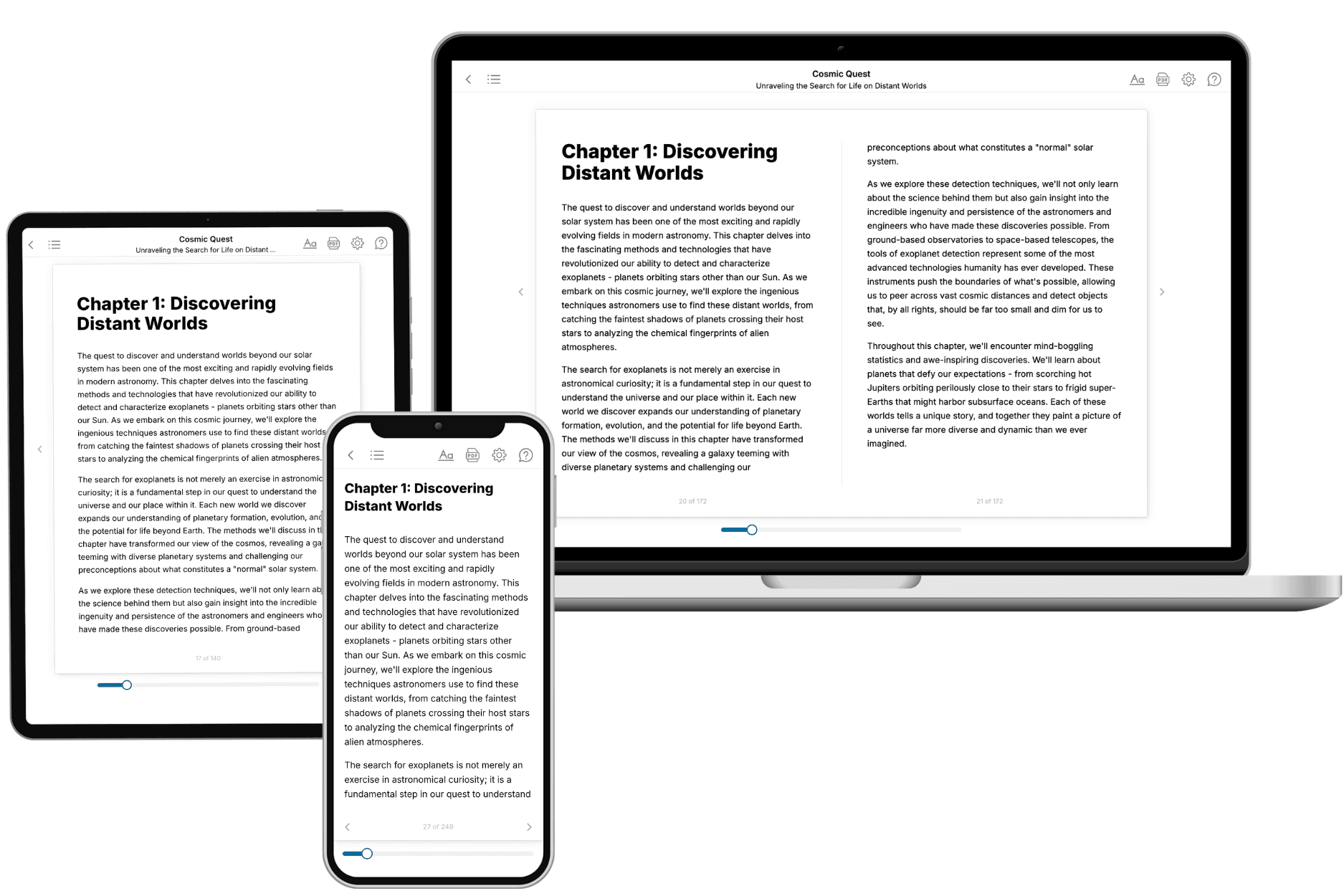
- 3. Get your tailored book
Your book is ready in 10 minutes. Read it online, download as EPUB or PDF, or send to Kindle.
Frequently asked questions
- What is TailoredRead?
TailoredRead creates complete, full-length nonfiction ebooks, written specifically for you. Tell us what you want to learn and why, and TailoredRead writes you a complete ebook on it, with charts, tables, and diagrams throughout. Read it online, on Kindle, or on any e-reader, or download it as a PDF or EPUB. Every book is written fresh the day you order it.
- How is the book tailored to me?
Before anything is written, you answer a few short questions about your goals, your background, and the topics you care about. Your book is then planned around your answers: written at your level, focused on your goals, and covering the topics you chose, instead of the one-size-fits-all book a store sells everyone.
- Will it read like generic AI content?
No. Your book isn't a chat transcript: it's planned chapter by chapter before a single word is written, told in a clear book voice, and explains ideas visually with charts, tables, and diagrams. After writing, every book goes through an editorial pass that polishes chapters so the book reads consistent from start to finish. Judge for yourself: browse thousands of sample books on our Explore Books page.
- How accurate is the content?
Our AI first checks whether your subject needs live research. Niche and fast-moving subjects are researched before writing, and the book plan and chapters are grounded in what it finds. After writing, every book goes through a quality pass that checks its facts and consistency, and researched books list their sources in a Notes section at the back.
- How long is the book?
You choose the length: Comprehensive (250-300 pages), Detailed (150-200 pages), Essential (70-100 pages), or Short (30-50 pages).
- Does the book include visuals?
Yes. Every book includes charts, tables, and diagrams: timelines, checklists, step-by-step guides, decision trees, comparison tables, matrices, and bar charts. A typical book includes dozens of these visual elements.
- Can I read it on Kindle? What formats can I download?
Yes. Every book can be read in our online reader or downloaded as a PDF or EPUB. The EPUB can be opened with Kindle, Apple Books, Kobo, and any e-reader. The Commercial and Author licenses also include an editable Word (DOCX) and Markdown download.
- How much does it cost?
About the price of a regular ebook. The exact price depends on your book's length and complexity, from $2 for the shortest books to $35 for the most comprehensive, and it's shown when you review your book, before you commit to anything. Each book is a one-time purchase, yours to keep, no subscription. Licenses that let you share, teach, or publish your book range from $35.99 to $49.99.
- Can I preview the book before purchasing?
Before you pay, you'll see what your book will cover: the title, a detailed description, the estimated length, and the complete chapter-by-chapter table of contents, so you know what you're getting before you decide. The full text itself is written after you purchase.
- How long does it take to create a book?
About 10 minutes. You can start reading the opening chapters while the rest is still being written.