Educational Research Books
Explore tailored Educational Research books created by our AI
Education and Society
Understanding How Schools Shape Culture, Inequality, and Social Change
Imagine understanding why some students thrive in school while others struggle—not because of individual ability, but because of how schools are fundamentally organized. This book reveals the hidden social forces shaping education and its outcomes. You'll discover how schools transmit culture, reproduce inequality, and influence who gets ahead in society. Through accessible explanations and real-world examples, you'll learn why educational systems look the way they do, how they affect different groups unequally, and what role teachers, families, and institutions play in educational outcomes. Whether you're an educator, parent, student, or simply curious about society, this exploration of education's social dimensions will change how you see schools and their impact on individuals and communities. Gain the sociological perspective needed to understand education's role in shaping opportunity, identity, and social change.
Arts Integration in Education
How Creative Learning Transforms Students and Communities
Discover how integrating the arts into core academic subjects creates powerful learning experiences that engage all students and boost achievement. This book shows you that arts integration isn't about adding art classes—it's about weaving creative thinking, expression, and collaboration into every subject you teach. You'll learn why students who engage with arts-integrated instruction show stronger performance in math, reading, and science, while developing critical thinking and problem-solving abilities. Through practical strategies, real classroom examples, and evidence-based research, you'll understand how to design lessons that honor diverse learning styles and help every student succeed. Whether you're teaching elementary, middle, or high school, you'll find actionable approaches to connect the arts with your curriculum, build community partnerships, and create classrooms where creativity and academic rigor work together. This book empowers educators to transform instruction and help students see themselves as capable, creative learners.
The Reggio Emilia Way
Building Confident, Creative Learners Through Child-Centered Education
What if the most powerful learning happens when children follow their own curiosity rather than predetermined curricula? The Reggio Emilia approach offers a radically different vision of education—one where children are recognized as capable thinkers, the classroom environment becomes an active teacher, and learning emerges from genuine questions and exploration. This book demystifies the philosophy behind this transformative educational approach and shows you how to bring its principles to life. You'll discover how to design environments that spark discovery, observe and document learning in meaningful ways, collaborate with families as true partners, and facilitate projects that develop critical thinking and creativity. Whether you're an educator seeking fresh approaches, a parent wanting to understand progressive education, or a leader implementing systemic change, this guide provides both the philosophical foundation and practical strategies you need. Learn how the Reggio Emilia way cultivates confident, creative learners who develop a genuine love of learning that extends far beyond the classroom.
AI-Powered Education
Transforming Learning, Assessment, and Research in the Digital Age
Embark on a transformative journey through the world of AI-powered education with this groundbreaking book. As an educator and researcher, you'll discover how artificial intelligence is reshaping the landscape of learning, assessment, and academic research. Dive deep into the realm of AI-driven educational tools, from intelligent chatbots that enhance student engagement to sophisticated algorithms that optimize curriculum design. You'll gain invaluable insights into analyzing learning patterns, predicting student success, and integrating AI seamlessly into your teaching methods. This comprehensive guide offers practical strategies for leveraging AI to streamline your grading process, enhance research methodologies, and ultimately improve learning outcomes. Whether you're looking to write a cutting-edge paper on AI in education or simply want to stay ahead of the curve in your field, this book provides the knowledge and tools you need to thrive in the digital age of education.
Are you limiting your research potential by relying on just one methodological approach? In today's complex research landscape, the most compelling studies combine the precision of numbers with the depth of human experience. This comprehensive guide takes you beyond traditional single-method approaches to master the art and science of mixed methods research. You'll discover how to strategically blend quantitative and qualitative techniques to answer research questions that neither approach could tackle alone. From designing robust sequential and concurrent studies to analyzing integrated datasets, you'll gain the skills to conduct research that captures both statistical significance and meaningful context. Through practical examples, step-by-step procedures, and real-world applications, you'll learn to navigate the complexities of mixed methods design, overcome common integration challenges, and present findings that resonate with diverse audiences. Whether you're investigating educational interventions, organizational behavior, or social phenomena, this book provides the framework to elevate your research impact. By the end, you'll confidently design studies that harness the complementary strengths of both methodological traditions, creating research that is both rigorous and relevant to the complex questions facing your field.
The biggest challenge facing qualitative researchers today isn't finding interesting questions to explore—it's conducting research that meets rigorous academic standards while capturing the rich, complex realities of human experience. Too many researchers struggle with methodological uncertainty, wondering if their approach is sound, their analysis is credible, or their findings will be taken seriously by the academic community. This comprehensive guide bridges the gap between theoretical knowledge and practical application, providing you with the tools and confidence needed to conduct exceptional qualitative research. You'll discover how to design studies that are both methodologically rigorous and deeply meaningful, moving beyond surface-level data collection to uncover profound insights about human behavior, experiences, and social phenomena. Through systematic exploration of research design, data collection techniques, and analytical approaches, you'll learn to navigate the complexities of qualitative inquiry with precision and purpose. From developing compelling research questions to presenting findings that resonate with diverse audiences, this book equips you with proven strategies used by successful researchers across disciplines. By the end of this guide, you'll possess the methodological expertise and analytical skills necessary to contribute original, high-quality research to your field, while maintaining the ethical standards and reflexive practices that define excellent qualitative scholarship.
The Case Study Playbook
Master the Art and Science of In-Depth Research
What makes some research findings stick with decision-makers while others gather dust on shelves? The answer often lies not in the volume of data collected, but in how deeply you understand the phenomenon you're studying. Case study research offers a pathway to that depth—yet many researchers approach it haphazardly, treating it as a lesser alternative to quantitative methods rather than a rigorous methodology in its own right. This book demystifies case study research, showing you how to design studies that produce credible, compelling findings. You'll learn to navigate the critical decisions that separate rigorous case studies from superficial investigations: selecting cases strategically, collecting data systematically, and analyzing findings with precision. Whether you're investigating organizational change, policy implementation, or complex social phenomena, this guide provides the frameworks, tools, and real-world examples you need to conduct case studies that inform theory, influence practice, and advance your field.
Many researchers struggle with qualitative data collection, unsure how to capture the moments that truly matter. The Critical Incident Technique offers a proven solution—a structured yet flexible approach to identifying and analyzing the specific behavioral events that reveal deep insights about human performance, organizational culture, and social dynamics. This guide walks you through every stage of the process, from defining what makes an incident "critical" for your research to conducting interviews that elicit rich, detailed accounts, and finally, analyzing your data to uncover meaningful patterns. Whether you're studying workplace effectiveness, educational outcomes, healthcare delivery, or user experiences, you'll learn how to apply CIT with confidence and rigor. Discover how to design incident collection strategies tailored to your research questions, navigate common pitfalls, ensure your findings are valid and reliable, and translate your analysis into actionable insights. This book combines theoretical foundations with practical tools, real-world examples, and step-by-step guidance to help you master this powerful qualitative research method.
The Ethics of Research
Navigating Moral Responsibility in the Pursuit of Knowledge
Research drives progress, but it also raises profound moral questions. How do you ensure participants are truly protected? When does pursuing knowledge cross ethical lines? What happens when your interests conflict with your responsibilities? This book addresses the tension between scientific ambition and ethical obligation. You'll discover why research ethics matters beyond compliance—it's about respecting human dignity and building trust in knowledge itself. Through real-world scenarios and practical frameworks, you'll learn to navigate informed consent, manage conflicts of interest, recognize misconduct, and protect vulnerable populations. Whether you're designing studies, reviewing proposals, or conducting fieldwork, you'll gain clarity on the principles that guide responsible research and the tools to apply them confidently. This is essential reading for anyone committed to advancing knowledge ethically.
The Language Acquisition Compass
Navigating Theories and Practices in Language Teaching
Master the intricacies of language acquisition theories and revolutionize your approach to language teaching and learning. This comprehensive guide bridges the gap between theoretical knowledge and practical application, empowering you to create more effective and engaging language learning experiences. Delve into the fascinating world of how humans acquire languages, exploring key theories that have shaped our understanding of this complex process. You'll gain insights into the cognitive, social, and linguistic factors that influence language learning, and discover how to leverage this knowledge in real-world teaching scenarios. Whether you're a language teacher looking to enhance your instructional strategies or an advanced language learner seeking to optimize your own learning process, this book offers a wealth of evidence-based approaches and practical techniques. By the end, you'll have a robust toolkit of strategies to foster language acquisition, create supportive learning environments, and address common challenges in language education.
Many educators believe that integrating AI into their teaching practices is a daunting and time-consuming task. However, this couldn't be further from the truth. AI in the Classroom: A Teacher's Guide to Revolutionizing Education with Artificial Intelligence is your comprehensive roadmap to harnessing the power of AI to transform your teaching methods and streamline your workload. This guide takes you on a step-by-step journey through the world of educational AI, from automated grading systems to AI-powered trip planners. You'll discover how to design AI-assisted lessons that captivate your students' attention and cultivate their tech-savvy skills. Learn to leverage AI writing feedback tools to improve student compositions and explore the exciting possibilities of gamified learning powered by artificial intelligence. As you delve into the pages of this book, you'll gain practical insights on how to automate time-consuming tasks like report card generation, freeing up valuable time to focus on what truly matters - your students. With a balanced approach that combines theoretical understanding with hands-on applications, this guide ensures you're well-equipped to navigate the future of AI in schools.
African History Blueprint
Master African History with Tailored Insights and Timelines
What if everything you thought you knew about African history was just the beginning of a much richer, more complex story? This comprehensive guide takes you beyond surface-level narratives to explore the intricate tapestry of African civilizations, from ancient kingdoms to modern nations. You'll discover how diverse regions developed unique cultural identities, political systems, and economic networks long before external influences arrived. Through detailed analysis of key historical periods, influential figures, and pivotal moments, you'll gain the tools to understand how colonialism's varied impacts shaped different independence movements and post-colonial trajectories. The book examines architectural marvels like Great Zimbabwe, explores the often-overlooked contributions of African women leaders, and traces the evolution of educational systems and urbanization patterns across the continent. Each chapter builds upon previous knowledge while offering practical frameworks for creating your own personalized historical timelines. You'll learn to analyze regional differences, assess economic developments, and understand how ethnic diversity has influenced political changes throughout African history. This isn't just about memorizing dates and names—it's about developing analytical skills to comprehend the complex forces that have shaped Africa's past and continue to influence its future. Whether you're seeking to deepen your understanding of cultural heritage, examine social transformations, or build a comprehensive knowledge base of African history, this blueprint provides the structured approach you need to master this vast and fascinating subject.
The Polytechnic Revolution
Reimagining Higher Education for the Industry 4.0 Era
In today's rapidly evolving technological landscape, traditional universities struggle to keep pace with industry demands and emerging fields. The gap between academia and real-world application has never been wider, leaving many institutions at risk of becoming obsolete. "The Polytechnic Revolution" offers a bold new vision for higher education, tailored for university executives and leaders who are ready to embrace change. This comprehensive guide provides a roadmap for transforming your institution into a modern polytechnic powerhouse, equipping students with the skills and knowledge they need to thrive in the Industry 4.0 era. You'll discover innovative strategies for redesigning STEM curricula, fostering meaningful industry partnerships, and creating dynamic learning environments that blend cutting-edge technology with hands-on experience. From implementing AI-enhanced learning systems to establishing thriving innovation hubs, this book covers every aspect of the modern polytechnic model. By following the actionable insights and proven methodologies outlined in this book, you'll be able to boost research output, improve student retention, and position your institution at the forefront of technological innovation and interdisciplinary education. Don't let your university get left behind – join the Polytechnic Revolution and shape the future of higher education.
Related books you may like:
Picture a university where AI seamlessly enhances every aspect of learning and research. Students engage with AI-powered teaching assistants, researchers leverage AI to push the boundaries of discovery, and curricula evolve to prepare graduates for an AI-driven world. This isn't a far-off dream—it's the new reality of higher education, and you have the power to bring it to life on your campus. "AI in Academia: A Leader's Guide to Shaping the Future of Higher Education" is your roadmap to revolutionizing your institution with artificial intelligence. This comprehensive guide demystifies AI technology and its applications in education, providing you with practical strategies to integrate AI across your university's operations. You'll discover how to develop cutting-edge AI ethics curricula, enhance STEM education with AI tools, and leverage AI to streamline course planning and research processes. Learn to implement AI literacy programs that empower your entire campus community, from freshmen to faculty. With this book, you'll gain the knowledge and confidence to lead your institution into the AI era, fostering a culture of innovation and preparing your students for the challenges and opportunities of tomorrow's workforce.
You'll elevate your training effectiveness by mastering the science and strategy behind adult learning. This comprehensive guide bridges theory and practice, providing you with evidence-based frameworks, actionable techniques, and real-world applications that immediately improve learner engagement, retention, and performance transfer. Whether you're designing curricula, facilitating virtual sessions, or assessing competencies, you'll discover how to apply andragogy principles, leverage cognitive science, and integrate technology strategically. You'll learn to motivate adult learners through intrinsic drivers, create psychologically safe environments, and deliver feedback that drives improvement. With practical tools for instructional design, assessment strategies, and blended learning approaches, you'll design learning experiences that stick—transforming how your organization develops talent and builds capability. This is your complete resource for becoming a master facilitator of adult learning.
Create an Educational Research Book Tailored to You
Create an AI-crafted book tailored to your goals, interests, and background





Benefits of AI-tailored books
- Read one book, not ten:
- all the Educational Research knowledge you need, gathered into a single book.
- Save days of learning:
- tell us your goals, choose your topics, and the whole book is built around them.
- Learn effortlessly:
- Educational Research book written for your specific background and expertise.
- Understand at a glance:
- includes charts, tables, timelines, checklists, decision trees, and more.
- Stay current:
- written the day you order it, not years ago.
- Trust what you read:
- every book is checked for accuracy, with real research when your subject needs it.
Create your unique book in 3 steps
- 1. Select your focus
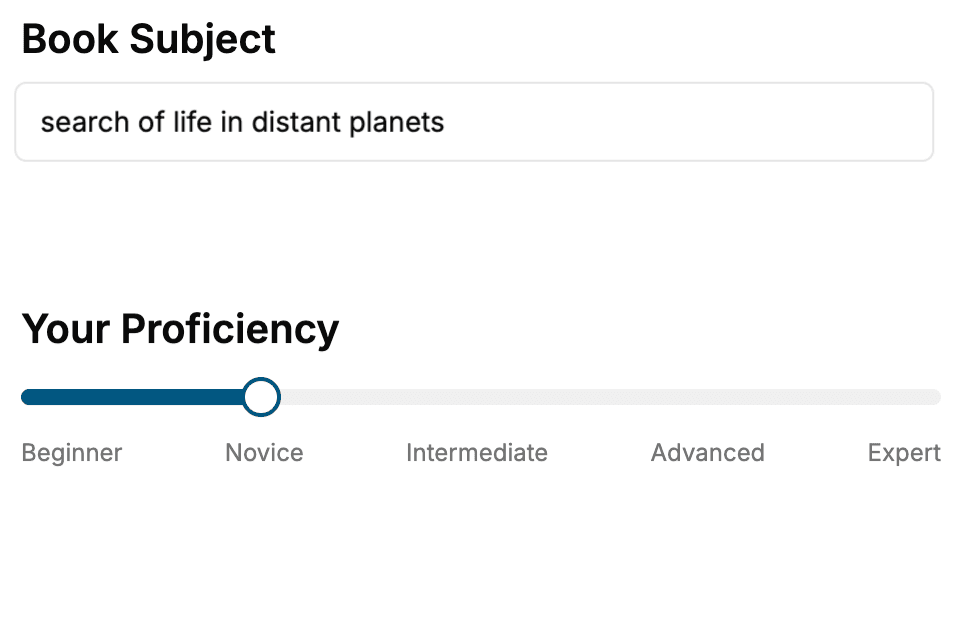
Select the focus of your Educational Research book and share your background
- 2. Personalize your book
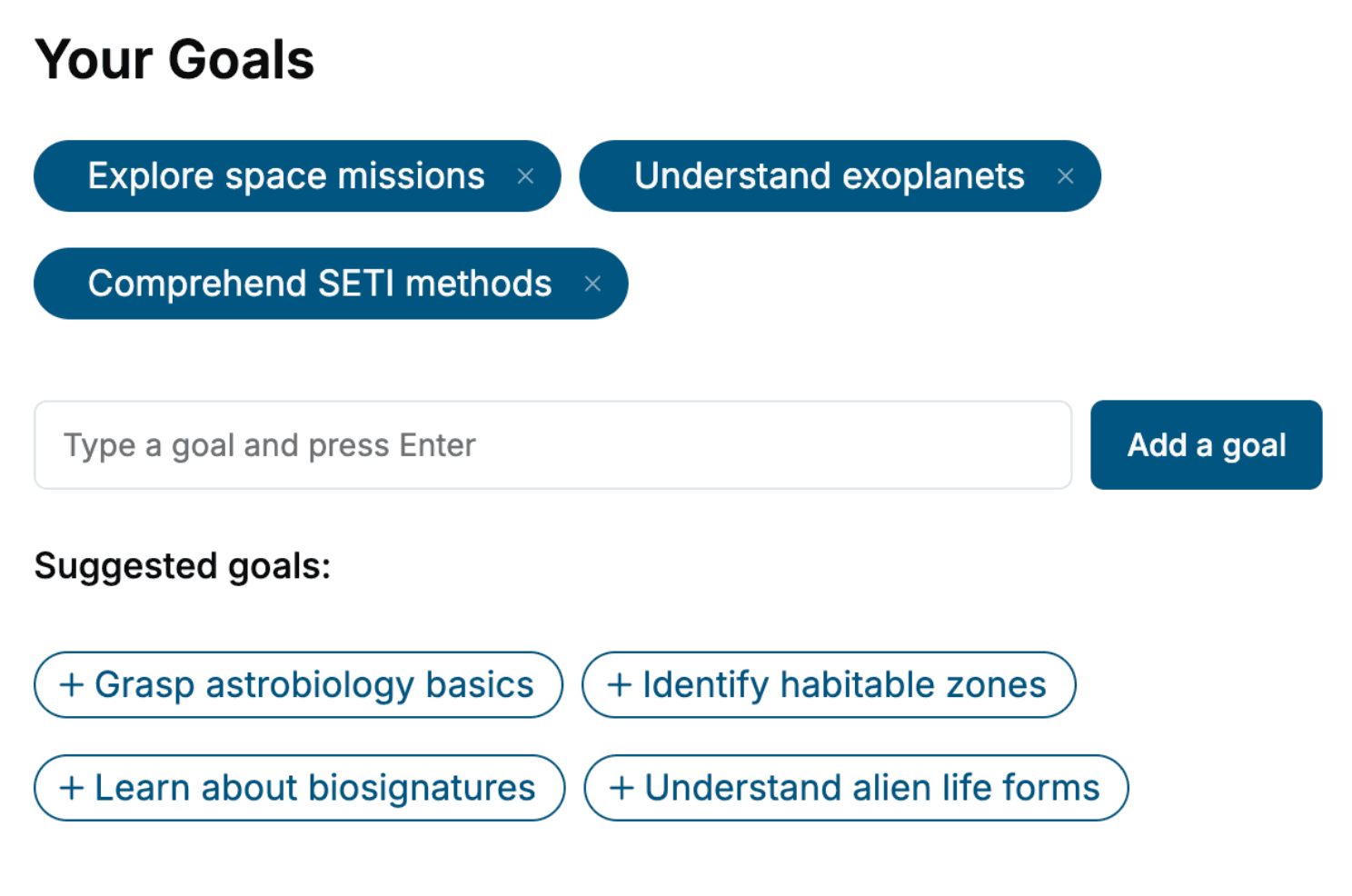
Specify your goals and choose sub-topics to include
- 3. Get your tailored book
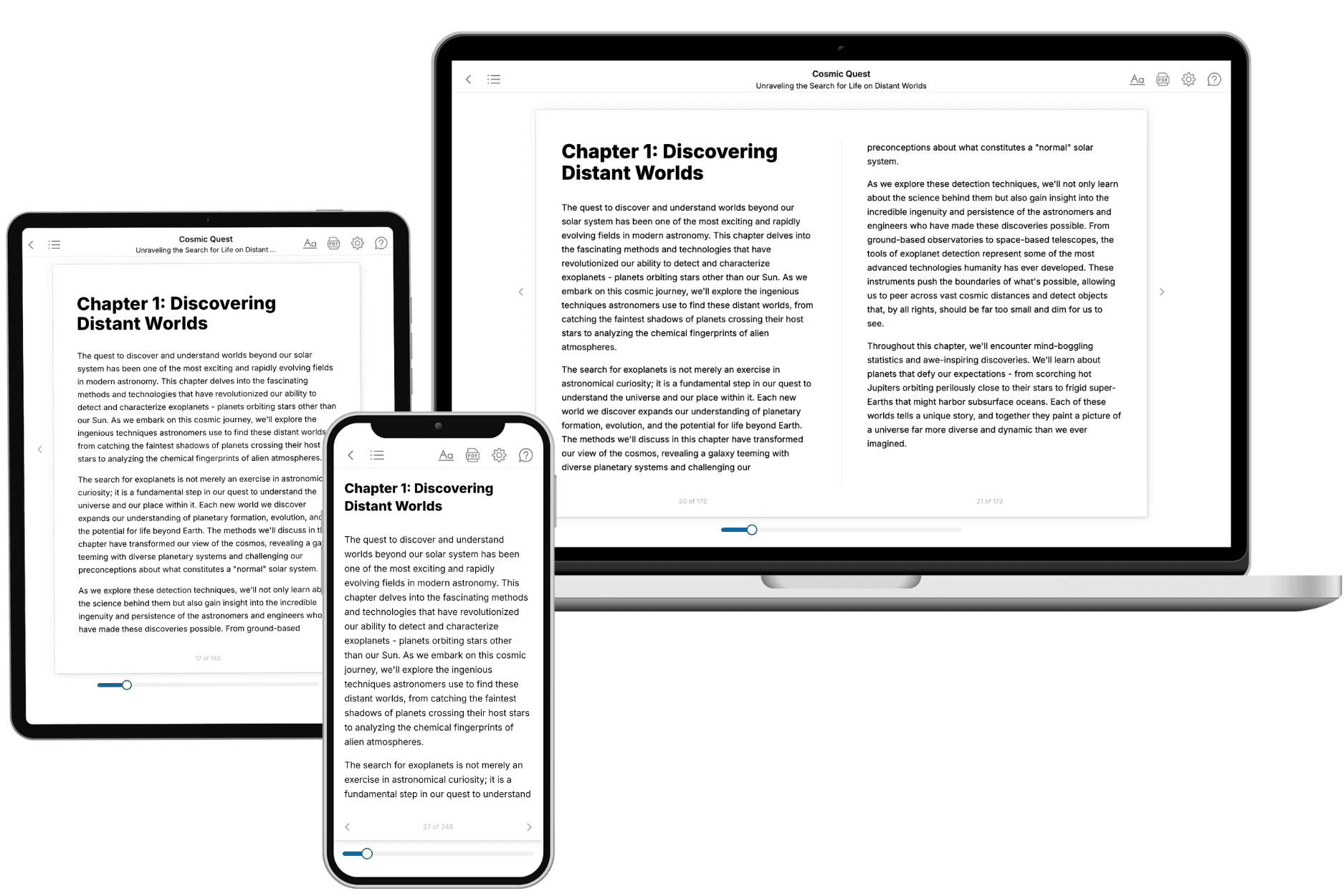
Your book is ready in 10 minutes. Read it online, download as EPUB or PDF, or send to Kindle.
Start from a template
Frequently asked questions
- What is TailoredRead?
TailoredRead creates complete, full-length nonfiction ebooks, written specifically for you. Tell us what you want to learn and why, and TailoredRead writes you a complete ebook on it, with charts, tables, and diagrams throughout. Read it online, on Kindle, or on any e-reader, or download it as a PDF or EPUB. Every book is written fresh the day you order it.
- How is the book tailored to me?
Before anything is written, you answer a few short questions about your goals, your background, and the topics you care about. Your book is then planned around your answers: written at your level, focused on your goals, and covering the topics you chose, instead of the one-size-fits-all book a store sells everyone.
- Will it read like generic AI content?
No. Your book isn't a chat transcript: it's planned chapter by chapter before a single word is written, told in a clear book voice, and explains ideas visually with charts, tables, and diagrams. After writing, every book goes through an editorial pass that polishes chapters so the book reads consistent from start to finish. Judge for yourself: browse thousands of sample books on our Explore Books page.
- How accurate is the content?
Our AI first checks whether your subject needs live research. Niche and fast-moving subjects are researched before writing, and the book plan and chapters are grounded in what it finds. After writing, every book goes through a quality pass that checks its facts and consistency, and researched books list their sources in a Notes section at the back.
- How long is the book?
You choose the length: Comprehensive (250-300 pages), Detailed (150-200 pages), Essential (70-100 pages), or Short (30-50 pages).
- Does the book include visuals?
Yes. Every book includes charts, tables, and diagrams: timelines, checklists, step-by-step guides, decision trees, comparison tables, matrices, and bar charts. A typical book includes dozens of these visual elements.
- Can I read it on Kindle? What formats can I download?
Yes. Every book can be read in our online reader or downloaded as a PDF or EPUB. The EPUB can be opened with Kindle, Apple Books, Kobo, and any e-reader. The Commercial and Author licenses also include an editable Word (DOCX) and Markdown download.
- How much does it cost?
About the price of a regular ebook. The exact price depends on your book's length and complexity, from $2 for the shortest books to $35 for the most comprehensive, and it's shown when you review your book, before you commit to anything. Each book is a one-time purchase, yours to keep, no subscription. Licenses that let you share, teach, or publish your book range from $35.99 to $49.99.
- Can I preview the book before purchasing?
Before you pay, you'll see what your book will cover: the title, a detailed description, the estimated length, and the complete chapter-by-chapter table of contents, so you know what you're getting before you decide. The full text itself is written after you purchase.
- How long does it take to create a book?
About 10 minutes. You can start reading the opening chapters while the rest is still being written.