Organizational Psychology Books
Explore tailored Organizational Psychology books created by our AI
The Big Five Decoded
Mastering Personality Dimensions for Organizational Success
In today's complex business landscape, understanding personality is no longer a luxury—it's a necessity. The biggest obstacle you face is translating theoretical knowledge of personality traits into practical, actionable strategies that drive organizational success. "The Big Five Decoded" bridges this gap, offering you a deep dive into the nuances of the five fundamental personality dimensions: Neuroticism, Extraversion, Openness, Agreeableness, and Conscientiousness. This comprehensive guide equips you with the tools to refine your assessment methods, enhance your coaching skills, and optimize team composition based on personality insights. Discover how to leverage the power of personality in talent identification, leadership development, and team dynamics. Learn to predict behavioral patterns, understand situational influences, and cultivate emotional intelligence within your organization. With a focus on practical application, this book provides frameworks for trait-based hiring, performance correlation, and effective communication patterns tailored to diverse personality types. Whether you're looking to improve workplace motivation, manage stress more effectively, or develop stronger leadership styles, "The Big Five Decoded" offers the knowledge and strategies you need to excel in your role as a business psychologist and drive your organization towards greater success.
This comprehensive guide takes you through the psychological foundations that shape how organizations function and how people behave within them. You'll discover why some teams thrive while others struggle, how organizational culture influences every decision made, and what drives genuine employee engagement beyond surface-level initiatives. The book explores the intersection of individual psychology, group dynamics, and organizational systems, revealing the hidden patterns that determine success or failure. Through practical frameworks and real-world examples, you'll learn how to recognize cognitive biases in decision-making, understand the psychology of change and resistance, and create environments where people are motivated to do their best work. Whether you're a manager, HR professional, or organizational leader, this book equips you with evidence-based insights to navigate the complex human dimensions of organizational life and build more effective, psychologically healthy workplaces.
Many physicians assume that clinical expertise alone qualifies them to lead teams and manage organizational challenges. Yet hospitals and clinics operate as complex social systems where understanding human behavior, motivation, and group dynamics is equally critical to patient outcomes. This book bridges the gap between organizational psychology theory and the real-world challenges you face daily—from managing difficult team dynamics and resolving conflicts to assessing culture and implementing sustainable change. You'll learn how to assess your organization's current state, understand the hierarchical dynamics unique to healthcare, strengthen physician-staff relationships, and design interventions tailored to your specific team's needs. Whether you're struggling with burnout, interdisciplinary collaboration, or employee engagement, this guide provides practical, evidence-based strategies grounded in organizational psychology principles. Discover how to build psychological safety, measure team cohesion, prevent burnout, and lead with both authority and empathy in healthcare settings.
You're about to discover how to conduct performance appraisals that actually work. Most organizations treat appraisals as a compliance checkbox—a once-yearly conversation that frustrates both managers and employees. This book reveals why that approach fails and shows you a better way grounded in occupational psychology research. You'll learn how cognitive biases silently sabotage your evaluations, why your current rating scales might be misleading you, and how to design appraisal systems that employees trust and respond to. Through practical frameworks, real-world examples, and evidence-based techniques, you'll master the psychology behind effective performance evaluation. Whether you're redesigning your organization's appraisal system or improving your personal evaluation skills, this book provides the tools to make appraisals meaningful, fair, and transformative. You'll understand how to give feedback that employees actually hear, how to reduce bias in your assessments, and how to use appraisals as genuine catalysts for performance improvement and career development.
Most leaders struggle with a fundamental challenge: they focus on what groups should accomplish without understanding why groups behave the way they do. This creates frustration, missed opportunities, and underperforming teams. The Psychology of Leading Groups bridges this gap by revealing the psychological forces that drive group behavior—and how to harness them. You'll discover why some groups develop unshakeable cohesion while others fragment, why intelligent people make poor decisions in groups, and how to create psychological safety that unlocks your team's full potential. Drawing on decades of group psychology research, this book provides practical frameworks for understanding motivation, managing conflict, preventing groupthink, and building trust. Whether you're managing a small team, leading an organization, or facilitating any group, you'll learn the psychological principles that separate exceptional leaders from the rest.
Discover how to systematically identify exactly what training your organization actually needs—and eliminate wasteful, ineffective learning programs. This practical guide walks you through a proven training needs analysis process that connects performance gaps to business outcomes. You'll learn how to gather meaningful data from multiple sources, analyze findings objectively, and prioritize initiatives that deliver real results. Whether you're managing a small team or an entire organization, you'll find actionable frameworks for conducting interviews, designing surveys, observing performance, and assessing competencies. This book bridges the gap between theory and practice, showing you how to navigate organizational politics, work with resistant stakeholders, and build sustainable training solutions. Stop guessing what training is needed and start making data-driven decisions that improve performance, reduce costs, and align learning with your organization's strategic goals.
Networks in Motion
Understanding Complex Systems Through Social Network Analysis and Physics
Most people view networks as isolated social phenomena, missing the deeper truth: networks are physical systems governed by universal laws. Whether you're analyzing social connections, organizational structures, or information flow, you're actually observing systems theory and physics in action. This book reveals how centrality measures predict influence, how small-world properties create both resilience and fragility, and how phase transitions explain sudden network collapses. You'll discover why some networks self-organize into communities while others remain fragmented, and how feedback loops drive network evolution. By understanding networks through the lens of systems theory and physics, you'll gain the ability to predict cascading failures, identify critical nodes, and design more robust systems. This isn't abstract theory—it's practical knowledge for anyone seeking to understand, navigate, or influence complex systems in the real world.
The Authentic Leader
Master Presence, Influence, and Impact Through Courageous Leadership
Many emerging leaders struggle with a critical gap: they understand leadership theory but lack the practical confidence to show up authentically in high-stakes situations. You know what you should do, but when facing a difficult conversation, a complex decision, or resistance to change, you revert to old patterns—becoming either too aggressive or too accommodating, losing your credibility in the process. This book bridges that gap by providing you with battle-tested frameworks and real-world strategies for developing authentic leadership presence, mastering difficult conversations, and building trust-based influence. You'll learn how to articulate strategic vision in ways that inspire action, navigate conflict with confidence, and understand the organizational behavior patterns that drive (or derail) change. Whether you're managing your first team or leading across multiple departments, these practical approaches will help you show up as the leader you're capable of being—one who influences through authenticity rather than authority, and who drives results through genuine connection.
You're about to discover how behavioral psychology works as a practical science—not just theory, but actionable principles you can apply immediately to yourself and your teams. This book walks you through the foundational concepts that explain human behavior, starting with the core theories that psychologists have validated over decades of research. You'll explore how your brain processes information, what truly motivates people to change, and why some transformation initiatives succeed while others stall. Along the way, you'll learn to recognize stress patterns, build psychological safety in your teams, and understand the social forces that shape decisions. By the end, you'll have a clear mental model of behavioral psychology that transforms how you approach change management, team development, and personal growth. This isn't overwhelming theory—it's a structured pathway designed for busy professionals who want to master the essentials without getting lost in complexity.
You'll transform from a trainer who teaches generic critical thinking into a strategic architect who redesigns how organizations actually think and decide. This book gives you the frameworks, tools, and assessment methods to identify the specific cognitive biases sabotaging your leaders' decisions—confirmation bias, anchoring, groupthink, availability heuristic, and overconfidence—and design targeted interventions that stick. You'll learn evidence-based coaching techniques grounded in behavioral science, master root cause analysis frameworks that reveal hidden organizational patterns, and develop Socratic questioning skills that build analytical reasoning in your teams. The book provides ready-to-use assessment tools, training module templates, and systems thinking approaches that address not just individual bias but the organizational structures that enable poor decisions. Whether you're designing executive coaching programs, building critical thinking workshops, or strengthening team decision-making processes, you'll have the practical playbook to create lasting change in how leaders think, reason, and decide.
Many researchers struggle with qualitative data collection, unsure how to capture the moments that truly matter. The Critical Incident Technique offers a proven solution—a structured yet flexible approach to identifying and analyzing the specific behavioral events that reveal deep insights about human performance, organizational culture, and social dynamics. This guide walks you through every stage of the process, from defining what makes an incident "critical" for your research to conducting interviews that elicit rich, detailed accounts, and finally, analyzing your data to uncover meaningful patterns. Whether you're studying workplace effectiveness, educational outcomes, healthcare delivery, or user experiences, you'll learn how to apply CIT with confidence and rigor. Discover how to design incident collection strategies tailored to your research questions, navigate common pitfalls, ensure your findings are valid and reliable, and translate your analysis into actionable insights. This book combines theoretical foundations with practical tools, real-world examples, and step-by-step guidance to help you master this powerful qualitative research method.
The Group Effect
Master the Psychology of Teams, Communities, and Collective Behavior
Many people assume that group behavior is simply the sum of individual behaviors—that if you put smart people together, you'll get smart decisions. The reality is far more complex. Groups operate according to psychological principles that often override individual judgment, creating dynamics that can lead to brilliant collaboration or spectacular failure. This book explores the fascinating science of how groups form, influence their members, make decisions, and achieve (or fail to achieve) their goals. Whether you're leading a team, participating in a community, or simply trying to understand why groups behave the way they do, this guide provides practical insights into conformity, leadership, cohesion, conflict, and the hidden forces that shape collective behavior. Learn how to recognize group dynamics in action and leverage this knowledge to build more effective teams and navigate social situations with greater awareness and skill.
Make better decisions and help others do the same by mastering the science of subtle influence. This book reveals how small, thoughtfully designed changes in how choices are presented can dramatically shift behavior and outcomes—without restricting freedom or manipulating people. You'll discover the psychological principles behind nudges and learn exactly how to apply them to real challenges: increasing savings rates, improving health behaviors, boosting productivity, and solving organizational problems. Through concrete examples and step-by-step frameworks, you'll understand why people make the choices they do and how to design choice environments that guide them toward better decisions. Whether you're leading a team, managing a business, or simply trying to improve your own decision-making, this book provides the practical tools and insights you need. Learn how to test nudges, measure their impact, and scale what works. Master the ethical considerations that separate responsible influence from manipulation. By the end, you'll have a complete playbook for designing nudges that create lasting change.
Most people view conflict as something to avoid or quickly resolve. But what if conflict is actually the engine of social progress? You're likely frustrated by headlines about political polarization, workplace tensions, and social unrest—yet struggle to understand why these conflicts keep happening despite our best efforts to fix them. Conflict theory offers a radically different perspective: these tensions aren't bugs in the system; they're features of how societies actually work. This book cuts through abstract academic jargon to show you how conflict theory explains everything from workplace hierarchies to political revolutions. You'll discover why inequality persists, how power really operates in institutions, and what drives social change. Whether you're interested in politics, sociology, organizational dynamics, or simply understanding the world better, this guide provides the frameworks and real-world examples you need to see society's hidden conflicts—and what they mean for your life.
Strategic Human Resource Management
Building Competitive Advantage Through People
What if your organization's greatest competitive advantage isn't your technology or capital, but how strategically you manage your people? This book reveals how to transform human resource management from a transactional function into a strategic business driver. You'll discover practical frameworks for aligning talent strategies with organizational goals, building high-performing teams, and creating cultures where employees thrive. Through real-world examples and actionable insights, you'll learn to navigate recruitment challenges, design performance systems that motivate rather than demotivate, develop future leaders, and use data to make smarter HR decisions. Whether you're managing a small team or leading an HR department, this guide provides the tools to attract top talent, retain your best people, and build an organization where strategy and human potential converge. Master the strategic mindset that separates organizations that merely manage people from those that leverage people as their primary source of competitive advantage.
The Illusion of Control
How Cognitive Biases Shape Your Decisions and What to Do About It
You'll gain a clear understanding of why you overestimate your control over outcomes and how this bias undermines your decision-making across finances, health, career, and relationships. This book reveals the psychological mechanisms behind the illusion of control—a pervasive cognitive bias that makes you feel more capable than you actually are in uncertain situations. Through real-world examples and behavioral economics research, you'll discover how this bias leads to overconfidence, poor risk management, and missed opportunities. More importantly, you'll learn practical frameworks to distinguish between what you can genuinely influence and what you cannot, enabling you to allocate your energy and resources more effectively. By developing metacognitive awareness and adopting probability-based thinking, you'll make decisions grounded in reality rather than illusion, leading to better outcomes in every area of your life.
You make hundreds of decisions every day, yet you rarely have complete information or unlimited time to analyze every option. This book explains why—and shows you how to make better decisions despite these constraints. Bounded rationality is the science of how humans and machines actually decide when facing real-world limitations. Rather than pursuing impossible perfection, you'll discover how to leverage heuristics, recognize cognitive biases, and design systems that work within practical constraints. Whether you're making personal choices, building AI models, or leading organizations, understanding bounded rationality transforms how you approach decision-making. This book bridges classical decision theory with modern machine learning, revealing the hidden logic behind choices that seem irrational but are actually quite sensible. Learn why your brain's shortcuts work, how to spot systematic errors in your thinking, and how to build AI systems that make smarter decisions by acknowledging—not ignoring—their limitations.
The Hidden Mind
Understanding and Overcoming Your Unconscious Biases
Discover how your brain's automatic patterns shape your decisions in ways you don't realize. This book reveals the science behind unconscious biases—the mental shortcuts that influence everything from who you hire to who you trust. You'll learn why these biases exist, how they operate beneath conscious awareness, and most importantly, what you can do about them. Through real-world examples, psychological research, and practical exercises, you'll develop the skills to recognize your own biases, understand their origins, and implement concrete strategies to make fairer decisions. Whether you're navigating workplace dynamics, building relationships, or simply wanting to understand yourself better, this guide provides the tools to move beyond automatic thinking and create meaningful change in your life and communities.
How do you know if your strategic planning data is actually guiding your organization toward meaningful change, or simply creating the illusion of progress? This book provides organizational development professionals with practical frameworks to evaluate strategic planning data with rigor and purpose. Rather than treating data as a technical afterthought, you'll learn to design metrics that reflect organizational values, assess data quality systematically, and align stakeholders around shared interpretations. Through systems thinking approaches, you'll uncover hidden organizational dynamics that traditional analysis misses. You'll discover how to integrate stakeholder feedback into data evaluation, validate strategic roadmaps with evidence, and track change management initiatives in real-time. Whether you're closing capacity gaps, analyzing organizational networks, or transforming how your organization uses data for decision-making, this book equips you with actionable tools to move from data collection to genuine organizational insight and sustainable transformation.
Navigate the complex landscape of modern business through the lens of timeless moral principles. This comprehensive guide bridges the gap between philosophical ethics and practical business application, providing you with the tools to make principled decisions in challenging situations. You'll discover how to apply classical ethical frameworks to contemporary business dilemmas, from stakeholder conflicts to corporate responsibility. Through real-world case studies and practical exercises, you'll develop the moral reasoning skills necessary to lead with integrity while achieving sustainable business success. The book explores how ethical leadership creates competitive advantage, builds stakeholder trust, and fosters organizational cultures where both people and profits can thrive. You'll learn to identify ethical blind spots, navigate moral complexity, and implement systems that support ethical behavior throughout your organization. Whether you're facing difficult decisions about resource allocation, stakeholder priorities, or organizational change, this guide provides the philosophical foundation and practical wisdom needed to chart an ethical course that serves both your values and your business objectives.
Navigating the complexities of public administration can feel overwhelming—whether you're managing a government agency, working within a public institution, or simply trying to understand how government actually works. The challenge is that public administration operates at the intersection of politics, law, ethics, and operations, requiring a sophisticated understanding of how these forces interact. This handbook provides a comprehensive yet accessible guide to the core principles, structures, and practices that define modern public administration. You'll explore how government organizations are designed and managed, how decisions get made in bureaucratic systems, and how public administrators balance accountability with effectiveness. Through practical frameworks and real-world examples, you'll gain the knowledge needed to understand institutional dynamics, implement change, manage stakeholders, and uphold the public trust. Whether you're advancing your career or deepening your professional knowledge, this book equips you with the essential tools to navigate and improve public sector organizations.
Most consultants recognize AI's potential but struggle to integrate it meaningfully into their practice. You face a critical gap: traditional consulting methodologies weren't designed for AI-augmented workflows, and generic AI training doesn't address the unique challenges of client-facing strategy work. This book bridges that gap by providing a practical, frameworks-based approach to AI-powered consulting. You'll learn how to master prompt engineering for strategic analysis, conduct AI-driven competitive assessments, design organizational readiness evaluations, and automate change management processes. More importantly, you'll discover how to align organizational culture with AI adoption—the overlooked factor that determines success or failure. Through real-world scenarios and step-by-step methodologies, you'll develop the skills to transform your consulting offerings, accelerate client outcomes, and establish competitive advantage in an AI-driven market. This isn't about replacing human judgment; it's about amplifying your strategic impact through intelligent technology integration.
Governance Mastery
A Comprehensive Guide to Ethical Leadership and Organizational Excellence
Are you ready to revolutionize your approach to leadership and decision-making? "Governance Mastery" is your ultimate guide to navigating the complex world of organizational management and policy implementation. This book goes beyond traditional leadership manuals, offering you a deep dive into the principles of ethical governance and innovative policy-making. You'll discover how to foster a culture of transparency and accountability within your organization, while developing the analytical skills needed to evaluate and implement effective policies. From stakeholder management to conflict resolution, this comprehensive guide covers every aspect of modern governance. Whether you're a seasoned professional looking to refine your leadership style or an aspiring manager aiming to make a lasting impact, "Governance Mastery" provides the tools and insights you need. You'll learn how to build consensus, engage with your community, and drive organizational efficiency through strategic planning and collaborative leadership. Prepare to elevate your professional capabilities and become a catalyst for positive change in your organization and community. With "Governance Mastery," you'll gain the confidence and competence to lead with integrity, innovate with purpose, and create lasting value in every sphere of influence.
You're about to discover a powerful approach to leadership that will revolutionize your team and organization. The Servant-First Advantage takes you on a transformative journey, exploring how servant leadership can become a sustainable business strategy in today's dynamic work environment. As a technical director, you'll learn how to shift from traditional leadership models to a servant-first mindset, fostering an environment of trust, empowerment, and innovation. This book provides you with practical strategies to align your team with organizational goals while promoting ethical leadership and cultivating emotional intelligence. Through real-world case studies and actionable insights, you'll gain the tools to implement servant leadership principles effectively, driving productivity and developing future leaders within your organization. The Servant-First Advantage offers a comprehensive guide to personal growth as a leader and organizational transformation, ensuring you're well-equipped to navigate the challenges of modern business landscapes while putting your team's needs at the forefront.
Related books you may like:
You're about to supercharge your animal advocacy efforts and nonprofit management skills with the power of AI. This groundbreaking guide is tailored specifically for leaders in the animal rights movement who are ready to harness cutting-edge technology to make a bigger impact. Discover how to leverage AI tools to streamline your operations, enhance your strategic planning, and amplify your advocacy campaigns. You'll learn practical techniques for automating administrative tasks, optimizing your workflow, and making data-driven decisions that will take your organization to the next level. From improving time management and task delegation to enhancing donor engagement and project tracking, this book offers a comprehensive roadmap for integrating AI into every aspect of your work. You'll gain insights into AI-driven research methods, problem-solving techniques, and productivity metrics that will revolutionize the way you approach animal advocacy.
Discover how air sign energy shapes your thinking, communication style, and approach to relationships. Whether you have a Gemini, Libra, or Aquarius placement in your birth chart, this guide reveals the intellectual and social gifts these signs bring—along with the blind spots worth understanding. You'll learn why air signs are natural communicators and idea-generators, how each sign expresses itself uniquely, and how your specific air sign placements influence your personality across different life areas. Through practical insights and real-world examples, you'll recognize air sign patterns in yourself and others, harness your natural strengths in connection and innovation, and navigate the challenges of overthinking and emotional detachment. Whether you're exploring your Sun, Moon, Rising, or other planetary placements, this book provides the clarity you need to work with your air sign energy authentically and effectively.
What if you could resolve years of trauma in just a handful of therapy sessions instead of months or years of traditional talk therapy? Accelerated Resolution Therapy (ART) offers a scientifically-grounded approach that harnesses your brain's natural healing capacity to process traumatic memories and emotional distress rapidly. This book demystifies how ART works at the neurological level, explains why it's so effective for conditions like PTSD, anxiety, and phobias, and explores how it differs from conventional therapeutic approaches. Whether you're a mental health professional considering adding ART to your practice, someone exploring treatment options for yourself or a loved one, or simply curious about innovative psychological interventions, this guide provides practical insights into one of the most promising developments in modern therapy. Discover how guided imagery and eye movement can facilitate profound emotional healing, what the research shows about its effectiveness, and whether ART might be the breakthrough approach you've been seeking.
The assumption that political parties are natural, inevitable, or even desirable features of democracy is surprisingly recent. For most of Western political history, the most sophisticated thinkers viewed organized factions as corrupting forces that distorted the pursuit of the common good. This book traces the genealogy of anti-party political thought from Plato's critique of democratic factionalism through contemporary populist movements, examining how philosophers, statesmen, and theorists have conceptualized the dangers of partisanship and imagined alternatives. You'll encounter Rousseau's vision of a general will transcending faction, the Federalist Papers' constitutional anxiety about party machinery, Tocqueville's ambivalent analysis of American partisanship, and the radical rejection of parties by socialist and anarchist movements. Rather than treating anti-party sentiment as mere nostalgia or populist demagoguery, this analysis reveals it as a coherent intellectual tradition grappling with enduring tensions between democratic participation and organized political competition. By understanding how different historical periods and ideological traditions have confronted the problem of faction, you gain critical perspective on contemporary debates about party reform, populism, and democratic alternatives.
Many people believe that behavior is determined either by our genetics or by direct rewards and punishments we experience. However, Albert Bandura's groundbreaking research revealed a more nuanced truth: we learn by watching others. This book explores the life and work of one of psychology's most influential figures and the revolutionary theory that transformed our understanding of human behavior. You'll discover how Bandura's concept of self-efficacy explains why some people persevere through challenges while others give up, how observational learning shapes everything from aggression to prosocial behavior, and why the environment, our thoughts, and our actions are constantly influencing each other. Whether you're an educator seeking to improve student outcomes, a professional interested in behavior change, or simply curious about the science of learning, this comprehensive guide illuminates the principles that govern human development and provides practical insights into how these theories apply to everyday life.
Create an Organizational Psychology Book Tailored to You
Create an AI-crafted book tailored to your goals, interests, and background






Benefits of AI-tailored books
- Read one book, not ten:
- all the Organizational Psychology knowledge you need, gathered into a single book.
- Save days of learning:
- tell us your goals, choose your topics, and the whole book is built around them.
- Learn effortlessly:
- Organizational Psychology book written for your specific background and expertise.
- Understand at a glance:
- includes charts, tables, timelines, checklists, decision trees, and more.
- Stay current:
- written the day you order it, not years ago.
- Trust what you read:
- every book is checked for accuracy, with real research when your subject needs it.
Create your unique book in 3 steps
- 1. Select your focus
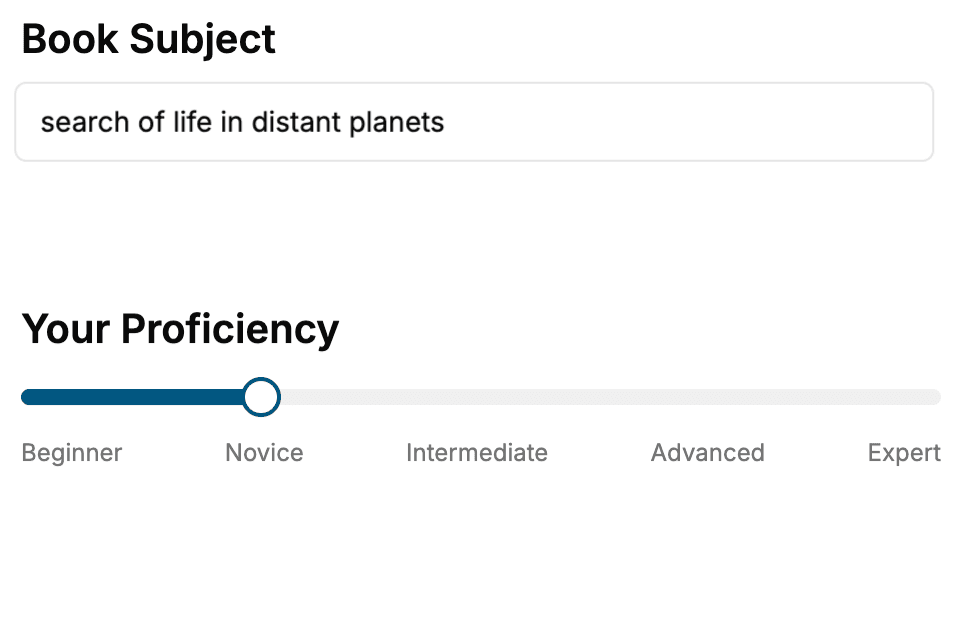
Select the focus of your Organizational Psychology book and share your background
- 2. Personalize your book
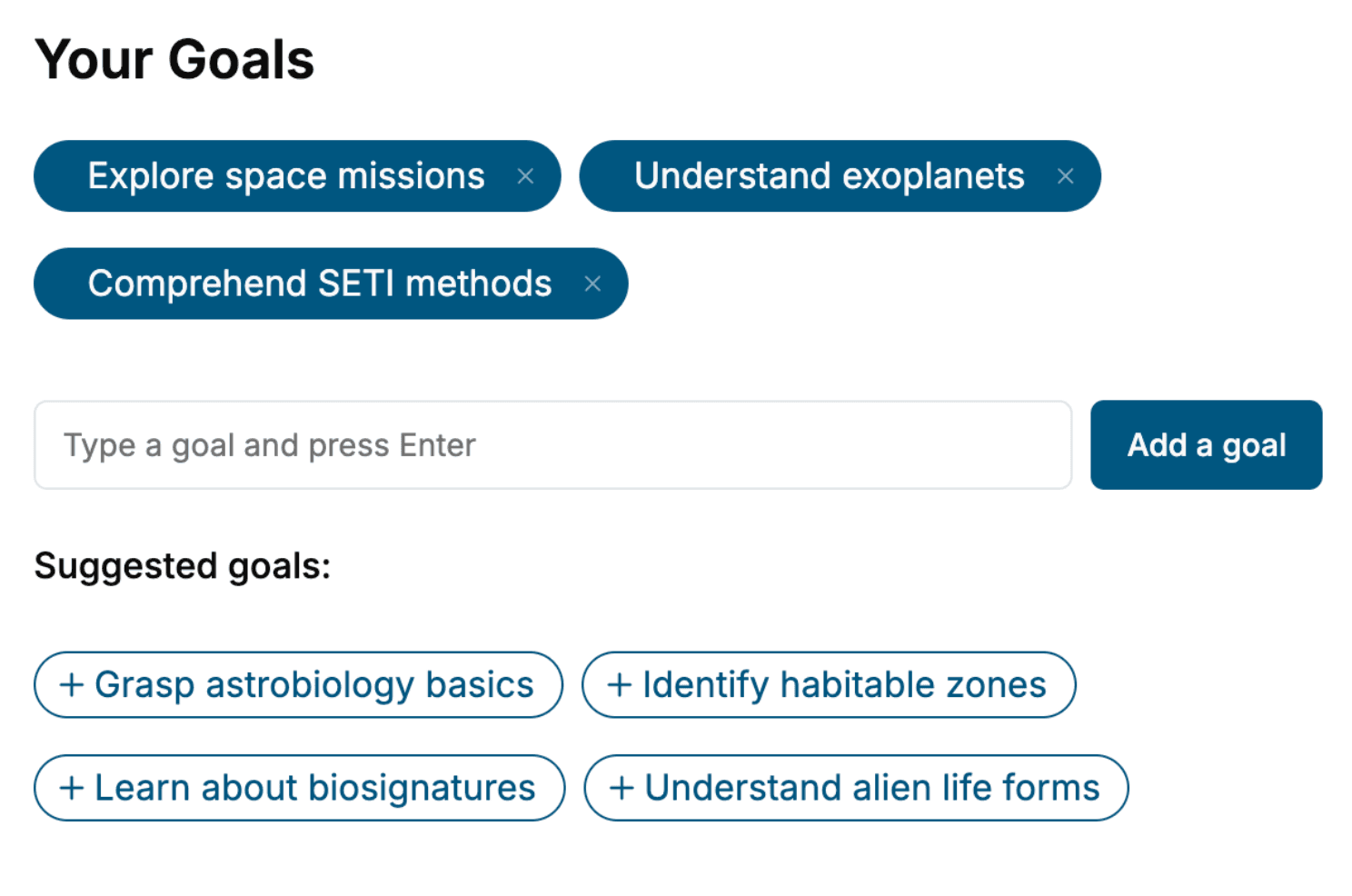
Specify your goals and choose sub-topics to include
- 3. Get your tailored book
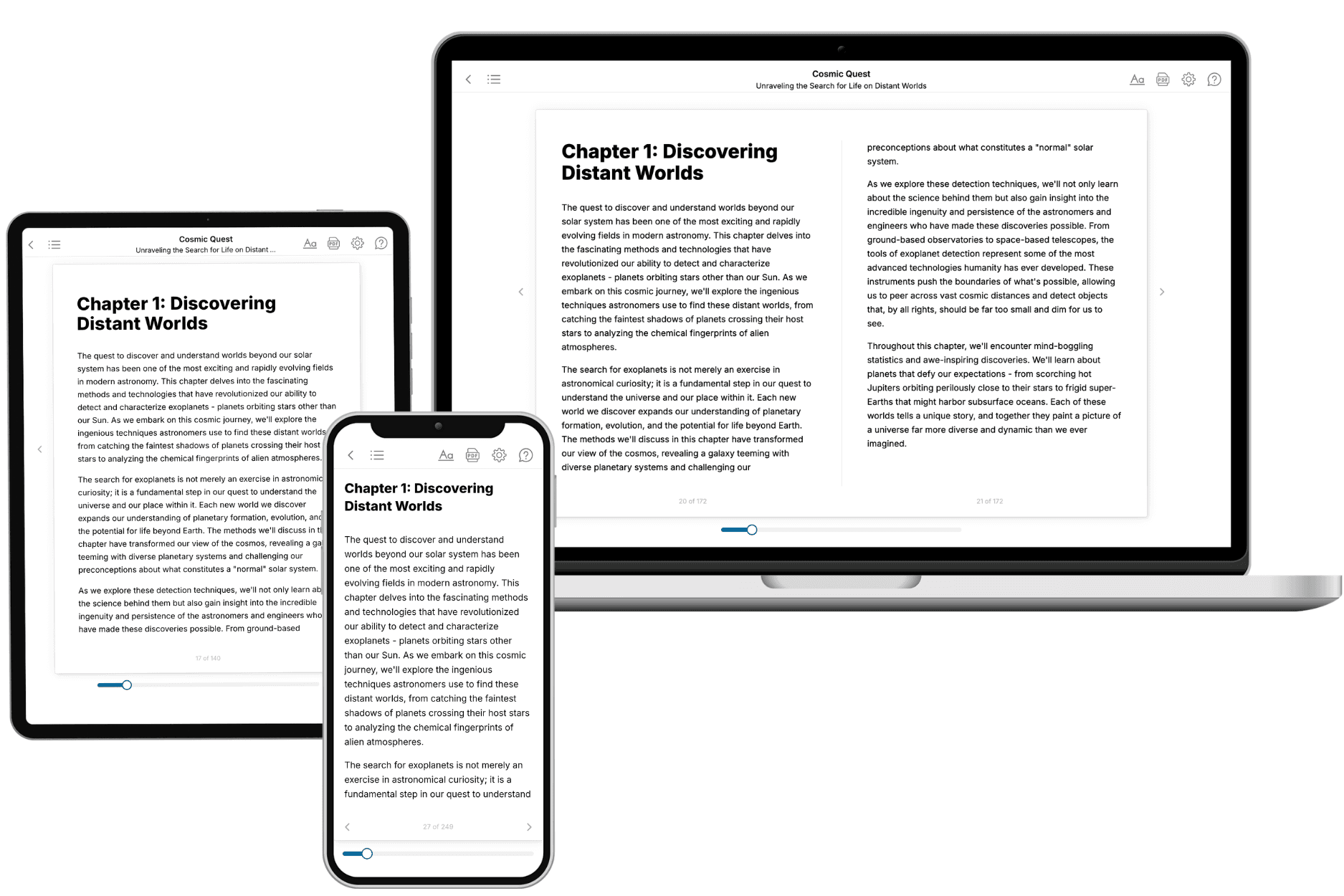
Your book is ready in 10 minutes. Read it online, download as EPUB or PDF, or send to Kindle.
Start from a template
Frequently asked questions
- What is TailoredRead?
TailoredRead creates complete, full-length nonfiction ebooks, written specifically for you. Tell us what you want to learn and why, and TailoredRead writes you a complete ebook on it, with charts, tables, and diagrams throughout. Read it online, on Kindle, or on any e-reader, or download it as a PDF or EPUB. Every book is written fresh the day you order it.
- How is the book tailored to me?
Before anything is written, you answer a few short questions about your goals, your background, and the topics you care about. Your book is then planned around your answers: written at your level, focused on your goals, and covering the topics you chose, instead of the one-size-fits-all book a store sells everyone.
- Will it read like generic AI content?
No. Your book isn't a chat transcript: it's planned chapter by chapter before a single word is written, told in a clear book voice, and explains ideas visually with charts, tables, and diagrams. After writing, every book goes through an editorial pass that polishes chapters so the book reads consistent from start to finish. Judge for yourself: browse thousands of sample books on our Explore Books page.
- How accurate is the content?
Our AI first checks whether your subject needs live research. Niche and fast-moving subjects are researched before writing, and the book plan and chapters are grounded in what it finds. After writing, every book goes through a quality pass that checks its facts and consistency, and researched books list their sources in a Notes section at the back.
- How long is the book?
You choose the length: Comprehensive (250-300 pages), Detailed (150-200 pages), Essential (70-100 pages), or Short (30-50 pages).
- Does the book include visuals?
Yes. Every book includes charts, tables, and diagrams: timelines, checklists, step-by-step guides, decision trees, comparison tables, matrices, and bar charts. A typical book includes dozens of these visual elements.
- Can I read it on Kindle? What formats can I download?
Yes. Every book can be read in our online reader or downloaded as a PDF or EPUB. The EPUB can be opened with Kindle, Apple Books, Kobo, and any e-reader. The Commercial and Author licenses also include an editable Word (DOCX) and Markdown download.
- How much does it cost?
About the price of a regular ebook. The exact price depends on your book's length and complexity, from $2 for the shortest books to $35 for the most comprehensive, and it's shown when you review your book, before you commit to anything. Each book is a one-time purchase, yours to keep, no subscription. Licenses that let you share, teach, or publish your book range from $35.99 to $49.99.
- Can I preview the book before purchasing?
Before you pay, you'll see what your book will cover: the title, a detailed description, the estimated length, and the complete chapter-by-chapter table of contents, so you know what you're getting before you decide. The full text itself is written after you purchase.
- How long does it take to create a book?
About 10 minutes. You can start reading the opening chapters while the rest is still being written.