Strategy Books
Explore tailored Strategy books created by our AI
Most competitive strategies fail because they're built on assumptions rather than rigorous analysis. You face competitors who are equally smart, equally motivated, and constantly adapting their moves. Without a systematic framework to analyze competitive dynamics, you're essentially guessing—and guessing wrong costs money, market share, and time. This book teaches you how to apply operations research and mathematical analysis to competitive strategy. You'll learn to model competitive interactions using game theory, optimize your strategic positioning through quantitative methods, and anticipate competitor moves before they happen. Whether you're competing in markets, managing organizational resources, or navigating complex business environments, these tools transform strategy from an art into a science. By combining mathematical rigor with practical business applications, you'll develop strategies that are defensible, adaptable, and grounded in data-driven insights. This isn't theoretical mathematics—it's a practical playbook for winning in competitive situations.
Most coaches understand the basic principles of pressing, but struggle to implement the advanced trigger recognition systems that separate elite teams from the rest. The challenge isn't knowing when to press—it's knowing exactly which moments create the highest probability of winning the ball while maintaining defensive shape. This book provides the tactical framework and practical systems you need to identify pressing triggers with precision, coordinate your defensive lines with synchronization, and maintain the compactness that makes pressing devastatingly effective. You'll learn how to recognize the subtle game situations that activate your pressing, how to layer multiple triggers across different defensive units, and how to train your team to execute these complex patterns under match pressure. With detailed tactical analysis, real-world examples, and implementation strategies, this guide transforms your defensive approach from reactive to proactive, giving your team the competitive edge in modern football.
How can your team maintain tactical discipline while adapting to opponent adjustments in real-time? This comprehensive guide presents a systematic approach to modern football tactics built on the 3-4-3 philosophy—a framework that integrates pressing systems, defensive organization, and in-game adaptation into a cohesive tactical model. Designed for coaches with advanced tactical knowledge, this book bridges the gap between theoretical understanding and practical implementation. You'll discover how to structure training through tactical periodization models that directly reinforce match demands, calibrate pressing intensity to exploit opponent weaknesses, and develop decision-making protocols that enable your team to execute complex tactical adjustments under pressure. Through detailed analysis of game phase transitions, defensive shape optimization, and counterattack timing mechanics, you'll gain the tools to design training sessions that build tactical intelligence and improve your team's competitive performance. This is not a beginner's guide—it's a masterclass in systematic tactical coaching for professionals ready to elevate their strategic approach.
Most consultants recognize AI's potential but struggle to integrate it meaningfully into their practice. You face a critical gap: traditional consulting methodologies weren't designed for AI-augmented workflows, and generic AI training doesn't address the unique challenges of client-facing strategy work. This book bridges that gap by providing a practical, frameworks-based approach to AI-powered consulting. You'll learn how to master prompt engineering for strategic analysis, conduct AI-driven competitive assessments, design organizational readiness evaluations, and automate change management processes. More importantly, you'll discover how to align organizational culture with AI adoption—the overlooked factor that determines success or failure. Through real-world scenarios and step-by-step methodologies, you'll develop the skills to transform your consulting offerings, accelerate client outcomes, and establish competitive advantage in an AI-driven market. This isn't about replacing human judgment; it's about amplifying your strategic impact through intelligent technology integration.
What if the future of football isn't about formations, but about mastering the invisible architecture that governs every transition, every press, and every counter-attack? In an era where tactical evolution moves faster than ever, understanding the mechanical principles behind modern systems separates elite coaches from the rest. This comprehensive guide dissects the revolutionary concepts reshaping contemporary football—from vertical compactness and spatial control to the precise timing of phase transitions. You'll explore the midfield revolution that has redefined positional play, analyze counter-attack triggers with scientific precision, and master the defensive line positioning that creates impenetrable structures. Drawing on cutting-edge tactical theory and real-world application, this book provides the analytical framework you need to architect systems that dominate possession, exploit transition moments, and develop players who thrive in complex tactical environments. Whether you're refining your coaching philosophy or building the next generation of intelligent footballers, you'll gain the insights that define modern tactical mastery.
Master the mathematical logic that governs strategic decision-making in competitive and cooperative environments. This comprehensive guide takes you from foundational concepts to advanced applications of game theory, equipping you with the analytical tools to understand why people make the choices they do and how to predict outcomes in strategic situations. You'll explore Nash equilibrium, prisoner's dilemma, mixed strategies, and cooperative game theory through clear explanations and practical examples. Whether you're analyzing business negotiations, understanding political dynamics, or simply wanting to think more strategically about everyday decisions, this book provides the logical framework and mathematical insights you need. Discover how game theory reveals hidden incentives, explains seemingly irrational behavior, and offers pathways to better outcomes through cooperation and strategic planning.
Many people believe that military victories are simply about having more ships, planes, and personnel than your opponent. This common assumption overlooks the intricate web of intelligence, strategy, timing, and human decision-making that truly determines the outcome of pivotal battles. The Battle of Midway stands as one of history's most remarkable examples of how superior strategy and intelligence can triumph over overwhelming odds. In June 1942, the United States Navy faced the formidable Imperial Japanese Navy in what would become the most decisive naval engagement of the Pacific War. Despite being significantly outnumbered, American forces achieved a stunning victory that fundamentally altered the trajectory of World War II. This comprehensive examination reveals the complex layers of preparation, intelligence gathering, and strategic planning that made this victory possible. You'll discover how codebreakers provided crucial advantages, how commanders made split-second decisions under immense pressure, and how technological innovations and tactical adaptations shaped the battle's outcome. Through detailed analysis of both American and Japanese perspectives, you'll gain insight into the human elements that determined success and failure. Whether you're seeking to understand this pivotal moment in military history or exploring the broader principles of strategic thinking and leadership under pressure, this book provides the depth and clarity needed to appreciate one of warfare's most studied engagements. You'll emerge with a profound understanding of how intelligence, courage, and strategic thinking can overcome seemingly impossible odds.
Transition Mastery
The Coach's Guide to Dominating High-Intensity Game Transitions
What separates elite teams from the rest during those critical moments when possession changes hands? The answer lies not in individual speed or athleticism, but in systematic decision-making frameworks that transform chaos into controlled advantage. This book provides you with a comprehensive tactical system for mastering high-intensity transitions—the moments that decide matches. You'll discover how to synchronize defensive line timing with coverage depth, implement transition zone coverage that reduces cognitive load, and develop pattern recognition protocols that accelerate your team's decision speed. Through evidence-based periodization strategies and game-realistic drill progressions, you'll build a team that doesn't just react to transitions but anticipates and controls them. Whether you're refining defensive recovery mechanics, optimizing offensive spacing principles, or preparing your squad for set-piece transitions, this guide delivers the tactical blueprints and implementation frameworks that elite coaches use to dominate the transition game.
The Battle of Long Island
How Washington's Retreat Saved the American Revolution
What if Washington's greatest defeat became the turning point that saved American independence? The Battle of Long Island in August 1776 was a catastrophic military loss—the largest engagement of the Revolutionary War—yet it paradoxically proved essential to American victory. This book explores how a seemingly defeated army, trapped on an island and facing annihilation, managed to escape and live to fight another day. You'll discover the strategic decisions, geographical advantages, and human factors that transformed a potential disaster into a crucial learning moment. Through detailed accounts of the battle's progression, the personalities who shaped its outcome, and the broader implications for the war's trajectory, you'll understand why military historians consider this forgotten battle one of the most consequential moments in American history. This is the story of how strategic retreat, not victory, sometimes determines the fate of nations.
The Conqueror of Carthage
Scipio Africanus and the Strategic Mastery That Won the Punic Wars
Many believe that Rome's victory over Carthage was inevitable, a simple matter of superior resources overwhelming a declining enemy. This misconception overlooks one of history's most brilliant strategic minds and the razor-thin margins that determined the fate of the ancient world. Scipio Africanus didn't just defeat Hannibal—he revolutionized warfare itself. While Rome's generals repeatedly fell to Carthaginian tactics, Scipio studied his enemies, adapted their methods, and forged alliances that would reshape the Mediterranean forever. His campaigns in Spain and Africa demonstrate how strategic thinking, cultural intelligence, and tactical innovation can overcome seemingly insurmountable odds. This comprehensive examination reveals how Scipio's military genius extended far beyond the battlefield. You'll discover the diplomatic maneuvers that secured crucial Numidian allies, the psychological warfare that demoralized Carthaginian forces, and the strategic patience that allowed Rome to strike at Carthage's heart when victory seemed impossible. Through detailed analysis of key battles, strategic decisions, and their lasting consequences, you'll understand how one man's vision transformed Rome from a regional power into an empire that would dominate the Western world for centuries. The lessons of Scipio's campaigns continue to influence military strategy and leadership principles to this day.
The Hidden War
How Intelligence and Espionage Shaped World War II's Outcome
Discover how secret intelligence operations determined the outcome of World War II in ways that official histories often overlook. This comprehensive analysis examines the hidden war fought by codebreakers, spies, and intelligence agencies that fundamentally shaped military strategy, diplomatic negotiations, and the final victory of the Allied powers. From Bletchley Park's revolutionary codebreaking to the OSS's covert operations and Soviet spy networks, you'll explore how intelligence failures crippled Axis powers while intelligence successes guided Allied commanders. Learn how diplomatic negotiations were informed by classified intelligence, how espionage in the Pacific Theater influenced military tactics, and how resistance movements provided critical information. This book connects the dots between intelligence gathering, military strategy, and political leadership, revealing the complex interplay that determined which side possessed decisive advantages. Whether you're studying military history, analyzing leadership decisions, or understanding how information shapes outcomes in large-scale conflicts, this examination of WWII's hidden war provides essential context for understanding both the conflict itself and the intelligence frameworks that emerged from it.
The Arteta System
Mastering Arsenal's Tactical Periodization and Modern Positional Play
This comprehensive analysis takes you through the architectural foundations of Mikel Arteta's tactical system, revealing how tactical periodization, player positioning zones, and systematic evolution create a cohesive framework for modern elite football. You'll examine the specific positioning principles that define Arsenal's approach, understand how Arteta structures training and competition to reinforce tactical objectives, and discover the mechanisms through which his system adapts to different opponents and competitive contexts. The book dissects pressing triggers, defensive compactness, possession patterns, and transition moments—showing how each element connects to the broader tactical philosophy. Through detailed tactical diagrams, positional analysis, and real-match examples, you'll gain the practical knowledge to evaluate, adapt, and implement these principles within your own coaching context. Whether you're refining an existing system or building a new tactical framework, this book provides the analytical depth and practical application strategies that elite-level coaching demands.
Battlefields of the Nation
Understanding the Pivotal Conflicts That Shaped America
You'll journey through the defining moments of the American Civil War, exploring the battles that determined the nation's fate. From the opening shots at Fort Sumter to the final confrontations at Appomattox, this book examines the strategic decisions, tactical innovations, and human costs that shaped each engagement. You'll discover how geography influenced battle outcomes, why certain commanders succeeded while others failed, and how technological advances transformed military tactics. Through detailed analysis of major battles like Gettysburg, Antietam, and Vicksburg, you'll understand the broader patterns of the war and how individual conflicts contributed to the Union's ultimate victory. By examining both Union and Confederate perspectives, you'll gain a balanced view of the war's complexity. This comprehensive exploration combines historical narrative with strategic analysis, revealing how the Civil War's battles established military principles still studied today.
Germantown 1777
The Fog of War in the American Revolution
The morning fog rolls in, obscuring the battlefield and the fate of a young nation. As General Washington's troops advance on British forces in Germantown, the stage is set for a pivotal moment in the American Revolutionary War. But confusion and chaos reign supreme, threatening to derail the Continental Army's bold offensive. In "Germantown 1777: The Fog of War in the American Revolution," you'll be transported to the front lines of this crucial battle. Through vivid storytelling and meticulous research, you'll experience the tension, strategy, and human drama that unfolded on that fateful day. Discover how this engagement, despite its ultimate failure, demonstrated the growing capabilities of the Continental Army and influenced both American and British military thinking. From the strategic importance of Philadelphia to the intricate tactics employed by both sides, this book offers a fresh perspective on a often-overlooked battle. You'll gain insights into the decision-making processes of key figures like George Washington and William Howe, and understand how the fog of war - both literal and metaphorical - shaped the outcome. By the final page, you'll have a newfound appreciation for the complexities of 18th-century warfare and the indomitable spirit that fueled the American Revolution.
Nash Equilibrium
Understanding Strategic Interaction and Decision-Making in Economics
Imagine confidently analyzing any competitive situation—whether in business, economics, or strategy—by understanding exactly how rational actors will behave and what outcomes will emerge. Nash Equilibrium is the mathematical lens that makes this possible. This book demystifies one of economics' most powerful concepts, showing you how strategic interactions reach stable states where no participant can improve their position by acting alone. You'll discover why companies set prices the way they do, how auctions determine fair value, and why certain market structures persist despite seeming inefficient. Through clear explanations, intuitive examples, and practical applications, you'll learn to identify equilibria in various scenarios, understand when multiple solutions exist, and recognize the concept's real-world limitations. Whether you're studying economics, making business decisions, or simply curious about how strategic thinking shapes outcomes, this book provides the mathematical foundation and practical insight you need to think like a game theorist and predict competitive behavior with confidence.
Most mobility consultants still rely on fragmented research methods—jumping between databases, industry reports, and manual analysis—losing weeks to information gathering before they can deliver strategic insights. Perplexity changes this equation entirely. This book shows you how to harness Perplexity's real-time data synthesis to conduct comprehensive market research, competitive intelligence, and regulatory analysis in hours instead of weeks. You'll learn proven techniques for evaluating fleet management costs, comparing leasing models, analyzing EV transition strategies, and benchmarking provider performance with unprecedented speed and accuracy. Whether you're optimizing total cost of ownership, monitoring mobility sector trends, or preparing data-driven recommendations for complex client decisions, this guide provides the frameworks, prompts, and methodologies to integrate Perplexity into your consulting practice. Discover how to transform raw AI-generated insights into credible, actionable recommendations that drive client confidence and competitive advantage in the rapidly evolving mobility landscape.
Imagine your team executing the 3-5-2 formation with such precision that every transition flows seamlessly from defense to attack, your pressing triggers activate in perfect synchronization, and your counter-attacks consistently create high-quality scoring opportunities. This comprehensive guide provides the exact framework to achieve that level of tactical mastery. Built on the four phases of play—defensive, transition, build-up, and attacking—you'll discover how to architect defensive compactness metrics, calibrate wing-back pressing angles, synchronize midfield pressing coordination, and execute counter-attacks with geometric precision. Each chapter combines tactical theory with practical drill progressions, allowing you to implement these concepts immediately with your squad. Whether you're refining your defensive transition timing, optimizing your pressing line synchronization, or developing your counter-attack spacing geometry, this book provides the detailed methodology and measurable benchmarks that separate elite 3-5-2 implementations from standard formations. Transform your tactical approach through systematic, phase-based development.
30-Day NFL Playbook
Rapidly Improve Your NFL Knowledge with Daily Focused Lessons
You'll elevate your NFL understanding from casual fan to knowledgeable analyst in just 30 days. This practical guide breaks down the complexity of professional football into digestible daily lessons, each building on the previous one. You'll master the fundamental concepts that coaches use to build winning teams, from basic offensive formations to advanced defensive blitz packages. Through structured film study methodology, you'll learn to watch games like a coach, identifying key assignments and tactical decisions. You'll understand how game planning integrates personnel, matchups, and situational awareness into winning strategies. Each day includes focused lessons on specific topics—offensive schemes, defensive tactics, player development, and performance analysis—designed for someone with intermediate knowledge who wants to think strategically about the game. By day 30, you'll analyze NFL games with confidence, understand coaching decisions, and grasp the tactical depth that makes professional football compelling.
Imagine mastering the intricate military and political landscape of Renaissance Italy—understanding not just what happened on the battlefield, but why commanders made specific tactical decisions and how political alliances shaped military outcomes. This comprehensive guide provides you with the analytical framework and detailed battle analysis necessary to understand the Italian Wars as a transformative period in military history. Through systematic examination of key campaigns including Fornovo, Cerignola, Garigliano, Marignano, Ravenna, Forlí, Bicocca, Agnadello, Pavia, and Ceresole, you'll develop expertise in Renaissance tactics, pike-and-shot formations, siege warfare, and the strategic positioning that determined territorial control. Detailed battle maps, casualty analysis, and commander strategy evaluations provide the empirical foundation for understanding how gunpowder innovation, mercenary army dynamics, and political-military coordination created the modern warfare paradigm. Whether you're conducting research, developing strategic frameworks, or seeking to understand how military innovation emerges from the intersection of technology, politics, and human leadership, this guide delivers the rigorous analysis and practical insights you need.
Discover how a desperate general and a ragged army transformed the American Revolution through one audacious night. In late 1776, George Washington faced annihilation. The Continental Army was fractured, supplies were depleted, and British forces controlled New York. Yet on Christmas night, Washington made a decision that would change everything: he would cross the frozen Delaware River and strike back. This book reveals the untold story behind the Crossing of the Delaware—the strategic calculations, the logistical challenges, the personal courage of soldiers and officers, and the military genius that turned certain defeat into unexpected victory. You'll understand why this single operation mattered more than any other moment in the Revolutionary War, how it saved the American cause when all seemed lost, and what it teaches us about leadership, strategy, and the power of decisive action in moments of crisis. Through detailed accounts and historical analysis, explore how Washington's gamble at Trenton and Princeton restored hope to a dying revolution and proved that ordinary people could defeat the world's greatest military power.
The Battle of Atlanta
Sherman's March to Victory and the Turning Point of the Civil War
Picture yourself standing at a pivotal moment in American history—July 1864, when the fate of a nation hung in the balance. The Battle of Atlanta was far more than a military engagement; it was the turning point that determined whether the Union would survive and slavery would end. This comprehensive account takes you through the strategic decisions, tactical maneuvers, and human drama that unfolded as General William Tecumseh Sherman's Union forces clashed with Confederate General John Bell Hood's desperate defense of Georgia's vital city. You'll discover how this single battle shifted the entire trajectory of the Civil War, boosted Northern morale when it mattered most, and introduced revolutionary concepts of modern warfare. Through detailed analysis of troop movements, supply lines, and command decisions, you'll understand why Atlanta's fall was inevitable and how it set the stage for Sherman's devastating March to the Sea. This is essential reading for anyone seeking to comprehend the Civil War's most consequential moments and the military innovations that shaped American conflict forever.
You'll navigate the complete tactical and physical demands of modern Premier League football by mastering drills that develop your team's ability to execute complex systems across all four game phases. This guide provides detailed, practical protocols for building defensive solidity through block formations and pressing angles, while simultaneously developing the aerobic capacity and movement intelligence required for sustained attacking play. You'll discover how elite clubs integrate tactical pressing with lactate threshold training to maintain intensity when it matters most, and learn transition defense strategies that prevent dangerous counter-attacks. Each drill is designed with specific performance metrics and progression pathways, allowing you to systematically elevate your team's tactical execution and physical resilience. By implementing these evidence-based methods, you'll develop a squad capable of maintaining tactical discipline and intensity throughout full matches, creating the competitive advantage that separates Premier League contenders from the rest.
Operation Overlord
The Complete Story of D-Day and the Normandy Campaign
Discover how the largest amphibious invasion in history unfolded and why it remains one of the most consequential military operations ever executed. Operation Overlord transformed World War II and reshaped the future of Europe. This comprehensive account takes you through the meticulous planning, daring execution, and hard-fought aftermath of D-Day and the Normandy campaign. You'll explore the strategic decisions that shaped the invasion, the intelligence operations that made it possible, and the personal stories of those who participated. From the beaches of Normandy to the breakout into France, understand how Allied forces overcame seemingly impossible odds through coordination, courage, and determination. Whether you're a history enthusiast or seeking to understand this pivotal moment, this book provides the context, detail, and insight needed to grasp why Operation Overlord mattered then—and why it still matters today.
AI in Academia
A Leader's Guide to Shaping the Future of Higher Education
Picture a university where AI seamlessly enhances every aspect of learning and research. Students engage with AI-powered teaching assistants, researchers leverage AI to push the boundaries of discovery, and curricula evolve to prepare graduates for an AI-driven world. This isn't a far-off dream—it's the new reality of higher education, and you have the power to bring it to life on your campus. "AI in Academia: A Leader's Guide to Shaping the Future of Higher Education" is your roadmap to revolutionizing your institution with artificial intelligence. This comprehensive guide demystifies AI technology and its applications in education, providing you with practical strategies to integrate AI across your university's operations. You'll discover how to develop cutting-edge AI ethics curricula, enhance STEM education with AI tools, and leverage AI to streamline course planning and research processes. Learn to implement AI literacy programs that empower your entire campus community, from freshmen to faculty. With this book, you'll gain the knowledge and confidence to lead your institution into the AI era, fostering a culture of innovation and preparing your students for the challenges and opportunities of tomorrow's workforce.
The Battle of Cowpens
How a Forgotten Victory Changed the Course of the American Revolution
What if a single battle could reverse the momentum of an entire war? The Battle of Cowpens stands as one of the most brilliantly executed military engagements in American history, yet it remains overshadowed by more famous Revolutionary War encounters. On January 17, 1781, General Daniel Morgan orchestrated a stunning victory in rural South Carolina that proved the Continental Army could defeat British regulars in open combat. This book explores the strategic brilliance, tactical innovations, and human drama behind this pivotal moment. You'll discover how Morgan's unconventional approach to combining militia and professional soldiers created a devastating trap, how terrain and psychology became weapons, and why this victory fundamentally altered the course of the American Revolution. Through detailed analysis of the battle's context, execution, and consequences, you'll gain insight into military strategy, leadership under pressure, and the often-overlooked Southern campaign that secured American independence.
Related books you may like:
In "Agile Governance: Mastering Software Product Management in Public Sector Projects," readers will discover a comprehensive guide to navigating the unique challenges of government software development. This book bridges the gap between traditional bureaucratic processes and modern agile methodologies, offering practical strategies for implementing user-centric design, effective stakeholder management, and iterative development in public sector environments. Tailored for team leads and aspiring product managers in government tech, this book provides invaluable insights into creating citizen-centric KPIs, managing cross-agency collaborations, and optimizing government tech stacks. Readers will learn how to adapt Scrum and Kanban for government projects, conduct effective requirement workshops, and create impactful product roadmaps that align with public value creation. With a focus on real-world application, "Agile Governance" equips you with the tools to enhance team leadership, master change management, and improve sprint planning within the constraints of government bureaucracy. Whether you're looking to implement a country-level solution or simply improve your agency's software development processes, this book provides the knowledge and strategies needed to succeed in the evolving landscape of public sector technology.
How many times has your development team built something that technically met the requirements but wasn't what the business actually needed? The gap between what gets built and what was intended often comes down to one thing: poorly written acceptance criteria. This book teaches you how to write acceptance criteria that eliminate ambiguity, align your entire team, and ensure successful delivery. You'll learn the proven frameworks and techniques used by leading product organizations, discover the common pitfalls that derail even experienced teams, and master the collaborative process that turns vague ideas into crystal-clear requirements. Whether you're writing your first user story or refining your team's process, this practical guide provides actionable templates, real-world examples, and step-by-step guidance to help you write acceptance criteria that actually work.
Imagine confidently deploying machine learning models that not only predict accurately but also earn stakeholder trust through transparency and business impact. This comprehensive guide bridges the gap between statistical theory and real-world analytics practice, equipping you with advanced techniques that transform raw data into strategic business value. You'll master predictive modeling frameworks, learn to communicate complex findings through data storytelling, and implement production-ready systems that scale. From time series forecasting and anomaly detection to natural language processing and Bayesian methods, each chapter builds practical skills grounded in statistical rigor. Whether you're optimizing SQL queries, validating clustering results, or deploying A/B testing frameworks, you'll discover how to combine technical excellence with business acumen. This book moves beyond textbook examples to address real deployment challenges: handling missing data intelligently, correcting for multiple testing, interpreting complex models, and measuring true business impact. Perfect for data scientists ready to elevate their impact from analysis to action.
Poor team communication is the silent killer of organizational success. In today's fast-paced business world, leaders who can't effectively convey their vision or listen to their team's concerns find themselves struggling to keep up with change and losing their competitive edge. Adaptive Leadership Mastery: Elevating Team Communication for Dynamic Success offers a fresh perspective on leadership in the modern workplace. This book provides you with practical strategies to overcome communication barriers, foster a culture of open dialogue, and lead your team through times of uncertainty and change. You'll discover how to adapt your leadership style to different situations, personalities, and challenges. From navigating difficult conversations to inspiring your team during periods of transformation, this guide equips you with the tools to become a more versatile and effective leader. By mastering the art of adaptive leadership and honing your communication skills, you'll be able to build a more resilient, innovative, and high-performing team ready to tackle any challenge that comes your way.
Are you struggling to balance company growth with personal well-being in today's fast-paced business world? "Agile Leadership Mastery" is your comprehensive guide to revolutionizing your leadership approach. This book offers a unique blend of cutting-edge leadership strategies and practical stress management techniques tailored for the modern executive. You'll discover how to implement agile methodologies, foster psychological safety, and drive digital transformation while maintaining your personal equilibrium. From cultivating emotional intelligence to mastering the art of strategic partnerships, this book provides the tools you need to not only lead your company to new heights but also to thrive personally in your role. Packed with actionable insights and real-world examples, "Agile Leadership Mastery" is an essential resource for any leader ready to embrace change, inspire innovation, and create a resilient, high-performing team in the digital age.
Create a Strategy Book Tailored to You
Create an AI-crafted book tailored to your goals, interests, and background






Benefits of AI-tailored books
- Read one book, not ten:
- all the Strategy knowledge you need, gathered into a single book.
- Save days of learning:
- tell us your goals, choose your topics, and the whole book is built around them.
- Learn effortlessly:
- Strategy book written for your specific background and expertise.
- Understand at a glance:
- includes charts, tables, timelines, checklists, decision trees, and more.
- Stay current:
- written the day you order it, not years ago.
- Trust what you read:
- every book is checked for accuracy, with real research when your subject needs it.
Create your unique book in 3 steps
- 1. Select your focus
Select the focus of your Strategy book and share your background
- 2. Personalize your book
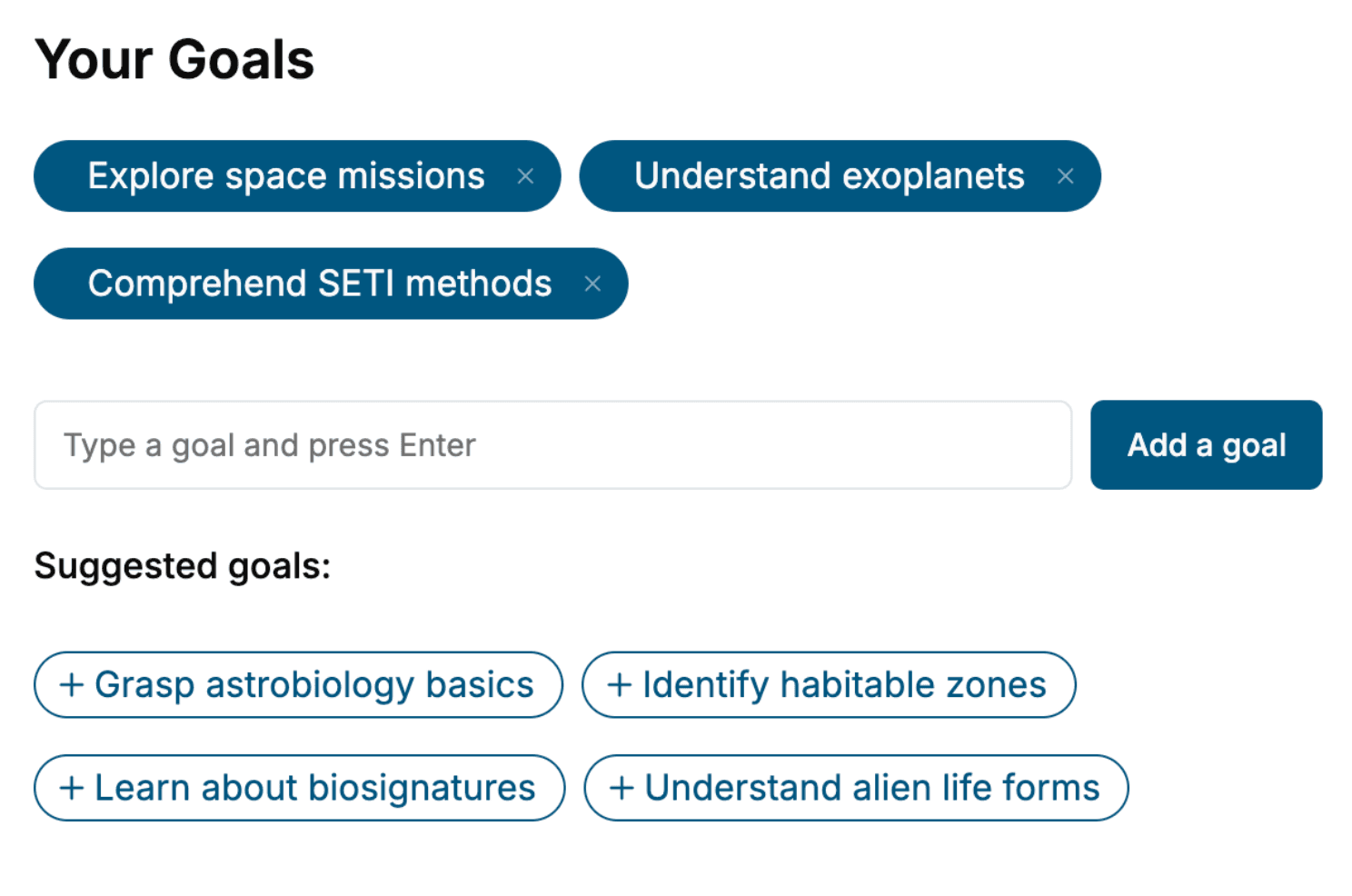
Specify your goals and choose sub-topics to include
- 3. Get your tailored book
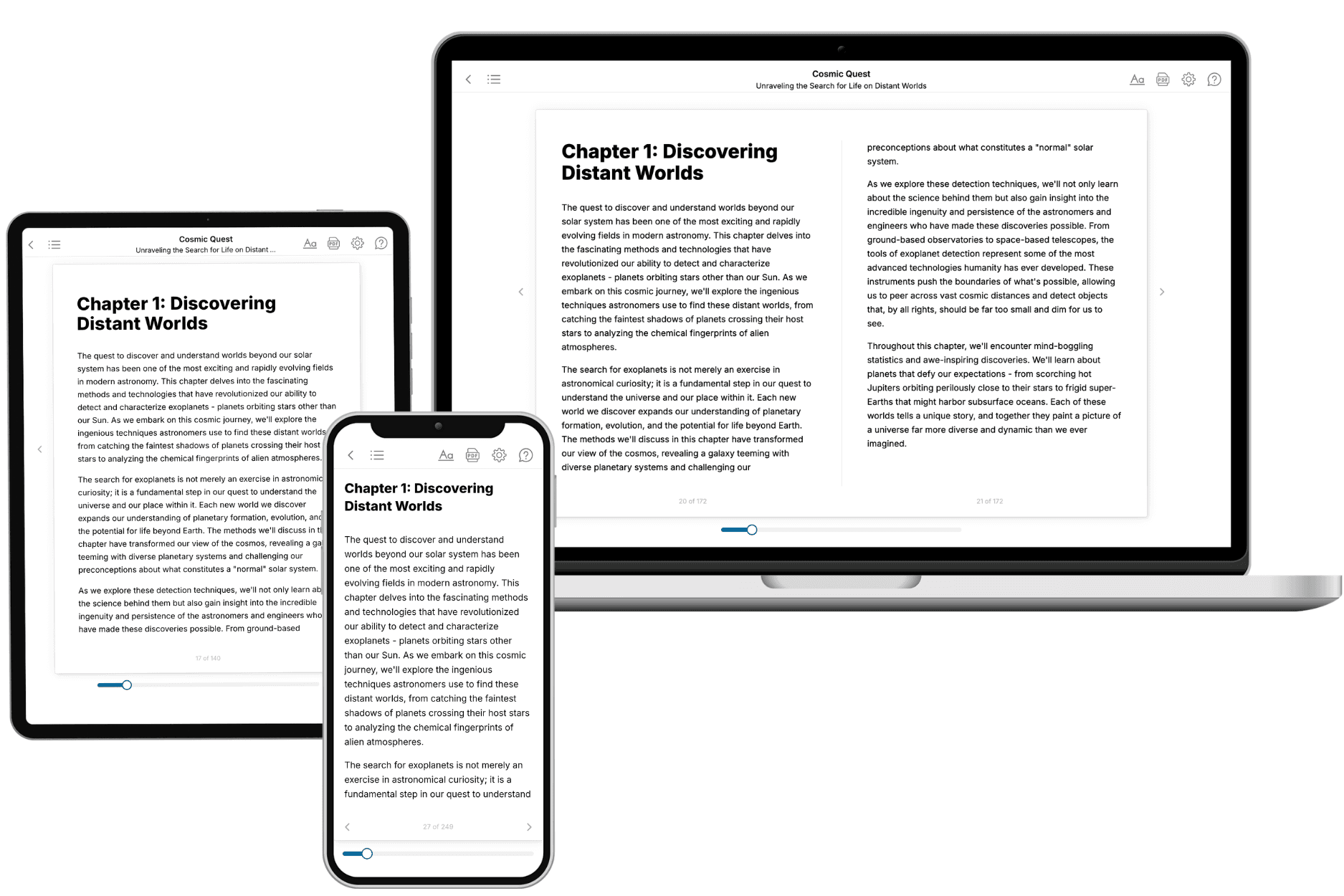
Your book is ready in 10 minutes. Read it online, download as EPUB or PDF, or send to Kindle.

Frequently asked questions
- What is TailoredRead?
TailoredRead creates complete, full-length nonfiction ebooks, written specifically for you. Tell us what you want to learn and why, and TailoredRead writes you a complete ebook on it, with charts, tables, and diagrams throughout. Read it online, on Kindle, or on any e-reader, or download it as a PDF or EPUB. Every book is written fresh the day you order it.
- How is the book tailored to me?
Before anything is written, you answer a few short questions about your goals, your background, and the topics you care about. Your book is then planned around your answers: written at your level, focused on your goals, and covering the topics you chose, instead of the one-size-fits-all book a store sells everyone.
- Will it read like generic AI content?
No. Your book isn't a chat transcript: it's planned chapter by chapter before a single word is written, told in a clear book voice, and explains ideas visually with charts, tables, and diagrams. After writing, every book goes through an editorial pass that polishes chapters so the book reads consistent from start to finish. Judge for yourself: browse thousands of sample books on our Explore Books page.
- How accurate is the content?
Our AI first checks whether your subject needs live research. Niche and fast-moving subjects are researched before writing, and the book plan and chapters are grounded in what it finds. After writing, every book goes through a quality pass that checks its facts and consistency, and researched books list their sources in a Notes section at the back.
- How long is the book?
You choose the length: Comprehensive (250-300 pages), Detailed (150-200 pages), Essential (70-100 pages), or Short (30-50 pages).
- Does the book include visuals?
Yes. Every book includes charts, tables, and diagrams: timelines, checklists, step-by-step guides, decision trees, comparison tables, matrices, and bar charts. A typical book includes dozens of these visual elements.
- Can I read it on Kindle? What formats can I download?
Yes. Every book can be read in our online reader or downloaded as a PDF or EPUB. The EPUB can be opened with Kindle, Apple Books, Kobo, and any e-reader. The Commercial and Author licenses also include an editable Word (DOCX) and Markdown download.
- How much does it cost?
About the price of a regular ebook. The exact price depends on your book's length and complexity, from $2 for the shortest books to $35 for the most comprehensive, and it's shown when you review your book, before you commit to anything. Each book is a one-time purchase, yours to keep, no subscription. Licenses that let you share, teach, or publish your book range from $35.99 to $49.99.
- Can I preview the book before purchasing?
Before you pay, you'll see what your book will cover: the title, a detailed description, the estimated length, and the complete chapter-by-chapter table of contents, so you know what you're getting before you decide. The full text itself is written after you purchase.
- How long does it take to create a book?
About 10 minutes. You can start reading the opening chapters while the rest is still being written.