Systems Analysis Books
Explore tailored Systems Analysis books created by our AI
Causal Loop Diagramming
Master the Art of Mapping Complex Systems and Feedback Dynamics
Most people struggle to understand why complex systems behave the way they do. They see problems but can't trace them to their root causes, or they implement solutions that backfire unexpectedly. The missing piece is a systematic way to visualize how different elements of a system interact and influence each other over time. Causal loop diagramming provides exactly that—a practical methodology for mapping the feedback loops, delays, and relationships that drive system behavior. This book teaches you how to construct clear, accurate causal loop diagrams that reveal the hidden dynamics within organizations, markets, ecosystems, and social systems. You'll learn to distinguish between reinforcing loops that amplify change and balancing loops that resist it, identify leverage points where small interventions create outsized effects, and communicate complex system dynamics to stakeholders and decision-makers. Whether you're conducting research, solving organizational problems, or analyzing policy impacts, this guide equips you with the tools to think systemically and diagram with confidence.
Hierarchical Task Analysis
Master the Art of Breaking Down Complex Work into Actionable Steps
Master the systematic approach to breaking down complex work into clear, actionable steps. This comprehensive guide to Hierarchical Task Analysis equips you with proven techniques for decomposing intricate tasks, identifying hidden dependencies, and creating requirements that actually work. Whether you're designing systems, improving processes, or developing training programs, you'll learn how to apply HTA to reveal what people really do—not just what they're supposed to do. Discover how to construct task hierarchies that stakeholders understand, integrate HTA with modern methodologies, and avoid common pitfalls that derail projects. Through practical examples and step-by-step guidance, you'll develop the analytical skills to transform vague objectives into precise, implementable requirements. This book bridges the gap between business goals and operational reality, making you a more effective requirements analyst and process improvement professional.
Master discrete event simulation and transform how you analyze and optimize complex operational systems. This comprehensive guide takes you from foundational concepts to practical implementation, equipping you with the skills to build accurate simulations that reveal hidden inefficiencies and test strategic scenarios risk-free. You'll learn how to design models that capture real-world complexity, validate your results with confidence, and extract actionable insights from simulation data. Whether you're improving manufacturing processes, optimizing service operations, or planning resource allocation, this book provides the frameworks, techniques, and best practices you need to make simulation a cornerstone of your decision-making process. Packed with practical examples and step-by-step guidance, you'll understand not just how to run simulations, but how to design them strategically to answer your most pressing operational questions.
What if the mysterious world of control systems—the technology behind everything from autopilot to smart thermostats—was actually accessible to you, regardless of your technical background? This comprehensive guide breaks down complex control theory into clear, practical concepts that you can immediately apply to your projects. You'll discover how feedback loops create self-correcting systems, why stability matters more than speed, and how to design controllers that perform reliably in real-world conditions. Through relatable examples, visual explanations, and step-by-step guidance, you'll build genuine confidence in control principles without drowning in advanced mathematics. Whether you're coordinating technical projects, troubleshooting system issues, or simply curious about how automated systems work, you'll gain the foundational knowledge to communicate effectively with engineers, make informed decisions, and even implement basic control solutions yourself. By the end, control systems won't feel like black magic—they'll be tools you understand and can leverage to solve real problems.
You'll discover how to architect control systems that transform your organization from reactive to proactive. This book guides you through designing feedback loops that give you real-time visibility into what matters most, establishing strategic control frameworks that align action with intent, and building the organizational agility that separates market leaders from followers. You'll learn how cybernetic principles—the science of self-regulating systems—apply directly to business management, enabling you to create organizations that adapt faster than competitors. Through practical frameworks and real-world applications, you'll master decision-making optimization, implement predictive analytics for strategic advantage, and allocate resources dynamically based on actual performance data. Whether you're managing a department or an enterprise, these control system principles will help you lead with greater precision, respond to change faster, and achieve results with less friction and wasted effort.
Chaos Control
Mastering Nonlinear Dynamics and Finding Order in Complex Systems
Discover how to identify, analyze, and control chaotic behavior in complex systems. This book bridges the gap between theoretical nonlinear dynamics and practical applications, showing you how seemingly random systems actually follow predictable mathematical rules. You'll learn to recognize bifurcation points where systems shift behavior, calculate Lyapunov exponents to measure sensitivity, and apply proven control techniques to stabilize unstable orbits. Whether you're working with engineering systems, biological processes, or environmental models, you'll gain the mathematical tools and conceptual frameworks needed to understand what drives chaos and how minimal interventions can restore order. Through clear explanations, worked examples, and real-world case studies, this book transforms chaos theory from abstract mathematics into actionable knowledge you can apply to your own research and professional challenges.
Fault Tree Analysis Essentials
Master the Art of Identifying and Preventing System Failures
Prevent catastrophic failures before they happen. Fault Tree Analysis is the proven methodology that helps you systematically identify how and why systems fail, then take targeted action to prevent those failures. Whether you're designing safety-critical systems, improving manufacturing reliability, or investigating past failures, this book provides the practical knowledge you need to master FTA from fundamentals to advanced applications. You'll learn how to construct accurate fault trees, perform quantitative risk assessments, identify critical failure pathways, and communicate findings that drive real change. With clear explanations, worked examples, and proven techniques used by leading engineers worldwide, you'll gain the confidence to apply FTA to your most complex systems and make decisions that protect both assets and lives.
Most optimization practitioners believe that sophisticated algorithms are the key to solving multi-objective problems effectively. This assumption leads to elegant mathematical solutions that fail spectacularly when applied to real-world scenarios with multiple stakeholders and conflicting objectives. The reality is that successful multi-objective optimization depends far more on proper problem formulation, stakeholder engagement, and systematic preference elicitation than on algorithmic complexity. This comprehensive guide bridges the gap between theoretical optimization and practical implementation, showing you how to develop weighted sum methods that actually work with real stakeholders and create decision support systems that deliver actionable results. You'll discover how to formulate multi-objective problems that capture the true essence of real-world decision scenarios, engage stakeholders effectively to elicit meaningful preferences, and handle the messy constraints that textbooks rarely address. Through detailed coverage of interactive decision support systems, hybrid optimization approaches, and goal programming applications, you'll learn to build tools that stakeholders trust and use. Drawing from extensive transportation case studies and other practical applications, this book provides the frameworks, techniques, and insights you need to move beyond academic exercises and solve the complex multi-objective optimization challenges that define modern decision-making environments.
Achieve superior aircraft and system designs by mastering the art and science of optimizing across multiple engineering disciplines simultaneously. This comprehensive guide shows you how to integrate aerodynamics, structures, propulsion, and systems into a cohesive optimization framework that delivers better performance, lower costs, and faster development cycles. You'll learn proven methodologies for formulating complex design problems, selecting appropriate optimization algorithms, managing trade-offs between competing objectives, and validating results through rigorous testing. Packed with real-world aerospace examples and practical case studies, this book bridges the gap between theoretical optimization concepts and their application in modern aircraft development. Whether you're designing commercial transports, military aircraft, or advanced aerospace systems, you'll discover how leading organizations use MDO to make smarter design decisions earlier in the development process, reducing risk and maximizing value.
Networks in Motion
How Network Science Shapes Better Decisions in AI and Machine Learning
Make smarter decisions by understanding the hidden networks that shape outcomes in AI and machine learning. Network science reveals how connections matter as much as individual data points—and how to leverage that insight for better predictions and decisions. This book teaches you to see systems as networks, apply graph theory to real problems, and build machine learning models that account for relational structure. You'll learn practical frameworks for mapping decision networks, identifying influential nodes, detecting communities, and predicting cascading effects. Whether you're optimizing recommendation systems, improving organizational decisions, or building more robust AI models, network thinking provides the missing perspective that transforms how you approach complex problems. Grounded in both theory and application, this guide makes network science accessible and immediately useful for practitioners working at the intersection of data science, AI, and decision-making.
Imagine delivering a system that perfectly aligns with what stakeholders actually need—not what you assumed they wanted. This book bridges the gap between vague business problems and precise technical specifications. You'll discover how to systematically extract hidden requirements, navigate conflicting stakeholder demands, and create specifications that guide development teams with clarity and confidence. Whether you're building enterprise software, designing algorithms, or architecting complex systems, mastering requirements engineering transforms how you approach every project. This practical guide walks you through proven elicitation techniques, analysis frameworks, and management strategies used by leading organizations. You'll learn to identify non-functional requirements that make or break systems, handle ambiguity with structured approaches, and maintain requirements throughout the entire development lifecycle. By applying these methods, you'll reduce costly rework, accelerate time-to-market, and build systems that stakeholders actually want to use.
The Structural Integrity of Price
A Technical Framework for Swing Trading Success
What if the markets operate with the same structural logic as the buildings you design or the financial systems you audit? This book reveals how price movements follow predictable architectural patterns that can be mapped, analyzed, and traded systematically. Rather than chasing random price movements, you'll learn to identify the structural integrity of price through market structure analysis, support and resistance mapping, and price action patterns. Drawing on your background in technical auditing and cost analysis, you'll discover how to apply systematic frameworks to swing trading—from analyzing order flow and liquidity zones to optimizing risk-reward ratios and position sizing. This isn't about predicting the future; it's about understanding the structural foundations that drive price behavior. You'll develop a comprehensive trading plan, master entry and exit strategies, and build the disciplined habits that separate consistent traders from those who rely on luck. By treating markets as systems to be audited rather than puzzles to be solved, you'll gain the confidence to execute trades with precision and accountability.
Ecological Consciousness
Awakening to Your Place in the Living World
This book guides you through a profound reorientation of how you understand yourself in relation to the natural world. You'll explore the philosophical roots of our current environmental crisis, tracing how Western thought separated humans from nature and created the conditions for ecological destruction. Through examining diverse philosophical traditions—from indigenous wisdom to contemporary environmental ethics—you'll discover frameworks for recognizing your deep interdependence with all living systems. Rather than presenting ecology as a burden, this book reveals how ecological consciousness aligns with your deepest interests and values. You'll learn to see beyond the illusion of human separation and dominion, understanding instead how your wellbeing is inseparable from the health of the ecosystems that sustain you. By the end, you'll possess both the intellectual foundation and practical perspective needed to live with genuine ecological awareness, making choices that reflect your true place within the living world.
Many people approach network theory as a purely graph-theoretic discipline, missing the profound insights that linear algebra brings to understanding complex systems. Without the right mathematical framework, analyzing large networks becomes computationally intractable and conceptually opaque. This book bridges that gap by showing you how matrices, eigenvalues, and linear transformations unlock the hidden structure of networks. You'll discover how adjacency and Laplacian matrices transform network questions into solvable linear algebra problems. Through spectral analysis, you'll learn to identify communities, measure centrality, and predict network behavior. The book connects abstract mathematical concepts to concrete applications, from ranking web pages to modeling epidemic spread. Each chapter builds systematically on linear algebra foundations while introducing network-specific techniques. You'll work through the mathematics of random walks, explore how eigenvalues reveal network connectivity, and understand why certain networks are robust while others are fragile. By the end, you'll possess a powerful toolkit for analyzing any networked system—from social networks to neural circuits—with mathematical rigor and computational efficiency.
How can your team maintain tactical discipline while adapting to opponent adjustments in real-time? This comprehensive guide presents a systematic approach to modern football tactics built on the 3-4-3 philosophy—a framework that integrates pressing systems, defensive organization, and in-game adaptation into a cohesive tactical model. Designed for coaches with advanced tactical knowledge, this book bridges the gap between theoretical understanding and practical implementation. You'll discover how to structure training through tactical periodization models that directly reinforce match demands, calibrate pressing intensity to exploit opponent weaknesses, and develop decision-making protocols that enable your team to execute complex tactical adjustments under pressure. Through detailed analysis of game phase transitions, defensive shape optimization, and counterattack timing mechanics, you'll gain the tools to design training sessions that build tactical intelligence and improve your team's competitive performance. This is not a beginner's guide—it's a masterclass in systematic tactical coaching for professionals ready to elevate their strategic approach.
Discover how human civilizations developed as interconnected systems of power, trade, and belief that shaped the course of history. This book traces the architectural foundations of our world from humanity's earliest settlements through the medieval period, revealing the systematic patterns that governed how societies organized themselves, connected across continents, and transformed through major historical transitions. You'll explore how ancient empires built centralized governance structures, how trade networks like the Silk Road created the first global systems of exchange, how feudalism emerged as a response to chaos, and how religious institutions unified diverse populations. By examining the mechanics of social hierarchies, the impact of migration and conquest, and the patterns of cultural diffusion, you'll gain a systems-based perspective on history that illuminates why civilizations rose, fell, and evolved. Perfect for those seeking to understand not just what happened in history, but how and why civilizations functioned as they did.
Fuzzy Logic Control Systems
Master the Art of Imprecise Decision-Making in Complex Systems
Imagine systems that think more like humans—handling uncertainty, making nuanced decisions, and adapting gracefully to imprecise information. Fuzzy logic control systems make this possible. This comprehensive guide takes you beyond basic concepts to show you how to design, build, and optimize intelligent systems that thrive in the real world's gray areas. Whether you're developing industrial automation, robotics, or decision-support systems, you'll discover how fuzzy logic transforms vague inputs into precise control outputs. Learn the practical techniques for building membership functions, crafting effective rule bases, and selecting the right defuzzification methods. Explore how leading companies use fuzzy logic in everything from washing machines to autonomous vehicles. This book combines rigorous theory with hands-on examples, showing you not just how fuzzy systems work, but why they work. You'll understand when to use fuzzy logic, how to integrate it with machine learning, and how to troubleshoot common implementation challenges. By the end, you'll have the expertise to architect sophisticated control systems that handle complexity with elegance.
What if the difference between a successful fishing trip and a frustrating day on the water comes down to understanding fish biology as precisely as you understand human anatomy? Your medical training has taught you to think systematically about complex systems—and fish behavior operates according to equally predictable principles. This guide bridges the gap between casual fishing knowledge and scientific mastery, revealing how fish sensory systems, predator-prey dynamics, and environmental factors determine lure effectiveness. You'll discover why certain colors work in specific water conditions, how vibration frequencies trigger strikes, and when tidal cycles and lunar phases create feeding windows. By applying the same analytical rigor you use in surgery to lure selection and presentation, you'll transform your saltwater fishing from hit-or-miss to consistently successful. This isn't about luck—it's about understanding the biological and ecological systems that govern fish behavior.
Mastering Control Theory
A Linear Algebra Approach to Dynamic Systems
You've studied linear algebra, but have you ever wondered how it applies to real-world systems? Control theory often seems like an abstract concept, disconnected from practical applications. This book shatters that misconception. "Mastering Control Theory: A Linear Algebra Approach to Dynamic Systems" bridges the gap between mathematical theory and real-world applications. You'll discover how control theory is the hidden force behind everything from simple thermostats to complex robotics. Through clear explanations and engaging examples, you'll learn to analyze and design control systems with confidence. By the end of this book, you'll be able to model dynamic systems, understand stability criteria, and implement feedback control strategies. Whether you're an engineering student or a curious mathematician, this book will equip you with the tools to tame complex systems and shape the world around you.
Related books you may like:
What if your app could serve twice as many users simply by making it accessible? Millions of people with disabilities want to use Android apps but face barriers created by poor design choices. This book shows you how to remove those barriers and build applications that work seamlessly for everyone. You'll learn the practical techniques for implementing screen reader support, voice control, and other assistive technologies. Discover how semantic markup, proper content descriptions, and inclusive design patterns create apps that are easier to use for all users. Through real-world examples and step-by-step guidance, you'll master the Android Accessibility Framework and understand WCAG 2.1 standards. Learn testing strategies that reveal accessibility issues before your users encounter them. By the end, you'll have the knowledge to make accessibility a core part of your development process, not an afterthought—expanding your market reach while creating genuinely inclusive digital experiences.
Imagine delivering software that consistently meets stakeholder expectations, where every feature works exactly as intended, and your team moves with confidence through changes and refactoring. This is the reality when you master acceptance test-driven development. This comprehensive guide takes you beyond the basics to show you how ATDD transforms the way teams develop software. You'll learn how to write acceptance tests that serve as living documentation, collaborate effectively with business stakeholders to define clear acceptance criteria, and integrate ATDD seamlessly into your Extreme Programming workflow. Whether you're struggling with unclear requirements, dealing with late-stage defect discovery, or simply want to elevate your development practices, this book provides practical strategies, real-world examples, and proven techniques. You'll understand not just the "how" but the "why" behind acceptance test-driven development, enabling you to make informed decisions about implementation in your own context. Master this essential XP practice and watch your team's productivity and code quality soar.
Take your TypeScript skills from intermediate to advanced in just 30 days with a structured, project-driven approach. This book guides you through focused techniques that matter most: mastering advanced types like generics and conditional types, writing reliable async code with proper error handling, integrating TypeScript with modern frameworks, and building confidence through comprehensive testing strategies. Each day builds on the previous one, combining theory with hands-on coding projects that you'll actually use. You'll refactor real code, understand why type safety matters, and develop the patterns that separate good TypeScript developers from great ones. By day 30, you'll have the skills to write safer, more maintainable code and the portfolio projects to prove it. This isn't theory—it's practical, accelerated learning designed for developers ready to level up.
Discover how to build software that meets expectations from day one. Acceptance test-driven development (ATDD) transforms how teams define, test, and deliver quality software by writing acceptance tests before development begins. This practical guide shows you how to collaborate with stakeholders to define clear acceptance criteria, automate those criteria into executable tests, and use them to guide development and beta testing efforts. You'll learn to bridge the communication gap between business requirements and technical implementation, reduce costly defects discovered late in the cycle, and create living documentation that keeps pace with your product. Whether you're a QA professional, beta tester, or developer, this book provides actionable strategies, real-world examples, and proven frameworks to implement ATDD in your organization. Move beyond traditional testing approaches and join teams that are catching defects earlier, improving stakeholder alignment, and delivering software with confidence.
Building systems that reliably handle data is one of the hardest challenges in backend development. Without a solid understanding of ACID properties, you risk data corruption, lost transactions, and system failures that cascade through your application. This book demystifies the four pillars of database reliability—Atomicity, Consistency, Isolation, and Durability—and shows you exactly how to apply them in real-world scenarios. You'll learn why these properties matter, how they work under the hood, and how to leverage them when designing transactions, choosing databases, and handling failures. Whether you're building a financial system that can't afford to lose a penny or a high-traffic application that needs to scale, understanding ACID properties gives you the confidence to make architectural decisions that keep your data safe and your systems running smoothly.
Create a Systems Analysis Book Tailored to You
Create an AI-crafted book tailored to your goals, interests, and background






Benefits of AI-tailored books
- Read one book, not ten:
- all the Systems Analysis knowledge you need, gathered into a single book.
- Save days of learning:
- tell us your goals, choose your topics, and the whole book is built around them.
- Learn effortlessly:
- Systems Analysis book written for your specific background and expertise.
- Understand at a glance:
- includes charts, tables, timelines, checklists, decision trees, and more.
- Stay current:
- written the day you order it, not years ago.
- Trust what you read:
- every book is checked for accuracy, with real research when your subject needs it.
Create your unique book in 3 steps
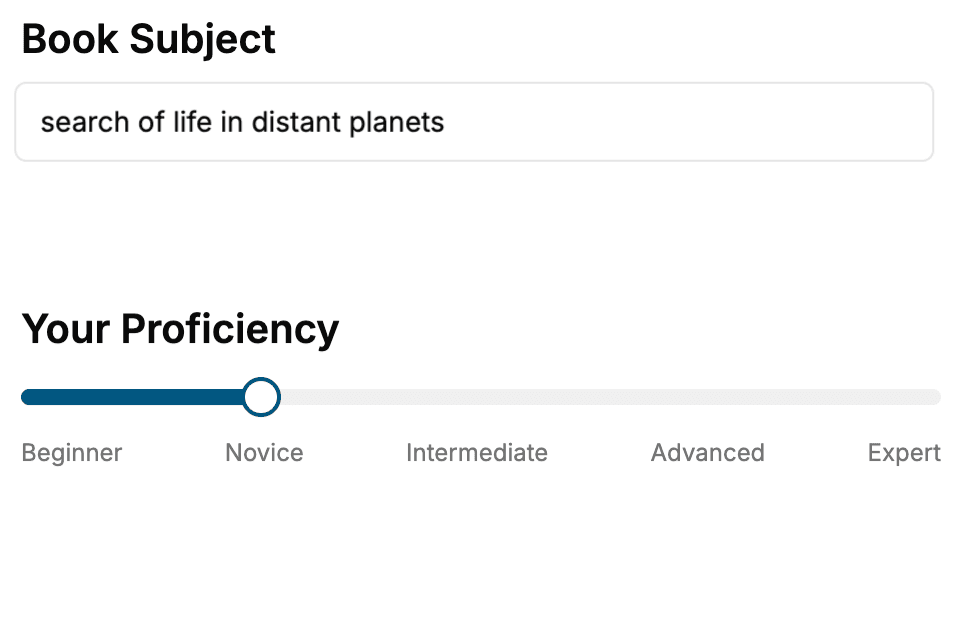
- 1. Select your focus
Select the focus of your Systems Analysis book and share your background
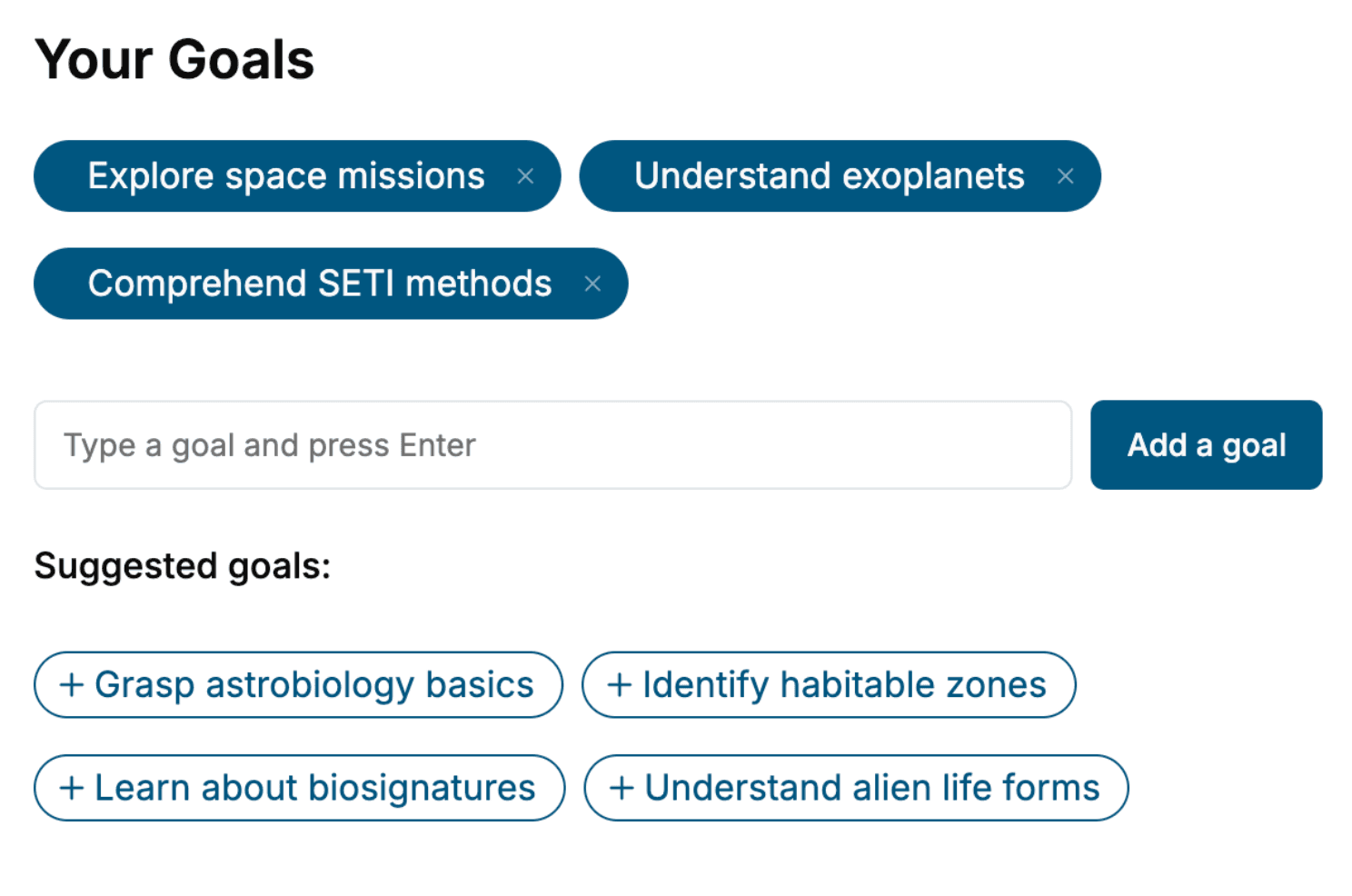
- 2. Personalize your book
Specify your goals and choose sub-topics to include
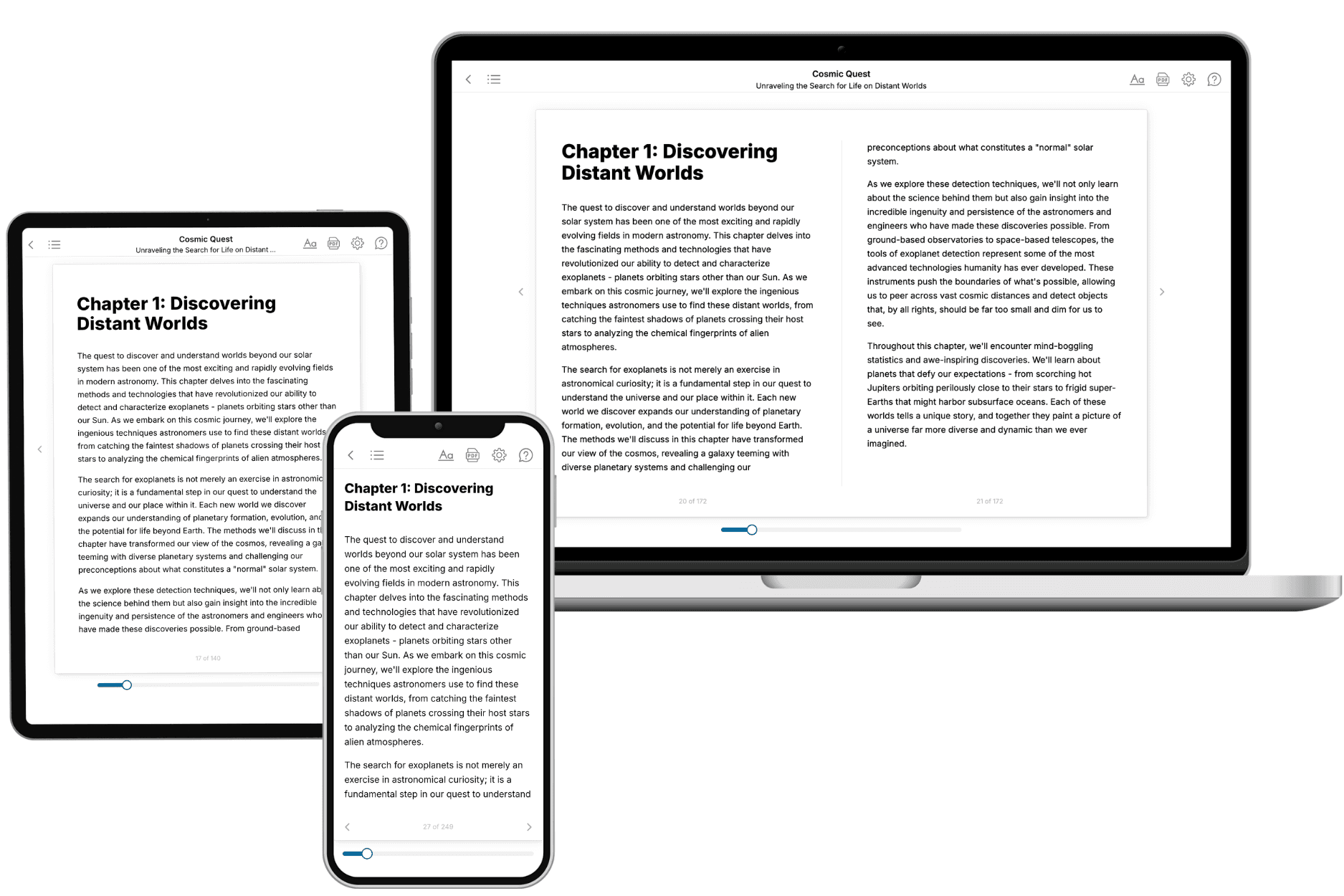
- 3. Get your tailored book
Your book is ready in 10 minutes. Read it online, download as EPUB or PDF, or send to Kindle.
Start from a template
Frequently asked questions
- What is TailoredRead?
TailoredRead creates complete, full-length nonfiction ebooks, written specifically for you. Tell us what you want to learn and why, and TailoredRead writes you a complete ebook on it, with charts, tables, and diagrams throughout. Read it online, on Kindle, or on any e-reader, or download it as a PDF or EPUB. Every book is written fresh the day you order it.
- How is the book tailored to me?
Before anything is written, you answer a few short questions about your goals, your background, and the topics you care about. Your book is then planned around your answers: written at your level, focused on your goals, and covering the topics you chose, instead of the one-size-fits-all book a store sells everyone.
- Will it read like generic AI content?
No. Your book isn't a chat transcript: it's planned chapter by chapter before a single word is written, told in a clear book voice, and explains ideas visually with charts, tables, and diagrams. After writing, every book goes through an editorial pass that polishes chapters so the book reads consistent from start to finish. Judge for yourself: browse thousands of sample books on our Explore Books page.
- How accurate is the content?
Our AI first checks whether your subject needs live research. Niche and fast-moving subjects are researched before writing, and the book plan and chapters are grounded in what it finds. After writing, every book goes through a quality pass that checks its facts and consistency, and researched books list their sources in a Notes section at the back.
- How long is the book?
You choose the length: Comprehensive (250-300 pages), Detailed (150-200 pages), Essential (70-100 pages), or Short (30-50 pages).
- Does the book include visuals?
Yes. Every book includes charts, tables, and diagrams: timelines, checklists, step-by-step guides, decision trees, comparison tables, matrices, and bar charts. A typical book includes dozens of these visual elements.
- Can I read it on Kindle? What formats can I download?
Yes. Every book can be read in our online reader or downloaded as a PDF or EPUB. The EPUB can be opened with Kindle, Apple Books, Kobo, and any e-reader. The Commercial and Author licenses also include an editable Word (DOCX) and Markdown download.
- How much does it cost?
About the price of a regular ebook. The exact price depends on your book's length and complexity, from $2 for the shortest books to $35 for the most comprehensive, and it's shown when you review your book, before you commit to anything. Each book is a one-time purchase, yours to keep, no subscription. Licenses that let you share, teach, or publish your book range from $35.99 to $49.99.
- Can I preview the book before purchasing?
Before you pay, you'll see what your book will cover: the title, a detailed description, the estimated length, and the complete chapter-by-chapter table of contents, so you know what you're getting before you decide. The full text itself is written after you purchase.
- How long does it take to create a book?
About 10 minutes. You can start reading the opening chapters while the rest is still being written.