Geochemistry Books
Explore tailored Geochemistry books created by our AI
You'll gain a solid grasp of how chemical elements behave in Earth's systems and why certain minerals form under specific conditions. This book breaks down the complex interactions between chemistry and geology into clear, practical concepts you can apply immediately. From understanding atomic bonding and thermodynamic principles to tracing element cycles through the environment, you'll discover how geochemistry explains everything from ore deposits to groundwater contamination. Each chapter builds systematically on previous concepts, using real-world examples and case studies to illustrate why geochemical knowledge matters. Whether you're studying geology, environmental science, or Earth sciences, this guide provides the essential framework for understanding how our planet's chemical processes shape the world around us.
Hydrothermal Vents
The Chemistry and Geochemistry of Earth's Most Extreme Ecosystems
Hydrothermal vents remain one of Earth's most mysterious and chemically complex environments, yet their geochemistry is often misunderstood or oversimplified. You'll discover how these underwater hot springs operate as natural chemical reactors, where temperatures exceed 400°C and pressure reaches crushing depths. This book demystifies the intricate geochemical processes that govern vent systems, from the water-rock interactions that create vent fluids to the mineral precipitation that builds towering chimneys. You'll learn why these extreme environments support thriving ecosystems without sunlight, how they influence global ocean chemistry, and why scientists believe they may hold clues to life's origins. Whether you're a student, researcher, or curious learner, this guide provides the chemical and geological foundation needed to understand these remarkable natural laboratories and their profound implications for science.
The Carbon Cycle
A Geochemical Journey Through Earth's Most Dynamic Element
Many people think of carbon simply as the element in coal or diamonds, but this narrow view misses one of nature's most fascinating stories. Carbon is the master traveler of our planet, constantly moving between air, water, rock, and life in an intricate dance that has shaped Earth for billions of years. This comprehensive guide reveals how carbon cycles through Earth's interconnected systems, from the rapid exchange between plants and atmosphere to the slow geological processes that lock carbon away for millions of years. You'll discover how ocean chemistry controls atmospheric carbon levels, why certain rocks hold clues to ancient climates, and how isotopic fingerprints help scientists trace carbon's pathways through complex Earth systems. Through clear explanations and real-world examples, you'll master the geochemical principles that govern carbon's behavior in different environments. You'll learn to interpret carbonate formations, understand weathering processes, and recognize the connections between carbon cycling and other essential Earth processes. Whether you're studying environmental science, geology, or simply curious about how our planet works, this book provides the scientific foundation you need to understand one of Earth's most critical cycles. By the end, you'll see carbon not as a static element, but as a dynamic force that connects every part of our planet's system, influencing everything from ocean pH to rock formation to the very air we breathe.
The Chemistry of Cosmic Life
How Geochemistry Shapes the Search for Life in the Universe
Discover how the fundamental forces of chemistry and geology work together to create the conditions for life throughout the cosmos. This comprehensive exploration reveals the intricate chemical processes that govern habitability on Earth and beyond, from the formation of organic molecules in interstellar space to the complex geochemical cycles that sustain planetary environments. You'll explore how water, carbon, and other essential elements interact across different planetary systems, and learn to evaluate the chemical signatures that scientists use to identify potentially habitable worlds. The book examines real-world case studies from Mars, Europa, Enceladus, and other celestial bodies, showing how geochemical analysis guides our understanding of where life might exist. Through clear explanations of complex chemical processes, you'll gain insight into how extremophile organisms expand our definition of habitability, how atmospheric chemistry reveals planetary history, and how isotopic analysis can detect the subtle fingerprints of biological activity. Each chapter builds your understanding of the chemical toolkit that astrobiologists use to search for life, whether in our solar system or around distant stars. By the end, you'll possess a solid foundation in the chemical principles that drive astrobiology research and the ability to critically evaluate new discoveries in this rapidly evolving field. This knowledge will enhance your appreciation for both the rarity and the potential ubiquity of life in our chemically diverse universe.
Discover how the seemingly permanent rocks beneath your feet are constantly transforming through invisible chemical reactions and relentless physical forces. This book reveals the geochemical mechanisms that drive weathering and erosion—the fundamental processes that shape mountains, create fertile soils, and influence water chemistry across the globe. You'll explore the chemistry of mineral dissolution, the physics of rock fracturing, and the surprising role of life in breaking down stone. Through clear explanations and practical examples, you'll understand why tropical rainforests weather rocks faster than deserts, how acid rain accelerates mineral breakdown, and why understanding these processes matters for everything from agriculture to climate science. Whether you're studying geology, environmental science, or simply curious about how Earth's surface evolves, this book provides the knowledge to see landscapes as dynamic, ever-changing systems shaped by chemistry and time.
What if the rocks beneath your feet could tell you what the weather was like a million years ago? They can—and paleoclimatologists have learned to read these ancient climate stories through geochemistry. This book reveals how scientists decode Earth's climate history by analyzing chemical signatures locked in ice, sediment, and stone. You'll discover the ingenious methods that transform isotope ratios, trace elements, and molecular fossils into a detailed timeline of past temperatures, rainfall patterns, and atmospheric conditions. From understanding how oxygen isotopes reveal ice age cycles to learning why carbon ratios expose ancient CO2 levels, you'll gain practical insight into the geochemical detective work that underpins modern climate science. Whether you're curious about how we know what we know about Earth's past, or seeking to understand the scientific foundation of climate research, this book makes paleoclimatology tangible and compelling.
Most rockhounders spend countless hours searching randomly across the landscape, missing productive sites and collecting the same common specimens repeatedly. This comprehensive atlas changes that approach by providing you with systematic methods to map geological formations, identify rare minerals in the field, and access the most productive collecting locations in Western Colorado and Eastern Utah. You'll master field identification techniques including streak testing, acid testing, and crystalline structure analysis—skills that work without laboratory equipment. Learn how to read geological maps, understand pegmatite deposits and hydrothermal veins, and recognize the specific formations where rare gemstones concentrate. This guide covers permit requirements, safety protocols, and accessibility information for major collecting regions, ensuring you collect legally and responsibly. Build a documented specimen collection with photography and database systems that transform your hobby into a valuable geological reference. Whether you're hunting tourmalines, beryls, quartz varieties, or rare earth element minerals, you'll discover how to locate productive sites systematically and expand your collection with confidence.
What happens to radioactive waste once it enters the soil, and can we truly contain it safely for future generations? This book cuts through the complexity and fear surrounding nuclear soil contamination to provide you with a clear, science-based understanding of one of energy production's most pressing challenges. You'll discover how radioactive materials move through soil systems, why certain contaminants pose greater risks than others, and what remediation strategies are actually working in the field. From the chemistry of soil-radionuclide interactions to the engineering solutions being deployed at contaminated sites worldwide, this guide equips you with the knowledge to evaluate claims, understand regulatory decisions, and participate meaningfully in discussions about nuclear waste management. Whether you're concerned about a nearby facility, involved in environmental policy, or simply curious about how we're addressing this legacy challenge, you'll gain practical insights into the science, technology, and management approaches shaping our nuclear future.
Potassium-Argon Dating
Unlocking Earth's Timeline Through Radioactive Decay
Discover how scientists determine the age of rocks, minerals, and archaeological artifacts using one of nature's most reliable clocks. This book walks you through the fascinating world of potassium-argon dating, starting with the fundamental physics of radioactive decay and building toward practical applications that have shaped our understanding of Earth's history. You'll learn why potassium-40 decays into argon-40 at a predictable rate, how scientists measure this decay in laboratory settings, and why this technique has become indispensable in geology and archaeology. Explore the challenges researchers face—from argon loss to contamination—and discover how modern refinements have made K-Ar dating even more powerful. Whether you're curious about how we know the age of volcanic rocks or how this method helps us trace human evolution, this book provides clear explanations, practical examples, and insights into one of science's most important dating techniques.
The Mineral Kingdom
A Comprehensive Guide to Earth's Treasures
Dive into the fascinating world of minerals with "The Mineral Kingdom: A Comprehensive Guide to Earth's Treasures." This book takes you on an exhilarating exploration of the Earth's hidden gems, from the common to the rare, unraveling the mysteries of their formation and properties. As you progress through the pages, you'll develop a keen eye for mineral identification and classification. You'll learn to decipher the intricate crystal systems that give minerals their unique structures and discover how these microscopic arrangements influence their macroscopic properties. "The Mineral Kingdom" doesn't just stop at identification; it delves deep into the geological processes that shape our planet. You'll gain insights into the formation of igneous, metamorphic, and sedimentary rocks, and understand how minerals play a crucial role in each. From the fiery depths of volcanoes to the intense pressures of the Earth's crust, you'll witness the incredible journey of mineral creation. This guide also serves as your passport to mineral localities around the globe. You'll explore famous sites and hidden treasures, learning about the unique geological conditions that make each location special. By the end of this journey, you'll have a newfound appreciation for the mineral wealth beneath our feet and the scientific wonders it represents.
Deep Time and Nuclear Waste
Understanding Geological Time Scales for Safe Energy Storage
You'll gain a comprehensive understanding of how geological time scales fundamentally reshape our approach to nuclear waste management and energy storage. This book bridges the gap between abstract geological concepts and practical energy policy, showing you why storing radioactive materials safely requires thinking in terms of millions of years rather than decades. You'll explore how scientists assess geological stability, evaluate repository sites, and predict the behavior of rock formations across incomprehensible timescales. Learn the science behind deep geological repositories, understand radioisotope decay and its timeline implications, and discover how natural geological processes provide the ultimate containment strategy. Whether you're evaluating energy policy, working in environmental management, or simply seeking to understand one of modern civilization's greatest challenges, this book provides the knowledge to grasp why geological time is not just relevant—it's essential to our energy future.
Related books you may like:
Discover how advanced functional materials are reshaping industries and enabling solutions to humanity's greatest challenges. This comprehensive guide takes you beyond basic materials science to explore the cutting-edge world of engineered materials designed to perform specific, transformative functions. You'll learn how scientists and engineers manipulate atomic structures and processing conditions to create materials that respond to stimuli, conduct electricity with unprecedented efficiency, or heal themselves. From smart polymers that change properties on demand to nanomaterials with revolutionary capabilities, this book reveals the principles behind these innovations and their practical applications in healthcare, energy, electronics, and aerospace. Whether you're advancing your career, developing new products, or simply fascinated by the materials shaping our future, you'll gain the knowledge to understand, evaluate, and potentially contribute to this rapidly evolving field.
Most chemical reactions should happen instantly, yet they don't. The culprit? Activation energy—the invisible barrier that keeps reactants locked in place until enough energy arrives to break them free. Without understanding this fundamental concept, enzyme kinetics remains a mystery, and the elegant mechanisms by which life accelerates reactions seem like magic. This book demystifies activation energy and enzyme kinetics through clear explanations, practical examples, and visual frameworks. You'll discover how enzymes perform their catalytic miracles by lowering activation energy, explore the mathematics of reaction rates through the Arrhenius equation and Michaelis-Menten kinetics, and learn how inhibition mechanisms control biological processes. Whether you're studying biochemistry, developing pharmaceuticals, or optimizing industrial processes, this guide equips you with both the conceptual understanding and quantitative tools needed to predict, analyze, and manipulate enzyme-catalyzed reactions with confidence.
Achieve reliable, reproducible separations of complex chemical mixtures using adsorption chromatography. This practical guide bridges the gap between theoretical principles and real-world laboratory application, providing you with the knowledge and skills to design effective separation strategies for your specific analytical needs. You'll explore the fundamental science of how compounds interact with adsorbent materials, learn to select optimal stationary and mobile phases, and master the practical techniques that ensure consistent results. Whether you're working with thin-layer chromatography, column chromatography, or HPLC systems, this book equips you with systematic approaches to troubleshooting common problems, optimizing separations, and interpreting data with confidence. Packed with practical examples, decision-making frameworks, and evidence-based strategies, you'll develop the expertise to tackle challenging separation problems and advance your analytical capabilities in pharmaceutical, environmental, or materials research.
Many assume adipose tissue is simply inert fat to be minimized or removed. In reality, it's a sophisticated, metabolically active organ with remarkable regenerative potential. This book reveals how adipose tissue engineering is revolutionizing medicine by creating functional tissue solutions for reconstruction, regeneration, and therapeutic applications. You'll discover the biological foundations of adipose tissue, learn how scientists harvest and cultivate adipose-derived stem cells, and explore cutting-edge engineering strategies that transform these cells into viable tissue constructs. From scaffold design and bioreactor optimization to vascularization techniques and clinical translation, this guide provides practical insights into the science and engineering behind adipose tissue regeneration. Whether you're a researcher, student, or healthcare professional, you'll gain actionable knowledge about the current state of the field, emerging technologies, and the real-world challenges of bringing engineered tissues from the laboratory to clinical practice.
In the rapidly evolving world of ultra-high-speed communications, the challenge of designing secure and efficient chips has never been more daunting. As a Principal Architect, you face the complex task of integrating cutting-edge VLSI techniques with robust cryptographic solutions. This book is your comprehensive guide to conquering these challenges. "Advanced VLSI Design" delves deep into the intricacies of modern chip architecture, offering you practical insights into overcoming CMOS scaling limitations, harnessing the power of 3D IC integration, and implementing state-of-the-art FinFET technology. You'll explore innovative approaches to low-power design and high-speed SerDes, crucial for next-generation communication systems. This book doesn't just stop at performance; it equips you with the knowledge to build security from the ground up. From hardware Trojan detection to side-channel analysis resistance, you'll learn how to create chips that are not only fast but also fortified against modern security threats. Dive into advanced topics like quantum-dot cellular automata and EUV lithography, positioning yourself at the forefront of VLSI innovation.
Create a Geochemistry Book Tailored to You
Create an AI-crafted book tailored to your goals, interests, and background






Benefits of AI-tailored books
- Read one book, not ten:
- all the Geochemistry knowledge you need, gathered into a single book.
- Save days of learning:
- tell us your goals, choose your topics, and the whole book is built around them.
- Learn effortlessly:
- Geochemistry book written for your specific background and expertise.
- Understand at a glance:
- includes charts, tables, timelines, checklists, decision trees, and more.
- Stay current:
- written the day you order it, not years ago.
- Trust what you read:
- every book is checked for accuracy, with real research when your subject needs it.
Create your unique book in 3 steps
- 1. Select your focus
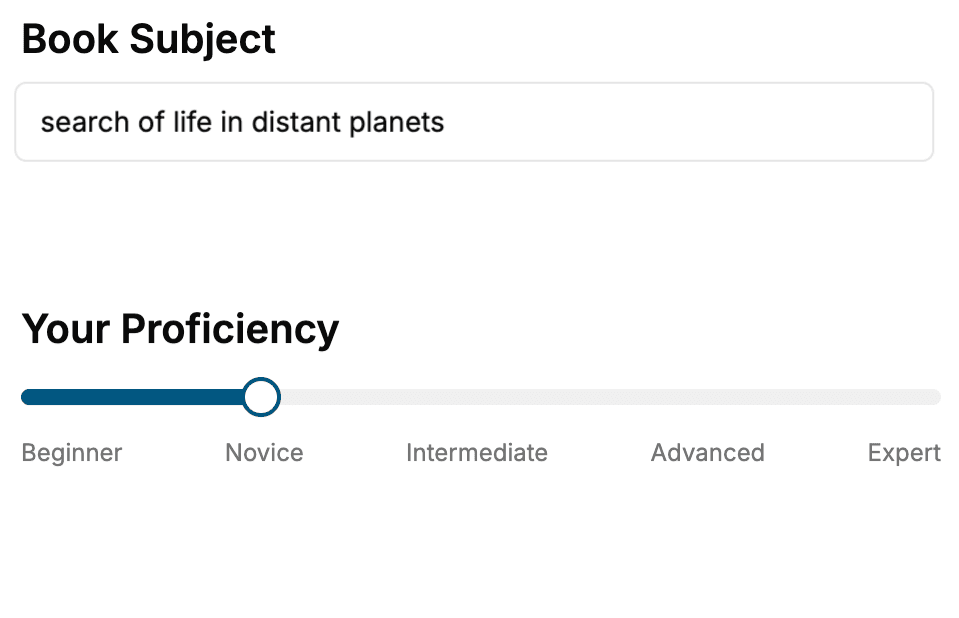
Select the focus of your Geochemistry book and share your background
- 2. Personalize your book
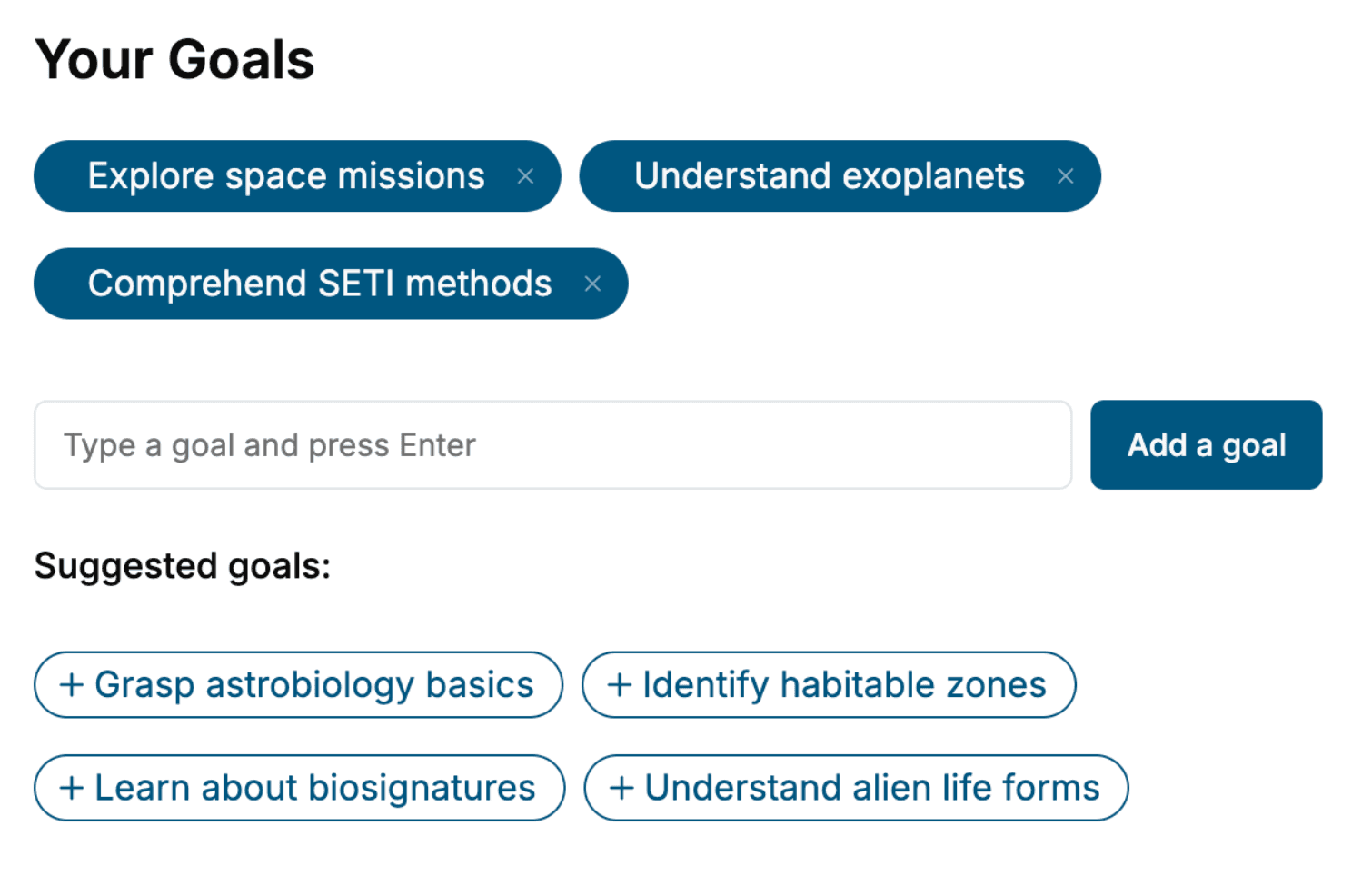
Specify your goals and choose sub-topics to include
- 3. Get your tailored book
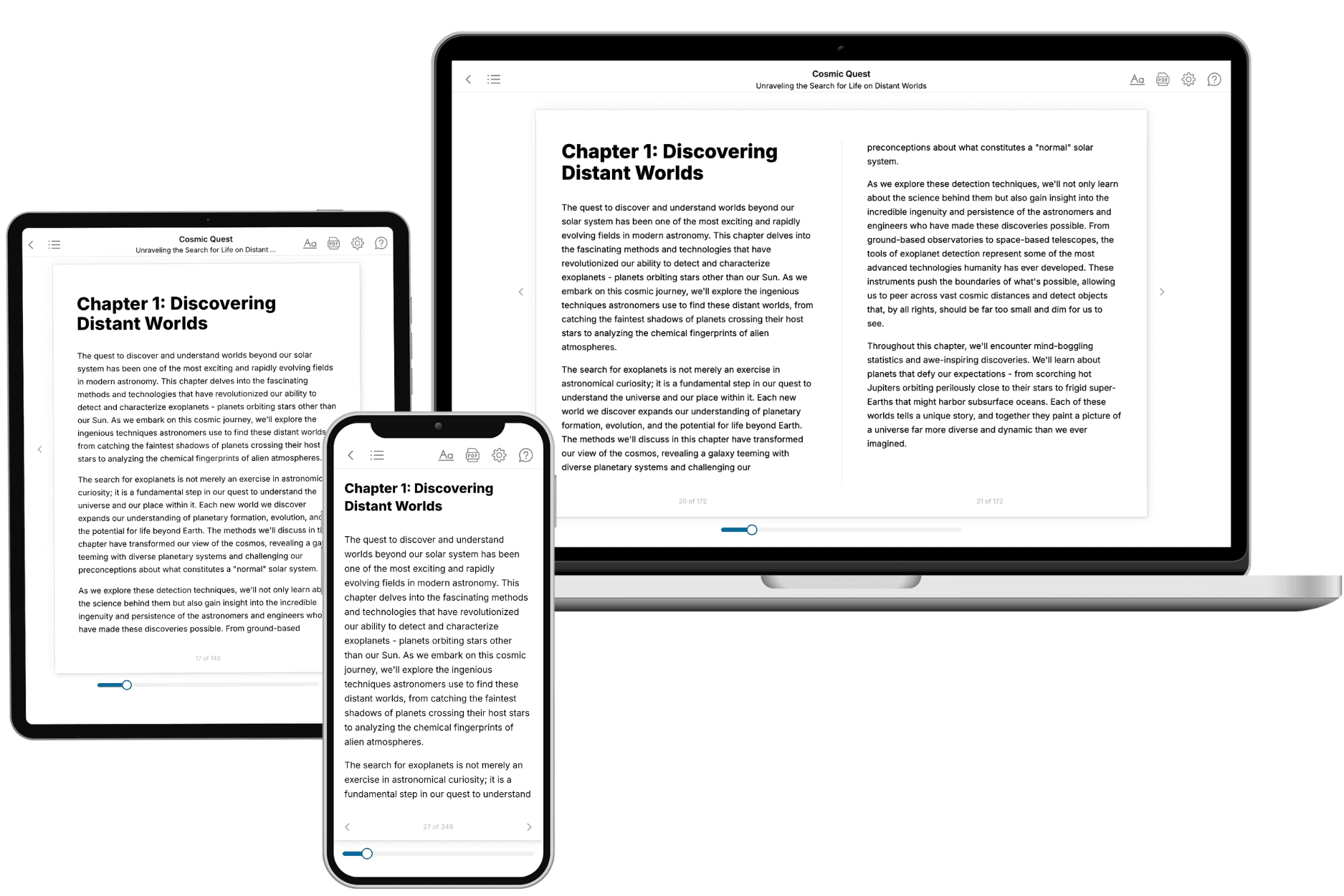
Your book is ready in 10 minutes. Read it online, download as EPUB or PDF, or send to Kindle.
Start from a template
Frequently asked questions
- What is TailoredRead?
TailoredRead creates complete, full-length nonfiction ebooks, written specifically for you. Tell us what you want to learn and why, and TailoredRead writes you a complete ebook on it, with charts, tables, and diagrams throughout. Read it online, on Kindle, or on any e-reader, or download it as a PDF or EPUB. Every book is written fresh the day you order it.
- How is the book tailored to me?
Before anything is written, you answer a few short questions about your goals, your background, and the topics you care about. Your book is then planned around your answers: written at your level, focused on your goals, and covering the topics you chose, instead of the one-size-fits-all book a store sells everyone.
- Will it read like generic AI content?
No. Your book isn't a chat transcript: it's planned chapter by chapter before a single word is written, told in a clear book voice, and explains ideas visually with charts, tables, and diagrams. After writing, every book goes through an editorial pass that polishes chapters so the book reads consistent from start to finish. Judge for yourself: browse thousands of sample books on our Explore Books page.
- How accurate is the content?
Our AI first checks whether your subject needs live research. Niche and fast-moving subjects are researched before writing, and the book plan and chapters are grounded in what it finds. After writing, every book goes through a quality pass that checks its facts and consistency, and researched books list their sources in a Notes section at the back.
- How long is the book?
You choose the length: Comprehensive (250-300 pages), Detailed (150-200 pages), Essential (70-100 pages), or Short (30-50 pages).
- Does the book include visuals?
Yes. Every book includes charts, tables, and diagrams: timelines, checklists, step-by-step guides, decision trees, comparison tables, matrices, and bar charts. A typical book includes dozens of these visual elements.
- Can I read it on Kindle? What formats can I download?
Yes. Every book can be read in our online reader or downloaded as a PDF or EPUB. The EPUB can be opened with Kindle, Apple Books, Kobo, and any e-reader. The Commercial and Author licenses also include an editable Word (DOCX) and Markdown download.
- How much does it cost?
About the price of a regular ebook. The exact price depends on your book's length and complexity, from $2 for the shortest books to $35 for the most comprehensive, and it's shown when you review your book, before you commit to anything. Each book is a one-time purchase, yours to keep, no subscription. Licenses that let you share, teach, or publish your book range from $35.99 to $49.99.
- Can I preview the book before purchasing?
Before you pay, you'll see what your book will cover: the title, a detailed description, the estimated length, and the complete chapter-by-chapter table of contents, so you know what you're getting before you decide. The full text itself is written after you purchase.
- How long does it take to create a book?
About 10 minutes. You can start reading the opening chapters while the rest is still being written.