Resource Management Books
Explore tailored Resource Management books created by our AI
Discover how to transform chaotic project complexity into structured clarity. This comprehensive guide walks you through the complete process of creating and leveraging Work Breakdown Structures—from initial concept through project execution. You'll learn why the most successful projects start with a solid WBS foundation, how to decompose even the most intricate deliverables into manageable components, and how to use your WBS as a strategic tool for planning, budgeting, scheduling, and risk management. Whether you're managing a small initiative or a large-scale program, you'll gain practical frameworks, real-world examples, and proven techniques that help you avoid common pitfalls and deliver projects on time and within scope. This book bridges the gap between theory and practice, giving you the tools to create WBS structures that actually work in your organization.
Operations Mastery Blueprint
Personalized Strategies to Optimize Your Operations Fast
Most operations managers struggle with competing priorities: cutting costs while maintaining quality, optimizing resources while meeting demand, and improving efficiency without burning out their teams. You're caught between pressure from above to reduce expenses and pressure from below to provide better working conditions. This book cuts through the complexity with a practical, step-by-step blueprint for operational excellence. You'll learn how to implement lean practices that actually stick, establish KPI dashboards that guide real decisions, optimize your supply chain to reduce vulnerabilities, and create standard procedures that your team actually follows. Each chapter builds on the last, moving from foundational concepts to advanced optimization techniques. Whether you're managing manufacturing, logistics, service operations, or hybrid environments, you'll discover proven strategies to minimize waste, reduce downtime, enhance team productivity, and strengthen customer satisfaction—all while lowering operational costs. This isn't theoretical management philosophy. It's a practical playbook designed specifically for operations managers who need results now.
How can you allocate limited government resources to maximize public benefit while satisfying competing policy demands? Linear programming provides a rigorous, transparent framework for answering this question. This guide teaches you to formulate real policy problems as mathematical models, solve them systematically, and interpret results for stakeholder communication. You'll learn to construct constraints that reflect actual policy limitations, optimize objective functions that align with public goals, and use sensitivity analysis to stress-test your recommendations. Whether you're allocating education budgets across districts, optimizing healthcare resource distribution, or evaluating policy feasibility, this book provides the conceptual foundation and practical tools you need. Through worked examples grounded in public administration contexts, you'll master constraint formulation, shadow price interpretation, duality theory, and cost-benefit analysis. By the end, you'll approach complex policy decisions with quantitative rigor, transforming ambiguous trade-offs into defensible, data-driven recommendations.
You'll gain the economic literacy to make smarter procurement decisions that directly impact your bottom line. This book bridges macroeconomics and practical buying strategy, showing you how inflation rates, interest rates, and monetary policy shape vendor pricing and supply chain costs. Learn to negotiate from a position of strength by understanding the economic pressures vendors face, then use that insight to structure deals that work for both sides. Discover how to optimize inventory levels based on economic cycles, evaluate vendor performance in context of market conditions, and build supplier relationships that weather economic uncertainty. Whether you're managing a single category or overseeing enterprise sourcing, you'll develop the analytical framework to anticipate market shifts, identify cost-saving opportunities, and make strategic decisions that align with your organization's financial goals. This is economics made practical for the modern buyer.
Most entrepreneurs chase obvious market gaps and wonder why they face intense competition. The real opportunity lies in identifying gaps that competitors haven't yet recognized—and then moving fast enough to establish dominance before they catch up. This book provides a practical framework for spotting emerging market opportunities that align with your capabilities and market conditions. You'll learn how to analyze market gaps systematically, assess whether a gap is worth pursuing, and build an innovation pipeline that consistently generates high-potential product ideas. Whether you're expanding your oil pipeline business into adjacent markets or exploring entirely new ventures, these methods help you make data-driven decisions about where to invest your time and capital. The book combines economic principles with real-world case studies to show how first-movers establish defensible positions, how disruptive technologies reshape markets, and how to manage innovation as a disciplined process rather than a creative free-for-all.
Balancing Act
Mastering Multi-Objective Optimization in Real-World Problem Solving
Most optimization problems in the real world aren't about finding one perfect answer—they're about navigating competing demands. You can't simultaneously maximize profit, minimize environmental impact, and reduce production time without making trade-offs. This is where multi-objective optimization becomes essential. This book demystifies the mathematics and practical techniques for solving problems with multiple, often conflicting objectives. Whether you're designing products, allocating resources, managing supply chains, or optimizing operations, you'll discover how to identify solutions that balance competing priorities rather than chase an impossible ideal. You'll learn the fundamental concepts—from Pareto optimality to weighted objectives—and explore proven methods including linear programming, evolutionary algorithms, and decision-making frameworks. Each concept is grounded in real applications, showing how organizations use these techniques to make better decisions under constraint. By the end, you'll have both the theoretical foundation and practical toolkit to tackle complex optimization challenges in your own work.
You'll discover how to architect control systems that transform your organization from reactive to proactive. This book guides you through designing feedback loops that give you real-time visibility into what matters most, establishing strategic control frameworks that align action with intent, and building the organizational agility that separates market leaders from followers. You'll learn how cybernetic principles—the science of self-regulating systems—apply directly to business management, enabling you to create organizations that adapt faster than competitors. Through practical frameworks and real-world applications, you'll master decision-making optimization, implement predictive analytics for strategic advantage, and allocate resources dynamically based on actual performance data. Whether you're managing a department or an enterprise, these control system principles will help you lead with greater precision, respond to change faster, and achieve results with less friction and wasted effort.
High Throughput Screening Essentials
Accelerating Discovery in Synthetic Biology and Beyond
Many researchers assume that high throughput screening requires massive budgets and industrial-scale infrastructure. In reality, HTS is a strategic approach to discovery that can be adapted to labs of any size. This book demystifies high throughput screening and shows you how to leverage it effectively in synthetic biology and biological research. You'll learn how to design assays that actually work, implement screening campaigns that generate reliable data, and interpret results with statistical confidence. Whether you're screening genetic libraries, optimizing metabolic pathways, or discovering novel biological functions, this guide provides practical frameworks and real-world examples. You'll understand the critical role of automation without becoming dependent on it, master data analysis techniques that separate signal from noise, and develop validation strategies that confirm your discoveries are genuine. By the end, you'll have a complete toolkit for accelerating your research through intelligent, systematic screening.
Are you breeding sheep reactively, hoping for better results, or strategically designing your flock's genetic future? The difference between a mediocre operation and a thriving one often comes down to intentional breeding decisions backed by data and science. This guide walks you through every aspect of building a breeding program that works—from setting clear genetic goals to selecting the right animals, managing genetics responsibly, and measuring success. You'll learn how to leverage modern tools like genomic testing alongside time-tested principles, optimize your breeding decisions for profitability, and create a flock that thrives in your specific environment. Whether you're managing a small heritage flock or a commercial operation, these practical strategies will help you make breeding decisions with confidence, reduce costly mistakes, and build a sustainable future for your sheep enterprise.
Building Rural Ventures
Creating Sustainable Businesses in Agricultural Communities
What makes a business succeed in a place where the nearest supplier is 50 miles away and your customer base numbers in the hundreds rather than thousands? Rural entrepreneurship operates by different rules than urban business, yet most guides ignore these realities entirely. This book cuts through generic advice to show you how to build a thriving venture in an agricultural community by working with—not against—the unique characteristics of rural life. You'll discover how to identify genuine market opportunities within your region, leverage the social networks and local knowledge that outsiders can't replicate, navigate the real constraints of rural capital and infrastructure, and create a business model that strengthens rather than exploits your community. Whether you're a farmer diversifying income, a community leader seeking economic development, or someone returning to rural roots, this guide provides concrete strategies grounded in rural sociology and tested by entrepreneurs who've succeeded where others failed.
Related books you may like:
In "Agile Governance: Mastering Software Product Management in Public Sector Projects," readers will discover a comprehensive guide to navigating the unique challenges of government software development. This book bridges the gap between traditional bureaucratic processes and modern agile methodologies, offering practical strategies for implementing user-centric design, effective stakeholder management, and iterative development in public sector environments. Tailored for team leads and aspiring product managers in government tech, this book provides invaluable insights into creating citizen-centric KPIs, managing cross-agency collaborations, and optimizing government tech stacks. Readers will learn how to adapt Scrum and Kanban for government projects, conduct effective requirement workshops, and create impactful product roadmaps that align with public value creation. With a focus on real-world application, "Agile Governance" equips you with the tools to enhance team leadership, master change management, and improve sprint planning within the constraints of government bureaucracy. Whether you're looking to implement a country-level solution or simply improve your agency's software development processes, this book provides the knowledge and strategies needed to succeed in the evolving landscape of public sector technology.
Imagine confidently deploying machine learning models that not only predict accurately but also earn stakeholder trust through transparency and business impact. This comprehensive guide bridges the gap between statistical theory and real-world analytics practice, equipping you with advanced techniques that transform raw data into strategic business value. You'll master predictive modeling frameworks, learn to communicate complex findings through data storytelling, and implement production-ready systems that scale. From time series forecasting and anomaly detection to natural language processing and Bayesian methods, each chapter builds practical skills grounded in statistical rigor. Whether you're optimizing SQL queries, validating clustering results, or deploying A/B testing frameworks, you'll discover how to combine technical excellence with business acumen. This book moves beyond textbook examples to address real deployment challenges: handling missing data intelligently, correcting for multiple testing, interpreting complex models, and measuring true business impact. Perfect for data scientists ready to elevate their impact from analysis to action.
How many times has your development team built something that technically met the requirements but wasn't what the business actually needed? The gap between what gets built and what was intended often comes down to one thing: poorly written acceptance criteria. This book teaches you how to write acceptance criteria that eliminate ambiguity, align your entire team, and ensure successful delivery. You'll learn the proven frameworks and techniques used by leading product organizations, discover the common pitfalls that derail even experienced teams, and master the collaborative process that turns vague ideas into crystal-clear requirements. Whether you're writing your first user story or refining your team's process, this practical guide provides actionable templates, real-world examples, and step-by-step guidance to help you write acceptance criteria that actually work.
Poor team communication is the silent killer of organizational success. In today's fast-paced business world, leaders who can't effectively convey their vision or listen to their team's concerns find themselves struggling to keep up with change and losing their competitive edge. Adaptive Leadership Mastery: Elevating Team Communication for Dynamic Success offers a fresh perspective on leadership in the modern workplace. This book provides you with practical strategies to overcome communication barriers, foster a culture of open dialogue, and lead your team through times of uncertainty and change. You'll discover how to adapt your leadership style to different situations, personalities, and challenges. From navigating difficult conversations to inspiring your team during periods of transformation, this guide equips you with the tools to become a more versatile and effective leader. By mastering the art of adaptive leadership and honing your communication skills, you'll be able to build a more resilient, innovative, and high-performing team ready to tackle any challenge that comes your way.
Are you struggling to balance company growth with personal well-being in today's fast-paced business world? "Agile Leadership Mastery" is your comprehensive guide to revolutionizing your leadership approach. This book offers a unique blend of cutting-edge leadership strategies and practical stress management techniques tailored for the modern executive. You'll discover how to implement agile methodologies, foster psychological safety, and drive digital transformation while maintaining your personal equilibrium. From cultivating emotional intelligence to mastering the art of strategic partnerships, this book provides the tools you need to not only lead your company to new heights but also to thrive personally in your role. Packed with actionable insights and real-world examples, "Agile Leadership Mastery" is an essential resource for any leader ready to embrace change, inspire innovation, and create a resilient, high-performing team in the digital age.
Create a Resource Management Book Tailored to You
Create an AI-crafted book tailored to your goals, interests, and background






Benefits of AI-tailored books
- Read one book, not ten:
- all the Resource Management knowledge you need, gathered into a single book.
- Save days of learning:
- tell us your goals, choose your topics, and the whole book is built around them.
- Learn effortlessly:
- Resource Management book written for your specific background and expertise.
- Understand at a glance:
- includes charts, tables, timelines, checklists, decision trees, and more.
- Stay current:
- written the day you order it, not years ago.
- Trust what you read:
- every book is checked for accuracy, with real research when your subject needs it.
Create your unique book in 3 steps
- 1. Select your focus
Select the focus of your Resource Management book and share your background
- 2. Personalize your book
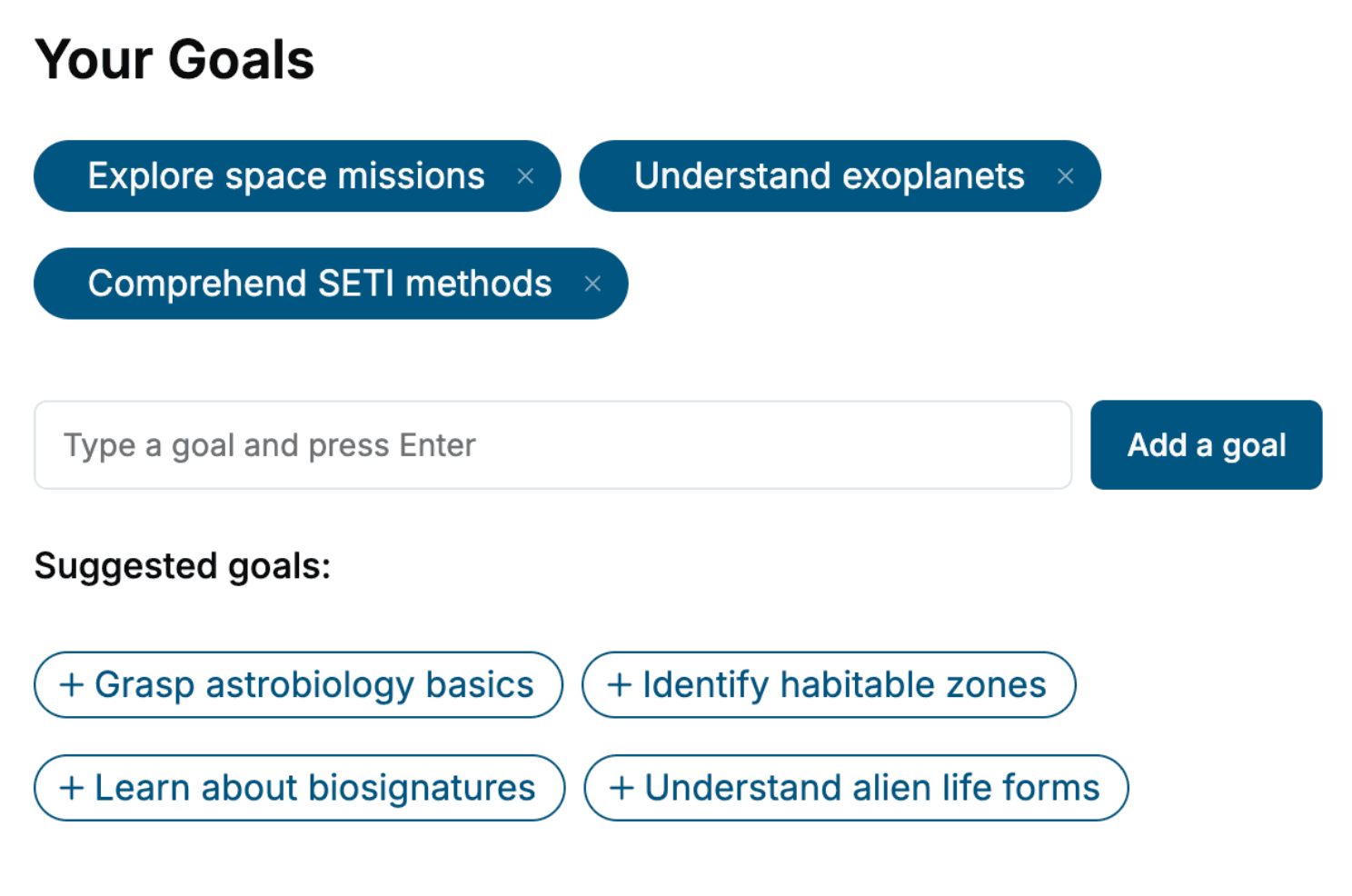
Specify your goals and choose sub-topics to include
- 3. Get your tailored book
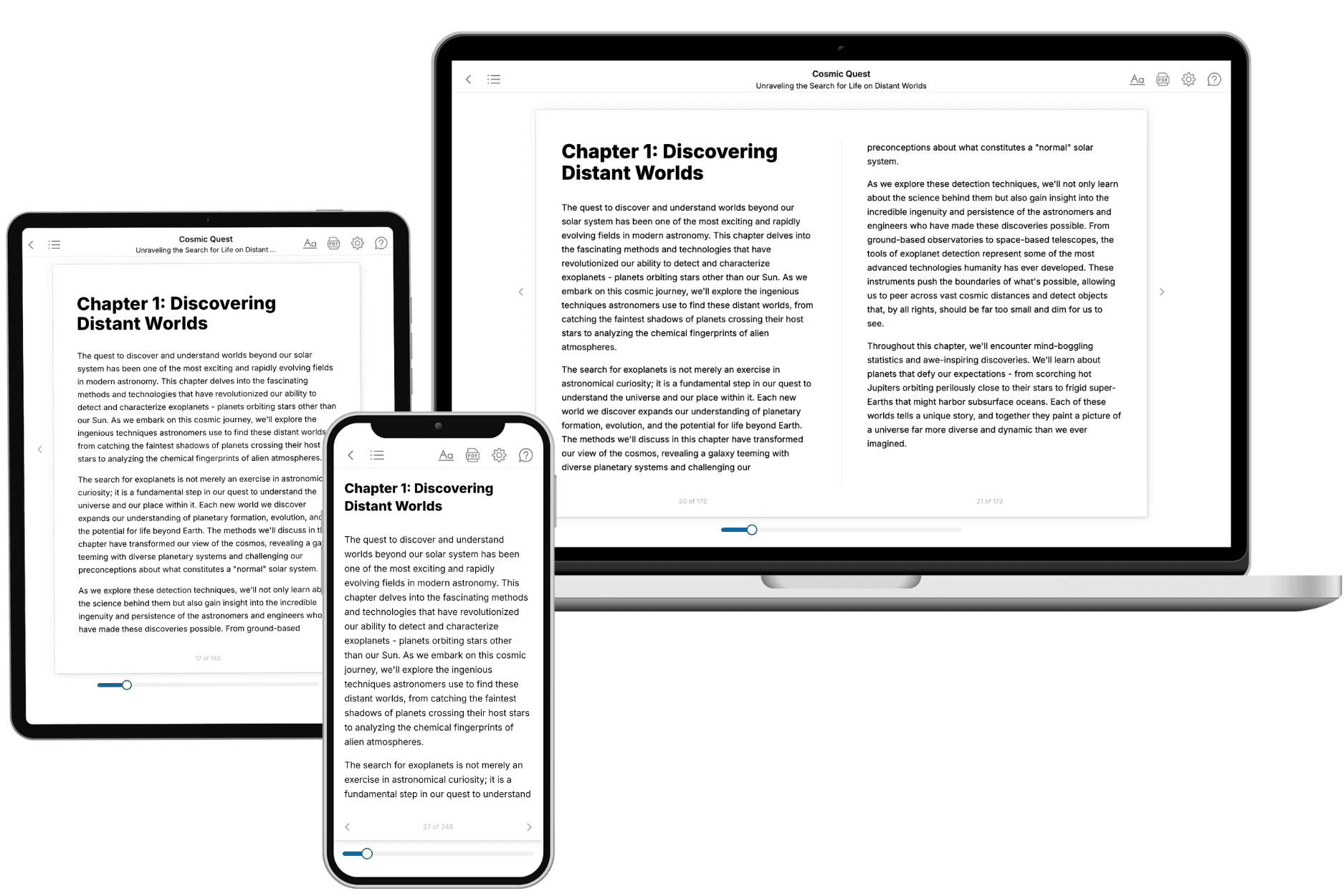
Your book is ready in 10 minutes. Read it online, download as EPUB or PDF, or send to Kindle.

Frequently asked questions
- What is TailoredRead?
TailoredRead creates complete, full-length nonfiction ebooks, written specifically for you. Tell us what you want to learn and why, and TailoredRead writes you a complete ebook on it, with charts, tables, and diagrams throughout. Read it online, on Kindle, or on any e-reader, or download it as a PDF or EPUB. Every book is written fresh the day you order it.
- How is the book tailored to me?
Before anything is written, you answer a few short questions about your goals, your background, and the topics you care about. Your book is then planned around your answers: written at your level, focused on your goals, and covering the topics you chose, instead of the one-size-fits-all book a store sells everyone.
- Will it read like generic AI content?
No. Your book isn't a chat transcript: it's planned chapter by chapter before a single word is written, told in a clear book voice, and explains ideas visually with charts, tables, and diagrams. After writing, every book goes through an editorial pass that polishes chapters so the book reads consistent from start to finish. Judge for yourself: browse thousands of sample books on our Explore Books page.
- How accurate is the content?
Our AI first checks whether your subject needs live research. Niche and fast-moving subjects are researched before writing, and the book plan and chapters are grounded in what it finds. After writing, every book goes through a quality pass that checks its facts and consistency, and researched books list their sources in a Notes section at the back.
- How long is the book?
You choose the length: Comprehensive (250-300 pages), Detailed (150-200 pages), Essential (70-100 pages), or Short (30-50 pages).
- Does the book include visuals?
Yes. Every book includes charts, tables, and diagrams: timelines, checklists, step-by-step guides, decision trees, comparison tables, matrices, and bar charts. A typical book includes dozens of these visual elements.
- Can I read it on Kindle? What formats can I download?
Yes. Every book can be read in our online reader or downloaded as a PDF or EPUB. The EPUB can be opened with Kindle, Apple Books, Kobo, and any e-reader. The Commercial and Author licenses also include an editable Word (DOCX) and Markdown download.
- How much does it cost?
About the price of a regular ebook. The exact price depends on your book's length and complexity, from $2 for the shortest books to $35 for the most comprehensive, and it's shown when you review your book, before you commit to anything. Each book is a one-time purchase, yours to keep, no subscription. Licenses that let you share, teach, or publish your book range from $35.99 to $49.99.
- Can I preview the book before purchasing?
Before you pay, you'll see what your book will cover: the title, a detailed description, the estimated length, and the complete chapter-by-chapter table of contents, so you know what you're getting before you decide. The full text itself is written after you purchase.
- How long does it take to create a book?
About 10 minutes. You can start reading the opening chapters while the rest is still being written.