Aesthetics Books
Explore tailored Aesthetics books created by our AI
Discover how to see and create beauty through the lens of Japanese aesthetic philosophy, where imperfection becomes perfection and simplicity reveals profound depth. This comprehensive exploration takes you beyond surface-level appreciation into the heart of concepts like wabi-sabi, mono no aware, and ma—principles that have shaped Japanese culture for centuries and offer transformative insights for contemporary life. You'll explore how these aesthetic philosophies emerged from Zen Buddhism, Shintoism, and centuries of cultural refinement, learning to recognize the subtle beauty in weathered textures, empty spaces, and fleeting moments. Through detailed examinations of traditional arts, architecture, and daily practices, you'll understand how Japanese aesthetics create harmony between humanity and nature, finding extraordinary meaning in ordinary experiences. The book reveals practical ways to integrate these timeless principles into your own creative work, living spaces, and daily mindfulness practices. You'll learn to appreciate the beauty of impermanence, cultivate awareness of negative space, and develop sensitivity to the understated elegance that characterizes Japanese aesthetic sensibility. Whether you're an artist, designer, philosopher, or simply someone seeking a deeper connection to beauty and meaning, this book provides the foundation for understanding one of the world's most influential aesthetic traditions and applying its wisdom to enrich your own life and creative expression.
The Art of Understanding
A Practical Guide to Philosophy of Art and Aesthetic Experience
Deepen your appreciation and understanding of art by exploring the philosophical questions that have shaped how we think about creativity, beauty, and meaning. This guide takes you beyond surface-level appreciation to examine why art matters, how it communicates, and what makes something worthy of aesthetic consideration. You'll discover how philosophers from Plato to contemporary thinkers have grappled with defining art, evaluating aesthetic experience, and understanding the relationship between artist, artwork, and audience. Through clear explanations and practical examples, you'll learn to think critically about art's role in society, develop your own aesthetic framework, and engage more meaningfully with creative works. Whether you're exploring philosophy for the first time or expanding your existing knowledge, this book provides the conceptual tools needed to navigate art's philosophical landscape with confidence and insight.
The Emotional Language of Art
How Visual Expression Moves the Human Heart and Mind
Discover how art speaks directly to your emotions and why certain paintings, sculptures, or installations move you in ways words cannot capture. This book explores the fascinating intersection of aesthetics and philosophy, revealing the hidden mechanisms through which visual art communicates feeling, meaning, and truth. You'll learn how artists deliberately craft emotional experiences through color, composition, and symbolism, and how your own responses to art are shaped by both universal human psychology and personal experience. By understanding the philosophical foundations of aesthetic emotion, you'll develop a richer, more nuanced appreciation for art—and gain deeper insight into your own emotional responses. Whether you're a casual museum visitor or a dedicated art enthusiast, this exploration of art's emotional power will transform how you see and feel when encountering creative expression.
The Poetics of Ethics
Aesthetic Resistance, Alterity, and the Ethical Limits of Language
How can poetry speak what philosophy cannot? This book challenges the assumption that ethics belongs exclusively to the domain of rational argument and systematic thought. By tracing the work of major continental philosophers—from Levinas and Heidegger to Deleuze, Derrida, and Butler—alongside poets like Celan, Artaud, and Weil, this study reveals how poetic language articulates ethical dimensions that exceed conventional moral categories. You'll discover how fragmentation, silence, and linguistic rupture become ethical strategies; how affect and emotion ground moral judgment; and how the encounter with alterity demands a poetics of resistance. This book integrates phenomenology, deconstruction, and aesthetic theory to show that ethics is fundamentally a question of form—how we write, speak, and create meaning in the face of suffering, precarity, and radical otherness. Whether examining tragedy's moral necessity, the ethics of memory, or the politics of aesthetic distribution, this work develops a philosophical methodology that treats poetry not as illustration but as essential to ethical thought itself.
The Algorithm and the Aesthetic
Understanding Art in the Age of Technology
The relationship between technology and art has never been more complex or consequential. You face a fundamental challenge: how do we understand and evaluate art when algorithms generate images, when code becomes creative material, and when the artist's hand is replaced by computational processes? This book cuts through the confusion by providing a rigorous philosophical framework for technological art. Rather than treating technology as a threat to authentic creativity, it explores how computational systems, digital tools, and algorithmic processes are expanding what art can be. You'll discover how technological art challenges centuries-old assumptions about authorship, originality, and aesthetic value. Through clear analysis of generative art, AI-created works, digital installations, and computational creativity, this book equips you to think critically about the future of artistic expression. Whether you're an artist, philosopher, educator, or simply someone trying to make sense of contemporary culture, you'll gain the conceptual tools to navigate this rapidly evolving landscape with confidence and insight.
Your creative work stands at the intersection of beauty and meaning, where every design decision carries philosophical weight. This comprehensive exploration of aesthetic theory will reshape how you approach visual communication, moving beyond surface-level styling to understand the deeper principles that make design truly compelling. You'll discover how classical aesthetic theories translate into contemporary design practice, learning to recognize the subtle relationships between proportion, balance, and visual harmony that separate memorable work from the mundane. Through systematic examination of color, form, typography, and composition, you'll develop the critical eye needed to evaluate and refine your creative decisions with confidence. The journey through historical aesthetic movements—from ancient Greek ideals to modern minimalism—reveals how cultural context shapes visual perception and provides a rich vocabulary for your own creative expression. You'll explore the philosophical tensions between subjective taste and objective beauty, gaining tools to navigate client preferences while maintaining design integrity. By the end, you'll possess a sophisticated framework for creating work that resonates on both intellectual and emotional levels, equipped with the theoretical foundation to articulate your design choices and push your creative practice toward greater depth and impact.
The Aesthetic Mind
Exploring the Philosophy of Beauty and Art
Have you ever wondered why certain works of art move you deeply, while others leave you indifferent? "The Aesthetic Mind: Exploring the Philosophy of Beauty and Art" delves into the fascinating world of philosophical aesthetics, offering you a thought-provoking journey through the concepts that shape our perception of beauty and artistic expression. This book goes beyond surface-level appreciation, challenging you to examine the very foundations of aesthetic experiences. You'll explore the intricate relationship between art and emotion, uncover the historical evolution of aesthetic thought, and gain new perspectives on the role of aesthetics in contemporary society. Whether you're an art enthusiast, a philosophy student, or simply someone intrigued by the nature of beauty, this book will equip you with the tools to engage more deeply with the aesthetic dimensions of your world.
Develop a solid grasp of art theory fundamentals by exploring how philosophy, sociology, psychology, and creativity intersect in artistic practice. This comprehensive guide bridges the gap between abstract theoretical concepts and practical understanding, offering you the foundational knowledge needed to analyze, create, and discuss art with authority. You'll discover how creativity actually works from a psychological perspective, explore the philosophical questions that have shaped artistic movements, understand the social and cultural forces that influence art, and learn how to apply these insights to both creating and interpreting artwork. Whether you're deepening your professional expertise or seeking to understand the theoretical underpinnings of artistic practice, this book provides the integrated framework you need to see art—and creativity itself—in a new light.
The Art Historian's Mind
How We See, Interpret, and Understand Art Across Time and Culture
Many people view art history as a settled body of facts about masterpieces and their creators. Yet the discipline is far more complex and contested than it appears. The real challenge lies in understanding how art historians actually construct knowledge—what methods they use, what assumptions they make, and how their own perspectives shape their interpretations. This book reveals the philosophical and methodological foundations underlying art historical practice. You'll discover how different analytical approaches illuminate different aspects of artworks, why the canon of "great art" reflects historical power structures rather than objective merit, and how to develop your own sophisticated interpretive skills. By exploring the intersection of philosophy and art history, you'll learn to read visual culture more critically, appreciate the complexity of historical interpretation, and engage with art on a deeper intellectual level. Whether you're a student, educator, or devoted art enthusiast, this guide transforms how you think about art and its history.
The Story in the Frame
Understanding How Art Tells Stories and Why It Matters
Many people assume that narrative in art is simply about recognizing the story being depicted—identifying the biblical scene, mythological tale, or historical event. But this surface-level reading misses the profound philosophical dimensions of how visual art actually creates, structures, and communicates narrative meaning. Unlike literature, which unfolds sequentially through time, visual art must compress narrative into spatial arrangements, requiring viewers to actively reconstruct temporal sequences and causal relationships from static images. This book guides you through the philosophical foundations of narrative art, exploring how paintings, sculptures, and other visual media tell stories in ways fundamentally different from words. You'll discover how artists manipulate composition, gesture, symbolism, and viewer perspective to create narrative tension and meaning. Through careful analysis of diverse artistic traditions, you'll learn to recognize the sophisticated strategies artists employ to suggest past events, imply future consequences, and invite multiple interpretations. Whether you're deepening your appreciation of museum collections or developing your critical thinking about visual culture, this book provides the conceptual tools to understand narrative art as a unique form of philosophical and aesthetic expression.
Many people encounter conceptual art and feel confused—is it really art if there's nothing to see? Why does a blank canvas or a written instruction matter? This book addresses that fundamental disconnect by exploring the philosophical revolution that conceptual art represents. Rather than dismissing it as pretentious or incomprehensible, you'll discover how conceptual artists fundamentally challenged what art is and what it can do. Through clear explanations of key philosophical concepts, historical context, and concrete examples, you'll learn why the idea behind a work matters more than its physical manifestation. You'll understand how conceptual art critiques the art market, questions artistic authority, and invites viewers into the meaning-making process. By the end, you'll not only appreciate conceptual art—you'll grasp why it represents one of the most important philosophical shifts in modern aesthetics.
Breaking the Frame
Understanding Avant-Garde Art and Its Challenge to Tradition
Discover how avant-garde art fundamentally transformed our understanding of what art can be and do. This book guides you through the philosophical foundations that underpin avant-garde movements, revealing why artists rejected tradition and what they sought to accomplish instead. You'll explore the key concepts that distinguish avant-garde practice—from the primacy of ideas over technique to the active role of the viewer in creating meaning. By examining major movements and their philosophical underpinnings, you'll gain insight into how avant-garde artists challenged institutions, questioned authorship, and redefined artistic value. Whether you're encountering a provocative installation, a conceptual piece, or an abstract composition, you'll understand the philosophical reasoning behind it. This exploration bridges the gap between confusing contemporary art and meaningful engagement, showing how avant-garde principles continue shaping artistic practice today. Perfect for anyone ready to move beyond surface-level appreciation and grasp the deeper philosophical questions that drive artistic innovation.
Most medical education treats patients as cases to be solved rather than persons to be understood. This fragmentation—where clinical reasoning dominates and human narrative disappears—diminishes both care and healing. This book reclaims the ancient tradition of the tragic rhapsode for contemporary medicine and philosophy, showing how interstitial narrative, aesthetic ethics, and performance-based resistance can restore what biomedicine has lost: the patient's voice, dignity, and narrative agency. Drawing on philosophical traditions, literary theory, and medical humanities, this work demonstrates that ethical practice is fundamentally aesthetic—rooted in vulnerability, embodied presence, and the power of storytelling. You'll discover how to recognize interstitial spaces in medical discourse where resistance becomes possible, how to cultivate aesthetic moral philosophy in clinical settings, and how to honor patients as narrative persons whose stories matter. This is essential reading for those committed to transforming medicine from within, integrating humanistic values into pedagogy and practice, and understanding how philosophy, literature, and performance create meaningful resistance to dehumanizing systems.
Beyond the Gallery
The Philosophy and Practice of Land Art
What happens when art abandons the safety of museum walls and ventures into the raw, uncontrolled realm of nature itself? Land Art represents one of the most radical artistic movements of the 20th century, fundamentally challenging how we think about art, space, and our relationship with the natural world. This comprehensive exploration takes you deep into the philosophical foundations that drive artists to create monumental works in remote deserts, to carve spirals into salt lakes, and to build earthworks that will outlast civilizations. You'll discover how Land Art emerged as both an artistic rebellion against commercialized gallery culture and a profound philosophical statement about humanity's place in the natural order. Through careful analysis of iconic works and lesser-known pieces, you'll understand how these artists grapple with questions of permanence and impermanence, presence and absence, the sublime and the accessible. The book examines how Land Art's unique relationship with time, weather, and geological processes creates entirely new categories of aesthetic experience that traditional art theory struggles to contain. Whether you're drawn to the monumental scale of Michael Heizer's earthworks or the subtle interventions of Andy Goldsworthy, this book provides the philosophical tools to understand Land Art not just as spectacle, but as a sophisticated form of thinking about art, nature, and human experience in the contemporary world.
You'll journey through one of architecture's most transformative and controversial movements—postmodernism—discovering how architects rebelled against the austere perfection of modernism to create buildings that speak, reference, and delight. This exploration reveals how postmodern architects reintroduced ornament, historical allusion, and playful contradiction into a discipline that had rejected them for half a century. You'll encounter the visionary designers who dared to ask whether buildings could be both functional and meaningful, both serious and ironic. Through detailed analysis of landmark projects and the philosophical debates that shaped the movement, you'll understand how postmodernism fundamentally altered architectural thinking and continues to influence how we design and experience buildings today. By the end, you'll grasp not just what postmodern architecture is, but why it matters for understanding the built environment around you and the future of design.
The Healing Canvas
Understanding Art Therapy Through Philosophy and Practice
Discover how philosophy illuminates the healing power of creative expression. This book bridges the gap between abstract philosophical thought and the tangible benefits of art therapy, showing you why making art addresses psychological wounds in ways that words cannot. You'll explore how existentialist philosophy explains authentic self-expression, how phenomenology reveals the transformative nature of the creative process, and how aesthetic theory justifies art's role in human flourishing. Whether you're curious about the theoretical underpinnings of art therapy or seeking to deepen your practice, this book provides the conceptual framework to understand creativity as a legitimate path to psychological and spiritual healing. By connecting philosophical traditions to real therapeutic applications, you'll gain new appreciation for how art engages the whole person—mind, body, and spirit—in the work of becoming more fully human.
What if the most authentic art isn't created through careful planning, but through the raw, unfiltered expression of your inner thoughts and emotions? Stream consciousness in abstract art represents a revolutionary approach to visual creation—one that captures the flowing, non-linear nature of human thought directly onto the canvas. This book explores how artists harness the power of spontaneous expression, intuition, and psychological depth to create works that resonate on a profound level. You'll discover the philosophical roots of stream consciousness, examine how pioneering artists translated this literary concept into visual form, and learn practical techniques for both creating and interpreting abstract works. Whether you're an artist seeking to deepen your practice or an art enthusiast wanting to understand the meaning behind abstract masterpieces, this guide reveals how consciousness itself becomes the subject and medium of contemporary art.
Kant's Revolution in Thought
How One Philosopher Reshaped the Modern World
Discover how one 18th-century philosopher fundamentally transformed human thought and continues to shape our world today. This book guides you through Kant's revolutionary ideas—from his groundbreaking theory of knowledge to his influential ethics—and shows you why his work remains essential for understanding modernity itself. You'll explore how Kant bridged centuries-old philosophical divides, established the intellectual foundations for human rights and democracy, and created a framework for understanding the limits and possibilities of human knowledge. Whether you're interested in philosophy, history, science, or politics, you'll find that Kant's insights illuminate contemporary debates about truth, morality, freedom, and human dignity. By the end, you'll understand not just what Kant thought, but why his ideas matter for how we live today and how we understand ourselves as thinking, moral beings in an increasingly complex world.
Related books you may like:
You're about to supercharge your animal advocacy efforts and nonprofit management skills with the power of AI. This groundbreaking guide is tailored specifically for leaders in the animal rights movement who are ready to harness cutting-edge technology to make a bigger impact. Discover how to leverage AI tools to streamline your operations, enhance your strategic planning, and amplify your advocacy campaigns. You'll learn practical techniques for automating administrative tasks, optimizing your workflow, and making data-driven decisions that will take your organization to the next level. From improving time management and task delegation to enhancing donor engagement and project tracking, this book offers a comprehensive roadmap for integrating AI into every aspect of your work. You'll gain insights into AI-driven research methods, problem-solving techniques, and productivity metrics that will revolutionize the way you approach animal advocacy.
Discover how air sign energy shapes your thinking, communication style, and approach to relationships. Whether you have a Gemini, Libra, or Aquarius placement in your birth chart, this guide reveals the intellectual and social gifts these signs bring—along with the blind spots worth understanding. You'll learn why air signs are natural communicators and idea-generators, how each sign expresses itself uniquely, and how your specific air sign placements influence your personality across different life areas. Through practical insights and real-world examples, you'll recognize air sign patterns in yourself and others, harness your natural strengths in connection and innovation, and navigate the challenges of overthinking and emotional detachment. Whether you're exploring your Sun, Moon, Rising, or other planetary placements, this book provides the clarity you need to work with your air sign energy authentically and effectively.
What if you could resolve years of trauma in just a handful of therapy sessions instead of months or years of traditional talk therapy? Accelerated Resolution Therapy (ART) offers a scientifically-grounded approach that harnesses your brain's natural healing capacity to process traumatic memories and emotional distress rapidly. This book demystifies how ART works at the neurological level, explains why it's so effective for conditions like PTSD, anxiety, and phobias, and explores how it differs from conventional therapeutic approaches. Whether you're a mental health professional considering adding ART to your practice, someone exploring treatment options for yourself or a loved one, or simply curious about innovative psychological interventions, this guide provides practical insights into one of the most promising developments in modern therapy. Discover how guided imagery and eye movement can facilitate profound emotional healing, what the research shows about its effectiveness, and whether ART might be the breakthrough approach you've been seeking.
The assumption that political parties are natural, inevitable, or even desirable features of democracy is surprisingly recent. For most of Western political history, the most sophisticated thinkers viewed organized factions as corrupting forces that distorted the pursuit of the common good. This book traces the genealogy of anti-party political thought from Plato's critique of democratic factionalism through contemporary populist movements, examining how philosophers, statesmen, and theorists have conceptualized the dangers of partisanship and imagined alternatives. You'll encounter Rousseau's vision of a general will transcending faction, the Federalist Papers' constitutional anxiety about party machinery, Tocqueville's ambivalent analysis of American partisanship, and the radical rejection of parties by socialist and anarchist movements. Rather than treating anti-party sentiment as mere nostalgia or populist demagoguery, this analysis reveals it as a coherent intellectual tradition grappling with enduring tensions between democratic participation and organized political competition. By understanding how different historical periods and ideological traditions have confronted the problem of faction, you gain critical perspective on contemporary debates about party reform, populism, and democratic alternatives.
Many people believe that behavior is determined either by our genetics or by direct rewards and punishments we experience. However, Albert Bandura's groundbreaking research revealed a more nuanced truth: we learn by watching others. This book explores the life and work of one of psychology's most influential figures and the revolutionary theory that transformed our understanding of human behavior. You'll discover how Bandura's concept of self-efficacy explains why some people persevere through challenges while others give up, how observational learning shapes everything from aggression to prosocial behavior, and why the environment, our thoughts, and our actions are constantly influencing each other. Whether you're an educator seeking to improve student outcomes, a professional interested in behavior change, or simply curious about the science of learning, this comprehensive guide illuminates the principles that govern human development and provides practical insights into how these theories apply to everyday life.
Create an Aesthetics Book Tailored to You
Create an AI-crafted book tailored to your goals, interests, and background




Benefits of AI-tailored books
- Read one book, not ten:
- all the Aesthetics knowledge you need, gathered into a single book.
- Save days of learning:
- tell us your goals, choose your topics, and the whole book is built around them.
- Learn effortlessly:
- Aesthetics book written for your specific background and expertise.
- Understand at a glance:
- includes charts, tables, timelines, checklists, decision trees, and more.
- Stay current:
- written the day you order it, not years ago.
- Trust what you read:
- every book is checked for accuracy, with real research when your subject needs it.
Create your unique book in 3 steps
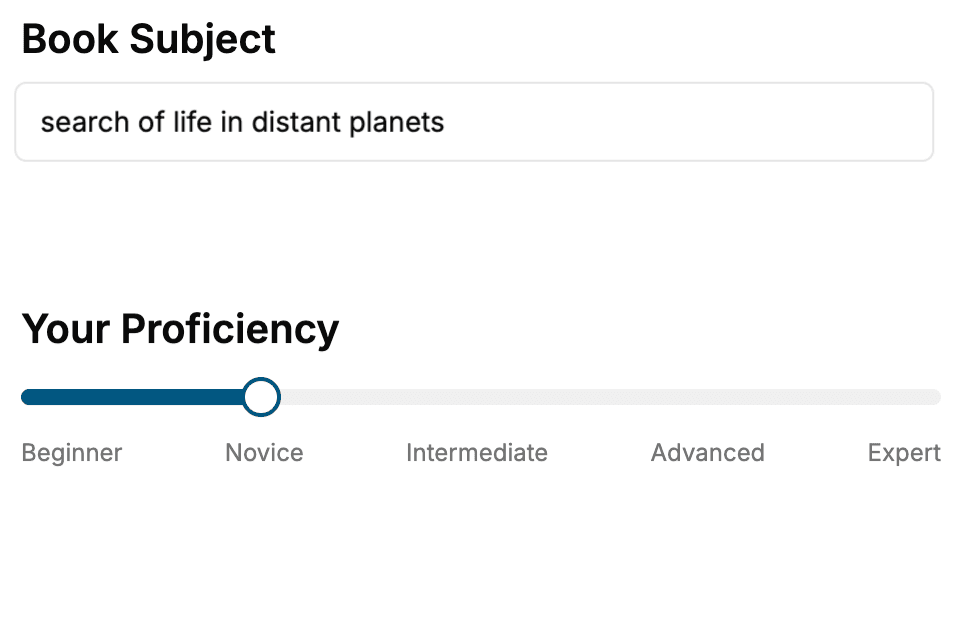
- 1. Select your focus
Select the focus of your Aesthetics book and share your background
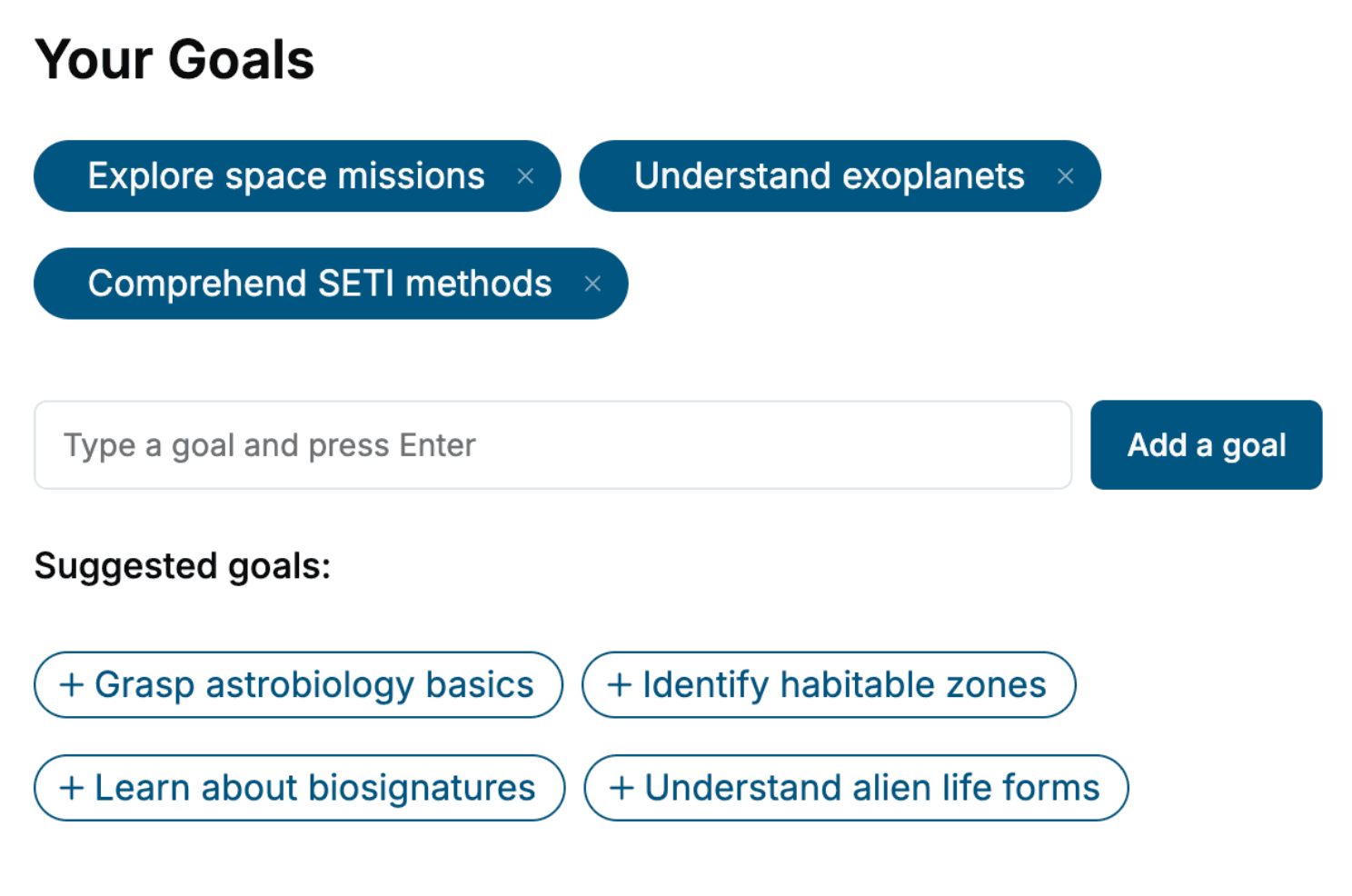
- 2. Personalize your book
Specify your goals and choose sub-topics to include
- 3. Get your tailored book
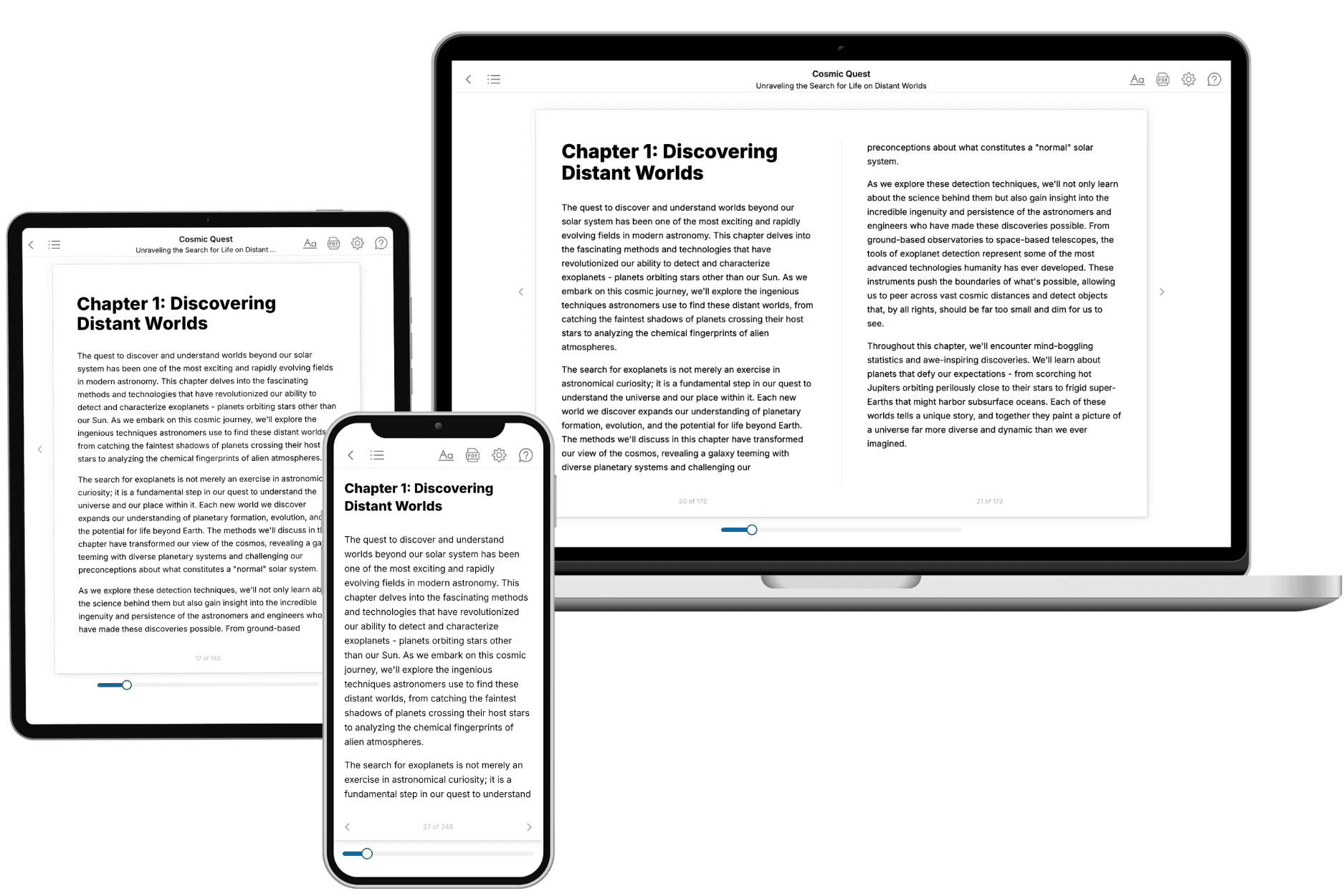
Your book is ready in 10 minutes. Read it online, download as EPUB or PDF, or send to Kindle.
Start from a template
Frequently asked questions
- What is TailoredRead?
TailoredRead creates complete, full-length nonfiction ebooks, written specifically for you. Tell us what you want to learn and why, and TailoredRead writes you a complete ebook on it, with charts, tables, and diagrams throughout. Read it online, on Kindle, or on any e-reader, or download it as a PDF or EPUB. Every book is written fresh the day you order it.
- How is the book tailored to me?
Before anything is written, you answer a few short questions about your goals, your background, and the topics you care about. Your book is then planned around your answers: written at your level, focused on your goals, and covering the topics you chose, instead of the one-size-fits-all book a store sells everyone.
- Will it read like generic AI content?
No. Your book isn't a chat transcript: it's planned chapter by chapter before a single word is written, told in a clear book voice, and explains ideas visually with charts, tables, and diagrams. After writing, every book goes through an editorial pass that polishes chapters so the book reads consistent from start to finish. Judge for yourself: browse thousands of sample books on our Explore Books page.
- How accurate is the content?
Our AI first checks whether your subject needs live research. Niche and fast-moving subjects are researched before writing, and the book plan and chapters are grounded in what it finds. After writing, every book goes through a quality pass that checks its facts and consistency, and researched books list their sources in a Notes section at the back.
- How long is the book?
You choose the length: Comprehensive (250-300 pages), Detailed (150-200 pages), Essential (70-100 pages), or Short (30-50 pages).
- Does the book include visuals?
Yes. Every book includes charts, tables, and diagrams: timelines, checklists, step-by-step guides, decision trees, comparison tables, matrices, and bar charts. A typical book includes dozens of these visual elements.
- Can I read it on Kindle? What formats can I download?
Yes. Every book can be read in our online reader or downloaded as a PDF or EPUB. The EPUB can be opened with Kindle, Apple Books, Kobo, and any e-reader. The Commercial and Author licenses also include an editable Word (DOCX) and Markdown download.
- How much does it cost?
About the price of a regular ebook. The exact price depends on your book's length and complexity, from $2 for the shortest books to $35 for the most comprehensive, and it's shown when you review your book, before you commit to anything. Each book is a one-time purchase, yours to keep, no subscription. Licenses that let you share, teach, or publish your book range from $35.99 to $49.99.
- Can I preview the book before purchasing?
Before you pay, you'll see what your book will cover: the title, a detailed description, the estimated length, and the complete chapter-by-chapter table of contents, so you know what you're getting before you decide. The full text itself is written after you purchase.
- How long does it take to create a book?
About 10 minutes. You can start reading the opening chapters while the rest is still being written.