Climatology Books
Explore tailored Climatology books created by our AI
Most people think climate models are black boxes that simply predict future temperatures. In reality, they're sophisticated computational systems built on decades of numerical algorithm research. This book demystifies the mathematical and computational foundations that make climate modeling possible. You'll discover how scientists discretize Earth's complex fluid dynamics equations into solvable computational problems, why certain numerical methods work better than others for different climate phenomena, and how modern supercomputers enable global simulations. Whether you're a student entering the field, a professional seeking deeper technical understanding, or a researcher looking to implement or improve climate models, this guide provides the practical knowledge you need. From grid design and time-stepping schemes to parameterization strategies and parallel computing approaches, you'll gain insight into the real engineering decisions that shape climate predictions and their uncertainties.
Beyond Tomorrow's Weather
Mastering the Science of Long-Range Forecasting
Predict weather patterns months and seasons ahead with confidence and scientific precision. This comprehensive guide reveals how meteorologists extend their forecasting horizon far beyond the traditional 7-day outlook, using ocean currents, climate oscillations, and advanced modeling techniques to anticipate weather trends weeks and months in advance. You'll discover the fundamental differences between short-term and long-range prediction, learning why a completely different set of tools and approaches becomes necessary when forecasting beyond two weeks. From El Niño cycles that reshape global weather patterns to the North Atlantic Oscillation that influences winter severity across continents, you'll understand the large-scale climate drivers that make extended forecasting possible. The book demystifies ensemble forecasting, probability-based predictions, and the integration of multiple modeling approaches that modern meteorologists use to push the boundaries of predictability. You'll learn to interpret seasonal outlooks, understand forecast confidence levels, and recognize when long-range predictions are most reliable versus when uncertainty dominates. Whether you're planning agricultural operations, managing weather-sensitive businesses, or simply fascinated by the science of atmospheric prediction, this book provides the knowledge and tools to harness the power of long-range weather forecasting for better decision-making in an uncertain climate.
The Genesis of Hurricanes
Understanding the Science Behind Nature's Most Powerful Storms
Understanding why tropical cyclones form where they do—and why they don't form elsewhere—remains one of the most challenging puzzles in atmospheric science. Despite decades of research, the precise mechanisms that transform ordinary tropical disturbances into devastating hurricanes, typhoons, and cyclones continue to elude simple explanation. This book cuts through the complexity to reveal the intricate dance of atmospheric conditions, ocean temperatures, wind patterns, and thermodynamic processes that must align for these powerful storms to develop. You'll explore the six essential ingredients required for cyclogenesis, from sea surface temperatures to atmospheric instability, and discover why slight variations in any single factor can mean the difference between a dissipating wave and a Category 5 monster. Through clear explanations grounded in current research, you'll gain insight into the role of the Coriolis effect, the importance of low wind shear, and how climate patterns like El Niño influence cyclone activity across different ocean basins. Whether you're deepening your understanding of atmospheric dynamics or seeking to comprehend these phenomena that shape our planet's weather and climate, this comprehensive guide provides the knowledge you need.
Master the science of atmospheric moisture and transform how you understand weather. Dew point temperature is one of the most powerful yet underutilized tools in meteorology, yet most people have never heard of it. This book reveals why dew point matters more than you think—from predicting fog and frost to understanding why some days feel unbearably humid while others feel crisp and dry. You'll discover how meteorologists use dew point to forecast severe weather, how farmers rely on it to protect crops, and how it influences everything from your comfort level to aviation safety. Through clear explanations, real-world examples, and practical applications, you'll learn to read dew point data like a professional meteorologist. Whether you're a weather enthusiast, professional working in climate-sensitive fields, or simply curious about the atmosphere above you, this book equips you with the knowledge to interpret weather patterns with confidence and make better decisions based on atmospheric conditions.
Extreme weather events are becoming more frequent and severe, affecting millions of people worldwide. This comprehensive guide helps you understand what causes these powerful storms, how to recognize the warning signs, and most importantly, how to protect yourself and your loved ones. You'll learn the science behind hurricanes, tornadoes, floods, droughts, and heat waves—not as abstract concepts, but as practical knowledge you can use immediately. Discover how meteorologists predict these events, what makes certain regions more vulnerable, and how climate change is reshaping weather patterns globally. Whether you're preparing an emergency kit, developing a family evacuation plan, or simply wanting to understand the weather reports you see on the news, this guide provides actionable strategies grounded in real science. From personal preparedness to community resilience, you'll gain the knowledge and confidence to face extreme weather with clarity and purpose.
The Weather Lab
Hands-On Experiments to Understand Meteorology and Predict Weather Patterns
Most people check weather forecasts without understanding the science behind them. You might wonder how meteorologists predict storms, why pressure matters, or what actually causes different weather patterns. This book bridges that gap by guiding you through hands-on experiments that reveal the hidden mechanics of our atmosphere. You'll build a working barometer to track pressure changes, create cloud formations in a bottle, measure humidity with simple tools, and learn to interpret weather maps like a professional forecaster. Each experiment is designed to be conducted with materials you likely have at home, yet each one teaches fundamental meteorological principles. By the end, you'll understand not just what the weather will be, but why it happens—and you'll be able to make your own weather predictions based on observable data and scientific reasoning.
Predicting the Atmosphere
How Numerical Weather Prediction Works and Why It Matters
What makes a weather forecast accurate, and why do meteorologists sometimes get it wrong? The answer lies in numerical weather prediction—a sophisticated blend of physics, mathematics, and computing that transforms raw atmospheric data into the forecasts you check daily. This book reveals how meteorologists use supercomputers to solve the equations governing wind, pressure, temperature, and moisture, and why even the most powerful computers have limits. You'll discover how observations from thousands of satellites and ground stations feed into models, how ensemble systems quantify uncertainty, and why a forecast for next week is fundamentally different from one for tomorrow. Whether you're a student exploring meteorology, a professional in aviation or agriculture, or simply curious about the science behind weather prediction, this guide makes the complex accessible without oversimplifying the remarkable achievement of modern forecasting.
Picture yourself confidently presenting compelling climate data to a captivated audience, armed with the knowledge to answer tough questions and propose innovative solutions. Imagine being able to navigate complex climate models, create eye-catching infographics, and organize impactful events that inspire action. With "Climate Change Decoded," you'll develop the skills and expertise to turn this vision into reality. This comprehensive guide takes you on an in-depth exploration of climate science, from the fundamentals of greenhouse gas emissions to the intricacies of climate feedback loops. You'll gain a solid understanding of key concepts like sea level rise projections, urban heat islands, and ocean acidification, while also delving into cutting-edge topics such as climate tipping points and ecosystem resilience. But this book goes beyond just theory. You'll learn how to apply your knowledge through practical exercises in climate data visualization, risk assessment, and scenario comparison. Discover how to craft compelling narratives around climate findings and explore a range of solutions, from renewable energy technologies to sustainable agriculture practices. Whether you're preparing for a career in climate science or simply want to be a more informed and effective advocate for our planet, "Climate Change Decoded" provides the tools and insights you need to make a real difference in the fight against global warming.
Most people assume weather forecasting requires advanced degrees and expensive software. In reality, you can create surprisingly accurate personal weather forecasts using publicly available data and a systematic approach. This book teaches you the exact algorithm that professional meteorologists use, broken down into manageable steps you can follow regardless of your background. Whether you're planning outdoor activities, managing patient care logistics, or simply curious about the science behind weather predictions, you'll learn to interpret atmospheric pressure patterns, analyze satellite and radar imagery, understand jet stream influences, and apply numerical weather prediction models. By mastering these interconnected techniques, you'll develop the analytical skills to forecast weather with confidence and accuracy, transforming raw meteorological data into actionable predictions.
You check the weather forecast before making plans, but do you really understand how meteorologists predict tomorrow's conditions—or why their forecasts sometimes miss by miles? The gap between what you see on your phone and the science behind it is vast and fascinating. This book bridges that gap by taking you inside the world of weather forecasting, revealing the sophisticated models, massive datasets, and computational power that drive modern meteorology. You'll discover why forecasts become less reliable beyond ten days, how meteorologists quantify uncertainty, and what makes some predictions remarkably accurate while others fail spectacularly. Whether you're planning a wedding, managing agricultural operations, or simply curious about the science, understanding forecast accuracy and limitations empowers you to make smarter decisions. Learn the real story behind the numbers, the tools meteorologists use, and how to interpret forecasts like a professional.
Imagine approaching your preflight weather briefing with complete confidence—not just reading reports, but truly understanding the atmospheric conditions that will affect your flight. You'll know exactly what the radar is showing you, what satellite imagery reveals about storm development, and how upper air data predicts icing and turbulence. This book bridges the gap between raw meteorological data and actionable flight decisions. You'll learn to interpret Doppler radar signatures, analyze satellite cloud patterns, read upper air soundings, recognize synoptic weather patterns, and assess atmospheric stability. Each chapter builds your ability to integrate these diverse data sources into a coherent weather picture. Whether you're planning a cross-country flight or navigating unexpected weather en route, you'll have the tools to make decisions grounded in meteorological science rather than guesswork. This is practical, applied meteorology designed specifically for pilots who want to master their weather decision-making.
What if the rocks beneath your feet could tell you what the weather was like a million years ago? They can—and paleoclimatologists have learned to read these ancient climate stories through geochemistry. This book reveals how scientists decode Earth's climate history by analyzing chemical signatures locked in ice, sediment, and stone. You'll discover the ingenious methods that transform isotope ratios, trace elements, and molecular fossils into a detailed timeline of past temperatures, rainfall patterns, and atmospheric conditions. From understanding how oxygen isotopes reveal ice age cycles to learning why carbon ratios expose ancient CO2 levels, you'll gain practical insight into the geochemical detective work that underpins modern climate science. Whether you're curious about how we know what we know about Earth's past, or seeking to understand the scientific foundation of climate research, this book makes paleoclimatology tangible and compelling.
The Rivers of the Sea
How Ocean Currents Shape Our Planet's Climate, Ecosystems, and Future
What if the invisible rivers flowing through our oceans hold the key to understanding the planet's past, present, and future? Ocean currents are far more than simple water movements—they are the dynamic forces that regulate global climate, sustain marine life, and connect distant ecosystems in ways that scientists are only beginning to fully comprehend. This book takes you beneath the surface to explore how these massive flows of water shape everything from the smallest plankton blooms to the migration patterns of apex predators. You'll discover why certain coastlines teem with life while others remain barren, how ancient circulation patterns influenced human history, and what current disruptions mean for the ecosystems we depend upon. Through clear explanations grounded in contemporary research, you'll gain insight into the mechanisms driving surface and deep ocean circulation, the ecological consequences of current patterns, and the profound changes now underway. Whether you're deepening your existing knowledge or exploring new dimensions of ocean science, this comprehensive guide will change how you perceive the living ocean and your connection to it.
Picture yourself standing before a world map that doesn't just show countries and borders, but reveals the invisible threads connecting climate patterns to ancient trade routes, population density to natural resources, and cultural traditions to geographic features. You can see how mountain ranges influence rainfall patterns, how rivers shaped civilizations, and how modern transportation networks follow paths carved by geography thousands of years ago. This comprehensive guide transforms how you see and understand our world through the lens of thematic mapping. You'll discover how these specialized maps serve as windows into complex geographic relationships, revealing patterns that remain hidden in traditional atlases. From planning your next adventure with elevation and climate maps to understanding global phenomena through population and economic visualizations, you'll develop the skills to read the stories that landscapes tell. Whether you're plotting hiking routes through national parks, researching destinations for international travel, or simply curious about the forces that shape our planet, this book provides practical techniques for interpreting and creating thematic maps. You'll learn to recognize the visual language of cartography, understand how different mapping methods reveal different truths, and develop critical thinking skills for evaluating geographic information. By the end of this exploration, you'll possess a cartographer's eye for seeing beyond surface features to the deeper patterns that connect places, peoples, and phenomena across our interconnected world. Every map you encounter will become a gateway to richer understanding and more meaningful travel experiences.
Frozen Frontiers
The Untold Story of Operation Highjump and America's Antarctic Expedition
Imagine standing on the icy expanse of Antarctica, surrounded by a fleet of ships and aircraft, part of one of the most ambitious polar expeditions in history. This is the world of Operation Highjump, a fascinating yet often overlooked chapter in the annals of Arctic and Antarctic exploration. "Frozen Frontiers: The Untold Story of Operation Highjump and America's Antarctic Expedition" takes you on an exhilarating journey to the bottom of the world. You'll discover the intricate planning, cutting-edge technology, and sheer human determination that went into this massive naval operation in 1946-1947. From the geopolitical context of the early Cold War to the scientific advancements made during the expedition, this book offers a multifaceted exploration of Operation Highjump. You'll gain insights into the challenges faced by the expedition members, the groundbreaking mapping techniques employed, and the lasting impact of this mission on our understanding of the polar regions. Whether you're a history buff, a polar exploration enthusiast, or simply curious about one of the most ambitious expeditions to the Antarctic, "Frozen Frontiers" provides a compelling narrative that brings this crucial moment in polar history to life.
Related books you may like:
Discover how advanced functional materials are reshaping industries and enabling solutions to humanity's greatest challenges. This comprehensive guide takes you beyond basic materials science to explore the cutting-edge world of engineered materials designed to perform specific, transformative functions. You'll learn how scientists and engineers manipulate atomic structures and processing conditions to create materials that respond to stimuli, conduct electricity with unprecedented efficiency, or heal themselves. From smart polymers that change properties on demand to nanomaterials with revolutionary capabilities, this book reveals the principles behind these innovations and their practical applications in healthcare, energy, electronics, and aerospace. Whether you're advancing your career, developing new products, or simply fascinated by the materials shaping our future, you'll gain the knowledge to understand, evaluate, and potentially contribute to this rapidly evolving field.
Most chemical reactions should happen instantly, yet they don't. The culprit? Activation energy—the invisible barrier that keeps reactants locked in place until enough energy arrives to break them free. Without understanding this fundamental concept, enzyme kinetics remains a mystery, and the elegant mechanisms by which life accelerates reactions seem like magic. This book demystifies activation energy and enzyme kinetics through clear explanations, practical examples, and visual frameworks. You'll discover how enzymes perform their catalytic miracles by lowering activation energy, explore the mathematics of reaction rates through the Arrhenius equation and Michaelis-Menten kinetics, and learn how inhibition mechanisms control biological processes. Whether you're studying biochemistry, developing pharmaceuticals, or optimizing industrial processes, this guide equips you with both the conceptual understanding and quantitative tools needed to predict, analyze, and manipulate enzyme-catalyzed reactions with confidence.
Achieve reliable, reproducible separations of complex chemical mixtures using adsorption chromatography. This practical guide bridges the gap between theoretical principles and real-world laboratory application, providing you with the knowledge and skills to design effective separation strategies for your specific analytical needs. You'll explore the fundamental science of how compounds interact with adsorbent materials, learn to select optimal stationary and mobile phases, and master the practical techniques that ensure consistent results. Whether you're working with thin-layer chromatography, column chromatography, or HPLC systems, this book equips you with systematic approaches to troubleshooting common problems, optimizing separations, and interpreting data with confidence. Packed with practical examples, decision-making frameworks, and evidence-based strategies, you'll develop the expertise to tackle challenging separation problems and advance your analytical capabilities in pharmaceutical, environmental, or materials research.
Many assume adipose tissue is simply inert fat to be minimized or removed. In reality, it's a sophisticated, metabolically active organ with remarkable regenerative potential. This book reveals how adipose tissue engineering is revolutionizing medicine by creating functional tissue solutions for reconstruction, regeneration, and therapeutic applications. You'll discover the biological foundations of adipose tissue, learn how scientists harvest and cultivate adipose-derived stem cells, and explore cutting-edge engineering strategies that transform these cells into viable tissue constructs. From scaffold design and bioreactor optimization to vascularization techniques and clinical translation, this guide provides practical insights into the science and engineering behind adipose tissue regeneration. Whether you're a researcher, student, or healthcare professional, you'll gain actionable knowledge about the current state of the field, emerging technologies, and the real-world challenges of bringing engineered tissues from the laboratory to clinical practice.
In the rapidly evolving world of ultra-high-speed communications, the challenge of designing secure and efficient chips has never been more daunting. As a Principal Architect, you face the complex task of integrating cutting-edge VLSI techniques with robust cryptographic solutions. This book is your comprehensive guide to conquering these challenges. "Advanced VLSI Design" delves deep into the intricacies of modern chip architecture, offering you practical insights into overcoming CMOS scaling limitations, harnessing the power of 3D IC integration, and implementing state-of-the-art FinFET technology. You'll explore innovative approaches to low-power design and high-speed SerDes, crucial for next-generation communication systems. This book doesn't just stop at performance; it equips you with the knowledge to build security from the ground up. From hardware Trojan detection to side-channel analysis resistance, you'll learn how to create chips that are not only fast but also fortified against modern security threats. Dive into advanced topics like quantum-dot cellular automata and EUV lithography, positioning yourself at the forefront of VLSI innovation.
Create a Climatology Book Tailored to You
Create an AI-crafted book tailored to your goals, interests, and background






Benefits of AI-tailored books
- Read one book, not ten:
- all the Climatology knowledge you need, gathered into a single book.
- Save days of learning:
- tell us your goals, choose your topics, and the whole book is built around them.
- Learn effortlessly:
- Climatology book written for your specific background and expertise.
- Understand at a glance:
- includes charts, tables, timelines, checklists, decision trees, and more.
- Stay current:
- written the day you order it, not years ago.
- Trust what you read:
- every book is checked for accuracy, with real research when your subject needs it.
Create your unique book in 3 steps
- 1. Select your focus
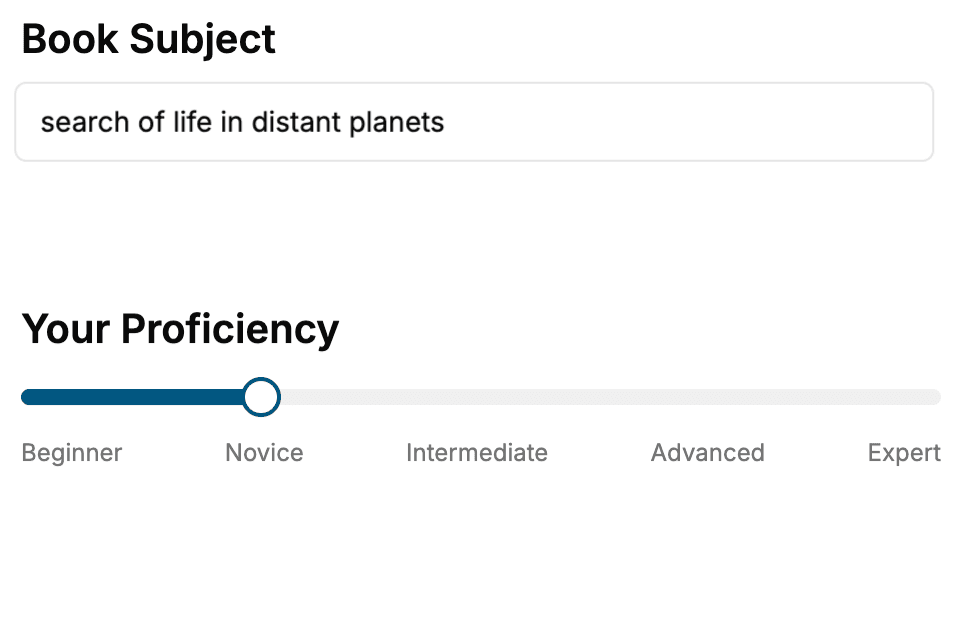
Select the focus of your Climatology book and share your background
- 2. Personalize your book
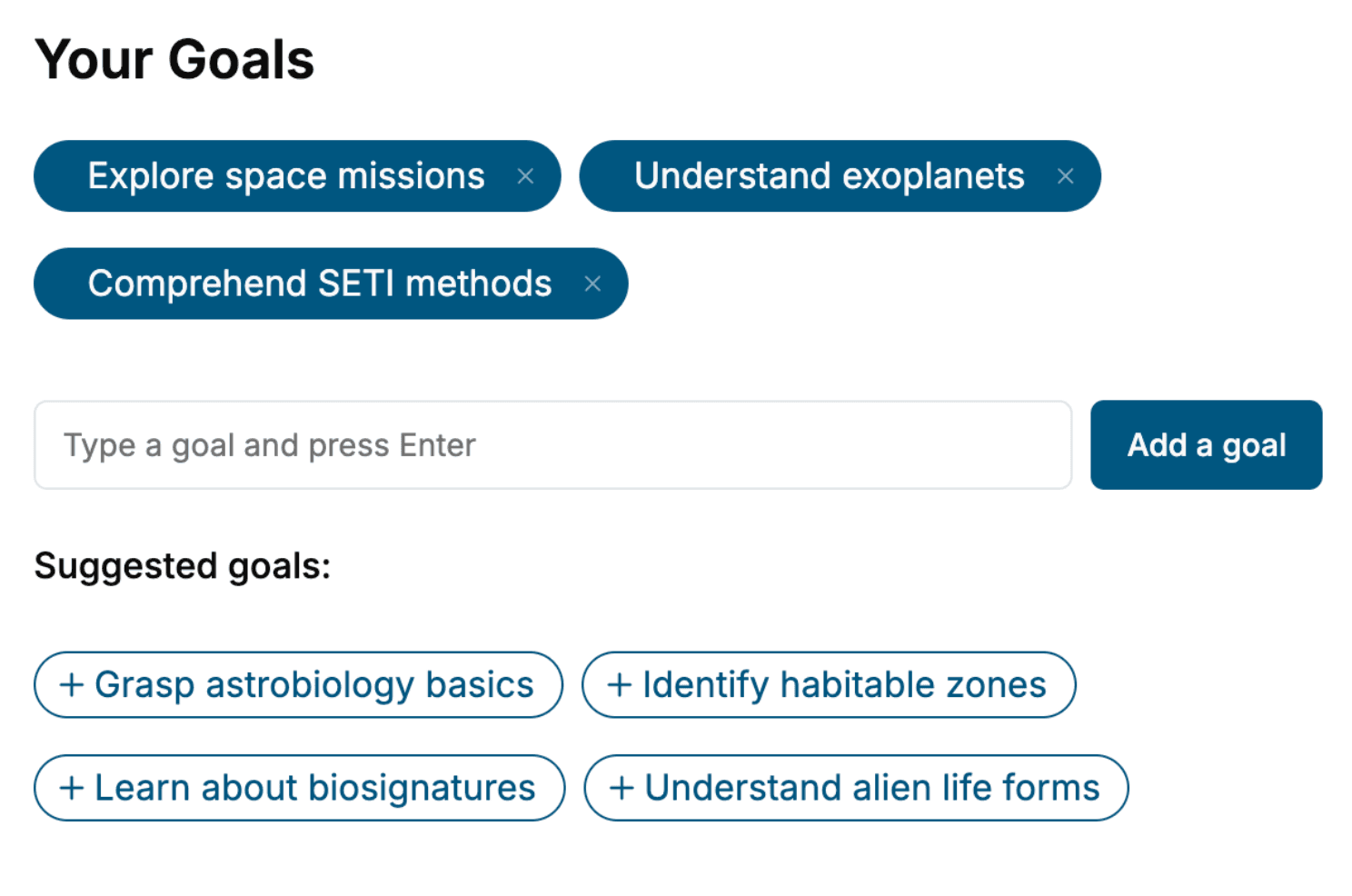
Specify your goals and choose sub-topics to include
- 3. Get your tailored book
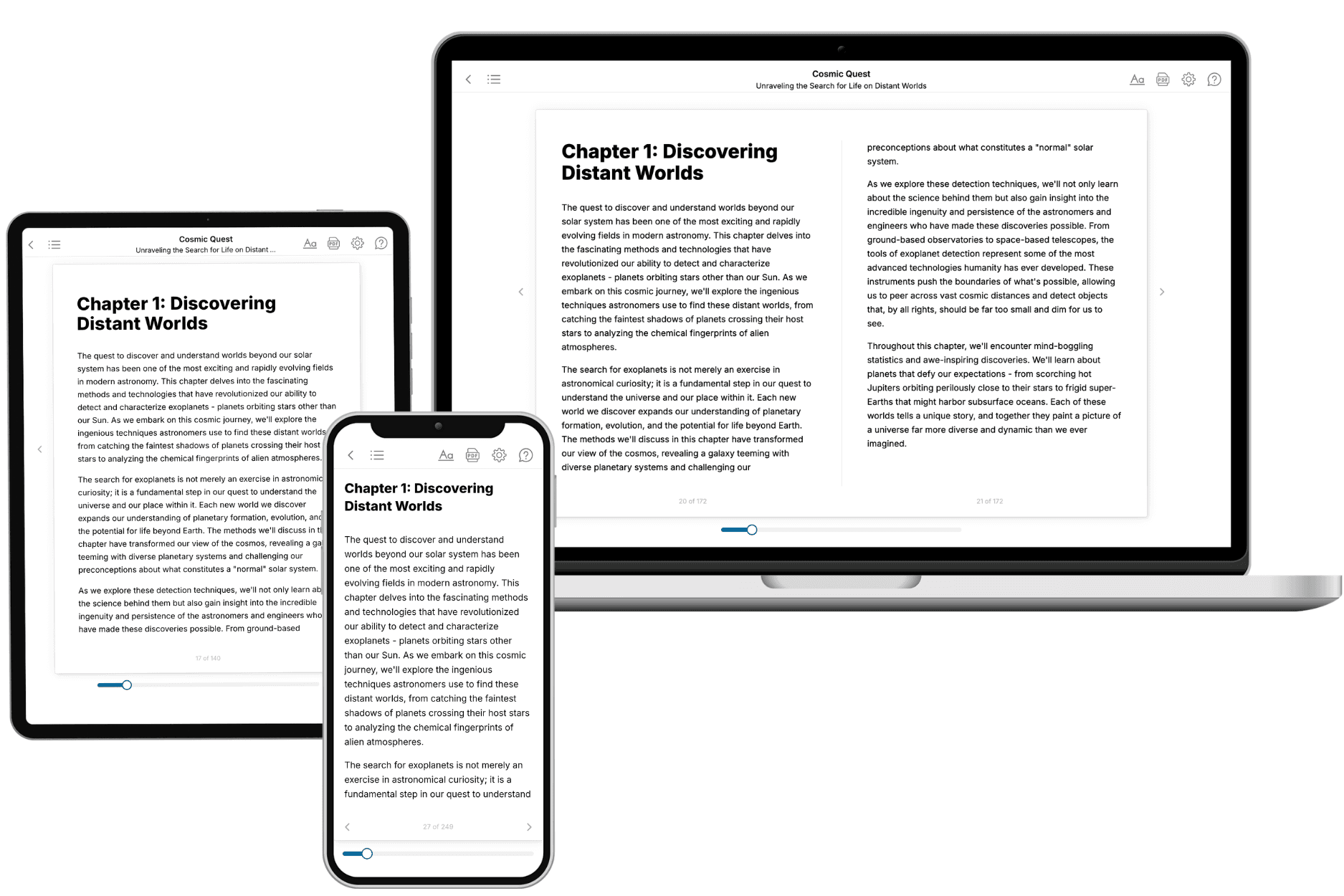
Your book is ready in 10 minutes. Read it online, download as EPUB or PDF, or send to Kindle.
Start from a template
Frequently asked questions
- What is TailoredRead?
TailoredRead creates complete, full-length nonfiction ebooks, written specifically for you. Tell us what you want to learn and why, and TailoredRead writes you a complete ebook on it, with charts, tables, and diagrams throughout. Read it online, on Kindle, or on any e-reader, or download it as a PDF or EPUB. Every book is written fresh the day you order it.
- How is the book tailored to me?
Before anything is written, you answer a few short questions about your goals, your background, and the topics you care about. Your book is then planned around your answers: written at your level, focused on your goals, and covering the topics you chose, instead of the one-size-fits-all book a store sells everyone.
- Will it read like generic AI content?
No. Your book isn't a chat transcript: it's planned chapter by chapter before a single word is written, told in a clear book voice, and explains ideas visually with charts, tables, and diagrams. After writing, every book goes through an editorial pass that polishes chapters so the book reads consistent from start to finish. Judge for yourself: browse thousands of sample books on our Explore Books page.
- How accurate is the content?
Our AI first checks whether your subject needs live research. Niche and fast-moving subjects are researched before writing, and the book plan and chapters are grounded in what it finds. After writing, every book goes through a quality pass that checks its facts and consistency, and researched books list their sources in a Notes section at the back.
- How long is the book?
You choose the length: Comprehensive (250-300 pages), Detailed (150-200 pages), Essential (70-100 pages), or Short (30-50 pages).
- Does the book include visuals?
Yes. Every book includes charts, tables, and diagrams: timelines, checklists, step-by-step guides, decision trees, comparison tables, matrices, and bar charts. A typical book includes dozens of these visual elements.
- Can I read it on Kindle? What formats can I download?
Yes. Every book can be read in our online reader or downloaded as a PDF or EPUB. The EPUB can be opened with Kindle, Apple Books, Kobo, and any e-reader. The Commercial and Author licenses also include an editable Word (DOCX) and Markdown download.
- How much does it cost?
About the price of a regular ebook. The exact price depends on your book's length and complexity, from $2 for the shortest books to $35 for the most comprehensive, and it's shown when you review your book, before you commit to anything. Each book is a one-time purchase, yours to keep, no subscription. Licenses that let you share, teach, or publish your book range from $35.99 to $49.99.
- Can I preview the book before purchasing?
Before you pay, you'll see what your book will cover: the title, a detailed description, the estimated length, and the complete chapter-by-chapter table of contents, so you know what you're getting before you decide. The full text itself is written after you purchase.
- How long does it take to create a book?
About 10 minutes. You can start reading the opening chapters while the rest is still being written.