Cognitive Function Books
Explore tailored Cognitive Function books created by our AI
Discover how your brain can create vivid taste sensations that don't actually exist—and why entire groups of people sometimes experience the same phantom flavors simultaneously. This book explores the fascinating world of gustatory hallucinations, revealing the psychological and neurological mechanisms behind false taste experiences. You'll learn how suggestion, emotion, and social influence can trick your sensory system, why mass hysteria involving taste occurs, and what distinguishes genuine hallucinations from other sensory phenomena. Through real-world case studies and scientific research, you'll understand the surprising ways your mind constructs reality and how collective psychology can create shared false experiences. Whether you're interested in neuroscience, psychology, or simply understanding the quirks of human perception, this book provides clear, evidence-based insights into one of the mind's most intriguing mysteries.
The Two-Point Touch
Understanding How Your Skin Perceives Space and Why It Matters
Imagine being able to feel the difference between a single touch and two separate touches on your fingertip—but not on your back. This seemingly simple ability reveals profound truths about how your nervous system works. Two-point discrimination is the foundation of tactile perception, determining how precisely your skin can distinguish spatial information. This book explores the fascinating science behind this sensory capability, from the microscopic receptors in your skin to the neural maps in your brain. You'll discover why your fingertips are exquisitely sensitive while your back is relatively numb, how illusions trick your sense of touch, and why this seemingly obscure measure matters for diagnosing disease and understanding human perception. Whether you're curious about sensory science, interested in neurology, or seeking to understand the hidden mechanisms of perception, this exploration of two-point discrimination will fundamentally change how you think about the boundary between your body and the world.
Mind Mastery Blueprint
Personalized Pathways to Master Philosophy of Mind Concepts
The mind-body problem has puzzled philosophers and scientists for centuries: how does subjective experience arise from physical matter? With your background in rigorous analytical disciplines, you're positioned to engage deeply with this question, yet the fragmented landscape of competing theories—dualism, physicalism, emergentism, functionalism—can obscure rather than clarify. This book synthesizes philosophy of mind's most important frameworks, arguments, and contemporary neuroscience findings into a coherent, intellectually rigorous exploration. You'll examine consciousness theories from multiple angles, understand the hard problem and why it resists easy solutions, explore mental representation and qualia, and discover how philosophical analysis and empirical neuroscience inform each other. Rather than advocating for one position, this book equips you with the conceptual tools to evaluate competing views critically, recognize their strengths and limitations, and develop your own informed perspective on consciousness, mind, and the nature of subjective experience.
Face Blind
Understanding Prosopagnosia and How Your Brain Recognizes Faces
You walk into a room and see someone familiar, but their face is a blank slate. You've known them for years, yet you can't place them. This isn't forgetfulness—it's prosopagnosia, or face blindness, a neurological condition that disrupts how your brain processes faces. Whether you suspect you have it, know someone who does, or simply want to understand this fascinating perceptual phenomenon, this book cuts through the confusion. You'll discover how your brain's face-recognition systems work, why they sometimes fail, and what that reveals about perception itself. Learn the difference between developmental and acquired prosopagnosia, explore the surprising prevalence of this condition, and discover practical strategies that help people navigate social and professional life. Through real examples, psychological research, and accessible explanations, you'll understand that face blindness isn't a deficit in intelligence or memory—it's a unique way of processing visual information. This book combines neuroscience, psychology, and practical wisdom to help you make sense of facial recognition, whether you're experiencing it firsthand or understanding it from the outside.
Most people don't realize that their thoughts, emotions, and behaviors are fundamentally rooted in biology. You might struggle to understand why you react the way you do, why certain situations trigger anxiety, or why motivation seems to come and go. The missing piece is understanding the biological systems driving these experiences. This book bridges the gap between abstract psychology and concrete neuroscience, revealing how your brain's structure, chemistry, and physiology shape every aspect of your mental life. You'll discover how neurotransmitters influence your mood, how hormones regulate your stress response, and why sleep and nutrition matter more than you think. Rather than treating psychology and biology as separate subjects, this book shows how they're inseparably linked. Whether you're curious about why you behave the way you do, interested in optimizing your mental health, or simply want to understand the science behind human nature, this guide provides the knowledge you need to make sense of yourself and others.
Most writers struggle with a fundamental problem: they don't understand how their reader's brain actually processes language. This disconnect leads to unclear writing, lost messages, and frustrated audiences. The Brain's Language Blueprint bridges this gap by revealing the neuroscience behind language processing, writing, and comprehension. You'll discover how your brain's language networks activate when reading, why certain writing structures work better than others, and how to leverage neural principles to make your writing more persuasive and memorable. From understanding semantic networks and cognitive load to harnessing emotional language and prediction systems, this book translates cutting-edge neuroscience into practical writing strategies. Whether you're crafting emails, articles, or creative work, you'll learn to write in alignment with how brains actually work—not how we assume they do. The result: clearer thinking, more effective communication, and writing that genuinely resonates with your audience.
Most people think of the brain as a mysterious black box—too complex to understand through science. But the brain is fundamentally a computational system, and once you understand its logic, its behavior becomes predictable and explainable. This book reveals how neuroscientists use mathematics, computer simulations, and algorithms to decode the brain's secrets. You'll discover how individual neurons perform calculations, how networks of neurons create thought and memory, and how computational models help us understand everything from sensory perception to decision-making. Whether you're curious about artificial intelligence, interested in neuroscience, or want to understand the biological basis of cognition, this book provides the conceptual foundation and practical knowledge you need. By exploring real examples and avoiding unnecessary jargon, you'll gain genuine insight into how the brain computes, learns, and adapts—and why this computational perspective is revolutionizing neuroscience.
Visual Evoked Potentials
Understanding How Your Brain Processes What You See
Imagine being able to see exactly how your brain responds to light and images in real time. Visual Evoked Potentials make this possible by measuring the electrical activity your brain generates when processing visual information. This book demystifies VEPs—a powerful neurophysiological tool that bridges the gap between what you see and how your brain interprets it. Whether you're a student, clinician, researcher, or simply curious about visual neuroscience, you'll discover how VEPs work, why they matter in clinical diagnosis and research, and how they reveal the hidden mechanisms of visual perception. From the basic principles of neural electrical activity to advanced applications in detecting neurological disease, this guide walks you through the science with clarity and practical insight. Learn how VEPs differ from other vision tests, what the waveforms actually tell us, and why this technology continues to be essential in modern neurology and ophthalmology. By the end, you'll understand not just the "what" and "how" of VEPs, but the "why"—and how this knowledge applies to real-world clinical and research scenarios.
You'll gain a complete, personalized ketogenic protocol engineered specifically for your age, metabolic condition, and health history. This guide combines the latest research on type 2 diabetes reversal with practical strategies for the unique challenges seniors face—from managing electrolytes and preventing nosebleeds to preserving muscle and protecting your joints. As someone with a technical background, you'll appreciate the data-driven approach: learn how to track biomarkers, interpret your metabolic response, and adjust your protocol based on measurable results rather than guesswork. You'll discover how ketone bodies protect your brain, why protein timing matters for muscle preservation, and exactly how to structure strength training to prevent re-injury while building resilience. This isn't a generic diet book—it's a longevity system built for your specific situation, with the precision and accountability you'd expect from a well-engineered solution.
Most psychologists still rely on consciousness frameworks developed decades ago, missing critical 2025 breakthroughs that fundamentally reshape how we understand awareness, cognition, and the mind-brain relationship. This comprehensive guide bridges the gap between cutting-edge neuroscience, quantum physics, and philosophical inquiry to present an integrated view of consciousness that's both scientifically rigorous and clinically applicable. You'll explore how integrated information theory provides measurable frameworks for consciousness, discover the quantum mechanisms potentially underlying subjective experience, and examine evidence supporting panpsychism as a serious scientific hypothesis. The book synthesizes emerging research on consciousness measurement techniques, consciousness-brain correlations, and the bidirectional relationship between awareness and cognition. Whether you're seeking to deepen your theoretical knowledge, evaluate new research methodologies, or integrate these discoveries into your clinical practice, this book provides the conceptual tools and empirical evidence you need. Each chapter builds systematically from foundational concepts to cutting-edge discoveries, ensuring you can confidently engage with 2025 consciousness research and apply these insights professionally.
How Your Brain Speaks
The Neuroscience of Language, Writing, and Communication
Discover how your brain transforms thoughts into words and written language into meaning. This book reveals the fascinating neuroscience behind language processing, from the moment you hear a word to when you craft a compelling sentence. You'll explore how specialized brain regions work together to produce speech, comprehend meaning, and create written communication that resonates with readers. Learn why some writing techniques are neurologically more effective, how your brain predicts what comes next in conversation, and why practice literally rewires your neural pathways. Whether you're a writer seeking to understand your craft at a deeper level, a student curious about cognitive science, or simply someone fascinated by how your mind works, this book demystifies the brain's language systems. Packed with real-world examples and practical insights, you'll gain a new appreciation for the remarkable neural machinery that makes human communication possible—and discover how understanding these mechanisms can help you become a more effective communicator.
The Visual Field Handbook
Understanding How Your Eyes Perceive the World Around You
Discover how your eyes perceive the world beyond what you consciously notice. Your visual field—the entire area you can see when looking straight ahead—is far more complex than most people realize. This book explores the science of visual field testing, explaining how eye care professionals assess your peripheral vision and detect hidden problems that could affect your safety and independence. You'll learn why visual field testing matters, how different testing methods work, and what your results actually mean. Whether you're curious about your own eye health, studying visual perception, or working in a healthcare field, this guide demystifies the technology and psychology behind one of medicine's most important diagnostic tools. Understand the connection between your visual field and conditions like glaucoma, stroke, and retinal disease. Explore how your brain processes visual information across your entire visual space, and why some people experience blind spots or peripheral vision loss. This practical yet scientifically rigorous exploration bridges the gap between clinical practice and everyday vision, giving you the knowledge to better understand your own eyes and the eyes of those around you.
What if the brain's most complex functions could be reduced to elegant mathematical equations? Computational neuroscience reveals that they can. This book shows you how mathematical models transform our understanding of neural systems—from the firing patterns of individual neurons to the coordinated activity of millions of brain cells. You'll discover why a simple equation can predict when a neuron fires, how networks of neurons create memories through mathematical rules, and why understanding the brain's mathematics matters for treating neurological diseases. Rather than treating biology and mathematics as separate disciplines, this book demonstrates their deep integration, showing you the concrete models that neuroscientists use to decode brain function. Whether you're curious about how your brain works or seeking to understand the cutting edge of neuroscience research, you'll gain practical insight into the mathematical principles that govern neural computation and behavior.
Related books you may like:
Many ophthalmologists approach age-related macular degeneration management using standardized protocols that fail to account for the disease's remarkable heterogeneity and individual patient variation. This comprehensive guide bridges the gap between foundational AMD knowledge and advanced clinical practice by synthesizing the latest evidence on surgical techniques, pharmacological interventions, and diagnostic innovations. You'll master anti-VEGF injection optimization, learn to interpret multimodal imaging data for precise staging and prognosis, and develop personalized treatment algorithms that integrate genetic risk factors, biomarker monitoring, and combination therapy strategies. The book covers emerging technologies including adaptive optics imaging and complement system inhibition, while providing practical frameworks for managing complications, preventing subretinal fibrosis, and maximizing patient quality of life. Whether refining injection techniques, integrating new imaging modalities, or designing evidence-based clinical guidelines, this resource equips you with the knowledge and tools to advance your practice and improve outcomes for your AMD patients.
Imagine confidently identifying precise auricular points on your patients' ears and knowing exactly which anatomical landmarks correspond to their pain conditions. This comprehensive guide bridges the gap between anatomical knowledge and clinical practice, providing you with the practical skills needed to master auricular acupuncture. Drawing on your medical background, you'll learn the systematic mapping of ear point anatomy, develop proficiency in point sensitivity assessment, and implement evidence-based treatment protocols for both acute and chronic pain management. Each chapter builds your clinical competency through detailed anatomical descriptions, landmark identification techniques, and real-world application strategies. You'll understand the neurophysiological mechanisms underlying auricular acupuncture's effectiveness and gain the confidence to design individualized treatment plans. Whether you're treating acute injuries or managing chronic conditions, this book provides the anatomical precision and clinical frameworks necessary to deliver effective auricular acupuncture therapy and enhance your patient outcomes.
As a psychiatric nurse practitioner, you understand that ADHD extends far beyond childhood hyperactivity—yet many clinicians lack comprehensive frameworks for recognizing its complex manifestations across development and effectively integrating evidence-based interventions. This resource bridges that gap by providing clinically rigorous, practical guidance grounded in neuroscience and clinical evidence. You'll explore the neurobiological foundations of ADHD, master differential diagnosis across age groups, and implement multimodal treatment strategies that combine pharmacological management, behavioral interventions, and psychoeducational approaches. The book emphasizes neurodiversity-affirming care that reframes ADHD traits as neurological differences rather than deficits, helping your patients recognize inherent strengths like creativity and hyperfocus. Discover how to support families through psychoeducation, develop individualized coping strategies, and navigate the unique challenges of adult ADHD diagnosis and management. With practical assessment tools, treatment algorithms, and real-world clinical scenarios, this comprehensive guide enhances your ability to provide patient-centered, evidence-based care that improves outcomes and reduces stigma.
You'll gain a clear, science-based understanding of how ADHD actually works in your brain and why traditional productivity advice often fails you. This book moves beyond generic tips to explore the neurological reality of attention regulation, executive function, and dopamine sensitivity—and what that means for your daily life. You'll discover why you struggle with certain tasks while excelling at others, learn to recognize your personal ADHD patterns, and access practical strategies for managing time, emotions, relationships, and work. Whether you're newly diagnosed, self-aware but undiagnosed, or supporting someone with ADHD, you'll find evidence-based approaches to medication, therapy, lifestyle design, and environmental modifications. This isn't about "fixing" yourself—it's about understanding your brain's unique operating system and building a life that works with it, not against it. Packed with real-world examples and actionable frameworks, this guide helps you transform ADHD from a source of shame into a manageable aspect of who you are.
Imagine confidently integrating auricular acupuncture into your clinical practice with precision and evidence-based confidence. This comprehensive guide equips you with the anatomical knowledge, diagnostic skills, and practical protocols needed to master auricular point mapping and deliver superior patient outcomes. Designed specifically for physicians, this resource provides detailed visual maps of auricular points for pain management, stress relief, sleep disorders, smoking cessation, and obesity treatment. You'll learn systematic point location techniques, develop point sensitivity testing skills, and understand the neurophysiological mechanisms underlying auricular acupuncture's therapeutic effects. Whether you're treating chronic pain, managing stress-related conditions, or helping patients overcome addiction and weight management challenges, you'll discover evidence-based protocols that integrate seamlessly with your medical practice. The book includes practical guidance on needle-free auricular stimulation techniques, clinical diagnostic approaches, and strategies for patient selection and treatment monitoring. Master the specialized expertise that sets apart clinicians who achieve consistent, measurable results in auricular acupuncture practice.
Create a Cognitive Function Book Tailored to You
Create an AI-crafted book tailored to your goals, interests, and background






Benefits of AI-tailored books
- Read one book, not ten:
- all the Cognitive Function knowledge you need, gathered into a single book.
- Save days of learning:
- tell us your goals, choose your topics, and the whole book is built around them.
- Learn effortlessly:
- Cognitive Function book written for your specific background and expertise.
- Understand at a glance:
- includes charts, tables, timelines, checklists, decision trees, and more.
- Stay current:
- written the day you order it, not years ago.
- Trust what you read:
- every book is checked for accuracy, with real research when your subject needs it.
Create your unique book in 3 steps
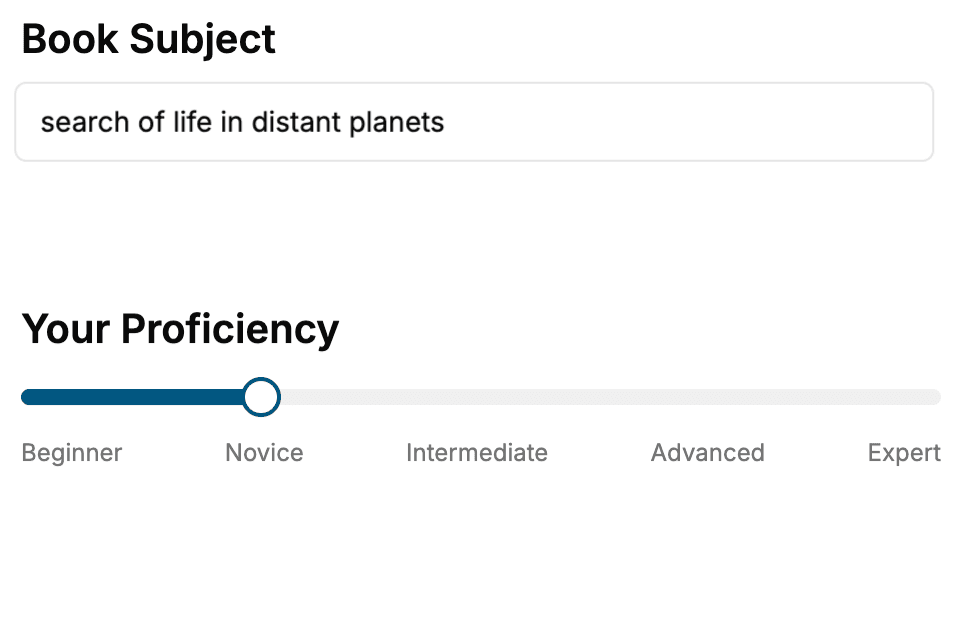
- 1. Select your focus
Select the focus of your Cognitive Function book and share your background
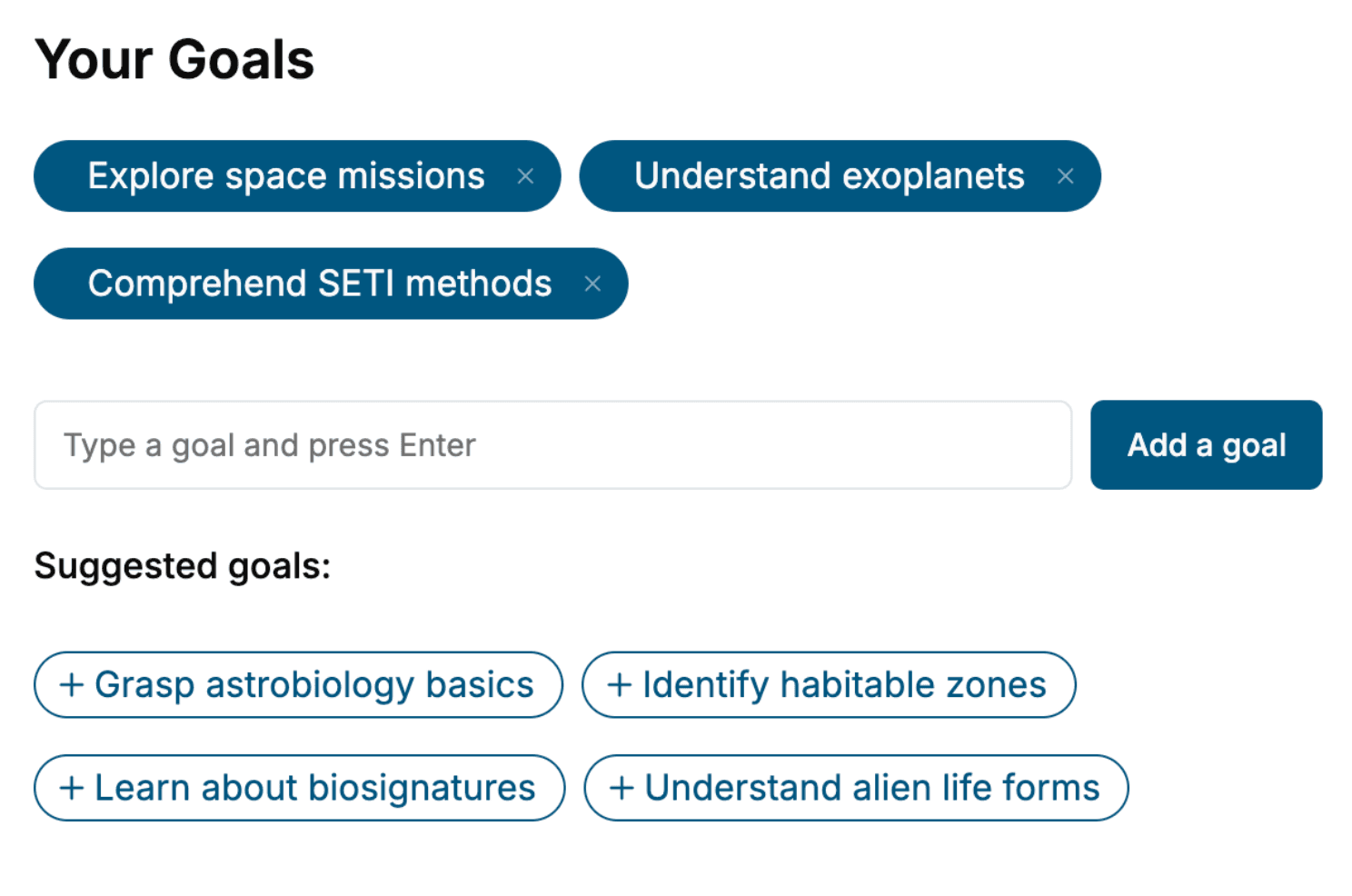
- 2. Personalize your book
Specify your goals and choose sub-topics to include
- 3. Get your tailored book
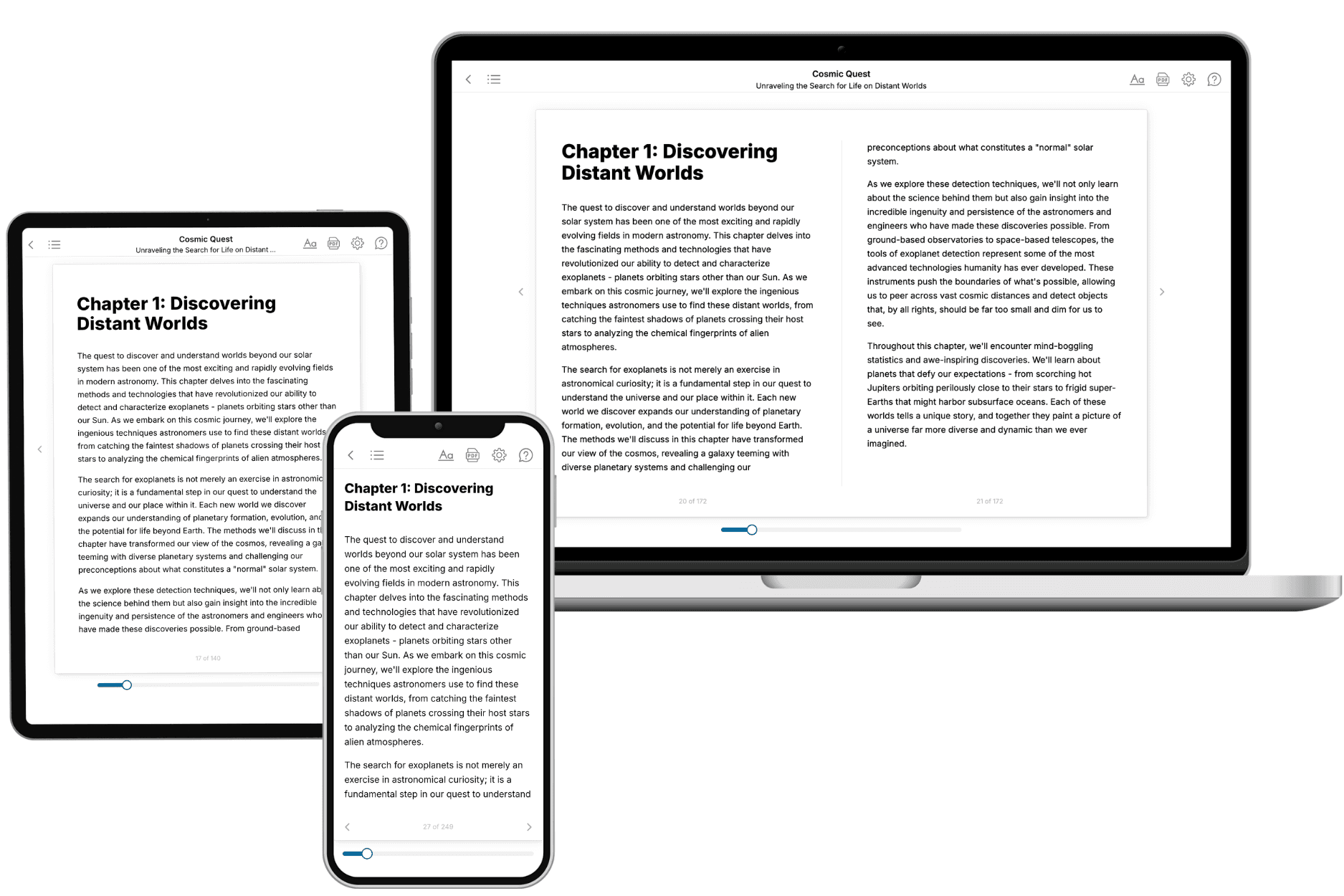
Your book is ready in 10 minutes. Read it online, download as EPUB or PDF, or send to Kindle.
Frequently asked questions
- What is TailoredRead?
TailoredRead creates complete, full-length nonfiction ebooks, written specifically for you. Tell us what you want to learn and why, and TailoredRead writes you a complete ebook on it, with charts, tables, and diagrams throughout. Read it online, on Kindle, or on any e-reader, or download it as a PDF or EPUB. Every book is written fresh the day you order it.
- How is the book tailored to me?
Before anything is written, you answer a few short questions about your goals, your background, and the topics you care about. Your book is then planned around your answers: written at your level, focused on your goals, and covering the topics you chose, instead of the one-size-fits-all book a store sells everyone.
- Will it read like generic AI content?
No. Your book isn't a chat transcript: it's planned chapter by chapter before a single word is written, told in a clear book voice, and explains ideas visually with charts, tables, and diagrams. After writing, every book goes through an editorial pass that polishes chapters so the book reads consistent from start to finish. Judge for yourself: browse thousands of sample books on our Explore Books page.
- How accurate is the content?
Our AI first checks whether your subject needs live research. Niche and fast-moving subjects are researched before writing, and the book plan and chapters are grounded in what it finds. After writing, every book goes through a quality pass that checks its facts and consistency, and researched books list their sources in a Notes section at the back.
- How long is the book?
You choose the length: Comprehensive (250-300 pages), Detailed (150-200 pages), Essential (70-100 pages), or Short (30-50 pages).
- Does the book include visuals?
Yes. Every book includes charts, tables, and diagrams: timelines, checklists, step-by-step guides, decision trees, comparison tables, matrices, and bar charts. A typical book includes dozens of these visual elements.
- Can I read it on Kindle? What formats can I download?
Yes. Every book can be read in our online reader or downloaded as a PDF or EPUB. The EPUB can be opened with Kindle, Apple Books, Kobo, and any e-reader. The Commercial and Author licenses also include an editable Word (DOCX) and Markdown download.
- How much does it cost?
About the price of a regular ebook. The exact price depends on your book's length and complexity, from $2 for the shortest books to $35 for the most comprehensive, and it's shown when you review your book, before you commit to anything. Each book is a one-time purchase, yours to keep, no subscription. Licenses that let you share, teach, or publish your book range from $35.99 to $49.99.
- Can I preview the book before purchasing?
Before you pay, you'll see what your book will cover: the title, a detailed description, the estimated length, and the complete chapter-by-chapter table of contents, so you know what you're getting before you decide. The full text itself is written after you purchase.
- How long does it take to create a book?
About 10 minutes. You can start reading the opening chapters while the rest is still being written.